Sarinka
Sarinka: Boldness, Beauty, and Becoming
Artist Spotlight · The Collection Editorial
There is a particular kind of artist who arrives quietly and then, all at once, makes the room impossible to ignore. Sarinka is that kind of artist. Working independently and on her own terms, she has cultivated a visual practice that pulses with emotional honesty and formal ambition, a practice that feels urgently necessary in the current landscape of contemporary art. Her presence on platforms like The Collection signals something collectors and curators increasingly understand: the most compelling voices in art today are often those building their reputations outside the traditional gallery circuit, forging direct connections with audiences who respond to work that feels genuinely alive.
Sarinka
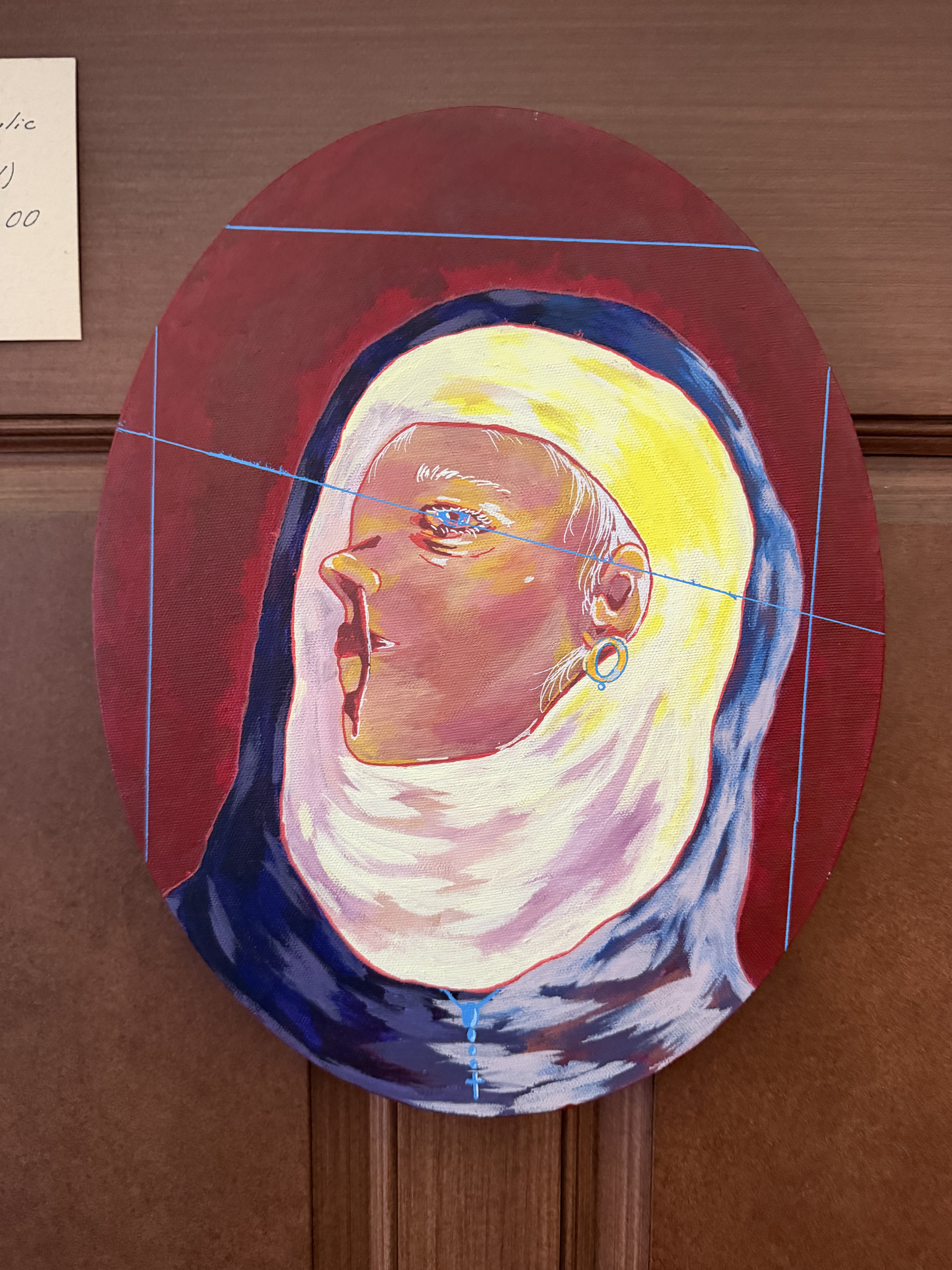
Her Flesh and Her Blood
What we know of Sarinka begins with the work itself, which is often the truest biography of any artist. Her practice spans painting, illustration, and mixed media, and across all of these she has developed a visual language that is immediately recognizable and deeply personal. Bold, saturated color sits alongside expressive, gestural linework. The figurative and the abstract push against each other, creating tension and then resolution, much the way emotional experience itself unfolds.
Her subjects are often women, rendered not as objects of observation but as subjects of their own interior worlds, figures caught in moments of transformation, endurance, or quiet revelation. The themes that run through her work, namely femininity, resilience, and the ongoing process of self understanding, place her in a rich tradition of artists who have used the painted figure as a site of psychological exploration. There are echoes here of the charged figuration found in the work of artists like Maria Lassnig, whose body awareness paintings made interiority visible, and of the raw emotional directness associated with Neo Expressionism more broadly. One also senses kinship with the Surrealist tradition, particularly the introspective, symbolically rich imagery of Leonora Carrington and Remedios Varo, artists who used the female body and dreamlike space to map territories that conventional representation could not reach.
Sarinka occupies this lineage with confidence, bringing to it a contemporary sensibility and a voice that is entirely her own. Among the works available through The Collection, one painting stands out as a concentrated expression of her practice and its possibilities. "Her Flesh and Her Blood," an acrylic on canvas, is the kind of title that announces its intentions plainly and then delivers something more layered than you anticipated. The phrase itself carries weight across multiple registers, invoking the body as both material and metaphor, suggesting lineage, sacrifice, sustenance, and the stubborn fact of physical existence.
In the hands of an artist working within the traditions of feminist art and emotional abstraction, these associations do not cancel each other out but accumulate, creating an image that rewards sustained looking. The acrylic medium suits her sensibility well: it allows for both the bold, flat passages of color that anchor her compositions and the more fluid, gestural marks that give them their emotional texture. For collectors approaching Sarinka's work, the appeal is layered and substantial. There is first the immediate visual impact, the sense that something important and felt is happening on the surface of the canvas.
But there is also the deeper satisfaction of acquiring work that participates meaningfully in conversations that matter right now: conversations about how women are represented in art, about the relationship between personal experience and aesthetic form, about what figurative painting can do that no other medium quite replicates. Emerging artists working at this level of intentionality and formal development represent a genuine opportunity, both in terms of the collecting experience and in terms of long term significance. The works are priced accessibly relative to where this artist's trajectory is pointing, and the collector who recognizes that early occupies a privileged position. Context within the broader contemporary art world helps clarify what makes Sarinka's contribution distinctive.
The past two decades have seen a remarkable resurgence of interest in figurative painting, particularly painting centered on the female gaze and female experience. Artists like Cecily Brown, Marlene Dumas, and Amy Sillman have demonstrated, at the highest levels of institutional and market recognition, that painting rooted in emotional and psychological directness can be among the most sophisticated and enduring work of our time. Sarinka works in this current, bringing her own specific vision to questions that these artists have helped put at the center of the contemporary conversation. Her independence from established gallery representation, rather than being a limitation, reads as a kind of freedom: the freedom to develop a practice on its own terms, without the pressures of market positioning or institutional expectation shaping the work before it is ready.
What ultimately distinguishes Sarinka is the quality of attention she brings to her subjects. The women in her paintings are not symbols or archetypes, though they carry symbolic resonance. They are individuals in the midst of experience, and the painter's task as Sarinka understands it seems to be one of witnessing and amplifying rather than explaining or resolving. This is a mature and generous artistic stance, one that trusts the viewer to bring their own experience to the work and find something true there.
It is also a stance with a long and honorable history, running from the great expressionists of the early twentieth century through to the most vital painters working today. Sarinka is an artist to watch, to collect, and to champion. Her practice is still in active development, which means that the most extraordinary work may still be ahead. But what already exists is more than enough to make a compelling case: here is a painter with a distinctive vision, a serious engagement with the history and possibilities of her medium, and a commitment to making work that is emotionally honest and visually arresting.
For collectors who trust their own responses to art, who are drawn to work that makes them feel something real, Sarinka offers exactly that, and the promise of much more to come.