Sarah Moon
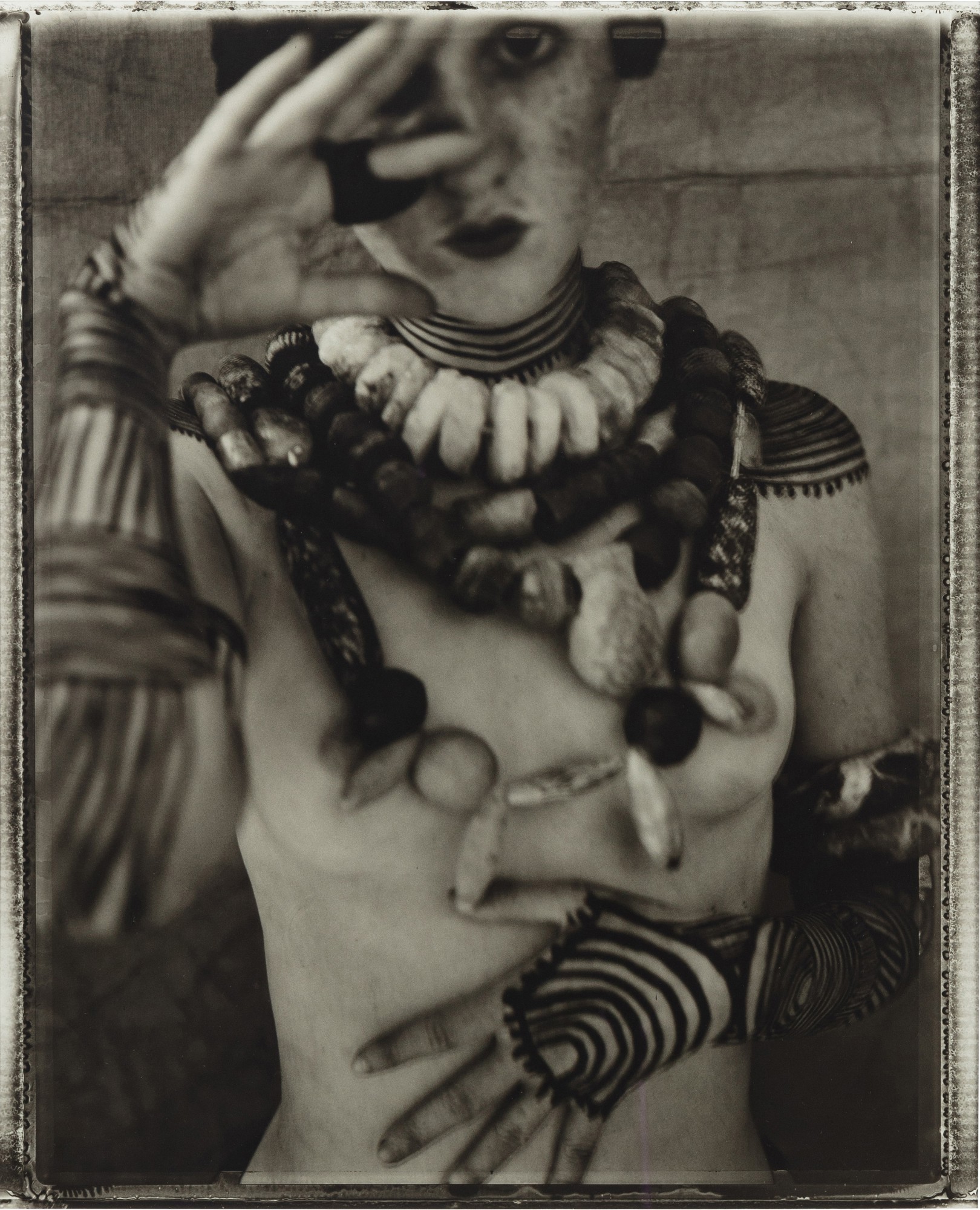
Sarah Moon: Dreaming in Silver and Shadow
Artist Spotlight · The Collection Editorial
“I don't take pictures of what I see. I take pictures of what I feel.”
Sarah Moon
There is a particular quality of light in a Sarah Moon photograph that feels less like something captured and more like something remembered. In recent years, major retrospectives and touring exhibitions across Europe have reaffirmed Moon's singular place in the history of photography, drawing new generations of collectors and curators to her body of work with fresh urgency. The Musée des Arts Décoratifs in Paris, which has long championed her practice, and institutions across Japan have mounted significant surveys of her images, cementing her reputation not merely as a fashion photographer who crossed into fine art, but as one of the most consequential visual artists working in the photographic medium today. Moon was born Marielle Warin in 1941, and her early years carried the particular atmosphere of postwar France, a country rebuilding itself amid elegance and uncertainty in equal measure.
Sarah Moon
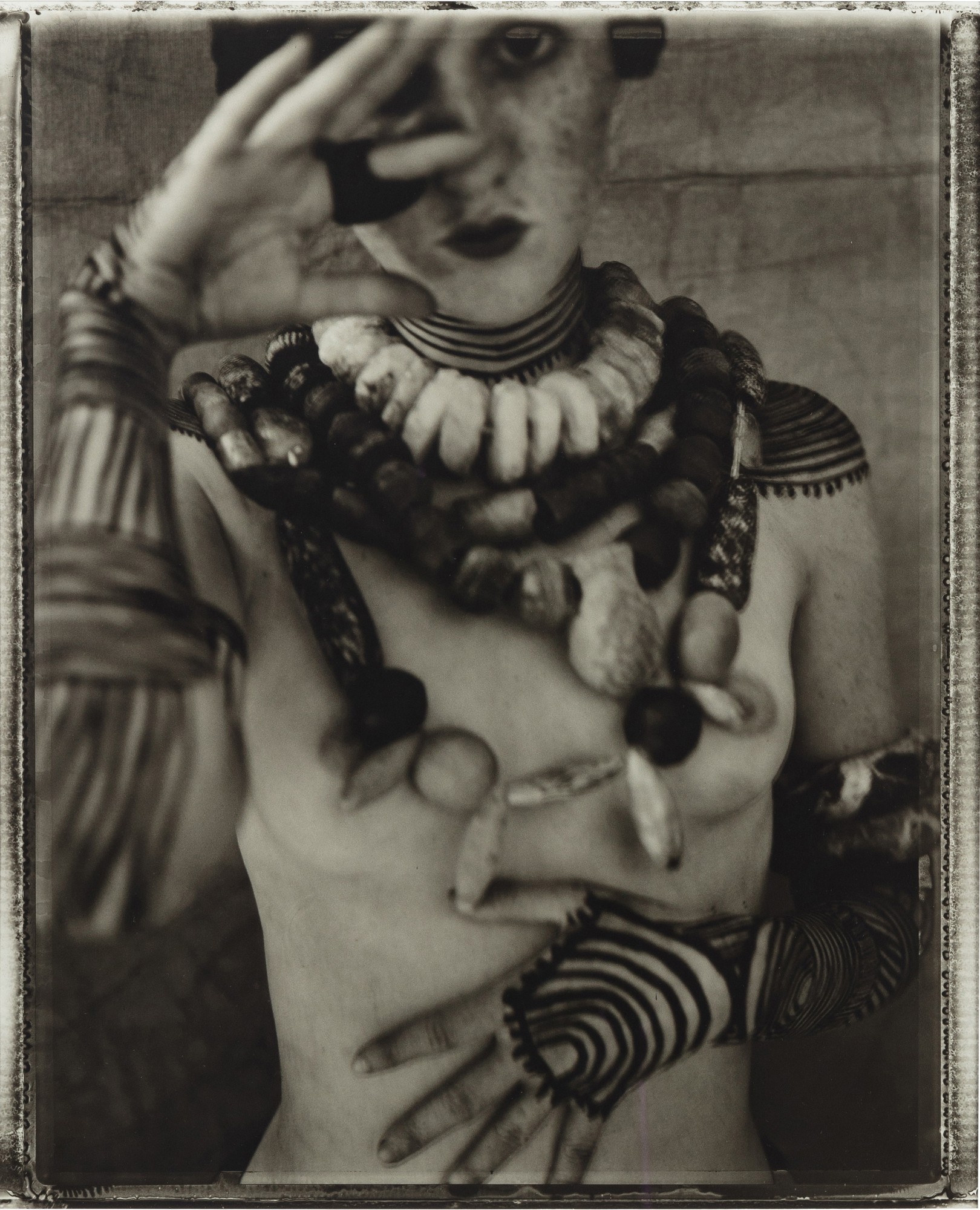
Avril pour "Elle" I, 2003
She came to photography through an unexpected route, first working as a fashion model in London and Paris during the 1960s, where she absorbed the visual grammar of haute couture and the restless creative energy of that era from the inside. It was precisely this intimacy with the world she would later photograph that gave her images their knowing quality, a sense that the woman behind the lens had once stood where her subjects now stood, and understood something profound about what it felt like to be looked at rather than to look. Her transition to photography in the late 1960s was swift and decisive. She began shooting for Cacharel, and the campaigns she produced for the French label became touchstones of a new kind of fashion imagery, one that rejected the sharp, clinical precision of much commercial photography in favor of something softer and far more emotionally resonant.
By the early 1970s she had established her signature approach: expired Polaroid film pushed far beyond its intended use, unconventional darkroom processes, printing techniques drawn from painterly traditions rather than photographic convention. The results were images that seemed to exist in a perpetual dusk, as if caught between sleep and waking, between the present moment and a half forgotten past. The works available through The Collection offer an exceptional survey of Moon's practice across several of her most celebrated periods. The two silver gelatin prints from her "Avril pour Elle" series of 2003 demonstrate her mastery of tonal restraint, images that feel simultaneously contemporary and ancient, as if they had been recovered from another century rather than made in our own.
Sarah Moon
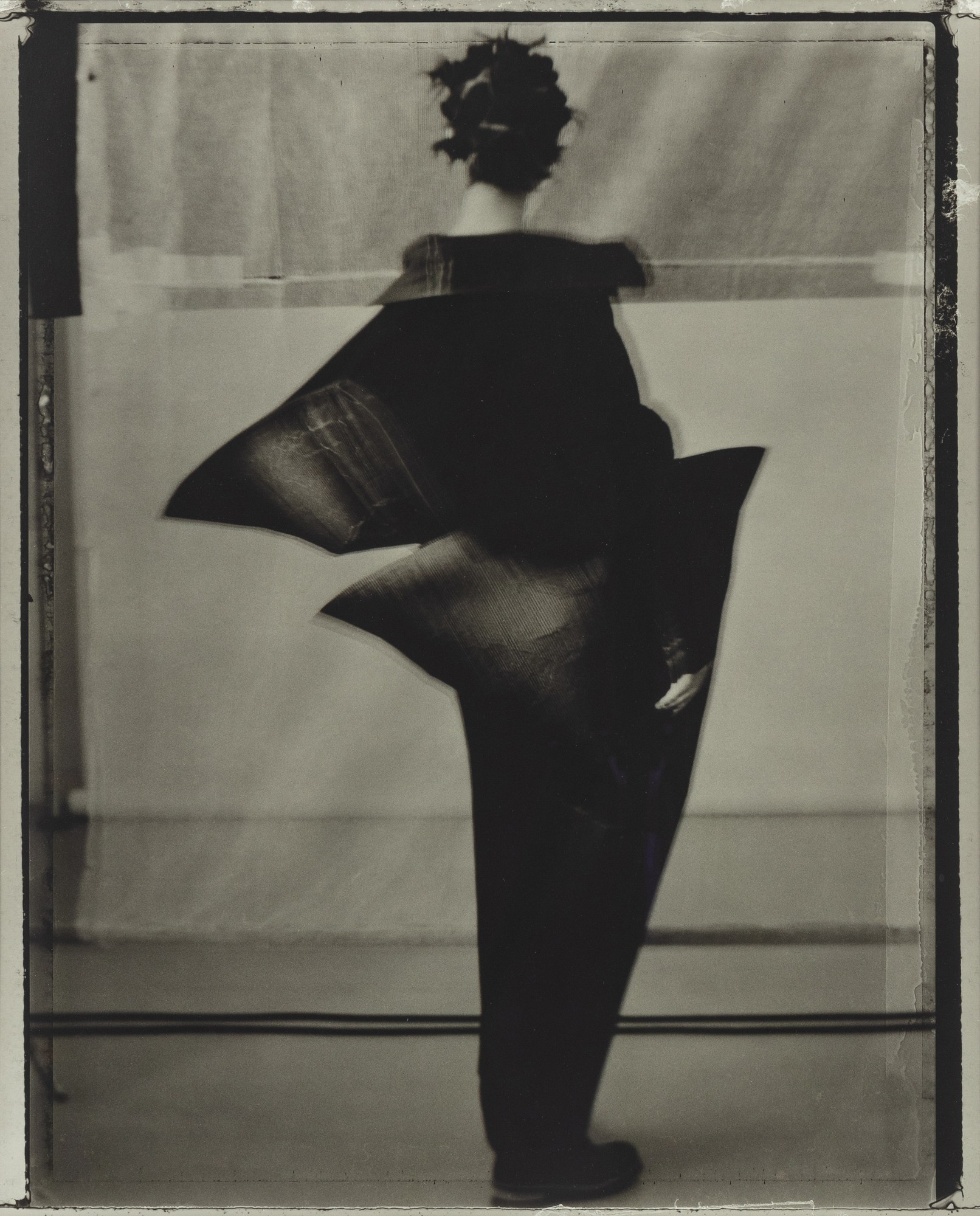
Issey Miyake II, 1992
Her collaborations with Issey Miyake, represented here by both the 1992 gelatin silver print and the pigment transfer print from the Fashion series, are among the most discussed works in her catalogue. Miyake's sculptural, architectural approach to garment construction found a natural counterpart in Moon's atmospheric sensibility, and the resulting images transcend the category of fashion photography entirely, functioning as meditations on the relationship between the body, fabric, and memory. Her work created for Yohji Yamamoto, the digital pigment print from 2019 now on the platform, shows a late career fully at ease with itself, the aesthetic vocabulary unchanged in its essentials yet continuing to evolve and surprise. For collectors, Moon occupies a position of particular desirability because her work operates convincingly across multiple categories simultaneously.
“A photograph is a secret about a secret. The more it tells you, the less you know.”
Sarah Moon
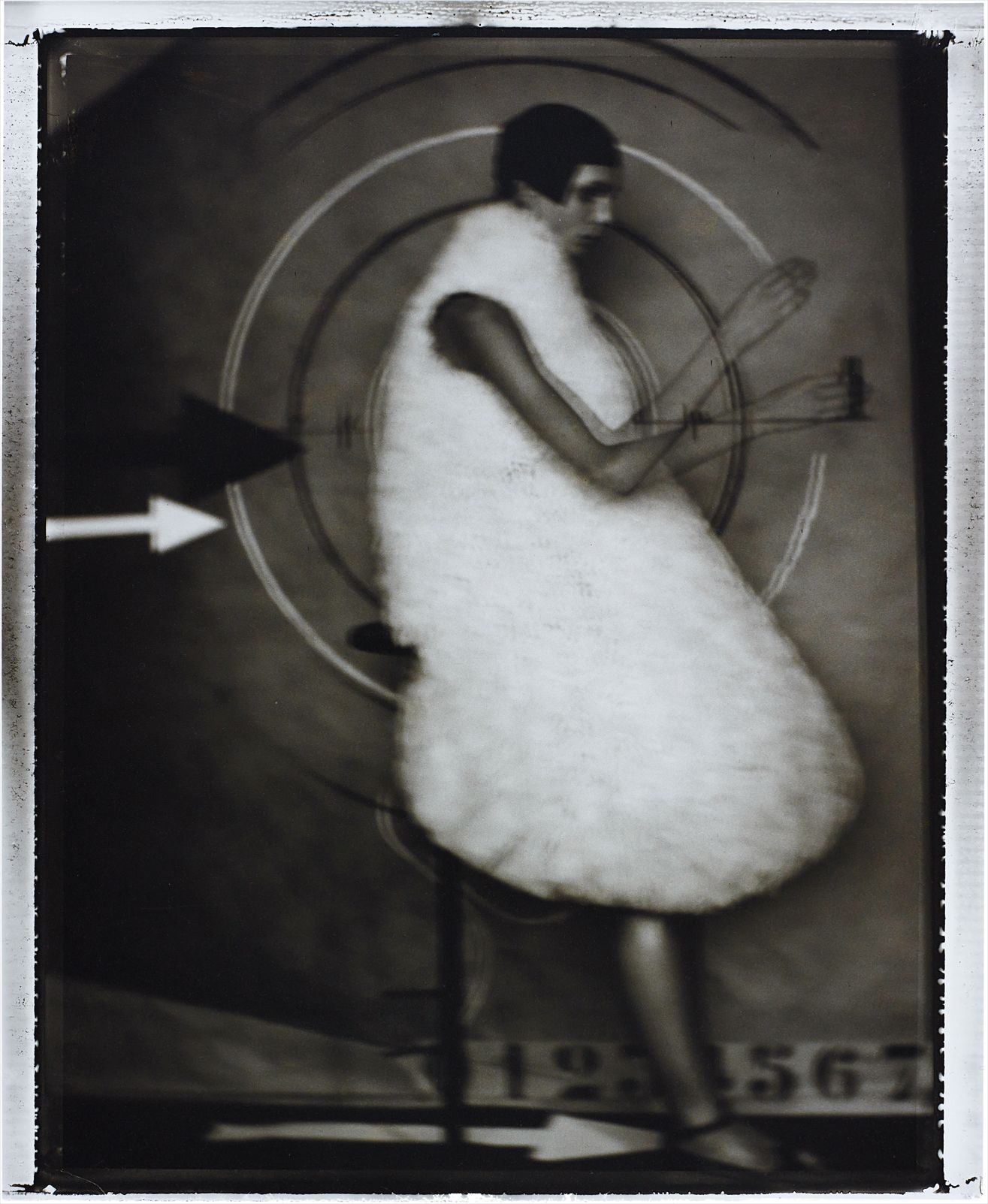
She is collected by those who approach photography through the lens of fashion history, by those who collect fine art photography alongside Cindy Sherman or Francesca Woodman, and by those whose primary allegiance is to the painterly tradition and who find in Moon a bridge between photography and the atmospheric worlds of Symbolism and Pictorialism. Her prints, produced in carefully controlled limited editions, are deeply sought after, and works such as "Blues" from 2019, signed and numbered 6 of 15 in pencil on the verso, carry the kind of provenance and scarcity that serious collectors prize. Toned gelatin silver prints like "The Clock" and "Pour Alexander McQueen" demonstrate her mastery of the physical print as an object in its own right, works in which the surface of the photograph is as considered as the image it carries. To place Moon within art history is to recognize how singular her contribution has been.
Sarah Moon
The Clock
Her closest aesthetic companions are found in several different traditions at once. The blurred, painterly quality of her imagery invites comparison with the Pictorialist photography of the early twentieth century, and specifically with figures such as Edward Steichen in his most lyrical period. Among her contemporaries, the work of Guy Bourdin and Helmut Newton defined the opposite pole of fashion photography, all hard edges and confrontation, and Moon's dreamlike warmth stands in instructive contrast to both. Among fine art photographers, Francesca Woodman explored similarly haunted interior spaces, and the work of Deborah Turbeville, another photographer who brought a melancholy poetry to fashion imagery, offers perhaps the closest parallel to Moon's sensibility.
Yet Moon remains irreducible, a genuinely original voice whose influence can be traced in the work of younger photographers across Europe and Japan but who has never been successfully imitated. The question of legacy is one that Moon herself has addressed with characteristic thoughtfulness, and the answer is visible in the sustained institutional attention her work continues to receive. She has also worked extensively as a filmmaker, directing short films that extend the visual language of her still photography into time based media, and these films have been screened at festivals and in gallery contexts with growing frequency. What makes Moon matter today is not simply the beauty of individual images, though that beauty is undeniable and profound.
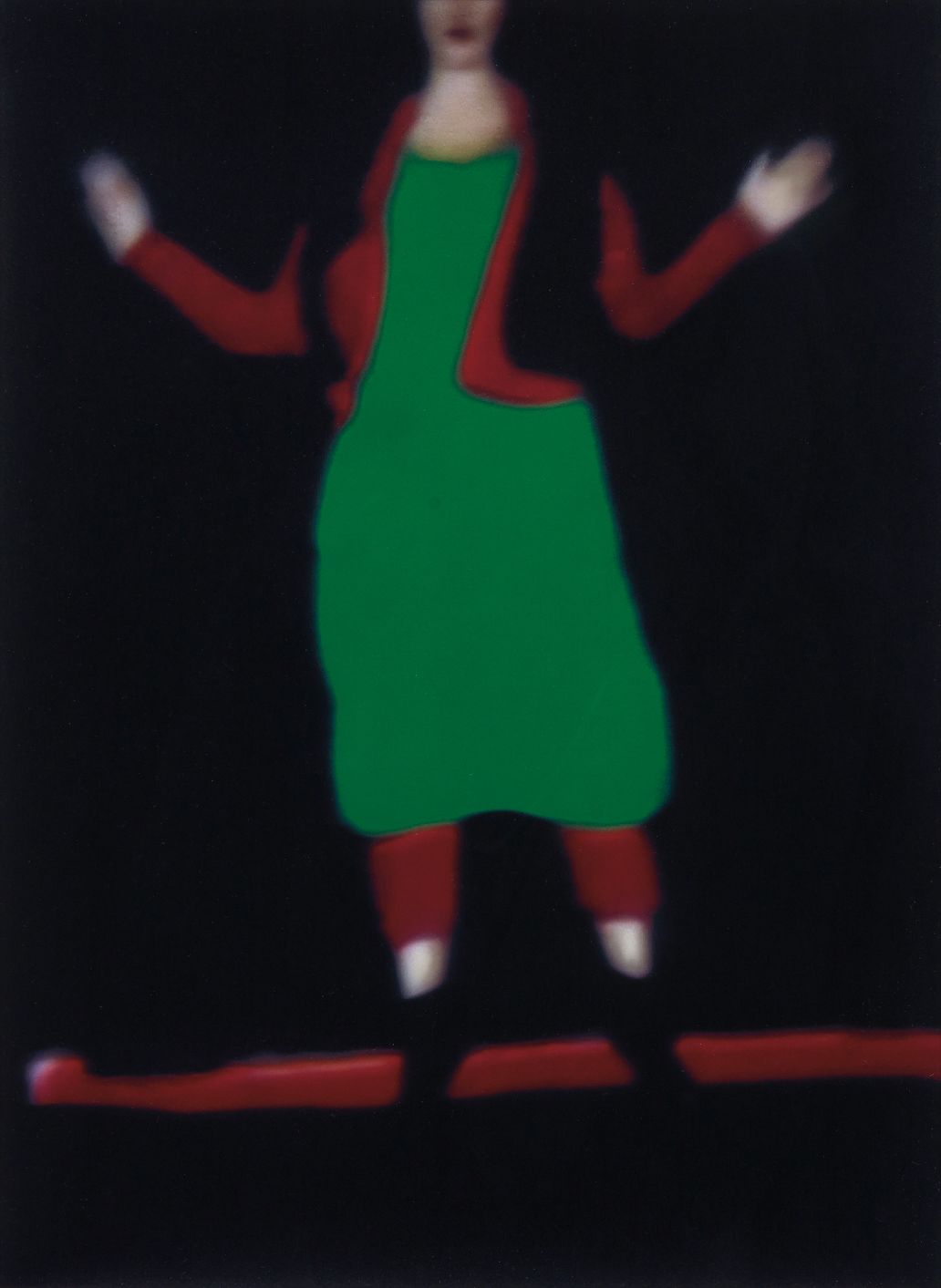
Sarah Moon
Fashion 1, Issey Miyake
It is the coherence of a lifelong vision, a commitment to a particular way of seeing the world that has remained constant across more than five decades while never becoming repetitive or static. In an era of photography defined by speed, saturation, and the relentless demand for novelty, Moon's deliberate, handmade, deeply felt images feel not like nostalgia but like a necessary counterargument, a reminder that the most powerful photographs are those that hold something back, that invite the viewer to bring their own dreaming to the image.
Explore books about Sarah Moon
Sarah Moon: Photography
Sarah Moon
Sarah Moon: Histoires de Crimes
Sarah Moon
Sarah Moon: The Story of N.
Sarah Moon
Sarah Moon: Peintures et Photographies
Sarah Moon
Sarah Moon: Cinéma
Sarah Moon
Sarah Moon: The Violent Life of Mind
Sarah Moon, Paul Virilio