Sandú Darié
Sandú Darié, Where Geometry Learns to Move
Artist Spotlight · The Collection Editorial
There is a particular kind of pleasure that comes from standing before a work of art and realizing it is waiting for you to complete it. That sensation, at once intellectual and almost physical, is what Sandú Darié spent five decades perfecting. In recent years, major Latin American art surveys at institutions including the Museum of Modern Art in New York and the Pérez Art Museum Miami have increasingly positioned the Cuban avant garde of the 1950s and 1960s as one of the most vital and underappreciated chapters in twentieth century modernism. Within that reassessment, Darié occupies a place of particular distinction, recognized now as a singular bridge between European constructivist thought and a distinctly Caribbean sensibility rooted in light, participation, and joy.
Sandú Darié
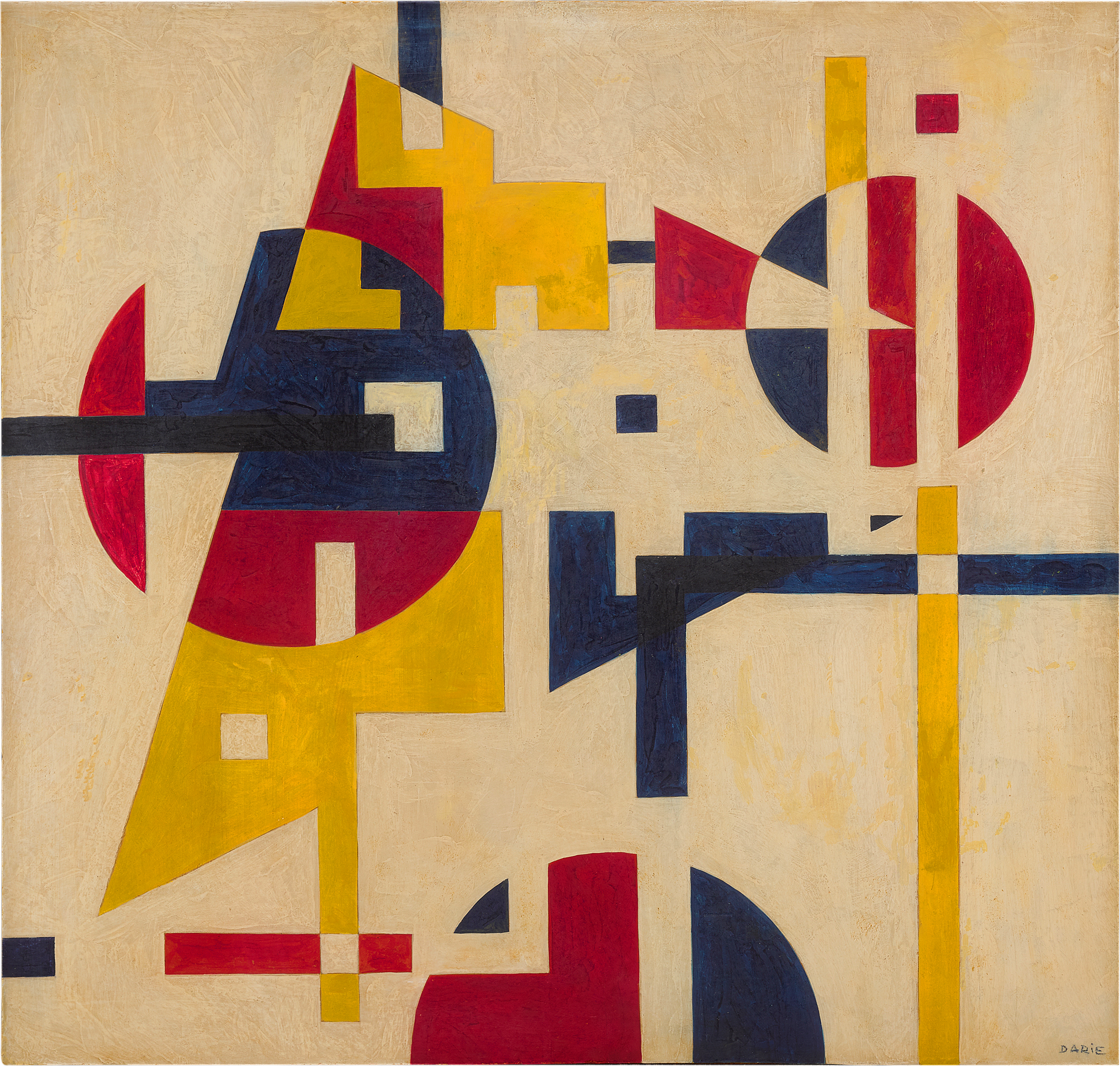
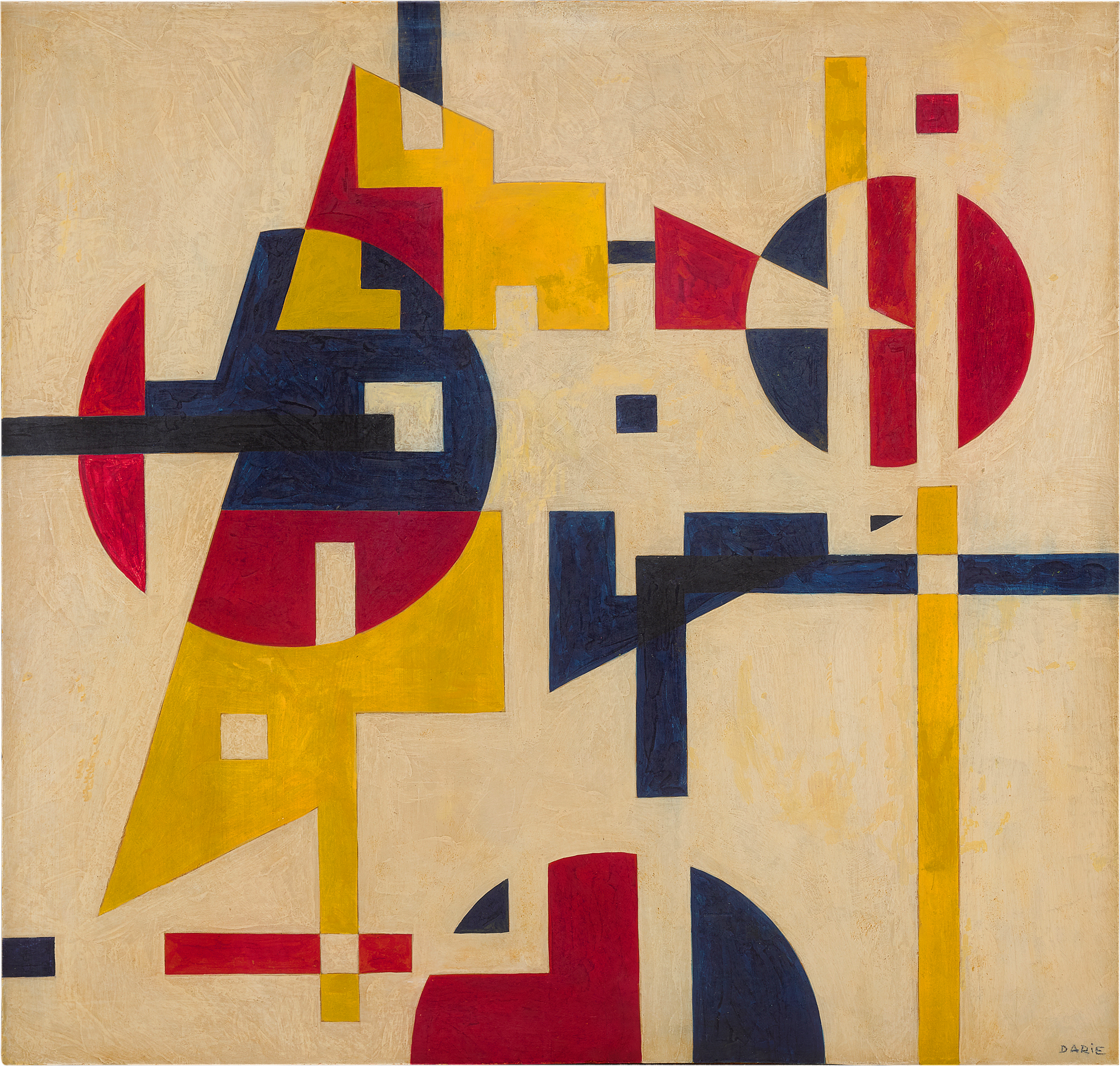
Sin título, 1957
Darié was born in 1908 in Romania, and his early formation unfolded in the intellectual currents of interwar Europe. He came of age during a period when the boundaries between art, design, architecture, and political idealism were being radically renegotiated. The Bauhaus was transforming how artists thought about space and function, and constructivism had proposed that art could be not merely a representation of the world but an active, structural force within it. These ideas lodged deeply in the young Darié, who absorbed them with the particular intensity of someone who would eventually carry them across an ocean into an entirely new context.
In 1941, Darié emigrated to Cuba, a move that would prove transformative in every direction. Havana in the 1940s was a city of remarkable cultural ferment, and Darié arrived not as an outsider looking in but as someone who immediately threw himself into the life of the place. He learned Spanish, immersed himself in Cuban visual culture, and found in the island's luminous atmosphere and vibrant social energy something that catalyzed and expanded everything he had brought from Europe. Cuba did not simply receive his ideas.
Sandú Darié
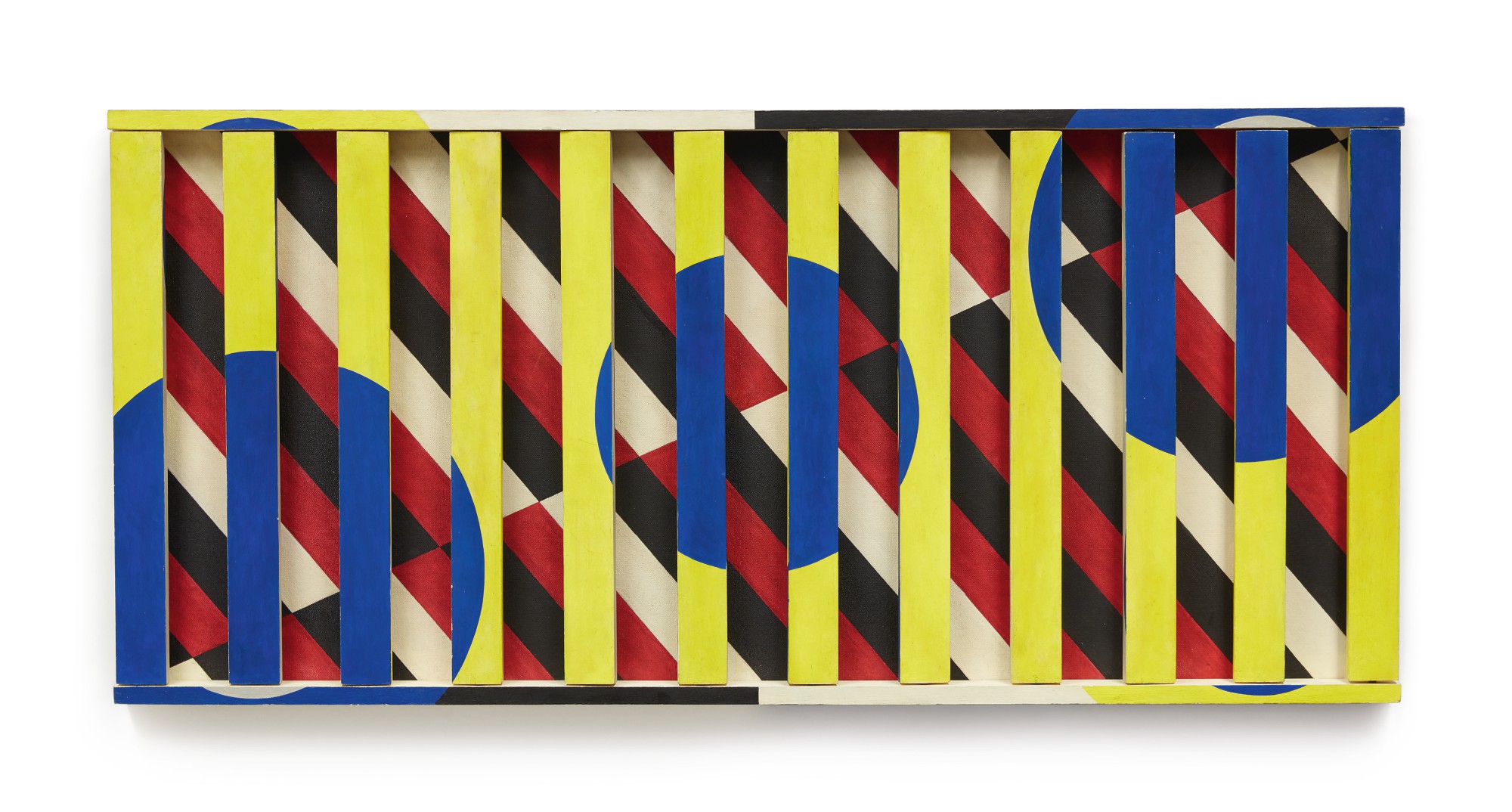
Composición espacial, 1955
It changed them. His involvement with Los Once, the group of eleven Cuban avant garde artists who coalesced in the early 1950s, marked a decisive moment in his development and in the history of Cuban modernism. Los Once positioned themselves in direct opposition to the academic and nationalist painting that dominated official Cuban culture at the time, insisting on abstraction as a language of genuine artistic freedom. Their exhibitions throughout the decade were provocations in the best sense, opening the Cuban art world to international currents that the establishment had largely tried to keep at bay.
Darié's participation in this group grounded his practice in a spirit of collective intellectual ambition that never left him. The work he developed across the 1950s represents the heart of his achievement. Paintings such as "Composición espacial" from 1955 and the remarkable "Sin título" from 1957, an oil on canvas combined with a painted wood construction, show his increasingly confident fusion of pictorial and sculptural thinking. In these works, the painted surface is no longer simply a field for geometric arrangement.
Sandú Darié
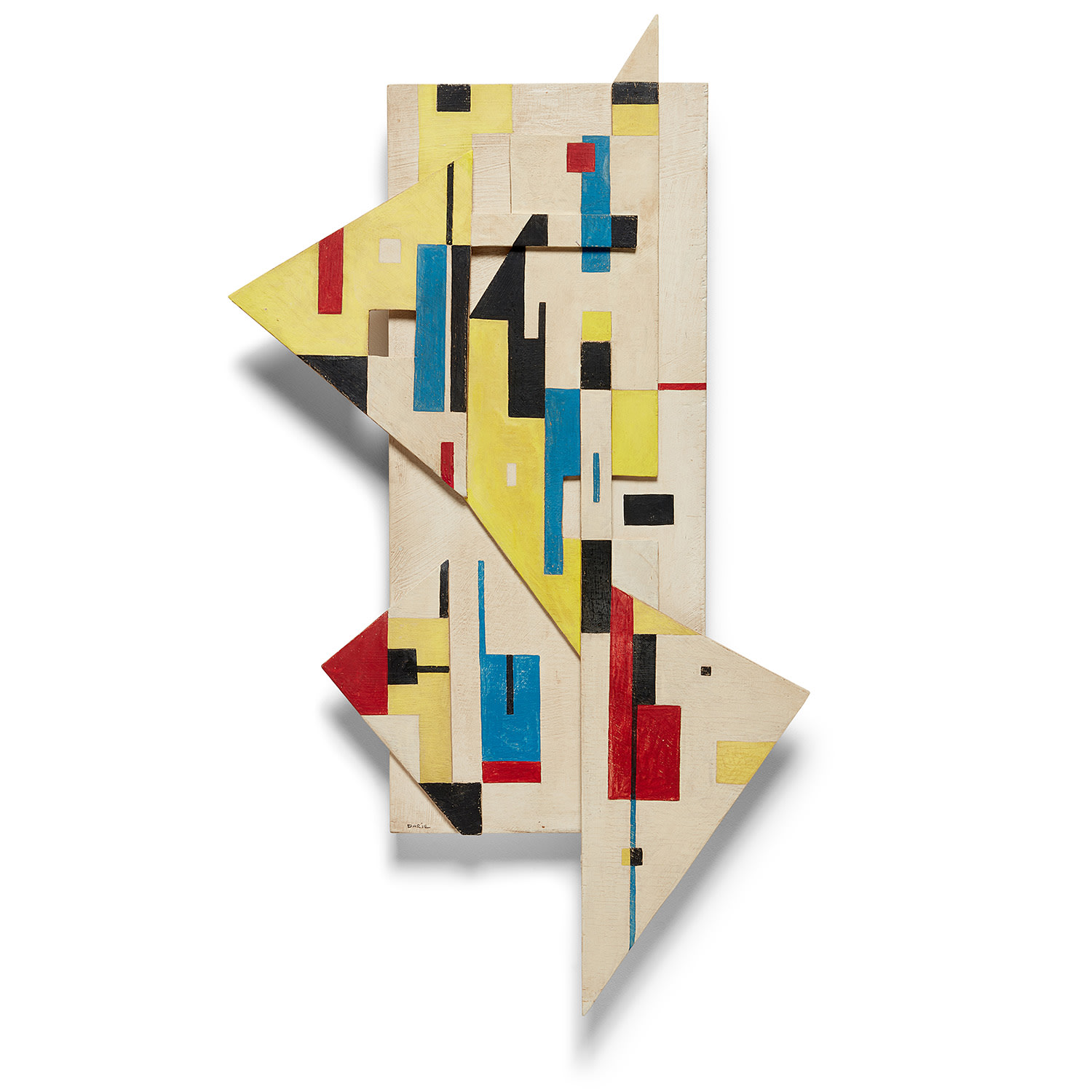
Estructura en el espacio, 1957
It begins to reach outward, to propose extension, to hint at the possibility of movement. The casein on board works from 1954, with their luminous, almost chalky surfaces and precise geometric divisions, have a meditative clarity that rewards sustained looking. What makes these objects so compelling to encounter today is that they feel neither dated nor nostalgic. They feel alive.
The transformable works, those kinetic constructions that Darié developed as a logical evolution of his painting practice, represent perhaps his most radical contribution to the history of art in the Americas. These were structures designed not to be contemplated from a fixed vantage point but to be physically altered, repositioned, activated by the hands and choices of whoever encountered them. In this he anticipated ideas that would later circulate widely under the banners of participatory art and relational aesthetics, but Darié arrived at these conclusions through an entirely distinct route, one rooted in constructivist geometry rather than in social theory. His closest intellectual companions in this territory were figures like Jesús Rafael Soto and Carlos Cruz Diez in Venezuela, and the Brazilian Neoconcrete artists including Lygia Clark and Hélio Oiticica, all of whom were similarly exploring what happened when the viewer's body became part of the work's meaning.
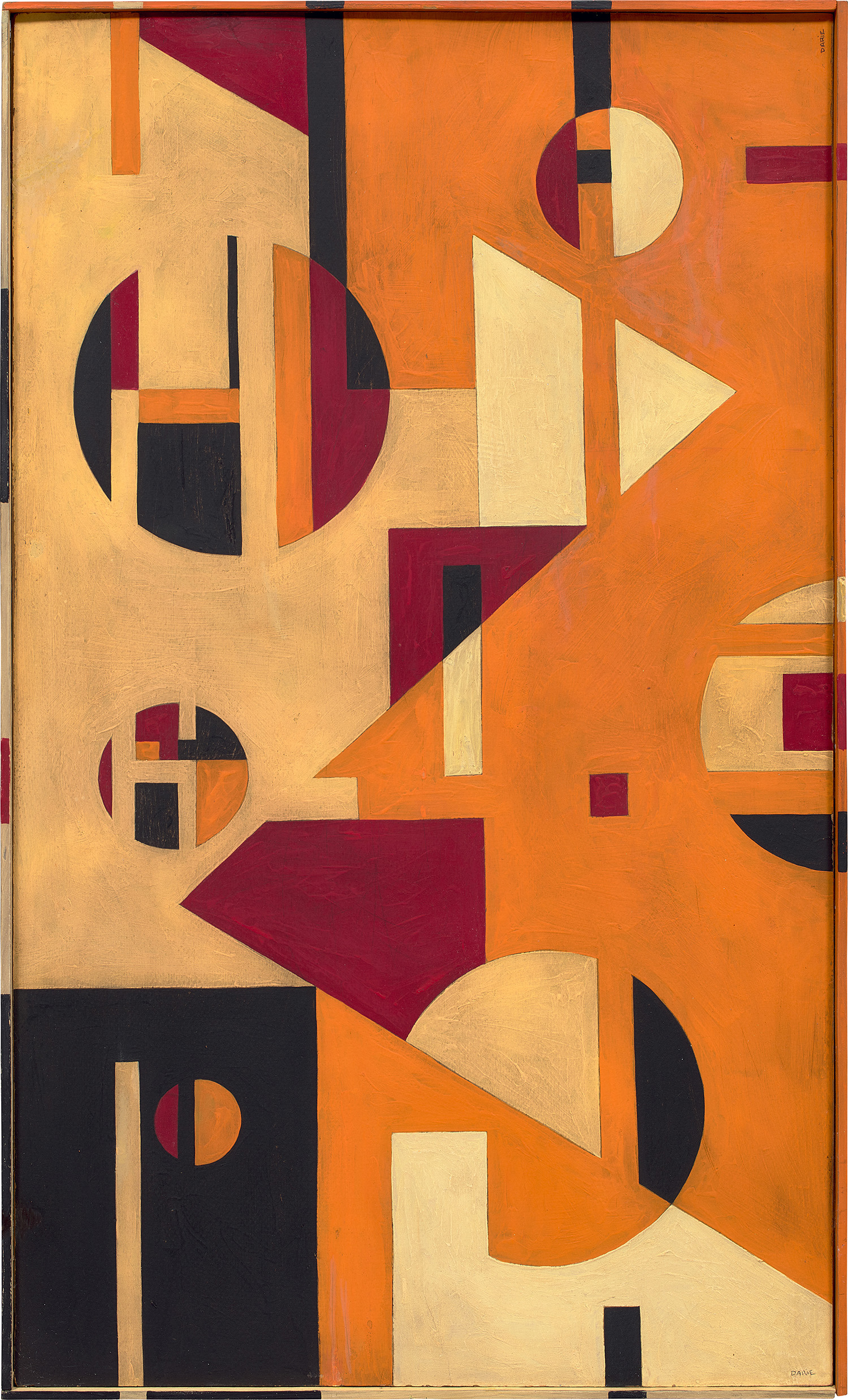
Sandú Darié
casein on board, in artist's frame, 1954
For collectors, the appeal of Darié's work is inseparable from its formal intelligence. These are not works that announce themselves loudly. They reward patience, careful looking, and a genuine appetite for the history of ideas. The panel works on board and the mixed constructions from the 1950s represent a particularly strong area of focus, combining historical importance with an aesthetic presence that holds its own in any sophisticated collection.
As the Latin American modernism market has matured, driven in part by sustained institutional interest and important auction results at Christie's, Sotheby's, and Swann Galleries over the past two decades, works by artists of Darié's stature have found committed collectors across Miami, New York, Mexico City, and beyond. His relative scarcity in the market, compared to some of his better known contemporaries, makes each appearance of a strong work a genuine opportunity. Darié lived and worked in Cuba until his death in 1991, remaining committed to his practice through the profound social and political transformations that reshaped the island across those decades. That commitment, that refusal to be deflected from the essential questions his art was asking, is part of what gives his biography its particular dignity.
He was not a figure who sought international celebrity. He was a figure who sought precision, movement, and a certain quality of encounter between a human being and a constructed form. His legacy today is one of quiet, gathering power. As museums and scholars continue the important work of expanding the canon of twentieth century modernism beyond its traditional European and North American centers, Darié's practice stands as compelling evidence of the richness and originality that flourished at those margins.
He took the rigorous geometry of the European avant garde and gave it warmth, gave it a body, gave it the capacity to move. That is a rare achievement in any century, and it is one that collectors and institutions are increasingly eager to recognize and celebrate.
Explore books about Sandú Darié