Sam Moyer
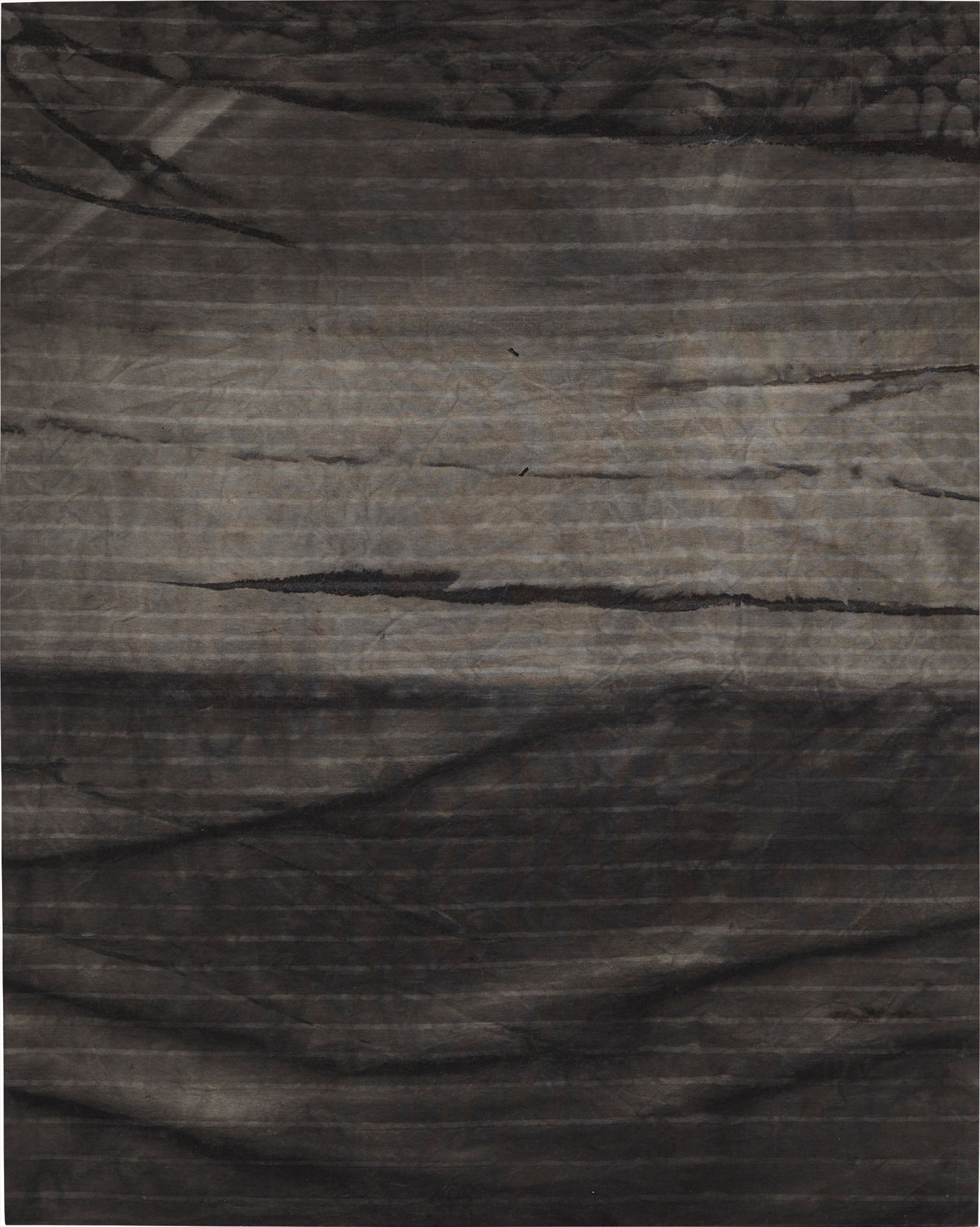
Sam Moyer Makes the Everyday Feel Eternal
Artist Spotlight · The Collection Editorial
In the conversation around contemporary abstraction, few artists have arrived at a visual language as immediately recognizable and genuinely affecting as Sam Moyer. Over the past decade, her work has moved steadily from the walls of intimate New York galleries into the collections of serious, discerning collectors across the United States and Europe. Her practice sits at an intersection that is difficult to name and easy to feel: somewhere between painting and sculpture, between the domestic and the monumental, between accident and intention. Moyer was born in 1978 and came of age as an artist during a period when painting was being rigorously questioned and just as rigorously defended.
Sam Moyer
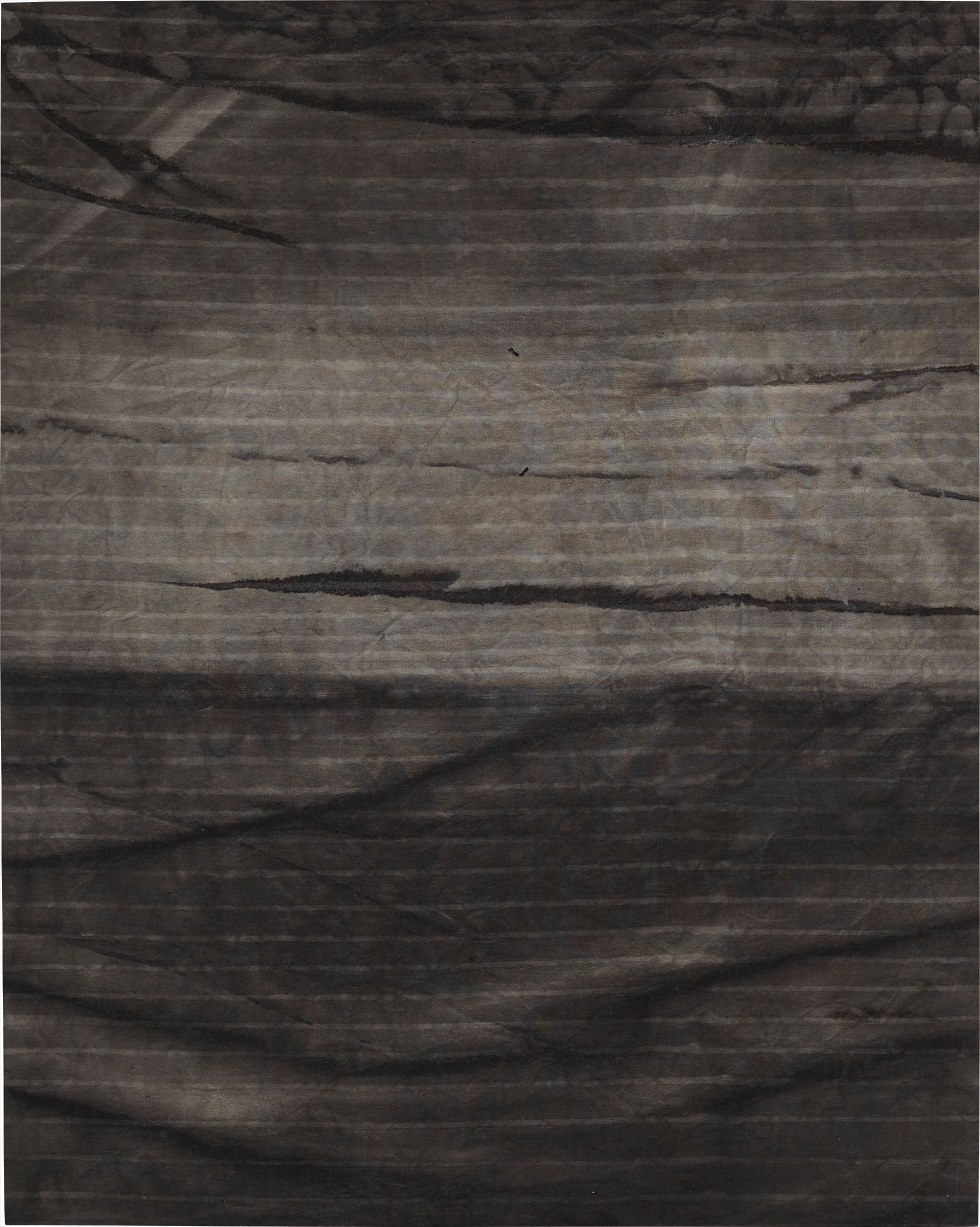
Ocean Flats V
The debates of the early 2000s around the validity of abstraction, the legacy of minimalism, and the possibilities of mixed media all shaped the environment in which she developed her practice. What set Moyer apart from her peers was not a desire to resolve those debates but to inhabit them fully, to make objects that carry the weight of those questions without being burdened by them. Her work feels liberated rather than anxious. Her formation as an artist drew deeply from an interest in materiality that extended beyond conventional art materials.
Fabric, stone, resin, bleach and ink became the vocabulary of a practice concerned with how surfaces hold time and memory. The decision to incorporate crushed stone and textile elements into her work was not simply an aesthetic choice but a conceptual one: these are materials that carry histories of use, of touch, of being lived with. By integrating them into compositions that read as paintings, Moyer asks viewers to reconsider what a painting can be made of and what it can mean. Among the works that best illuminate her practice are those in the bleach and ink series, pieces like "Bleach Bum" and "White Water I" from 2011, where ink on canvas mounted to panel produces surfaces of remarkable atmospheric depth.
Sam Moyer
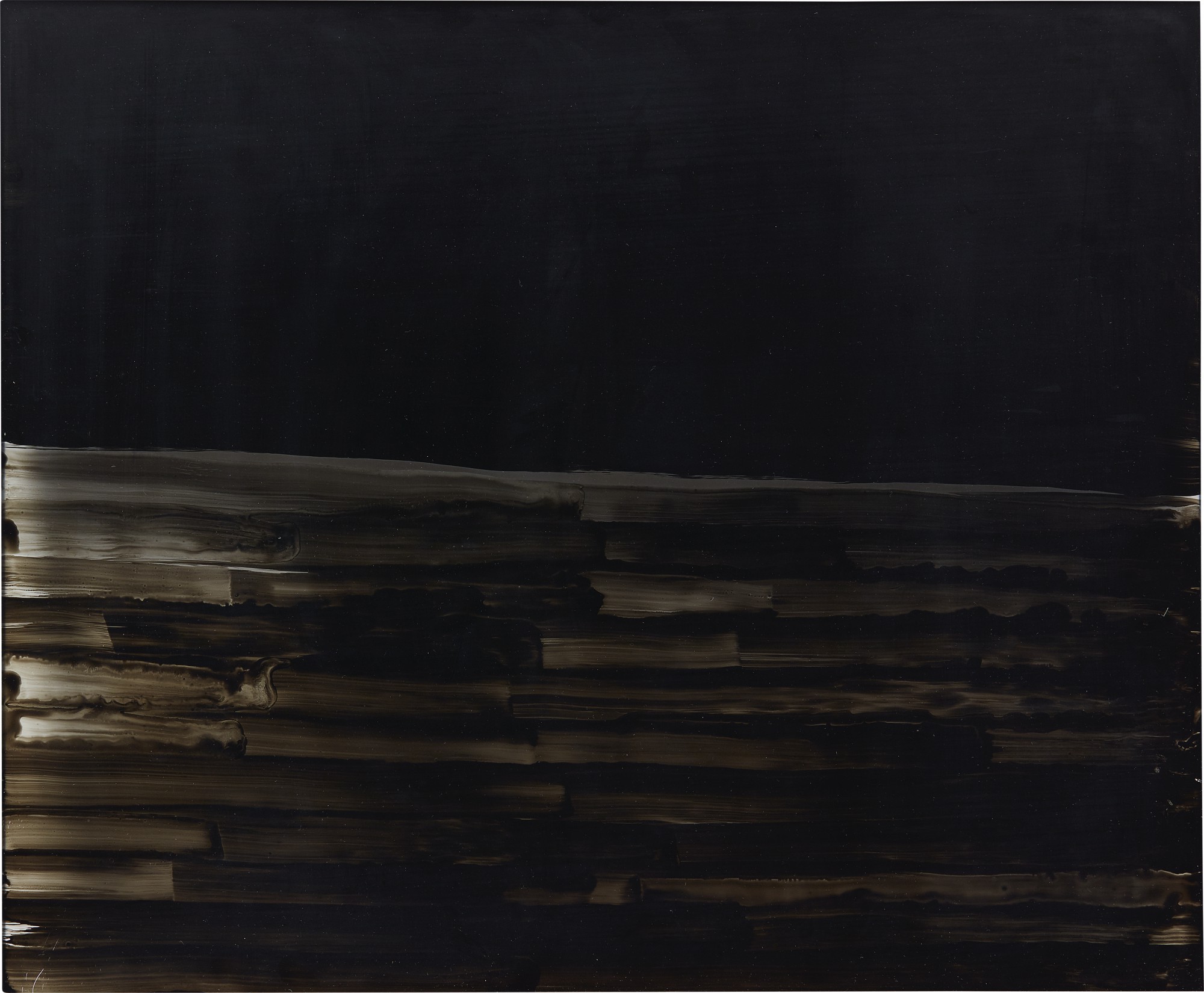
Untitled, 2013
The bleach does not simply remove color; it creates a kind of memory within the material, a trace of process that is visible in the final work. "Ocean Flats V" similarly demonstrates this sensitivity to material behavior, with bleach and ink working together on canvas to produce something that feels both geological and atmospheric. These are works that reward sustained looking, revealing more the longer you stay with them. "Fault Line," with its india ink on canvas mounted on panel, speaks to Moyer's interest in the language of landscape without ever becoming illustrative.
The title gestures toward rupture and geological time while the work itself remains resolutely abstract. Similarly, "Close Screen" from 2011, executed in india ink on paper, shows a quieter register of her practice, one in which economy of means produces a concentrated intensity. The untitled India ink on glass panel from 2013, presented in the artist's chosen frame, exemplifies her understanding of framing as a meaningful act: the choice of surround is part of the work's meaning. The marble bench is among the most striking demonstrations of Moyer's ambition and her ease with materials that carry centuries of art historical weight.
Sam Moyer
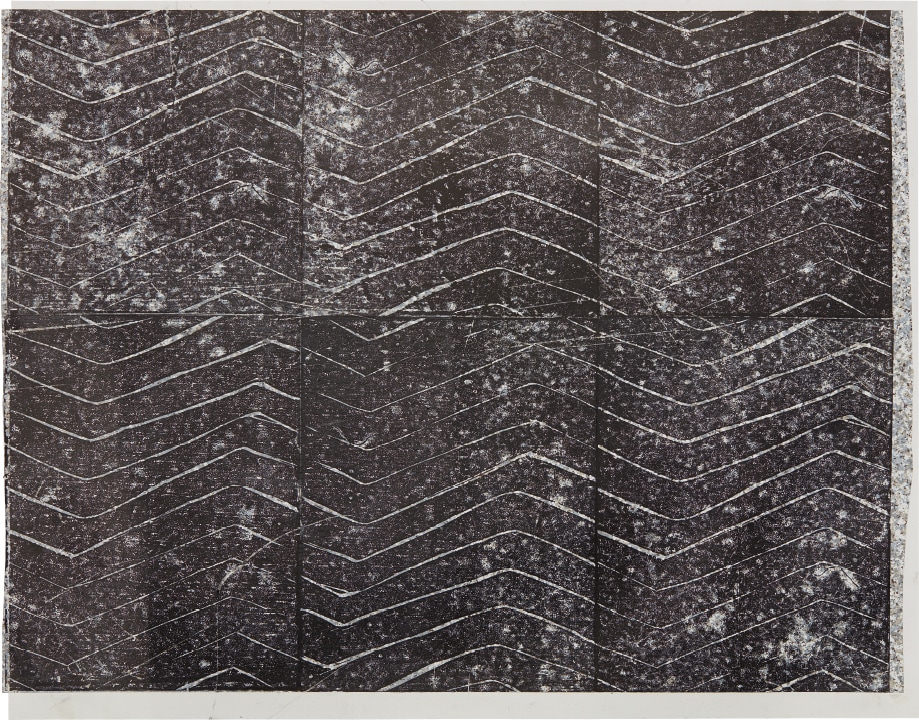
linoleum block print on contact paper, mounted to paper, 2014
Marble in the hands of most artists risks either reverence or irony, but Moyer treats it with the same directness she brings to canvas and textile. The result is an object that is functional and contemplative at once, a sitting place that is also a meditation on surface and presence. It reflects her broader instinct that the categories of furniture, sculpture, and painting need not remain separate. "Worry Rug 5" from 2009 is an early work that already announces the themes that would come to define her practice.
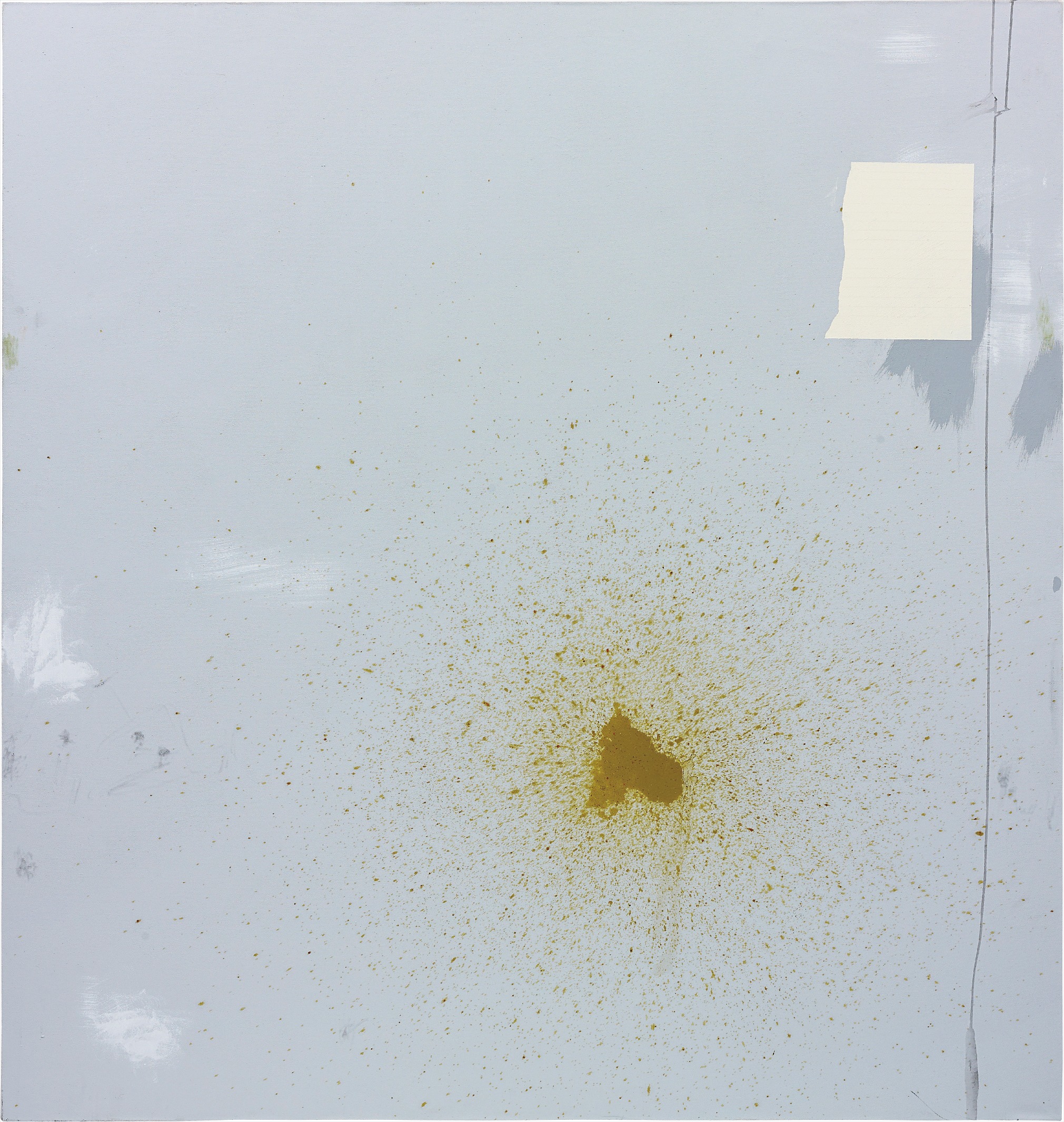
The word "worry" in the title is telling: there is something of the talisman in Moyer's objects, a sense that making and looking are forms of attention that can be restorative. The linoleum block print on contact paper mounted to paper from 2014, and "Aunt Gloria" from the same year, show a period of productive experimentation with surfaces and supports that continued to expand her formal range. For collectors, Moyer's work represents a compelling opportunity on several levels. Her prices have grown steadily as her reputation has solidified, and works from her early bleach and ink period on canvas are increasingly sought after as foundational examples of her practice.
Sam Moyer
Aunt Gloria, 2014
Collectors drawn to artists who work at the edge of painting and sculpture, those who admire figures like Mary Weatherford, Toba Khedoori, or Monique Prieto, will find in Moyer a practice of comparable seriousness and distinct visual identity. Her work holds walls with quiet authority and tends to become more meaningful to its owners over time rather than less. In art historical terms, Moyer belongs to a lineage of American artists who have expanded the possibilities of abstraction through an honest engagement with process and material. There are affinities with the legacy of Color Field painting and with the process oriented practices associated with artists like Eva Hesse and Agnes Martin, though Moyer is unmistakably a product of her own moment.
She shares with Martin a commitment to restraint and with Hesse an insistence on the expressive potential of unconventional materials, while arriving at a visual world that is entirely her own. What Moyer offers, finally, is a body of work that is at once rigorous and generous. Her compositions do not demand that viewers arrive with specialized knowledge; they ask only for attention and a willingness to be surprised by what paint, stone, and fabric can do together. In a cultural moment that often rewards loudness and legibility, her practice is a reminder that the most lasting art tends to work quietly, accumulating meaning through repeated encounter.
To live with a Sam Moyer is to live with a surface that keeps giving back.