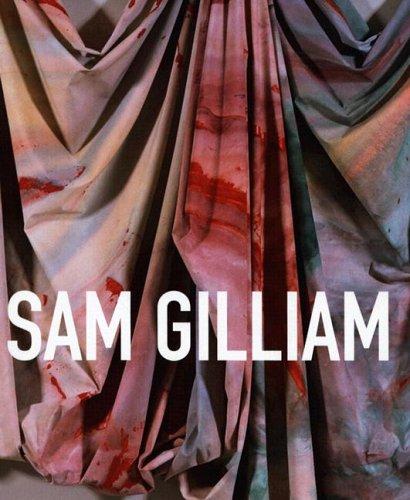
Sam Gilliam
Sam Gilliam: Color Freed From Every Boundary
Artist Spotlight · The Collection Editorial
“A painting is not a picture of an experience. It is an experience.”
Sam Gilliam
In 2022, the art world paused to honor one of the most genuinely original minds American painting had ever produced. Sam Gilliam, who passed away in June of that year at the age of eighty eight, left behind a body of work that had spent six decades defying categorization, expanding the vocabulary of abstraction, and insisting that color itself could be an act of liberation. The tributes that followed his death were not elegies so much as celebrations, a recognition that Gilliam had spent his entire career doing something rare: he had changed what painting could be, and he had done it with joy. Gilliam was born in Tupelo, Mississippi in 1933, the fifth of eight children in a family that valued education and creativity.
Sam Gilliam
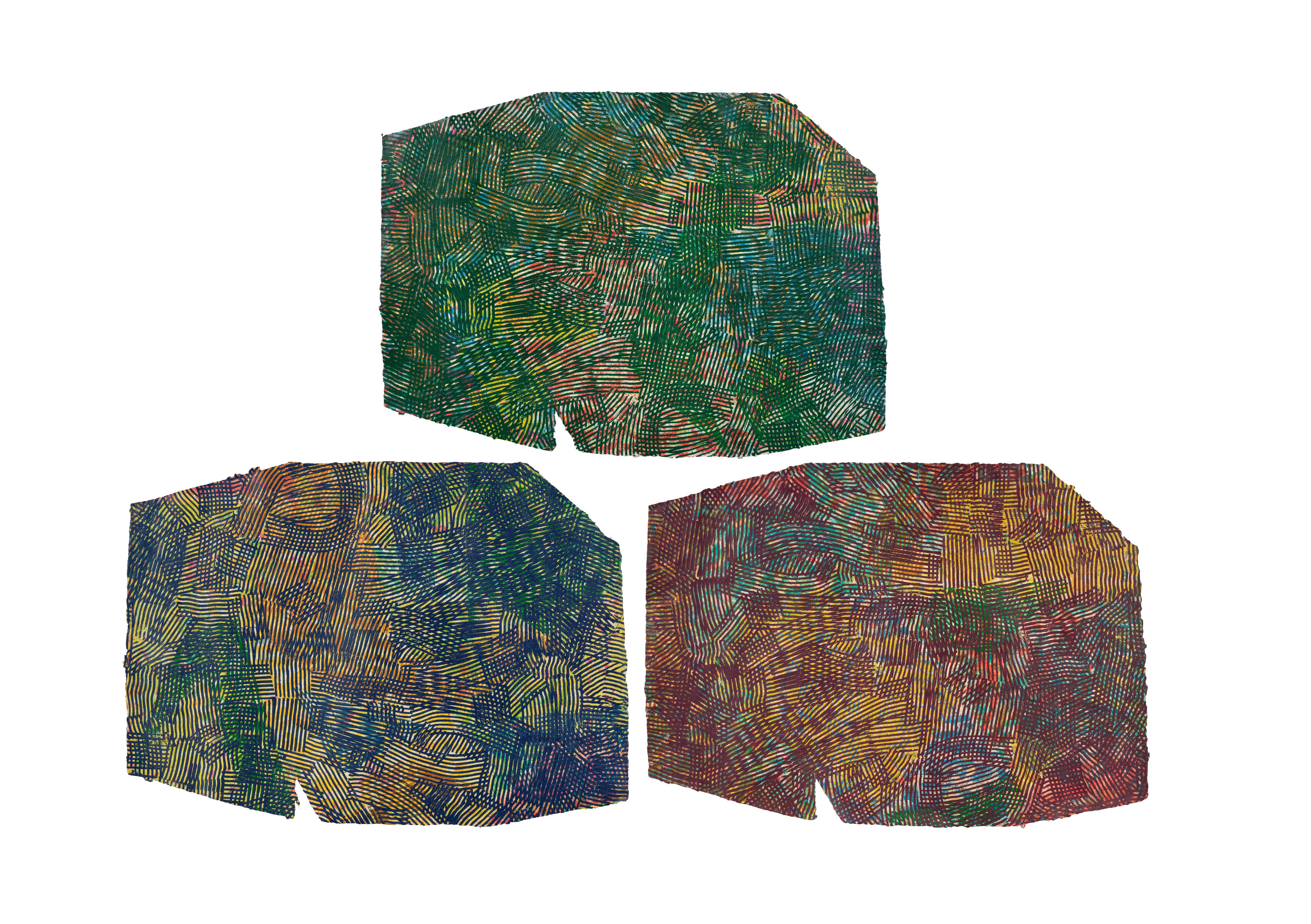
Lattice: three plates (V. 93-95)
He grew up in Louisville, Kentucky, where he earned his undergraduate degree and then a Master of Arts in painting from the University of Louisville in 1961. Louisville in the postwar years was a city of complicated cultural energies, and Gilliam absorbed them all, developing an early sensitivity to music, particularly jazz, that would inflect his relationship to rhythm, improvisation, and structure for the rest of his life. He moved to Washington, D.C.
in 1962, and that city became the crucible in which his mature vision would form. Washington in the 1960s was an extraordinary place for an ambitious young painter. The Washington Color School was in full flower, with artists like Morris Louis, Kenneth Noland, and Gene Davis pouring and staining pigment onto unprimed canvas in ways that made color feel simultaneously atmospheric and architectural. Gilliam found genuine kinship with this movement, absorbing its devotion to pure optical sensation while also feeling its limits.
Sam Gilliam
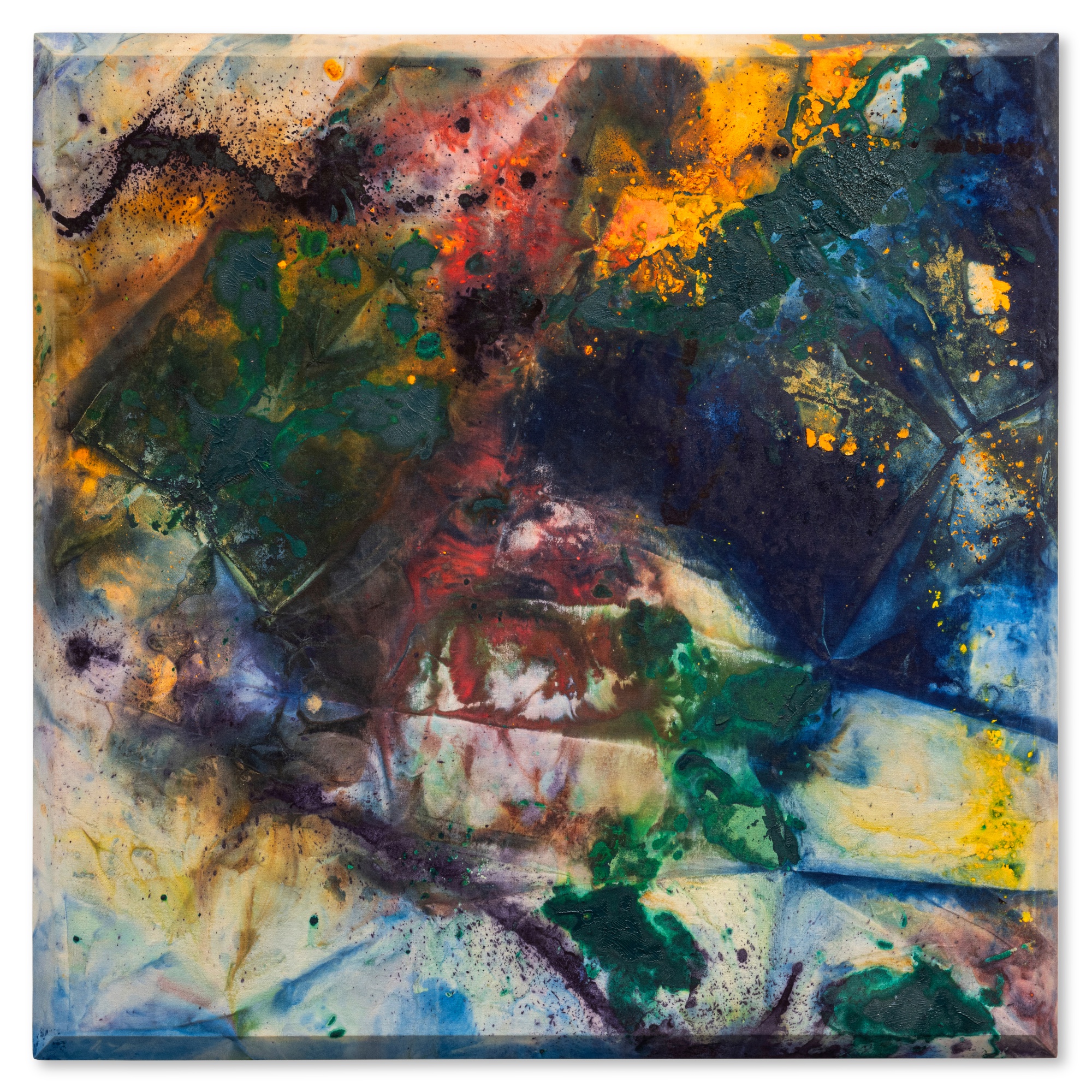
Orion, 1972
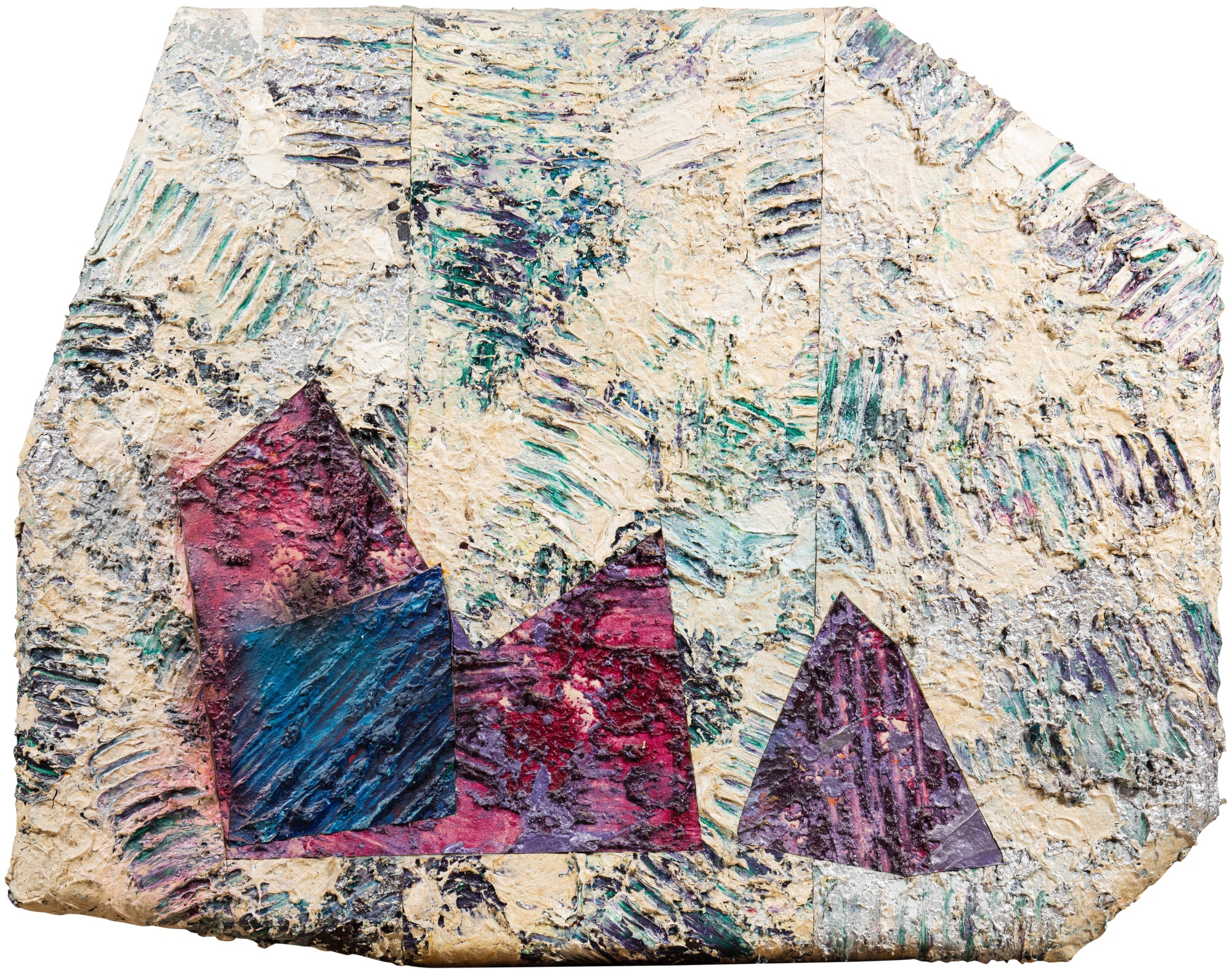
He wanted something more physical, more alive to accident and human gesture. His answer arrived around 1965 when he began experimenting with the acrylic staining techniques associated with Color Field painting, but pushing the color deeper, layering and folding the canvas before the paint dried so that the fabric itself became a record of time and process. The breakthrough that secured Gilliam's place in art history came in 1968, when he removed the stretcher bars entirely and began hanging his large stained canvases as draped fabric, suspending them from walls and ceilings like enormous abstract banners or the sails of some imaginary vessel. Works like "Surf" from 1968, with its shimmering acrylic and aluminum powder surface, exemplify the radiant physicality of this period.
“I wanted to free color from its imprisonment on a flat surface.”
Sam Gilliam
The draped canvases were unlike anything being made anywhere. They were paintings that also occupied space, that changed with the light and with the movement of air, that seemed to breathe. They drew on Gilliam's love of jazz improvisation, the sense that a fixed score was only the beginning of something, and they expanded Color Field painting into genuine three dimensional experience. When these works appeared in exhibitions, viewers often did not know quite where to stand, which was precisely the point.
Sam Gilliam
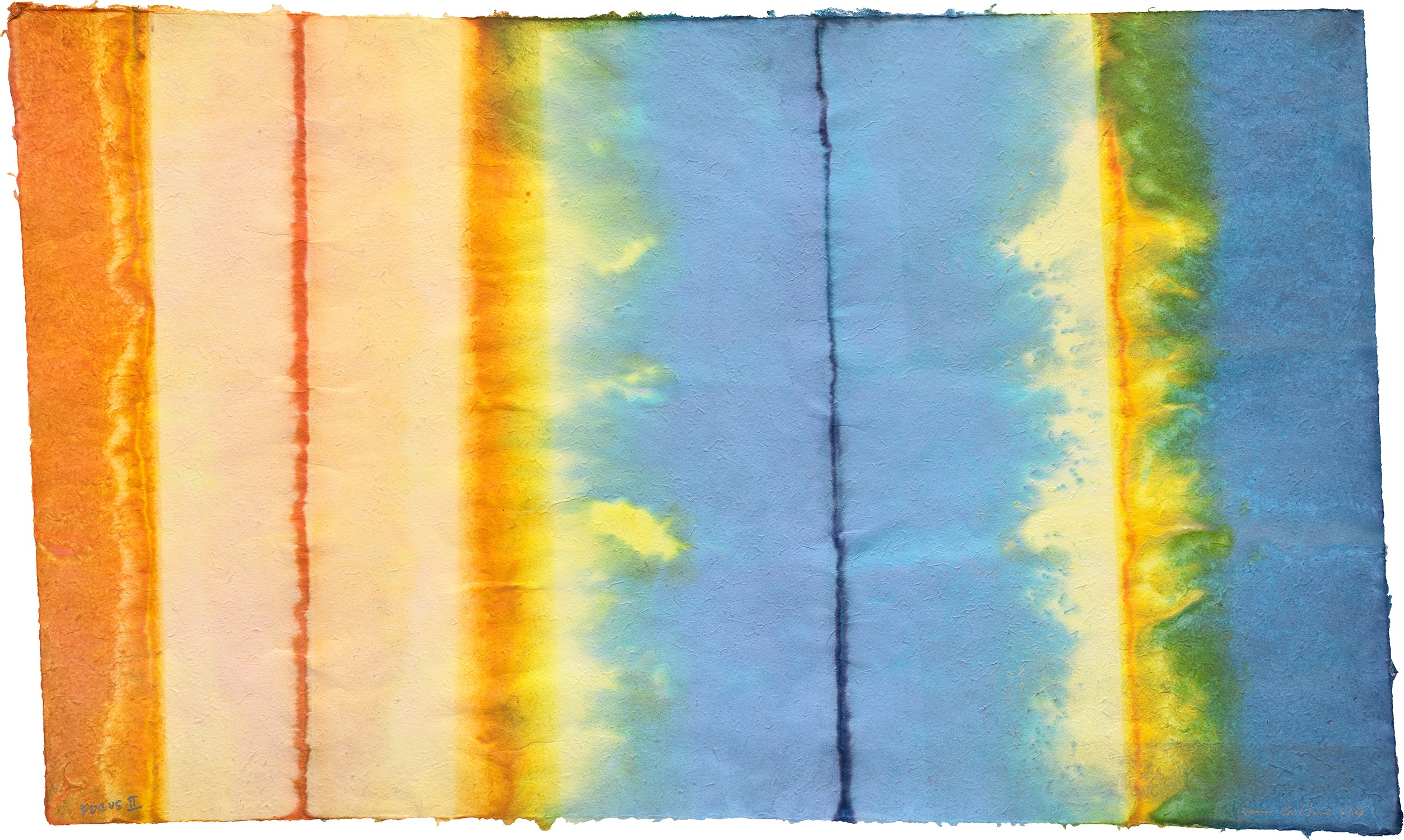
Focus II, 2014
The range of Gilliam's practice over the following five decades was astonishing. He worked across acrylic on beveled edge canvas, collage, monoprint, watercolor on rice paper, lithograph and etching, woodblock, and mixed media constructions of extraordinary complexity. A work like "Orion" from 1972 demonstrates how confidently he could anchor color to a shaped support, the beveled edge creating a subtle sculptural presence that sharpens the optical intensity of the surface. "Shimmering Pisces" from 1975 shows his gift for the diptych format, two panels in conversation, color rhyming and diverging across the join.
Later works such as "Focus II" from 2014 reveal his continued curiosity, the watercolor on rice paper finding a new kind of translucency and intimacy that sits in productive tension with the monumental ambitions of his earlier career. Throughout all of it, the commitment to color as an emotional and physical force never wavered. Gilliam's significance was recognized in ways that placed him firmly in the first rank of American artists. He was the first Black artist to represent the United States at the Venice Biennale, a milestone that carried weight not just symbolically but as an acknowledgment of genuine artistic stature by an institution that had long been slow to recognize Black American achievement.
Sam Gilliam
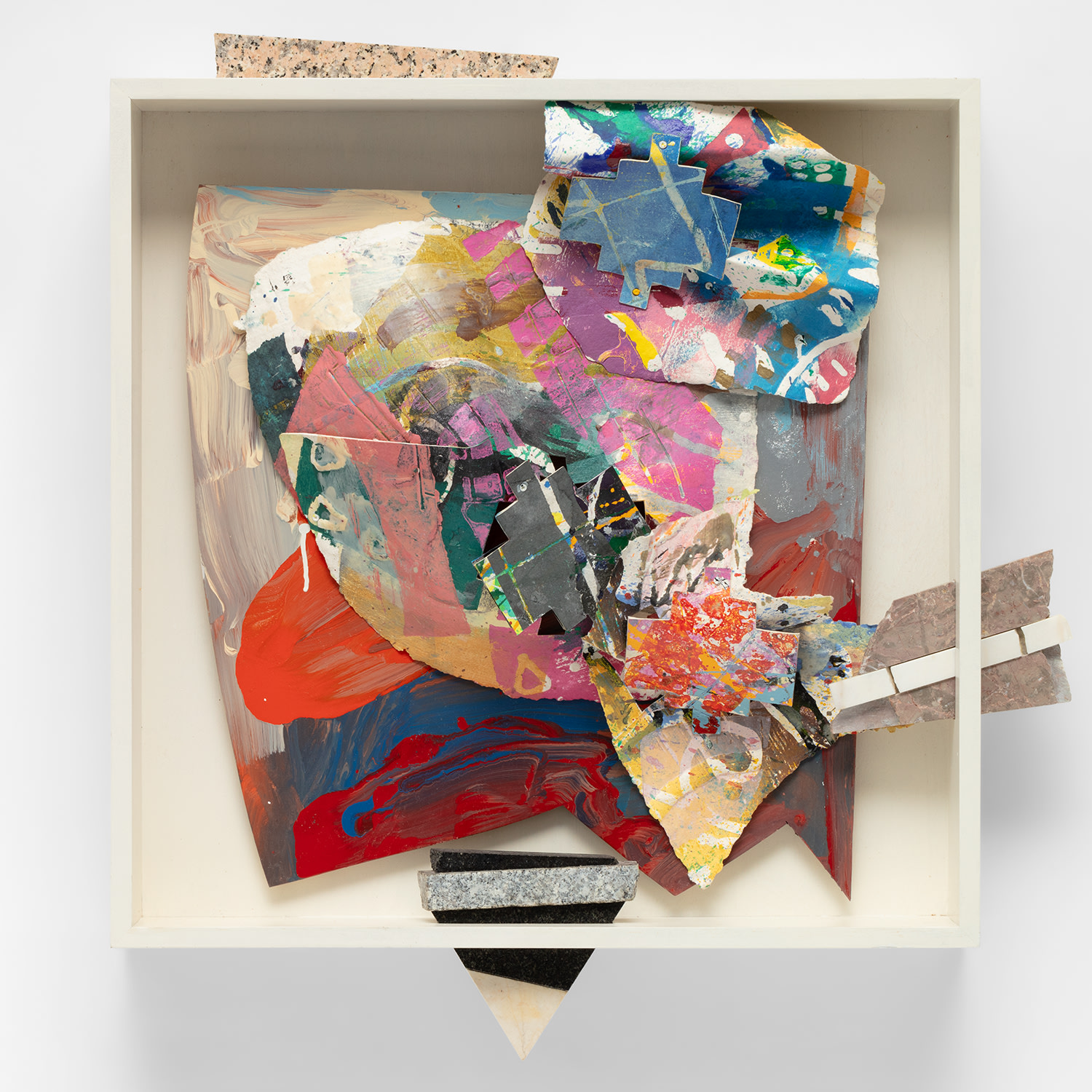
Flowers, from Tulip series
His work entered the collections of more than fifty museums worldwide, including the Metropolitan Museum of Art, the Art Institute of Chicago, and the Hirshhorn Museum and Sculpture Garden in Washington, D.C., a city that remained central to his identity and his legacy. Exhibitions at major institutions across Europe and the United States continued to bring new generations of viewers to his work throughout the 1990s, 2000s, and 2010s.
For collectors, Gilliam presents one of the most intellectually rewarding and visually compelling opportunities in postwar American art. His market has deepened considerably since his death, with strong auction results reflecting a growing consensus that he was systematically undervalued during his lifetime relative to his white contemporaries in the Color Field tradition. The works on paper and prints, including pieces like the "Lattice: three plates" lithograph and etching series and the extraordinary "Cuatro" monoprint with its stitching, embossing, and collage elements, offer accessible entry points into a practice that rewards close looking and long acquaintance. Collectors who have lived with Gilliam's work consistently report that it changes under different light conditions and across seasons, a quality that speaks to how deeply color and materiality are embedded in everything he made.
In the context of art history, Gilliam belongs in conversation with Morris Louis and Helen Frankenthaler for his mastery of staining, with Robert Rauschenberg for his embrace of materials and process, and with sculptors like Richard Serra for the way he understood that a flat surface could claim three dimensional space. But he also stands apart from all of them, because his particular synthesis, rooted in African American experience, in jazz, in the landscapes of the American South and the humid light of Washington, produced something that cannot be fully explained by any single influence. He was not a footnote to Color Field painting. He was its most radical and enduring extension.
The legacy Sam Gilliam leaves is one of openness. He showed that the canvas did not need a frame, that color did not need boundaries, and that abstraction was not the exclusive territory of any one culture or tradition. His work continues to ask the same generous and demanding questions it always did: what does light feel like, what does freedom look like, and how much beauty can a single surface hold.
Explore books about Sam Gilliam