Sam Francis
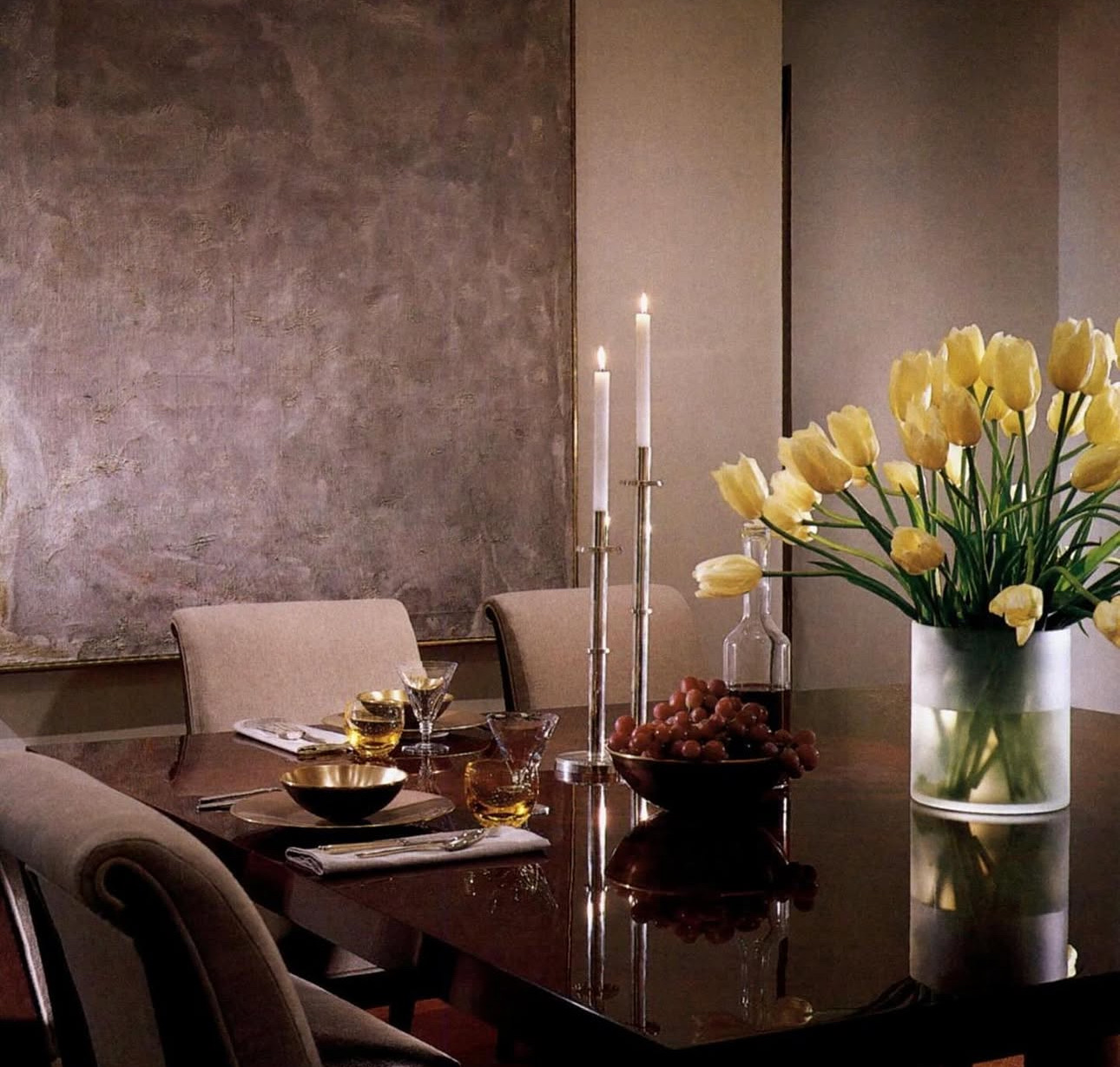
Sam Francis: Light, Color, and Pure Freedom
Artist Spotlight · The Collection Editorial
“The only thing I know is that I paint because I need to.”
Sam Francis
In the spring of 2023, the Fondation Beyeler in Basel mounted a survey of postwar American abstraction that reminded European audiences why Sam Francis remains one of the most exhilarating painters the twentieth century produced. His canvases glowed from across the room, their edges alive with eruptions of cadmium red and cobalt blue, their centers breathing with luminous white silence. For a generation of younger collectors and artists discovering him fresh, the encounter was something close to revelation. Francis never stops arriving.
Sam Francis
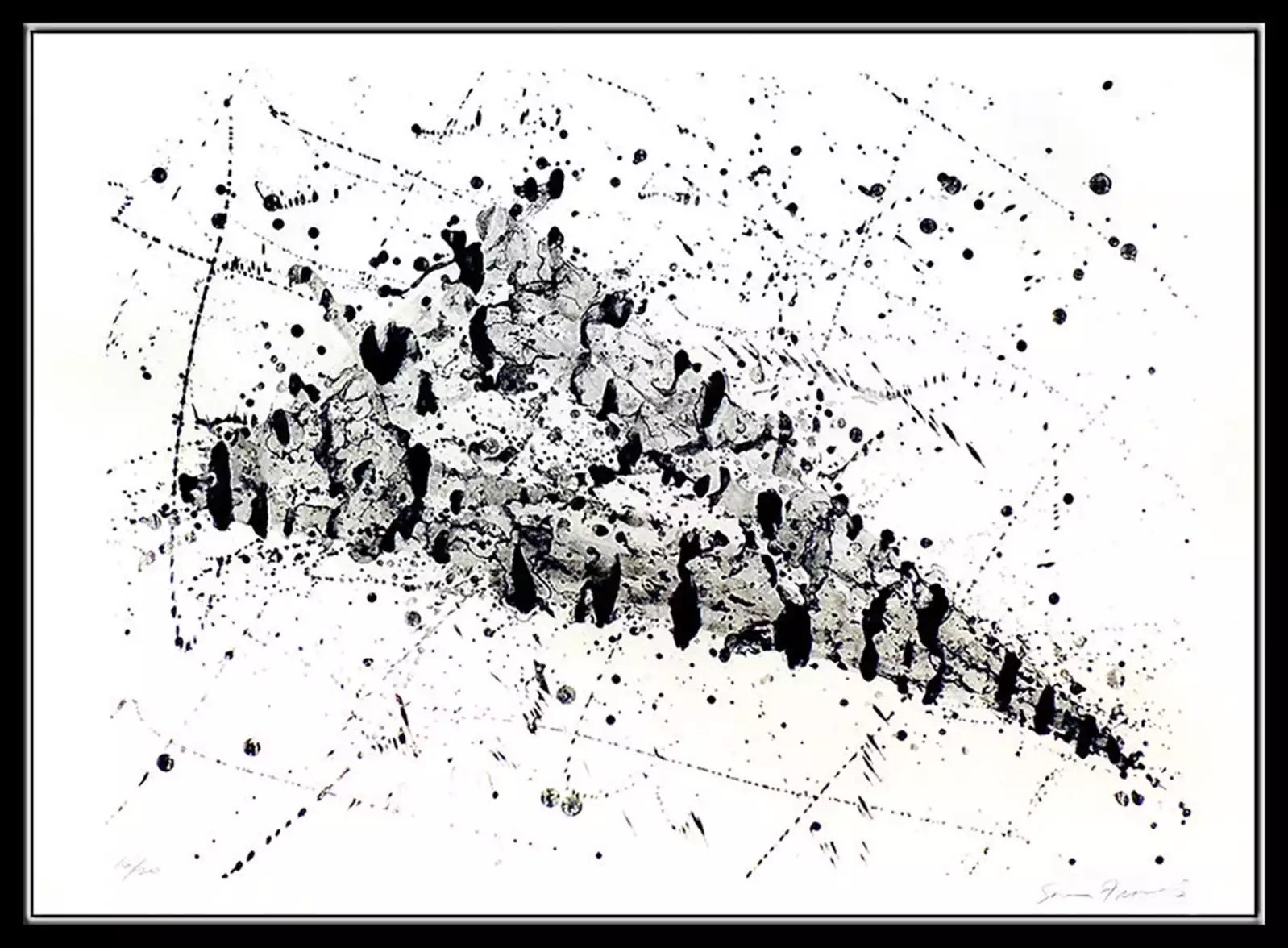
SF. 240, 1976
Samuel Lewis Francis was born in San Mateo, California, in 1923, and his relationship with California light would prove to be among the most fertile creative partnerships in modern art history. He studied botany and medicine at the University of California, Berkeley, before the Second World War interrupted everything. Serving as an Army Air Corps pilot, he suffered a spinal injury in a crash that left him bedridden for years. It was during this long, painful convalescence that Francis began to paint, finding in color a form of medicine the doctors could not prescribe.
The horizontal plane of his hospital bed, the way light fell across white sheets, the sense of the body suspended in space: all of it would echo through his work for decades. After the war, Francis returned to Berkeley and studied under David Park, one of the founding figures of Bay Area Figurative painting. But it was his move to Paris in 1950 that truly catalyzed his development. He arrived in a city still processing the trauma of occupation and the excitement of existentialism, and he fell into a community of artists and writers that included Jean Paul Riopelle and the circle around the Galerie Nina Dausset.
Sam Francis
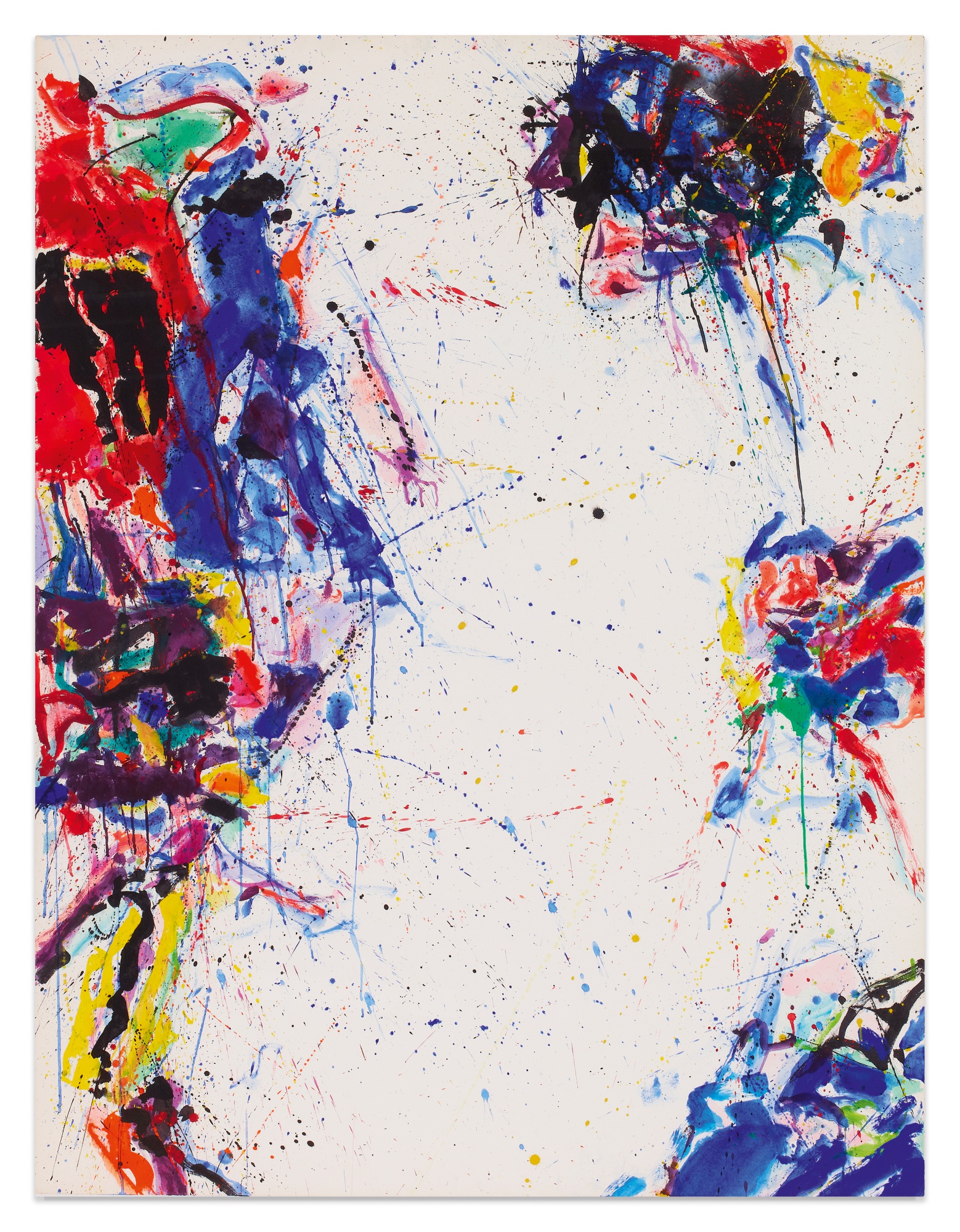
SF58-244 (Untitled)
Paris gave Francis access to the European painterly tradition and, crucially, to Japanese aesthetics through his friendships with artists working across that cultural bridge. He also encountered the work of Paul Klee and Henri Matisse with fresh eyes, and their influence on his sense of color as a living, breathing force became unmistakable. The paintings Francis made through the 1950s established his foundational language: pools and rivulets of saturated color set against fields of white, the white never passive but always active, almost aggressive in its demands on the surrounding hues. His 1950 work "Black (Deepened Black)" in oil on canvas shows him already working through questions of depth and surface that would preoccupy him for the rest of his life.
“Color is the keyboard, the eyes are the hammers, the soul is the piano with many strings.”
Sam Francis, notebook writings
By the late 1950s and into the 1960s, he was producing large scale canvases of extraordinary ambition, works that placed him in direct conversation with Mark Rothko, Franz Kline, and Helen Frankenthaler while maintaining an identity entirely his own. His 1961 watercolor "Blue 47" demonstrates his mastery of that most unforgiving medium, the pigment pooling and spreading with an intelligence that feels almost botanical. Francis also embraced printmaking with unusual seriousness and depth, treating the lithograph not as a secondary medium but as a primary site of artistic investigation. Works like "Chinese Wall" and "Chinese Opal" produced in collaboration with master printers reveal how thoroughly he understood the specific possibilities of ink on Arches and Rives BFK paper.
Sam Francis
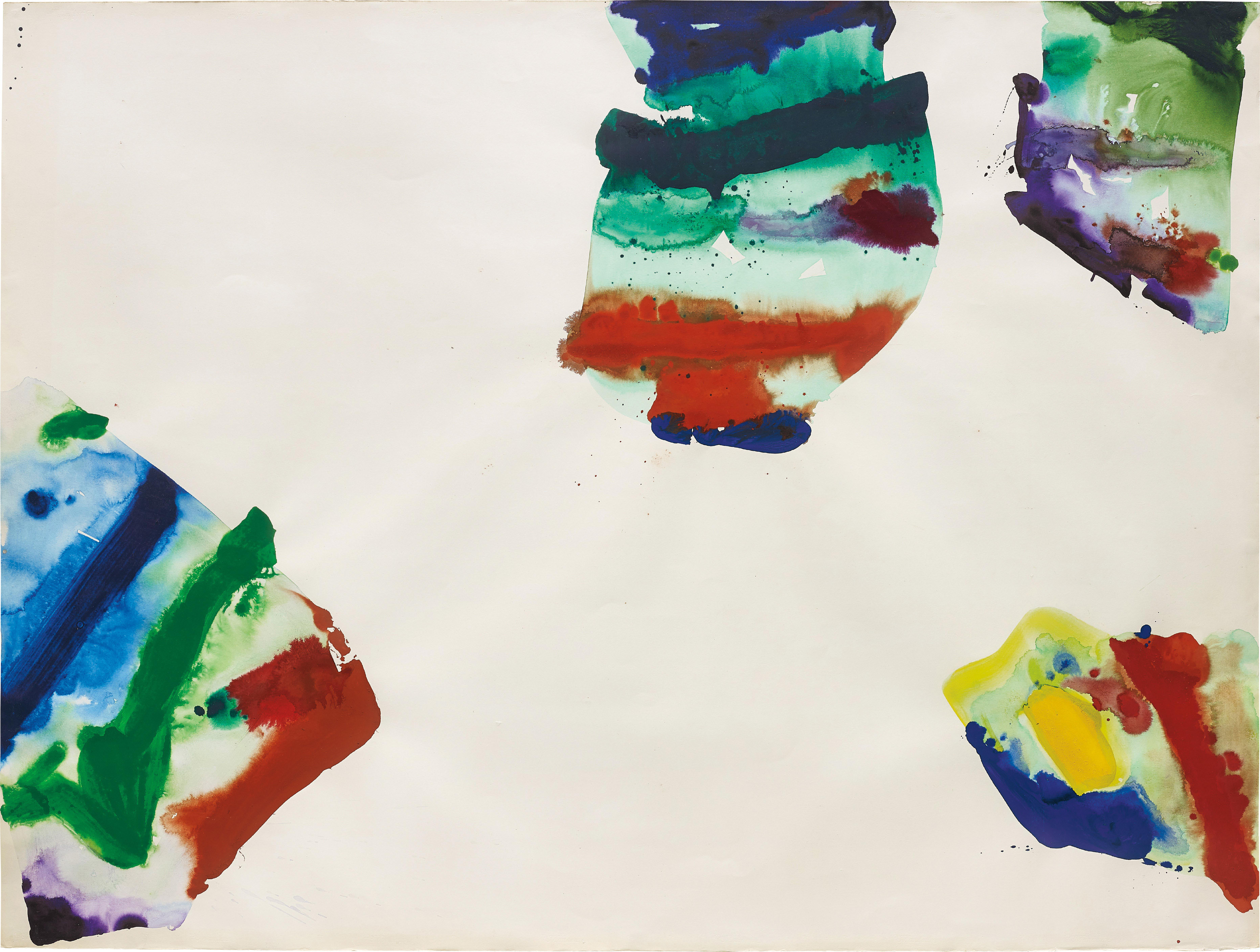
Los Angeles, 1970
His 1976 self portrait lithograph and the rich, complex "SF. 240" from the same year show an artist who had fully internalized the logic of the multiple, making each print feel singular and necessary. His gouache on paper "Los Angeles" from 1970 captures the particular quality of Southern California light with an almost documentary precision, even as its forms remain resolutely abstract. As a collecting proposition, Francis presents a range of entry points that few artists of his stature can match.
Works on paper and prints offer accessibility without sacrificing the essential qualities of his vision, and the market for his lithographs and gouaches has shown steady, sustained appreciation over the past two decades. Major auction houses including Christie's and Sotheby's have recorded strong results for his canvases, with significant oil paintings reaching well into the millions, while works on paper continue to reward attentive buyers who understand the depth of the practice behind them. Collectors drawn to the California Light and Space movement often discover Francis as a necessary antecedent, a painter who understood light as a material substance years before that became an organizing principle for a generation of sculptors and installation artists. Within the broader history of Abstract Expressionism, Francis occupies a position that is at once central and productively singular.
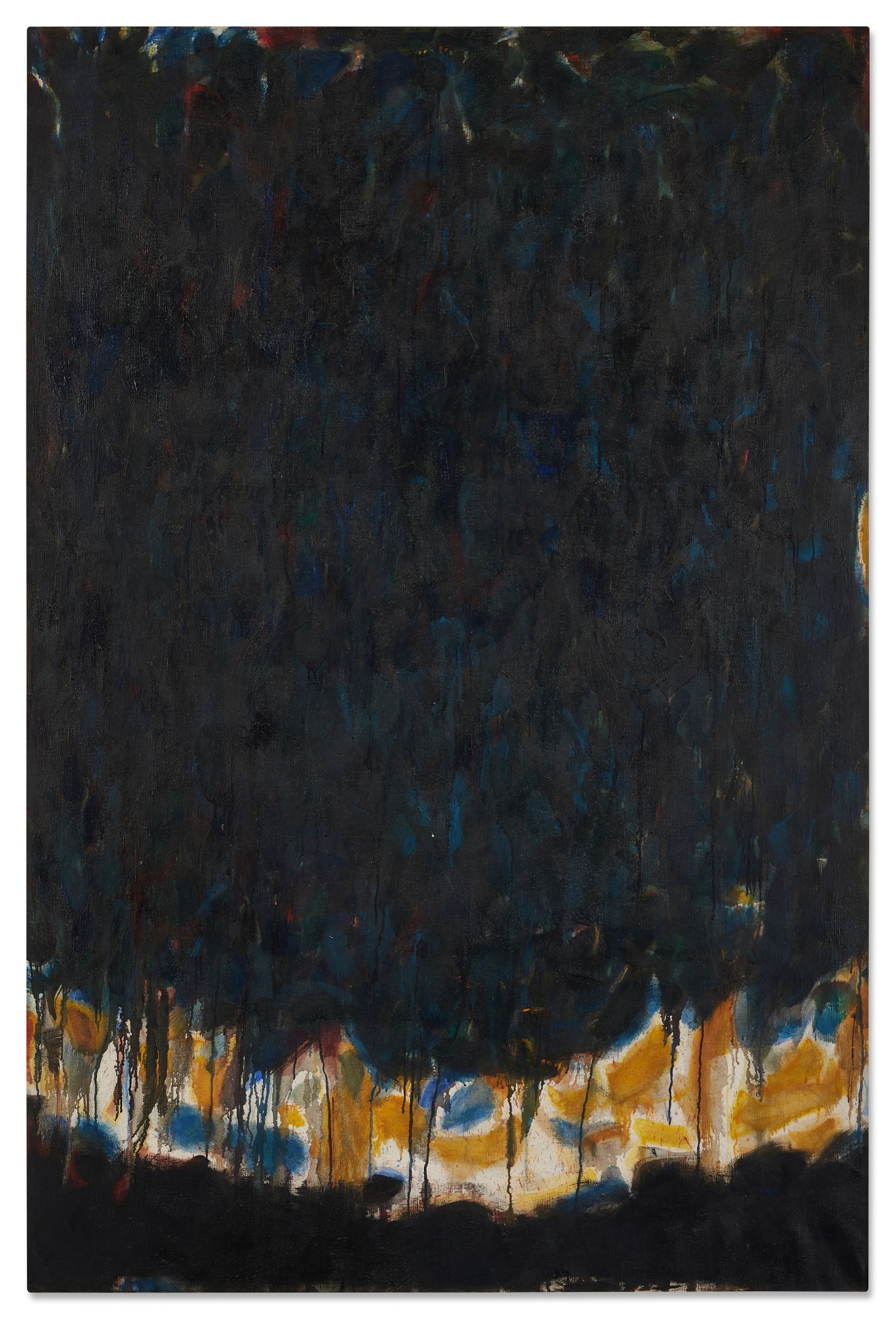
Sam Francis
Black (Deepened Black), 1950
He shared with Willem de Kooning and Jackson Pollock the commitment to gestural, physical mark making, but his sensibility was warmer, more lyrical, more openly indebted to Asian art and philosophy. The Buddhist concept of the void clearly informed his use of white space, and he studied and traveled in Japan extensively, building relationships there that influenced both his work and his collecting of Japanese objects. Artists like Joan Mitchell and Ellsworth Kelly offer useful points of comparison for collectors building around Francis, as does the work of Yves Klein, whose own investigations into monochromatic intensity parallel Francis's color obsessions from a very different angle. Sam Francis died in Santa Monica in 1994, but the Sam Francis Foundation has worked with exceptional care to preserve his legacy, supporting scholarship and ensuring that his archive remains accessible to researchers and institutions.
His work holds permanent places in the collections of the Solomon R. Guggenheim Museum, the Museum of Modern Art, and the Art Institute of Chicago, among many others, institutions whose curators return to him repeatedly when building arguments about the postwar period. What those curators understand, and what any serious collector eventually comes to feel, is that Francis was not simply a painter of beautiful surfaces. He was a philosopher of light, a man who had looked at mortality directly and decided that the only adequate response was pure, unmediated color.
To live with his work is to live with that decision, radiant and endlessly generous, every single day.
Explore books about Sam Francis
Sam Francis: Paintings, Drawings, and Prints
Sam Francis and various contributors
Sam Francis: A Catalogue Raisonné of Paper Works
San Lazzaro and Carolyn Christov-Bakargiev
Sam Francis: The Monotypes
Debra Bricker Balken
Sam Francis: A Retrospective
Various museum curators
Sam Francis: Color and Light
Joanne Mattera
Sam Francis: Paintings from the Estate
The Sam Francis Foundation
Sam Francis: Watercolors and Gouaches
Jane Livingston
Sam Francis in Japan: Influence and Innovation
Mami Kataoka