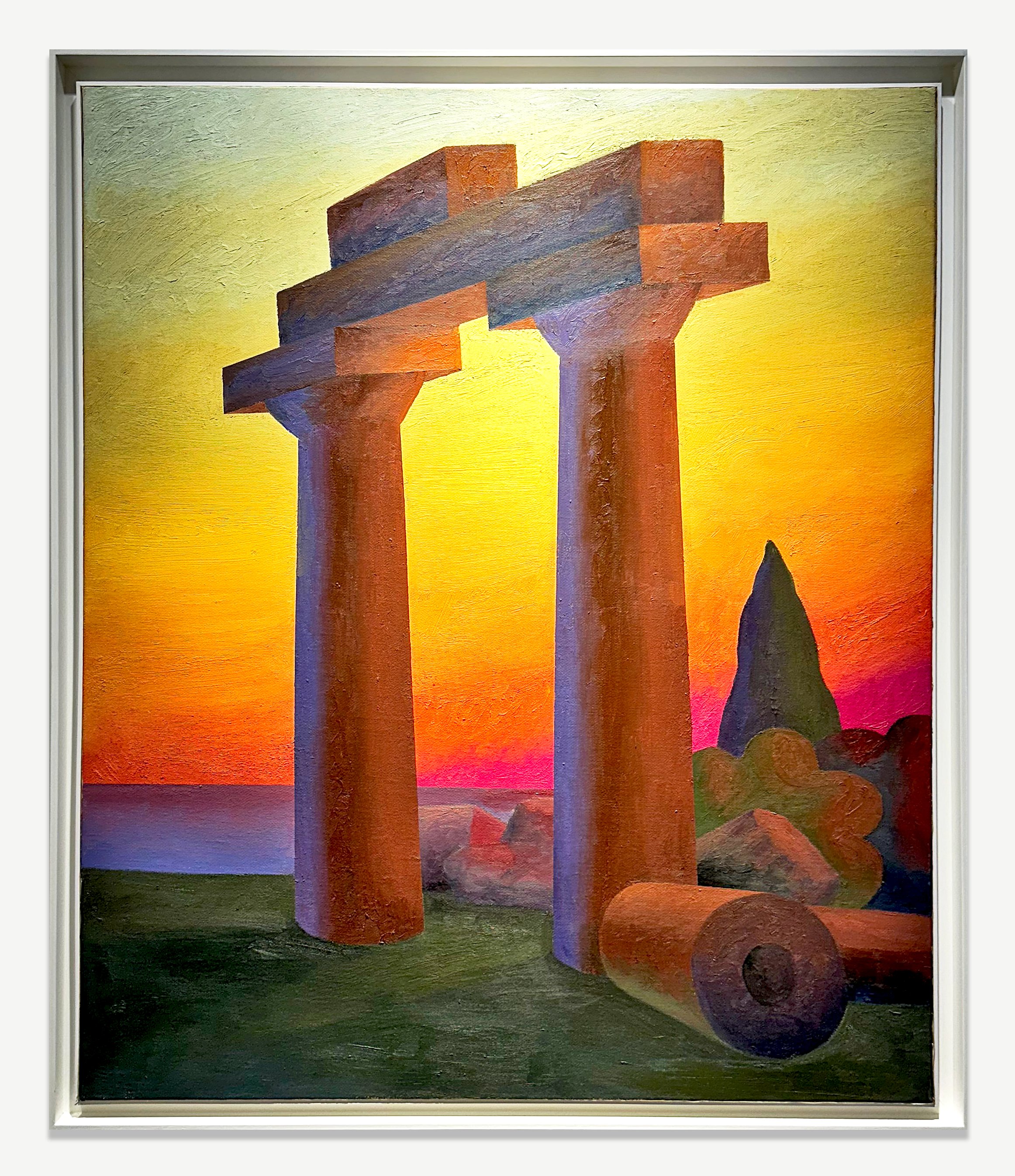
Salvo's Luminous Worlds Reward Patient Looking
Artist Spotlight · The Collection Editorial
In the permanent collection of the Galleria Civica di Modena and held in distinguished private holdings across Italy and beyond, the paintings of Salvo occupy a quiet but unshakeable place in the story of postwar Italian art. Born Salvatore Mangione in Leonforte, Sicily, in 1947, he died in Turin in 2015, leaving behind a body of work that continues to deepen in resonance and critical standing. As museum curators and private collectors alike revisit the extraordinary pivot that Italian art made in the 1980s and 1990s, from the conceptual austerity of Arte Povera toward a renewed, emotionally charged figuration, Salvo's paintings emerge as among the most luminous and considered achievements of that transformation. Salvo grew up in Sicily before relocating to Turin, the northern industrial city that became the crucible of Arte Povera in the late 1960s.
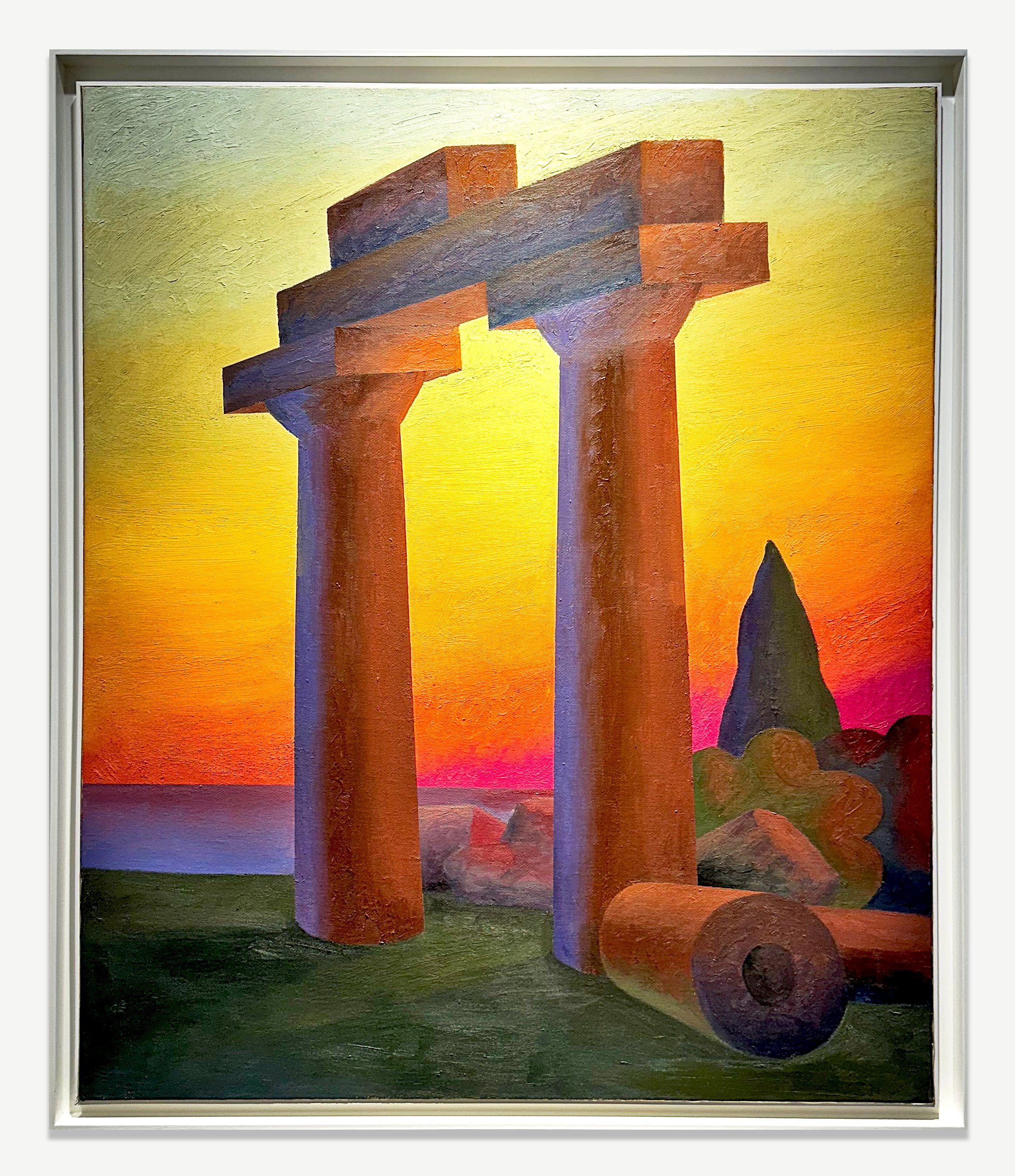
Salvo
Una sera, 2001
That movement, championed by critic Germano Celant and embodied by artists including Giovanni Anselmo, Jannis Kounellis, and Mario Merz, sought to strip art down to elemental materials and gestures, resisting the commodity logic of the market and the spectacle of pop culture. Salvo was a genuine participant in that world, producing text based and conceptual works in his early career that reflected the intellectual rigor and political energy of the moment. His formation within that community gave him a critical framework that would later make his return to painting something more than nostalgia. It was a considered, informed choice made by someone who understood exactly what he was turning toward.
The pivot came in the mid 1970s and deepened through the 1980s, when Salvo began painting in earnest, drawing on sources ranging from early Italian Renaissance masters to Northern European landscape traditions. He was particularly attentive to the quality of light in Flemish painting and the compositional stillness of artists like Piero della Francesca. His work from this period shows an artist constructing a visual language from the inside out, not illustrating ideas but discovering them through the act of looking and applying paint. By the time Italian painting was receiving renewed international attention in the context of the Transavanguardia movement associated with figures such as Sandro Chia and Francesco Clemente, Salvo was working in a related but distinctly quieter register, less expressionistic, more contemplative, more interested in silence than in gesture.
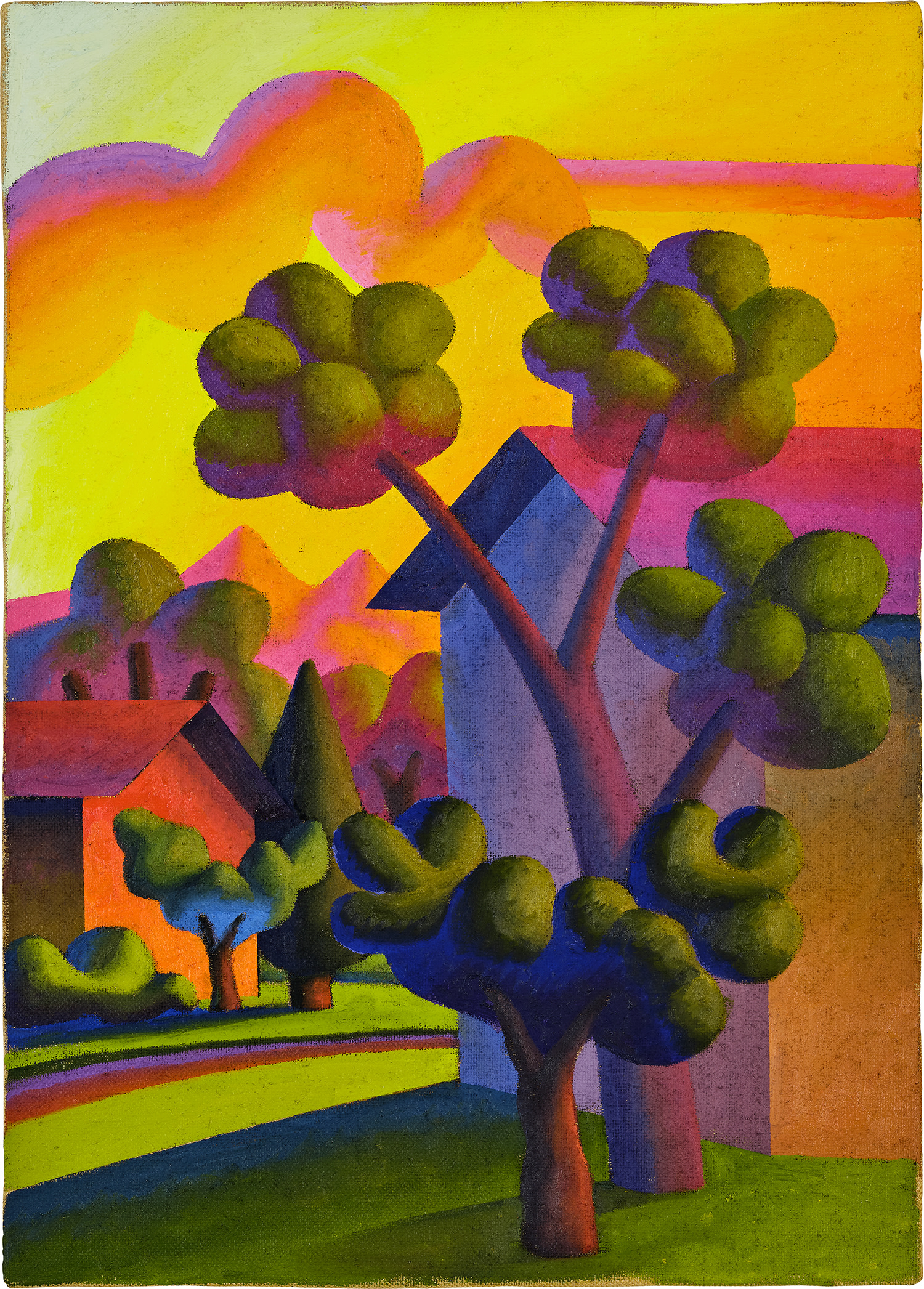
Salvo
Agosto, 2009
The paintings for which Salvo is most admired are his landscapes and architectural views, works that feel simultaneously ancient and impossible to date with certainty. A painting like Sassonia Cistercense from 1992 places the viewer before a monastic landscape rendered with the patience and tonal control of someone who has spent years looking at Flemish panels. Notturno from 1996 and Punta del Hidalgo from the same year demonstrate his mastery of evening and nocturnal light, achieving an atmosphere that is meditative without becoming sentimental. Una sera from 2001 and La fine del giorno together form an unofficial series of twilight meditations, paintings in which the hour before dark becomes a subject rich enough to sustain an entire career.
His palette tends toward warm ochres, cooled blues, and the particular golden grey of late afternoon, colors that feel observed from life even when the scenes themselves have a dreamed or invented quality. The oil on Masonite technique he employed in works such as San Nicola Arcella gives his surfaces a particular density and intimacy, the paint sitting differently than on stretched canvas, lending the image a panel painting gravity. For collectors, Salvo represents something increasingly rare and valuable: a significant historical position within Italian postwar and contemporary art combined with the daily pleasures of living with genuinely beautiful, contemplative objects. His work does not demand interpretation so much as time, and collectors who give it that time consistently report that the paintings change and reward continued looking.
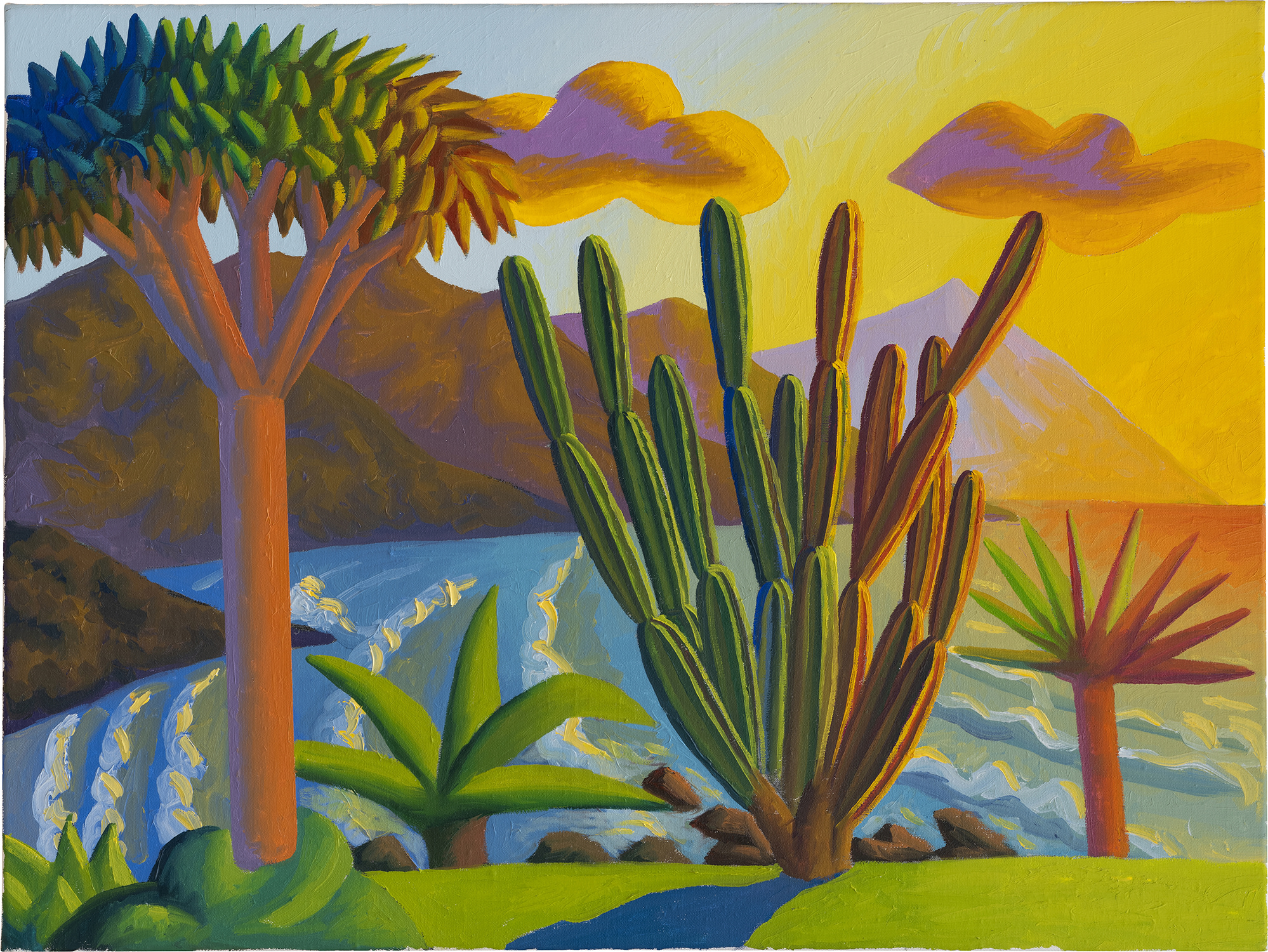
Salvo
Punta del Hidalgo, 1996
The market for Salvo's work has been concentrated primarily in Italy and Germany, with auction appearances at houses including Sotheby's Milan and Christie's, and his works have found their way into some of the most serious private collections of Italian postwar art. The range of works available through The Collection, spanning from the early 1990s through 2010, gives potential buyers an unusual opportunity to trace the full maturity of his practice across two decades. In placing Salvo within art history, the most useful comparisons are with artists who made similarly serious returns to painting after conceptual formation. Giorgio Morandi, though of an earlier generation, provides a useful touchstone: the same devotion to a limited set of subjects, the same refusal to be drawn into the fashionable or the spectacular, the same faith that repeated, deepened attention to simple things constitutes a sufficient artistic project.
Among his closer contemporaries, the German painter Gerhard Richter and the Scottish painter Peter Doig both share with Salvo an interest in the painted landscape as a site of memory and psychological projection, though each arrives from a different direction. Within the Italian context, Salvo's friendship and intellectual proximity to the Arte Povera circle gave his figurative work a conceptual seriousness that distinguishes it from the more theatrical painting of the Transavanguardia. Salvo's legacy rests on the integrity of his refusal. He refused the shortcuts of expressionist bravado, refused the comfort of pure tradition, and refused the cultural status that might have come from remaining a purely conceptual artist within the Arte Povera genealogy.
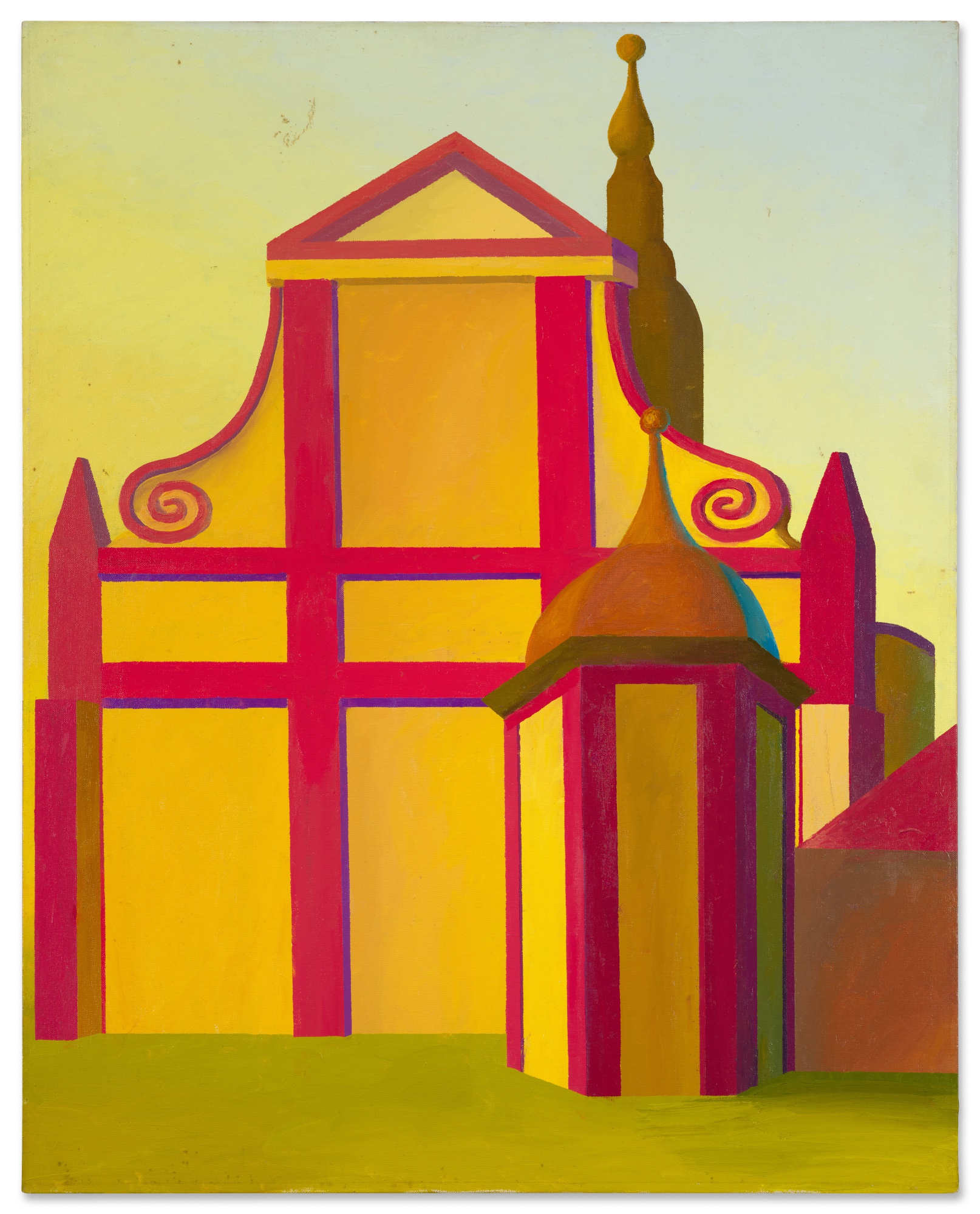
Salvo
Sassonia Cistercense, 1992
Instead he built, painting by painting and decade by decade, a body of work that makes its claims quietly and keeps them. The dreamlike clarity of his landscapes, the way his architectural scenes hold light like a vessel holds water, and his extraordinary sensitivity to the moods of particular hours and seasons make him one of the essential figures for understanding what Italian painting achieved in the last quarter of the twentieth century. For collectors who value depth over spectacle, and who understand that the most significant art often works in a lower register than the market tends to reward, Salvo is not simply an opportunity. He is a revelation.
Explore books about Salvo
Salvo: Catalogo Ragionato dell'Opera Pittorica
Maurizio Calvesi
Salvo: Paintings 1964-1984
Germano Celant
Salvo
Pierre Restany
Salvo: Opere 1965-1995
Achille Bonito Oliva
Salvo: Disegni e Scritti
Various editors