Sally Mann
Sally Mann: Memory, Light, and Eternal Grace
Artist Spotlight · The Collection Editorial
“What we have is a very small window of experience, and I want to use that window well.”
Hold Still: A Memoir with Photographs, 2015
In 2015, the Peabody Essex Museum mounted a landmark retrospective of Sally Mann's work, bringing together four decades of photographs that traced one of the most singular careers in American art. The exhibition traveled to institutions across the country, reintroducing Mann to a new generation of collectors and confirming what many in the photography world had long understood: that her vision is not merely important but essential, a body of work that has reshaped how we think about childhood, landscape, grief, and the passage of time. That same year, her memoir "Hold Still" was published to wide acclaim, earning a finalist nomination for the National Book Award and offering readers an intimate account of her life in Virginia's Shenandoah Valley. Mann arrived not as a footnote in photographic history but as its conscience.
Sally Mann
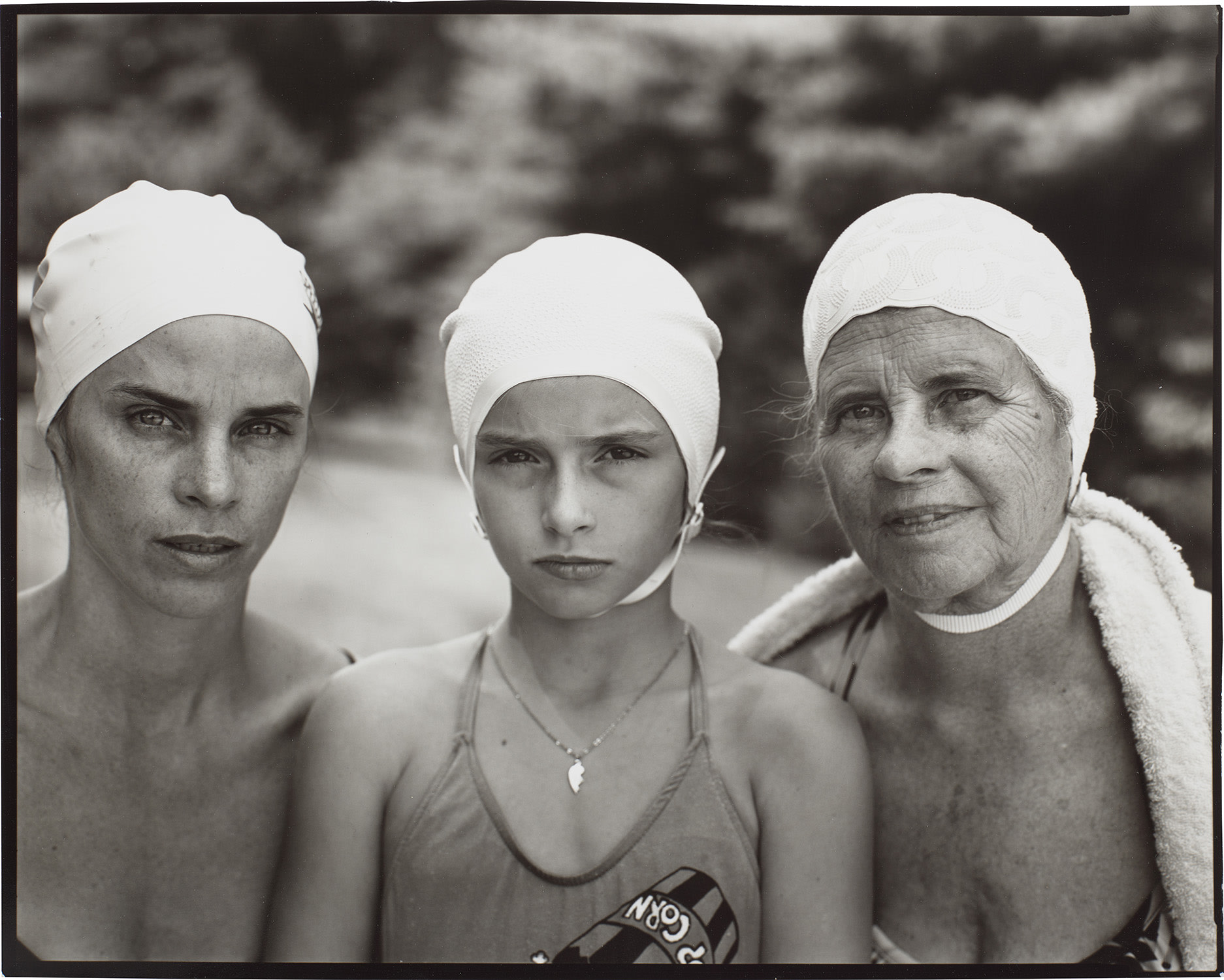
Three Generations
Sally Mann was born in Lexington, Virginia, in 1951, and she has never truly left. The landscape of the American South, its heat and its shadows, its soil carrying the weight of an unresolved history, has been both subject and collaborator throughout her career. Her father, a country doctor and amateur sculptor, encouraged a spirit of inquiry and fearlessness in her from an early age. She studied photography at Bennington College in Vermont and later at Hollins University in Virginia, where she earned her undergraduate degree.
It was a formation that blended rigorous academic thinking with a deep, almost physical attunement to place. Returning to her native Virginia to live on a farm near Lexington with her husband Larry Mann, a lawyer who would become her most steadfast supporter, she began building a practice rooted in the land and the life around her. Mann's artistic development unfolded in distinct and bold phases, each one an act of courage. Her early work explored the community of Lexington with a documentary sensibility, but it was in the late 1980s and early 1990s that she produced the photographs that would make her internationally known.
Sally Mann
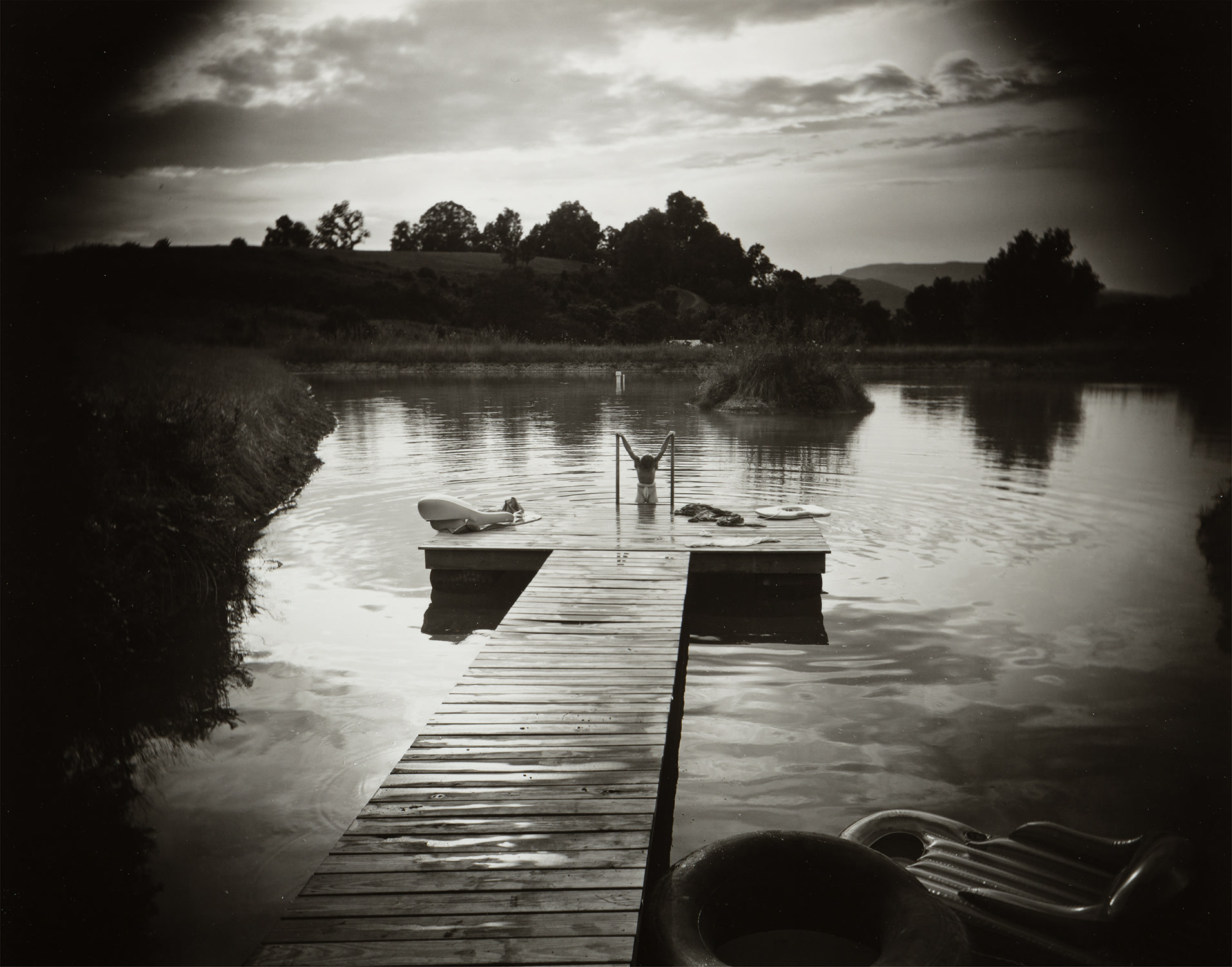
John's Pond
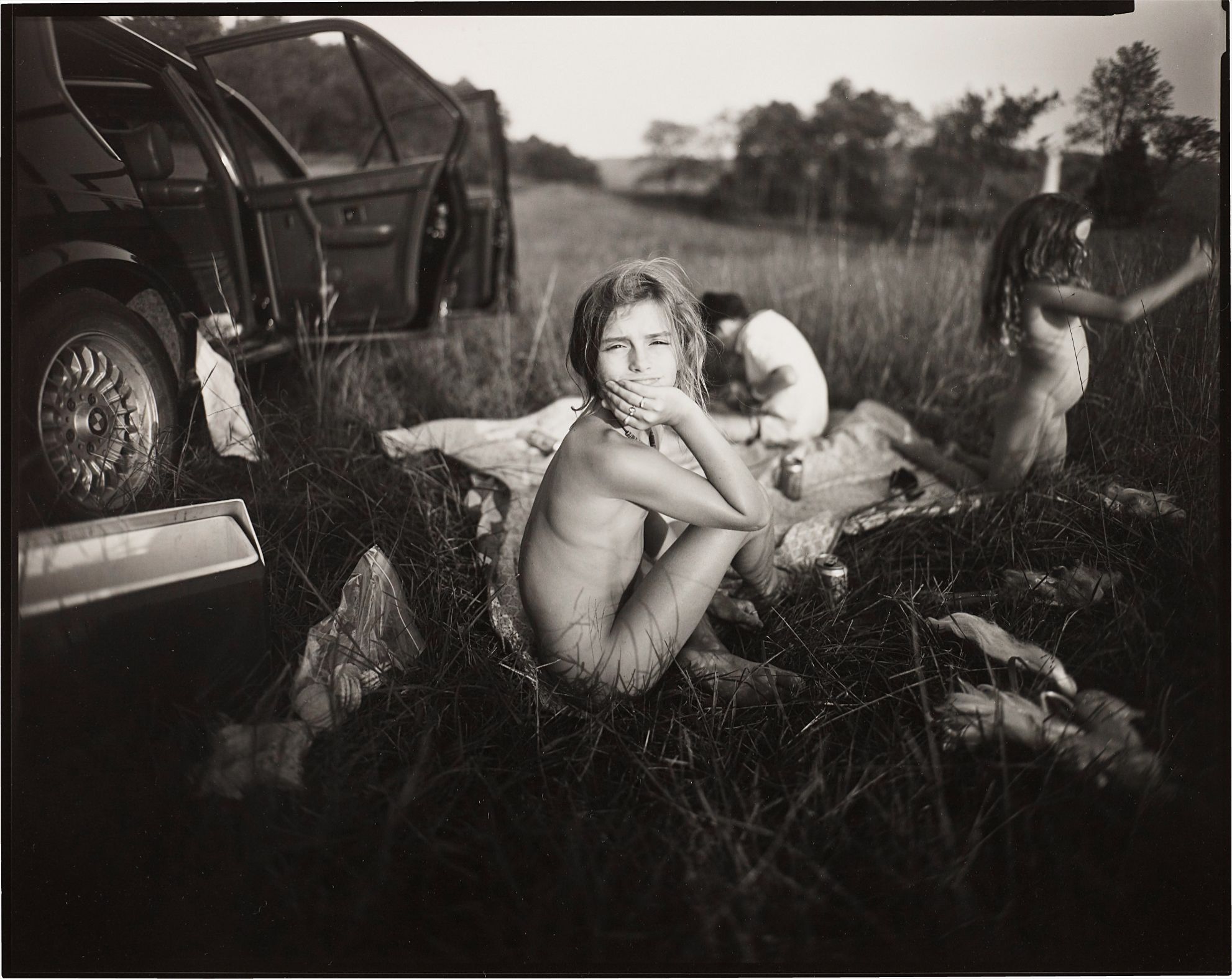
Working with a large format camera in the tradition of nineteenth century American photography, she began photographing her three children, Emmett, Jessie, and Virginia, at their rural farm. The resulting series, "Immediate Family," published as a monograph in 1992 by Aperture, provoked fierce public debate about childhood, privacy, and the nature of beauty. Critics argued about the images, but the photographs themselves were undeniable: luminous, formally precise, and charged with an emotional intelligence that elevated them far beyond the merely personal. What makes the works from "Immediate Family" so enduring is their refusal to sentimentalize.
“The South is both cursed and redeemed by its past, and I am both cursed and redeemed by mine.”
Hold Still: A Memoir with Photographs, 2015
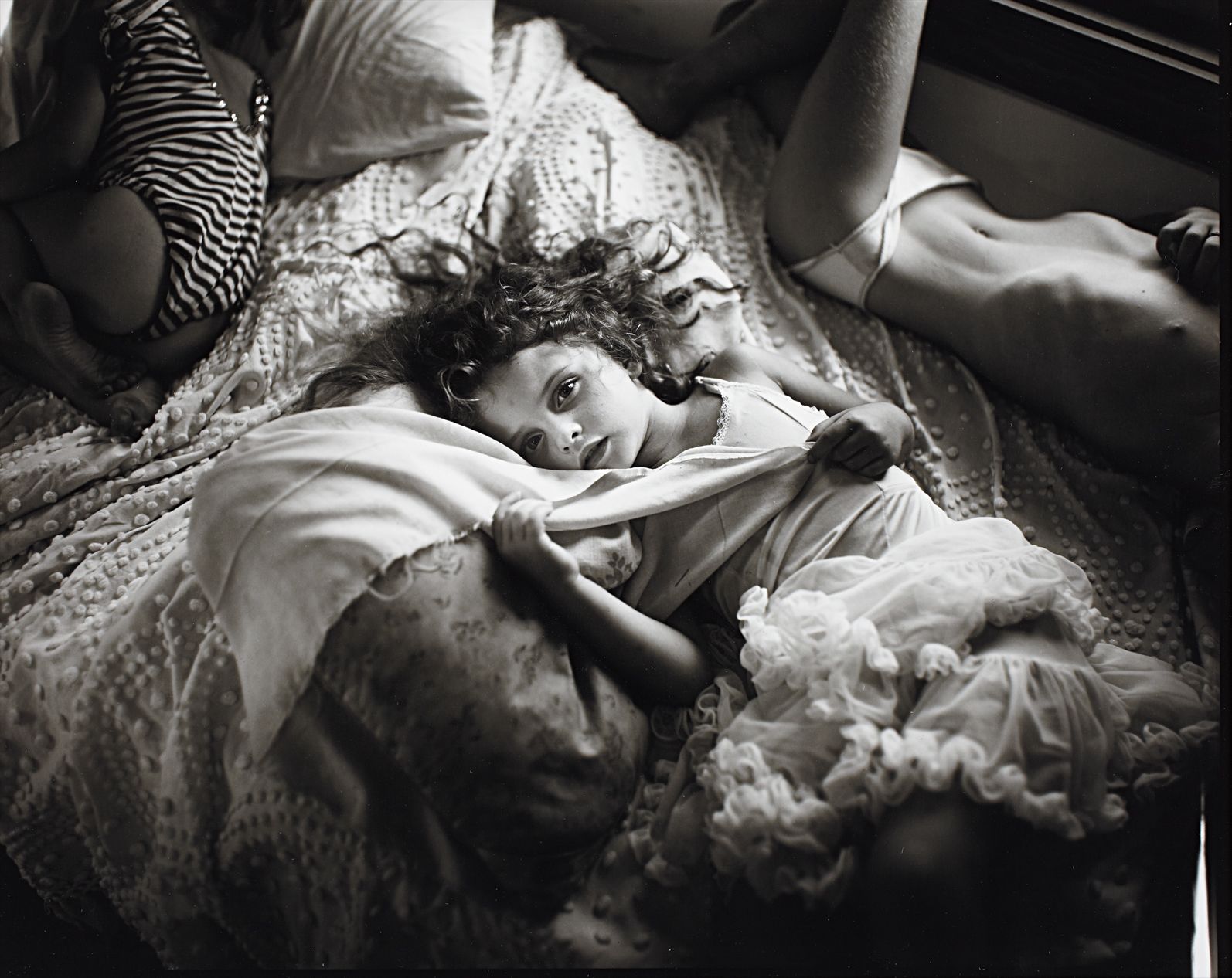
A photograph like "The Last Time Emmett Modeled Nude" holds within it the full complexity of a child approaching adolescence, the bittersweet awareness of time moving forward that no parent can stop. "Hayhook" suspends a moment of play and danger in a single frame, a child suspended against a soft sky in a gesture that reads simultaneously as joy and vulnerability. "Naptime" and "Juliet in White Chair" achieve a stillness that recalls the tableau painting of the Dutch Golden Age, while remaining absolutely rooted in a specific American childhood. The gelatin silver print, with its tonal range and capacity for velvety shadow, proved to be Mann's ideal medium in this period, and she wielded it with the confidence of a master printmaker.
Sally Mann
Naptime
Following the controversy and the acclaim that surrounded "Immediate Family," Mann turned her lens outward toward the Southern landscape itself. Her series "Mother Land" and later "Deep South," shot in the mid to late 1990s, employed wet plate collodion and other nineteenth century processes that introduced deliberate imperfections: chemical blooms, light leaks, and ghostly vignetting that made each image feel like a recovered memory rather than a documentary record. Works like "The Alligator's Approach" and "John's Pond" carry the density of myth, as if the land itself were exhaling its history. This shift toward historical photographic processes was not nostalgia but argument: Mann was insisting that the South could only be properly seen through a medium that bore the marks of time.
Later still, she turned to forensic landscapes near a university body farm in Tennessee for her series "What Remains," a meditation on death and decomposition that ranks among the most philosophically ambitious photography projects of the early 2000s. For collectors, Mann's work represents one of the most compelling and secure areas of focus within the contemporary photography market. Her prints are held by the Metropolitan Museum of Art, the Whitney Museum of American Art, and the National Gallery of Art, institutions whose sustained commitment signals lasting canonical status. At auction, her most significant works from "Immediate Family" have drawn strong results, particularly among collectors who understand that the controversy once surrounding these images has only deepened their art historical significance.
Sally Mann
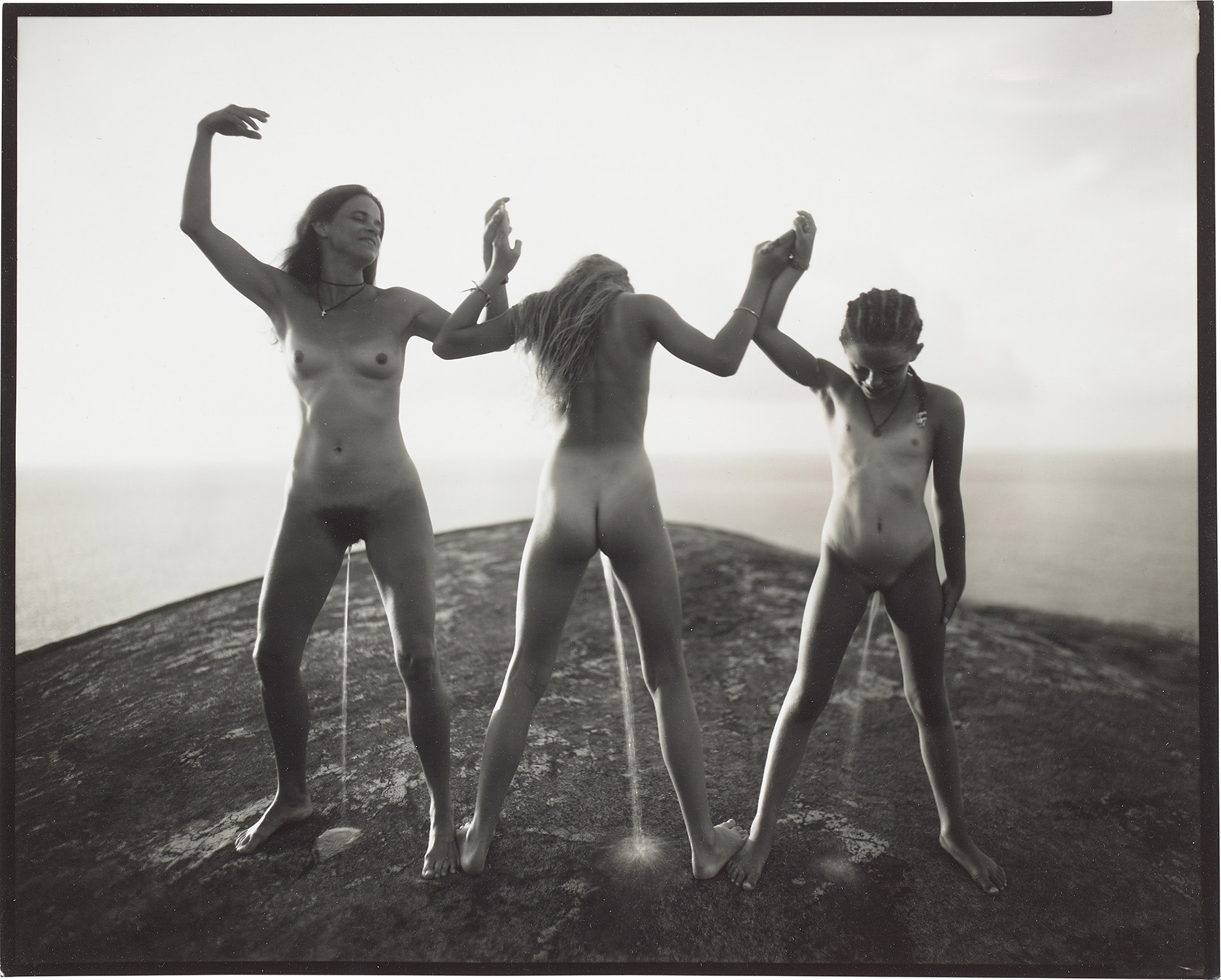
The Three Graces
Collectors drawn to the Southern landscape series often cite the way Mann's use of process becomes inseparable from meaning: no reproduction can fully convey the physical presence of a large format wet plate photograph, its surface alive with chemistry and decision. Works from every major series appear with some regularity through her primary gallery, Gagosian, which has represented her internationally and placed her work in major collections around the world. To understand Mann fully, it helps to consider her alongside peers who share her preoccupation with memory and the material weight of photography. The work of Francesca Woodman, with its ghostly self portraiture and its intimacy with the body, occupies adjacent territory, though Mann's gaze is always outward rather than inward.
The large format documentary tradition of Walker Evans and Dorothea Lange forms part of her inheritance, but Mann has always pushed against documentary neutrality toward something more charged and more personal. In her commitment to historical processes and to land as subject, she stands close to the legacy of Edward Weston and Clarence John Laughlin, whose own Southern photographs share her sense of the uncanny. Mann synthesizes all of this while remaining irreducibly herself. Sally Mann's legacy is already firmly established, and yet her work continues to feel urgent.
At a moment when photography is ubiquitous and almost weightless, her deliberate, labor intensive practice insists on slowness and consequence. Each image is a negotiation between artist and subject, between chemical process and human intention, between the present moment and deep time. Her children have grown, her landscapes have aged, and still the photographs hold their charge, asking the same questions they always have: What do we owe each other in the act of looking? What does it mean to love something and also to make it into art?
For collectors who live with her work, these are not unsettling questions but sustaining ones, the kind that give a life in art its meaning.
Explore books about Sally Mann