Sadamasa Motonaga
Sadamasa Motonaga, Where Color Finds Freedom
Artist Spotlight · The Collection Editorial
There is a photograph that captures something essential about Sadamasa Motonaga. It was taken in 1956 at the second Gutai Art Exhibition in Osaka, and it shows a landscape transformed: long plastic tubes filled with colored water and oil suspended between trees in an outdoor grove, their contents catching the light and casting trembling shadows across the ground below. No canvas, no frame, no institution. Just color, gravity, and the living world.
Sadamasa Motonaga
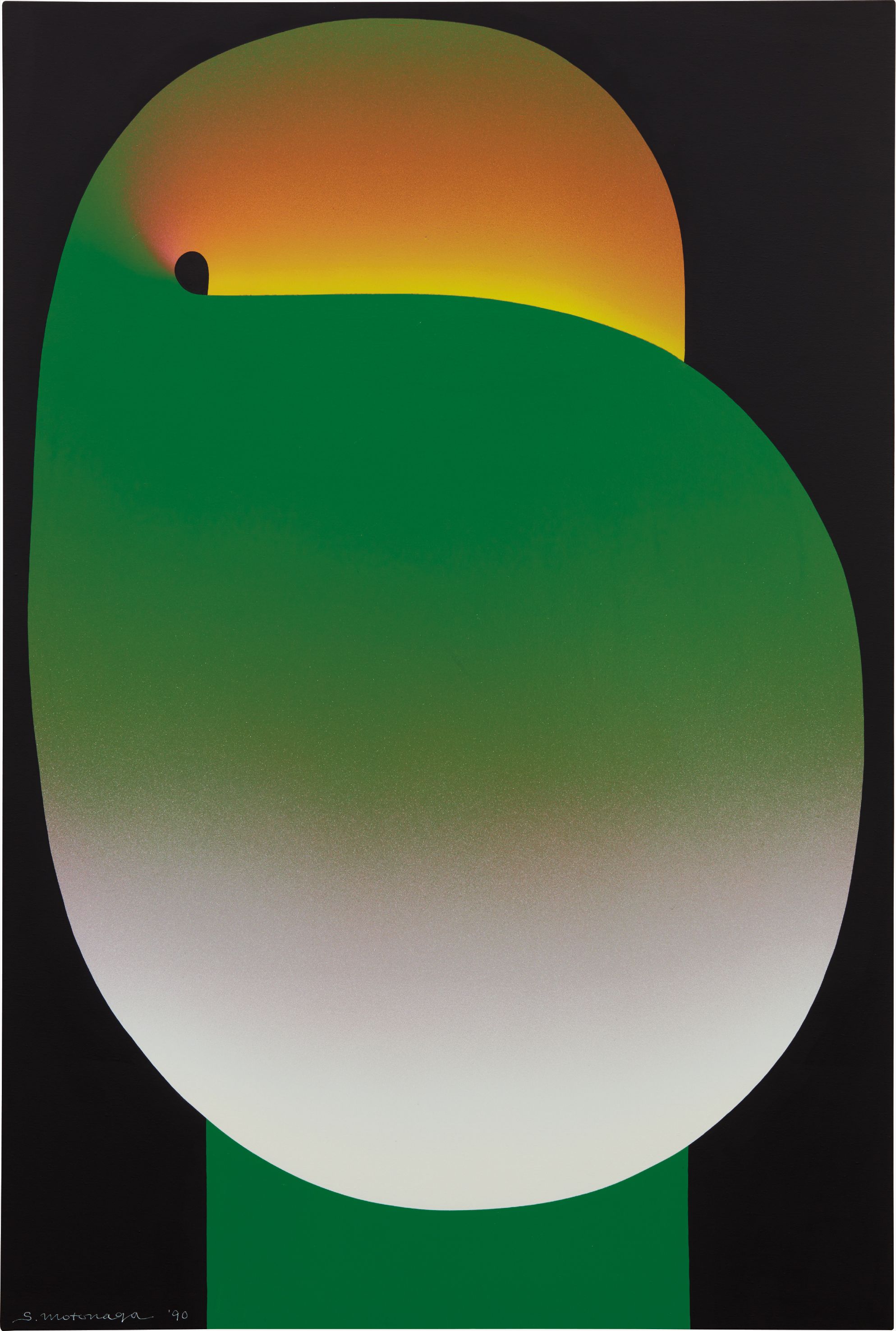
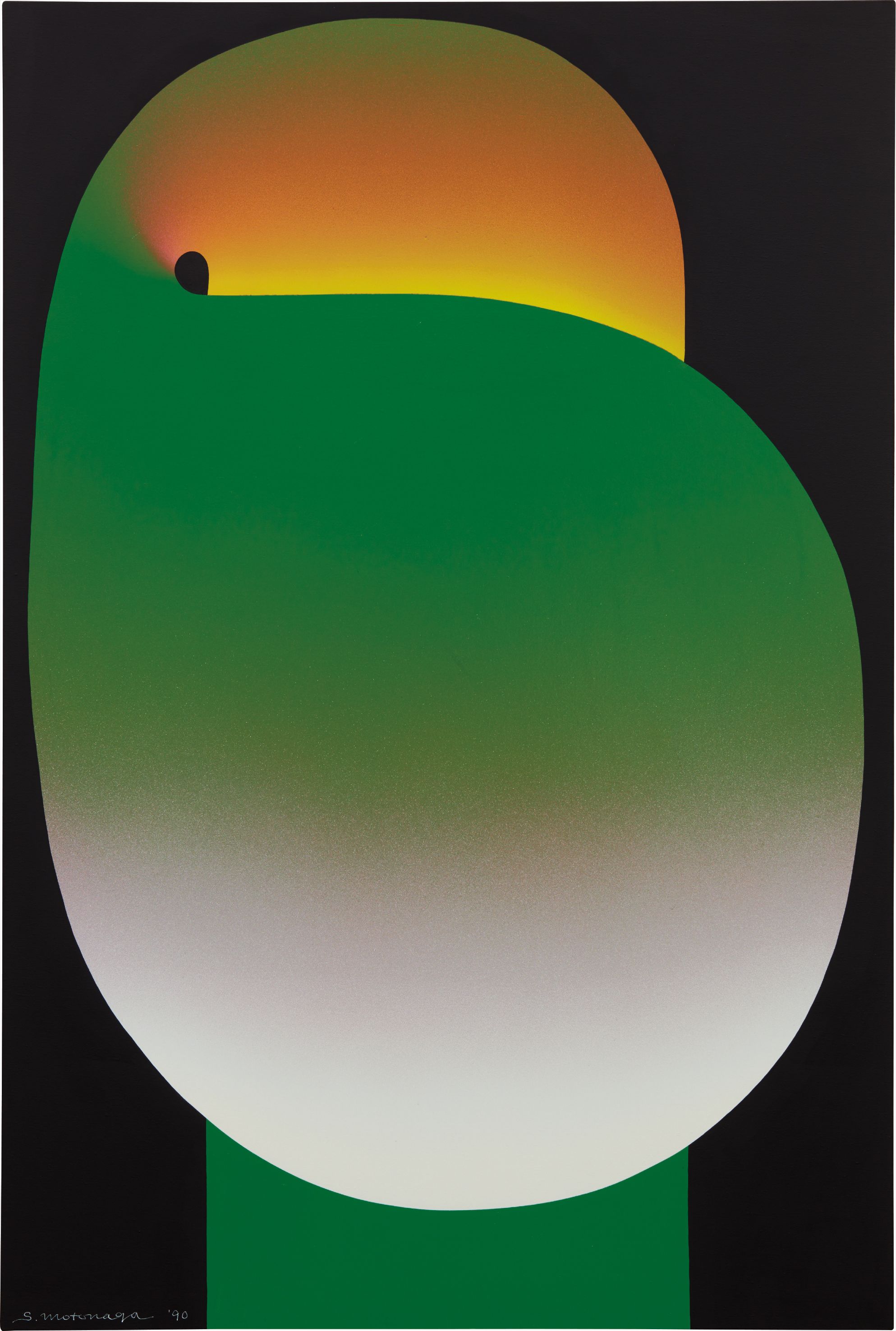
Green Form White Light, 1990
That image, and the sensibility behind it, would define a career spanning more than five decades and place Motonaga among the most inventive and joyful artists of postwar Japan. Motonaga was born in 1922 in Iga, Mie Prefecture, a region of Japan known for its forested hills and its deep association with tradition and craft. He came of age during a period of profound upheaval, and like so many artists of his generation, he arrived at abstraction not as a style but as a necessity, a way of processing and rebuilding inner life after the devastation of World War II. He was largely self taught, and that outsider energy never fully left him.
When he encountered Jiro Yoshihara, the founder of the Gutai Art Association, and joined the group in 1955, he found both a community and a permission structure for the radical experimentation he had already been reaching toward on his own. Gutai, which takes its name from a Japanese word meaning concrete or embodiment, was unlike anything that had come before in Japanese art. Founded in Osaka in 1954, the group demanded that artists go beyond the canvas, that they use their bodies, the environment, and unconventional materials to create work that bore the genuine imprint of human action and vitality. For Motonaga, this manifesto felt natural.
Sadamasa Motonaga
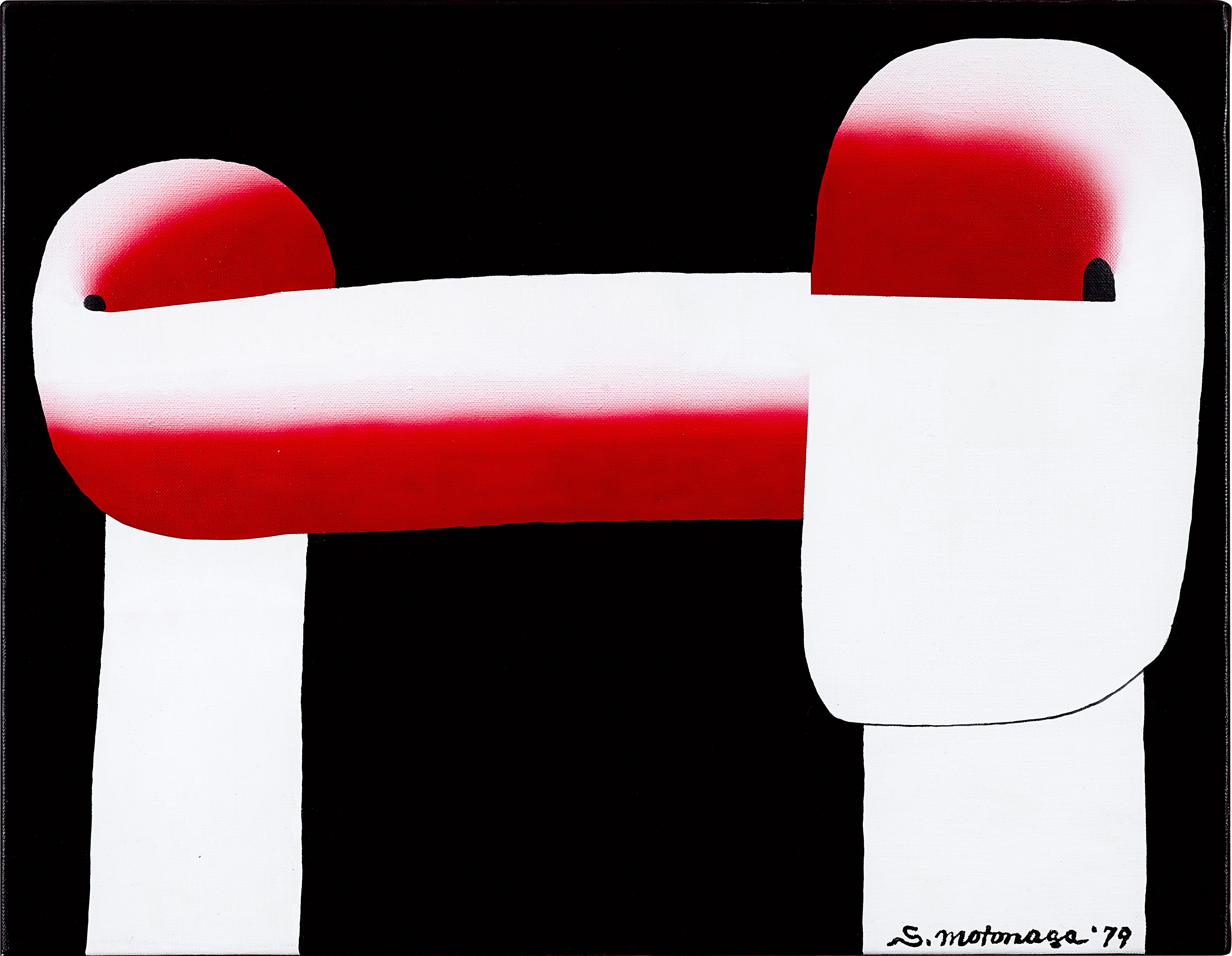
Red White Black 紅白黑
He had never been fully satisfied with paint on a flat surface. He wanted to understand what color could do when freed from its traditional constraints, when it could flow, pool, catch light, shift with the weather. His tube installations were radical acts of generosity as much as they were artistic experiments: he invited viewers to walk among color, to experience it as atmosphere and sensation rather than representation. What makes Motonaga's development so fascinating is the dialogue he maintained across his career between the ephemeral and the permanent.
His outdoor environmental works were by nature temporary, dependent on conditions that could not be replicated. But that spirit of experimentation, of color as living presence, flowed directly back into his paintings. The biomorphic forms that populate canvases like Green Form White Light from 1990 and Right Left Red from 1970 feel as though they have been caught mid motion, as though the colored liquid from his tube pieces has been frozen at its most graceful moment. These shapes, rounded and buoyant and deeply sure of themselves, read as organisms as much as they do as compositions.
Sadamasa Motonaga
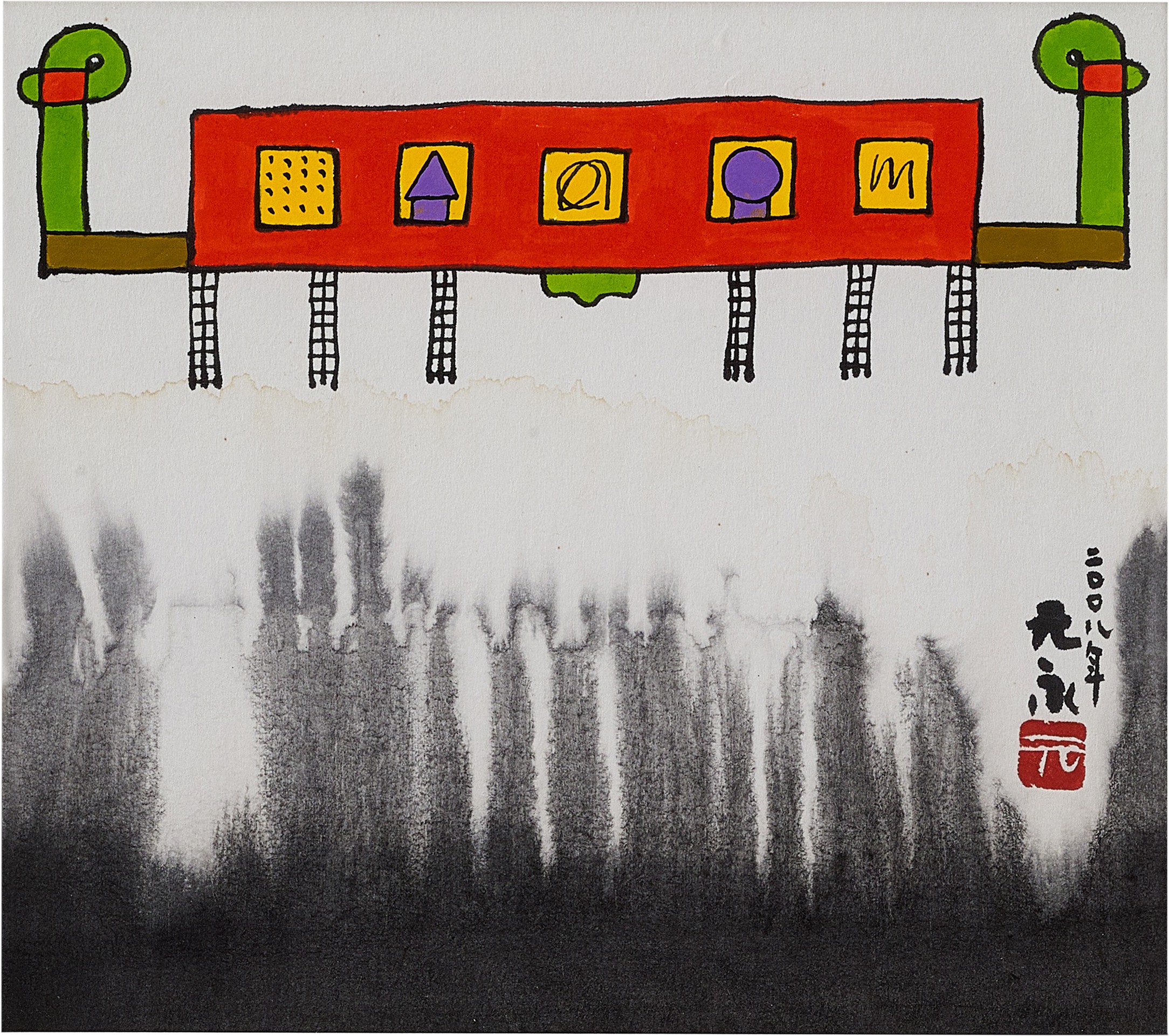
暈染上面
They breathe. The works on The Collection offer a generous window into the full range of his painted practice. Work from 1974 and Yon Kuru from the same year reveal an artist at a moment of confident synthesis, bringing together the lessons of his Gutai years with an increasingly refined personal vocabulary of form. Three Shapes are Drawn from 1978, rendered in acrylic and Chinese ink on paper, shows his ease with materials that connect to Japanese artistic tradition while remaining entirely contemporary in spirit.
Four Triangles Backed in Red from 1992 demonstrates how geometric structure and organic energy were never in opposition for Motonaga but were instead in constant productive conversation. And Red White Black, with its bold declarative title, announces a painter who understands that color is not decoration but argument. Each work rewards sustained looking, revealing layers of decision making beneath what initially appears effortless. For collectors, Motonaga represents one of the most compelling propositions in postwar Japanese art.
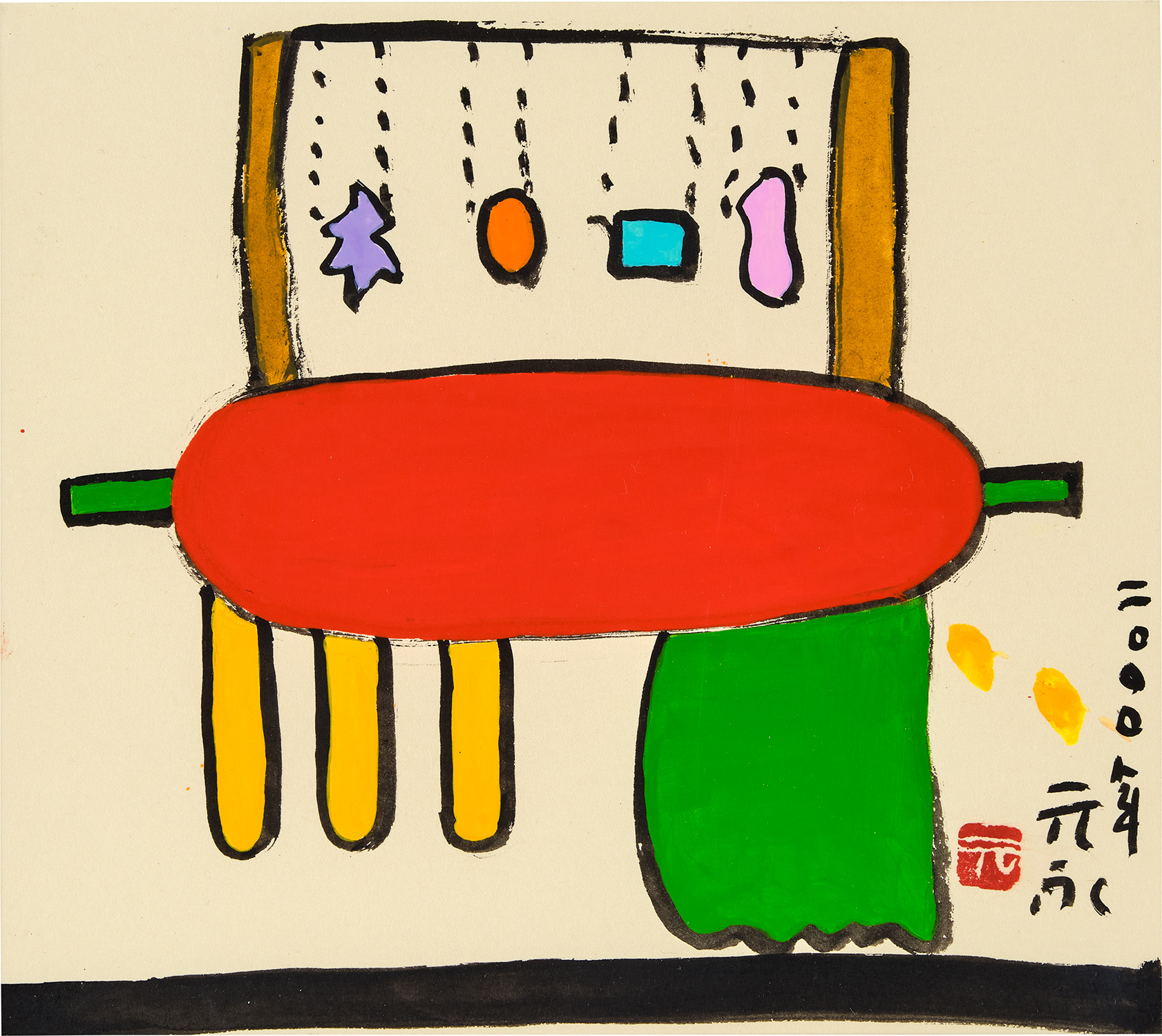
Sadamasa Motonaga
Red Oval and Shapes, 2000
His association with Gutai connects him directly to one of the most historically significant art movements of the twentieth century, a movement that anticipated Happenings, Process Art, and Installation Art while remaining rooted in a distinctly Japanese philosophical and cultural context. Works by Gutai artists have attracted serious institutional and collector attention internationally, with major retrospectives organized by the Guggenheim Museum in New York and sustained scholarly focus from curators and art historians across Europe and the United States. Within that context, Motonaga occupies a singular position: his paintings are among the most immediately beautiful and visually accessible of any Gutai artist, making them both intellectually serious and deeply livable. His works are held in the Ashiya City Museum of Art and History as well as significant private Japanese collections, and his presence in international auction results has grown steadily as awareness of Gutai's full breadth has expanded.
To understand Motonaga fully, it helps to place him in a broader constellation of artists working at the intersection of abstraction, color theory, and material experimentation. His sensibility resonates with that of Yayoi Kusama in its embrace of repetition and saturated color as vehicles for joy rather than anxiety. He shares with Sam Francis, who was himself deeply connected to Japan and Japanese aesthetics, a belief in paint as energy, as something that radiates outward from a surface rather than simply sitting on it. And he anticipates the concerns of later installation artists who would explore environmental immersion and the dissolution of the boundary between artwork and viewer.
Yet Motonaga's voice is irreducibly his own: warmer, more playful, more grounded in a tactile pleasure with materials that resists easy categorization. Sadamasa Motonaga died in 2011, leaving behind a body of work that feels more vital and more relevant with each passing year. At a moment when the art world continues to rediscover and properly celebrate the full scope of postwar abstraction beyond its New York center of gravity, his paintings and the extraordinary legacy of his environmental works stand as a reminder that the most adventurous art of the mid twentieth century was happening simultaneously on multiple continents. His colors still move.
His forms still breathe. And for any collector fortunate enough to live with one of his canvases, the experience of that daily encounter is precisely what great art promises and so rarely delivers: the sense that the world has been made larger, more luminous, and more alive.
Explore books about Sadamasa Motonaga
Sadamasa Motonaga: A Retrospective
Museum of Modern Art, Toyama
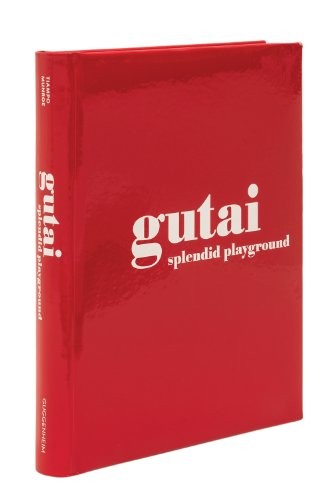
Gutai: Splendid Playground
Ming Tiampo
Gutai 1954-1972
Guggenheim Museum
Japanese Art After 1945: Scream Against the Sky
Various
Sadamasa Motonaga: Water and Light
Hiroshima City Museum of Contemporary Art