S. Sudjojono
The Soul Who Painted Indonesia Into Being
Artist Spotlight · The Collection Editorial
There are artists who document their era, and then there are artists who define it. S. Sudjojono belongs emphatically to the second category. When major Southeast Asian auction houses bring his canvases to market, the rooms grow quiet with a particular kind of reverence, the recognition that what is being offered is not merely a painting but a piece of living history.
S. Sudjojono
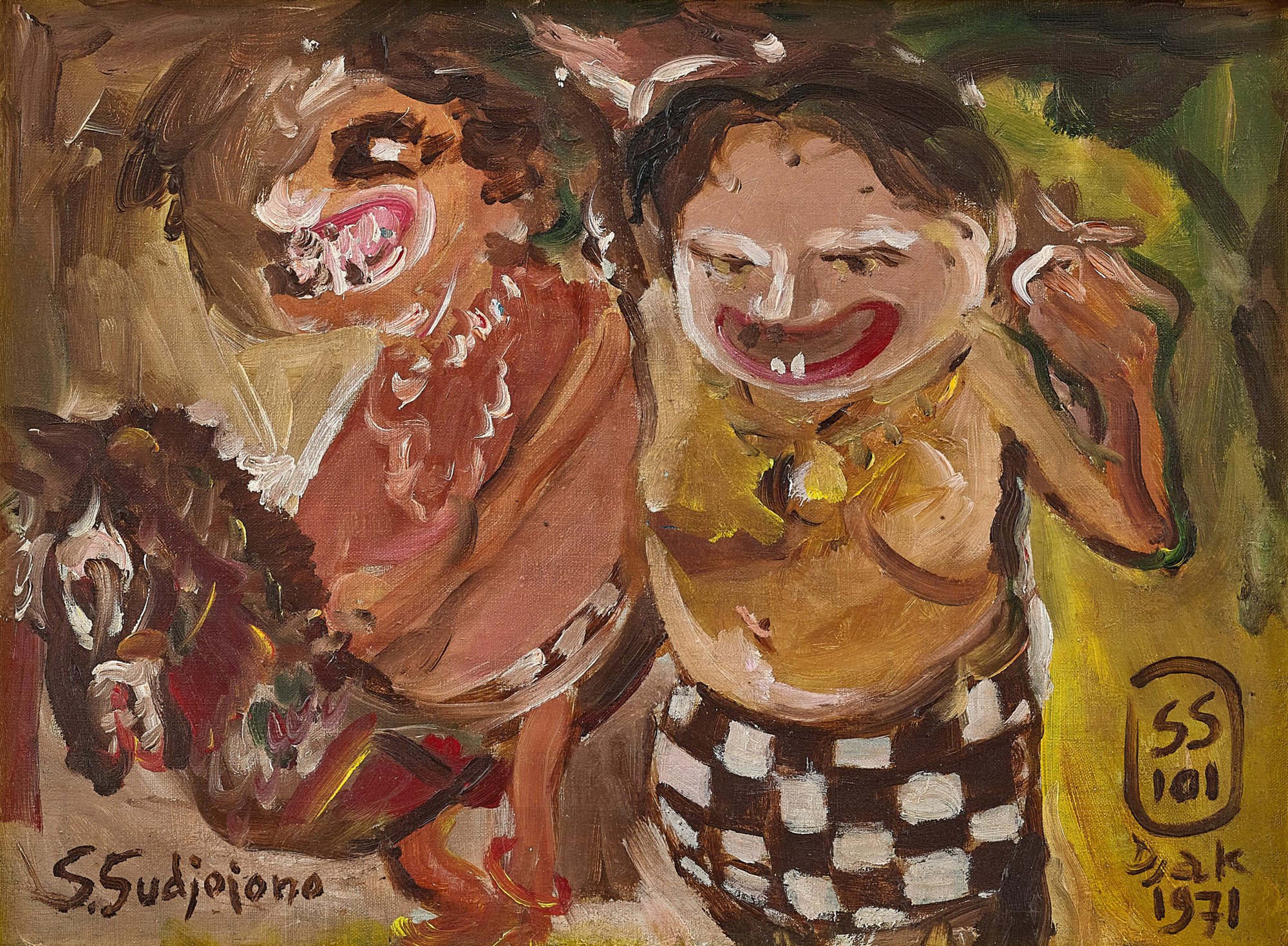
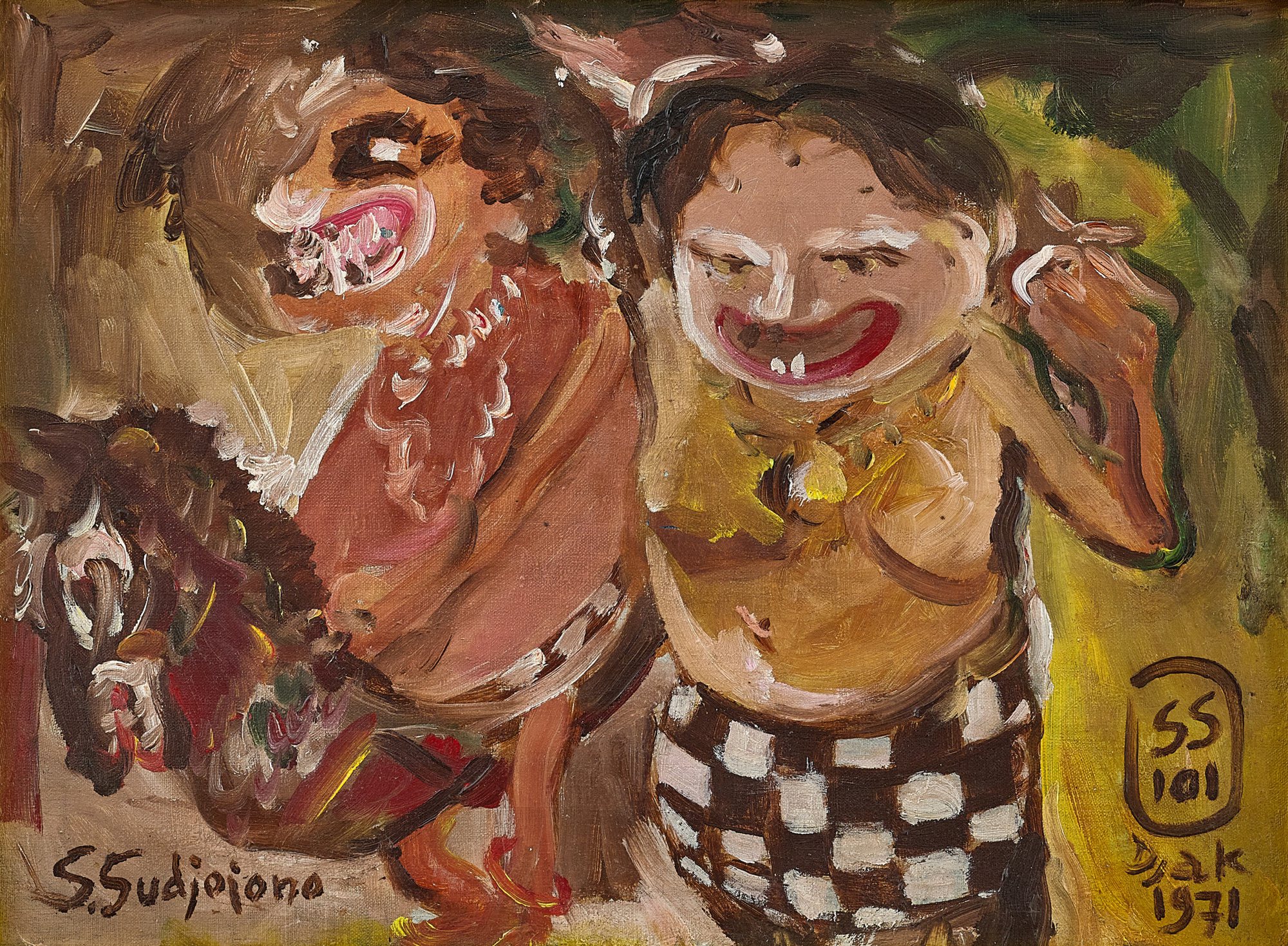
Kuda Lumping 入神舞蹈, 1971
His works have commanded record prices at Christie's and Sotheby's Southeast Asia sales over the past two decades, drawing serious collectors from Jakarta to Singapore to Hong Kong who understand that Sudjojono represents something irreplaceable: the conscience of a nation finding its voice through paint. Sudjojono was born in 1913, and the world he entered was one of profound colonial constraint. Indonesia was then the Dutch East Indies, a vast archipelago administered from afar, its cultural identity filtered through European assumptions about what art should look like and who was permitted to make it. The formal academies and salons that shaped artistic taste favored a decorative, romanticized vision of tropical life, one that pleased colonial patrons and sent Indonesian subjects into the background as picturesque detail rather than full human protagonists.
Growing up within this system, Sudjojono absorbed its lessons precisely long enough to reject them completely. His artistic education brought him into contact with the formal traditions of Western painting, but what animated him was something far more urgent than technique. He was a voracious reader and a passionate thinker, deeply engaged with questions of national identity and human dignity. By the late 1930s, his sense of mission had crystallized into collective action.
S. Sudjojono
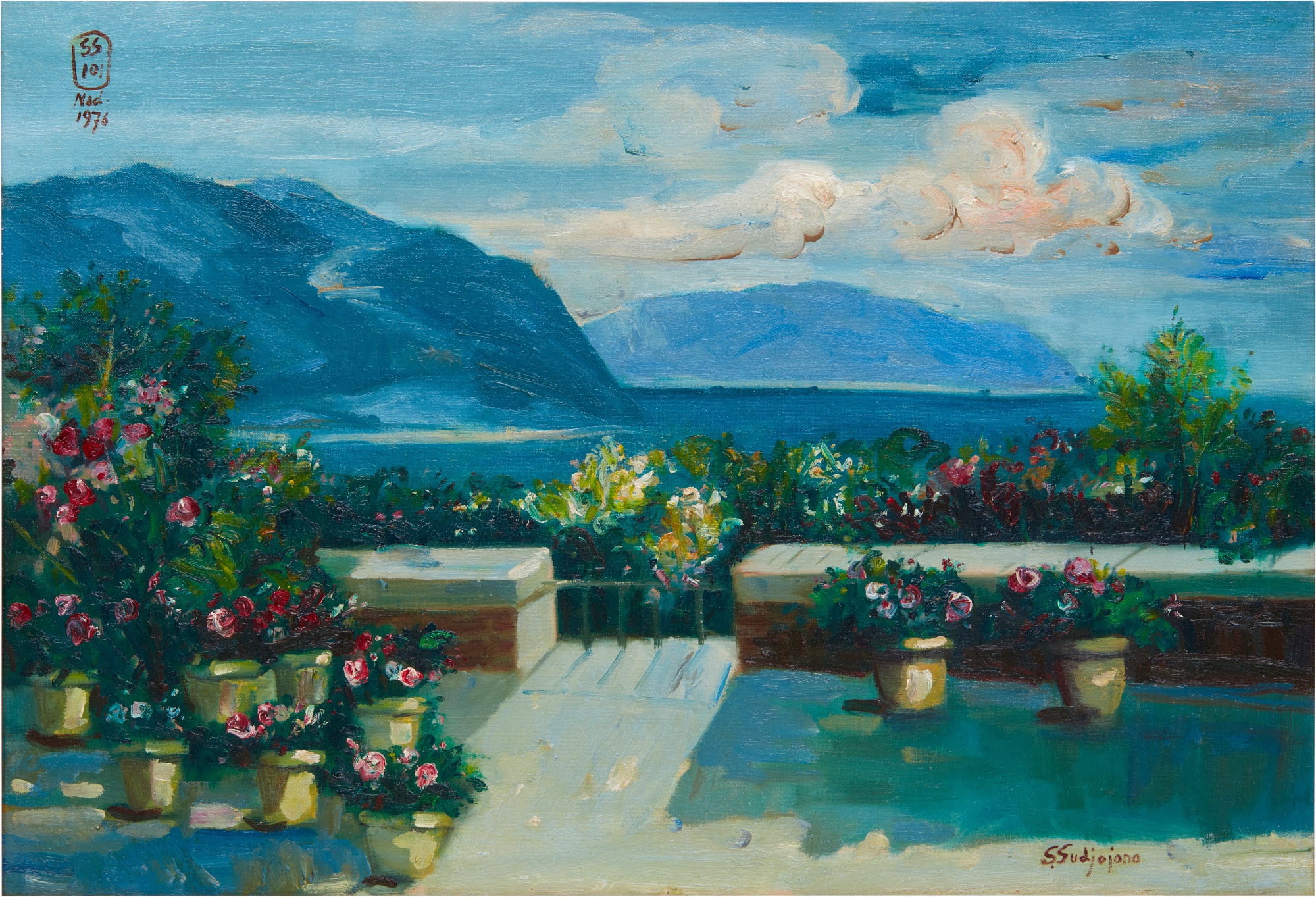
Beranda dengan Bunga Mawar 露台上的玫瑰, 1976
In 1938, he cofounded Persagi, short for Persatuan Ahli Ahli Gambar Indonesia, the Association of Indonesian Painters. This was a watershed moment not only in Indonesian art history but in the broader story of decolonial cultural movements across Asia. Persagi was a declaration of artistic sovereignty, insisting that Indonesian painters had not only the right but the responsibility to depict their own lives with honesty and emotional truth. The philosophy Sudjojono championed through Persagi was rooted in what he called jiwa ketok, a concept that might be translated as the visible soul.
He believed that great art must carry within it the inner life of its maker and the social reality of its moment. This was a direct challenge to the polished, distanced aesthetics that dominated colonial salon culture. Where others painted serene landscapes and idealized genre scenes, Sudjojono painted struggle, labor, longing, and resilience. His figures are present in their bodies, weighted with the specific gravity of people living through extraordinary historical pressures.
The brushwork is expressive and searching, never merely decorative, always reaching for something essential beneath the surface of appearances. Among the most celebrated works available to collectors today are his later paintings, which demonstrate the full maturity of his vision. His 1971 oil on canvas "Kuda Lumping" captures the trance dance tradition of Javanese performance culture with a luminous intensity that feels both documentary and spiritual. The horses, the dancers, the state of possession and release, all rendered with a brushstroke that vibrates between control and abandon, mirror the very dynamic that defined his lifelong practice.
His 1976 work "Beranda dengan Bunga Mawar," or Terrace with Roses, shows a different and equally compelling facet of his sensibility. Here the domestic and the contemplative take center stage, the roses carrying a tender weight that reminds us Sudjojono's emotional range extended far beyond the overtly political into the intimate and lyrical. Together these two works form a kind of testament, evidence of an artist who never stopped growing. For collectors, the appeal of Sudjojono operates on multiple levels simultaneously.
There is the historical dimension: owning a Sudjojono is owning a primary document of one of the twentieth century's great independence movements, an era when art and national consciousness were inseparable. There is the purely aesthetic dimension: his canvases reward sustained looking, revealing new textures and emotional registers with each encounter. And there is the market dimension, increasingly compelling to sophisticated collectors across the region. His works have appeared in major sales at Christie's Hong Kong and Sotheby's Singapore, where they consistently attract competitive bidding from both institutional and private buyers.
The supply of major works is genuinely limited, as much of his output is held in Indonesian national collections and private family holdings, which means that each canvas that does reach the open market carries exceptional significance. To understand Sudjojono fully it helps to place him within a broader constellation of artists who were grappling with similar questions of identity, modernity, and post colonial selfhood during the same period. In the Philippines, artists like Victorio Edades were leading their own modernist revolution against academic convention. In India, the Progressive Artists Group formed around F.
N. Souza and M. F. Husain in 1947 shared Sudjojono's conviction that a new national art required new visual languages rooted in lived reality rather than imported aesthetics.
These were parallel awakenings, each specific to its own cultural context yet united by a common insistence that the artist's first obligation is to truth rather than to taste. Sudjojono stands as the most significant figure in this movement within the Indonesian context, his influence traceable through generations of painters who came after him. His death in 1986 closed a remarkable chapter, but the conversation he started has never stopped. Indonesian museums and cultural institutions have continued to organize retrospectives and scholarly programs devoted to his legacy, and a new generation of collectors, many of them Indonesian diaspora with deep ties to the nation's history, have entered the market for his work with genuine passion and growing sophistication.
The international art world, increasingly attentive to modernist movements outside the traditional Western canon, has also begun to engage more seriously with what Sudjojono represents. He is not a regional curiosity but a genuinely world historical figure, an artist whose insistence on the visible soul of his people produced works of lasting beauty and moral force. To collect Sudjojono is to participate in that insistence, to carry forward the light of a vision that was hard won and is still very much alive.
Explore books about S. Sudjojono
S. Sudjojono: Pelukis Realis Indonesia
Asikin Imron
Sudjojono: Seniman Pejuang
Bambang Murphy Setiawan
Indonesian Modern Art: S. Sudjojono and Nationalist Vision
Claire Holt
Sudjojono: Kehidupan dan Karya
Kusnadi