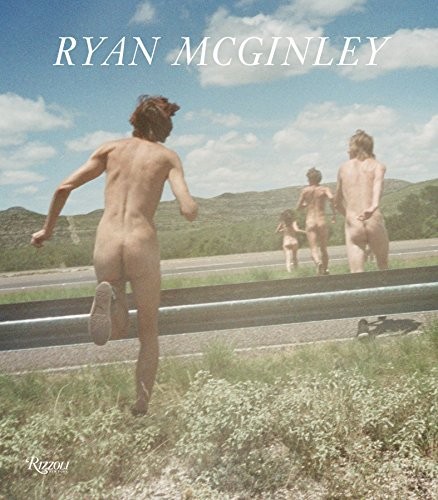
Ryan Mcginley
Ryan McGinley: Freedom, Youth, and Light
Artist Spotlight · The Collection Editorial
“I want the pictures to feel like a dream, like something you experienced but can't quite remember.”
Ryan McGinley, Interview Magazine
When the Whitney Museum of American Art presented Ryan McGinley with a solo exhibition in 2003, he became the youngest photographer ever to receive that honor, aged just twenty five. The show announced the arrival of a singular vision, one that would go on to reshape how an entire generation understood documentary photography, portraiture, and the American landscape. Two decades on, that vision has only deepened, and McGinley's place in the canon of contemporary American photography feels not just secure but essential. McGinley was born in 1977 in Ramsey, New Jersey, and grew up in a large Irish Catholic family.
He moved to New York City to study graphic design at Parsons School of Design, arriving in the late 1990s at a moment when downtown Manhattan was alive with a particular kind of creative energy. He fell in with a community of artists, skaters, and musicians whose lives became the raw material of his earliest work. His camera, often a cheap point and shoot loaded with film, was simply always present, recording the texture of friendship and late nights and the kind of reckless joy that belongs specifically to being young in a city. His breakthrough came with a self published monograph in 2002 titled The Kids Are Alright, which he distributed himself and which quickly circulated through New York's art world like a rumor that turned out to be true.
The images were candid, warm, and formally surprising, full of naked bodies, borrowed light, and the particular abandon of people who trust the person holding the camera completely. The Whitney show followed almost immediately, and with it came recognition that McGinley was doing something genuinely new. He was not merely documenting a subculture but constructing a lyrical mythology around it, one that drew as much from American road literature and the romanticism of the open landscape as it did from the downtown scene he inhabited. Over the years McGinley's practice evolved from the intimate interiors of his early New York work toward something more expansive and choreographed.
Beginning in the mid 2000s he began organizing road trips across the American West and Southwest, casting groups of young people and photographing them in vast natural settings, deserts, forests, rivers, and open plains. The resulting images have a quality that sits somewhere between reportage and painting, the figures small against enormous skies, their bodies becoming almost abstract elements within compositions that recall the American sublime tradition. Yet the intimacy is never lost. Even in his largest, most cinematic frames, you feel the trust between photographer and subject, the sense that something genuinely shared is being recorded rather than staged.
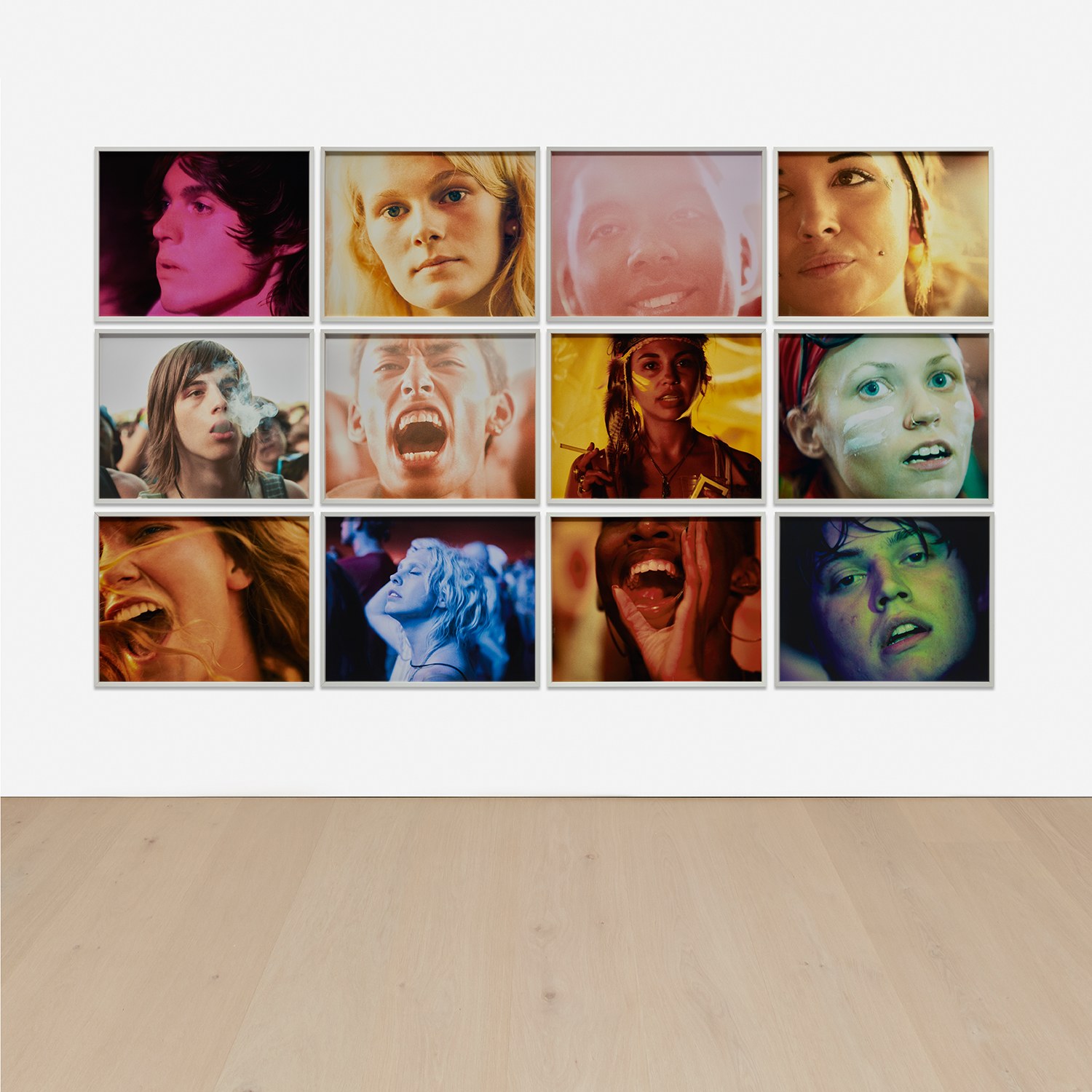
His signature works include the ongoing series of naked figures released into natural environments, images that manage to feel simultaneously free and carefully considered. Works from series such as Moonmilk and Irregular Renditions have been exhibited at major institutions and collected widely. The photographs have a saturated, almost luminous quality that owes something to McGinley's deep engagement with color printing and his long collaborations with darkroom specialists. The scale at which he prints matters enormously.
Seen large, these images have a physical presence that draws the viewer in bodily, not just visually. Collectors who have lived with his large format prints often describe the experience of returning to them over years as genuinely sustaining. From a collecting perspective McGinley occupies an interesting position in the market. His work is held in significant private and institutional collections internationally, and editions of his most celebrated images appear at auction with regularity at major houses including Christie's and Phillips.
Prices for significant prints have climbed steadily, reflecting both his critical stature and the broad emotional appeal of the work. Collectors are drawn to the photographs for reasons that are difficult to reduce to a single quality, there is the formal beauty, the cultural specificity, the sense of a world simultaneously vanished and preserved. For those entering the market now, works from his road trip series of the mid 2000s through the 2010s represent some of the most coherent and historically significant bodies of work available. McGinley exists within a rich tradition of American photographers who have trained their attention on youth, freedom, and the body.
His work is in genuine conversation with that of Nan Goldin, whose unflinching intimacy he has openly acknowledged as an influence, and with Larry Clark, whose Tulsa established a template for photographing subcultures from the inside. At the same time McGinley brings an optimism and a physical lyricism to the tradition that is distinctly his own. Critics have also noted connections to the pastoral romanticism of Wilhelm von Gloeden and the American landscape photography of the twentieth century, suggesting that his work synthesizes threads that had not previously been brought together in quite this way. What makes McGinley matter today, more than twenty years after that Whitney debut, is precisely the quality that was present from the beginning: an absolute conviction that joy and beauty and intimacy are worthy subjects for serious art.
In an era when photography is often most praised for its forensic or political dimensions, his continued insistence on ecstasy as a legitimate and even urgent concern feels both countercultural and necessary. His photographs remind us that the camera can be an instrument of celebration rather than critique, and that celebrating something well, with rigor and love and technical precision, is itself a profound act. For collectors, for institutions, and for anyone who cares about the ongoing story of American photography, his work remains one of the most vital and generous contributions of his generation.
Explore books about Ryan Mcginley