Ryan Gander
Ryan Gander Makes the World Think Again
Artist Spotlight · The Collection Editorial
When Ryan Gander represented Great Britain at the 2019 Venice Biennale, the art world was reminded of something it already knew but perhaps needed restating: that the most profound conceptual practice can feel, above all, like an invitation. His contribution to that most prestigious of international stages arrived not as a declaration but as a question, characteristically oblique and generous, asking viewers to reconsider what an exhibition space can hold, what language can mean, and what it feels like to be genuinely surprised by art. For a moment, the long corridors and heat of the Giardini seemed to belong entirely to his sensibility, which is one of the rarest things a living artist can achieve. Gander was born in Chester, England, in 1976, and his formation as an artist took place through the rigorous conceptual culture of British art education at its most ambitious.
Ryan Gander
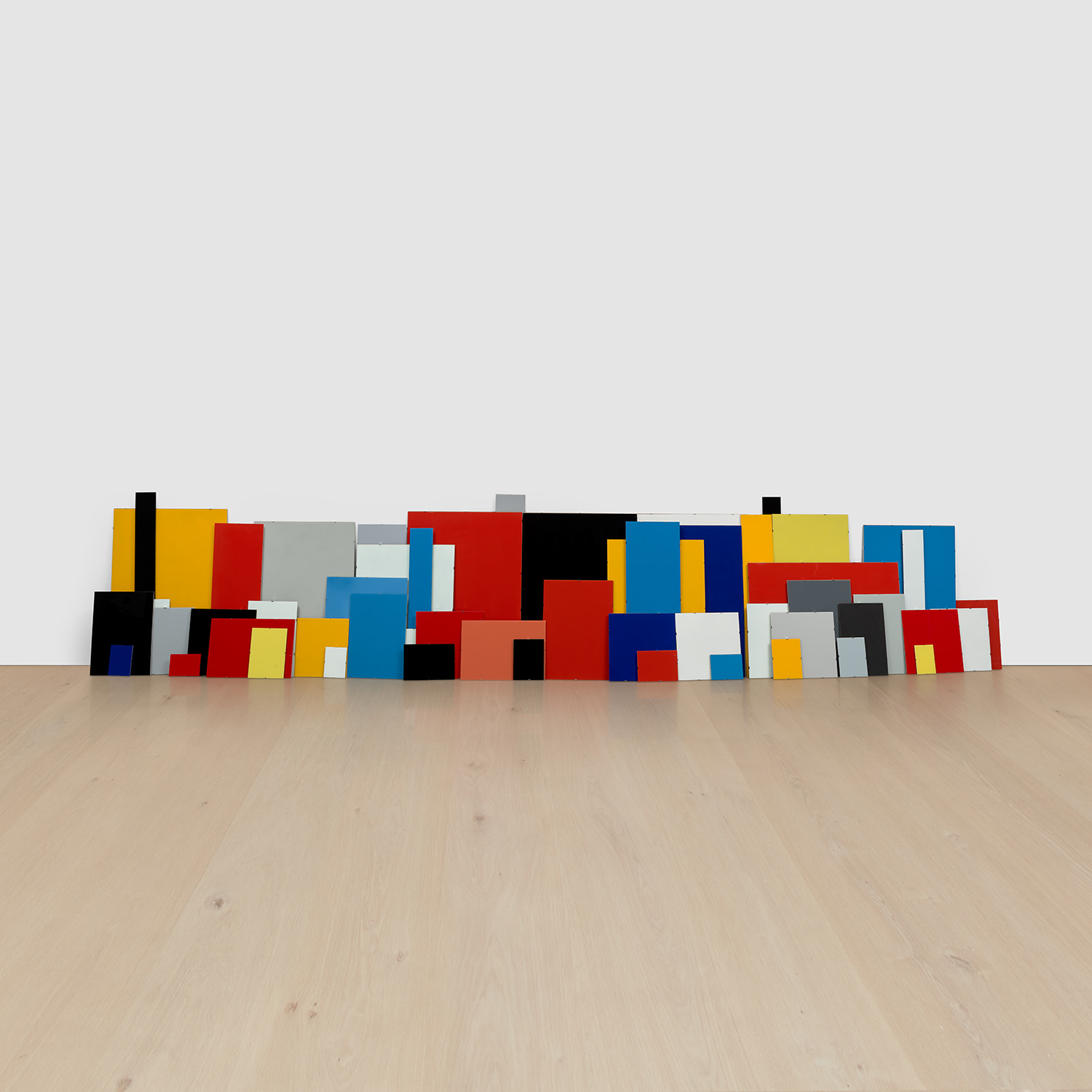
Your present time orientation (Second Act) - Random Abstraction, 2011
He studied at Manchester Metropolitan University and later at the Jan van Eyck Academie in Maastricht, the latter being a postgraduate research institute that has long been a crucible for artists interested in language, systems, and the edges of meaning. The Netherlands, with its tradition of precise formal inquiry and institutional critique, proved to be genuinely formative. Gander absorbed the intellectual frameworks available there while developing something distinctly his own: a warmth, a playfulness, and a commitment to narrative that set him apart from the cooler registers of much European conceptualism. His practice resists easy summary, which is part of its lasting appeal.
Working across sculpture, installation, text, drawing, lecture performance, and objects that defy easy categorization, Gander has built a body of work organized around the idea that meaning is always constructed, always contingent, and always slightly funnier than we expect. He is deeply interested in how systems of knowledge are assembled and transmitted, how institutions frame understanding, and how the individual viewer brings their own interpretive apparatus to any encounter with art. These are serious philosophical concerns, but Gander handles them with a lightness of touch that keeps his work accessible without ever being simplistic. His lecture performances in particular have become legendary in art world circles, blurring the line between academic presentation and theatrical event in ways that leave audiences uncertain, delighted, and thinking hard.
Ryan Gander
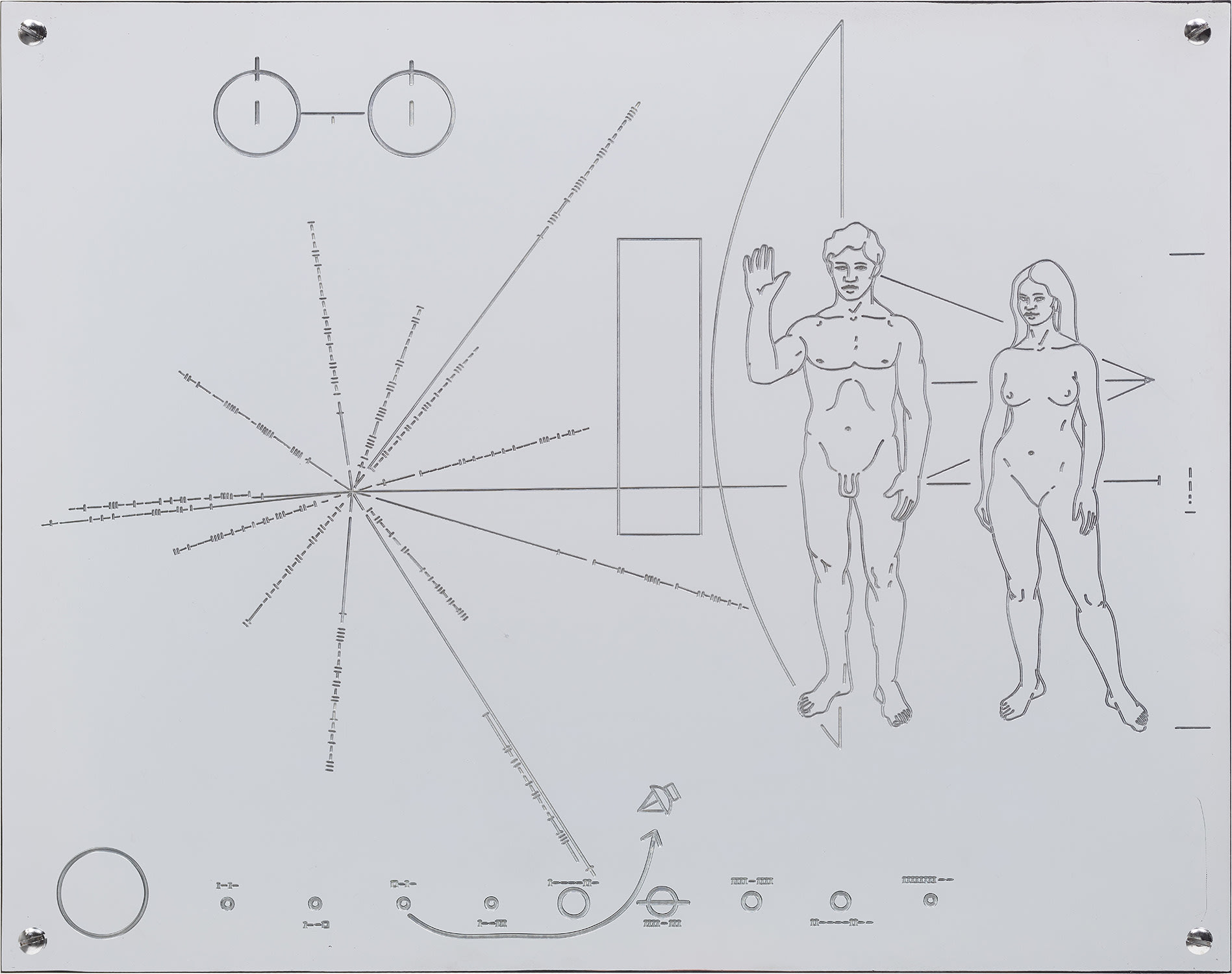
Plaque / Identity Tag, 2007
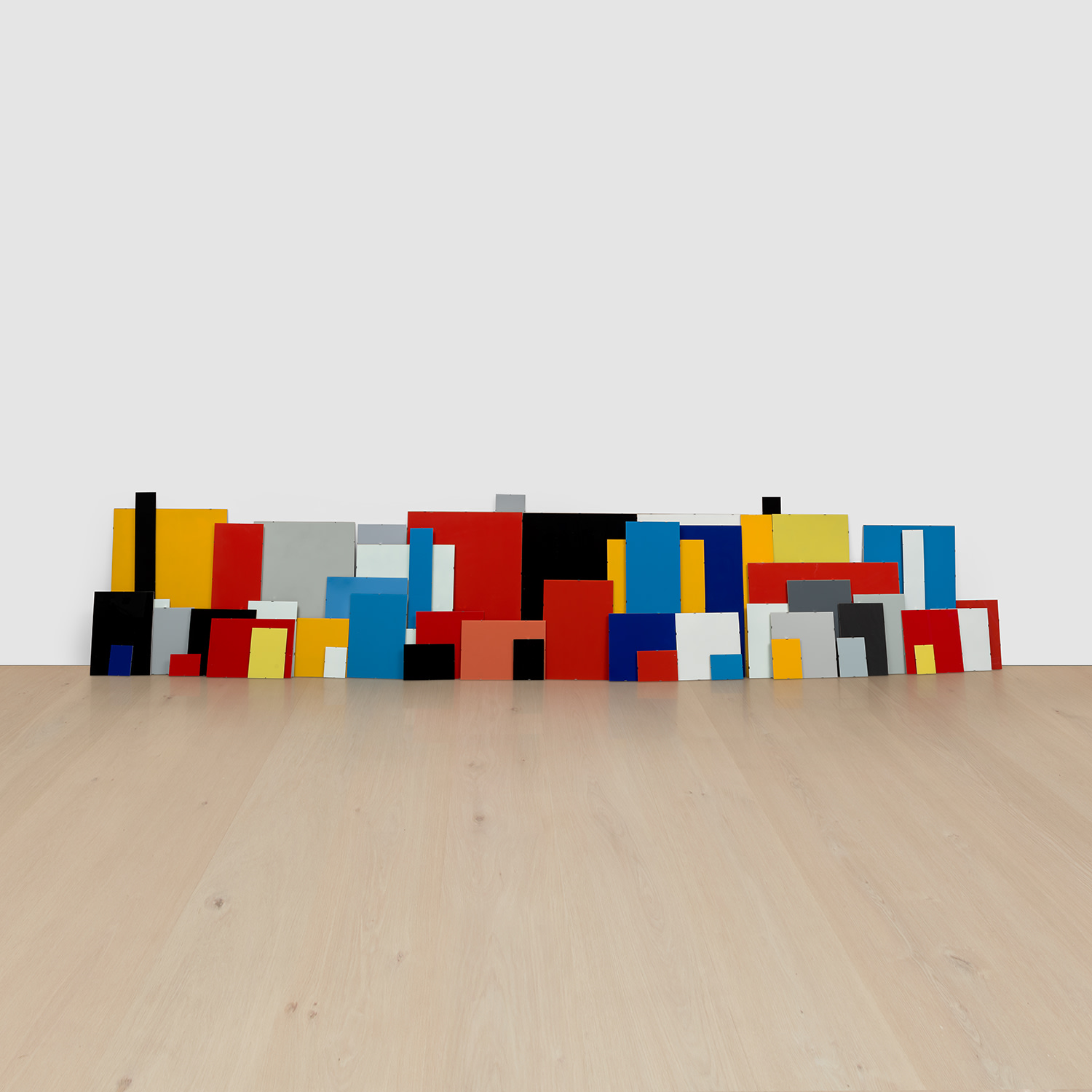
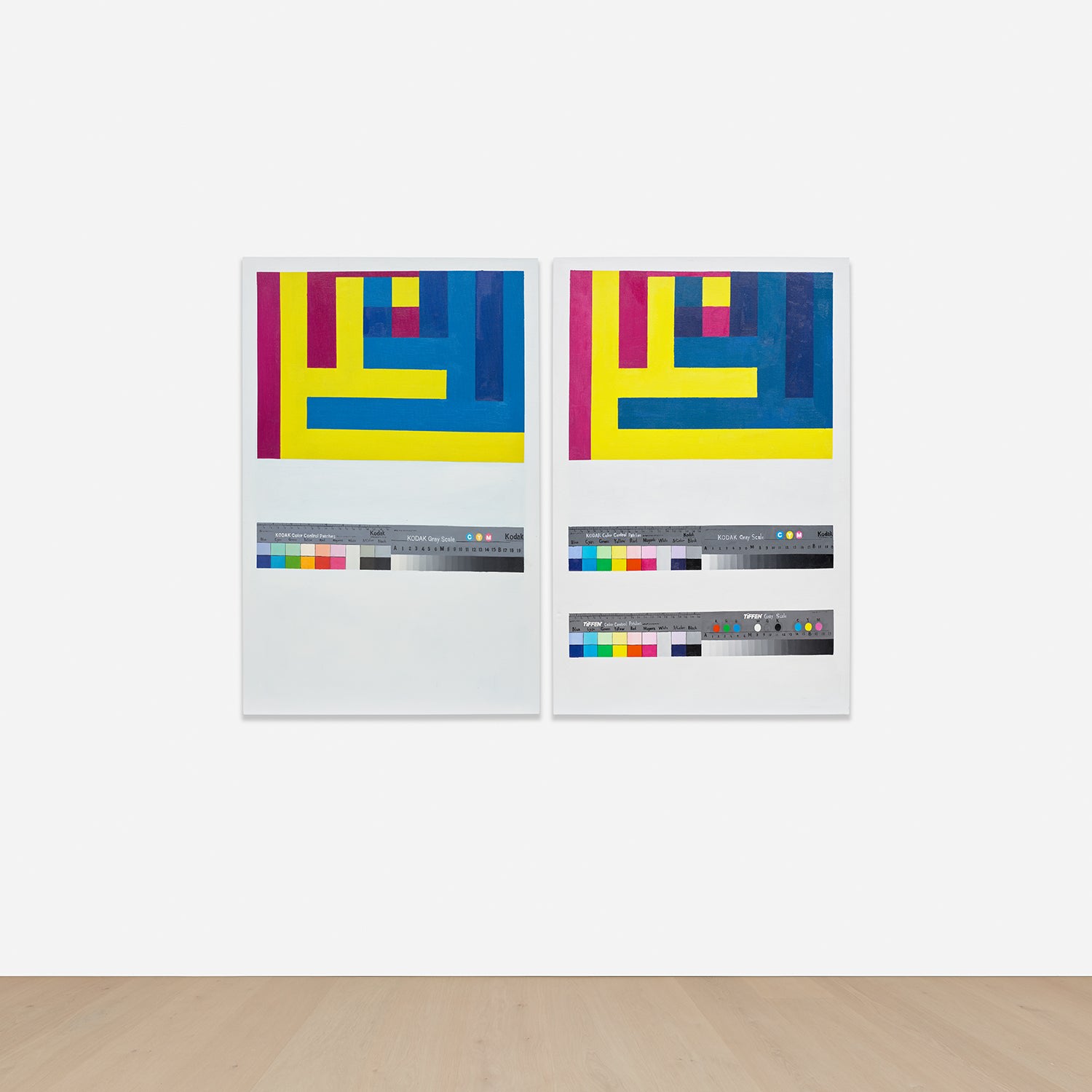
Among his most celebrated works is the 2011 piece "Your present time orientation (Second Act)" which takes the form of custom painted glass in perspex clip frames across 56 individual parts. The work is an extraordinary example of how Gander uses seriality and fragmentation to raise questions about perception and accumulation. Each component is modest on its own; together they constitute something that feels both systematic and deeply poetic. Also from 2011 comes "A Study for English Girls and Foreign Girls" and the diptych "Remember me, mistakenly, Although you have given me everything," an oil on canvas work whose title alone demonstrates his gift for language that carries emotional weight without sentimentality.
The companion piece referencing Fritz Glarner extends this investigation into painting's history and how abstraction carries memory, showing that even when Gander works in traditional media he is always thinking about what that medium inherits and what it forgets. His 2014 marble resin work "I is (IX)" reflects a sustained interest in materials that perform or deceive, objects that look like one thing and are quietly another, which is perhaps the most persistent metaphor in his entire practice. For collectors, Gander presents a genuinely exciting proposition. His work operates at the intersection of rigorous conceptual art and deeply human storytelling, meaning that pieces retain their intellectual complexity across decades while remaining emotionally resonant in domestic and institutional settings alike.

Ryan Gander
A Study for English Girls / Foreign Girls, 2011
The breadth of media he works in, from glass and marble resin to oil on canvas to works on paper published through distinguished publishers such as Polígrafa Obra Gráfica in Barcelona, means that entry points exist at multiple price levels and scales. Editions such as the pencil annotated series "I have Got the Money if You Have Got the Time," produced in an edition of six, represent the kind of considered multiples that serious collectors prize: intimate, rigorous, and deeply connected to the larger themes of his practice rather than peripheral to it. Gander has shown extensively at major institutions including Manchester Art Gallery, and his international profile continues to grow in ways that tend to support long term value for early and mid career collectors. Within the broader landscape of contemporary British conceptualism, Gander occupies a position that is genuinely singular.
He shares certain preoccupations with artists such as Liam Gillick and Simon Starling, both of whom are interested in the structures that organize knowledge and the narratives that institutions tell about themselves. There are also affinities with the work of Lawrence Weiner in the centrality of language, and with the institutional critique tradition that runs from Marcel Broodthaers through to the present. But Gander's particular blend of autobiography, fiction, humor, and rigorous formal intelligence gives his work a quality that is unmistakably his own. He has described his practice as a kind of storytelling machine, and that description captures something important: his works generate meanings rather than simply contain them.
Ryan Gander
Remember me, mistakenly - Although you've given me everything, 2011
What makes Gander genuinely important for this moment is precisely his insistence that conceptual art need not be cold, distant, or exclusionary. At a time when the art world is rightly asking questions about accessibility and whose stories get told, his practice offers a model of intellectual ambition that is also genuinely open. The "Plaque and Identity Tag" work from 2007 is a perfect example: a piece that addresses questions of naming, identity, and institutional authority through an object so apparently simple that it rewards repeated looking and thinking over years. This is the quality that collectors most often describe when they speak about living with his work: it does not exhaust itself.
It keeps producing new thoughts, new connections, new small pleasures. For a practice still very much in full development, and for an artist who continues to surprise even those who have followed him for two decades, that is perhaps the most compelling recommendation of all.
Explore books about Ryan Gander
Ryan Gander: The Kroupa Collection
Ryan Gander, Vít Havránek
Ryan Gander: Works 2000-2010
Ryan Gander, Various curators
Ryan Gander: Catalogue Raisonné
Ryan Gander
Ryan Gander: Selected Works
Ryan Gander, Jens Hoffmann