Ruth Asawa
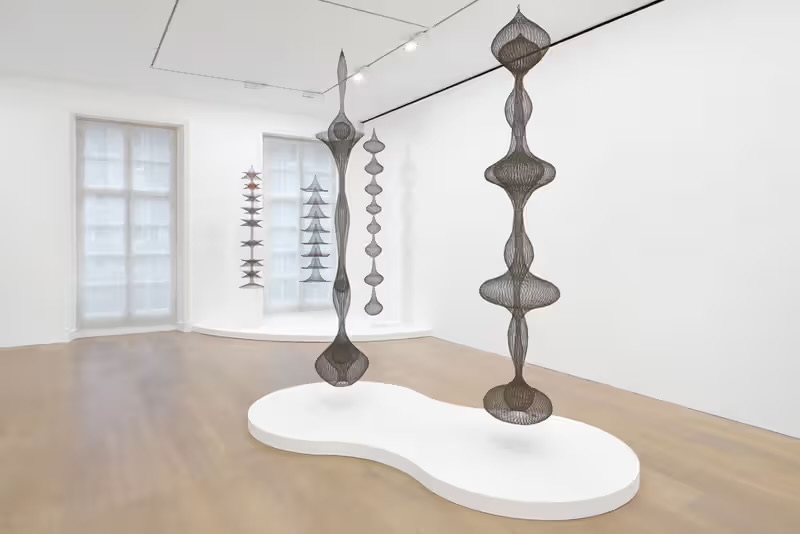
Ruth Asawa: Wire, Wonder, and Enduring Grace
Artist Spotlight · The Collection Editorial
“I thank my mother for sending me to school. I thank the government for sending me to camp. And I thank my teachers for teaching me.”
Ruth Asawa, public statement
In 2023, the San Francisco Museum of Modern Art continued to honor Ruth Asawa as one of the most quietly radical artists of the twentieth century, her cascading wire sculptures drawing visitors into a state of meditative wonder that few artists have ever achieved. That same year, her works appeared in major institutional surveys celebrating postwar American abstraction, and her public fountains in San Francisco remained among the most beloved civic artworks in the United States. Asawa's reputation, long cherished by those who knew her work intimately, has grown into something approaching universally acknowledged greatness. The art world has fully arrived at what her admirers understood for decades: that she was essential.
Ruth Asawa
Untitled
Ruth Asawa was born in 1926 in Norwalk, California, the fourth of seven children raised by Japanese immigrant parents who farmed the fertile land of Southern California. Hers was a childhood rooted in agricultural rhythms, in the careful observation of growing things, of vines and blossoms and the patient geometries of nature. That closeness to the organic world would never leave her work. When the United States government issued Executive Order 9066 following the attack on Pearl Harbor, the Asawa family was forcibly removed from their home and sent first to the Santa Anita Assembly Center and then to the Rohwer War Relocation Center in Arkansas.
It was an experience of profound injustice that Asawa would carry with dignity and without bitterness for the rest of her life, channeling its lessons into a lifelong commitment to community, education, and the redemptive power of art. At Rohwer, Asawa was taught to draw by Japanese American artists who were themselves incarcerated, an act of generosity and cultural transmission that she would later describe as transformative. After the war, denied admission to teaching programs because of discrimination against Japanese Americans, she found her way to Black Mountain College in North Carolina, where she studied from 1946 to 1949. Black Mountain was then the most intellectually alive arts institution in America, a gathering place for Josef Albers, Merce Cunningham, John Cage, and Buckminster Fuller.
Ruth Asawa
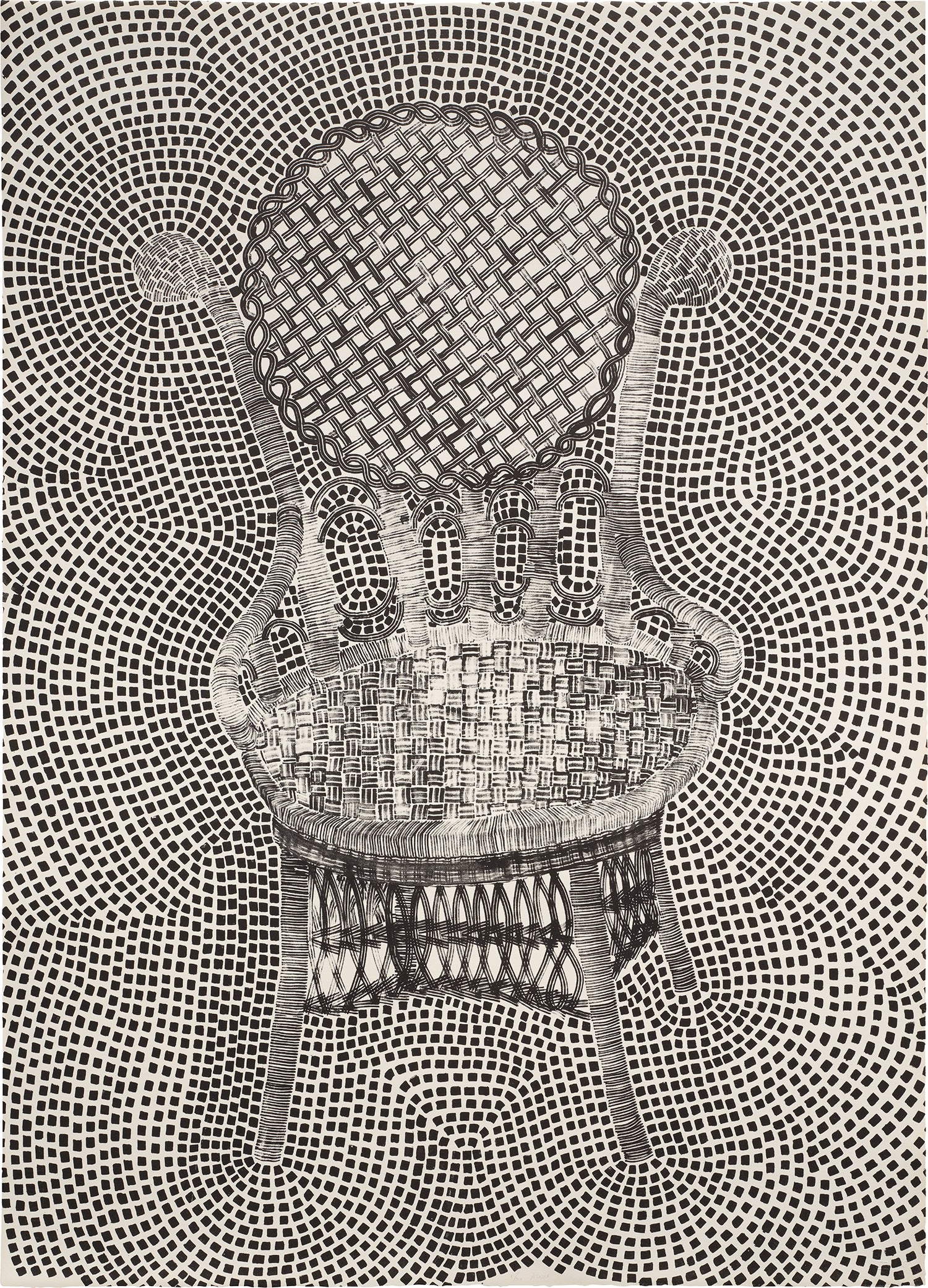
Chair (TAM.1558, Addie's Chair (Positive))
Under Albers, Asawa developed her understanding of form, structure, and the relationship between material and meaning. She absorbed the Bauhaus tradition of disciplined making while discovering her own instinct for improvisation and organic growth. It was at Black Mountain that she also met the architect Albert Lanier, whom she married in 1949 and with whom she raised six children in San Francisco. Asawa began working with wire in the late 1940s after a trip to Mexico, where she learned looping techniques from basket weavers in Toluca.
“Everything I do is related to one another, whether it is working with children, cooking, or making sculpture.”
Ruth Asawa
The discovery was a revelation. Using a continuous loop of wire, she began constructing sculptures that seemed to breathe, that captured interior and exterior space simultaneously, that made visible the invisible logic of growth and structure. Her method required extraordinary patience and physical intelligence: each sculpture was built loop by loop, from the inside out, without armature or welding. The resulting forms, often hung in clusters, caught light in ways that no cast or carved sculpture could.
Ruth Asawa
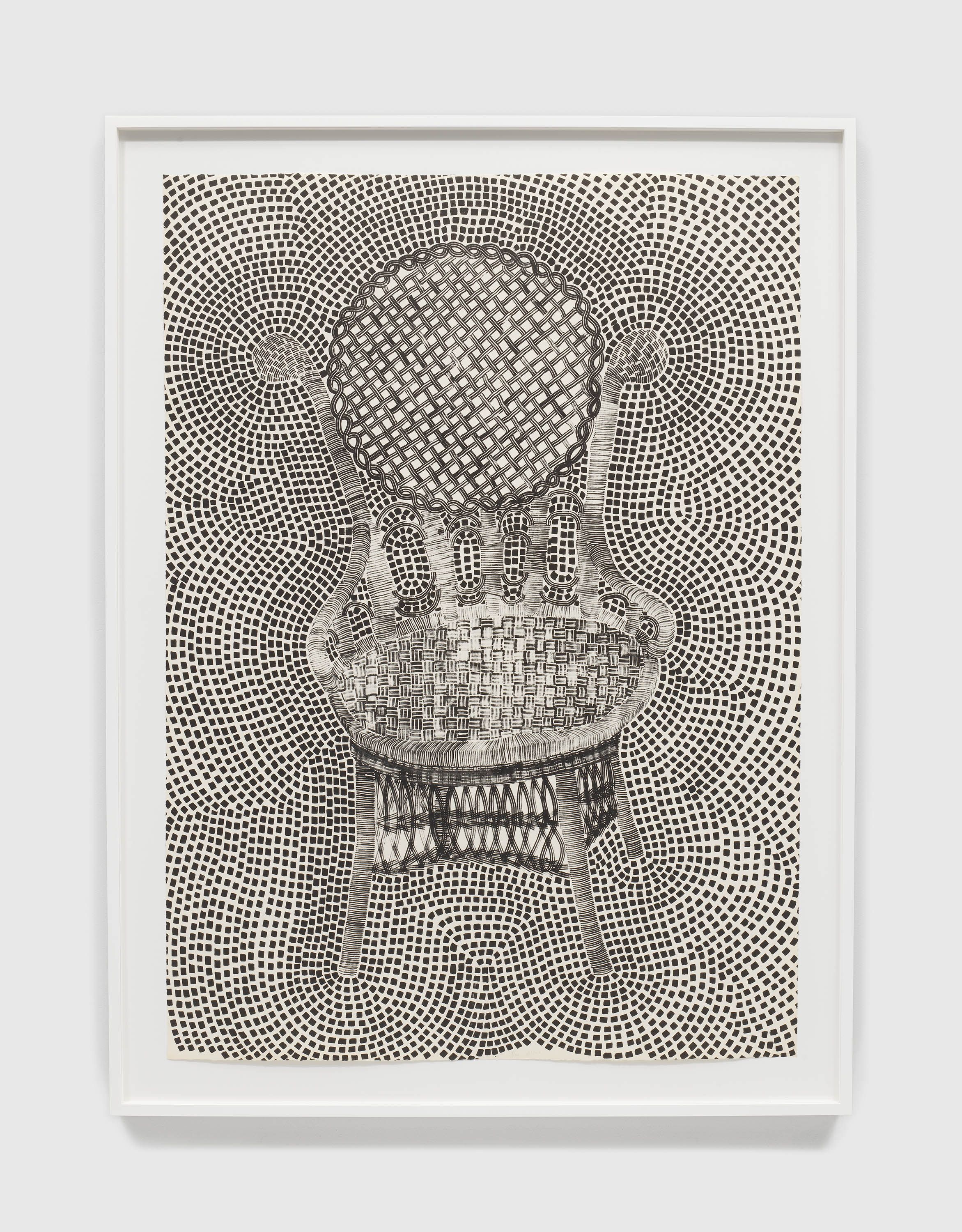
Chair (TAM.1558, Addie's Chair), 1965
They shifted with the viewer's movement, casting layered shadows, suggesting forms found in nature: seed pods, coral, the internal architecture of cells. By the 1950s, she was exhibiting at the Peridot Gallery in New York, where she attracted serious critical attention and the admiration of collectors who recognized something genuinely new. Among her most celebrated works are the wire sculptures that hang like ethereal forms suspended between the material and the immaterial. Her Untitled wire pieces, including those wrought from copper and brass wire, demonstrate the full range of her technical and conceptual achievement.
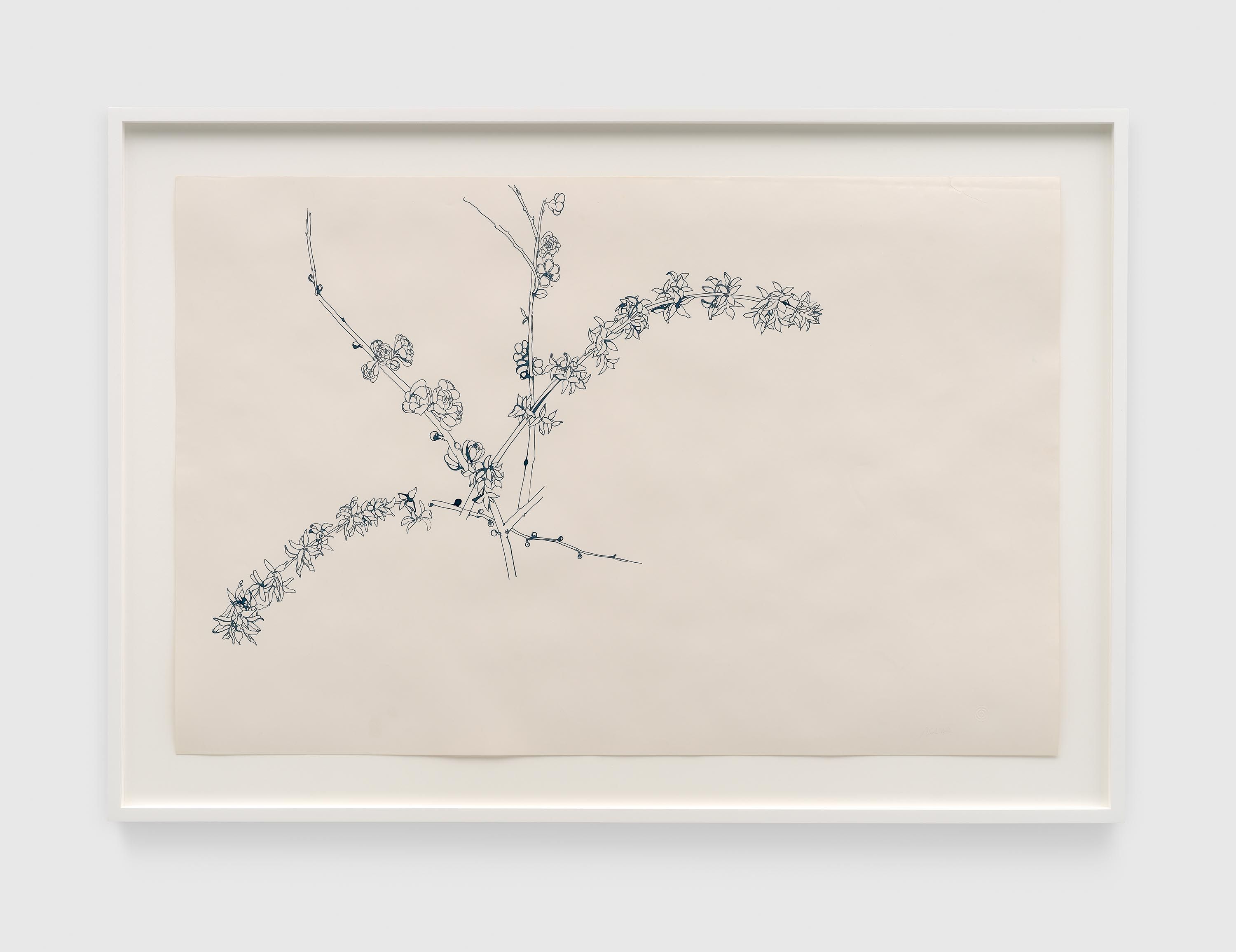
Within each looping structure lives an entire universe of negative space, the air inside the form as integral to the work as the wire itself. Her prints and works on paper, including delicate ink drawings such as her studies of loquat leaves and blossoms and flowering quince, reveal another dimension of her practice: a draftswoman of extraordinary sensitivity, capable of rendering the natural world with the precision of a scientist and the feeling of a poet. Her lithographs, including the striking Chair series produced in the 1960s, show her engagement with the everyday object as subject, her ability to find formal complexity in the most familiar things. From a collecting perspective, Asawa occupies a position that is both historically significant and increasingly difficult to access at the highest levels.
Ruth Asawa
Untitled (PF.597, Flowering Quince), 1992
Her wire sculptures are held by major institutions including the Whitney Museum of American Art, SFMOMA, and the Smithsonian American Art Museum, and when works of this caliber appear at auction, they attract fierce competition. Her works on paper and prints offer collectors a meaningful and more accessible point of entry into her practice, and they reward close attention. The ink drawings in particular carry the directness of a lifelong observation of the natural world. Collectors drawn to Asawa often share an appreciation for artists such as Alexander Calder, whose sculptural wit and command of line in space share something of Asawa's spirit, and Eva Hesse, whose exploration of process, repetition, and organic form resonates with Asawa's methods.
Within the broader context of postwar American abstraction, Asawa stands as a figure who pursued her own vision with total commitment, outside the dominant movements of her era, and was ultimately vindicated by history. Asawa was also a tireless advocate for arts education, founding what would eventually become the San Francisco School of the Arts, now renamed the Ruth Asawa San Francisco School of the Arts in her honor. Her public fountains in Japantown, Ghirardelli Square, and Union Square are woven into the daily life of the city she loved. She believed that art was not a luxury but a necessity, that the ability to make things with one's hands was fundamental to human dignity and community.
This conviction grew directly from her own experience: from the artists who taught her in the camps, from the basket weavers in Mexico who showed her a new way of seeing wire, from the teachers at Black Mountain who treated her as a full and serious person when much of America would not. Ruth Asawa died in San Francisco in 2013, leaving behind a body of work that continues to grow in significance with each passing year. To encounter her sculptures is to understand something essential about patience, beauty, and the quiet courage required to make something lasting from a single unbroken line.
Explore books about Ruth Asawa
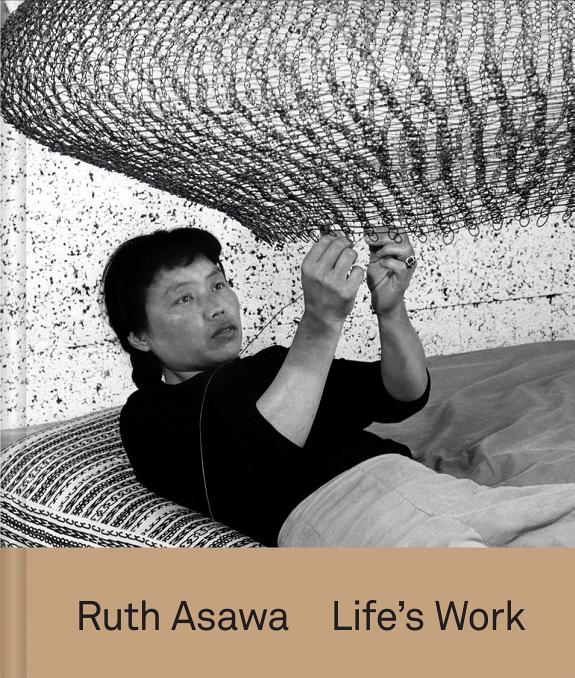
Ruth Asawa: Life's Work
Jennifer Dunlap
Ruth Asawa: Retrospective
Susan Landauer
Ruth Asawa: Cast and Uncast
Various
Ruth Asawa: A Life
Jennifer Dunlap
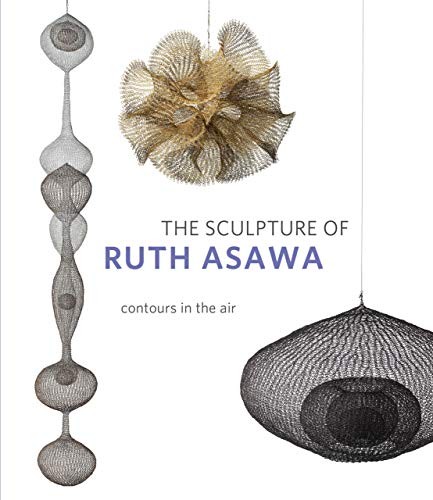
Drawings
Ruth Asawa, foreword by Paul Karlstrom
Ruth Asawa: Sculpture and Drawings
George Neubert