Rufino Tamayo
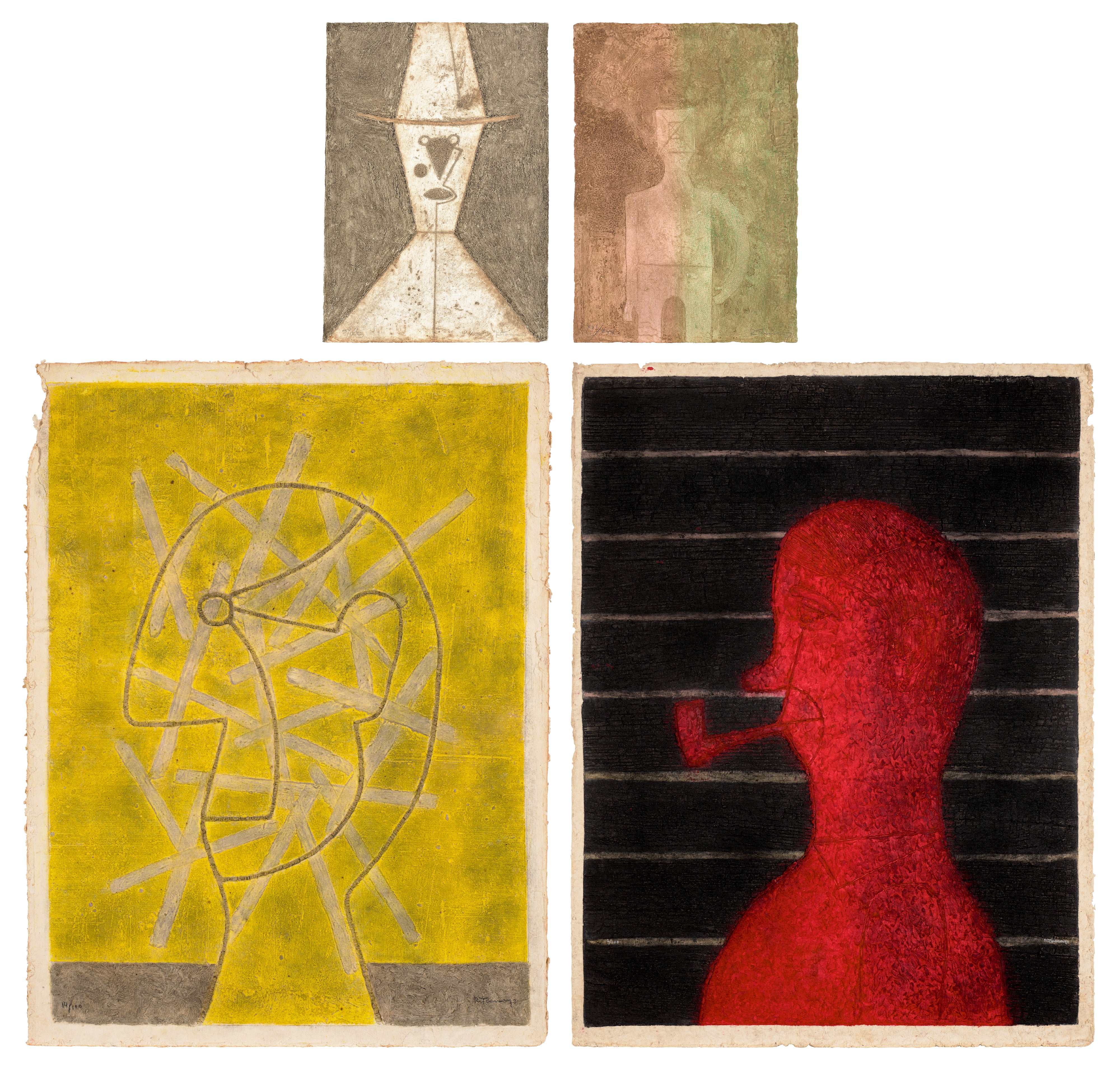
Rufino Tamayo, Where Ancient Worlds Sing
Artist Spotlight · The Collection Editorial
“I am not a Mexican painter. I am a painter who happens to be Mexican.”
Rufino Tamayo, frequently cited in interviews
In the grand atrium of the Museo Tamayo Arte Contemporáneo in Chapultepec Park, Mexico City, a building that Tamayo himself helped bring into existence, visitors still pause at the threshold as though crossing into another world entirely. The museum opened in 1981 as a gift from the artist to his country, housing the international collection he and his wife Olga spent decades assembling. Nearly a century after he began painting, Tamayo's presence in Mexico's cultural life remains not merely historical but viscerally alive, his canvases still provoking the same charged silence they did when they first shocked audiences accustomed to the monumental political muralism of Diego Rivera and David Alfaro Siqueiros. Rufino Arellanes Tamayo was born in 1899 in Oaxaca, a southern Mexican state whose indigenous Zapotec culture would mark every brushstroke he ever made.
Rufino Tamayo
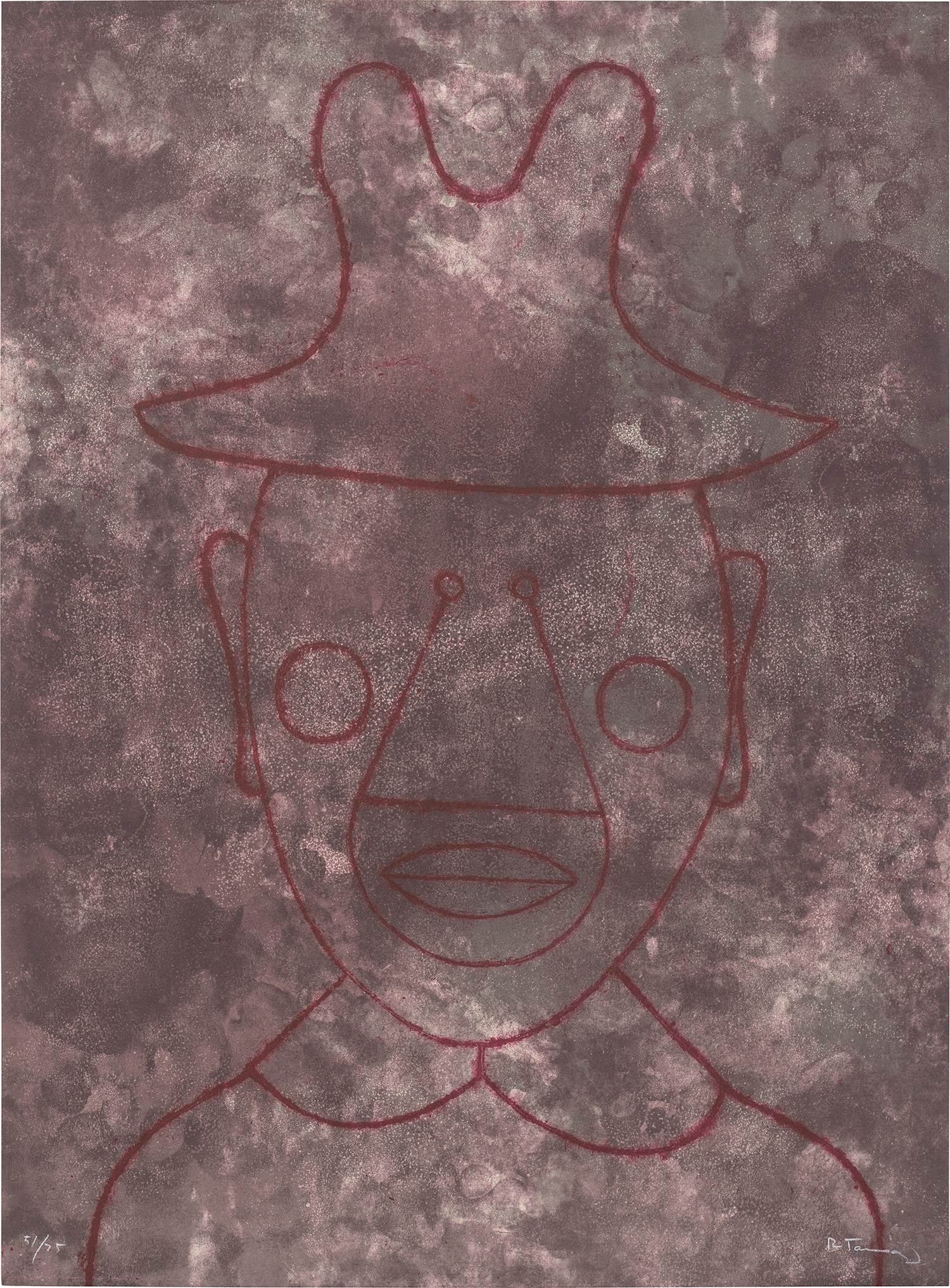
Cabeza en gris (Head in Grey) (P. 150)
Orphaned young, he was sent to live with an aunt in Mexico City, where he eventually enrolled at the Escuela Nacional de Bellas Artes. His early years in the city coincided with the eruption of the Mexican muralist movement, that vast publicly funded enterprise of post revolutionary art making that sought to paint a new national identity onto the walls of government buildings. Tamayo absorbed its energy but resisted its ideology. Where his contemporaries deployed art as a vehicle for political instruction, he insisted that painting belonged to something older and more mysterious than any party platform.
The formative pivot of Tamayo's career came through his work at the Museo Nacional de Arqueología, where he was appointed head of the ethnographic drawing department in the early 1920s. Surrounded daily by pre Columbian ceramics, figures, and masks, he came to understand indigenous Mexican art not as folk heritage to be celebrated sentimentally but as a rigorous formal tradition with its own spatial logic, its own color relationships, its own conception of the human body. This understanding became the bedrock of his mature style. He was not borrowing imagery from ancient sources; he was absorbing a way of seeing the world that predated the European Renaissance entirely, and then translating it into the language of twentieth century painting.
Rufino Tamayo
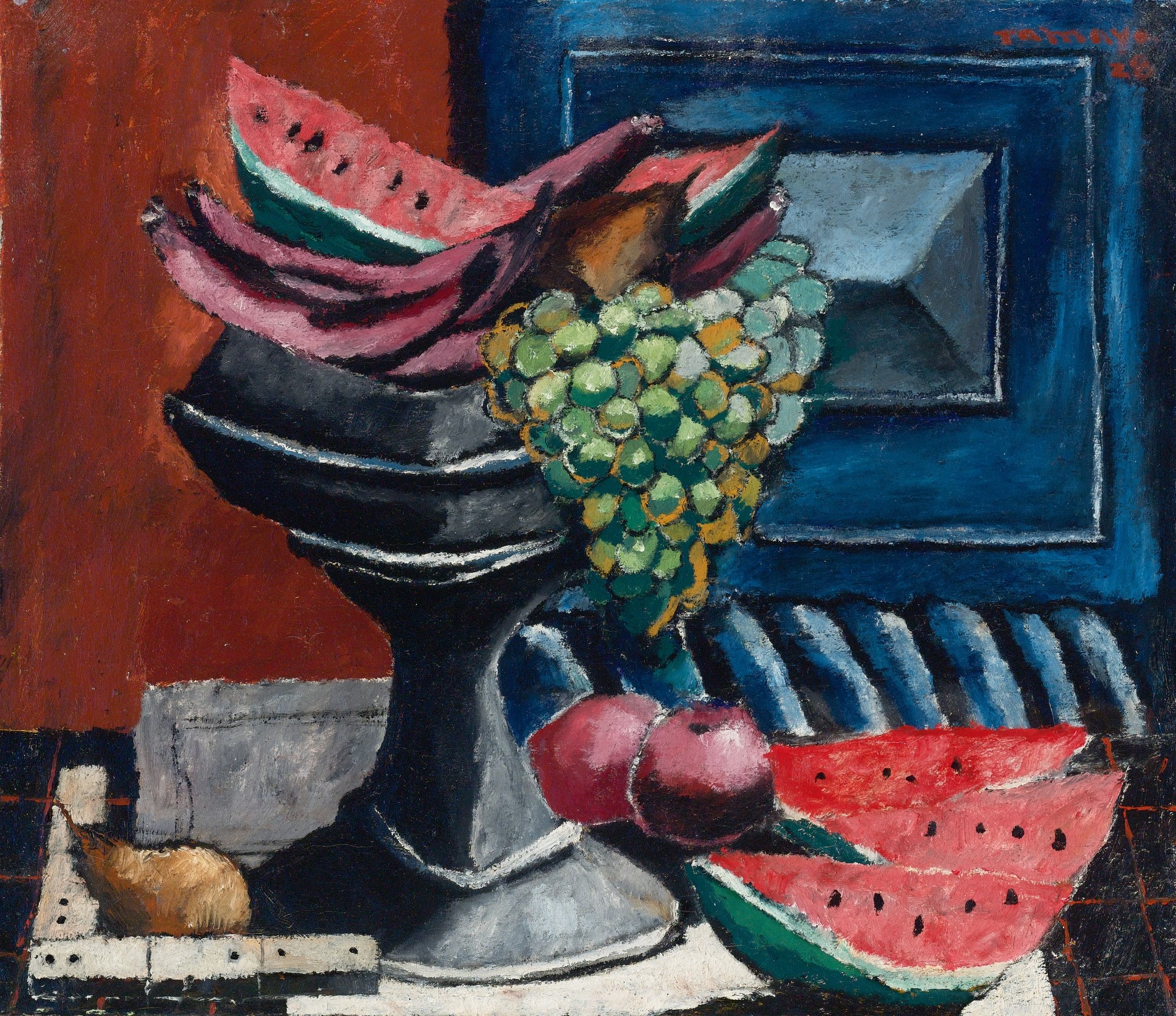
Frutero y dominó, 1928
By the late 1920s and into the 1930s, Tamayo's canvases were already demonstrating the qualities that would define his reputation. Works such as Frutero y dominó from 1928 and La vendedora de fruta from 1938 show his early engagement with still life and figure, rendered in warm earth tones and saturated reds and oranges that recall both Oaxacan textiles and the sandy hues of ancient pottery. These are not simply paintings of fruit vendors or domestic objects. They are meditations on daily life as ceremony, on the body as something simultaneously earthly and cosmological.
“My painting is a synthesis of the pre-Columbian and the universal.”
Rufino Tamayo
Tamayo spent extended periods in New York beginning in the late 1920s, teaching at the Dalton School and absorbing the energy of European modernism at close range. His friendships with artists working in the orbit of Picasso and Miró sharpened his formal ambitions without dislodging his essential Mexicanness. The postwar decades saw Tamayo achieve genuine international stature. His work entered major collections and earned him significant mural commissions, including large scale works for the UNESCO headquarters in Paris and for the Palacio de Bellas Artes in Mexico City.
Rufino Tamayo
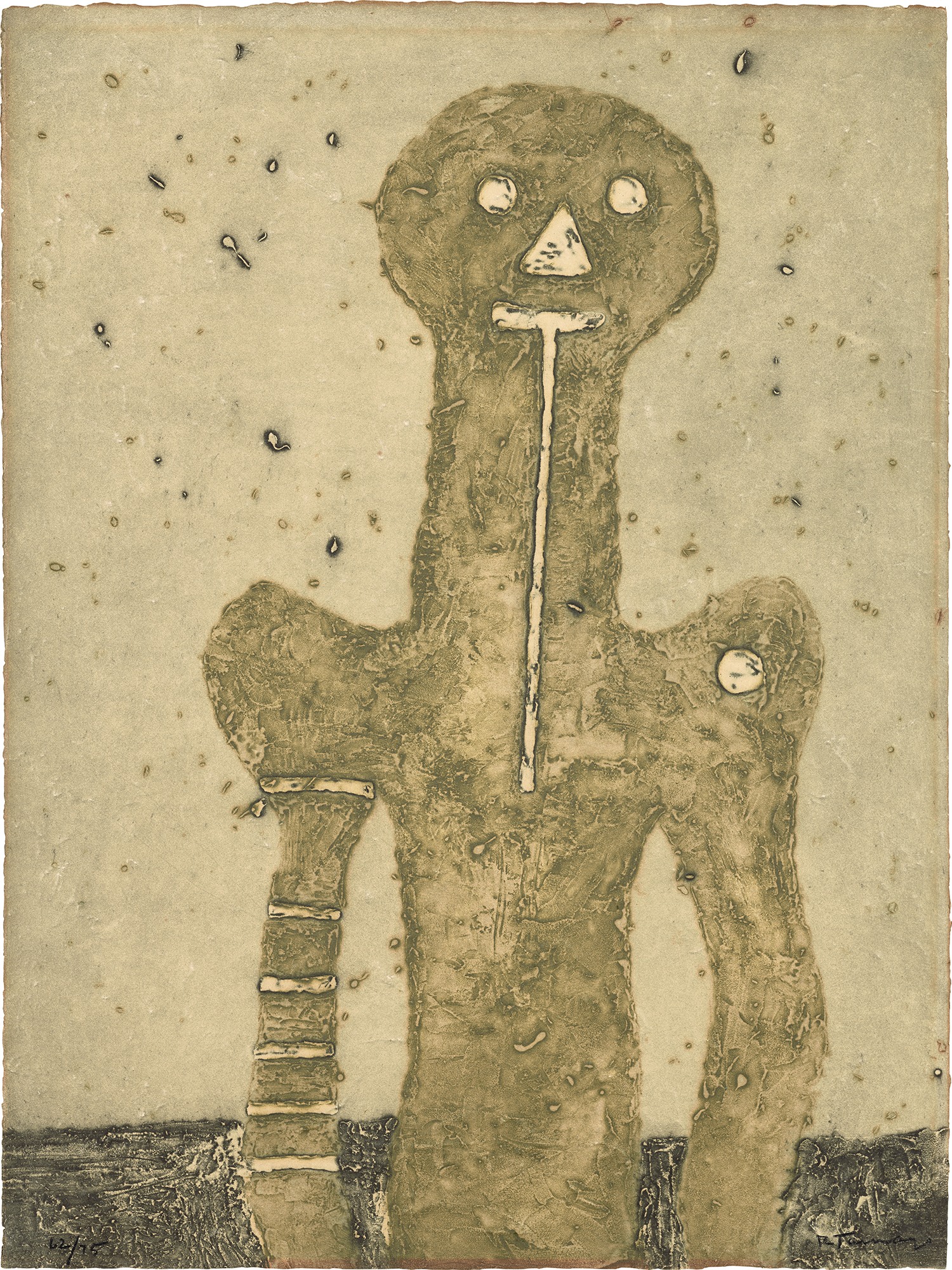
Torso, from 15 Aguafuertes (15 Etchings) (P. 176)
His figures became increasingly archetypal through these years, less individual portraits than presences: watermelon eaters, musicians, dogs howling at the moon, anonymous personages reaching toward light or confronting the vast indifference of the cosmos. His palette grew stranger and more electric, employing what he called mixografía textures, surfaces built up with sand and pigment until the canvas itself seemed to breathe. Throughout all of this formal experimentation, the emotional register remained remarkably consistent: a kind of grave tenderness toward human existence, a sense that life is brief and luminous and worth regarding with the fullest attention. Tamayo's prints deserve particular attention from collectors, as they represent some of his most inventive and concentrated work.
His etchings and carborundum prints, including the series of works on Guarro paper such as Cabeza en gris, Torso from 15 Aguafuertes, and Máscara from 8 Aguafuertes, demonstrate his absolute mastery of the intaglio process while pushing that process into territory it had rarely occupied before. Carborundum, the abrasive material he used to create velvety tonal passages, gave his prints a painterly depth unusual in the medium. These works on paper are not secondary expressions of ideas developed on canvas; they are complete artistic statements in their own right, and they offer collectors an accessible entry point into one of the great bodies of work in twentieth century art. His suites, such as the Tamayo 90 Aniversario plates produced to mark his ninetieth year, stand as remarkable testaments to his creative vitality across an extraordinarily long career.
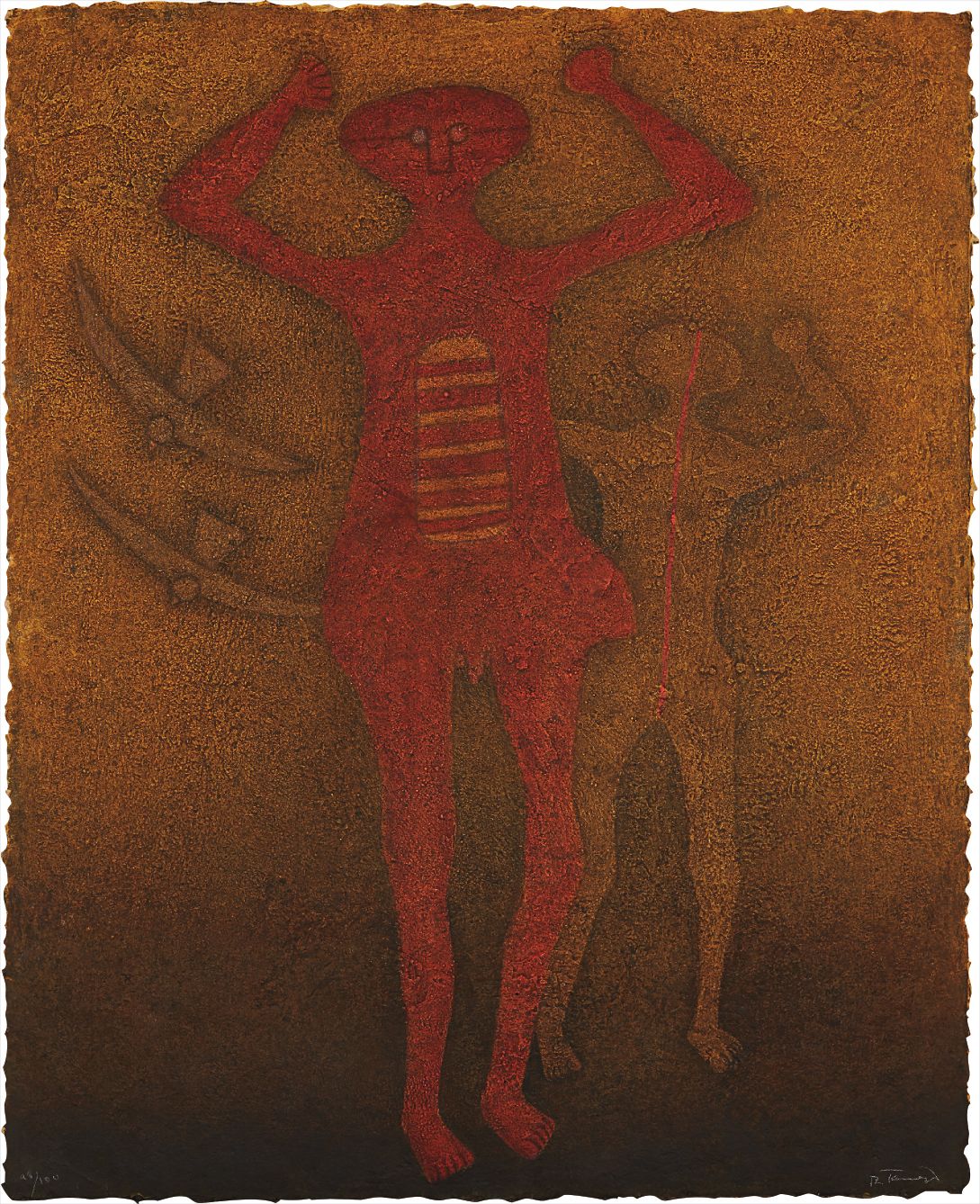
Rufino Tamayo
Personajes con Pájaros (Personages with Birds)
In terms of market positioning, Tamayo occupies a significant and still somewhat underrecognized place among the major Latin American modernists. His paintings regularly appear at Christie's, Sotheby's, and Bonhams, with important canvases achieving prices in the hundreds of thousands and occasionally exceeding one million dollars. Collectors drawn to Tamayo often describe a similar experience: an initial encounter with color, followed by a slower recognition of something archaic and ceremonial in the imagery, followed finally by the realization that what they are looking at has no real equivalent in any other artist's work. His prints and works on paper offer strong value relative to his painted canvases, and the quality of execution across his graphic work is remarkably consistent.
Those new to collecting Tamayo would do well to study the catalogues raisonnés carefully, as the artist worked with numerous publishers and editions vary in quality and rarity. To situate Tamayo within art history is to place him at a genuinely unusual crossroads. He shares with Wifredo Lam and Fernando Botero a commitment to forging a specifically Latin American modernism that neither copied European models nor retreated into folkloric nationalism. He was closer in sensibility to Paul Klee and Joan Miró than to Rivera, drawn to the mythic and the interior rather than the historical and the political.
His sculpture, including late works such as Hombre rojo from 1990 in steel with its distinctive patina, extends his visual vocabulary into three dimensions with the same authority he brought to painting and printmaking. Tamayo died in 1991 in Mexico City, having outlived most of his contemporaries and having witnessed his own transformation from controversial outsider into national treasure. The retrospective arc of his career is astonishing: more than six decades of sustained, evolving, genuinely original work. What collectors and viewers find in Tamayo today is what they have always found, a vision of human existence that is rooted in a specific place and culture yet reaches toward something universal, something that predates the nation state and the art market and the very categories through which we habitually organize our looking.
To own a Tamayo is to hold in your hands a fragment of one of the most singular artistic visions the twentieth century produced.
Explore books about Rufino Tamayo

Rufino Tamayo: A Life and Work
Octavio Paz
Tamayo: Myth and Magic
Jacques Lassaigne
Rufino Tamayo 1921-1991
Edward J. Sullivan
Tamayo: Obra Completa
Instituto Tamayo

Rufino Tamayo: Paintings and Murals 1917-1981
Sam Hunter
The Intimate Vision of Rufino Tamayo
Teresa del Conde