Rudolf Weisse
Rudolf Weisse, Master of Everyday Grandeur
Artist Spotlight · The Collection Editorial
There is a particular kind of painting that rewards patience. You approach it expecting something modest and leave feeling you have witnessed something quietly magnificent. That is precisely the experience of standing before a Rudolf Weisse canvas. Though he worked largely beyond the glare of the avant garde movements that defined his era, Weisse produced a body of work that speaks with remarkable authority to collectors today, paintings that possess the warmth of lived experience and the technical command of a rigorously trained academic hand.
Rudolf Weisse
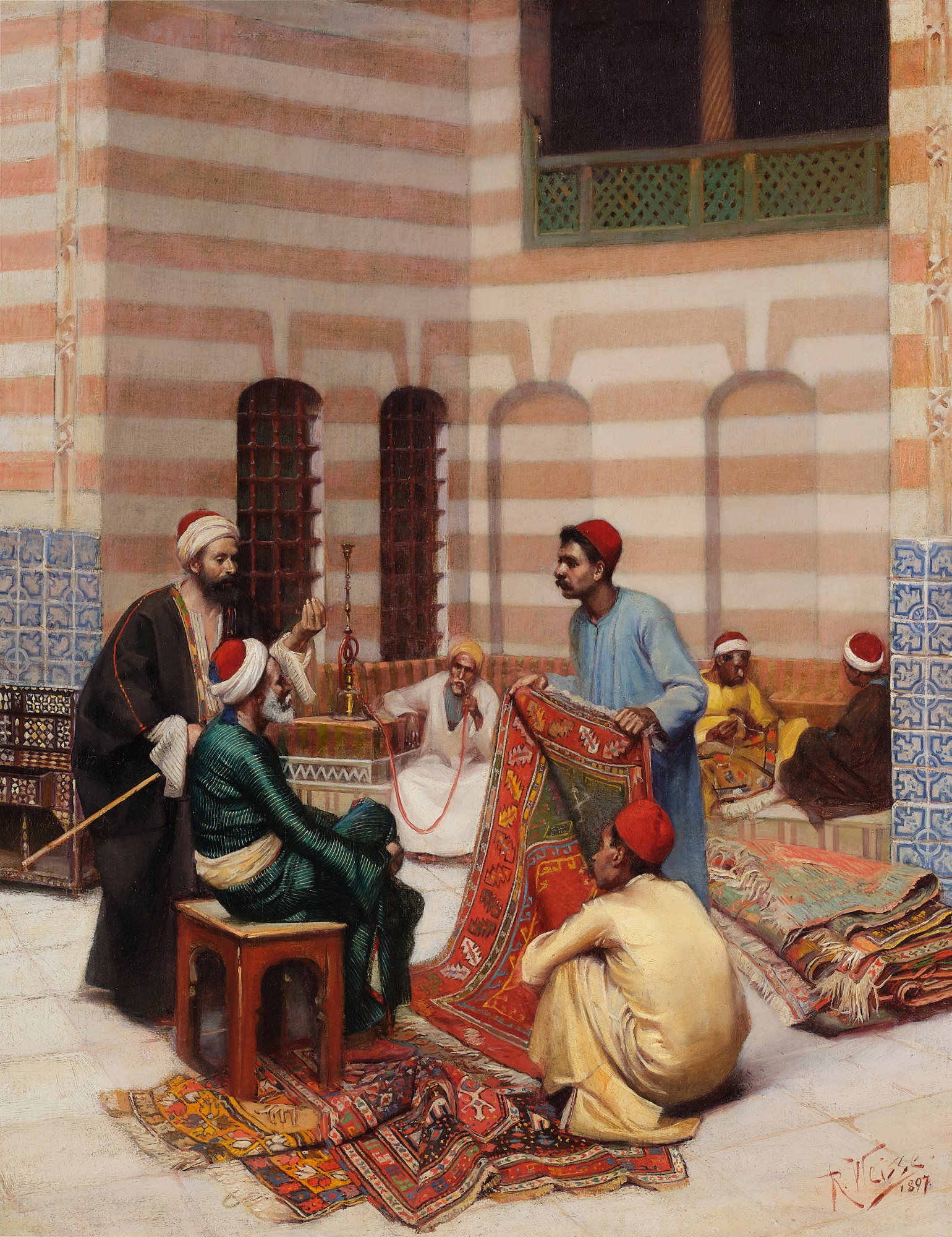
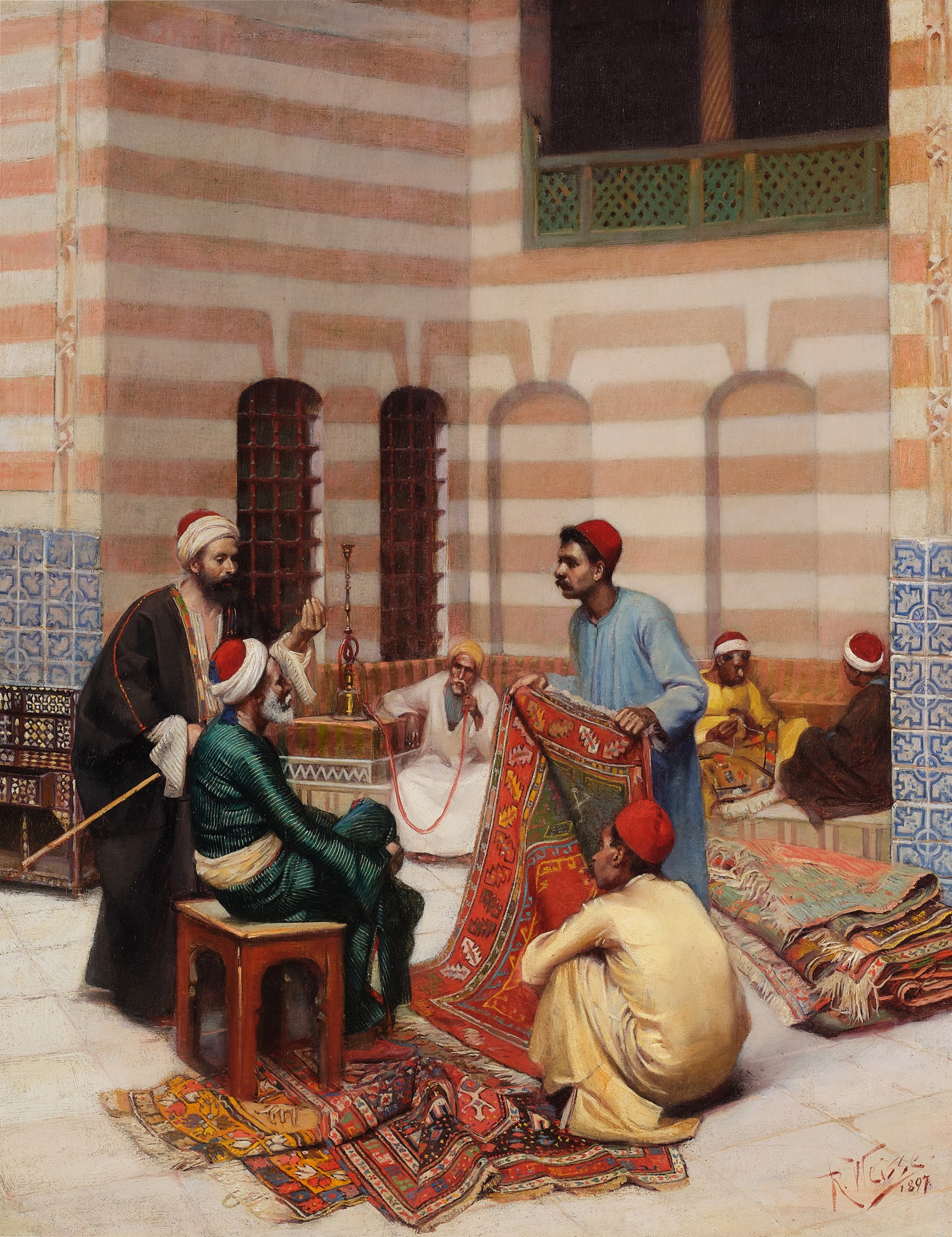
The Carpet Merchant
His oils, rendered with careful attention to light and social atmosphere, feel less like historical documents and more like invitations. Rudolf Weisse was born in Germany in 1870, a moment of extraordinary cultural and political transformation. The newly unified German nation was asserting itself on the world stage, and its cultural institutions were expanding rapidly. The great academies of Munich and Berlin were flourishing, drawing students from across Europe and instilling in them the disciplines of classical draftsmanship, tonal painting, and compositional rigour.
It was within this ambitious and structured environment that Weisse came of age as an artist, absorbing the lessons of naturalistic academic realism that would define his practice for the next five decades. The influence of the Munich School, with its emphasis on earthy tonal palettes and honest observation of ordinary life, is legible throughout his mature work. The late nineteenth century German academic tradition to which Weisse belonged was itself deeply indebted to earlier masters of genre painting. Artists such as Carl Spitzweg, whose warm and gently humorous depictions of bourgeois and peasant life established a template for intimate figurative scenes, and Wilhelm Leibl, whose unflinching naturalism elevated everyday subjects to the level of serious art, formed part of the living conversation that shaped Weisse's sensibility.
Rudolf Weisse
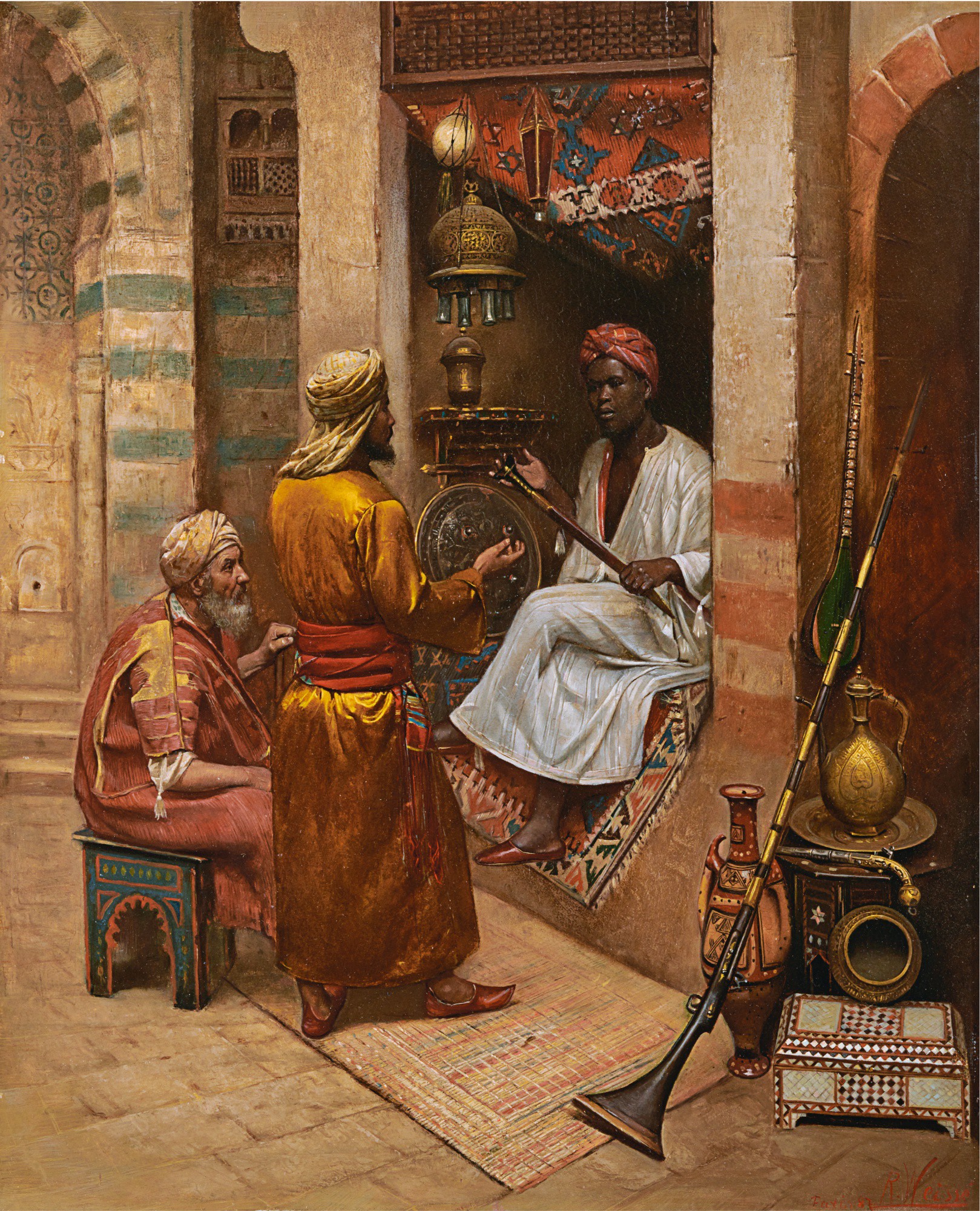
The Antiques Seller
He worked within this lineage not as an imitator but as a thoughtful inheritor, bringing his own particular attention to the texture of human interaction and the poetic possibilities of mundane settings. His paintings do not shout. They draw you in. Weisse's development as a painter moved through several productive phases, with his figurative work becoming increasingly assured through the 1890s and into the early decades of the twentieth century.
He showed particular affinity for scenes of commerce and social gathering, spaces where people of different stations briefly intersect. Markets, coffee houses, and the storefronts of merchants and antiquarians provided him with endlessly rich material. In these settings he found not just picturesque subject matter but genuine human drama, the quiet negotiations of trade, the contemplative study of old objects, the easy sociability of a public courtyard. His compositions are never crowded or chaotic.
Rudolf Weisse
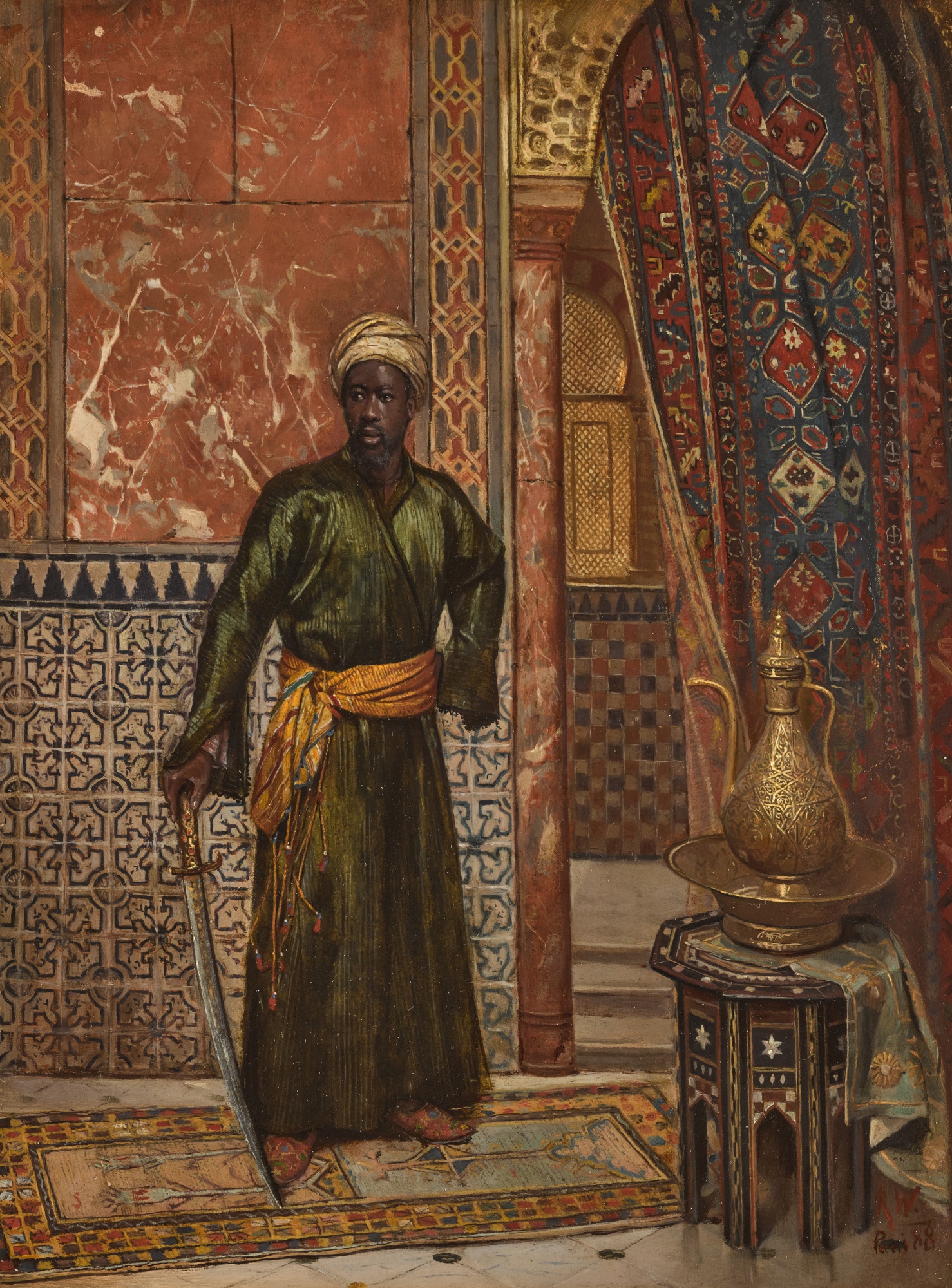
The Guard
They breathe. Among the works that best illuminate Weisse's gifts are those now available through The Collection. "The Carpet Merchant," rendered in oil on canvas, exemplifies his ability to construct a scene of cultural and mercantile richness without resorting to exoticism or condescension. The work holds its figures with respect and curiosity.
"The Antiques Seller," painted on panel, reveals his skill with interior light and the satisfying weight of accumulated objects. Panel painting demands precision and control, and Weisse delivers both with apparent ease. "The Guard" similarly demonstrates his mastery of character study within environmental context, a solitary figure given full human presence through careful observation. "Outside a Coffee House" opens the picture plane to social air and afternoon light, capturing the leisurely rhythm of public life in a way that feels both historically specific and timelessly familiar.
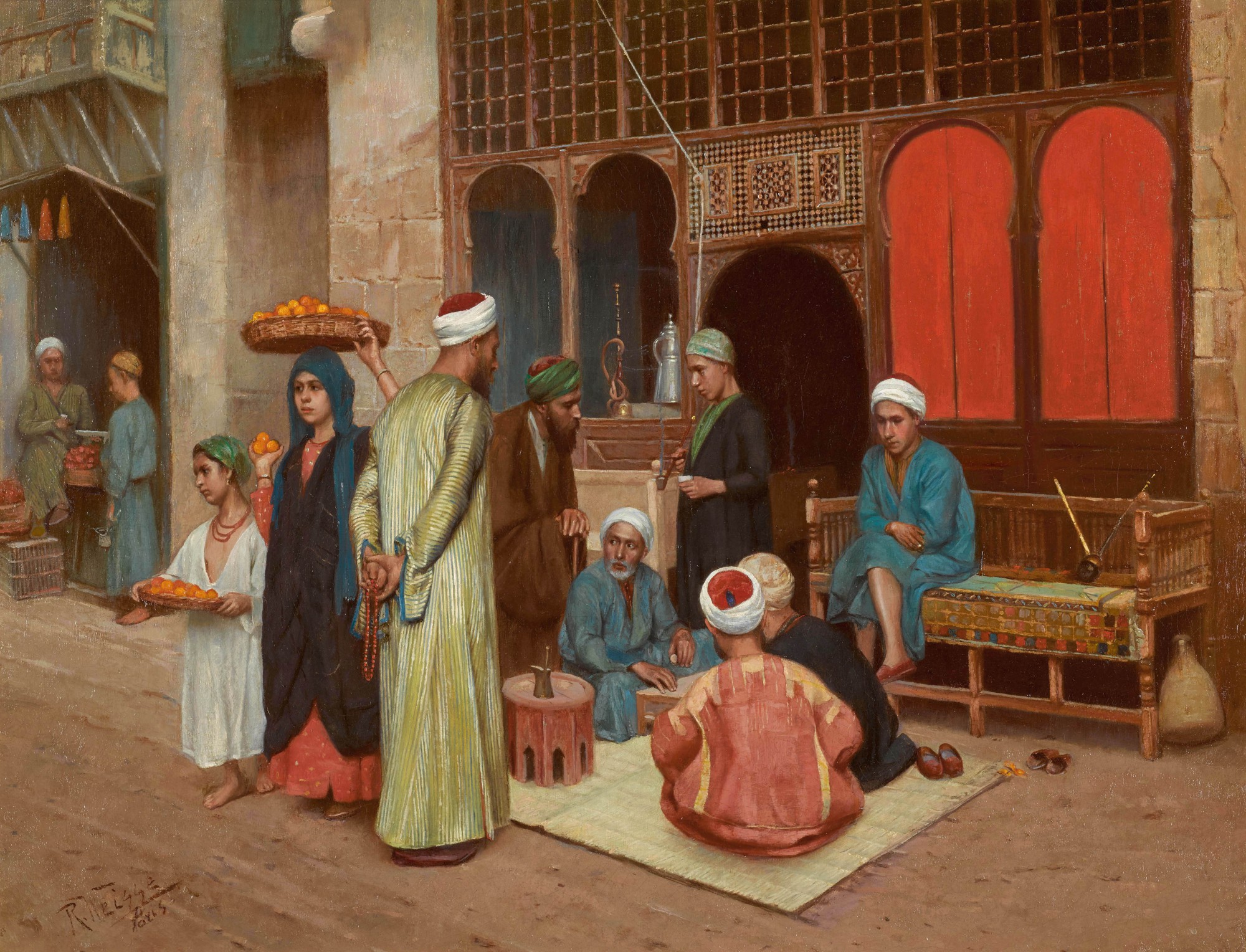
Rudolf Weisse
Outside a Coffee House
From a collecting perspective, Weisse represents one of the more compelling opportunities in the category of late nineteenth and early twentieth century German academic painting. His works have appeared at auction across German speaking markets, where regional interest in this tradition has kept appreciation for his output consistent and grounded. Collectors drawn to this area of the market often find that German academic realists of Weisse's generation have been somewhat undervalued relative to their French and Dutch counterparts, despite producing work of comparable technical achievement and often greater emotional directness. For a discerning collector, this represents genuine opportunity.
What to look for in Weisse is his handling of ambient light, particularly the way he moves tonal gradations across surfaces to suggest the quality of a specific hour in a specific kind of place. His figure work rewards close inspection. Weisse's position in art history sits comfortably alongside painters who understood that the grandeur of academic technique need not be reserved for mythological or historical subjects. Artists such as Eduard Grützner, known for his warmly rendered genre scenes, and Franz von Defregger, whose figurative compositions balance sentiment and observation with careful craft, offer useful points of comparison.
Like them, Weisse belongs to a generation that believed painting could honour ordinary life by bringing to it the full weight of artistic seriousness. He worked through a period of enormous upheaval, from the confidence of the Wilhelmine era through the devastation of the First World War and into the turbulence of the Weimar years and beyond, and his sustained commitment to his particular vision speaks well of his artistic integrity. Weisse passed away in 1942, leaving behind a body of work that has aged with considerable grace. The distance of time has only clarified what is most valuable in his paintings: an honest eye, a generous spirit toward his subjects, and a technical fluency that never tips into cold display.
As interest in academic realism continues to grow among a new generation of collectors who have come to appreciate craft and historical context as virtues rather than liabilities, Weisse stands to be discovered with fresh enthusiasm. His paintings ask nothing more of a viewer than attention and an openness to quiet pleasure. They deliver, in return, a great deal.