Ross Bleckner
Ross Bleckner, Painter of Luminous Eternal Light
Artist Spotlight · The Collection Editorial
“I want to make paintings that have a feeling of transcendence, that deal with loss and transformation.”
Ross Bleckner, interview with Robert Enright, Border Crossings, 1995
In the spring of 2024, the art world paused to take stock of a body of work that has only grown more essential with time. Ross Bleckner, whose paintings have long occupied a singular position between abstraction and elegy, continues to draw serious attention from curators, scholars, and collectors who recognize in his canvases something rare: genuine feeling rendered with extraordinary formal intelligence. His works hang in the permanent collections of the Guggenheim Museum, the Museum of Modern Art, and the Metropolitan Museum of Art, institutions that do not bestow such honors lightly. At a moment when painting itself is undergoing vigorous critical reassessment, Bleckner stands as proof that the medium can carry the full weight of human experience.
Ross Bleckner
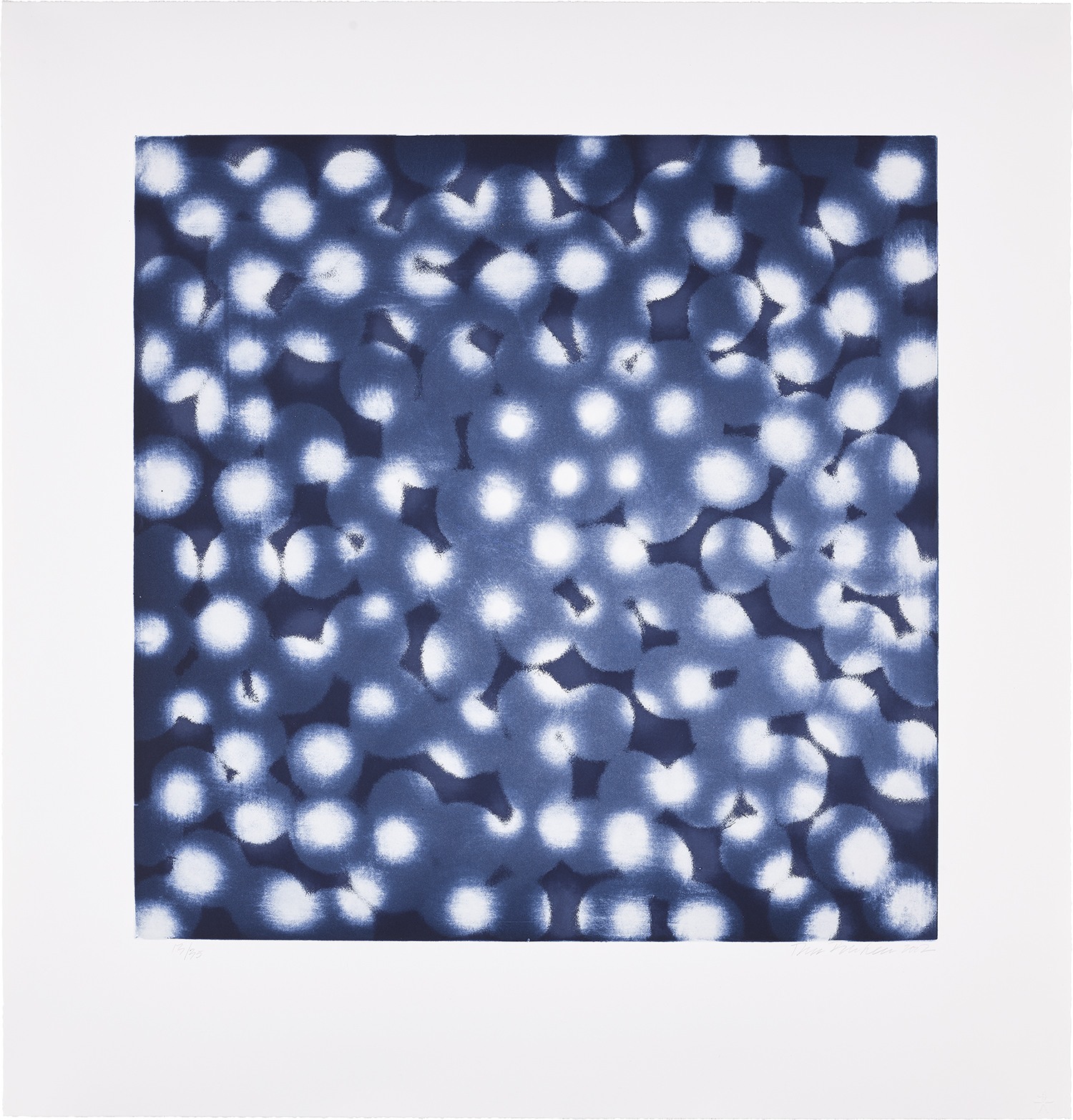
Chaperone
Born in New York City in 1949, Bleckner grew up steeped in the visual energy of a city that was, throughout his formative years, producing some of the most adventurous art in the world. He studied at New York University before completing his MFA at the California Institute of the Arts in Valencia, where he encountered the influential teaching of John Baldessari and absorbed the conceptual rigor that CalArts demanded of its students. Returning to New York in the mid 1970s, he settled into the downtown scene at a pivotal moment, when the exhaustion of Minimalism and the energies of a new figuration were beginning to collide. That collision would become the crucible in which his mature voice was formed.
Bleckner first gained significant critical recognition in the early 1980s with a series of stripe paintings that felt at once archaic and urgent. Where Frank Stella and his generation had used stripes to strip painting of all associative content, Bleckner loaded his stripes with atmosphere and optical trembling, producing images that seemed to vibrate with unresolved emotion. His 1987 solo exhibition at Mary Boone Gallery in New York announced him as a major figure, and the critical response recognized something important: here was a painter who had found a way to speak about loss and longing through purely visual means. The stripe paintings were not illustrations of feeling but its structural equivalent, built from light and repetition and the quiet insistence of color.
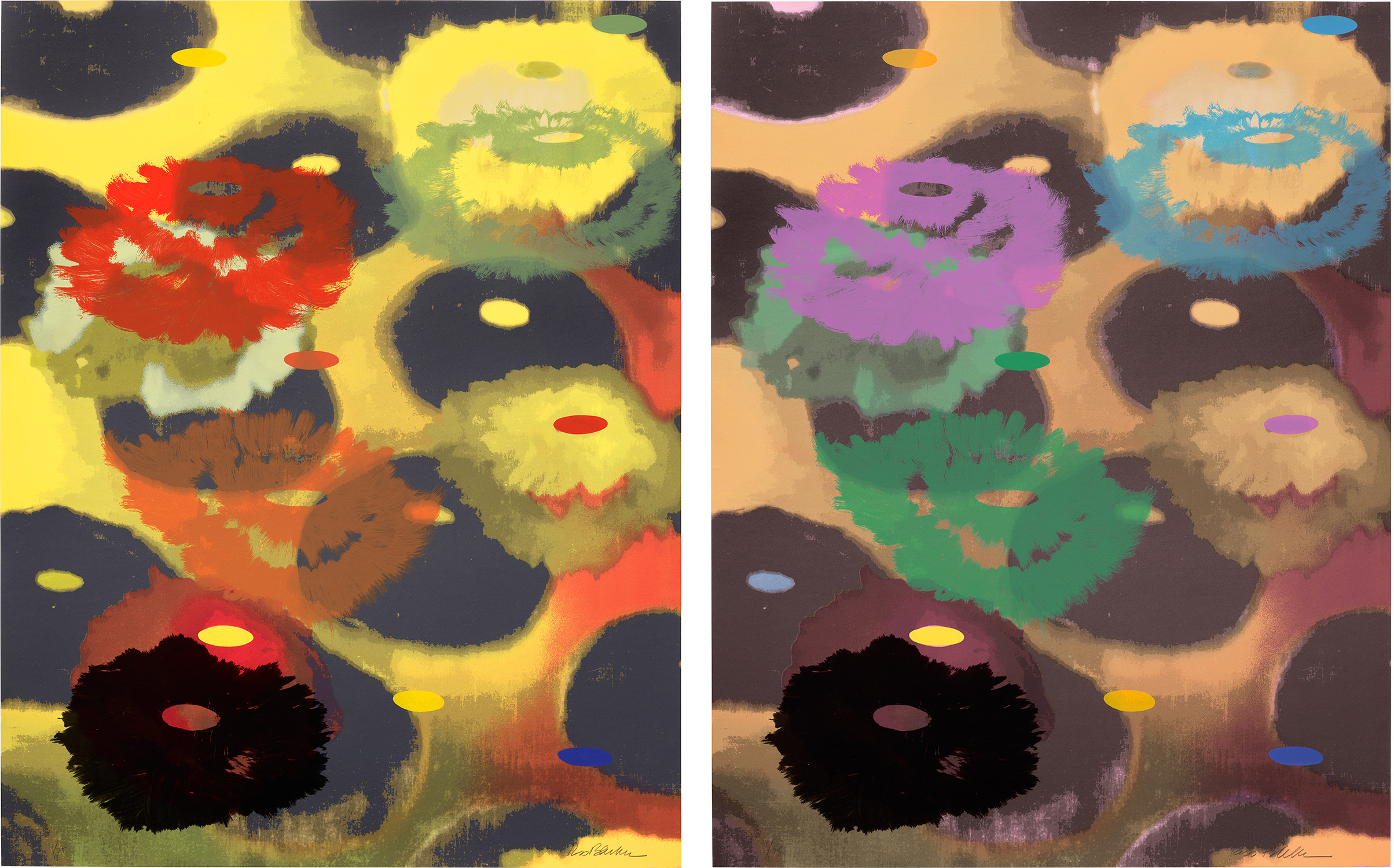
Ross Bleckner
PS I; and PS II
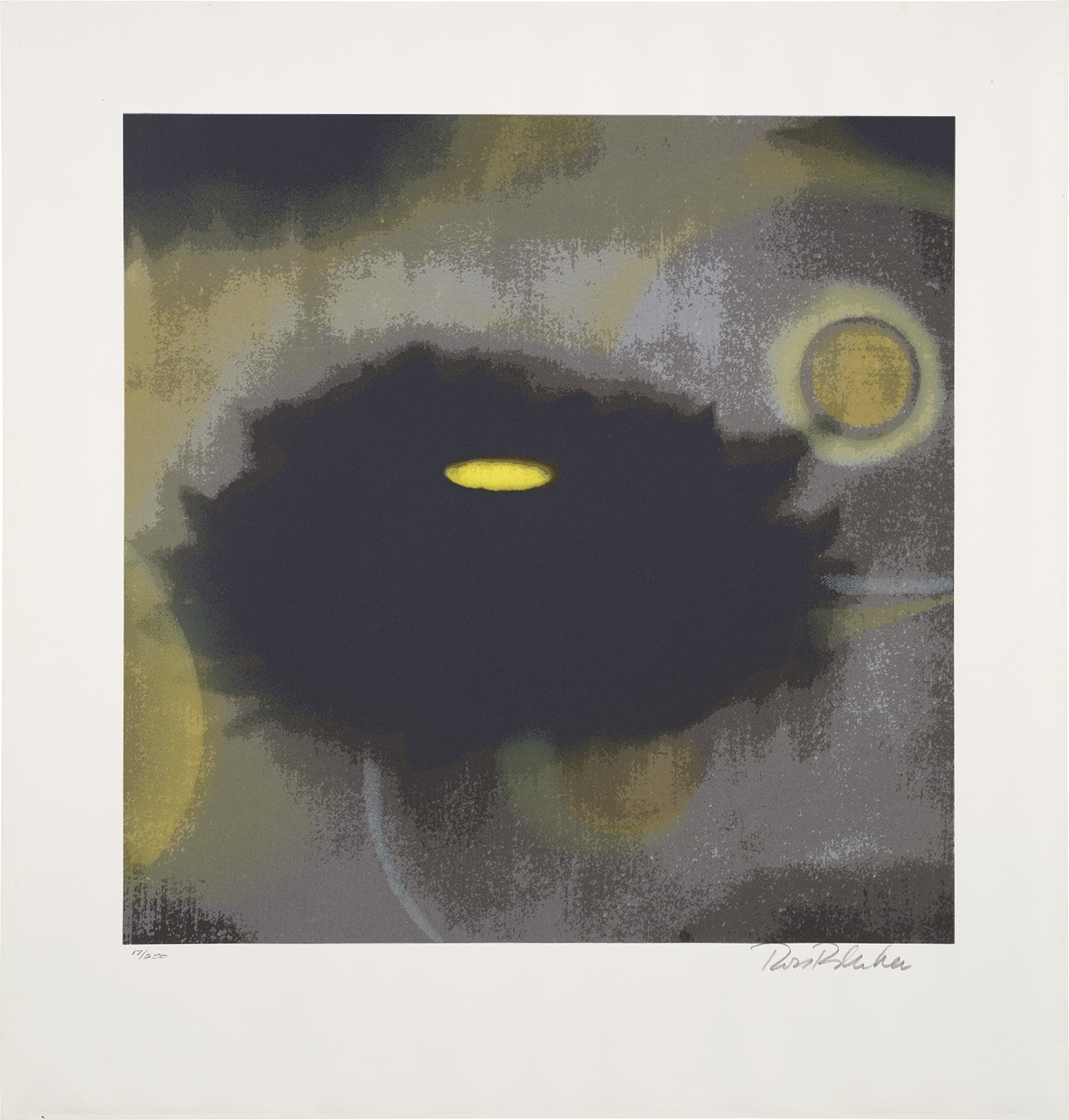
The AIDS crisis transformed his practice, and in so doing transformed the terms on which his work would be understood by history. As the epidemic devastated the New York arts community throughout the 1980s and into the 1990s, Bleckner turned his attention to imagery that could honor the dead without sentimentality. His memorial paintings, featuring floating urns, memorial wreaths, scattered birds, and fields of luminous orbs, drew on the visual language of nineteenth century Symbolism and the devotional traditions of religious painting while remaining unmistakably contemporary. Works such as the 1981 oil and wax on canvas titled Deceased mark an early articulation of themes that would deepen over the following two decades.
“The stripe paintings were about a kind of haunting, a residue of something that had been there and was no longer.”
Ross Bleckner, Artforum interview, 1980s
These paintings never collapse into grief; instead they hold grief and transcendence in a kind of suspension, the light in the works pressing always toward something beyond sorrow. The range of Bleckner's output is one of the most compelling arguments for his importance. His printmaking practice alone constitutes a significant body of work, encompassing screenprints such as the quietly radiant Happiness for Instance II and Happiness for Instance III from 1997, as well as aquatints like Chaperone, produced with the technical refinement that serious print publishing demands. His collaborative relationships with publishers including Lococo Fine Art in St.
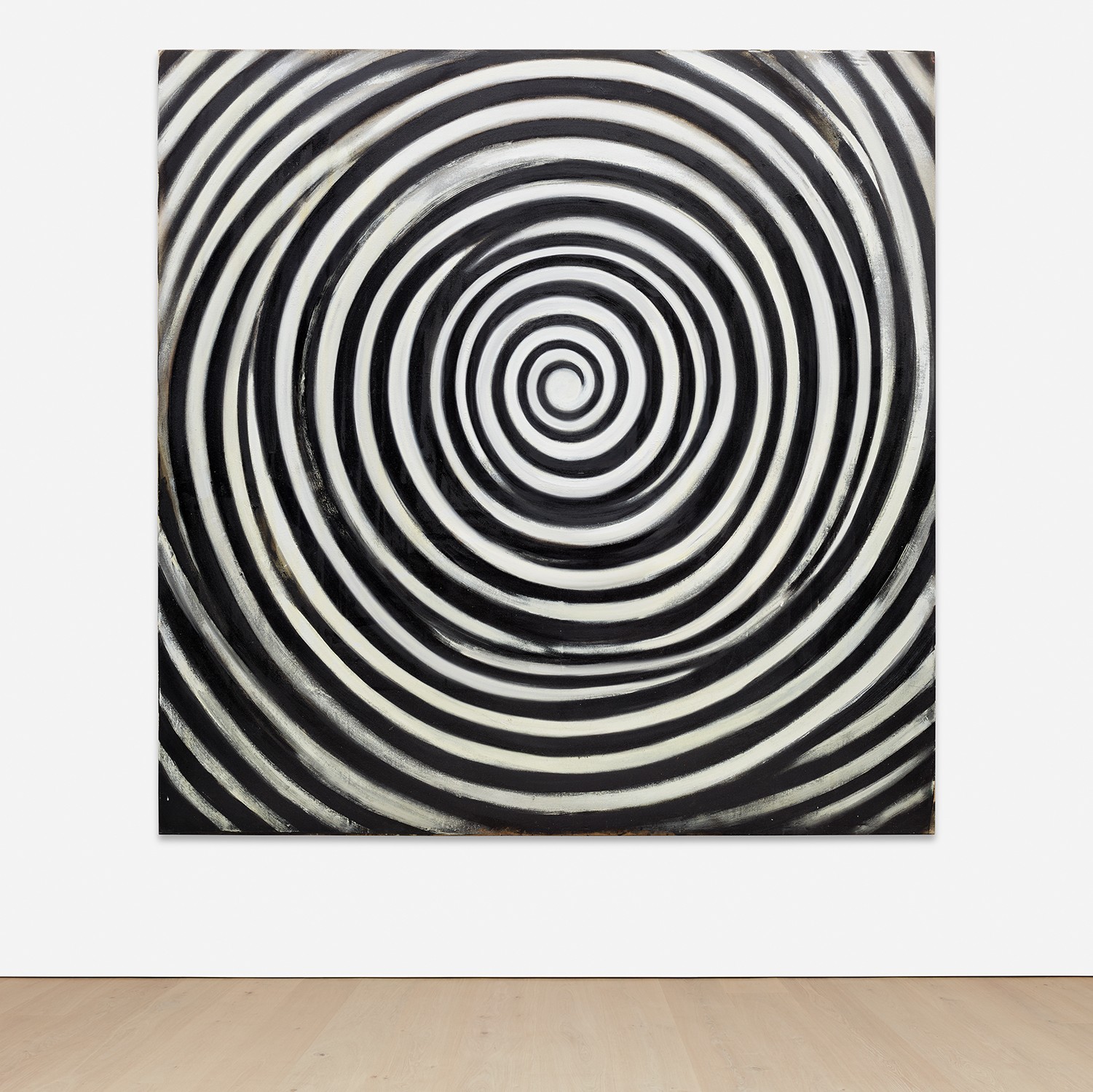
Ross Bleckner
Deceased, 1981
Louis have resulted in editions that bring his singular visual thinking to collectors across a wide range of entry points. Works such as the Falling Birds series, issued in editions of sixty with a small number of printer's proofs, demonstrate how seriously he approaches the particular possibilities of the print medium rather than treating it as a secondary enterprise. For collectors, Bleckner offers something that is increasingly rare in the contemporary market: a coherent vision that has deepened and evolved over more than four decades without losing its essential character. His oil paintings on canvas and linen, including recent works such as the 2019 oil on canvas and the 2022 oil on linen catalogued as RB 7714, show a painter who continues to push his own practice into new territory.
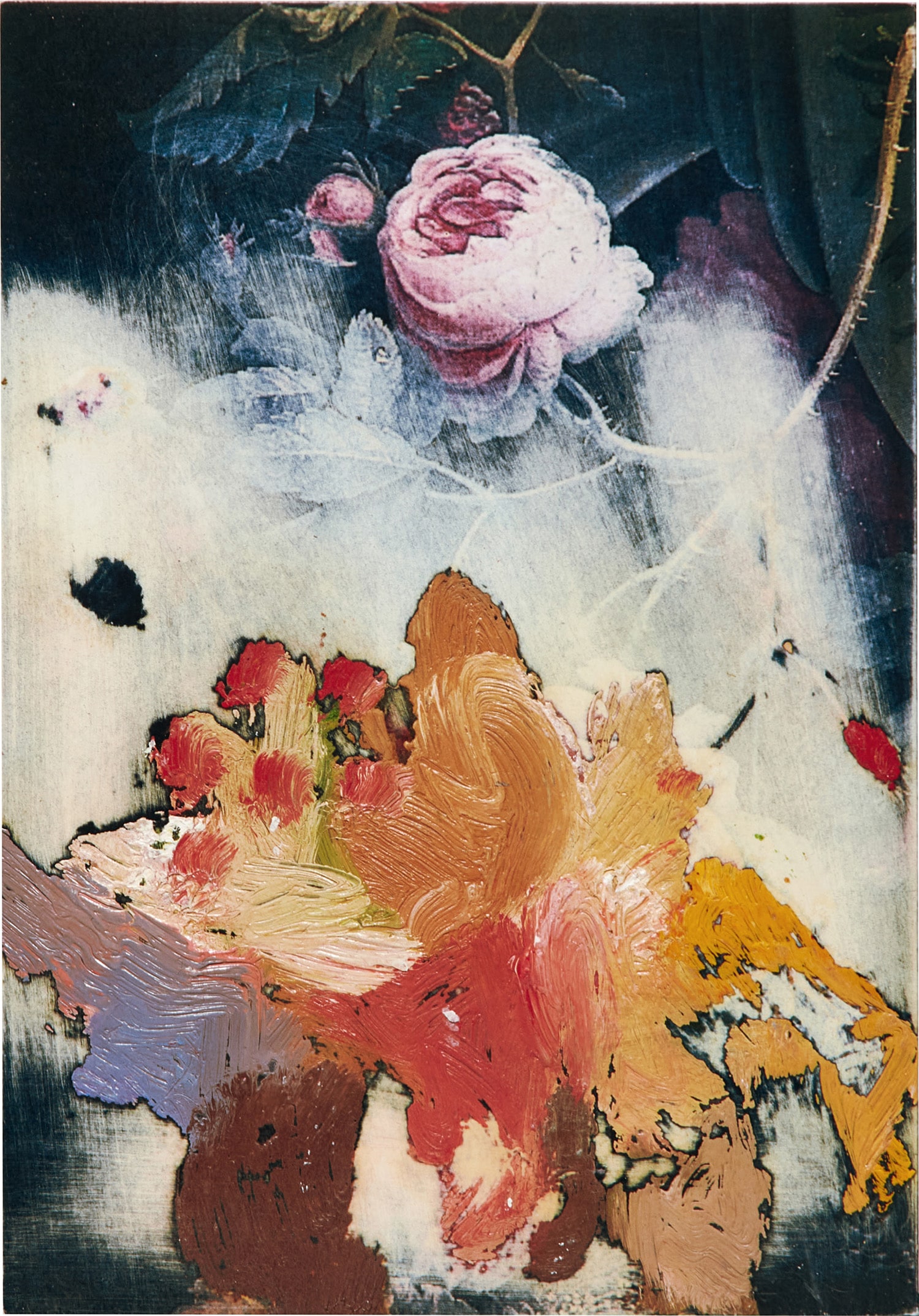
His 2009 work Half is for the Moon, executed in oil on photographic paper mounted to aluminum, reveals an artist willing to interrogate the physical ground of painting itself. The intimacy of his hand applied oil paint on a Metropolitan Museum of Art card, folded as issued, speaks to a sensibility that finds equal value in the monumental and the personal. Bleckner belongs to a generation of painters that includes David Salle, Eric Fischl, and Julian Schnabel, all of whom emerged from the Neo Expressionist moment of the late 1970s and early 1980s. But where many of his contemporaries pursued a rhetoric of scale and bravado, Bleckner consistently pursued interiority.
Ross Bleckner
Ross Bleckner
His affinities reach backward to Odilon Redon and the Symbolists, and forward to artists like Felix Gonzalez Torres, with whom he shared a profound commitment to making art that could hold grief with dignity. He also connects to the tradition of light painting in American art, to James Turrell's investigation of luminosity and to the atmospheric aspirations of the nineteenth century Hudson River School, though his means and his subjects are entirely his own. What endures about Ross Bleckner, finally, is the quality of attention his paintings demand and reward. To stand before one of his canvases is to be drawn into a space where mortality and beauty are not opposites but companions, where the shimmer of light across a dark field carries the full weight of what it means to lose someone and to remain.
His work reminds us that painting can be a form of witness, and that witness, done with honesty and craft, is one of the most necessary things art can offer. For collectors who understand that the works they live with become part of their own interior landscape, Bleckner's paintings are not merely acquisitions but ongoing conversations, alive in every light.
Explore books about Ross Bleckner