Ronnie Cutrone
Ronnie Cutrone, Where Pop Meets Pure Joy
Artist Spotlight · The Collection Editorial
There is a particular kind of artist who makes you feel the energy of a city at its most alive, and Ronnie Cutrone was exactly that. His paintings and prints, dense with cartoon characters, religious symbols, and the visual detritus of American consumer culture, carry the pulse of downtown New York in the 1980s as vividly as any document from that era. When his work appears at auction or surfaces in a thoughtful private collection, it invariably stops people in their tracks, not because it demands reverence, but because it radiates a kind of exuberant intelligence that feels almost impossibly generous. That generosity, both of spirit and of visual information, is what keeps Cutrone's reputation growing steadily in the years since his passing in 2013.
Ronnie Cutrone
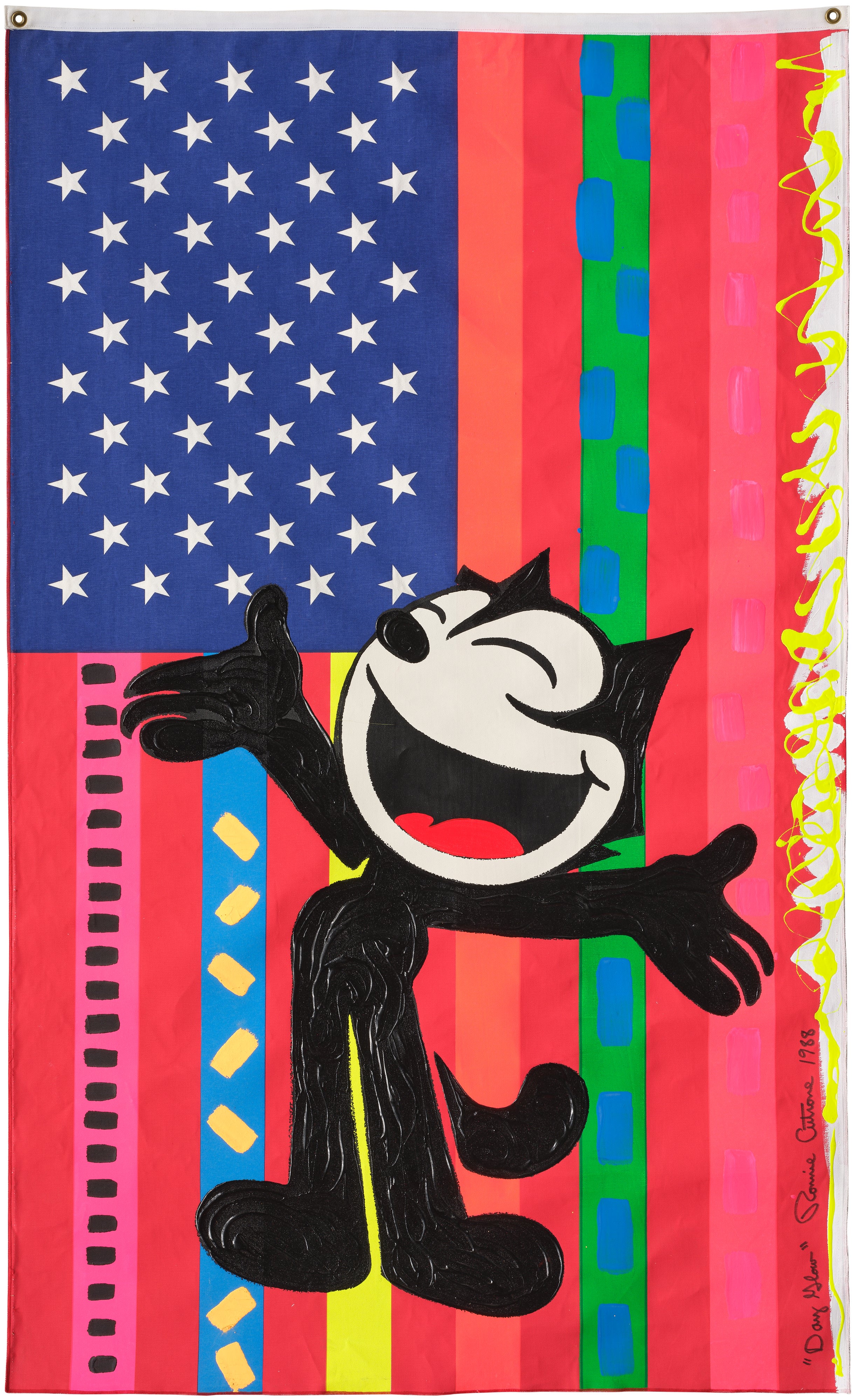
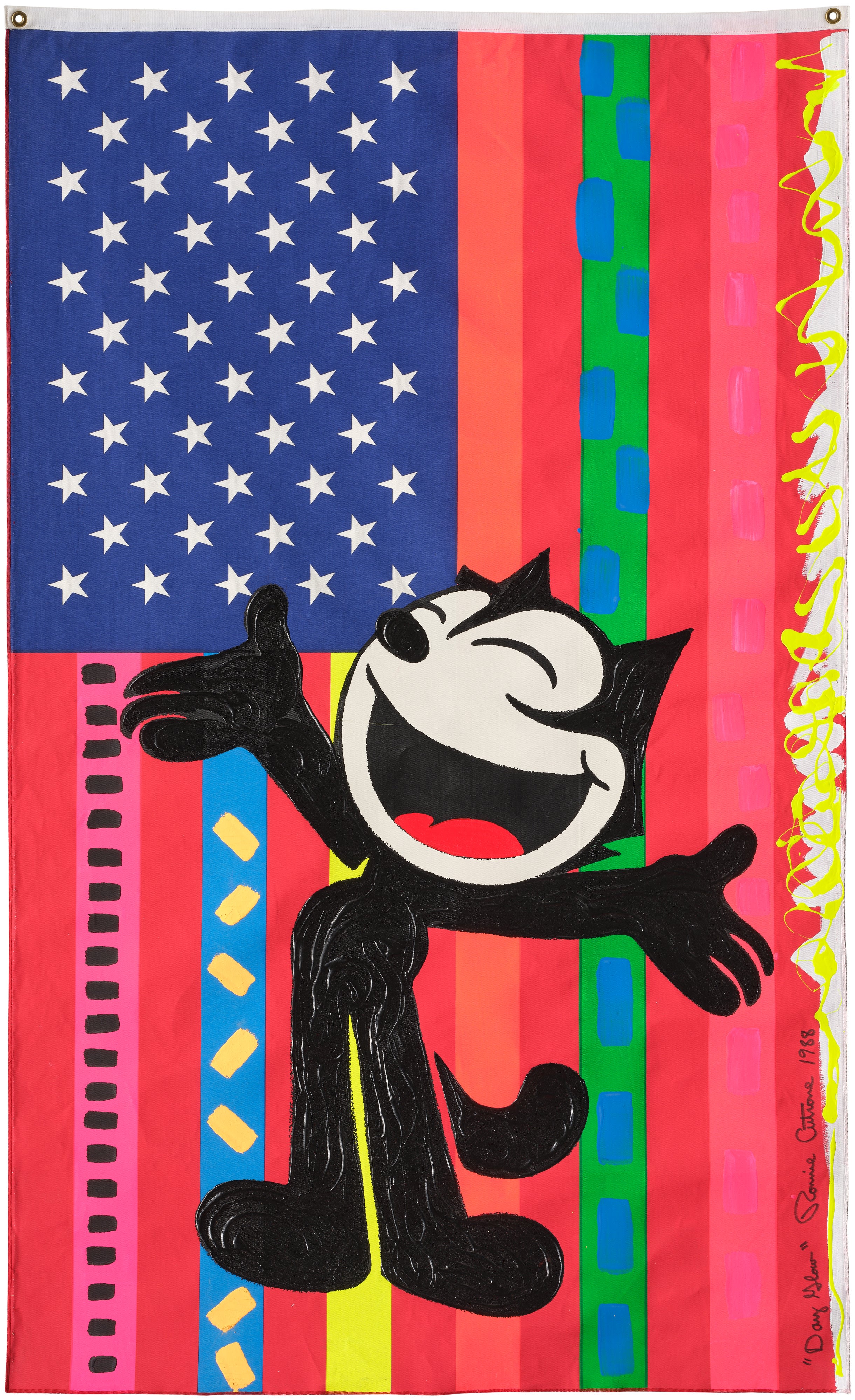
Day Glow, 1988
Ronnie Cutrone was born in 1948 in New York City, and the city shaped him in ways that were both obvious and profound. He grew up absorbing the same visual landscape that would later define his canvases: television cartoons, Catholic iconography, newspaper comics, and the relentless commercial imagery of mid century American life. These were not, for Cutrone, sources of irony or detached critique. They were the genuine fabric of his experience, and he approached them with the kind of affection that only comes from having truly lived inside a culture rather than observed it from a distance.
That autobiographical sincerity is one of the qualities that distinguishes his work from cooler, more cerebral contemporaries. His formation as an artist took a decisive turn when he became a studio assistant to Andy Warhol at the Factory, a position he held through much of the 1970s. Working alongside Warhol gave Cutrone an intimate understanding of the mechanics of Pop Art, the way imagery could be repeated, enlarged, screened, and transformed until it became something both familiar and strange. But where Warhol maintained his famous emotional distance, Cutrone absorbed the lessons of Pop and then pushed them in an entirely different direction.
Ronnie Cutrone
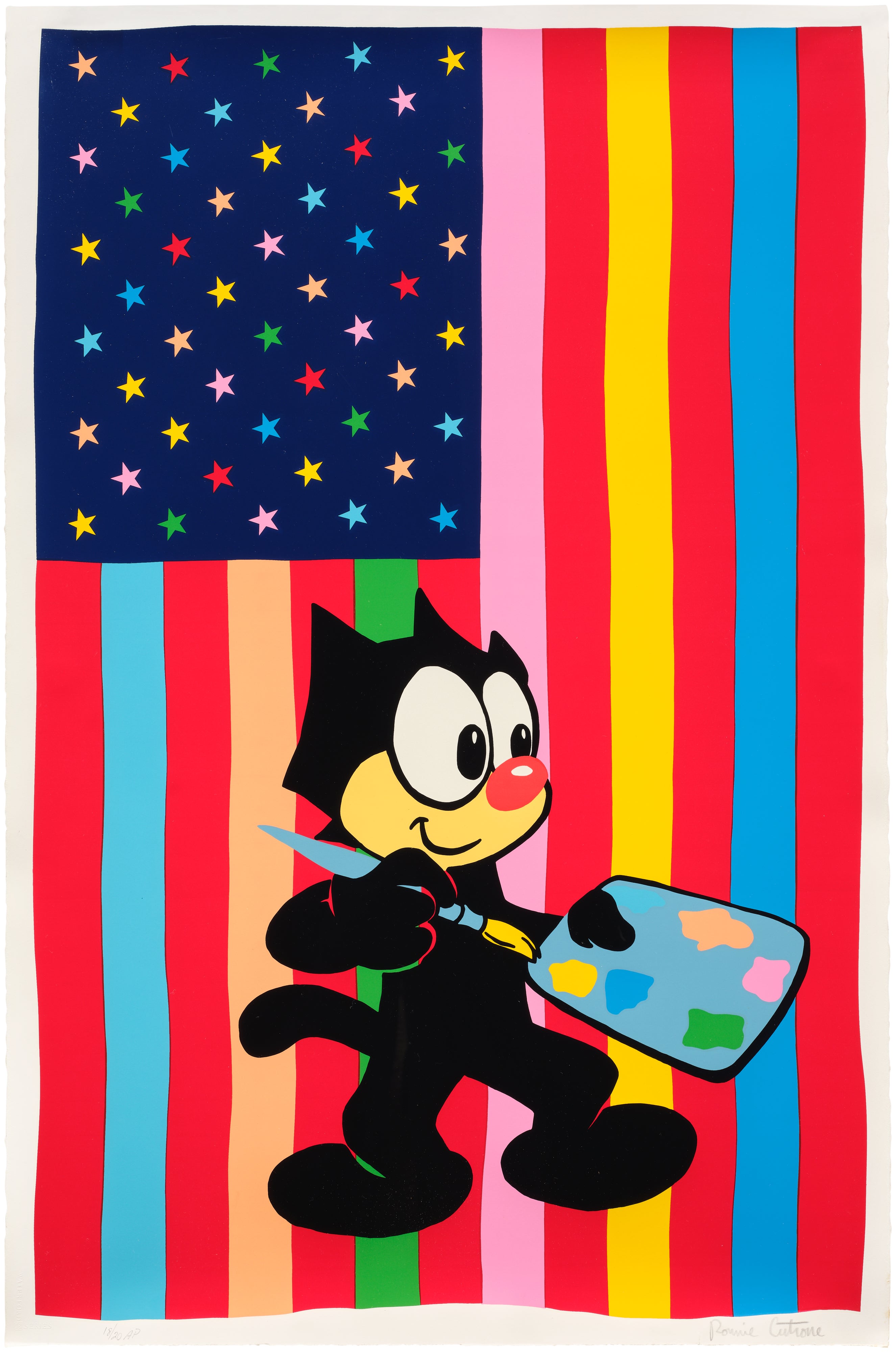
Felix and Flag
By the late 1970s and into the 1980s, he was developing a practice that brought raw, gestural energy into contact with the iconography of popular culture, producing work that felt more like a bear hug than a cool conceptual statement. The arrival of Neo Expressionism as a dominant force in early 1980s painting gave Cutrone a context and a community. He became a central figure in the East Village art scene, a world of small galleries, enormous ambition, and genuine creative ferment that produced some of the most important American art of the decade. Galleries in the East Village and beyond showed his work to growing audiences, and he exhibited internationally as collectors and institutions began to recognize that his particular synthesis of Pop imagery and expressive brushwork was something singular.
He shared the cultural moment with artists like Jean Michel Basquiat and Keith Haring, figures who were equally committed to dissolving the boundaries between high art and street culture, between fine art tradition and the immediacy of popular imagery. Cutrone's signature works reveal an artist who was always thinking about the flag, in both literal and metaphorical terms. His paintings and prints frequently incorporate actual cloth flags as their support, transforming the loaded symbol of national identity into a ground for his swirling, layered compositions. Works such as Day Glow from 1988, a bold combination of acrylic, mixed media, and screenprint on a fabric flag, demonstrate how skillfully he could fuse printmaking precision with painterly spontaneity.
Ronnie Cutrone
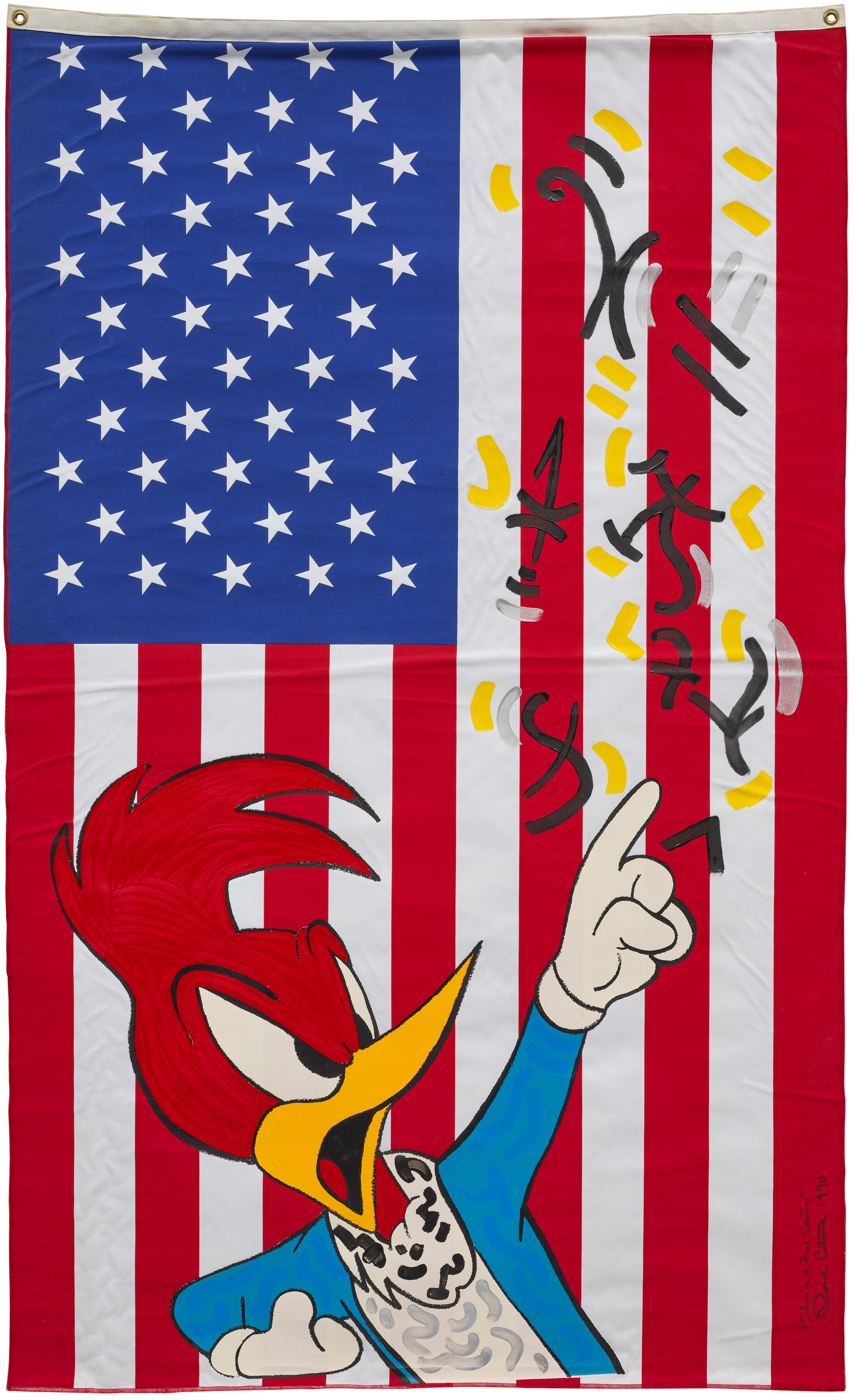
This is a Free Country
Felix and Flag brings the beloved cartoon cat into direct conversation with the American flag, creating a visual equation between cultural mythology and national symbol that feels simultaneously playful and pointed. This is a Free Country takes that impulse further, layering unique hand additions in acrylic over a screenprinted cloth flag to produce something that exists between edition and unique artwork, between democratic multiples and singular expression. Birdland, from the Gran Pavese Flag Project, scales these ideas to monumental proportions, the imagery expanding across the surface of a large polyester flag in a gesture that feels both celebratory and declaratory. For collectors, Cutrone's work occupies a genuinely appealing position in the market.
His prints and works on paper offer accessible entry points into a practice that is historically significant without commanding the stratospheric prices of some of his contemporaries. Works that combine screenprinting with substantial hand additions occupy a particularly interesting space, functioning as editions in their origin but unique objects in their final form. Collectors who have pursued his flag works have been drawn to their durability as visual objects and to the richness of the references they contain. The works reward close looking, revealing new layers of imagery and association the longer you spend with them.
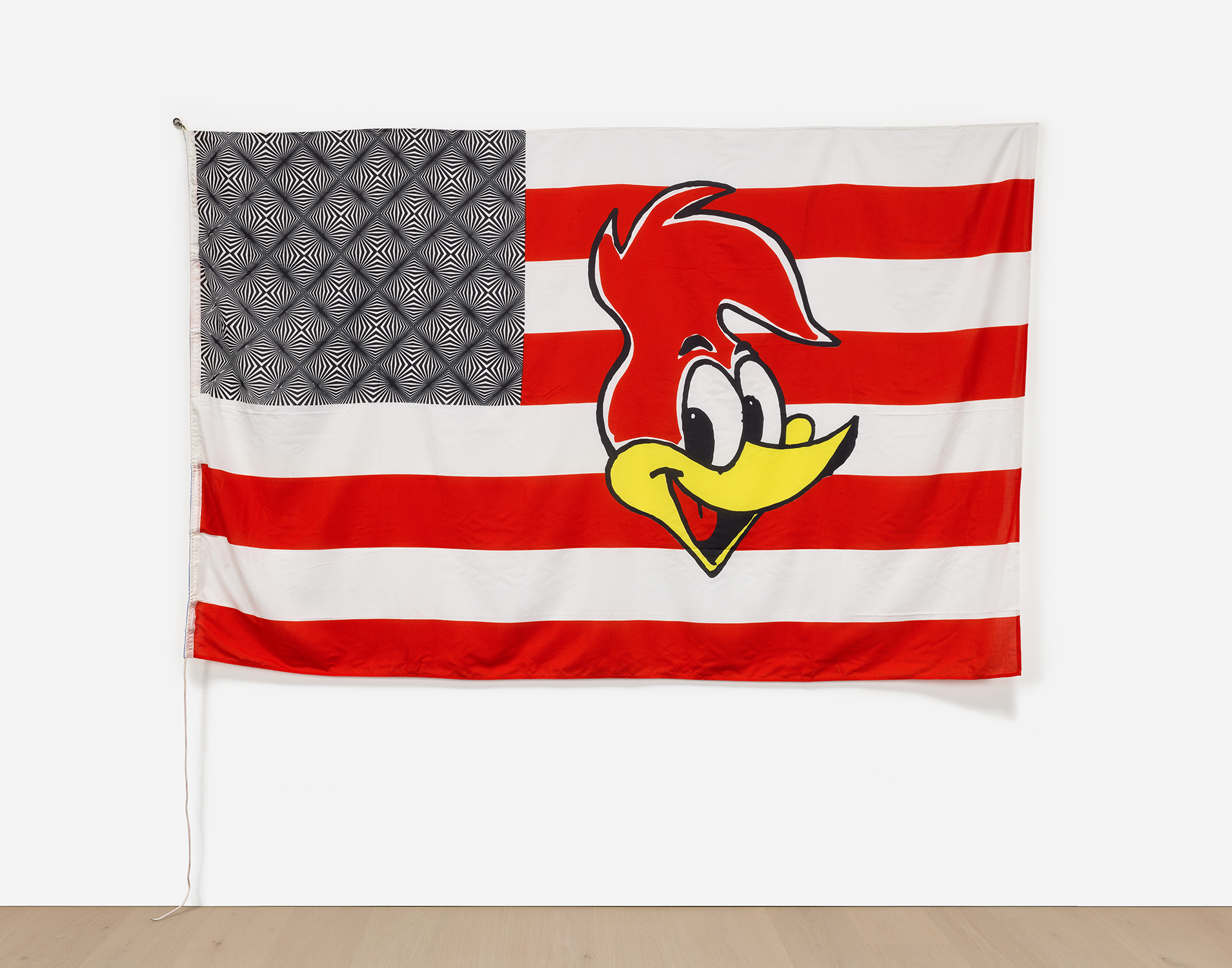
Ronnie Cutrone
Birdland, from Gran Pavese – The Flag Project
As institutional interest in the East Village generation continues to grow, with museums and foundations revisiting the period with fresh curatorial attention, Cutrone's market position has the kind of quiet momentum that serious collectors recognize as an opportunity. Understanding Cutrone means understanding him in relation to the broader constellation of artists who defined that extraordinary moment in American art. His work in dialogue with Basquiat and Haring makes clear that the East Village was producing a genuine movement, not merely a scene. His debt to Warhol is evident but never slavish.
He absorbed Pop's vocabulary and then rewrote it in a more physical, more emotionally immediate register, closer in some ways to the Neo Expressionist energy of Julian Schnabel or David Salle, though always anchored in the specifically American iconography that was his native tongue. That combination of influences, processed through a sensibility that was deeply, authentically New York, produced work that has its own unmistakable character. Ronnie Cutrone died in 2013, and the years since have only clarified his importance. He was an artist who took the most familiar images in the culture, the cartoon characters and the flags and the saints and the consumer logos, and found in them a language capable of genuine emotional expression.
His work reminds us that the line between high and low culture was always more porous than critics pretended, and that an artist who loved Mickey Mouse and Fra Angelico in equal measure was not confused but simply honest. That honesty, rendered in vivid color and energetic mark making, is his enduring gift to the history of American art.
Explore books about Ronnie Cutrone