Ron Arad
Ron Arad: Where Form Becomes Pure Freedom
Artist Spotlight · The Collection Editorial
“I never design for a specific market. I design because I have something to say.”
Ron Arad, interview with Dezeen
When the Centre Pompidou in Paris mounted its major survey of design at the intersection of art and industry, Ron Arad's steel forms occupied a place of quiet authority among the twentieth century's most consequential makers. His work has never needed a grand platform to assert itself, though it has earned many. From the Vitra Design Museum in Weil am Rhein to the Museum of Modern Art in New York, where his pieces entered the permanent collection decades ago, Arad's sculptures and furniture have accumulated a presence in the world's great institutions that speaks to something rarer than talent. It speaks to genuine originality, the kind that reshapes how an entire discipline understands itself.
Ron Arad
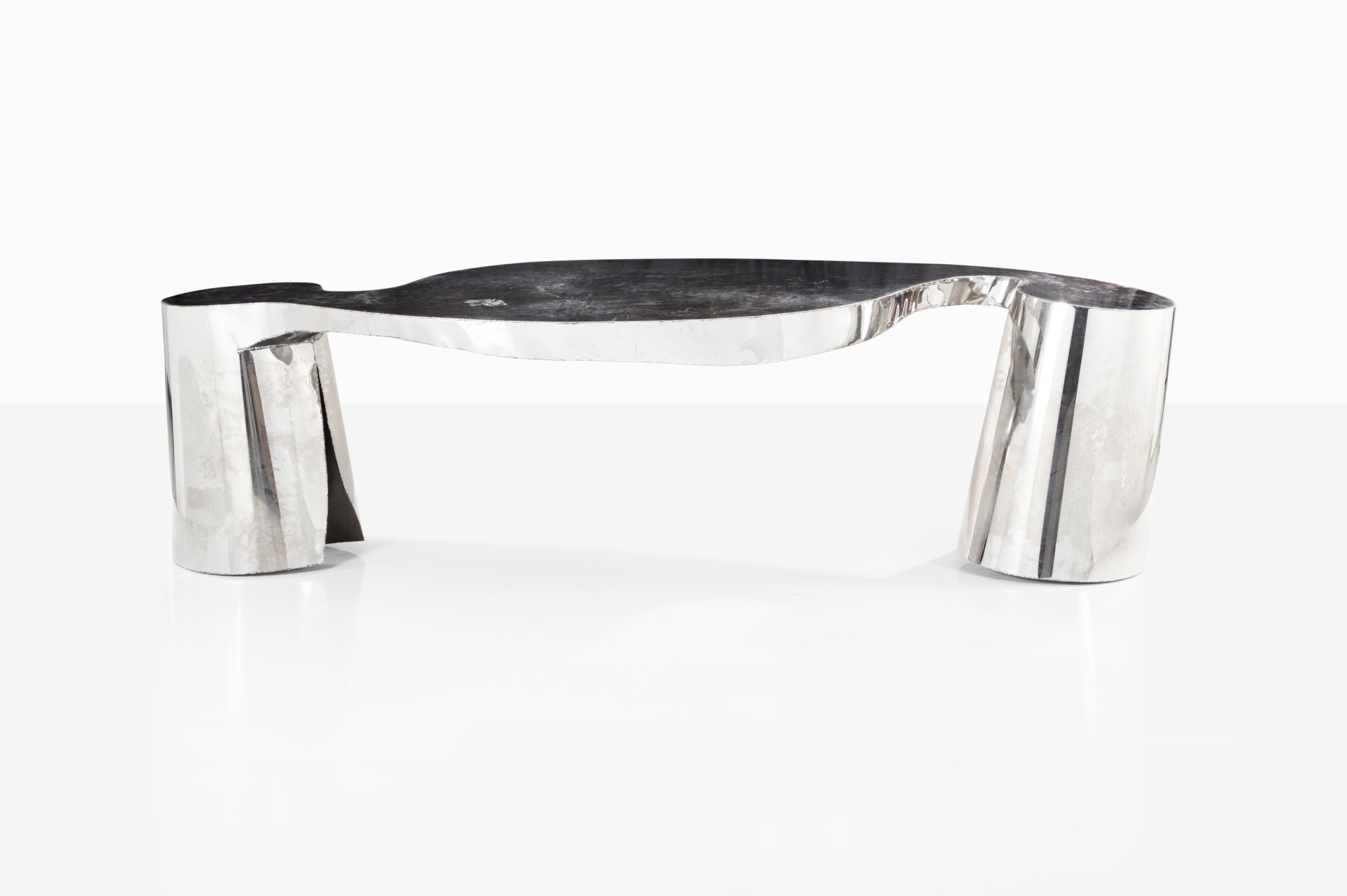
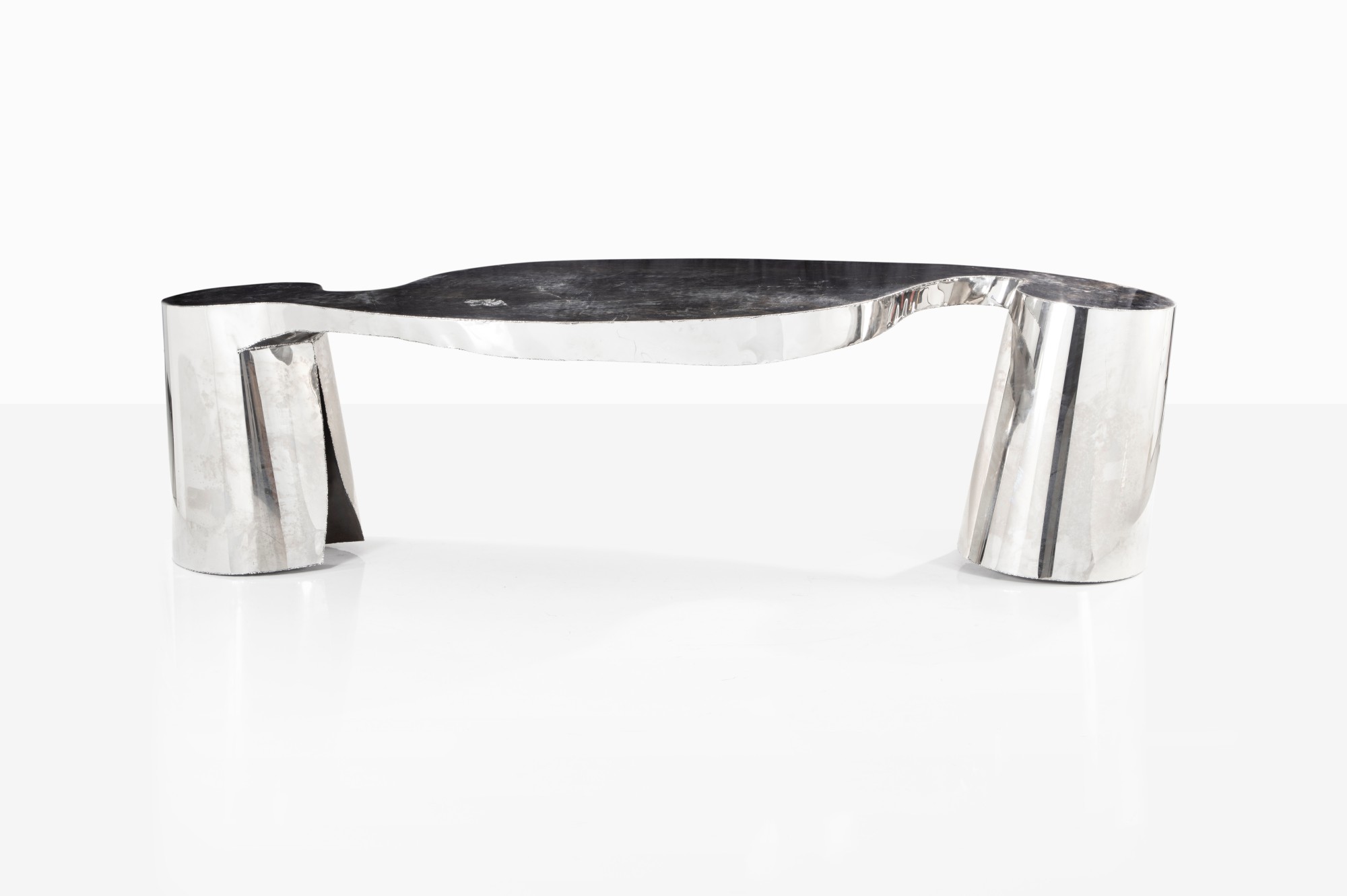
Two legs and a table, vers 1990-1994
Ron Arad was born in Tel Aviv in 1951, and his early formation was shaped by the creative energy of a young nation finding its cultural voice. He studied at the Jerusalem Academy of Art before relocating to London in 1973 to enroll at the Architectural Association, where he trained under Peter Cook of the legendary Archigram group. The AA in the 1970s was a crucible of radical thinking, a place where the boundaries between building, object, and idea were deliberately dissolved. That atmosphere of principled irreverence settled deep into Arad's sensibility, and he has never quite shaken it, which is entirely to his credit.
In 1981, Arad founded One Off, a studio and workshop in Covent Garden, London, that became one of the most talked about creative spaces of the decade. The name announced a philosophy: these were not products to be endlessly replicated but singular objects, each one carrying the marks of its making. The Rover Chair, created in the early 1980s, became his first celebrated statement. Constructed from salvaged leather seats taken from Rover 2000 automobiles and mounted on Kee Klamp scaffolding tubing, it was witty, resourceful, and genuinely beautiful, a piece of furniture that wore its origins without shame and invited its owner into a conversation about value, craft, and the poetry of found materials.
Ron Arad
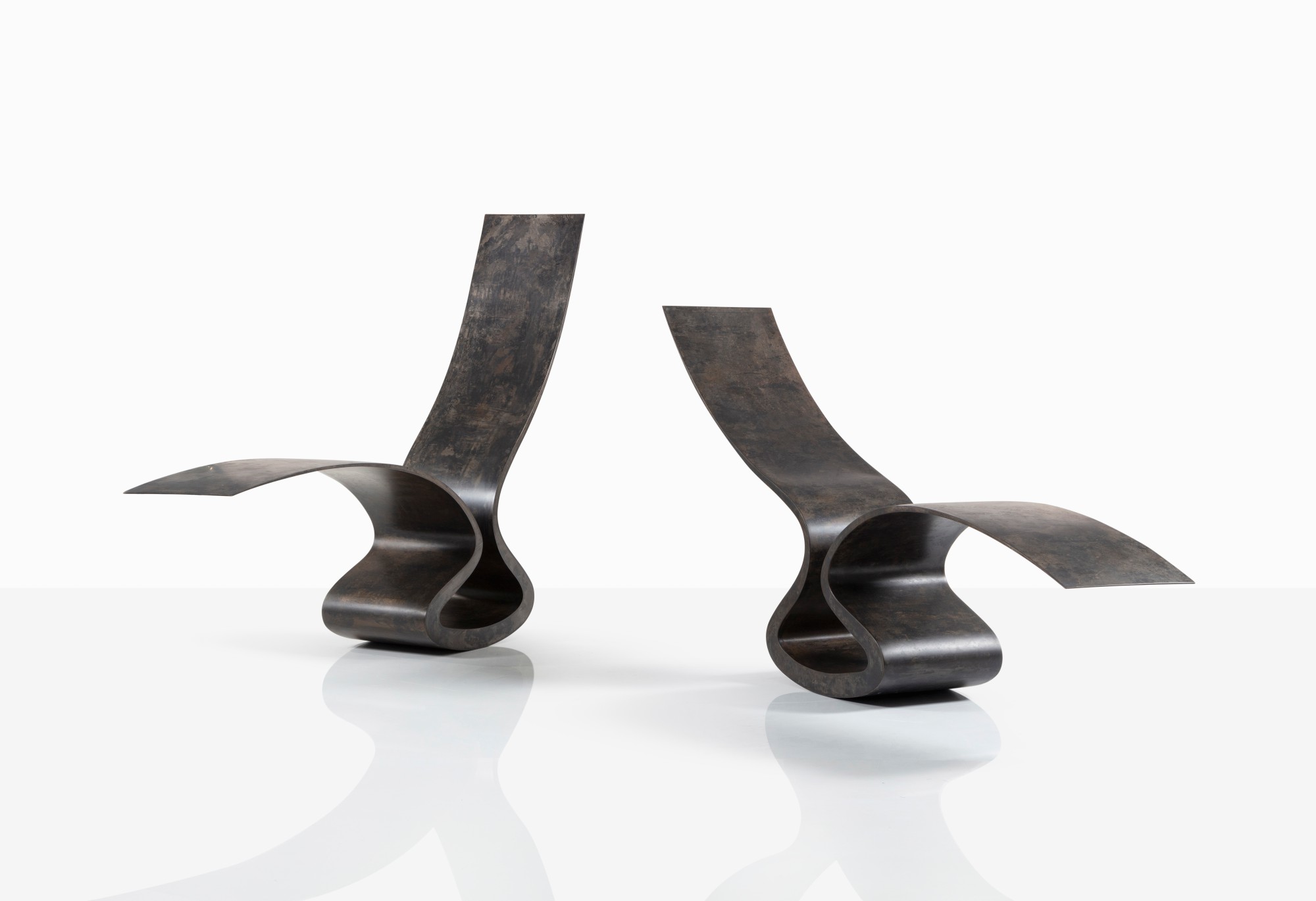
Chaises Longues After Spring et Before Summer, le modèle créé en 1992
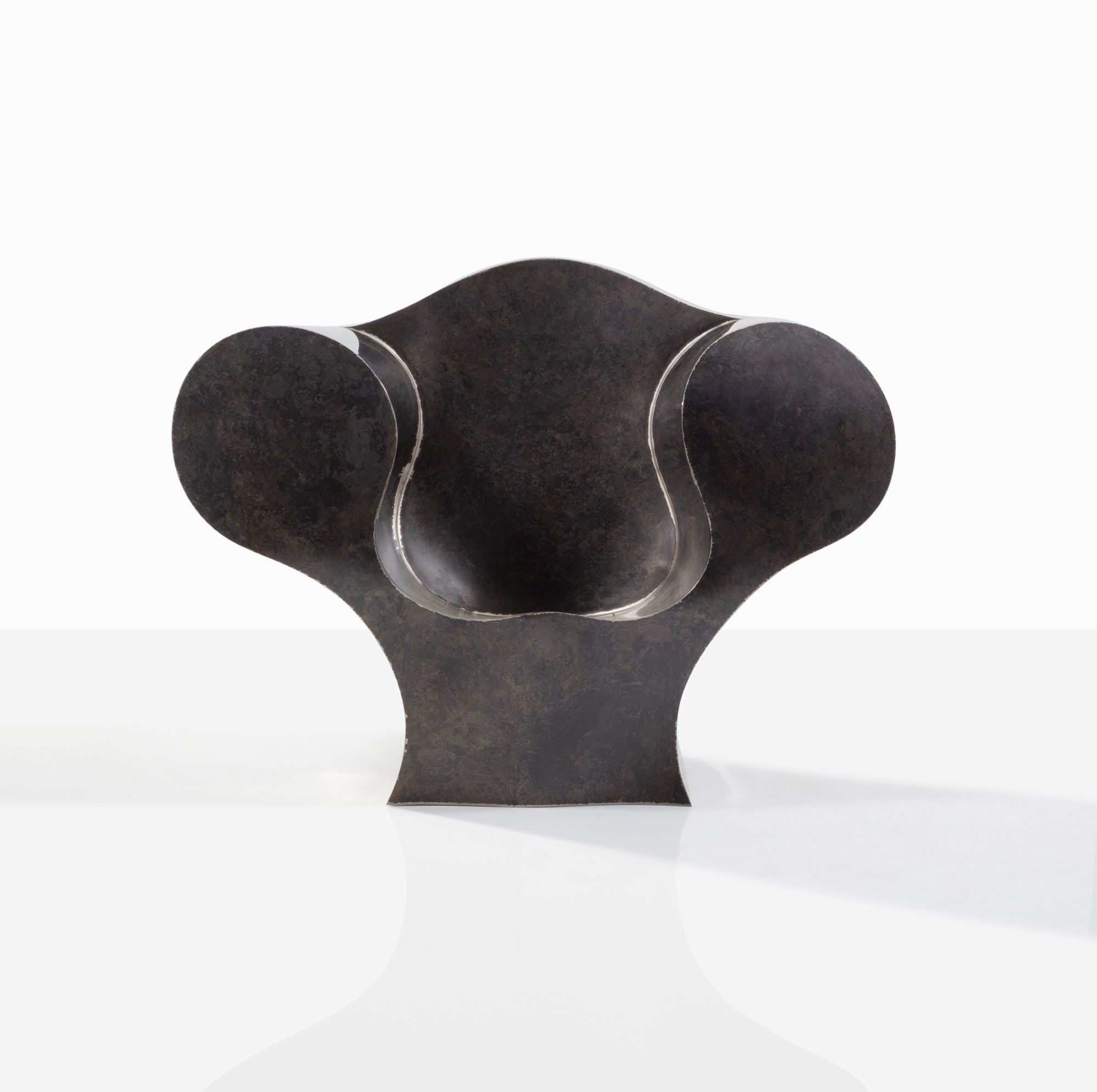
It arrived at exactly the moment when post punk London was hungry for objects that rejected the smooth certainties of mainstream consumer design. Through the late 1980s and into the 1990s, Arad's practice evolved with remarkable velocity. He moved from salvaged materials into an intensive investigation of steel and aluminium, learning to weld and manipulate metal with a fluency that few designers of his generation could match. The Big Easy chair, first created in 1988 and produced in patinated and polished steel, announced a new phase of his ambition.
Its generous, almost cartoonishly rounded forms seemed to mock the austerity of high Modernism while simultaneously demanding to be taken seriously as sculpture. The tension between those two impulses, the playful and the rigorous, became the signature of Arad's mature voice. The Spring and Before Summer chaise longues from 1992, formed in patinated steel with their extraordinary, almost biological curves, showed that he could work at the scale of the body with the same confidence he brought to smaller pieces. The works from the early to mid 1990s that bear the titles Two Legs and a Table and Three Legs and a Table, both executed in polished and patinated stainless steel, demonstrate another quality central to Arad's achievement: his ability to make structural logic feel lyrical.
Ron Arad
Fauteuil Big Easy volume 2, créé en 1988
These are tables that ask you to think about what a table is, about the relationship between support and surface, about elegance as a form of economy. They sit in collections today as objects that have only grown more resonant with time. The Oh Void 2 chair, formed in clear and coloured acrylic, opened yet another material chapter, one in which transparency and light became as important as mass and weight. The Blo Void II, in polished steel and mesh, combined industrial precision with an almost atmospheric delicacy.
As his market grew, so did the range of his output. The Tondino of 2020, worked in marble, showed a maker in his seventh decade still willing to begin again with an unfamiliar material, still asking the stone what it wanted to become rather than imposing a preconceived idea. The Table Split, in walnut and stainless steel, belongs to a longer tradition of artists who understand wood as a living material with its own history and its own grain of argument. Arad reads these materials with the attentiveness of a poet reading a language he loves.
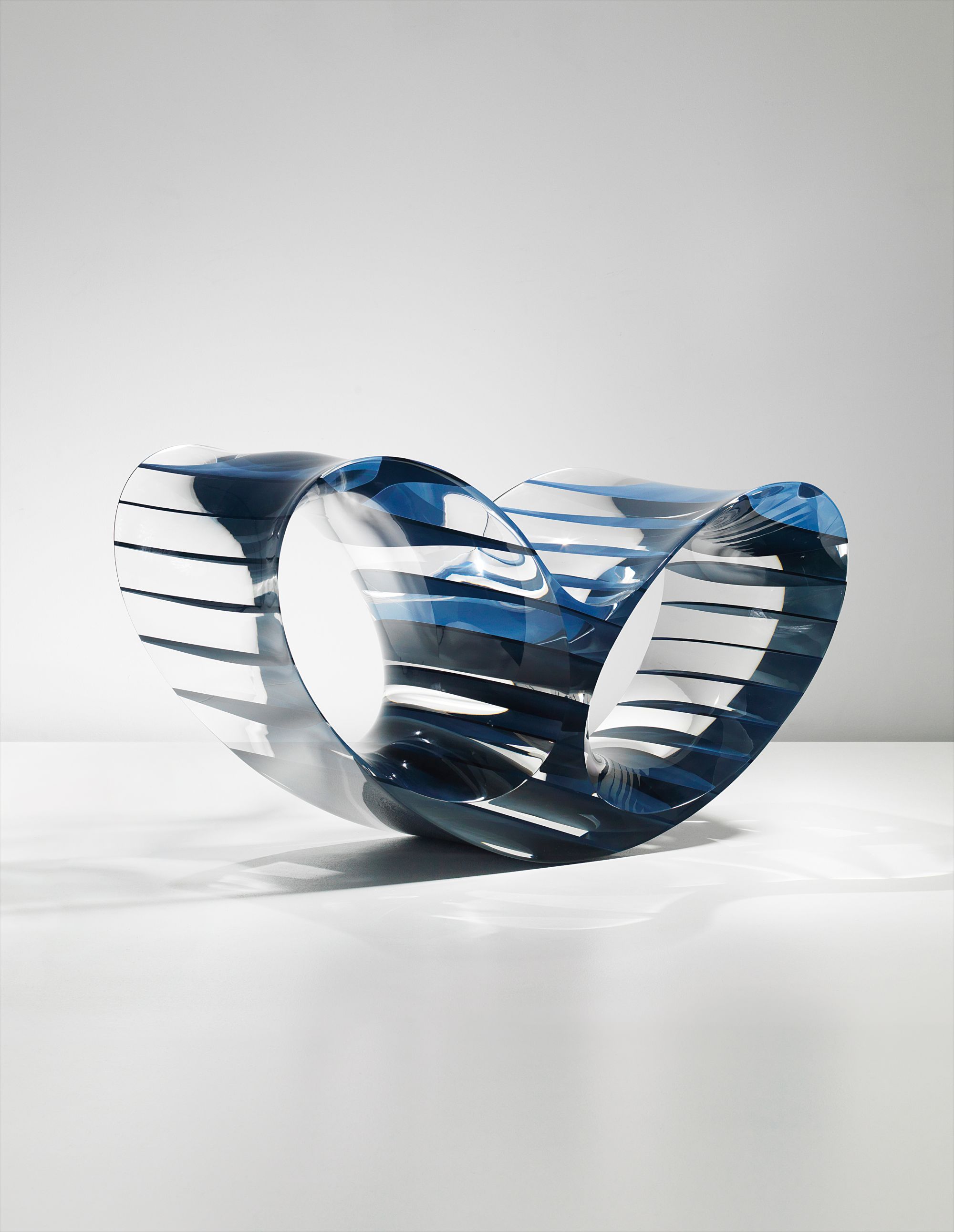
Ron Arad
“Oh-Void 2” chair
For collectors, Arad's work occupies a particularly compelling position. His pieces exist at the junction of the design market and the fine art market, which means that a collector who acquires one is participating in both conversations at once. Works by Arad have appeared at Phillips, Christie's, and Sotheby's with consistent results, and the most significant pieces in patinated steel from his One Off and early Ron Arad Associates period have attracted serious institutional competition. Collectors who know his work well tend to value the pieces where the process of making is most visible, where the hammer marks or the weld lines tell a story that no catalogue description can fully convey.
In this sense, Arad rewards the kind of close looking that distinguishes a true collector from a buyer. In terms of artistic context, Arad belongs to a generation that transformed what design could aspire to. He shares certain obsessions with figures like Marc Newson, Zaha Hadid, and the late great Shiro Kuramata, all of whom pursued form with a freedom usually associated with sculpture rather than manufacture. He has cited the influence of artists such as Donald Judd, whose insistence on the integrity of materials and the precision of form resonates through Arad's steel works, and of sculptors in the tradition of Brancusi, who showed that simplicity and radical originality were not in opposition.
Among his contemporaries in the expanded field of design art, he stands as one of the figures who made the category possible and who gave it genuine intellectual credibility. What makes Ron Arad matter today is not simply the beauty of the individual objects, though that beauty is real and lasting. It is the consistency of his argument over more than four decades, the insistence that making things well and making things that think are not separate activities. In a cultural moment when the boundaries between art, design, architecture, and technology are dissolving faster than institutions can track them, Arad turns out to have been ahead of the conversation all along.
His studio continues to produce work that surprises, his influence runs through an entire generation of makers who trained with him or were shaped by his example, and the objects he has placed in the world continue to ask good questions of everyone who encounters them.
Explore books about Ron Arad
Ron Arad: A Retrospective
Alison Jackson
Ron Arad: Restart
Catherine Armour
Ron Arad: Art, Design, Architecture
Deyan Sudjic
Ron Arad: Published Works
Museo Nacional Centro de Arte Reina Sofía
Ron Arad: No Discipline
Ron Arad, Paul Rodgers