Roger Ballen
Roger Ballen: Illuminating the Extraordinary Inner World
Artist Spotlight · The Collection Editorial
“The ultimate purpose of my work is to help the viewer define what it means to be human.”
Roger Ballen, various interviews
In recent years, the international museum community has turned with renewed intensity toward the work of Roger Ballen, whose retrospective exhibitions and institutional acquisitions have reaffirmed his standing as one of the most singular visual voices of the past half century. The Fotografiska network, which has hosted his work across its Stockholm, New York, and Tallinn venues, brought his images to vast new audiences who encountered them with the same unsettled wonder that has greeted his photographs since the 1980s. His work appears in the permanent collections of institutions including the Museum of Modern Art in New York, the Tate Modern in London, and the Moderna Museet in Stockholm, a roster that speaks to his extraordinary reach across cultural and geographic boundaries. That reach continues to grow, as younger generations of photographers, filmmakers, and visual artists cite Ballen as a foundational influence on their understanding of what a photograph can do and say.
Roger Ballen
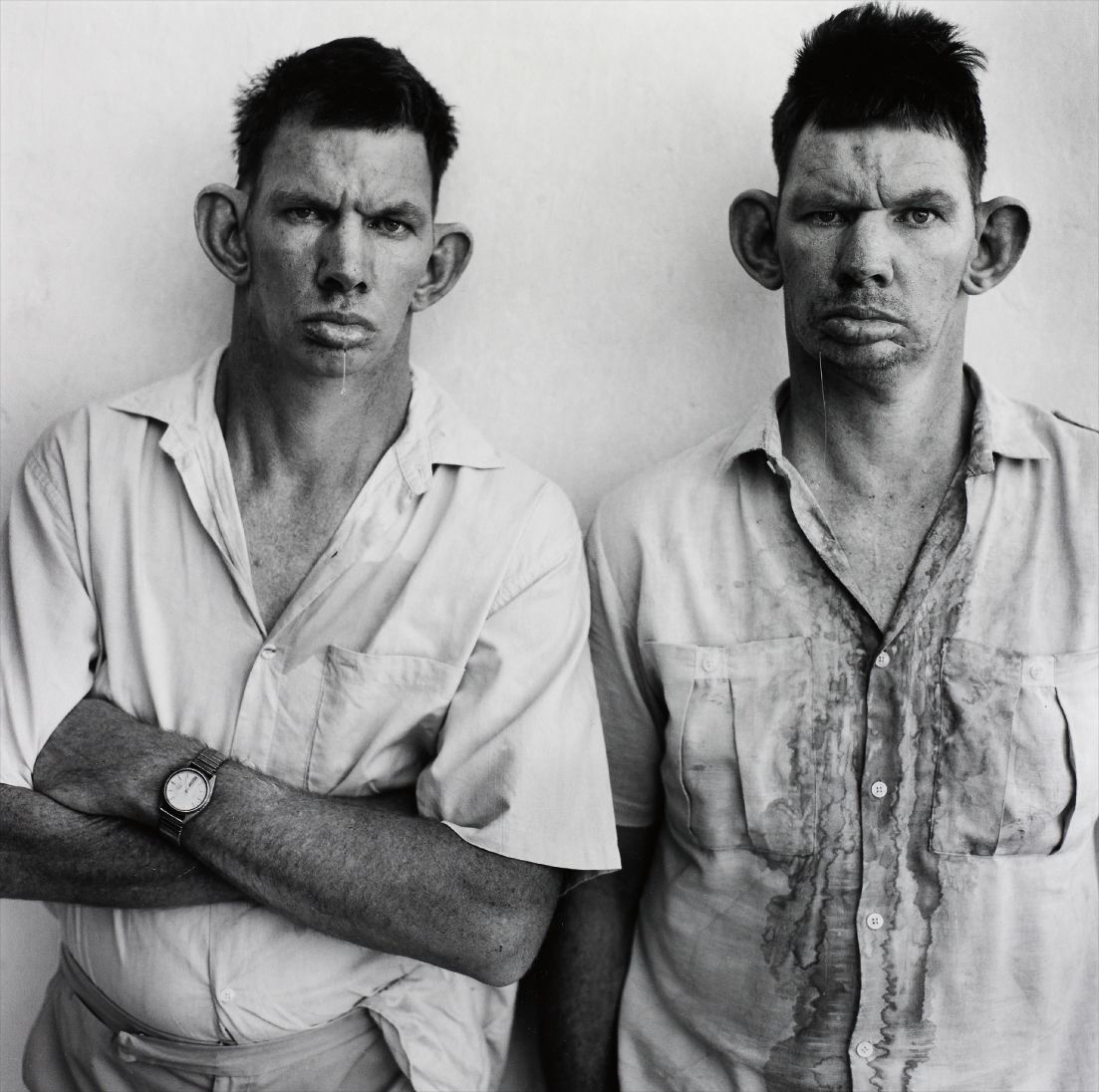
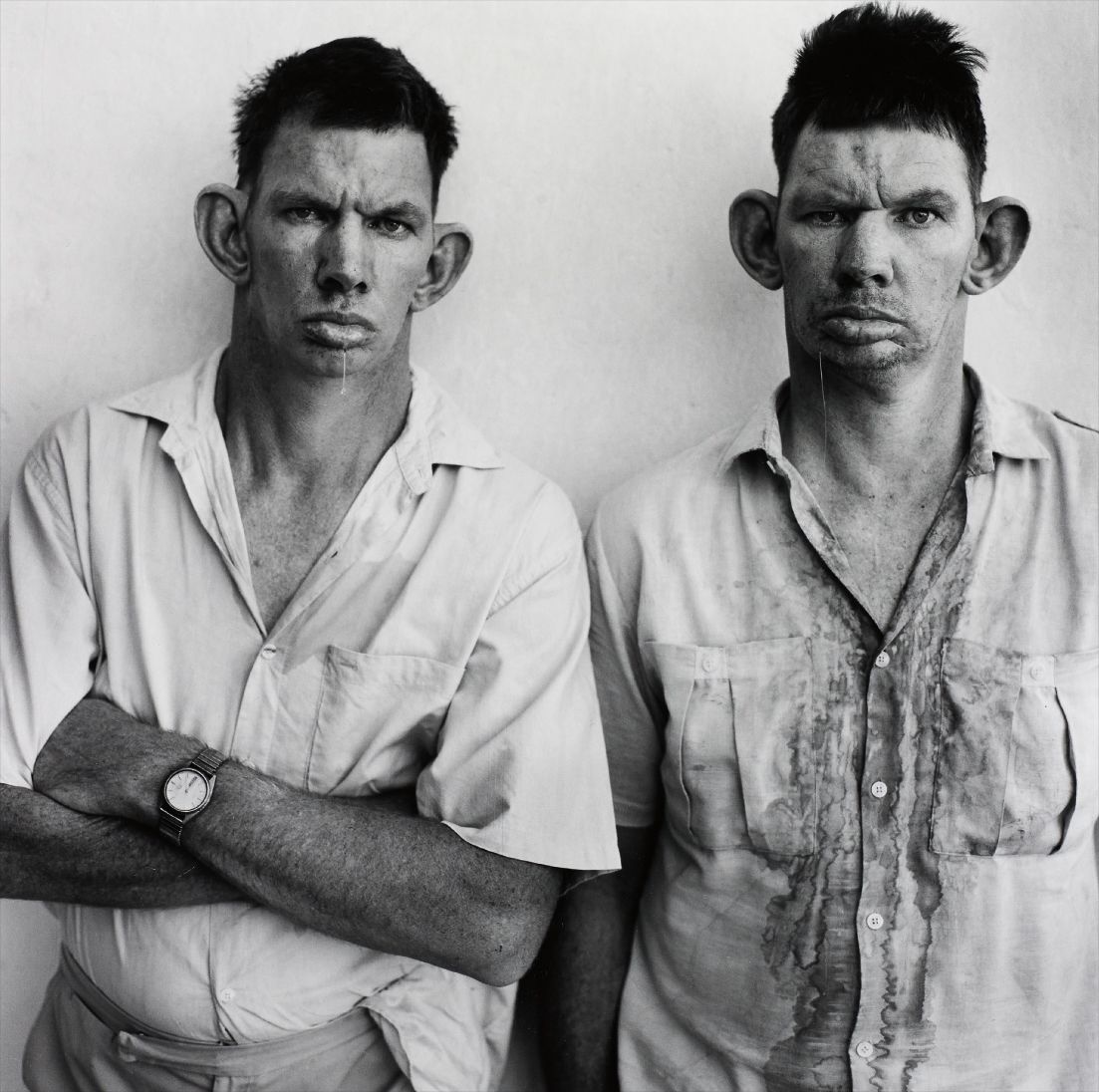
Dresie and Casie, twins, Western Transvaal
Born in New York City in 1950, Roger Ballen grew up in an environment saturated with photographic culture. His mother, Adrienne Ballen, was a picture editor at Magnum Photos, and the family home served as an informal gallery of some of the most powerful documentary and fine art photography of the postwar era. This early immersion gave him an instinctive literacy with the image long before he began making his own. He studied psychology at the University of California, Berkeley, graduating in 1972, and later earned a doctorate in mineral economics from the Colorado School of Mines, a dual intellectual formation that would prove essential to the particular fusion of scientific observation and psychological intensity that defines his mature work.
Ballen arrived in South Africa in the late 1970s, initially pursuing a career as a geologist. He traveled extensively through the country's rural and semi urban landscapes, and it was during these journeys that his photography began to take on the character of a true artistic vocation. His early documentary series, most notably Platteland, published in 1994, recorded the lives of poor Afrikaner communities in the dorps and farming regions of the country. These images were already marked by an unflinching quality, a refusal to sentimentalize or aestheticize poverty, but they remained recognizably within the tradition of concerned documentary photography.
Roger Ballen
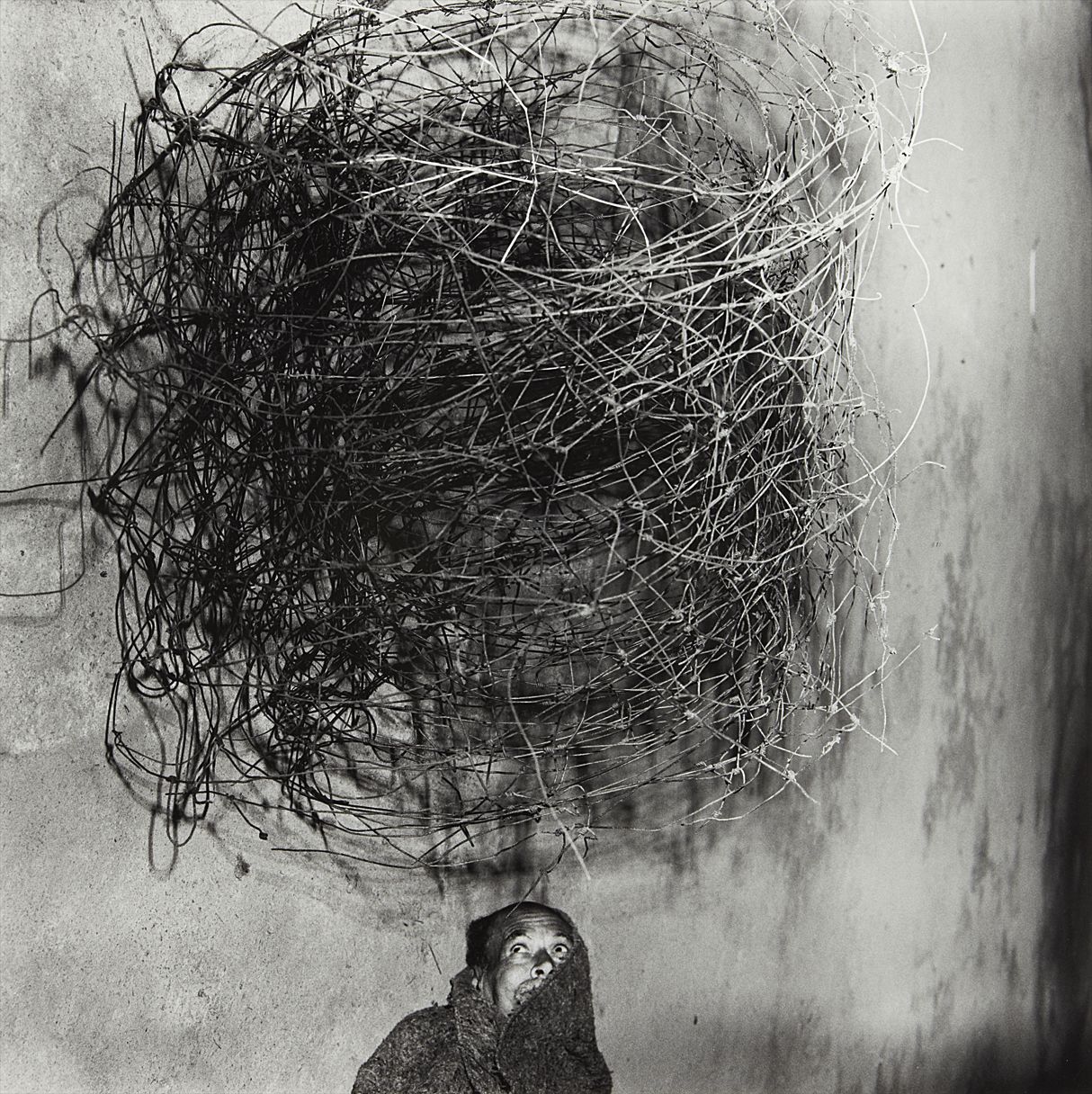
Twirling Wires
The recognition that followed Platteland placed Ballen among the most discussed photographers working in social documentary, yet he was already quietly moving toward something far more interior and strange. The series Outland, published in 2001, marked the decisive rupture in his practice. Here the documentary impulse gave way to something that refused easy categorization, as Ballen began incorporating drawings, wire constructions, and found objects into his compositions, staging scenes in derelict interiors that felt simultaneously real and hallucinatory. His subjects, often marginalized individuals living on the edges of South African society, became collaborators in the creation of images that operated as psychological theaters rather than records of social fact.
“I am not a documentary photographer. I am trying to define and objectify a place in my own mind.”
Roger Ballen, interview with The Guardian
Shadow Chamber, published in 2005, deepened this direction, and Boarding House, published in 2009, pushed it further still, into territory that critics began describing as its own autonomous genre. It was in this period that the term Ballenesque entered the critical vocabulary, a rare distinction reserved for artists whose vision is so coherent and so original that it generates its own descriptive language. Among the works that have come to define his reputation, Dresie and Casie, Twins, Western Transvaal stands apart as perhaps the single most discussed photograph of his career. Printed as a selenium toned gelatin silver print, the image confronts the viewer with a directness that is simultaneously compassionate and deeply unsettling, the two brothers staring out from the frame with an expression that resists simple interpretation.
Roger Ballen
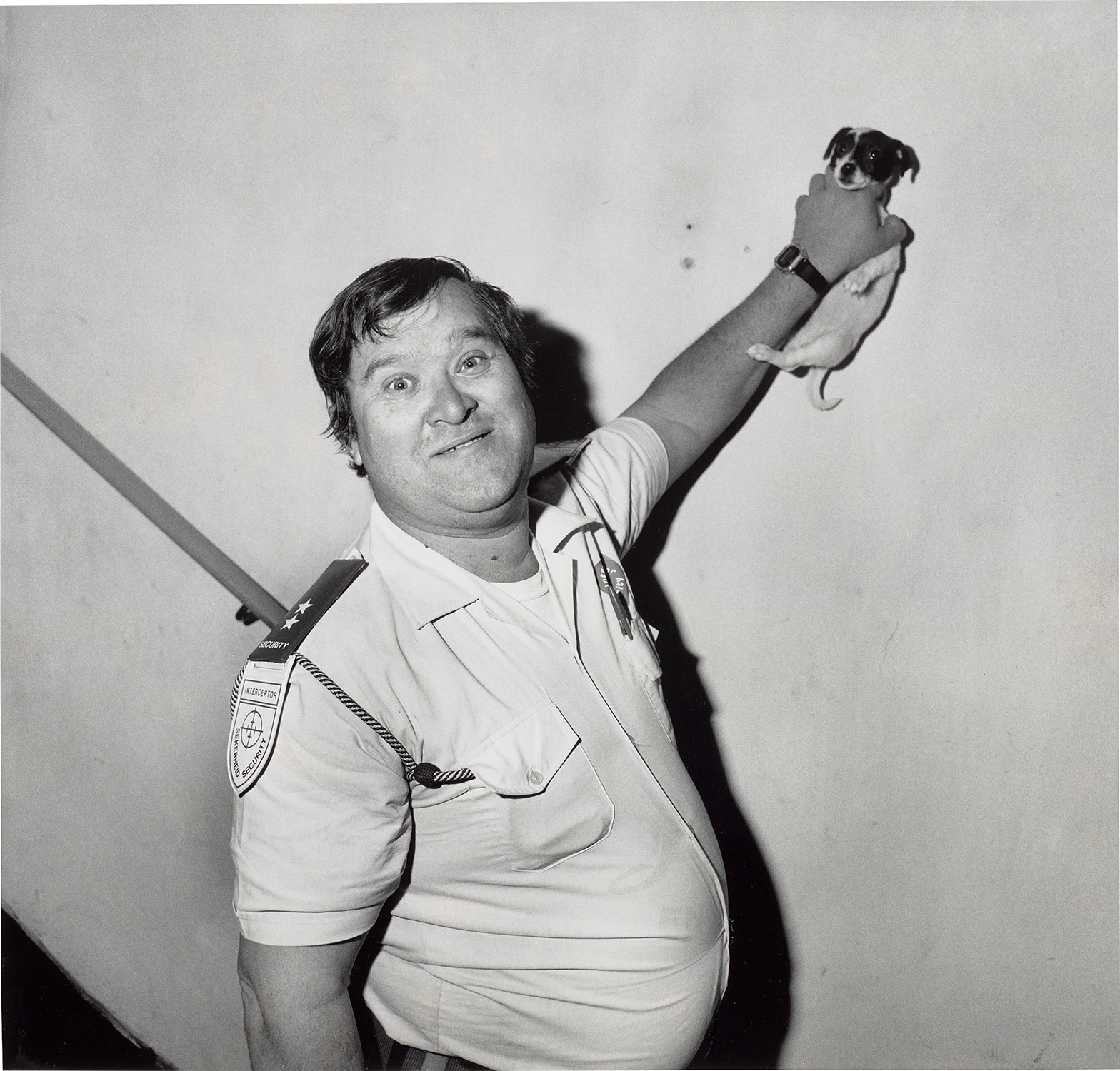
Security Guard and Puppy on Staircase, Gauteng
The selenium toning gives the print a warmth that complicates the starkness of the subject, a technical choice that reveals Ballen's understanding of the relationship between craft and meaning. Twirling Wires and Security Guard and Puppy on Staircase, Gauteng, both also rendered as selenium toned gelatin silver prints, demonstrate the range within his formal concerns, one abstract and near sculptural in its focus on found construction, the other tender and oddly domestic within a context of institutional severity. His more recent works, including Ritual as an archival pigment print and Two Figures as a chromogenic print flush mounted, show an artist continuing to evolve his material vocabulary while deepening the psychological resonances that have always been central to his project. For collectors, Ballen represents a distinctive proposition.
His prints occupy a category somewhere between fine art photography, outsider art, and surrealist drawing, which means that informed collectors who understand the breadth of his practice can find extraordinary works across a range of price points and formats. His vintage gelatin silver prints, particularly those from the Platteland and Outland periods, have attracted sustained interest at auction and through galleries including Rat Hole Gallery in Tokyo and Galerie Karsten Greve, which has represented his work in Europe. The selenium toned prints in particular are prized for the stability and depth of tone that the process confers, qualities that matter both aesthetically and as considerations of archival longevity. Collectors approaching his work for the first time are often advised to consider the internal consistency of his body of work as a whole, since a Ballen from any period in his development speaks to all the others in ways that reward sustained looking.
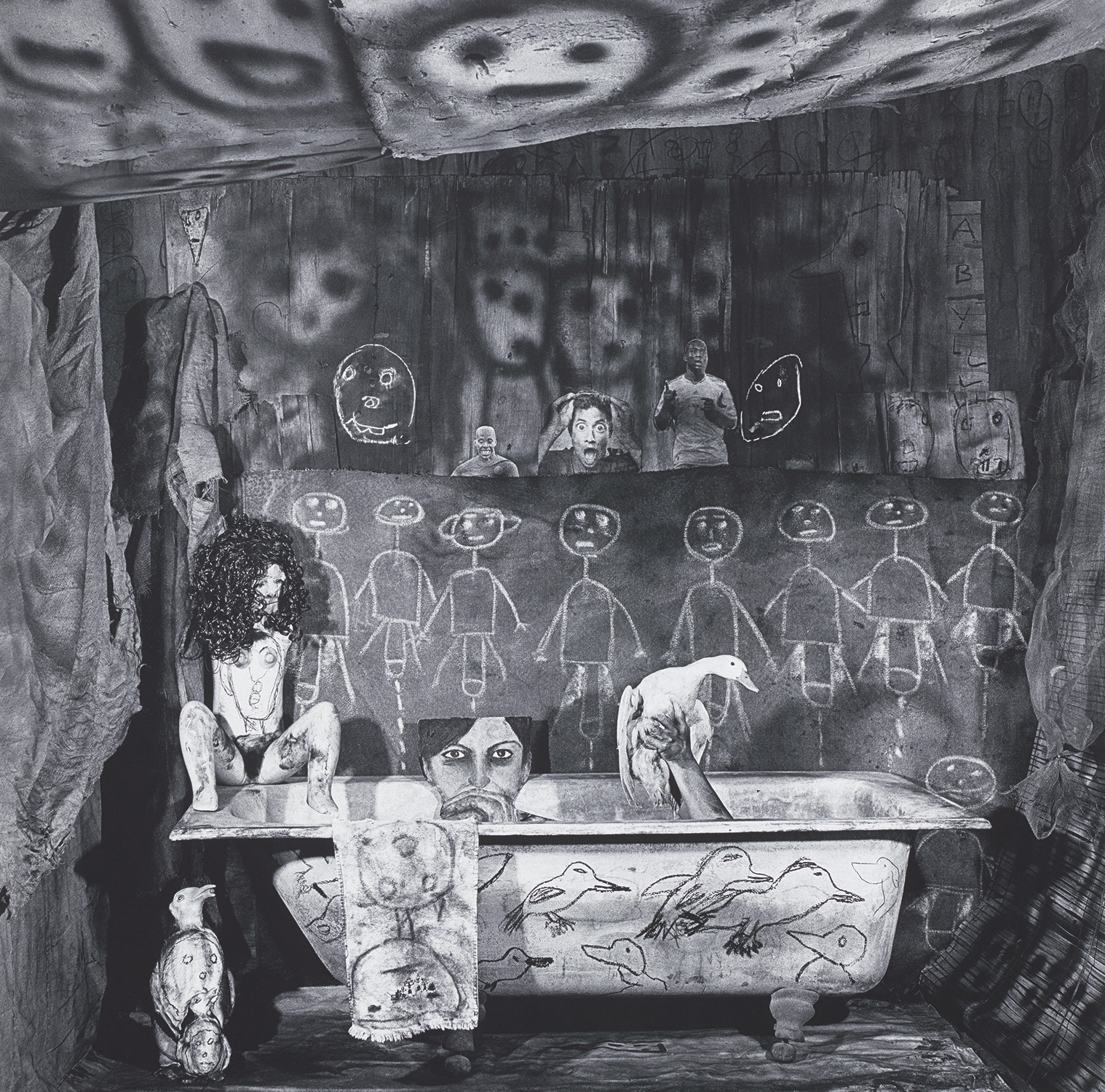
Roger Ballen
Ritual
Within the broader history of photography and contemporary art, Ballen occupies a position that connects several distinct traditions while belonging fully to none of them. His work invites comparison to the psychological intensity of Diane Arbus, with whom he shares an interest in marginalized subjects and a refusal to soften the confrontational aspects of portraiture. The surrealist and expressionist dimensions of his staged interiors echo the theatrical installations of Edward Kienholz and the dark romanticism of Francesca Woodman. His incorporation of drawing and found material into photographic space places him in dialogue with artists such as William Kentridge, another South African figure who has made the hybrid image a central concern.
Yet the Ballenesque remains irreducibly itself, a vision so thoroughly worked through over decades that its influences have been fully metabolized into something new. The legacy of Roger Ballen is still being written, but its outlines are already clear. He has demonstrated that photography can sustain a fully interior and philosophical practice without sacrificing its essential relationship to the real world and the people who inhabit it. His images ask their viewers to sit with discomfort, to resist the impulse toward easy meaning, and to find in the strange and marginal a mirror of their own psychological depths.
For a generation of artists working across photography, video, and installation, his example has been liberating in its refusal of category and its insistence on the sovereignty of personal vision. To collect Ballen is to acquire not merely a beautiful and demanding object but a piece of one of the most coherent and ambitious artistic projects of the contemporary era.
Explore books about Roger Ballen
Shadowland
Roger Ballen
Outland
Roger Ballen
Asylum
Roger Ballen
Boarding House
Roger Ballen
Hasselblad Award 2010
Roger Ballen
Roger Ballen: A Retrospective
Roger Ballen, Roger Scruton
The Theatre of the Real
Roger Ballen