Roe Ethridge
Roe Ethridge Makes Everything Feel Alive
Artist Spotlight · The Collection Editorial
“I want the photographs to be in a kind of conversation with each other, regardless of where they came from.”
Roe Ethridge, Aperture interview
There is a particular kind of attention that Roe Ethridge brings to the world, one that refuses to separate the beautiful from the banal, the commercial from the intimate, the planned from the accidental. In recent years, his visibility within the contemporary photography conversation has only grown more pronounced, with sustained institutional and market interest affirming what his most devoted collectors have long understood: that Ethridge is one of the most genuinely original image makers working today. His presence in major international collections and his continued engagement with both gallery programs and publishing projects have kept him firmly at the center of conversations about what photography can do and what it means in the twenty first century. Ethridge was born in Miami in 1969 and grew up in Atlanta, Georgia, a city whose particular blend of suburban sprawl, commercial signage, and Southern light would leave a visible mark on his sensibility.
Roe Ethridge
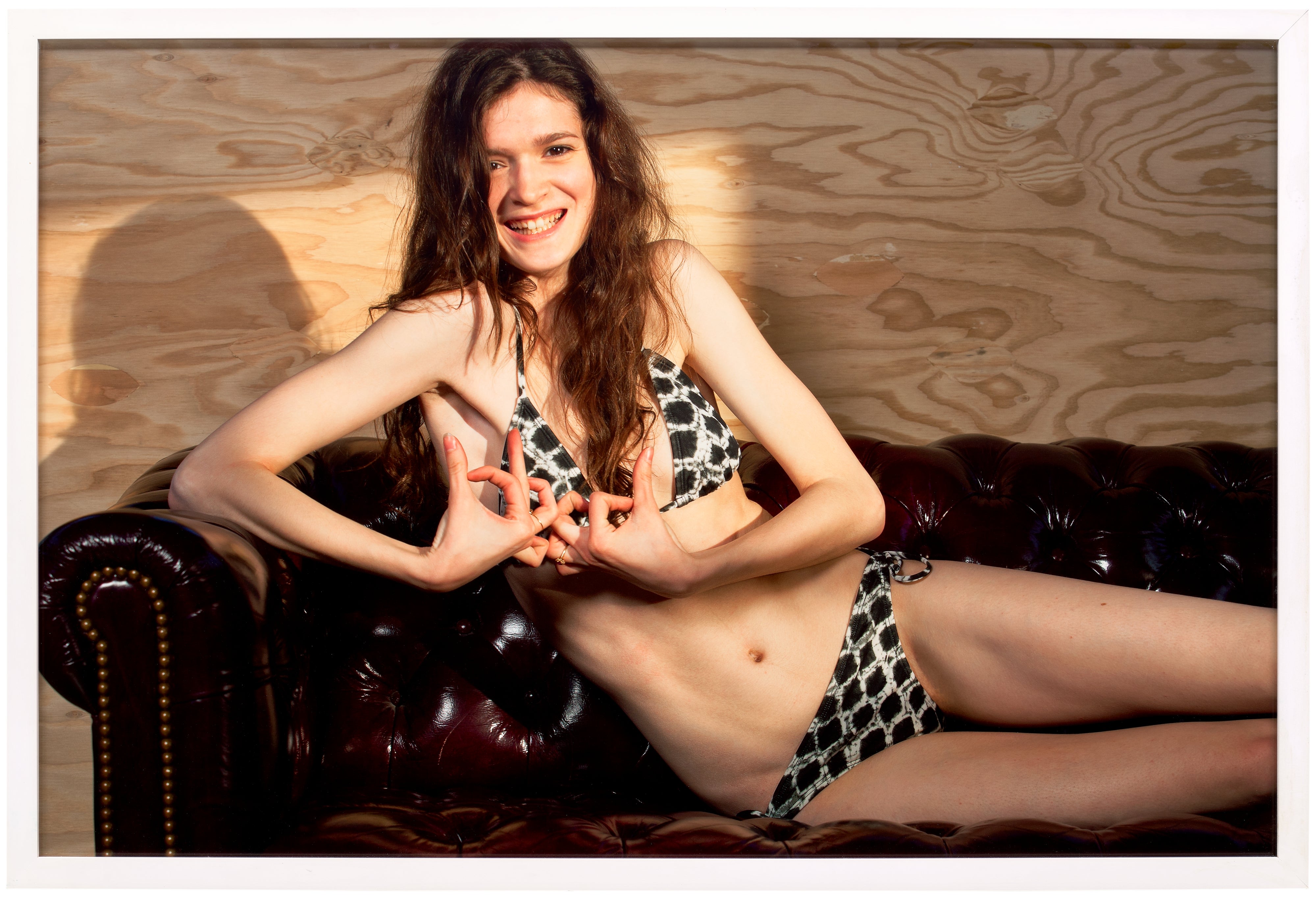
Annabella for SEPP, 2012
The strip malls, gas stations, and parking lots of his Georgia upbringing were not backdrop but subject, and the gently strange quality of American consumer landscapes became a recurring presence in his visual vocabulary. He studied photography at the Atlanta College of Art before moving to New York, where he embedded himself in both the commercial photography world and the emerging downtown arts scene of the 1990s. That dual citizenship, one foot in the studio, one foot in the gallery, was not a compromise but a position, and it became the foundation of everything he would go on to make. His artistic development is inseparable from his refusal to treat commercial and fine art photography as opposing categories.
From early in his career, Ethridge was working simultaneously for fashion clients and editorial publications while producing personal work that found its way into galleries and museum contexts. Rather than keeping these streams separate, he allowed them to bleed into one another, creating installations and publications in which a fashion image might appear beside a snapshot of his daughter, a still life of fruit, or a roadside sign photographed through a car window. This mixing was not ironic or detached. It was genuinely curious, motivated by a desire to understand how images acquire meaning and how that meaning shifts depending on the company they keep.

Roe Ethridge
Dunwoody Mall Sign
The signature quality of an Ethridge photograph is its studied ambiguity. Works like Dunwoody Mall Sign and Gas Station carry the visual grammar of documentary photography but are suffused with a lyrical, almost painterly consciousness. Liberty Square, Liberty NY, made in 2005, has the quiet authority of a painting by Edward Hopper transposed into color photography, its composition both casual and precise. Popcorn Factory from the same year, flush mounted to Dibond, exemplifies his ability to find in the most unremarkable commercial subject a kind of visual poetry.
Moon from 2003 and Sunset from 2008 demonstrate his range across the natural world, images that feel both personal and universal, made with an artist's eye trained equally by advertising deadlines and museum walls. Annabella for SEPP, created in 2012 and presented in an artist's frame, is among the works that best illustrate his seamless movement between the commissioned portrait and the fine art photograph, an image that functions fully in both worlds without belonging entirely to either. For collectors, Ethridge's work presents a rare and compelling proposition. His chromogenic prints, often flush mounted or presented in artist's frames of his own design, reward close looking and reward living with over time.
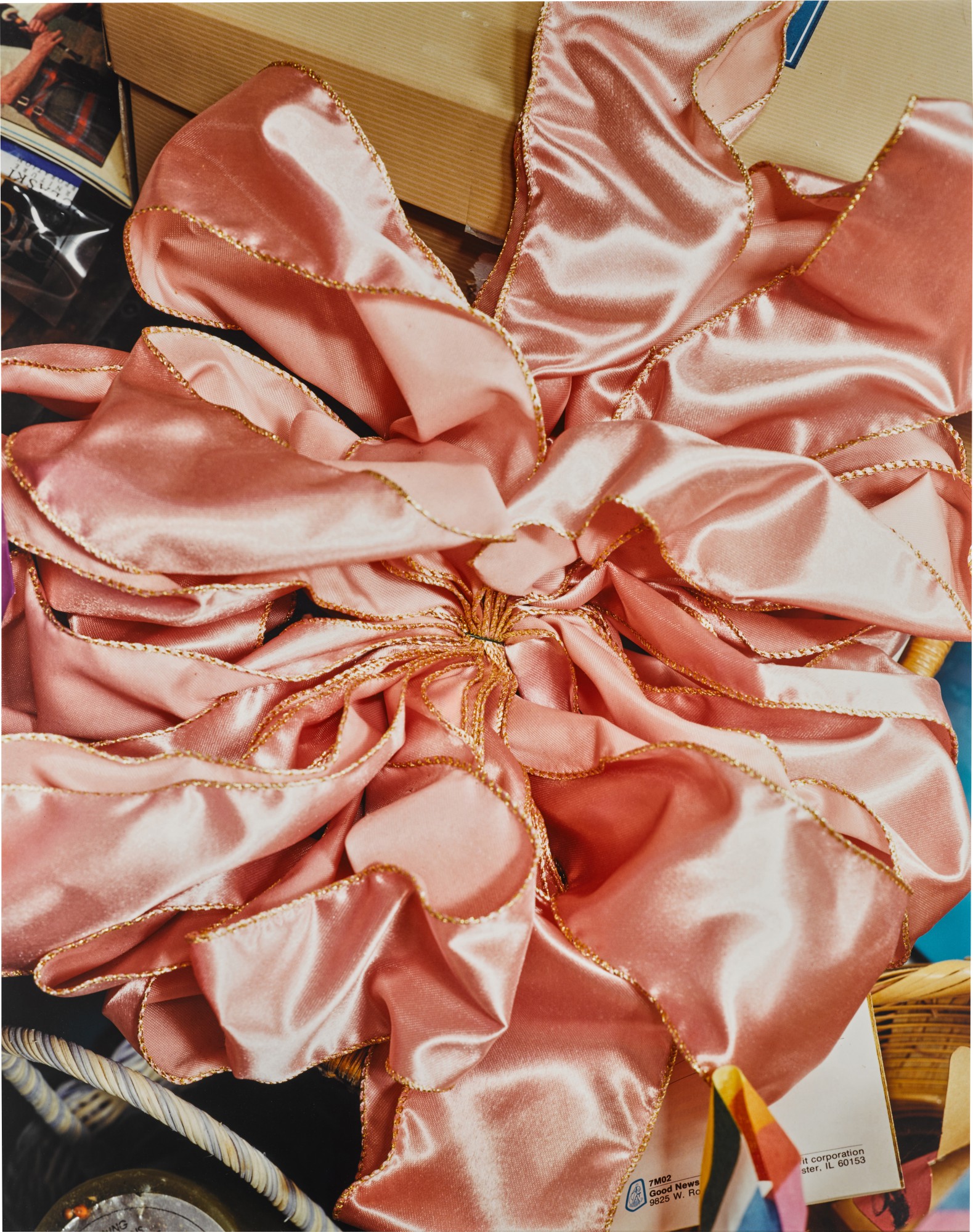
Roe Ethridge
'The Pink Bow', 2002
The framing choices are not incidental: the artist's frames function as part of the work, giving each piece a deliberate, considered presence on the wall that distinguishes it from the broader field of contemporary photography. Collectors drawn to artists such as Wolfgang Tillmans, Taryn Simon, or Paul Graham will find in Ethridge a similarly rigorous approach to sequencing and context, while those who appreciate the American vernacular tradition running from Walker Evans through Stephen Shore will recognize a deep and genuine engagement with that lineage. His auction presence has grown steadily, reflecting both the maturity of his career and the broadening recognition of his importance within the medium. Within the history of photography, Ethridge occupies a position that is genuinely his own even as it is richly informed by what came before.
He shares with Shore and Eggleston an eye for the overlooked American scene, but his practice is more restless, more willing to move between registers of image making. His engagement with fashion and commercial work connects him to a tradition that includes Irving Penn and Guy Bourdin, though his intentions are always pointed somewhere beyond the image's original function. He has exhibited at MoMA PS1, the Whitney Museum, and major international galleries, and his work has been included in significant group exhibitions that map the evolution of photography at the turn of the century. His books and publications, which function as artworks in their own right, have been particularly influential on a younger generation of photographers who saw in them a new model for how images could be organized and understood.
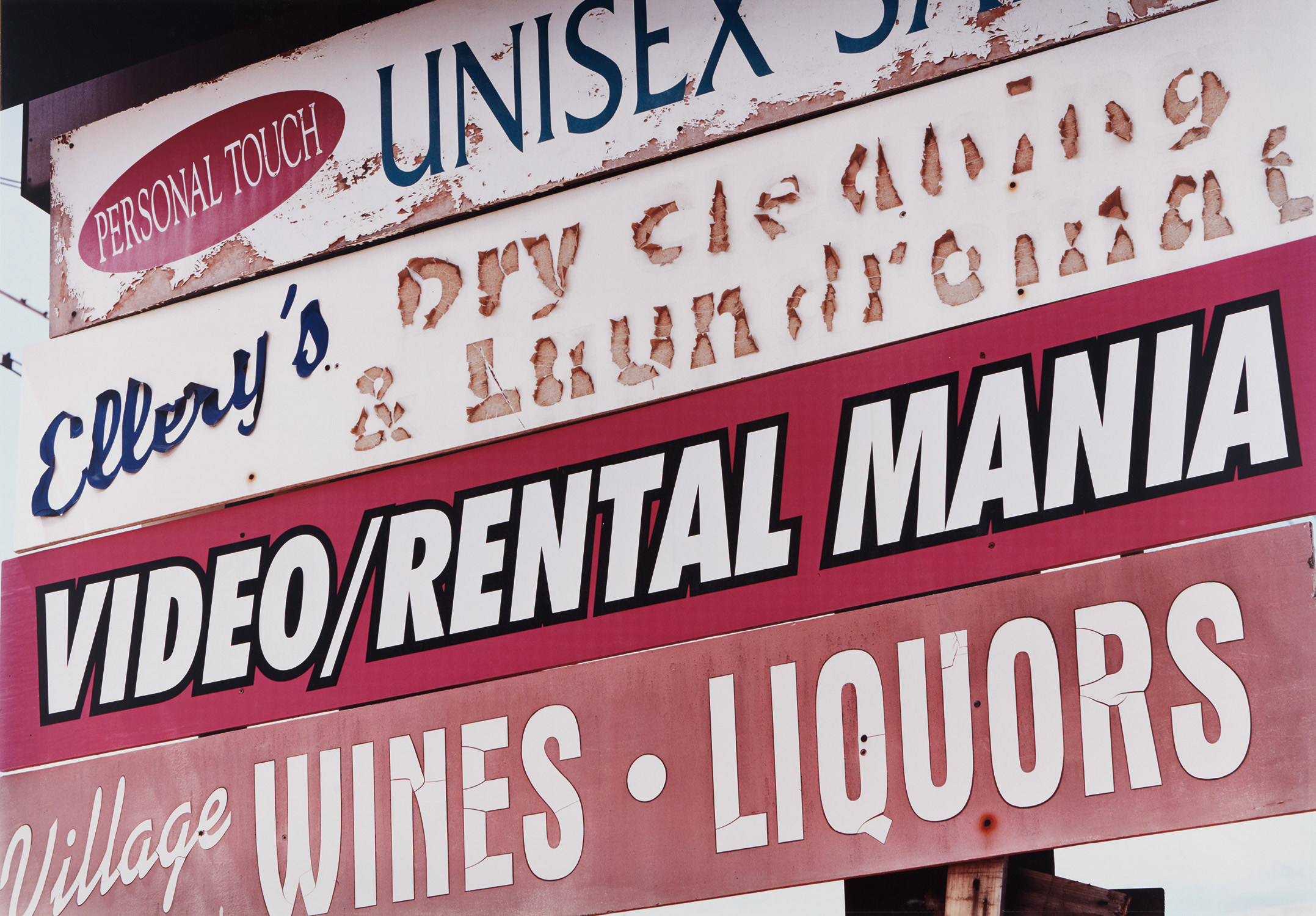
Roe Ethridge
Liberty Square, Liberty NY, 2005
The legacy of Roe Ethridge is still very much being written, which is part of what makes him such a rewarding artist to follow and to collect. He has spent more than two decades demonstrating that the categories we use to organize image making are less stable than we assume, and that the most interesting work often happens in the spaces between them. His photographs of suburban Atlanta, of fashion subjects, of moons and sunsets and popcorn factories, form a body of work that is at once deeply American and genuinely universal, rooted in the specific textures of contemporary life while reaching toward something more lasting. To own an Ethridge is to own a particular kind of attentiveness to the world, a reminder that the images surrounding us every day, whether on billboards or gallery walls, are always in conversation with one another, always asking to be looked at again.
Explore books about Roe Ethridge