Robert Mangold
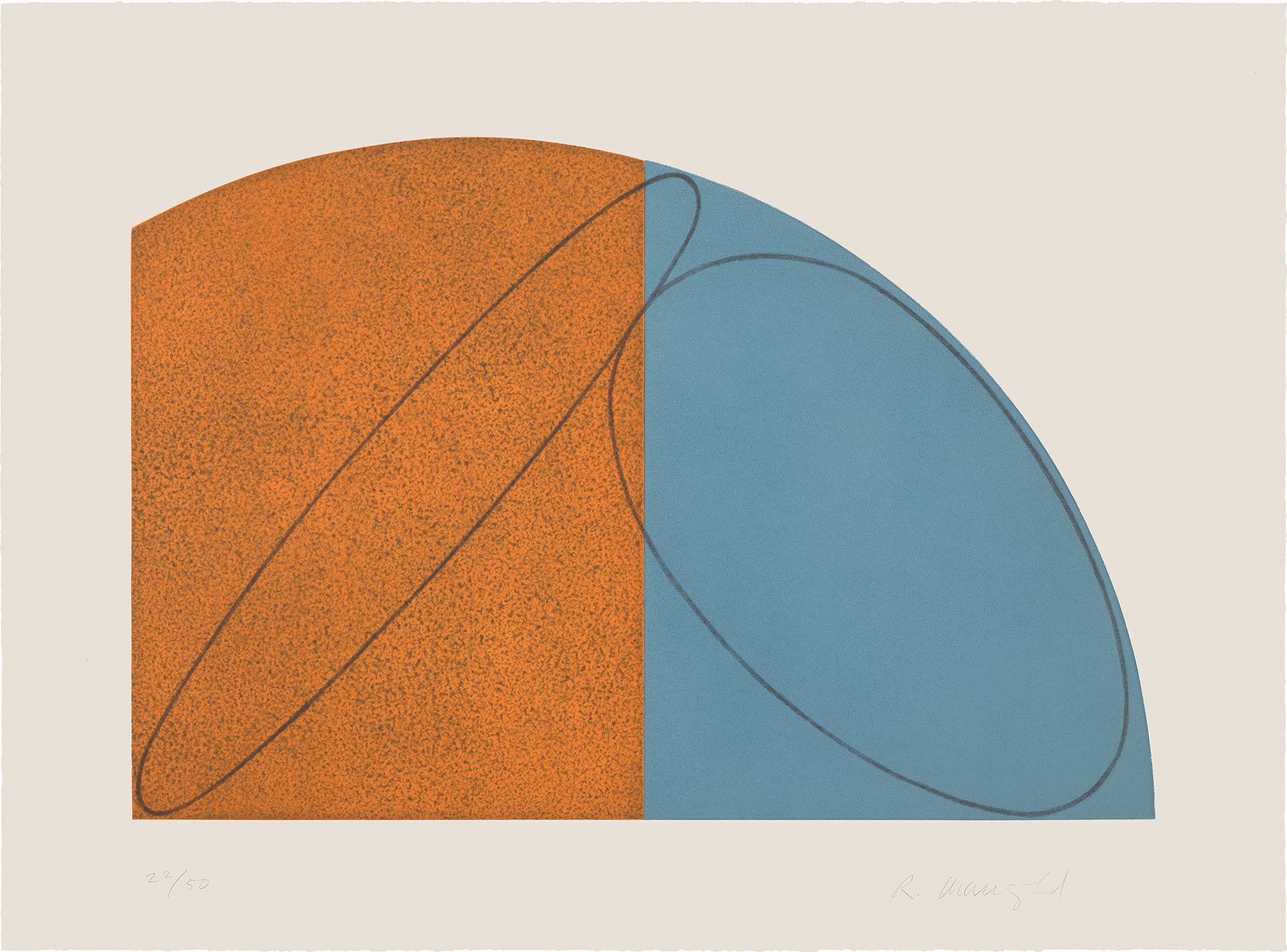
Robert Mangold: Geometry Alive With Quiet Brilliance
Artist Spotlight · The Collection Editorial
“I wanted the line to be a drawing element and not just a structural element of the canvas.”
Robert Mangold, interview with Robin White, 1978
When the Solomon R. Guggenheim Museum devoted a major retrospective to Robert Mangold in 2005, the art world was reminded of something it had always known but perhaps not said loudly enough: here was one of the most rigorously intelligent and genuinely beautiful painters working in America. The exhibition traced five decades of shaped canvases, delicate graphite lines, and colors so precisely chosen they seemed to hum. Visitors moved through the spiraling rotunda and found themselves in conversation with works that asked slow, patient questions about perception, form, and the strange poetry of geometric thought.
Robert Mangold
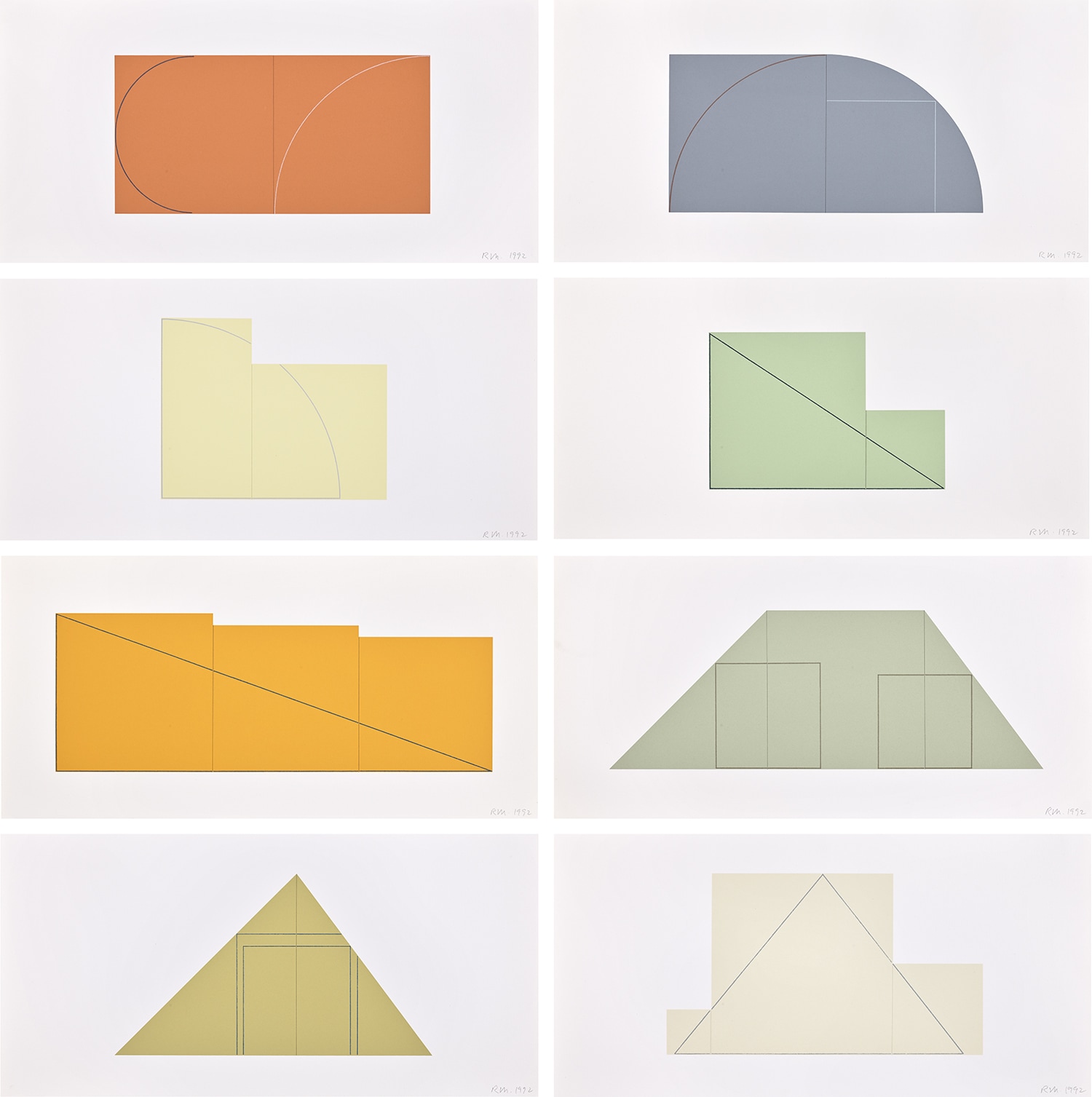
Multiple Panel Paintings, 1973-1976: eight plates (S. & S. 1977.02)
Mangold was born in North Tonawanda, New York, in 1937, a small industrial city near Buffalo that shaped in him an appreciation for structure and material reality. He studied at the Cleveland Institute of Art before completing his graduate work at Yale University in the early 1960s, where he joined a generation of artists who were beginning to question the emotional excess of Abstract Expressionism. Yale in that era was a crucible of serious formal thinking, and Mangold emerged from it with a commitment to painting as an act of precise inquiry rather than gestural release. His early years in New York, where he worked at the Museum of Modern Art in an administrative capacity during the 1960s, placed him at the very center of the conversation about what painting could and should become.
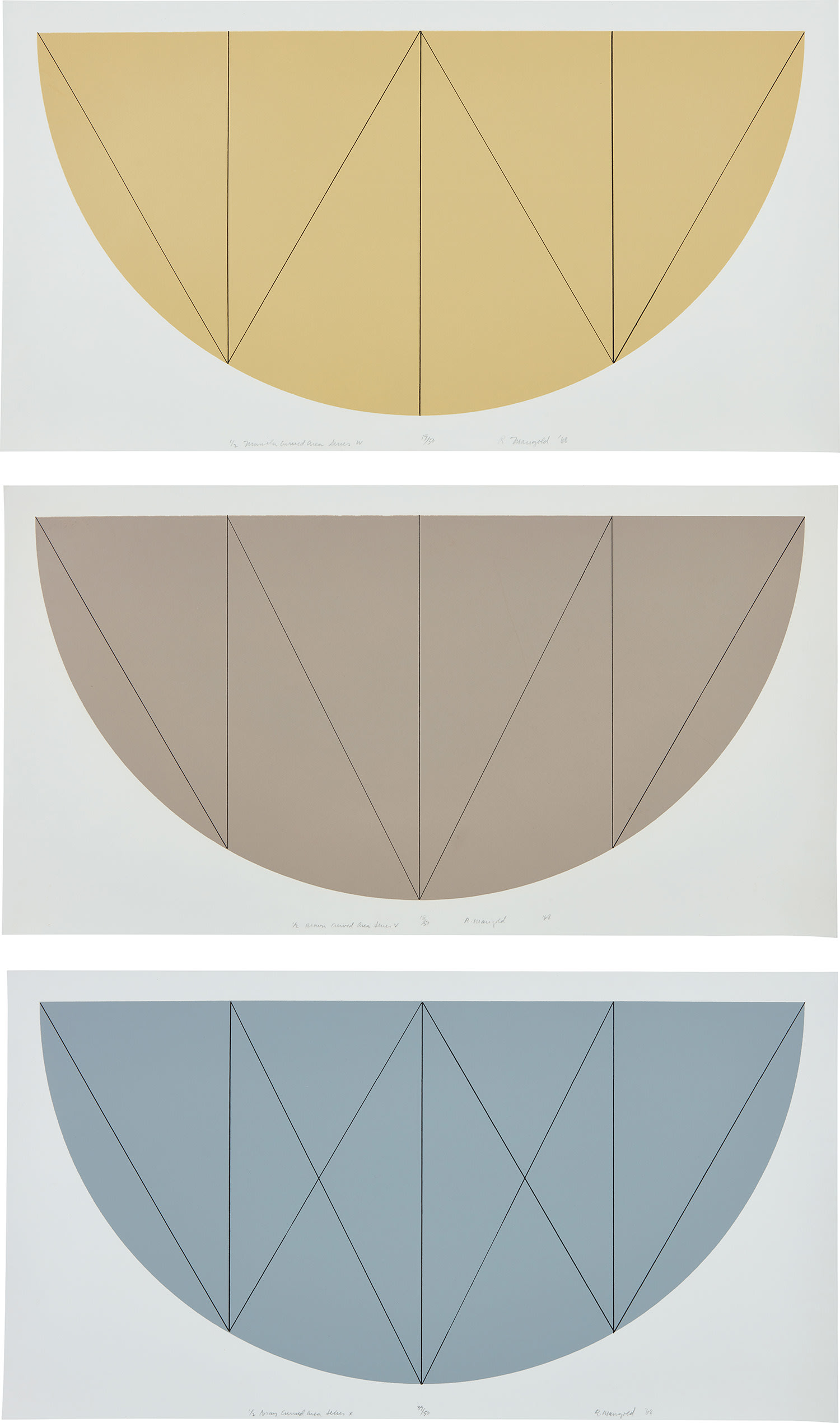
His artistic development in the mid to late 1960s placed him firmly within the Minimalist orbit, though Mangold always resisted the coldness that could attach itself to that label. His early works used industrial materials including Masonite and plywood covered in flat, matte paint, and they were often large enough to read as architectural interventions rather than conventional pictures. The Curved Area Series of 1968, among the earliest works that collectors today most eagerly seek out, introduced the shaped canvas as a philosophical proposition: what happens when the boundary of the painting is itself part of the meaning? Published through the Fischbach Gallery in New York, these works announced an artist who understood that the edge of a canvas was not a given but a decision.
Robert Mangold
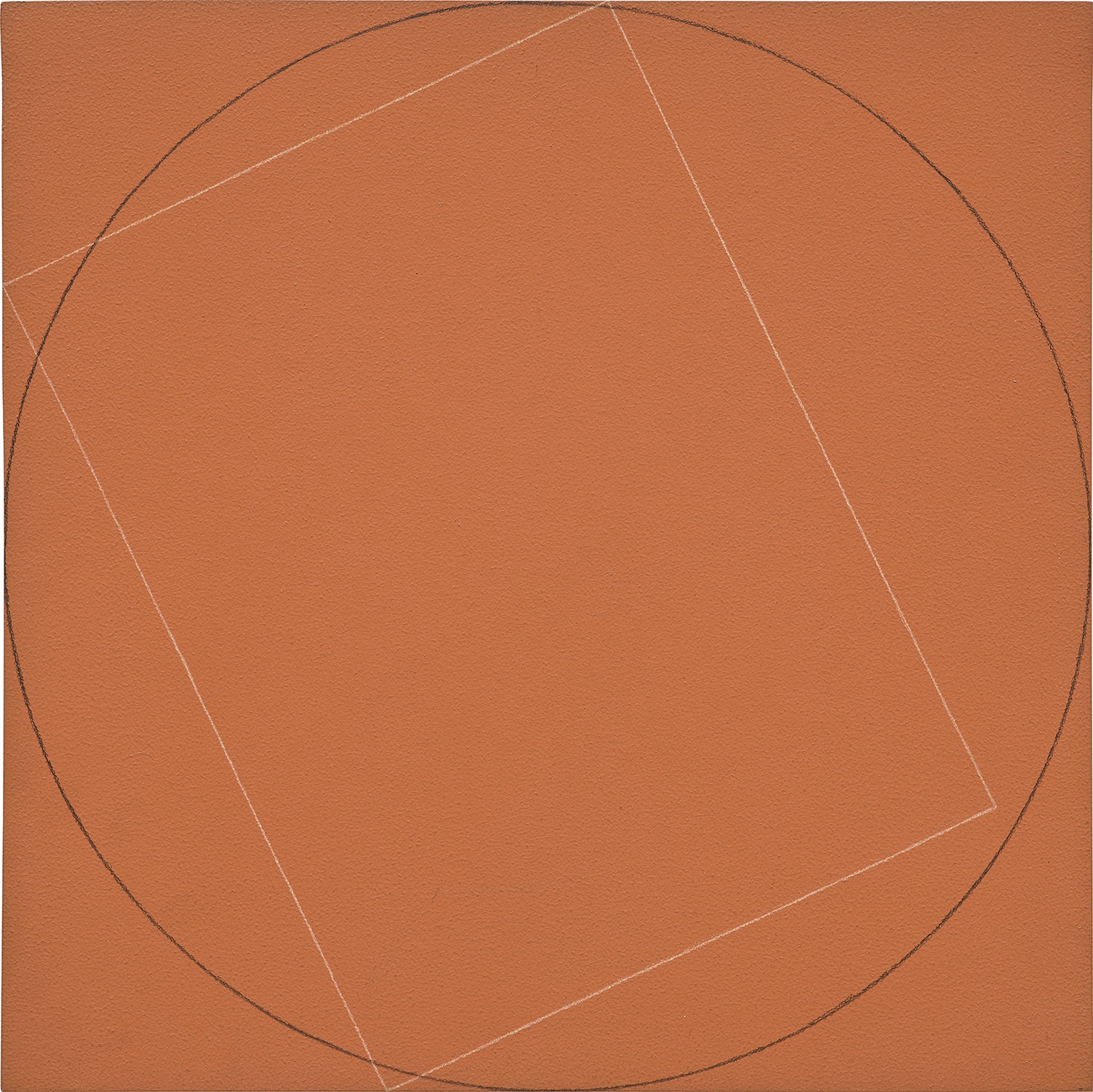
A Rectangle and a Circle Within a Square, 1975
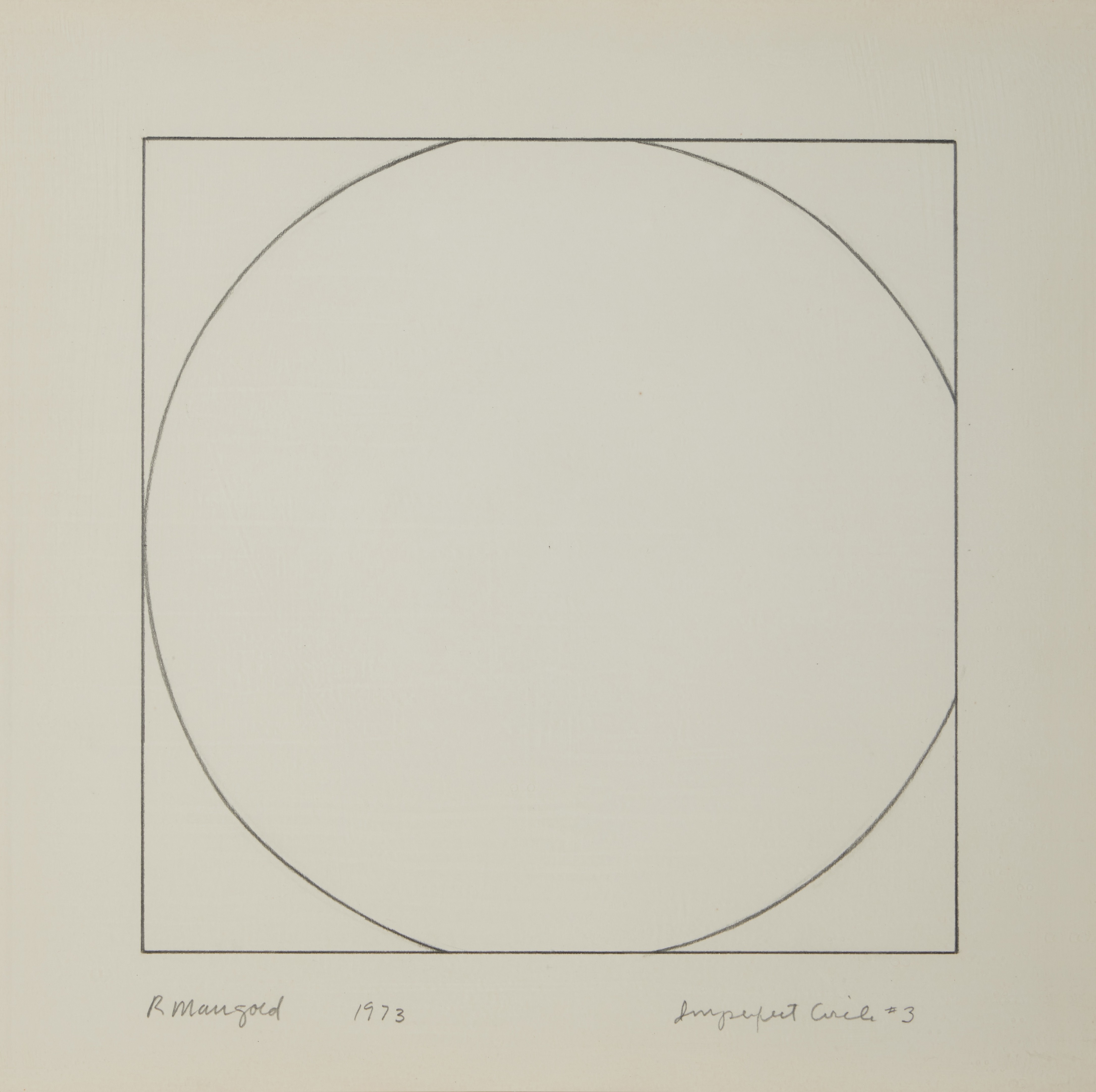
Through the 1970s, Mangold moved into an extraordinarily productive period that produced some of the most recognized works in his career. The Frame Paintings and the X Series brought his signature vocabulary into full focus: shaped canvases, often in two or more joined panels, traversed by drawn lines that do not quite follow the geometry of the support. The line wants to be a circle, or an X, or a curve, but the panel insists on its own shape, and the tension between the two creates something genuinely alive. His 1973 work Imperfect Circle No.
“The painting is always about the relationship between the shape and what is drawn on it.”
Robert Mangold, Pace Gallery statement
3, rendered in graphite on paper, captures this sensibility with remarkable economy. The Multiple Panel Paintings of 1973 to 1976, co published by Edition Domberger in Germany and Parasol Press in New York and now available in several editions on The Collection, brought this body of work to a wider audience and remain among the most important prints of the Minimalist period. In 1975, works like A Rectangle and a Circle Within a Square, executed in acrylic and graphite on Masonite, showed how much depth and feeling could live inside the most apparently simple geometric proposition. The 1990s saw Mangold embrace an even greater ambition in scale and complexity.
Robert Mangold
1/2 Manila Curved Area Series W; 1/2 Brown Curved Area Series V; and 1/2 Gray Curved Area Series X (S. & S. 1968.01-1968.03, S. 1-3)
The Curved Plane and Figure series, of which Curved Plane Figure VIII Study from 1995 is a luminous example, expanded his vocabulary into multi panel works of commanding physical presence. His palette warmed and deepened, moving through ochres, pinks, and greens that carry an almost Mediterranean warmth despite their geometric rigor. He has worked from his farm in upstate New York for many decades, and there is in his mature work a quality of sustained, unhurried attention that feels connected to landscape even when no landscape is depicted. His partner and frequent collaborator, the sculptor Sylvia Plimack Mangold, has shared that rural environment and that commitment to looking and making with equal seriousness.
For collectors, Mangold represents one of the most compelling propositions in the post war and contemporary market. His prints, particularly the editions published through Parasol Press, have long been recognized as among the finest examples of printmaking in the Minimalist tradition. Works on paper including the graphite drawings carry the full weight of his conceptual intelligence at a scale and price point that makes them accessible to a broader range of collectors. The Ring Image aquatints and the screenprints such as Distorted Circle Within a Polygon demonstrate his mastery of the print medium as a space for genuine invention rather than mere reproduction.
Robert Mangold
Imperfect Circle #3, 1973
At auction, his paintings have achieved significant results at Christie's, Sotheby's, and Phillips, with major shaped canvases from the 1970s and 1980s drawing serious competition from institutional and private collectors alike. What distinguishes the most desirable works is the quality of the relationship between drawn mark and painted ground, and the particular subtlety of his color choices, which reward close and repeated looking. Mangold belongs to a generation that includes Frank Stella, Ellsworth Kelly, Agnes Martin, and Brice Marden, artists who each found their own path through the question of what abstraction could carry after the heroic gestures of the previous decade. Like Kelly, he is fascinated by the edge and the shape of the support.
Like Martin, he brings a meditative quietness to formal rigor. But his particular combination of the drawn and the painted, the geometric and the imperfect, is entirely his own. He has shown consistently at Pace Gallery for many years, and his work has entered the permanent collections of the Museum of Modern Art, the Guggenheim, the Whitney Museum of American Art, the Art Institute of Chicago, and leading museums across Europe. Robert Mangold turned eighty seven in 2024 and remains one of the great living painters in America.
His work has never chased fashion or sought the approval of successive art world moments, and that integrity has given it a durability that feels increasingly rare. To live with a Mangold is to live with a work that asks something of you each time you encounter it, that changes with the light and with your own attention, that holds a kind of quiet confidence about what painting is for. In a cultural moment that rewards spectacle and novelty, his art is a sustained argument for depth, patience, and the enduring power of a well considered line.
Explore books about Robert Mangold
Robert Mangold
Diane Waldman
Robert Mangold: Paintings and Drawings
Linda Shearer
Robert Mangold: A Retrospective
Briony Fer
Robert Mangold: Paintings 1973-2010
Hal Foster
Robert Mangold: Works on Paper
Paul Schimmel