Robert Janitz
Robert Janitz Paints Light Into Being
Artist Spotlight · The Collection Editorial
Something remarkable happens when you stand before a painting by Robert Janitz. The surface seems to breathe. What reads from across the room as a sweep of luminous color reveals itself, up close, as a terrain of extraordinary physical complexity, a topography of wax, flour, and oil that catches the light differently with every shift of your position. Janitz has been building this singular body of work for decades, and in recent years the international art world has caught up with what a devoted circle of collectors has long understood: this is painting at its most genuinely alive.
Robert Janitz
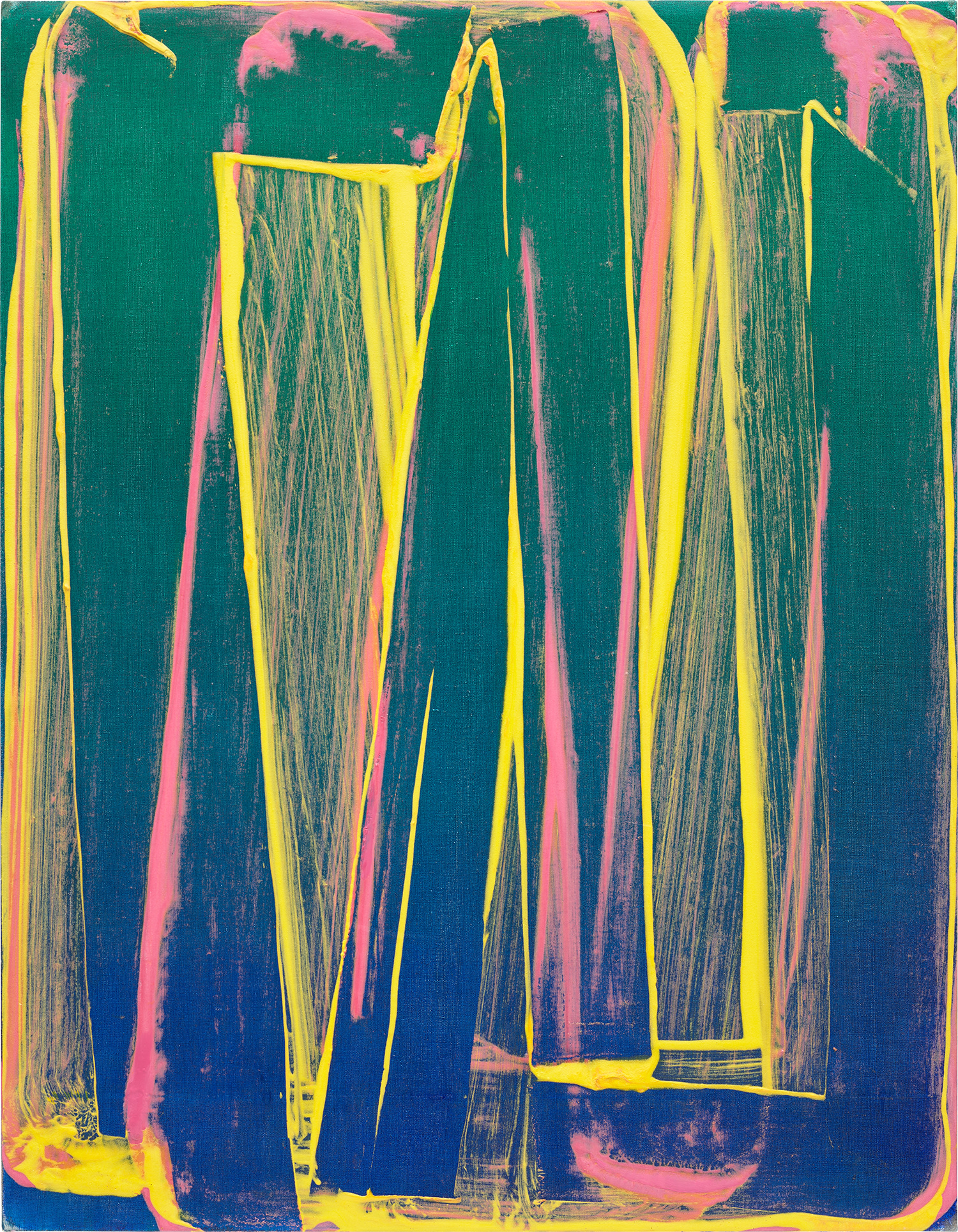
Attitude is Everything, 2019
Janitz was born in Germany in 1962, coming of age during a period when German painting carried enormous cultural weight. The generation before him had produced figures of towering ambition, artists who treated the canvas as a site of historical reckoning and psychological excavation. That inheritance was both a gift and a challenge. Janitz absorbed the seriousness of the German painterly tradition, its commitment to materiality and to painting as a form of thinking, while eventually charting a course that was entirely his own.
His decision to relocate to Mexico City proved to be the defining geographical turn of his artistic life, placing him at a remove from the market centers of New York and Berlin and allowing his practice to develop on its own terms. Mexico City gave Janitz something that is difficult to quantify but easy to feel in the work: a particular quality of light, a chromatic warmth, and a sense of physical immediacy that permeates the culture around him. Living and working in one of the world's great urban centers, dense with visual stimulation and human presence, seems to have deepened his interest in the relationship between surface and sensation. His studio practice is rigorous and exploratory in equal measure, driven by a commitment to process that places him in conversation with some of the most intellectually serious painters working today.
Robert Janitz
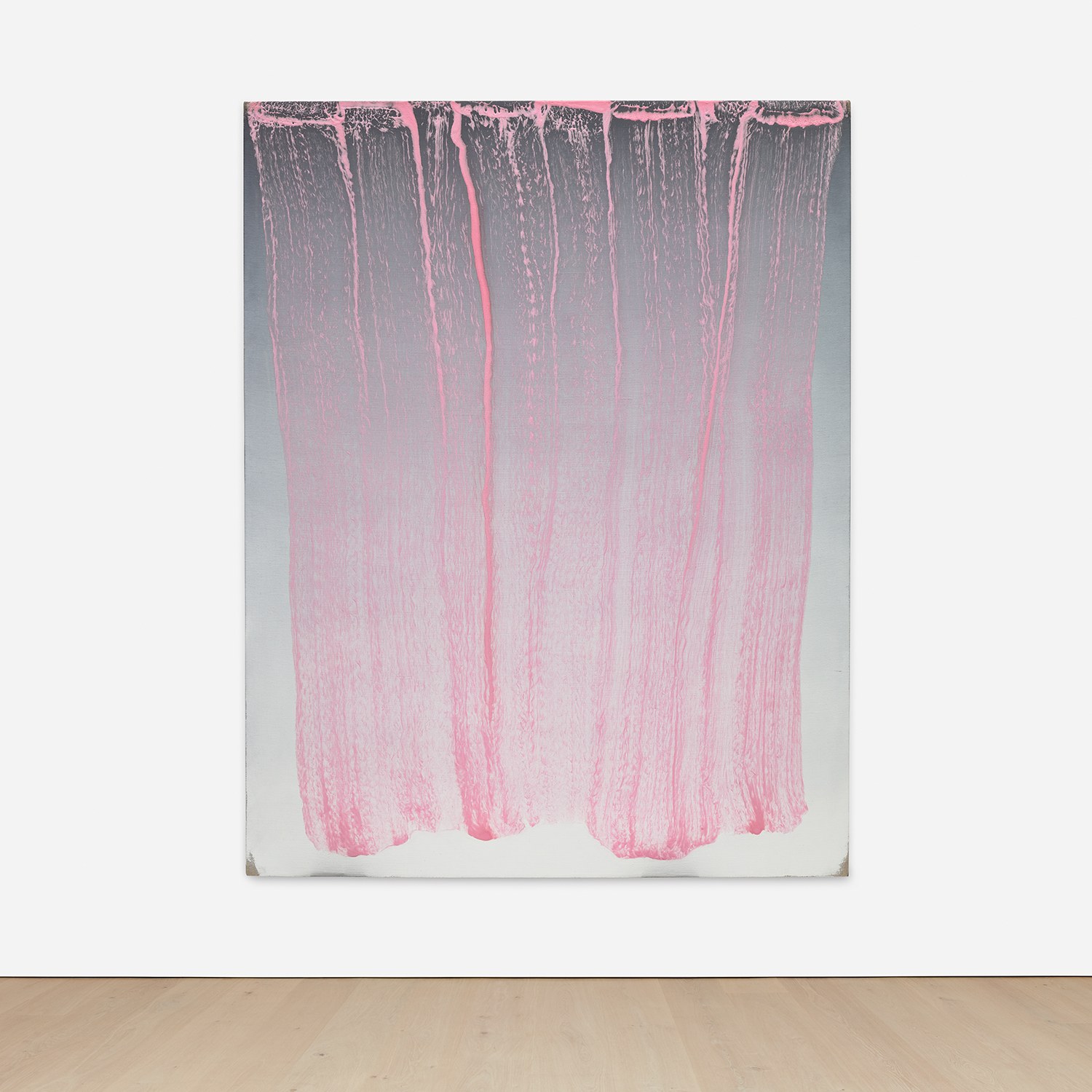
Deep Beneath the Surface, 2017
The technical innovation at the heart of Janitz's practice is both simple and radical. Rather than applying paint with a traditional brush, he employs a wide, squeegee like tool that drags his unusual mixture of oil, wax, and flour across linen or canvas in broad, decisive strokes. The addition of flour to the paint mixture is the detail that stops most people in their tracks. It gives the surface a matte, almost powdery quality in certain passages while elsewhere the wax creates pools of translucency and depth.
The result is a surface that feels genuinely corporeal, that has the quality of skin, of membrane, of something living. No two passes of the tool produce the same mark, and Janitz works with and against this unpredictability in every composition. Among the works available through The Collection, several stand out as particularly eloquent expressions of his vision. "Attitude is Everything" from 2019, rendered in oil, wax and flour on linen, demonstrates Janitz at his most assured, the surface carrying a kind of confident repose that matches its title.
Robert Janitz
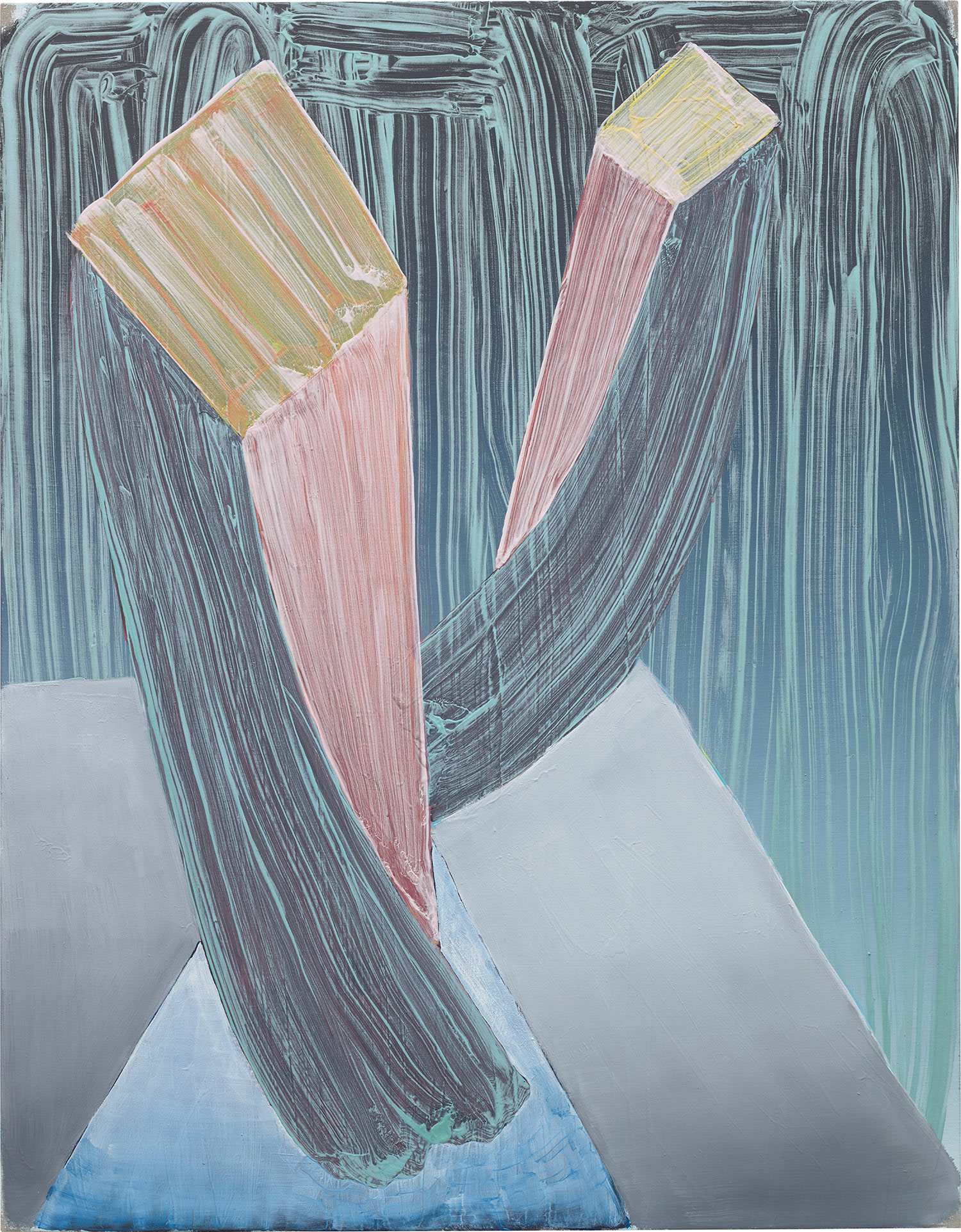
Liquid Conscience, 2018
"Deep Beneath the Surface" from 2017 rewards extended looking, its layers of material suggesting depth and interiority that seem to shift as one's eyes adjust. "The Nadir of Nihilism," also from 2019, is a work of striking tonal complexity, the title's philosophical edge counterbalanced by the warmth and tactile richness of the painted surface. "Elastic Temperament" from 2015, one of his earlier canvases in this grouping, shows the emergence of the vocabulary he would continue to develop with increasing confidence. Taken together, these works map a practice in productive, consistent evolution.
The titles Janitz gives his paintings are themselves worthy of attention. Phrases like "Liquid Conscience" and "All Running Combs" operate somewhere between poetry and provocation, suggesting interior states and strange phenomenological conditions without ever collapsing into illustration. Janitz is not a painter of stories or symbols in any conventional sense. His titles open a space of associative possibility rather than closing one down.
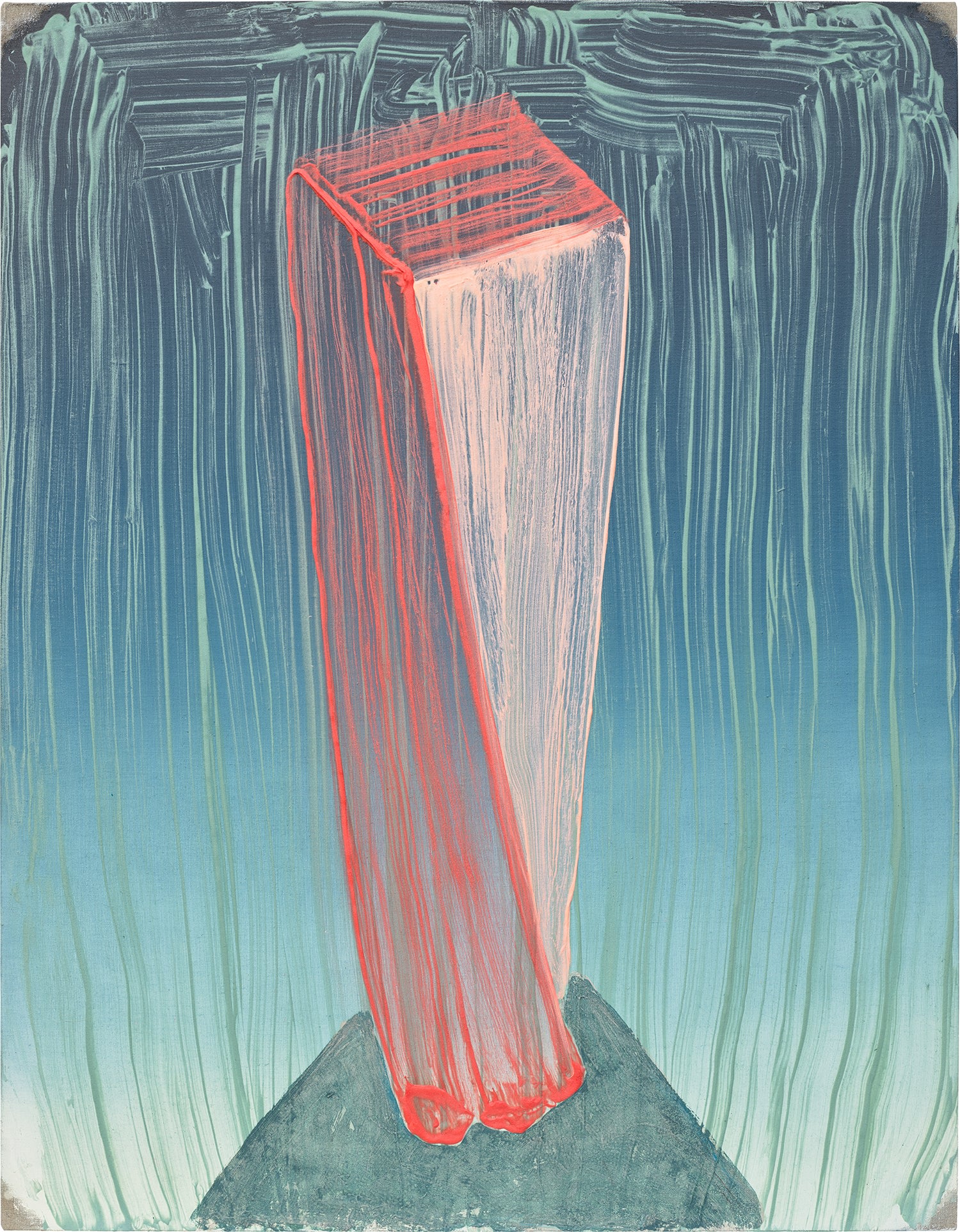
Robert Janitz
All running combs, 2018
This linguistic attentiveness places him in an interesting relationship with painters like Cecily Brown and Luc Tuymans, artists who treat the gap between image and language as a productive zone of ambiguity. He also shares with painters such as Albert Oehlen a commitment to surface as a primary carrier of meaning, and with the legacy of Gerhard Richter a fascination with the way paint can simultaneously reveal and obscure. The market for Janitz's work has grown steadily and with the kind of sustained momentum that serious collectors recognize as a meaningful signal. His paintings have appeared at Phillips and Sotheby's, where the distinctive materiality of his surfaces has translated powerfully into the auction context, where physical presence is everything.
The works reward acquisition in person whenever possible, because photographs, however well produced, cannot fully capture the way his surfaces interact with ambient light. Collectors who have lived with Janitz paintings consistently report that the works reveal new dimensions over time, that the surface seems to offer something different on a grey afternoon than it does in morning sun. This is a quality shared by only the most genuinely accomplished painters. What makes Janitz important in the larger arc of contemporary painting is his demonstration that abstraction and figuration need not be resolved into a hierarchy.
His surfaces hover between the two conditions, suggesting bodies, atmospheres, and presences without committing to any single reading. In this he participates in one of the most vital ongoing conversations in painting today, the question of what the painted surface can carry and what it can withhold. He approaches this question not through theory but through the physical intelligence of his hands and his distinctive tool, through the stubborn, generous materiality of wax and flour and oil on linen. The answer he arrives at, again and again, is that painting can hold more than we expect of it.
That is a generous and sustaining proposition, and it is precisely why Robert Janitz matters.
Explore books about Robert Janitz
Robert Janitz: Paintings and Drawings 1984-1994
Various
Robert Janitz
Michael Petzet
Robert Janitz: New Paintings
Various
Robert Janitz: Werke 1984-2004
Various
Robert Janitz: Paintings 2005-2010
Various