Robert Frank
Robert Frank Saw America Whole
Artist Spotlight · The Collection Editorial
“When people look at my pictures I want them to feel the way they do when they want to read a line of a poem twice.”
Robert Frank, interview with William S. Johnson, 1980
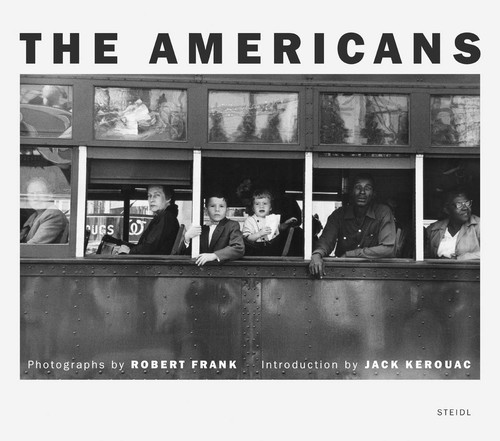
There is a photograph of a jukebox in a South Carolina diner, its chrome gleaming under fluorescent light, Black patrons seated in the back and white patrons in front, the machine itself a kind of indifferent witness to the division. Robert Frank made it in 1955 during the cross country road trip that would become The Americans, and it remains one of the most quietly devastating images in the history of photography. When Grove Press finally published the American edition of the book in 1959, with a preface by Jack Kerouac, it landed like a stone thrown through a plate glass window. Nothing in documentary photography has quite recovered from the impact.
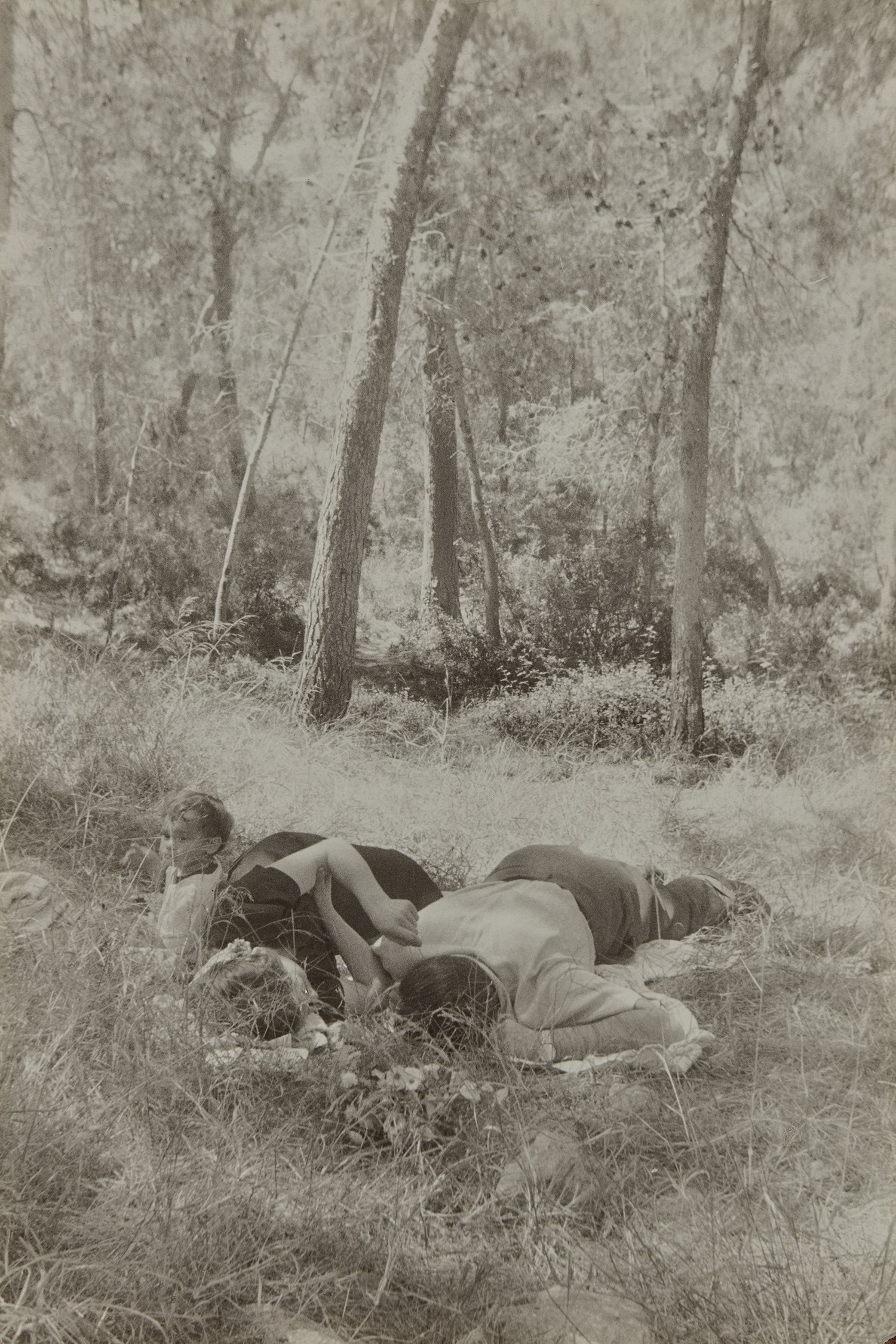
Robert Frank
Whitmore Lake, Michigan
Robert Frank was born in Zurich in 1924, into a prosperous Jewish family whose life in Europe was already being shadowed by the rise of fascism. His Swiss citizenship protected the family during the war years, but the experience of living on the margins of catastrophe left its mark. Frank took up photography as a teenager and trained briefly in Zurich before emigrating to New York in 1947, arriving with a portfolio and the restless hunger of someone who understood that the world he had been born into no longer existed. New York in the late 1940s was the center of everything, and Frank threw himself into it, finding work as a fashion photographer for Harper's Bazaar under the art direction of Alexey Brodovitch, one of the most influential editorial minds of the twentieth century.
Brodovitch encouraged Frank's instinct for the decisive and the oblique, but it was the work of Walker Evans that truly set his compass. Evans had spent the 1930s making photographs of the American vernacular landscape with a cool, formal intelligence that Frank admired deeply. Where Evans was classical, though, Frank became expressionistic. In 1955, armed with a Guggenheim Fellowship, the first ever awarded to a European photographer, he loaded his Leica and drove across the United States over the course of two extended journeys, shooting approximately 28,000 frames and selecting 83 for The Americans.
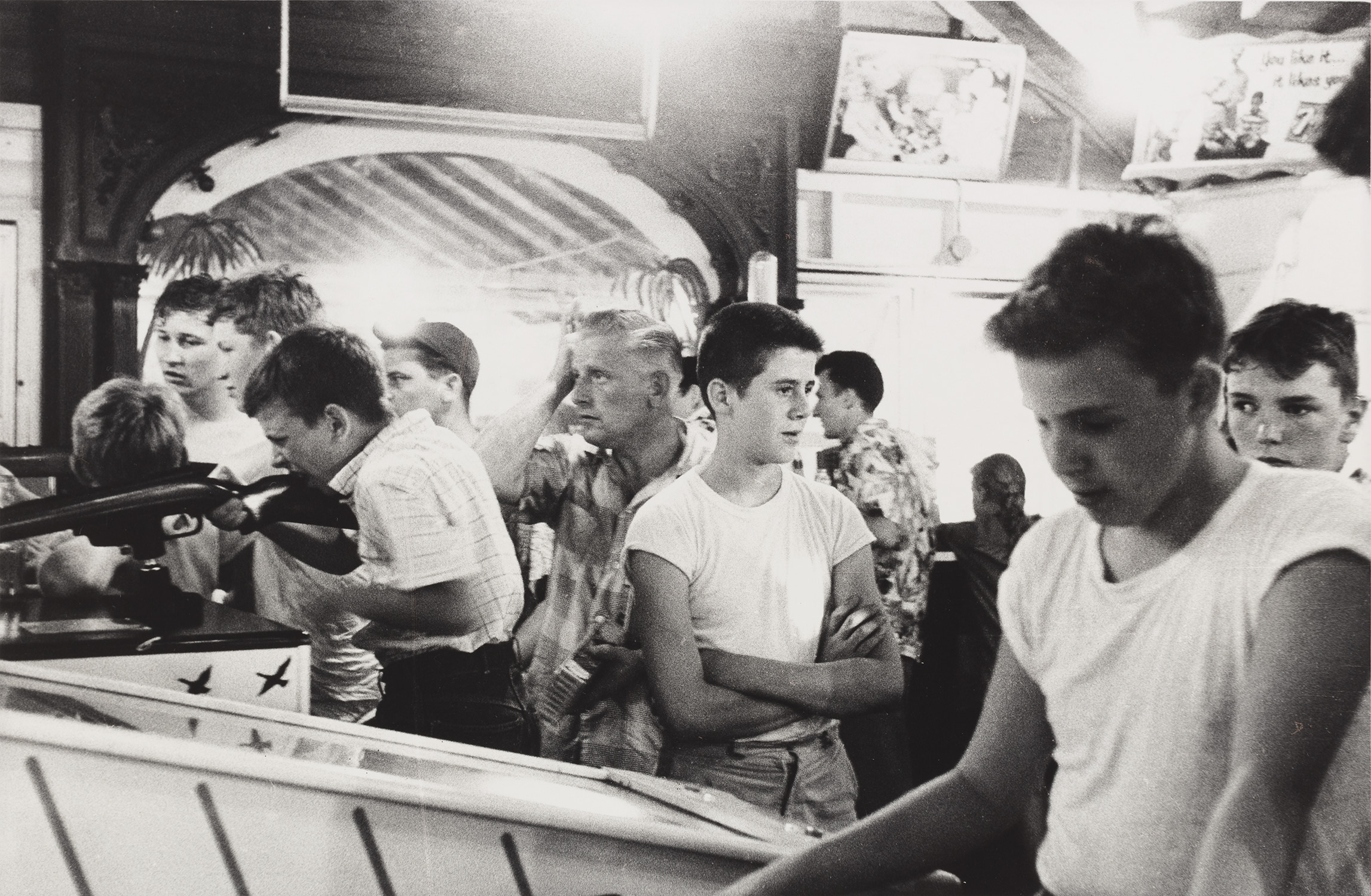
Robert Frank
'Mary and Andrea in NYC'
The selection process itself was an act of authorship, a radical departure from the neutral reportage that photojournalism had trained audiences to expect. The Americans is structured less like a document than like a poem. Frank moved from image to image through associative logic, returning repeatedly to certain motifs: the American flag, the automobile, the television set, the jukebox, the highway. These were not symbols deployed with heavy intention but recurring presences that accumulated meaning as the book progressed.
“There is one thing the photograph must contain, the humanity of the moment.”
Robert Frank
The photographs were technically unconventional by the standards of the day, often grainy and tipped at angles that suggested the instability of the world they captured. Critics initially resisted them. Popular Photography ran a dismissive review calling the work anti American. But artists and writers understood immediately what Frank had done.
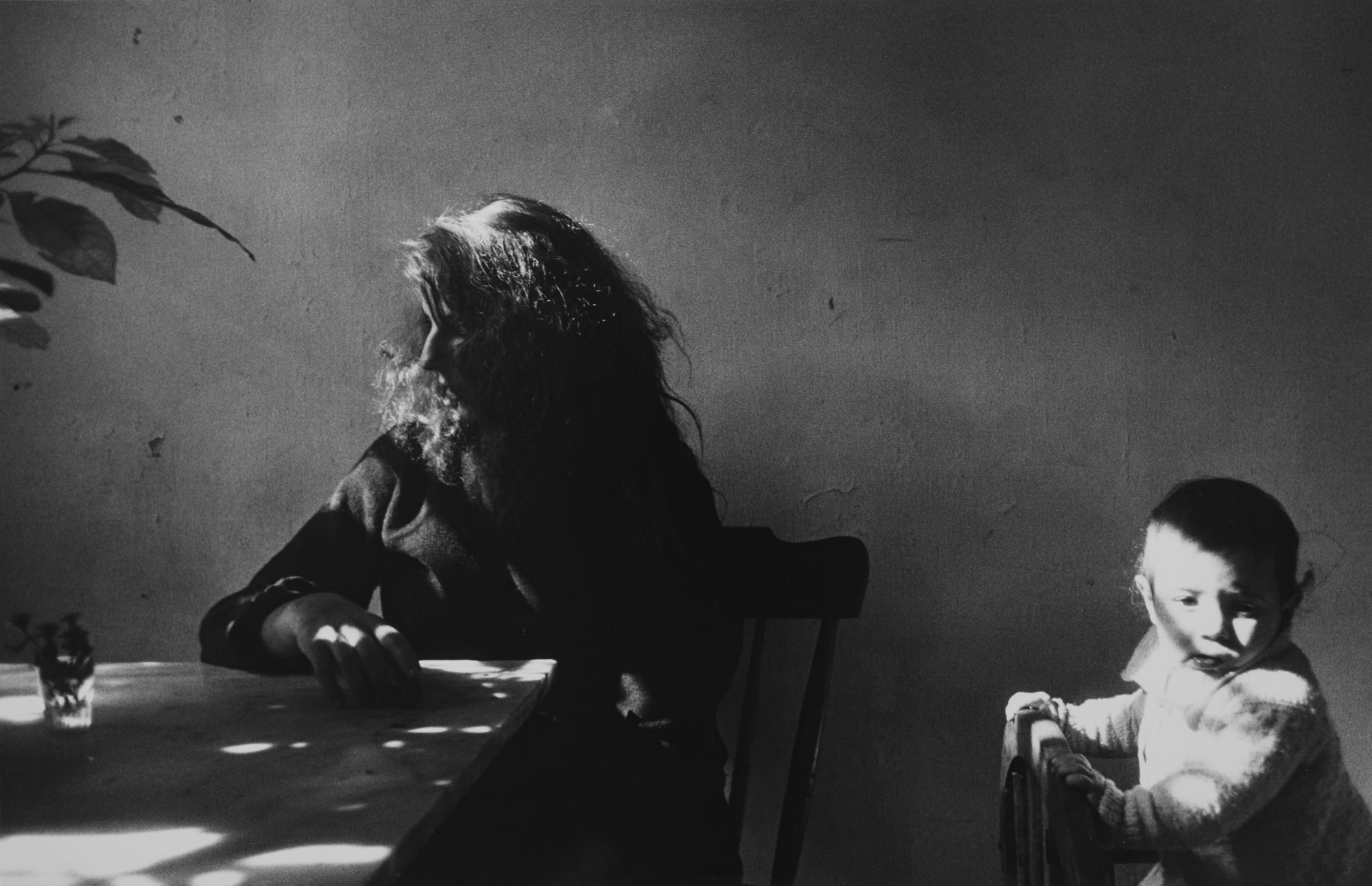
Robert Frank
San Gennaro Festival
He had shown postwar American prosperity from the inside, with all its loneliness and segregation and spiritual vacancy intact alongside its genuine energy and beauty. Among the works available to collectors today, pieces such as Whitmore Lake, Michigan and San Gennaro Festival offer remarkable access to the range of Frank's vision during this foundational period. Whitmore Lake, Michigan, a gelatin silver print from around 1955, carries the road weary attentiveness that defines the Americans project, a seemingly ordinary scene charged with the weight of observation. San Gennaro Festival catches another register entirely, the crowded luminosity of immigrant New York, a city Frank loved with the particular devotion of someone who chose it.
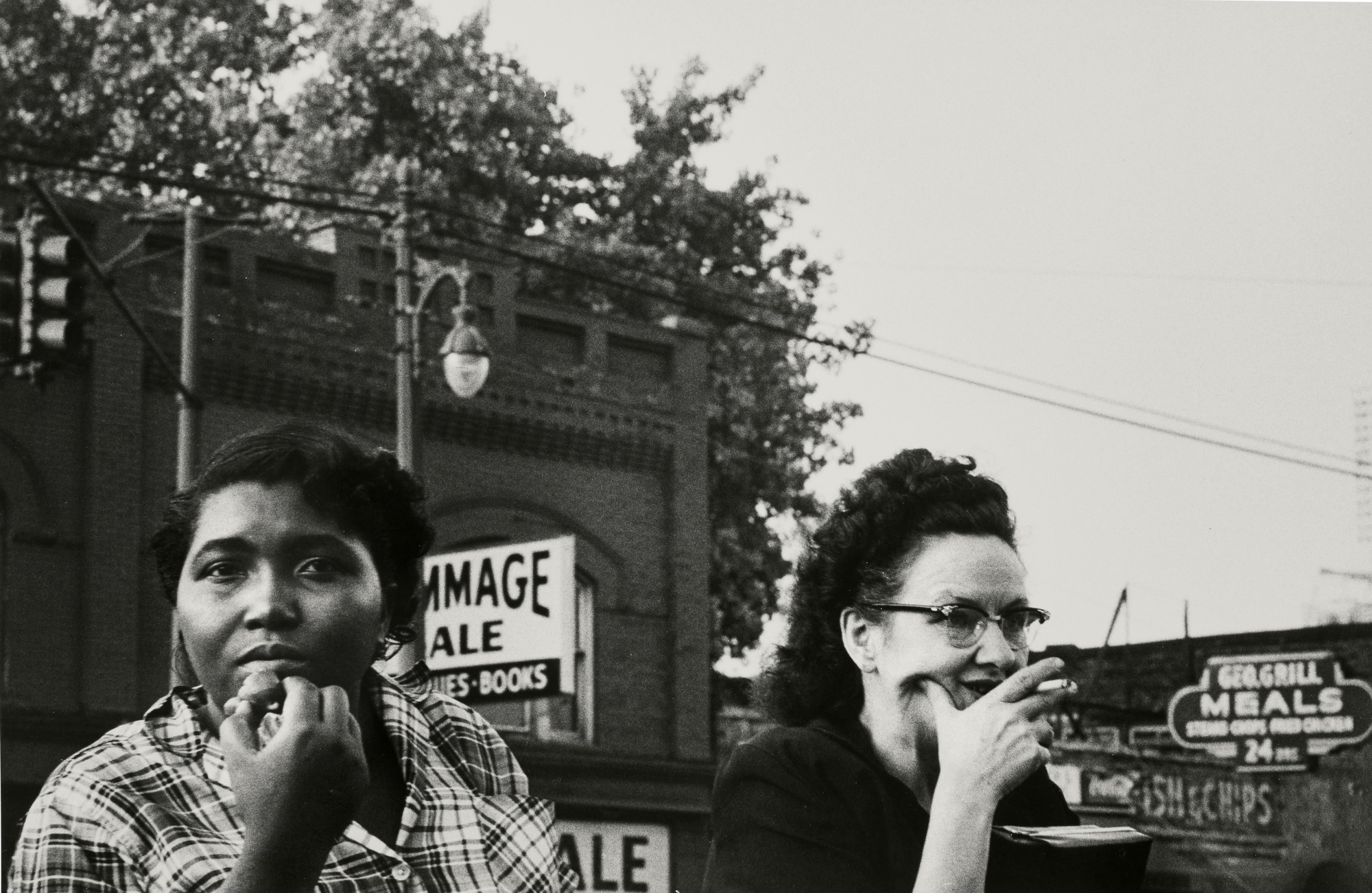
Works like Times Square and From the Bus (Man on the Sidewalk) demonstrate his gift for finding the monumental inside the ordinary, a single figure on a pavement becoming a meditation on solitude in modern life. NYC Candy Store and New York Thru the Window (Woolworth, New York City) show his willingness to work with glass and reflection, layering the world rather than simply recording it. In the market, Frank's gelatin silver prints occupy a respected and increasingly sought position in the landscape of twentieth century photography. Major auction houses including Christie's and Phillips have seen consistent interest in his vintage prints, particularly those made in the 1950s during and around the Americans project.
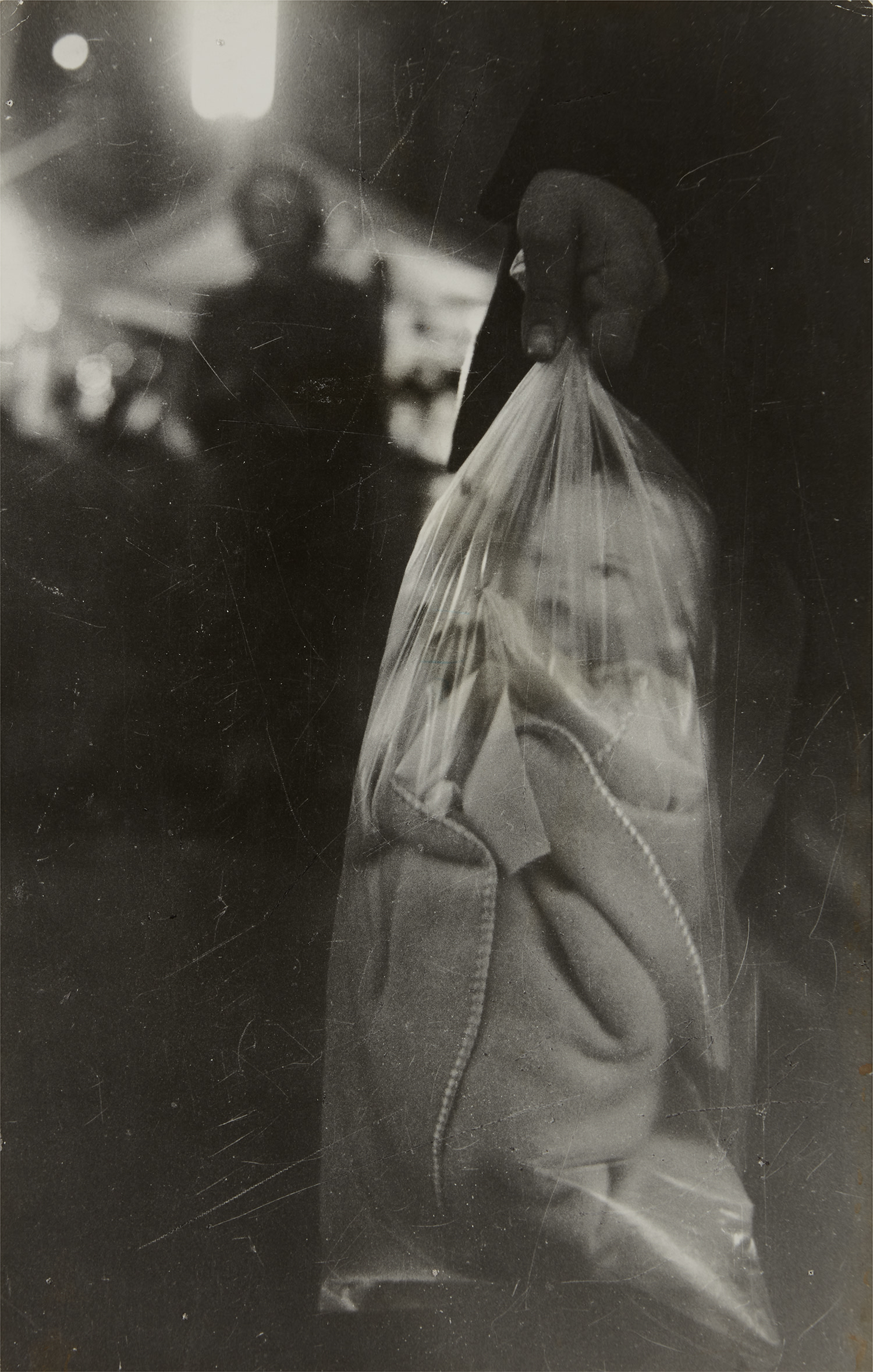
Robert Frank
'Detroit'
Collectors are drawn to the combination of art historical significance and the intimate, handmade quality of the prints themselves, many of which Frank printed himself or supervised closely. The distinction between vintage prints made close to the time of shooting and later authorized prints matters significantly to serious collectors. Works on the market through trusted platforms represent an opportunity to engage with one of the defining visual documents of the modern era at a range of price points, from more accessible later prints to the rarer and more valuable vintage examples. Frank's place in art history is best understood in conversation with the artists he influenced and the tradition he was working within.
Walker Evans was his acknowledged forebear, and the formalist strain of American documentary photography runs clearly from Evans through Frank. But Frank's emotional directness and formal restlessness opened doors for photographers like Garry Winogrand, Lee Friedlander, and Diane Arbus, all of whom pushed the subjective and the personal further into the documentary tradition. His influence extended beyond photography into cinema: his 1959 film Pull My Daisy, made with Alfred Leslie and featuring Allen Ginsberg, Gregory Corso, and other Beat figures, is a landmark of American independent film. Later filmmakers including Wim Wenders and Jim Jarmusch have acknowledged his way of seeing as foundational to their own.
Robert Frank spent his later decades in Mabou, Nova Scotia, where he continued to work with video and collage, incorporating text into images and returning again and again to grief and memory following the deaths of his daughter Andrea and his son Pablo. These later works are harder and more private than the Americans photographs, and they have been the subject of significant museum attention, including retrospectives at the National Gallery of Art in Washington and the Museum of Modern Art in New York. He died in Inverness, Nova Scotia in September 2019 at the age of ninety four, having reshaped the visual culture of the world he had once set out to document. To collect Robert Frank is to hold a piece of that reshaping, a fragment of the long argument he made with his camera about what it means to move through the world with your eyes open.
Explore books about Robert Frank
Robert Frank: A Life
Jonathan Tuamerika
The Americans
Robert Frank
Robert Frank: Moving Out
Sarah Greenough
Robert Frank:Books and Films, 1947-1986
Robert Frank and Anne Tucker
Robert Frank: Storylines
Sarah Greenough

Frank Film: My Life
Robert Frank
Pull My Daisy
Robert Frank and Alfred Leslie

Robert Frank: Photofilm
Michael Köhler