Robert Doisneau
Robert Doisneau, Poet of Parisian Life
Artist Spotlight · The Collection Editorial
“I don't photograph life as it is, but life as I would like it to be.”
Robert Doisneau
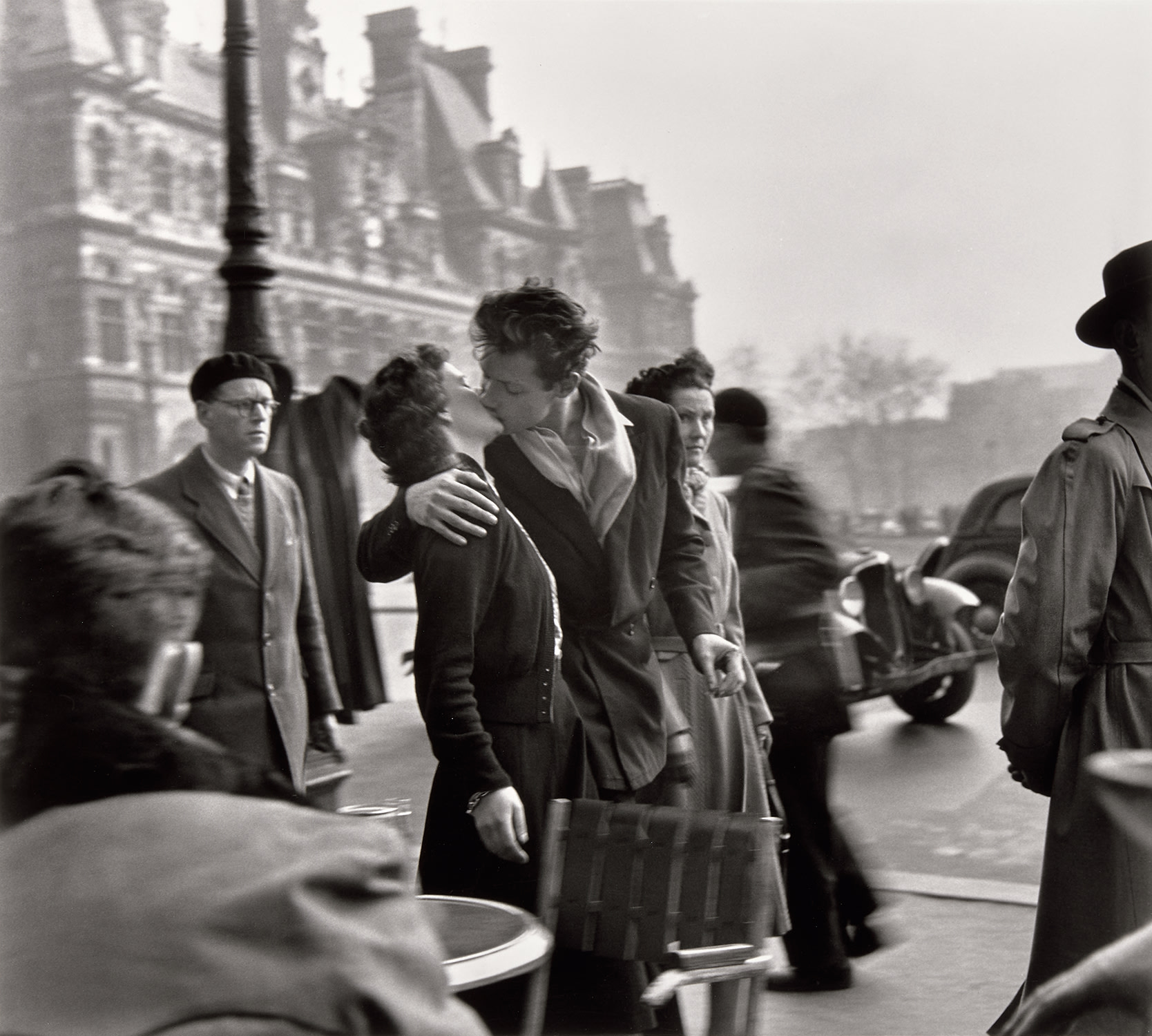
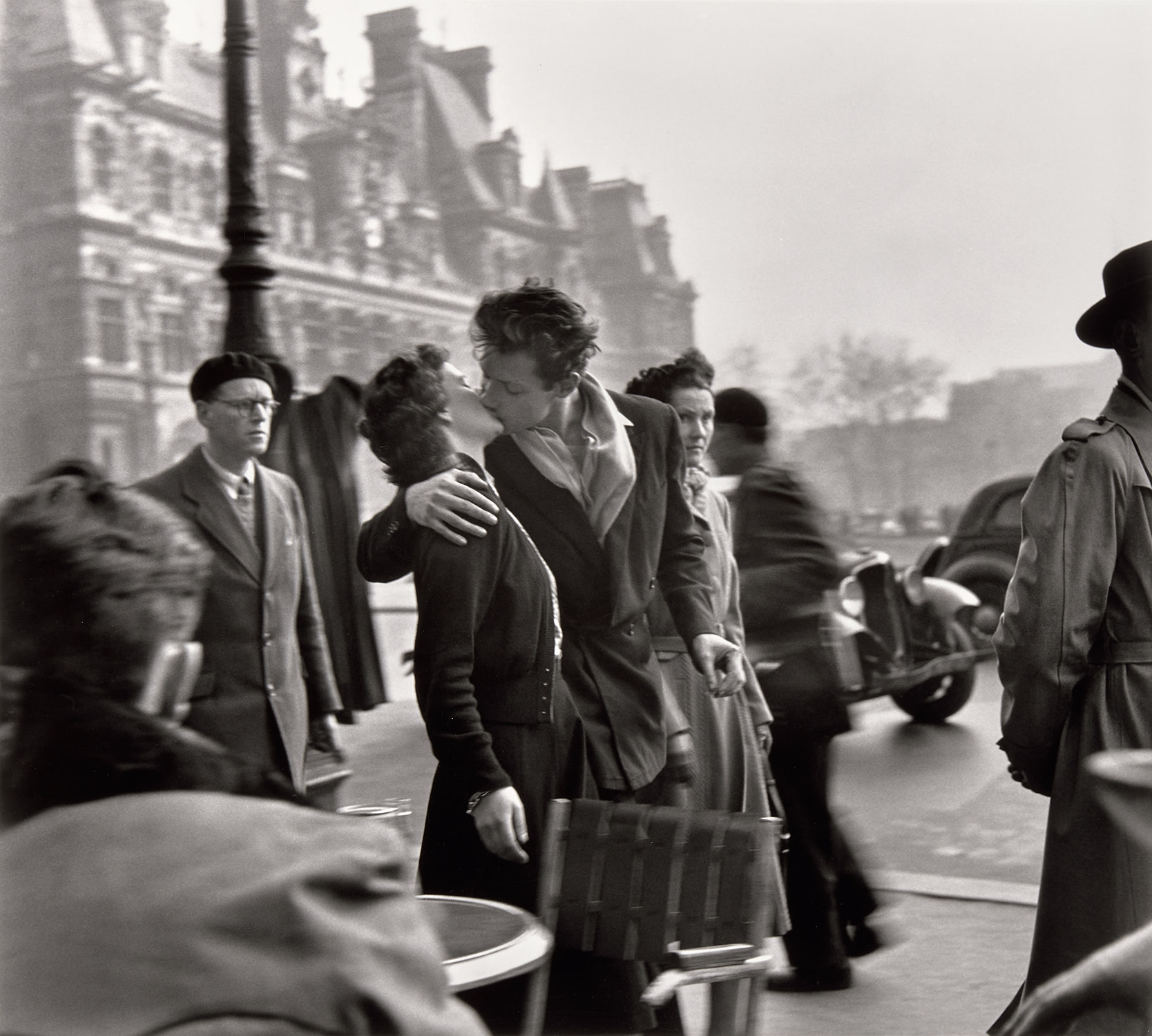
There is a photograph that nearly everyone on earth has seen, even if they cannot immediately name its maker. Two young lovers embrace in a kiss on a crowded Paris pavement, the flow of pedestrians parting around them like a river around a stone, indifferent to their tenderness. "Le Baiser de l'Hôtel de Ville," captured in 1950, is one of the most reproduced images in the history of photography. It is the work of Robert Doisneau, and it distills everything that made him extraordinary: a profound belief in the beauty of ordinary moments, and a gift for being exactly where poetry decided to happen.
Robert Doisneau
Le Baiser de l'Hotel de Ville
Doisneau was born in 1912 in Gentilly, a working class suburb just south of Paris, and his origins shaped everything that followed. Orphaned young and raised by an aunt in modest circumstances, he came of age on the margins of the grand city rather than at its gilded center. He trained as a lithographer and engraver at the École Estienne in Paris, skills that gave him a rigorous eye for composition and a craftsman's respect for the printed image. His early professional work, first as a commercial illustrator and then as an industrial photographer for the Renault factory at Billancourt in the 1930s, was unglamorous but formative.
It placed him among workers, mechanics, and ordinary Parisians, the people who would become the true subjects of his life's work. He was dismissed from Renault in 1939 for persistent lateness, a consequence of wandering the streets of Paris with his camera on his own private missions. This dismissal, in retrospect, was the moment his real career began. He had already begun working with the picture agency Rapho, with which he would maintain a lifelong association, and the streets of Paris became his permanent studio.
Robert Doisneau
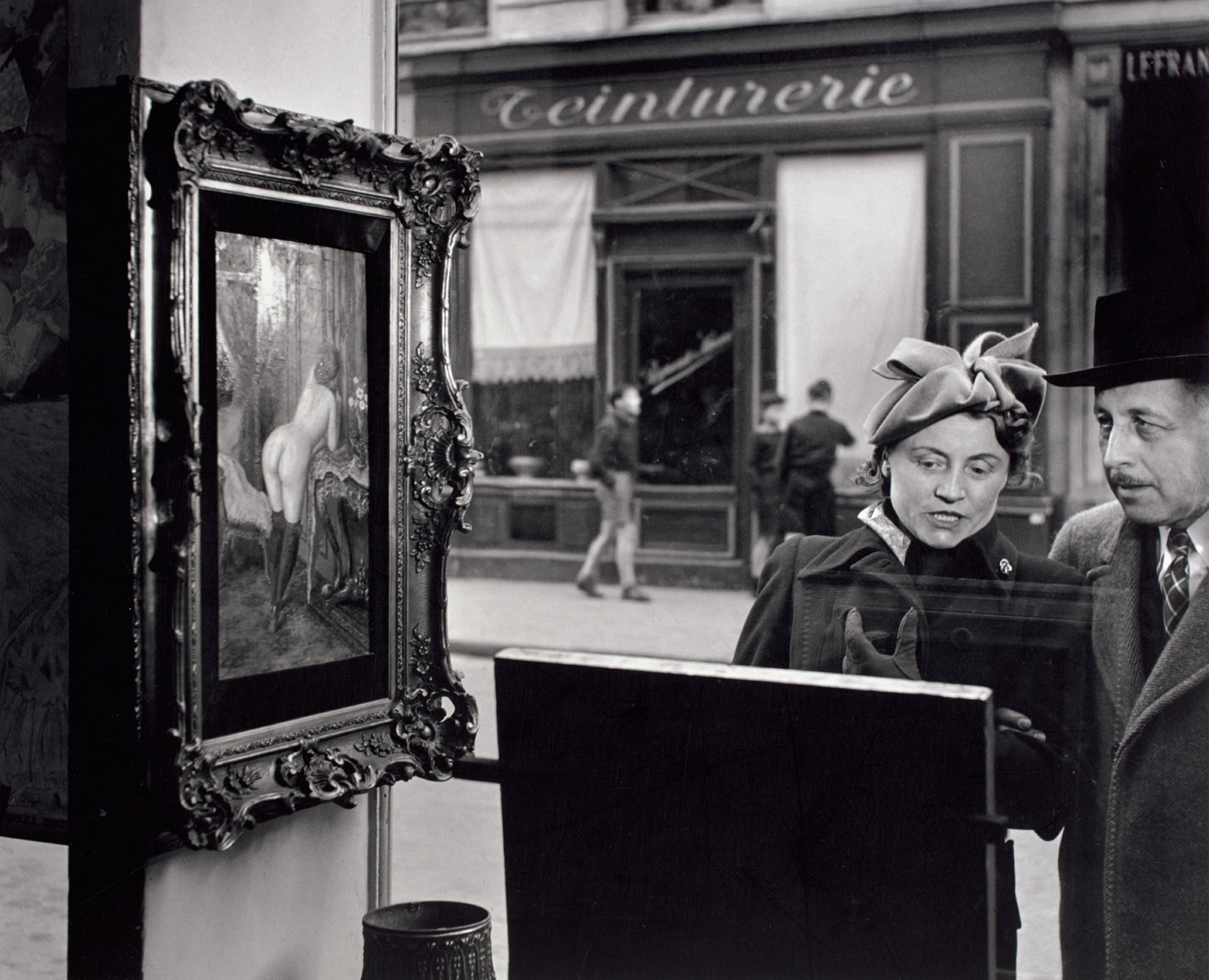
Un Regard Oblique
During the German Occupation of the Second World War, Doisneau worked quietly and courageously, forging identity documents for members of the Resistance and continuing to photograph a city living under enormous strain. His images from this period carry a particular emotional gravity, though even then he sought the moments of warmth and resilience that human beings manage to sustain in difficult times. The late 1940s and 1950s represent the peak of what many consider his classical period. Working for magazines including Vogue Paris and Life, he brought a photojournalist's mobility to subjects that had the intimacy of private observation.
“The marvels of daily life are exciting; no movie director can arrange the unexpected that you find in the street.”
Robert Doisneau
The streets around Saint Germain des Prés, the zinc bars of Montmartre, the schoolyards and market stalls of the outer arrondissements: Doisneau moved through all of it with a small camera and an extraordinary patience. He understood that the decisive moment, to borrow the phrase associated with his great contemporary Henri Cartier Bresson, was not simply about reflexes. It was about trust. Doisneau spent years building relationships with neighborhoods, with shopkeepers and children and street musicians, so that when he raised his camera the world in front of him had already forgotten to perform.
Robert Doisneau
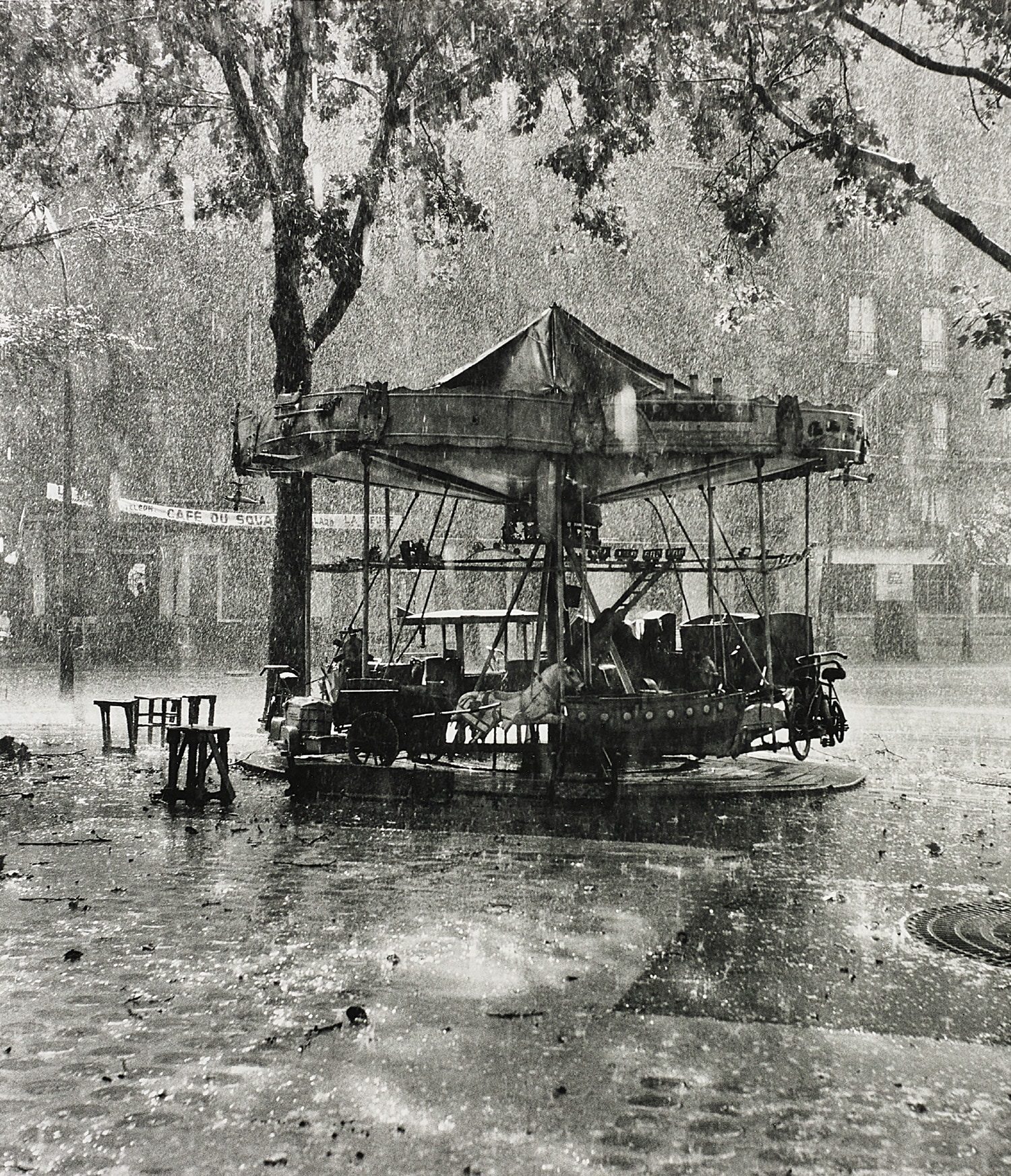
Le manège de Monsieur Barré
Among his most celebrated works, "Un Regard Oblique" from 1948 demonstrates a more playful, conceptually mischievous quality. In it, a man and woman pause before a gallery window displaying a reclining nude; the man's gaze slides sideways toward the painting while his companion studies the street. The image works as comedy, as social observation, and as a meditation on looking itself, a subject that preoccupied Doisneau throughout his career. "Les Pains de Picasso," made in 1952, captures the artist Pablo Picasso at his dining table in Vallauris, with loaves of bread arranged so that they resemble hands.
It is tender and witty in equal measure, a portrait that flatters its subject precisely by finding the sculptor in an unguarded domestic instant. "Mademoiselle Anita," printed in 1974, demonstrates his ease in the cafe and cabaret world, where his warmth toward performers and night workers gave him access that a more formal photographer could never have earned. For collectors, Doisneau's work presents a compelling and richly layered proposition. The gelatin silver print remains the format most closely associated with his practice, and the distinction between prints made during his lifetime and later authorized prints is a meaningful one that reputable dealers and auction houses take seriously.
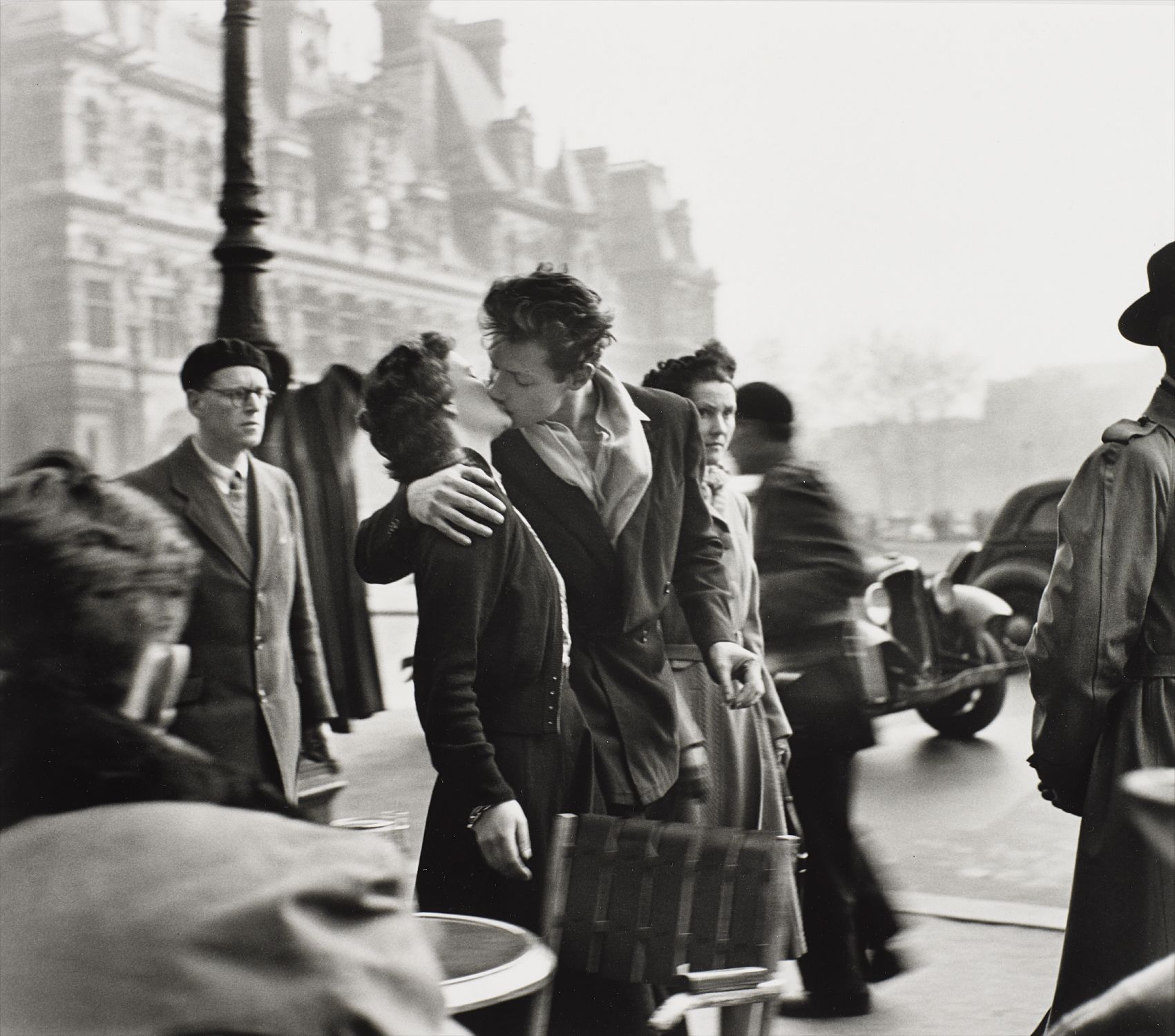
Robert Doisneau
Le baiser de l'Hôtel de Ville, March
Works printed later carry a transparency about their production that Doisneau himself sanctioned, and they have brought his images within reach of a broader collecting community without diminishing the significance of period prints. At major auction houses including Christie's and Sotheby's, his most iconic images have achieved prices that reflect both broad cultural recognition and genuine art historical importance. Collectors drawn to humanist photography frequently position Doisneau alongside works by Willy Ronis, Izis, and Edouard Boubat, photographers who shared his postwar Parisian world and his faith in the dignity of everyday life. Brassaï, who illuminated the nocturnal city with similar devotion, offers another natural point of comparison, though Brassaï's shadows contrast strikingly with Doisneau's preference for the open light of day.
The legacy of Robert Doisneau is sometimes complicated by his extraordinary popular success. The reproduction of "Le Baiser de l'Hôtel de Ville" on posters and postcards across the world created a paradox familiar to many beloved artists: the image became so ubiquitous that its radical originality risked being taken for granted. It is worth remembering that in 1950 this was a genuinely daring photograph, intimate and romantic in a public space, celebrating the erotic spontaneity of ordinary people at a moment when European cities were still rebuilding themselves after catastrophic war. When the full story of the photograph emerged decades later, that it had been staged using two young actors rather than captured spontaneously, the revelation prompted genuine debate.
Doisneau's candid response was characteristically honest and self aware: he had been asked by Life magazine for images of Parisian romance, and he had made them. The craft, the composition, the emotional truth of the image remained entirely real. Today, interest in Doisneau continues to grow among a generation of collectors who came to photography through street photography and who are now tracing its history back to its French humanist roots. Major retrospectives at the Hôtel de Ville in Paris and traveling exhibitions organized through the Atelier Robert Doisneau in Montrouge, which preserves and promotes his archive, have introduced his work to new audiences.
He died in Paris in 1994, having spent eight decades in and around the city he loved more than any other place on earth. What he left behind is not merely a record of Paris as it was, but an argument, gentle and persistent, that beauty is available to anyone patient enough to wait for it, and generous enough to believe that the people passing on an ordinary pavement are worth the full weight of an artist's attention.
Explore books about Robert Doisneau
Robert Doisneau: A Retrospective
Peter Hamilton
Robert Doisneau
Françoise Denies
Doisneau: Paris
Robert Doisneau
Robert Doisneau: An Everyday Magic
Charmonman Surat
Doisneau: The Ballad of Everyday Life
Taschen Publishing
Robert Doisneau: 1912-1994
Musée de Montparnasse
The Eye of Robert Doisneau
Jean-Louis Comolli