Rineke Dijkstra
Rineke Dijkstra Sees You Completely
Artist Spotlight · The Collection Editorial
“I try to find a moment where people are unguarded, where they reveal something about themselves.”
Rineke Dijkstra, interview with Aperture
When the Stedelijk Museum Amsterdam mounted a major survey of Rineke Dijkstra's work, the queues stretched into the street. It was not a surprise. For decades, Dijkstra has been one of the most quietly essential photographers alive, and the retrospective confirmed what collectors and curators have long understood: her pictures are among the most searching portraits made in the twentieth and twenty first centuries. The exhibition traveled and continued to draw audiences who stood before her large scale prints in the particular hush that great portraiture commands, that feeling of being in the presence of something true.
Rineke Dijkstra
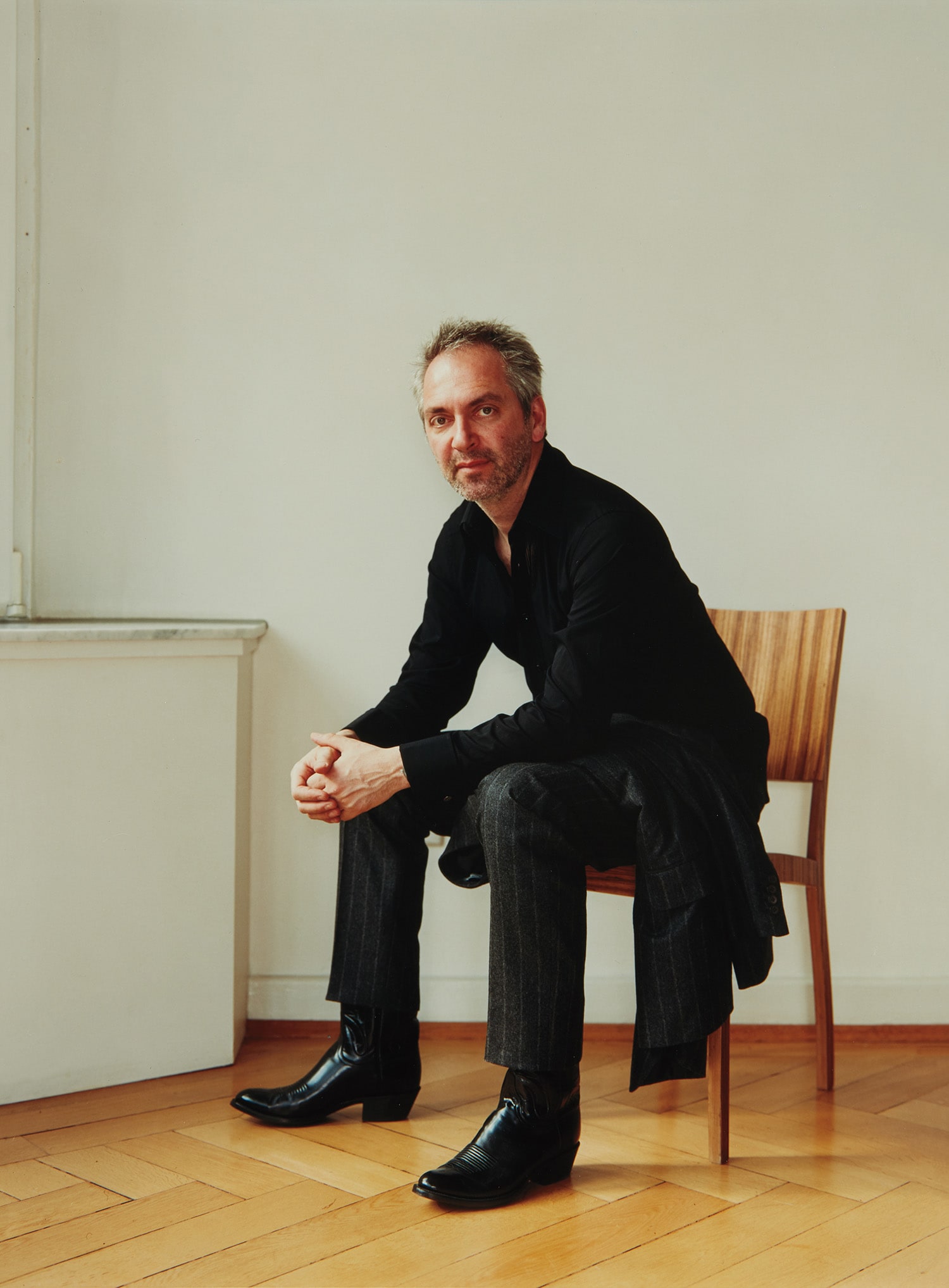
Thomas Struth, Düsseldorf, Germany, March 24
Dijkstra was born in Sittard, in the southern Netherlands, in 1959, and grew up in a country with an extraordinarily rich tradition of figurative representation stretching from Vermeer and Rembrandt through the Hague School to the postwar avant garde. She studied at the Gerrit Rietveld Academie in Amsterdam, graduating in 1986, and spent her early professional years working as a commercial photographer, shooting advertising and editorial assignments. That training gave her a command of light and a fluency with the studio that she would eventually turn inside out, carrying its discipline into the open air and into the lives of strangers. A bicycle accident in 1991 left her briefly unable to work on assignment, and during her recovery she turned the camera on herself, producing a series of raw, unflinching self portraits that many critics identify as the true beginning of her artistic voice.
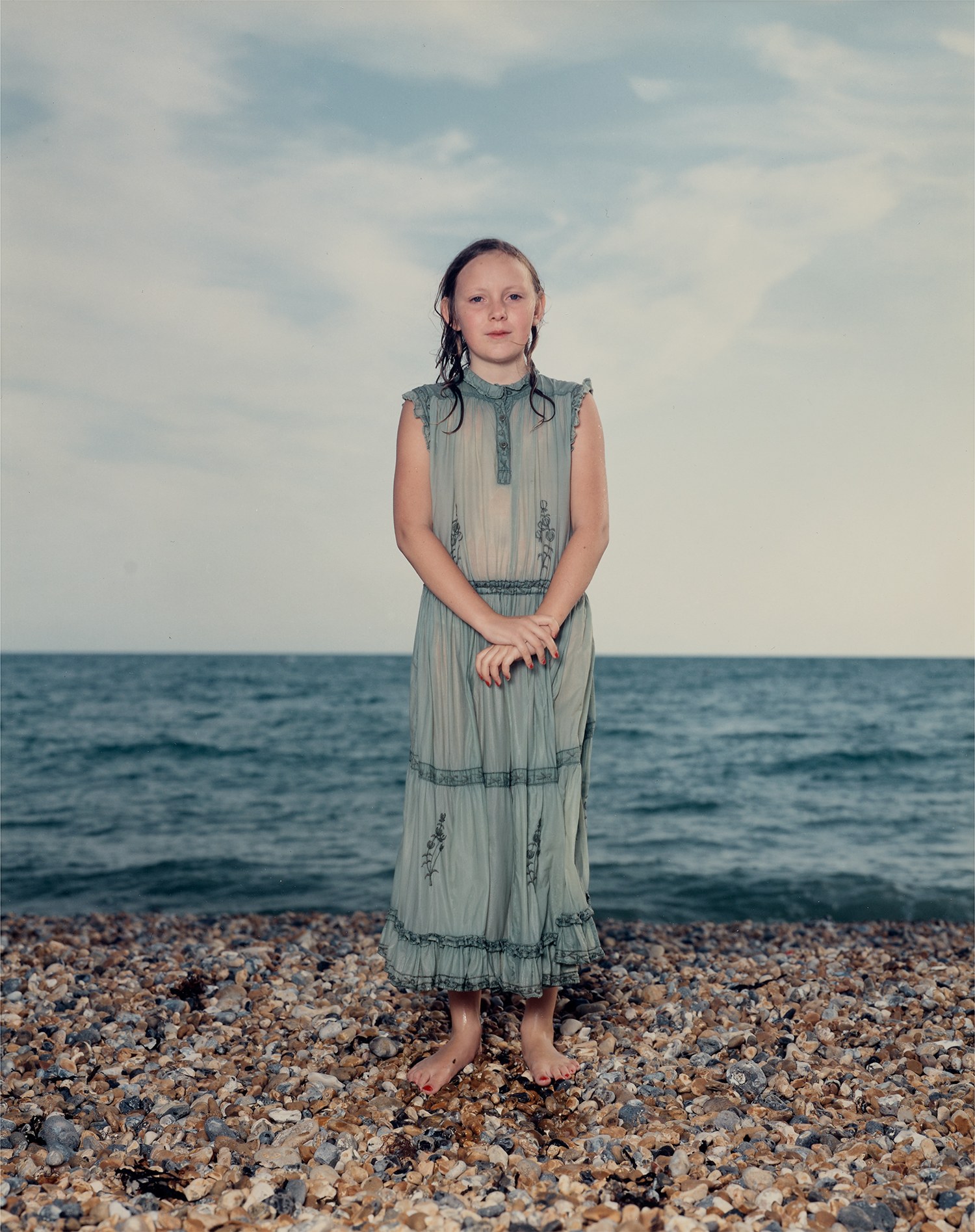
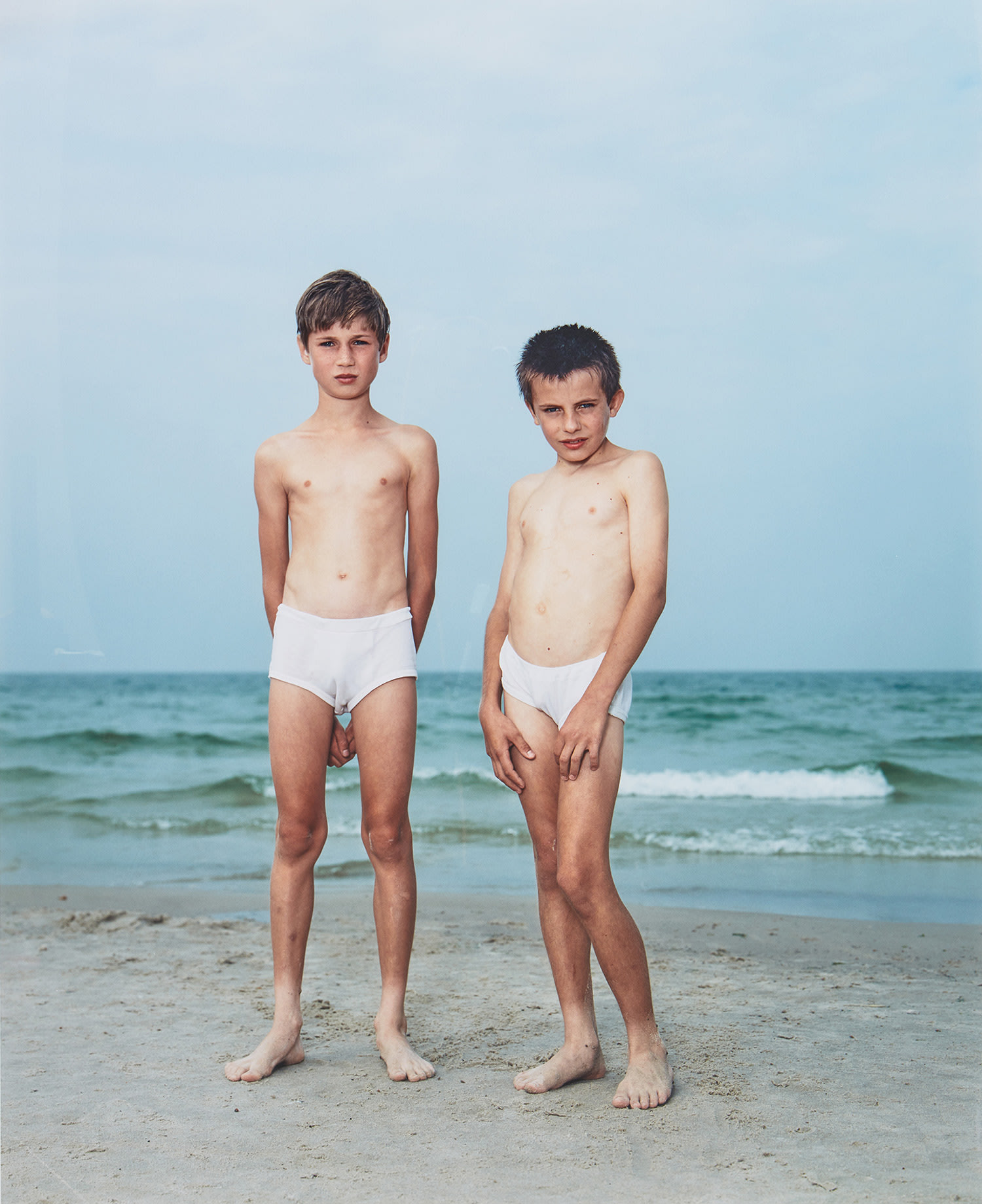
The breakthrough came with the Beach Portraits, begun in 1992. The project was deceptively simple in conception: she photographed adolescents standing at the water's edge on beaches across Europe and the United States, from the shores of Ukraine and Poland to the coasts of Croatia and South Carolina. The locations appear in the titles with the precision of a field report: Odessa, Ukraine, 1993. Kolobrzeg, Poland, July 27.
Rineke Dijkstra
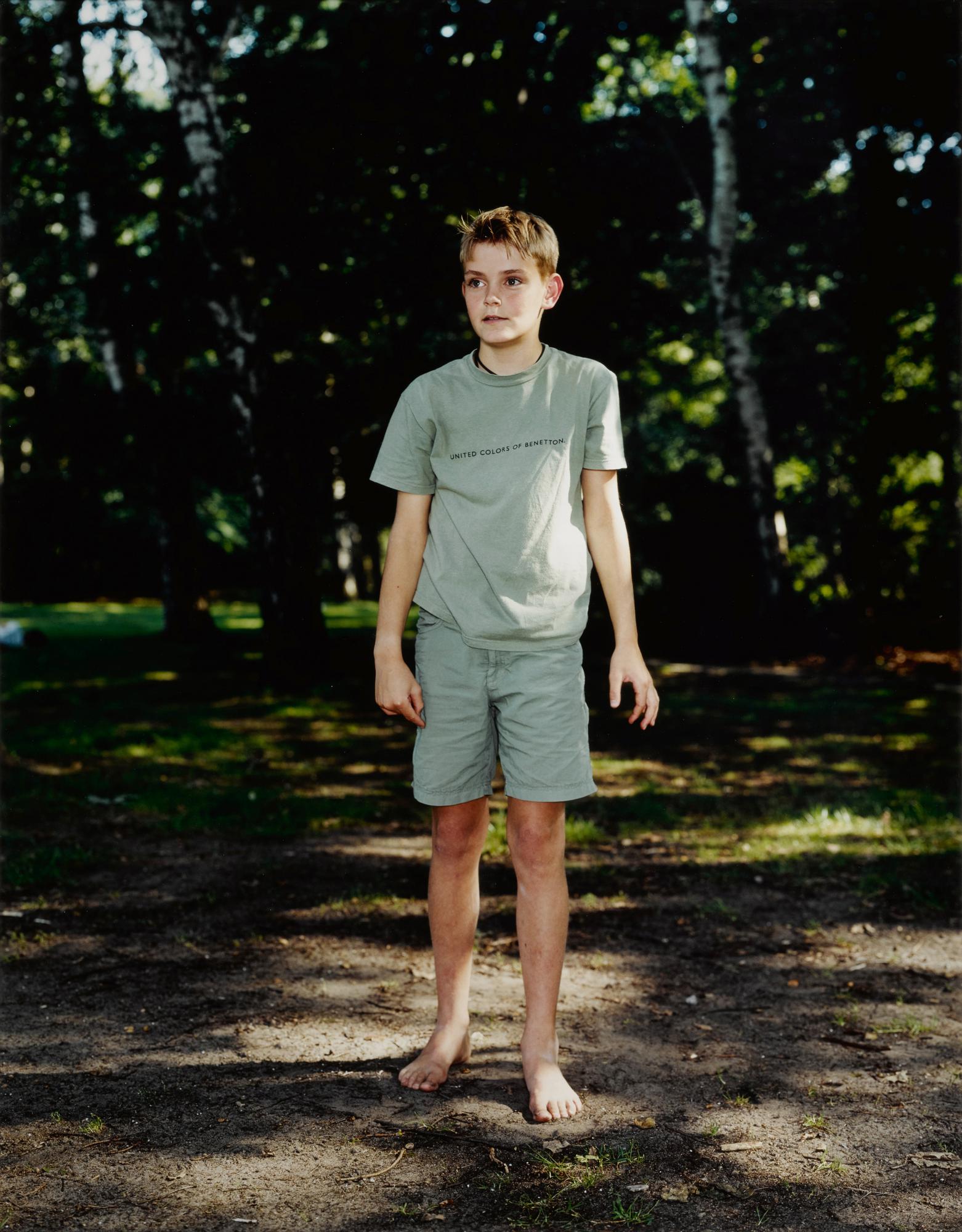
Tiergarten, Berlin, August 13, 2000
Dubrovnik, Croatia, July 13, 1996. Hilton Head Island, S.C., June 27.
The subjects stand slightly apart from the sea, wet and self conscious, arms neither fully relaxed nor purposefully placed, occupying that exquisitely uncertain territory between childhood and adult selfhood. The flat light of overcast northern beaches and the harsher sun of the Adriatic each produce their own particular vulnerability. These are images of becoming, and they carry a formal clarity that rewards long looking. What makes the Beach Portraits so enduring is the tension Dijkstra holds between the documentary and the classical.
Rineke Dijkstra
Kolobrzeg, Poland, July 27
The compositions are frontal and symmetrical in a way that recalls the formal portraiture of the Dutch Golden Age, yet the subjects are utterly contemporary, caught in a moment of unselfconscious exposure. She shoots on large format film, and the resulting prints are substantial objects: chromogenic prints flush mounted to aluminum, mural sized and physically commanding. The scale is not a statement of bravado but a deliberate strategy of intimacy, bringing the viewer close enough to read every flicker of expression, every goosebump, every hesitation in the body. The series grew over years and continents, gaining cumulative power as it became clear that Dijkstra was mapping something universal about the passage from youth to adulthood across cultures and geographies.
Alongside the beach work, Dijkstra developed Almerisa, one of the most celebrated longitudinal photographic projects of its era. Beginning in 1994, she photographed a young Bosnian refugee named Almerisa at intervals over many years, creating a record of a single life unfolding through adolescence and into motherhood. The project is achingly tender without ever being sentimental, and it stands as a demonstration of what photography can accomplish that no other medium can quite replicate: the accumulation of time made visible in a face. Her other serial projects, including the Bullfighters series and her studies of new mothers photographed immediately after giving birth, share this quality of meeting subjects at moments of extreme physical and psychological transition, when the body is most honest and the social mask has not yet been reassembled.
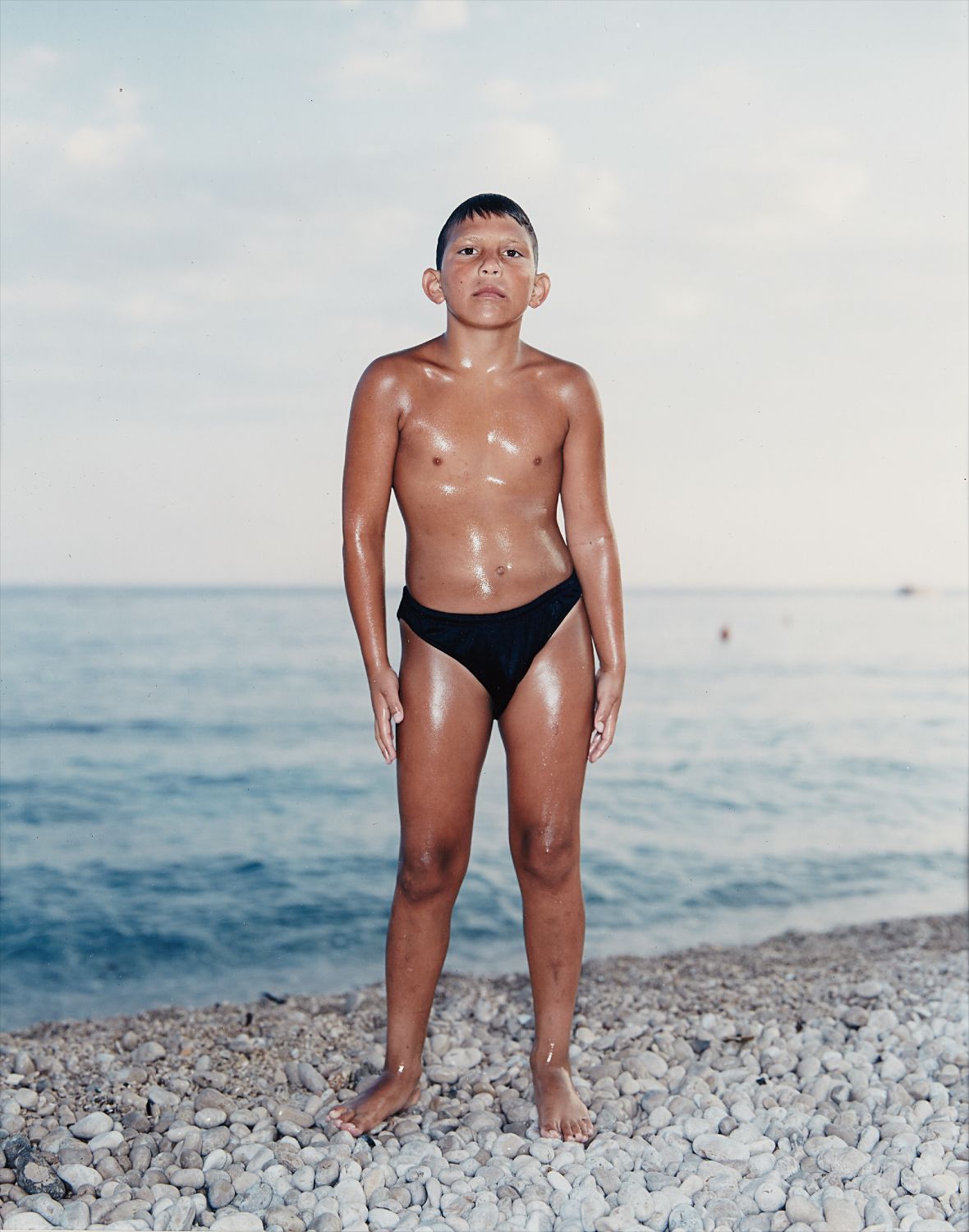
Rineke Dijkstra
Dubrovnik, Croatia, July 13, 1996
Her work with adolescents in public settings extended into museum spaces, most notably with The Krazyhouse (2009), a video work documenting young people dancing alone at a Liverpool nightclub, and with her ongoing interest in the ways institutions shape and reveal identity. The I See a Woman Crying (Weeping Woman) video installation, in which schoolchildren respond to Picasso's famous painting, demonstrated that Dijkstra's curiosity about youth was not merely documentary but philosophical, a sustained inquiry into how people learn to feel and to speak about feeling. These video works earned significant attention at major institutions including Tate Modern and the Guggenheim, where her photographs also entered the permanent collection alongside holdings at MoMA. For collectors, Dijkstra's work presents an unusually coherent and historically grounded opportunity.
The chromogenic prints from the Beach Portraits series, particularly those from the early to mid 1990s, are the foundation of her market and her reputation, and examples from these years appear with regularity at the major auction houses, where they have achieved consistent and rising results. Prints are typically produced in editions of six to ten, and early numbered examples from landmark series command the strongest prices. Works on paper from the Almerisa project and the bullfighter series are also keenly sought. The mural sized prints, flush mounted to aluminum and framed, are physically imposing and require appropriate architectural context, but collectors who have placed them well report that they become the organizing intelligence of an entire room.
Dijkstra is represented by Marian Goodman Gallery, one of the most respected galleries in the world, and that relationship has been central to her sustained visibility in the primary and secondary markets. Dijkstra belongs to a generation of European photographers who transformed portraiture into a serious and philosophically rigorous practice during the 1980s and 1990s. Her work is usefully considered alongside that of Thomas Struth, whose typological approach to the family portrait shares her interest in formal clarity and psychological revelation, and Wolfgang Tillmans, whose commitment to the quotidian body in social space runs parallel to her own. The influence of August Sander's encyclopedic social portraiture is evident in her serial ambitions, and the Dutch painting tradition is never far from the surface of her compositions.
Yet Dijkstra is not reducible to any single lineage. Her particular achievement is a quality of attention that feels ethical as much as aesthetic, a willingness to wait for the subject to arrive at their own truth in front of the lens. What Rineke Dijkstra offers us, finally, is the conviction that looking at another person with patience and without judgment is itself an act of meaning. In a visual culture increasingly defined by speed and performance, her photographs insist on duration and stillness.
The teenagers at the water's edge, the woman who has just given birth, the young soldier in Israel, the child dancing in the dark: they are all asking, and answering, the same question about what it means to be a body in the world at a particular moment. That question does not age. Neither do these pictures.
Explore books about Rineke Dijkstra

