Richard Pettibone
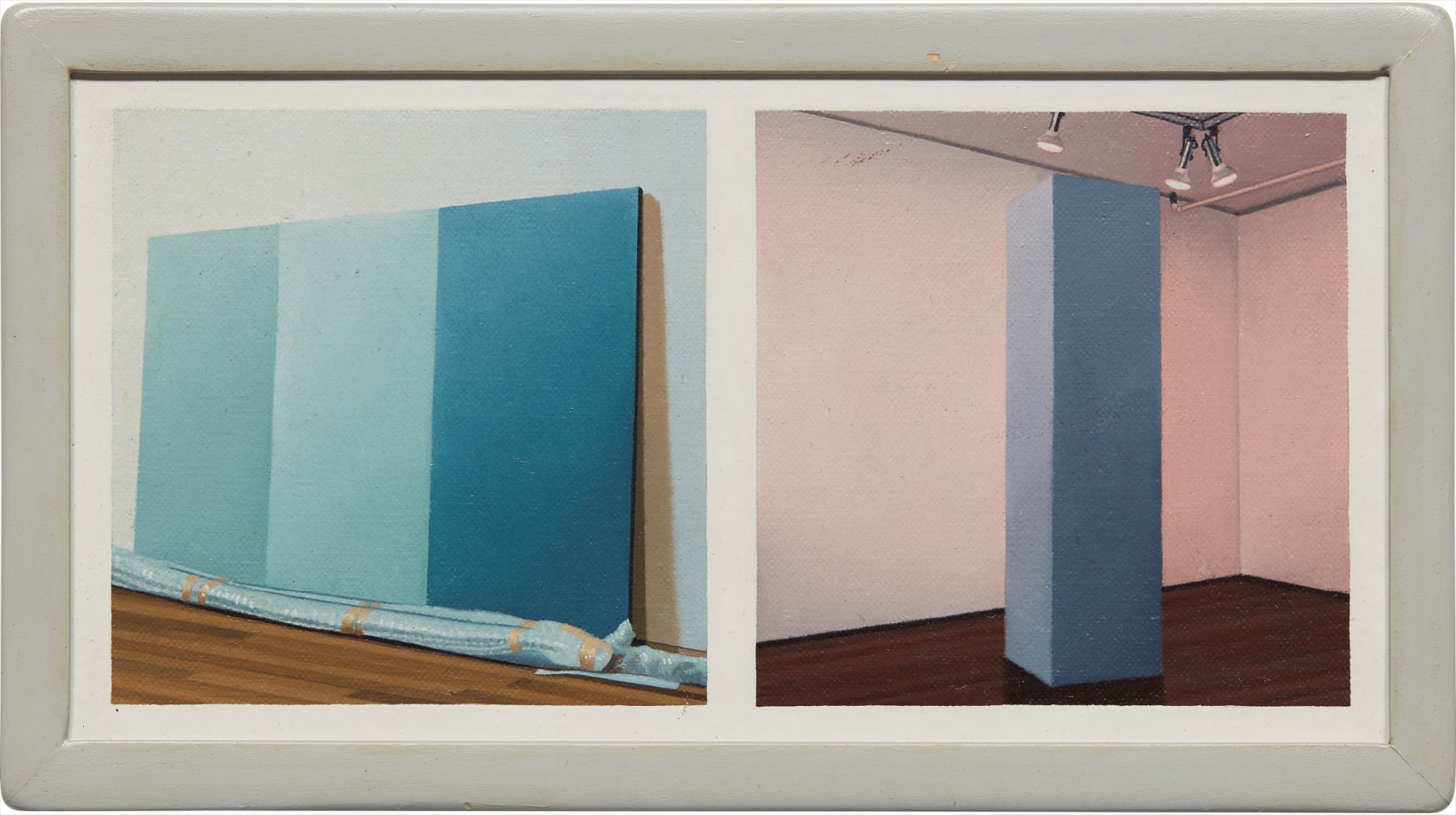
Richard Pettibone, The Master of Magnificent Miniatures
Artist Spotlight · The Collection Editorial
There is a moment, standing before a Richard Pettibone, when the eye refuses to believe what the mind already knows. The canvas is barely larger than a paperback novel. The image upon it, a Warhol Marilyn or a Frank Stella pinstripe abstraction, is rendered with such fidelity, such quiet authority, that the familiar becomes suddenly strange again. This is the gift Pettibone has offered for more than six decades: the power to make you see art history as if for the very first time.
Richard Pettibone
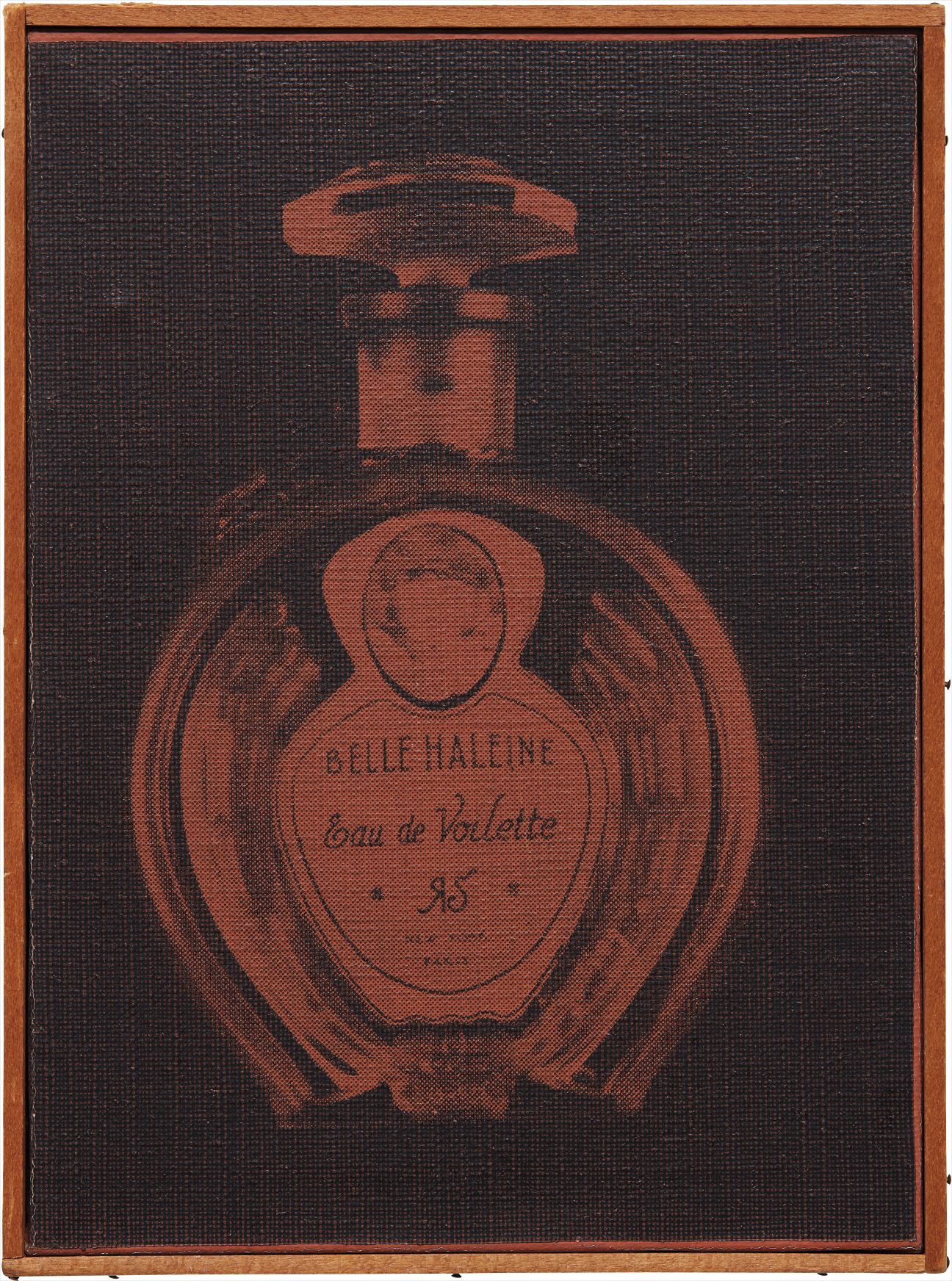
Marcel Duchamp, "Belle Haleine: Eau de Voilette", 1921 (violet), 1966
Richard Pettibone was born in Los Angeles in 1938, and the city's particular relationship to surface, image, and popular culture would prove formative. He studied at the Chouinard Art Institute in Los Angeles, an institution with deep ties to the California design and animation industries, before completing his education at the Otis Art Institute. These were environments attuned to reproduction, craft, and the mechanics of image making, and Pettibone absorbed their lessons deeply. By the early 1960s, he was already attuned to the seismic shifts happening in the New York art world, even from three thousand miles away.
Pettibone began his signature practice around 1964, at a moment when Pop Art was transforming the cultural landscape and Minimalism was beginning its austere ascent. His move was both simple and radical: he began meticulously copying, at drastically reduced scale, the landmark works of his contemporaries and predecessors. Andy Warhol's silkscreened celebrities, Marcel Duchamp's conceptual provocations, Roy Lichtenstein's bold comic book panels, Frank Stella's hard edge geometries. Where other artists of his generation were making work larger, louder, and more commanding of physical space, Pettibone went the other way entirely.
Richard Pettibone
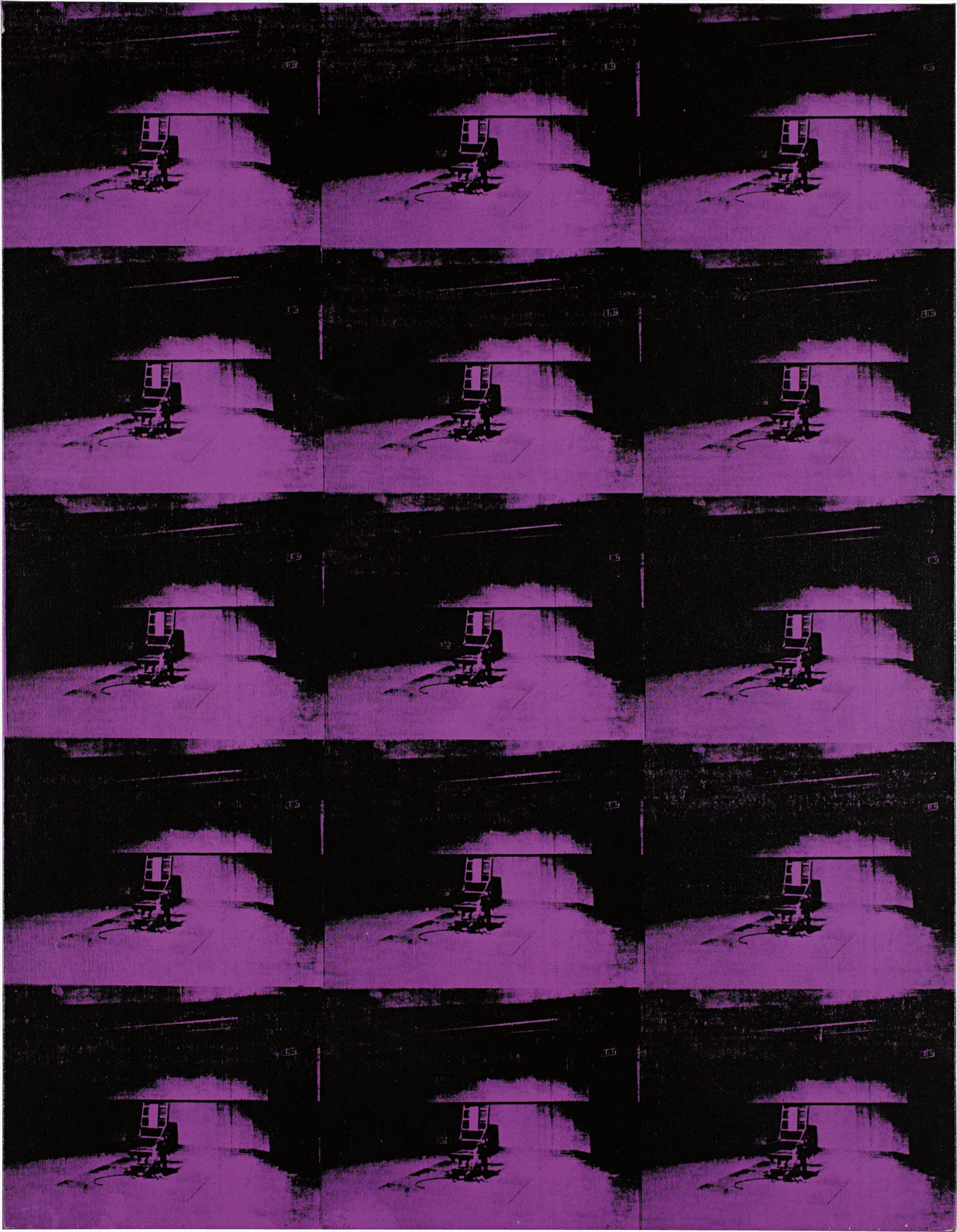
Andy Warhol, 'Lavender Disaster', 1963
His paintings demanded that you come closer, lean in, pay attention. What makes this practice so conceptually rich is the layering of questions it generates. When Pettibone reproduces Warhol's "Lavender Disaster" in acrylic and silkscreen on a canvas small enough to hold in one hand, what exactly is the object you are looking at? It is not a forgery, since Pettibone has never concealed his authorship.
It is not merely an homage, since the act of reproduction is itself the critical gesture. It sits in a space between quotation and creation, between criticism and celebration, asking whether scale is intrinsic to meaning and whether a copy made with love and skill carries something of the original's aura or fundamentally transforms it. These were not merely academic questions in the mid 1960s. They were live wires.
Richard Pettibone
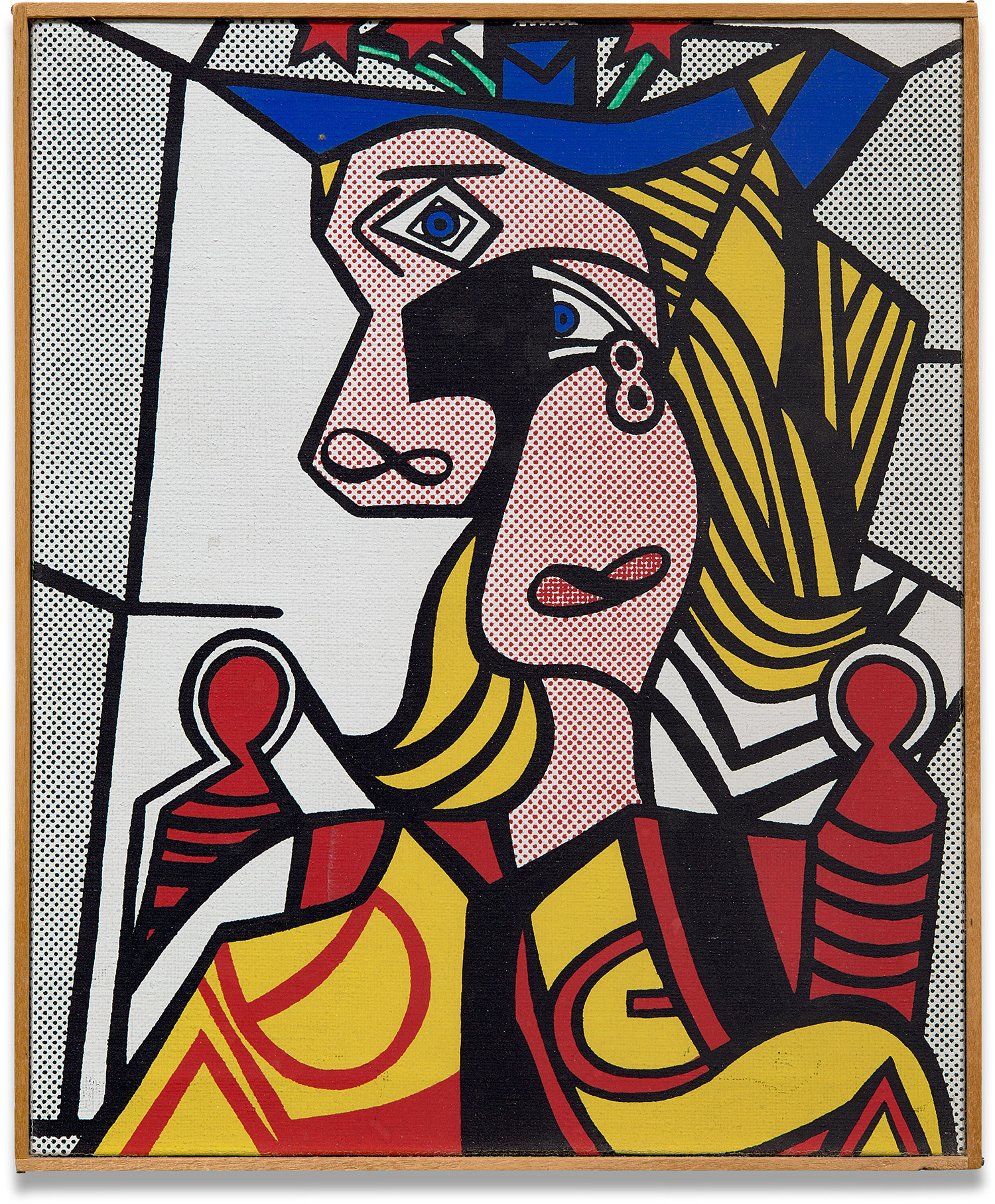
Roy Lichtenstein, Woman with Flowered Hat, 1963
His engagement with Duchamp is particularly resonant. Pettibone's 1966 reproduction of Duchamp's "Belle Haleine: Eau de Voilette" from 1921, rendered in acrylic and silkscreen ink on canvas and presented in Pettibone's own handmade frame, creates a chain of conceptual recursion that rewards extended thought. Duchamp's original was itself a playful assault on the idea of the unique art object, a readymade perfume bottle relabeled with a feminine alter ego. Pettibone reproduces this gesture of reproduction, adding another layer of remove and in doing so amplifies rather than diminishes its strangeness.
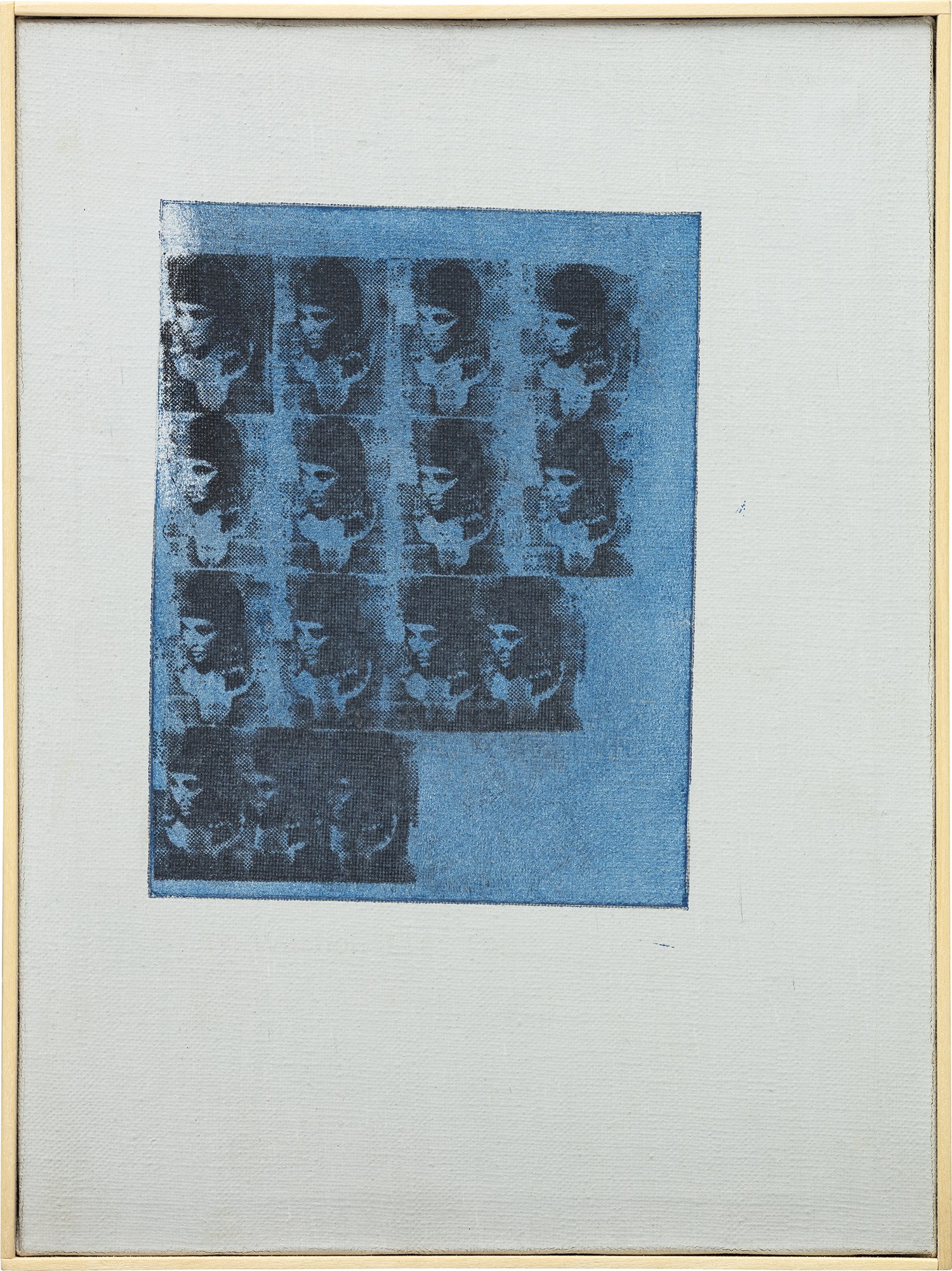
The handmade frame, a consistent element across much of Pettibone's work, adds a note of intimate devotion that complicates any purely ironic reading. Pettibone's relationship to Warhol is the one that has most captured the imagination of collectors and critics alike. Works such as his reproductions of "Liz," "Marlon," "Two Elvis," and "Marilyn" compress some of the most iconic images of the twentieth century into objects of almost jewel like concentration. There is something deeply affecting about seeing a Warhol electric chair reduced to the scale of a hand mirror.
Richard Pettibone
Andy Warhol 'Liz' 1962, 1965
The violence of the original image becomes more intimate rather than less disturbing. His reproduction of the Cow Wallpaper, rendered as a screenprint on wove paper, similarly reframes a work Warhol conceived as environmental, as something singular and collectible, questioning what it means to own a piece of an artwork that was originally designed to be everywhere at once. From a collecting perspective, Pettibone occupies a position of genuine art historical importance that the market has increasingly come to recognize. His works appeared in galleries in Los Angeles and New York from the late 1960s onward, and he has been associated with the Leo Castelli Gallery, one of the most significant commercial galleries of the postwar era.
His work is held in major institutional collections and has appeared at auction with increasing regularity as scholarly attention to the roots of appropriation art has grown. Collectors are drawn to Pettibone not only for the intellectual pleasure his work provides but for its physical intimacy. These are objects that transform any domestic or private space, demanding a quality of attention that larger works sometimes do not require. The handmade frames, often crafted by Pettibone himself, mean that each work carries a further layer of the artist's touch.
It is impossible to discuss Pettibone without situating him alongside the artists who would make appropriation a dominant mode of art making in the following decade. Sherrie Levine, whose rephotographed Walker Evans images caused a sensation in the early 1980s, and Mike Bidlo, who has similarly recreated canonical works at full scale, are the names most frequently invoked in the same breath. Richard Prince's early Marlboro cowboy rephotographs and Elaine Sturtevant's uncanny repetitions of Warhol and other contemporaries also belong to this lineage. What sets Pettibone apart is the earliness of his intervention, the consistency of his commitment to small scale, and the peculiar warmth that infuses even his most conceptually pointed gestures.
His work never feels cold. Today, as conversations about originality, authorship, and the circulation of images have become central not just to art discourse but to culture at large, Pettibone's practice feels more timely than ever. In an era saturated with reproductions, screenshots, and algorithmically recombined imagery, the questions he began asking quietly in a Los Angeles studio in the mid 1960s have become the defining questions of visual culture. He did not predict the future so much as he perceived something true about images and desire and meaning that the rest of the world has slowly caught up to.
For collectors who seek work that is both visually compelling and intellectually inexhaustible, Richard Pettibone remains one of the great rewards of looking closely.