Richard Parkes Bonington
Bonington: The Romantic Light That Endures
Artist Spotlight · The Collection Editorial
In the spring of 1826, a young Englishman stood before the Grand Canal in Venice, capturing its shimmering facades on small panels of millboard with a speed and confidence that astonished his companions. Richard Parkes Bonington was twenty three years old, already celebrated in Paris, already a gold medalist at the Salon, and already producing work that would define a generation of Romantic painting. Two centuries on, his oils and watercolors continue to surface at the great auction houses, drawing fierce competition from collectors who recognize in them something that transcends their modest scale: a quality of light so alive it seems to breathe. Bonington was born in Arnold, Nottinghamshire, in October 1802, the son of a drawing master and portrait painter.
Richard Parkes Bonington
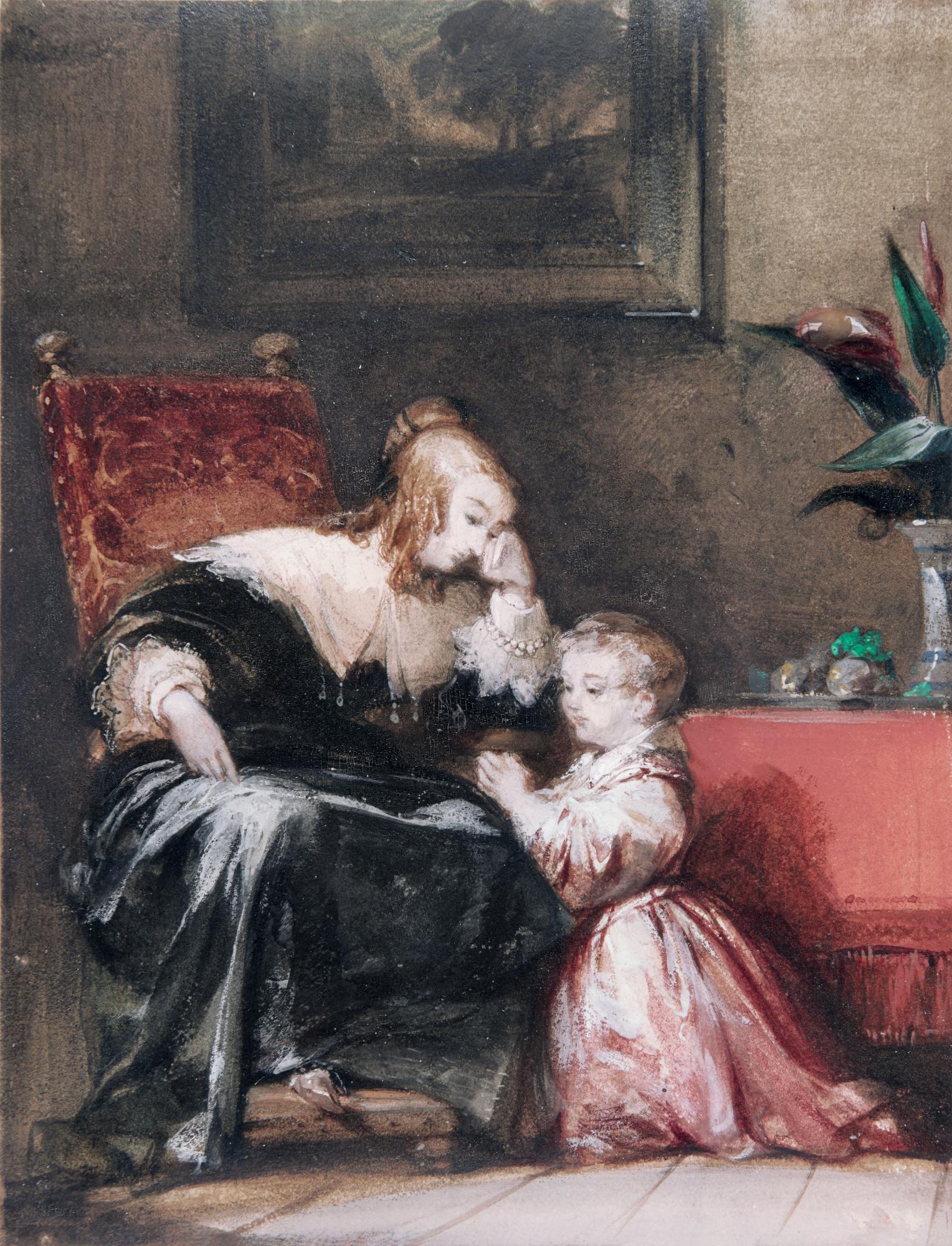
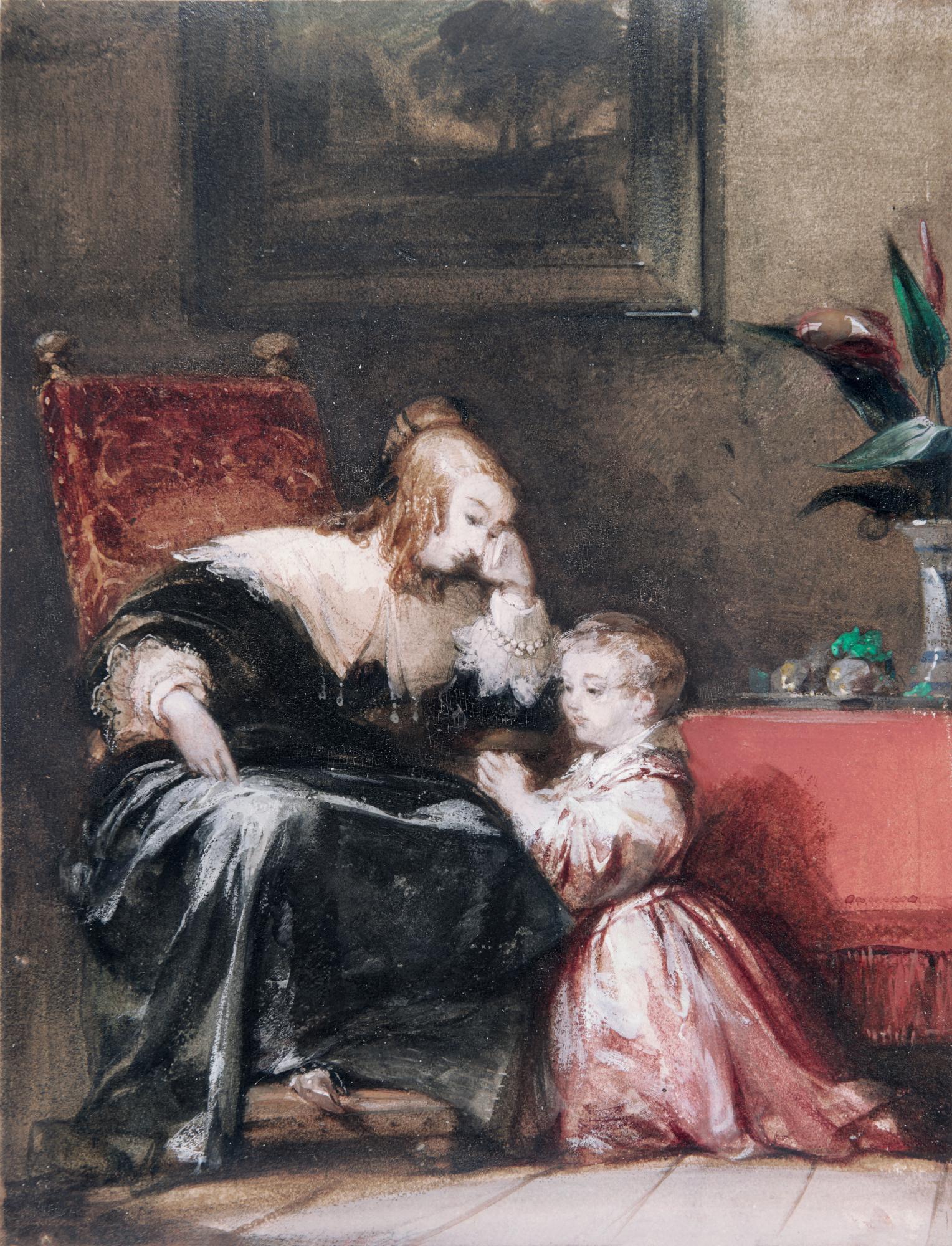
The Prayer
His early years in England gave him a grounding in the English watercolor tradition, that distinctly British gift for rendering atmosphere and weather that had been elevated by figures such as Thomas Girtin and John Sell Cotman. The decisive turn came in 1817, when his family relocated to Calais, drawn by his father's ambitions in the lace trade. France would become Bonington's true home and his true academy. In Calais he encountered Louis Francia, a French born painter who had worked in London and absorbed the English watercolor tradition thoroughly, and under Francia's guidance the young Bonington developed the fluid, luminous touch that would become his hallmark.
By 1820 Bonington had moved to Paris and enrolled in the atelier of Baron Antoine Jean Gros, one of the dominant figures of French academic and Romantic painting. Gros was a former student of Jacques Louis David and had painted the great Napoleonic battle scenes that set the emotional temperature for an era. Under his tutelage Bonington mastered the formal mechanics of oil painting while absorbing the dramatic ambition of the French Romantics. Yet he was never simply a student.
Richard Parkes Bonington
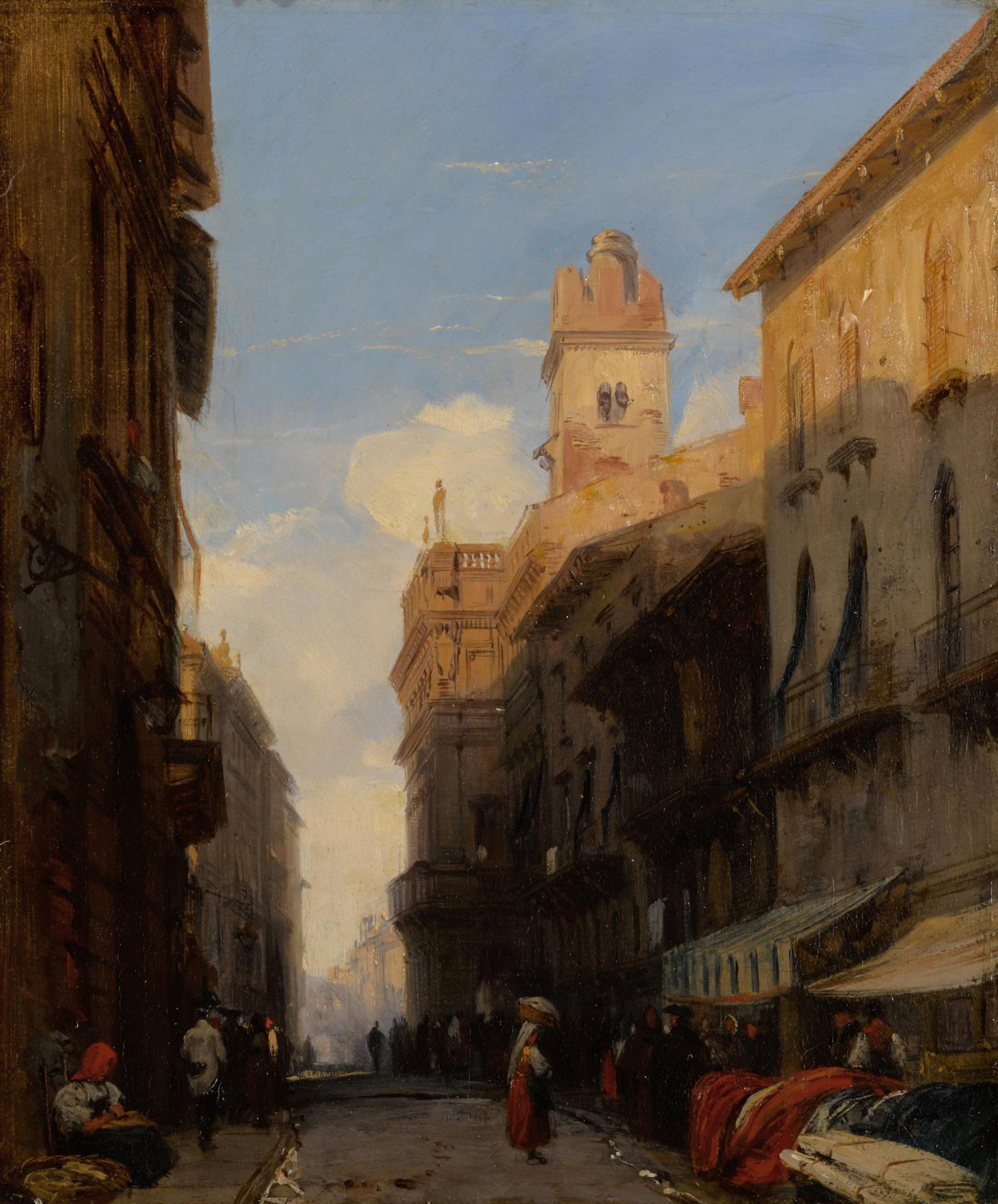
Corso Sant'Anastasia, Verona
His fellow pupils at the Ecole des Beaux Arts recognized him as something exceptional, and it was in the Louvre's long galleries, where he went to copy the Old Masters, that he made the friendship that would shape the rest of his life. There, sometime around 1821 or 1822, he met Eugene Delacroix. The relationship between Bonington and Delacroix was one of the great creative partnerships of nineteenth century art. They shared a studio briefly in 1825, traveled together, and exchanged ideas with a generosity that enriched both of their practices.
Delacroix was four years older and would outlive his friend by decades, eventually becoming the towering figure of French Romanticism, but he never forgot what he had learned from Bonington. He later described Bonington as possessing a lightness of execution that was unique, an ability to make the surface of a painting feel effortless even when the underlying craft was immensely sophisticated. The two men shared a passion for historical costume, Venetian colorism, and the work of Constable and other English painters whose loose, observational handling of landscape offered a counter model to French academic finish. Bonington's breakthrough at the Salon of 1824, where he exhibited alongside Constable and was awarded a gold medal, announced him to the Parisian public as a force to be reckoned with.
Richard Parkes Bonington
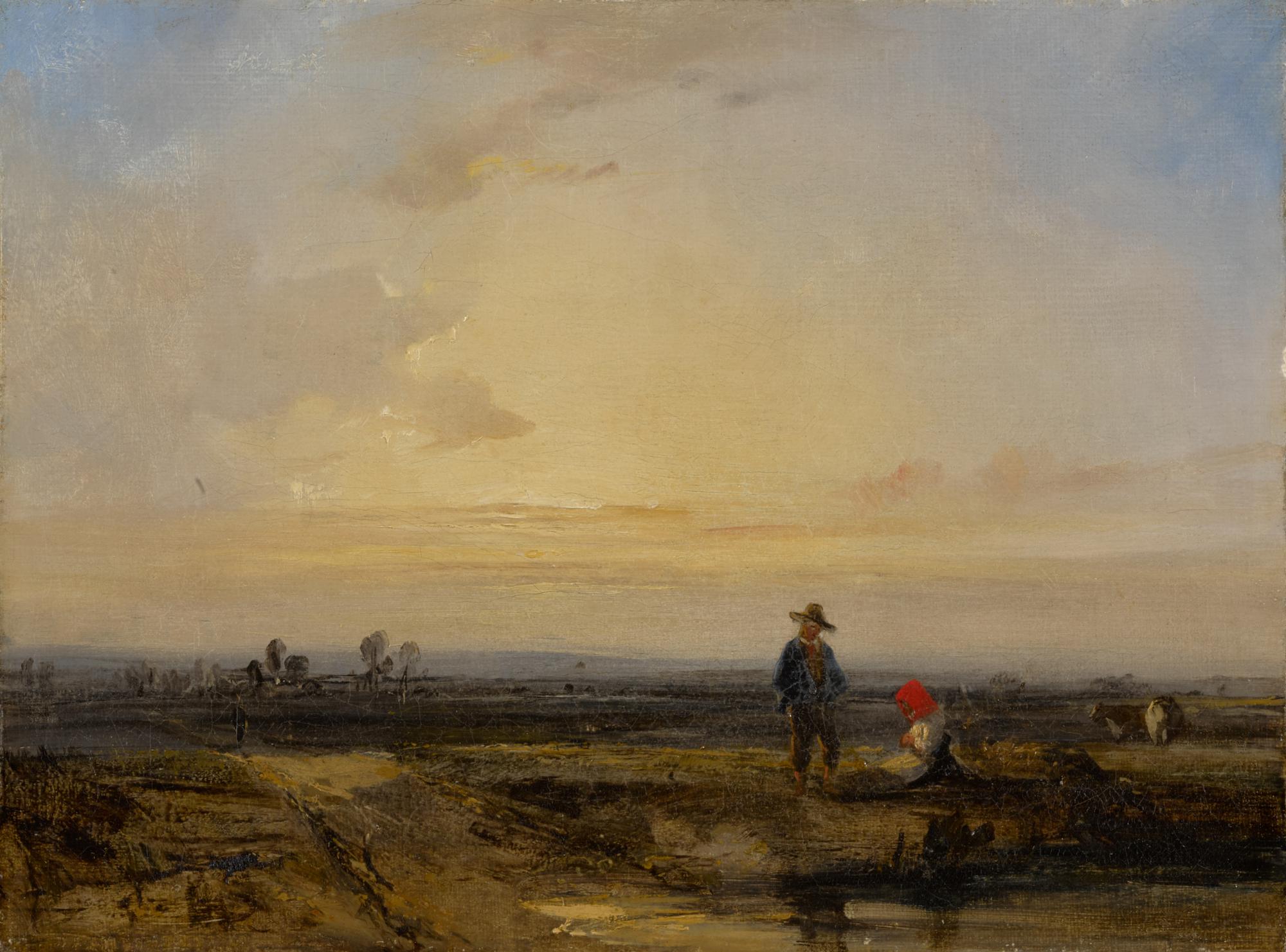
Landscape with sunset and figures before a pond
His landscapes and coastal scenes, particularly those set along the beaches of Normandy and Picardy, offered something French audiences had rarely encountered: the freshness of direct observation combined with a poet's sense of transience. These were not topographical records but emotional arguments, making the case that a stretch of sand under a cloudy sky, or a fishing boat catching the afternoon sun, could carry the same weight of feeling as a history painting. His Italian journey of 1826, which produced the extraordinary Venice panels now counted among his finest achievements, added a new richness to his palette and confirmed his standing as one of the most versatile painters of his age. The works available on The Collection offer a superb cross section of everything that makes Bonington indispensable.
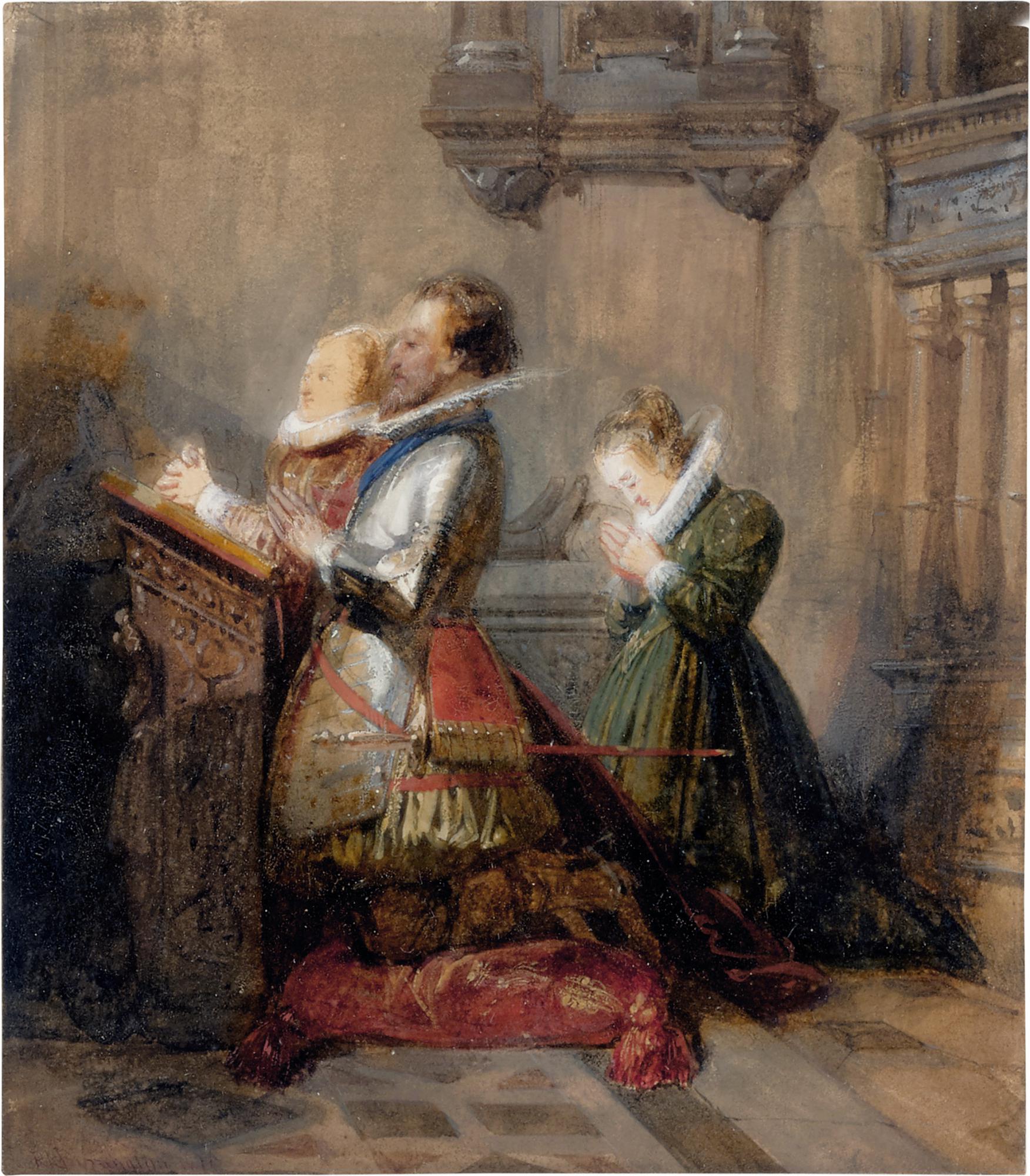
The oil panels of Venice, including the luminous view of the Doge's Palace and the study of the Palazzi on the Grand Canal, show his command of architecture and reflection, the way stone and water and sky become a single integrated field of light. The historical genre subjects, among them "The Prayer" and the related work known as "La Priere" depicting Henry IV accompanied by two ladies, reveal his deep engagement with the costumed past and his ability to bring an intimate, almost theatrical warmth to historical narrative. These small scale cabinet pictures were enormously fashionable in the 1820s and fetched extraordinary prices during his lifetime. The watercolor and gouache technique he employed in these works, built up with transparent washes and then enriched with opaque highlights and the subtle gloss of gum arabic, remains a technical masterpiece of the medium.
Richard Parkes Bonington
Henry IV praying, accompanied by two ladies (La Prière)
The Verona panel and the view of Lerici, with its charming vignette of Baron Charles Rivet sketching in the foreground, add further evidence of his tireless curiosity as a traveler and observer. For collectors, Bonington occupies a particularly rewarding position in the market. His works appear at Christie's, Sotheby's, and Bonhams with enough regularity to allow serious acquisitions, but with sufficient rarity that a fine example, particularly a finished oil or a highly worked watercolor, remains a genuine event. The historical genre watercolors, combining as they do the technical intimacy of the medium with the theatrical sophistication of his subject matter, represent some of the most accomplished examples of early nineteenth century British and French Romantic art.
Collectors drawn to Turner, Constable, and Delacroix will find in Bonington a natural companion, a figure who moves between those worlds with a freedom that belongs entirely to himself. The armor study, a focused oil investigation of a sixteenth century half suit, speaks to the same archaeological passion that animated Delacroix and anticipates the Pre Raphaelite obsession with historical material culture later in the century. In art historical terms, Bonington sits at a remarkable crossroads. He is the most French of the British Romantics and the most English of the French, a figure who carried the watercolor tradition of Girtin and Cox across the Channel and returned it transformed by contact with Venetian colorism and French Romantic ambition.
Artists as different as Camille Corot, Johan Barthold Jongkind, and the painters of the Barbizon School owed something to the example he set. His influence on Delacroix alone would be enough to secure his place in history, but Bonington was not simply an influence on greater men. He was a great painter in his own right, whose early death at twenty five in September 1828 from tuberculosis cut short a career of extraordinary promise at the very moment of its fullest flowering. What draws people to Bonington today, collectors and scholars and museum visitors alike, is not primarily the pathos of a life cut short, though that story has its own romance.
It is the work itself: its directness, its joy, its absolute refusal to be ponderous. In a cultural moment that often prizes difficulty and conceptual weight, there is something quietly radical about paintings that ask only that you look, and that reward looking with a quality of pleasure that does not diminish on repeated encounter. Bonington painted the world as it appeared to a supremely gifted eye on a particularly clear afternoon, and the clarity has not faded.
Explore books about Richard Parkes Bonington
Richard Parkes Bonington: His Life and Work
Andrew Wilton
Bonington, Francia and Wyld
Andrew Wilton
Richard Parkes Bonington 1802-1828
Marcia Pointon
Bonington, the Norfolk House Collection
Henry Englefield
The World of Bonington
Christopher Newall