Richard Misrach
Richard Misrach, Poet of the American Wilderness
Artist Spotlight · The Collection Editorial
“The desert is not just a landscape. It is a symbol of the American psyche, vast and violent and beautiful.”
Richard Misrach
In the fall of 2023, the Getty Center in Los Angeles mounted a landmark survey of landscape photography in the American West, and Richard Misrach's prints commanded the room with the quiet authority of someone who has spent five decades learning how light behaves over alkali flats at four in the morning. His large format chromogenic prints, some stretching to monumental scale, reminded a new generation of collectors and curators why Misrach remains one of the most consequential photographers working in the United States today. His presence in such institutional contexts is no longer a matter of critical debate but of settled, celebrated fact. Misrach was born in Los Angeles in 1949 and came of age during a period of profound social and environmental reckoning in America.
Richard Misrach
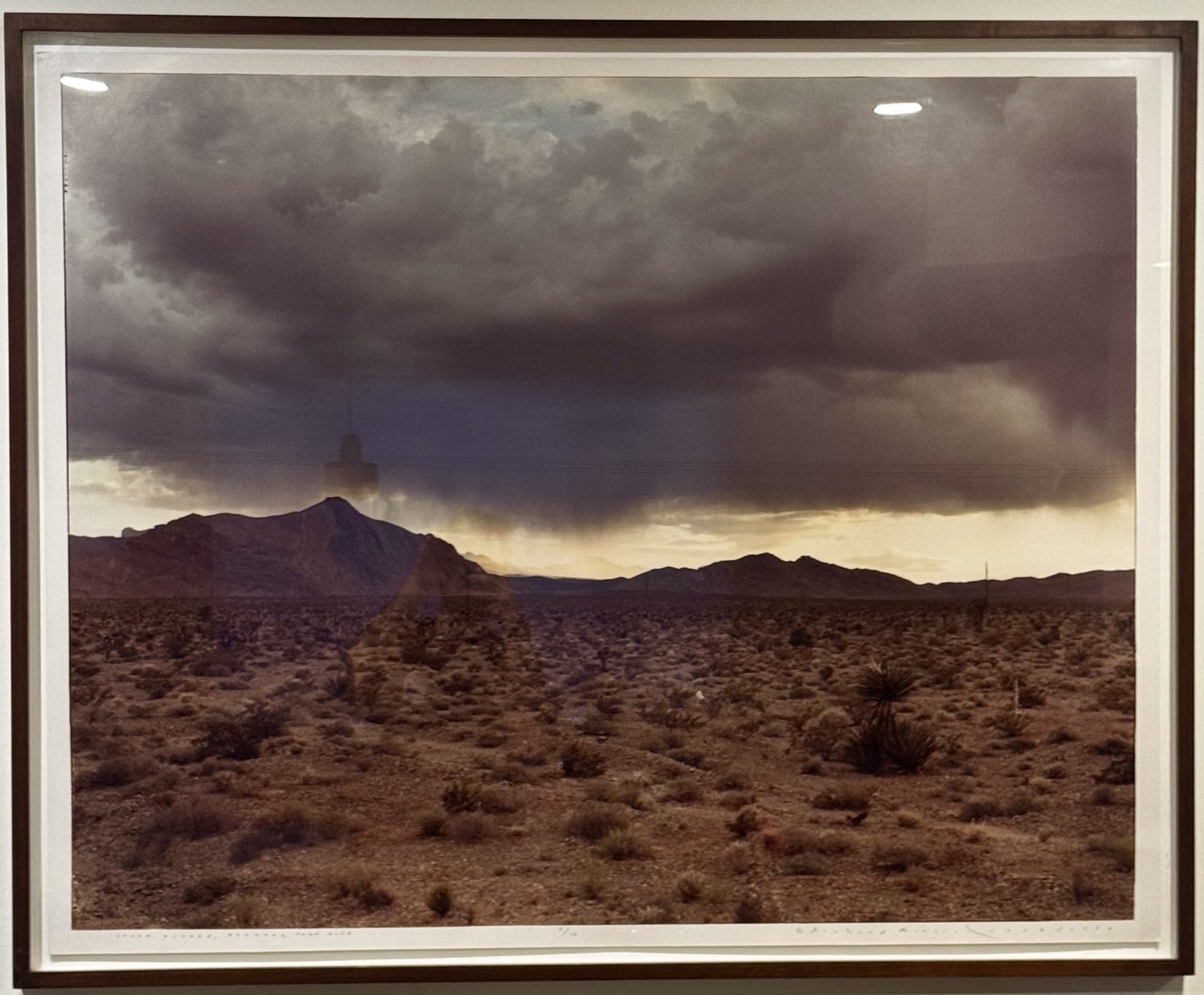
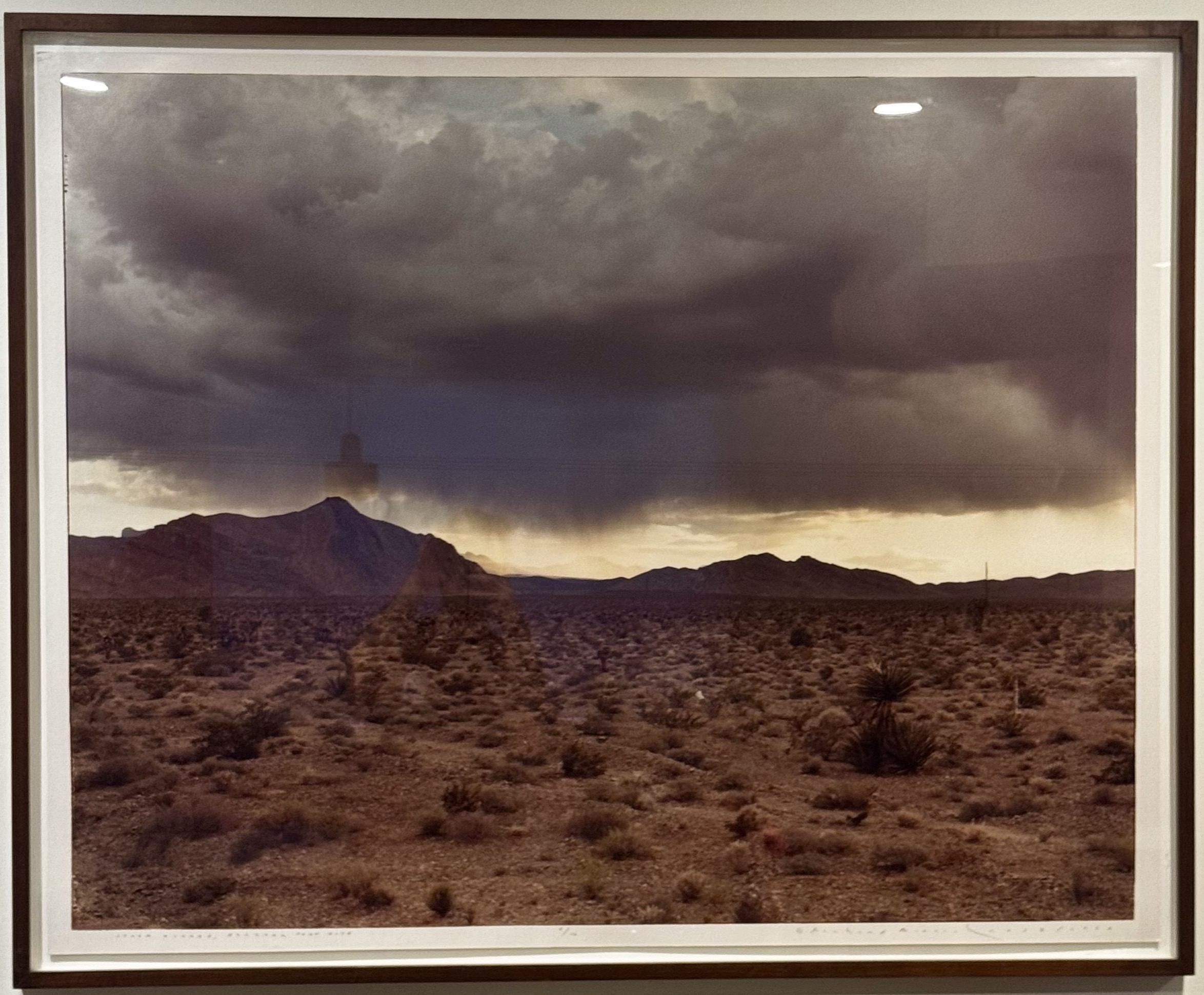
Storm Clouds, Nuclear Test Site, 1987
He studied at the University of California, Berkeley, graduating in 1971, and it was in the Bay Area that he first picked up a camera with serious intent. Berkeley in that era was charged with political energy, and Misrach absorbed its urgency without ever becoming didactic in his work. He was drawn instead to the physical landscape as a site where politics, beauty, and catastrophe could be witnessed simultaneously, without the need for captions or protest signs. His early work in the 1970s showed a young photographer finding his footing, but by the late 1970s and into the 1980s something decisive happened.
Misrach began making extended journeys into the Sonoran and Mojave deserts, working at night with a large format camera and long exposures, creating images of cacti and desert flora that pulsed with an almost supernatural radiance. These nocturnal photographs announced a sensibility that was lyrical and rigorous at once. He was not simply documenting nature; he was revealing it as a place of charged, even sacred significance. The project that would define his career and cement his reputation began in 1979 and continues to this day.
Richard Misrach
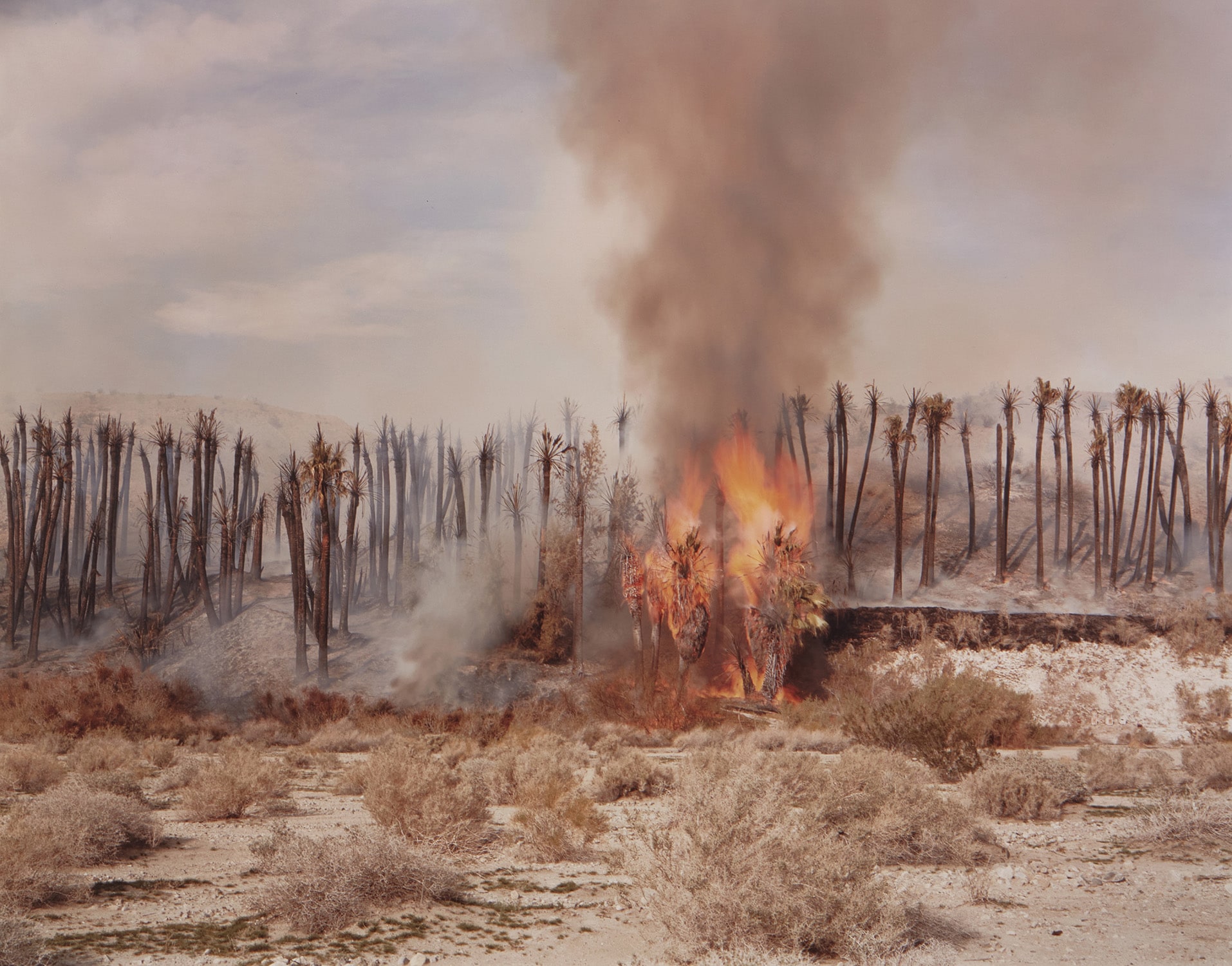
Desert Fire #1 (Burning Palms)
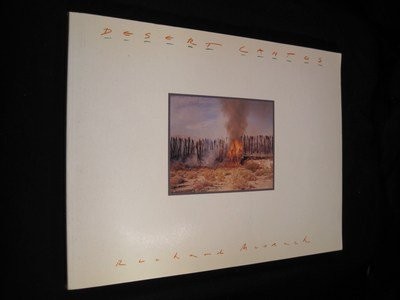
Desert Cantos, named in homage to Ezra Pound's ambitious poetic sequence, is a long form photographic investigation of the American desert Southwest organized into thematic cantos or chapters. Each canto examines a particular aspect of human interaction with the desert landscape, from military testing grounds and government bombing ranges to flooded plains, animal carcasses, and the eerie infrastructure of nuclear experimentation. The project is astonishing in its scope and its patience, a decades long act of sustained attention that has no precise equivalent in the history of photography. Among the works that define his practice, "Desert Fire #1 (Burning Palms)" from 1984 stands as one of the most arresting images in the Desert Cantos series.
“I want the pictures to be aesthetically compelling so that people are drawn in and then confronted with something difficult.”
Interview, Aperture Foundation
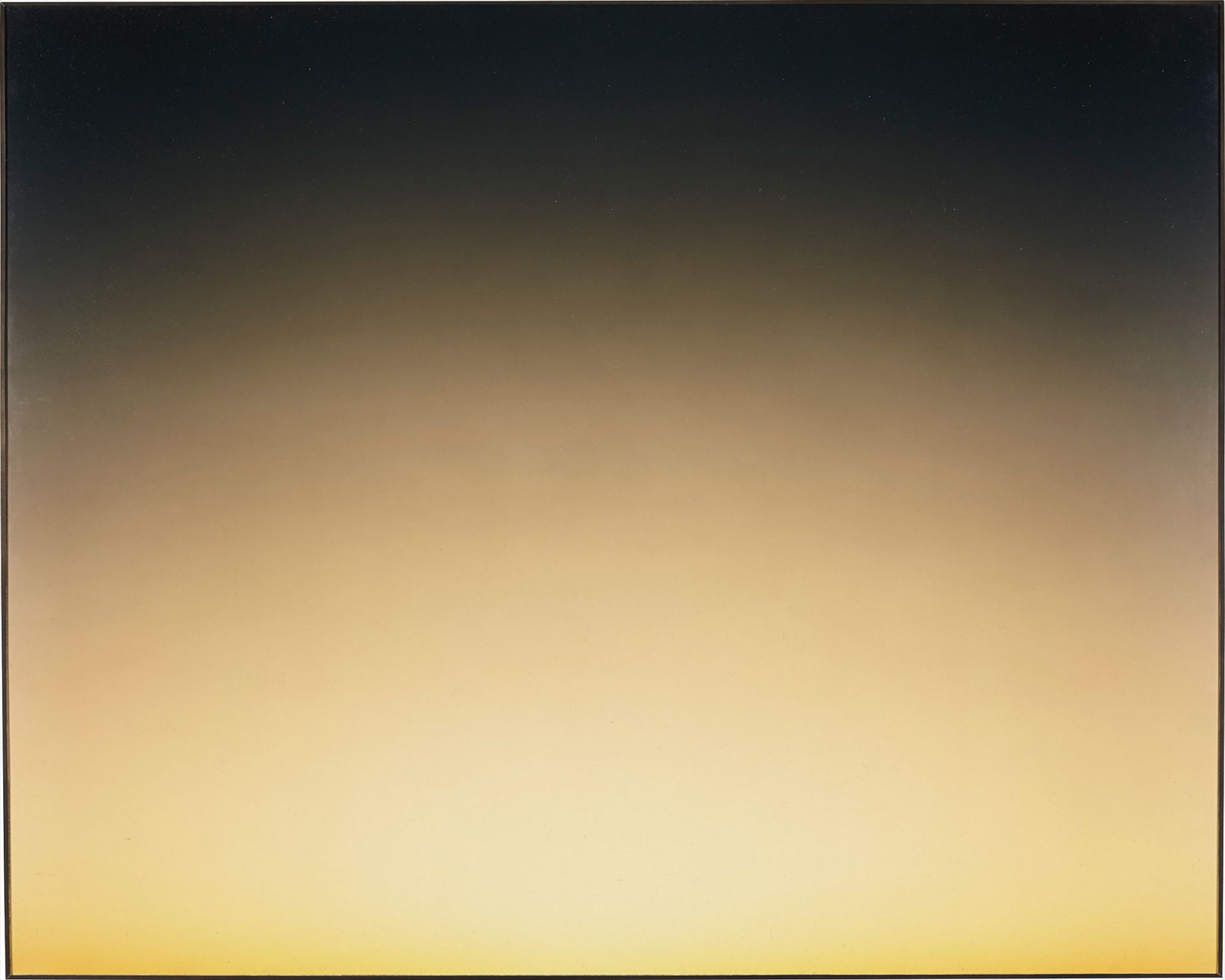
The burning palm trees, rendered in deep chromogenic color against a darkening sky, carry both the grandeur of a natural spectacle and the unsettling suggestion of destruction as spectacle. "Storm Clouds, Nuclear Test Site" from 1987 is another touchstone, its vast sky pressing down on a landscape marked by decades of atomic testing at the Nevada Test Site. These are not comfortable images, but they are ravishingly beautiful, and that tension between aesthetic seduction and moral weight is precisely where Misrach operates with the greatest confidence. Works like "Dante's View, 5:40 A.
Richard Misrach
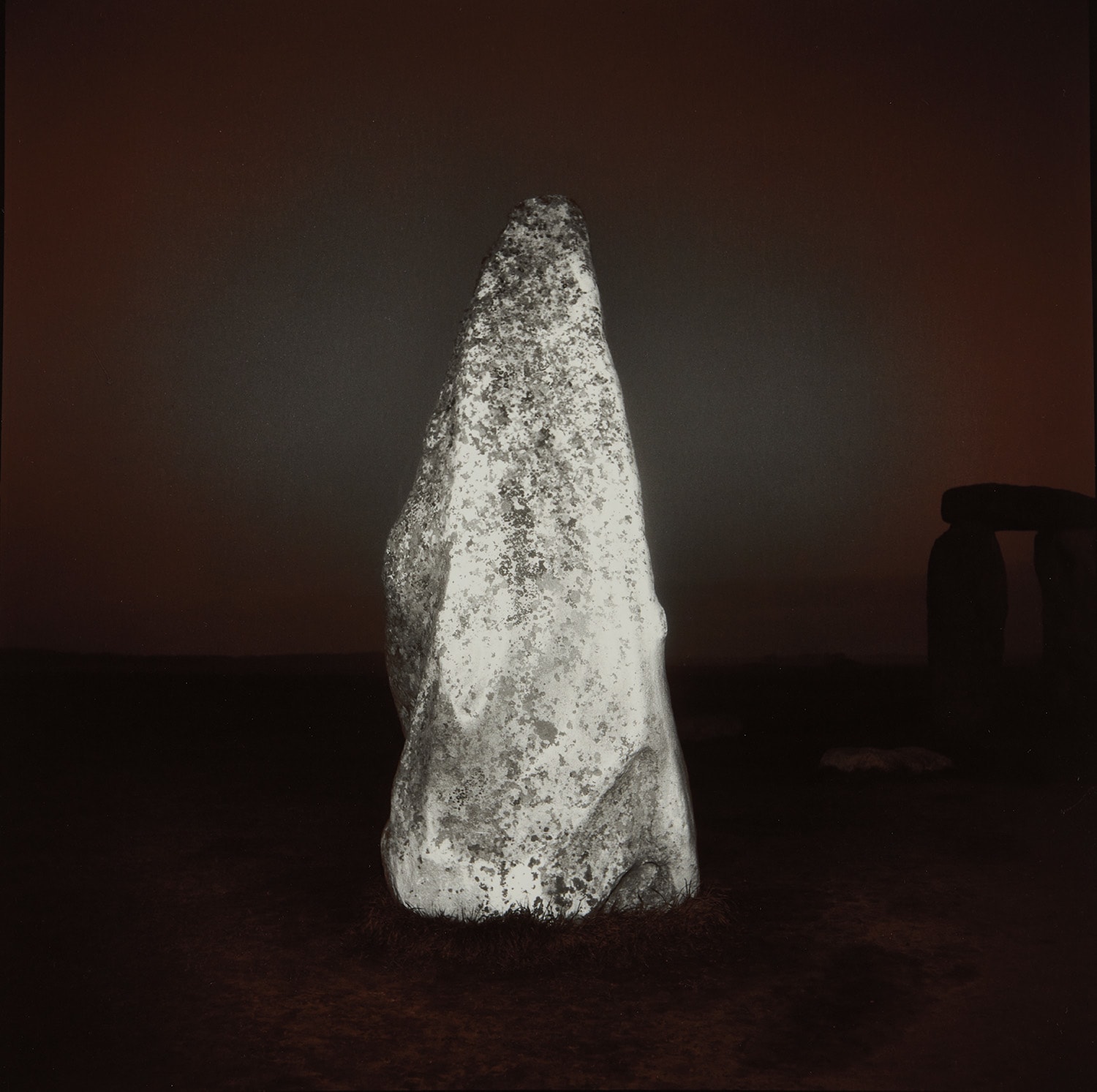
Stonehenge #1
M., 3 27 95" demonstrate his precision as an observer; the timestamp in the title insists on the specific, the verifiable, the witnessed. His photographs of the Salton Sea, including "Stranded Rowboat, Salton Sea" from 2005, introduced a new body of work examining an inland body of water that has become a byword for ecological collapse and forgotten dreams of mid century American leisure. The Salton Sea images are among his most elegiac, combining a documentarian's fidelity to fact with a painterly sensitivity to color and atmosphere.
A stranded rowboat sitting on cracked earth and receding waterline is not a complicated symbol, but Misrach's genius lies in never needing to simplify what he is showing. The image holds contradiction without resolving it. For collectors, Misrach represents something relatively rare in the contemporary photography market: a blue chip artist whose work is genuinely plural in its appeal. His prints are held by the Museum of Modern Art, the Whitney Museum of American Art, the National Gallery of Art in Washington, and major private collections across the United States and Europe.
Richard Misrach
Dante's View, 5:40 A.M., 3-27-95
The chromogenic and pigment prints that appear at auction and through galleries such as Fraenkel Gallery in San Francisco and Pace Gallery in New York have shown consistent strength, with strong demand from institutional buyers competing alongside private collectors. Works from the Desert Cantos series, particularly those made in the 1980s and 1990s during the project's most intense phase, carry the greatest historical weight and tend to attract the most serious attention at auction. Collectors are advised to look closely at condition, as large chromogenic prints require careful stewardship, and to prioritize works that bear strong conceptual connection to the series structure rather than treating individual prints as isolated objects. Misrach belongs to a generation of American photographers that fundamentally transformed what landscape photography could mean and do.
His closest peers in sensibility include Robert Adams, whose unflinching views of the American West share Misrach's commitment to photographic beauty as a form of moral witness, and Lewis Baltz, whose cool precision in documenting industrial and suburban incursion into the natural world shares the same critical underpinning. The influence of Edward Weston and Ansel Adams is present in Misrach's technical mastery but is consciously complicated by his awareness of what large format landscape photography had historically chosen not to show. Where Adams gave us Yosemite as paradise, Misrach gives us the desert as a site of consequence. What makes Misrach matter so urgently right now is not merely his historical achievement but his continuing relevance.
The questions his work raises about environmental harm, military encroachment on wilderness, ecological crisis, and the complicated aesthetics of catastrophe have only grown more pressing since he first began Desert Cantos more than four decades ago. He has also moved in recent years into new territories, including aerial photography of the Gulf Coast and large scale work examining the border regions of the American Southwest, extending his practice into new geographies while deepening the same fundamental questions. To collect Richard Misrach is to invest in one of the most searching and beautiful investigations of the American landscape ever committed to photographic paper, a body of work that will be studied and admired for generations to come.
Explore books about Richard Misrach