Richard Long
Richard Long Walks the World Into Art
Artist Spotlight · The Collection Editorial
“My art is about working in the wide world, wherever, on the surface of the earth.”
Richard Long, artist statement
There are artists who make work about nature, and then there is Richard Long, who makes work from nature itself, with his own body as the primary instrument. When Tate Britain mounted a major survey of his practice, it confirmed what collectors and curators had long understood: Long is one of the most original artists Britain has produced in the postwar era, a figure whose influence radiates quietly but persistently through decades of contemporary art. His work has entered the permanent collections of institutions from the Museum of Modern Art in New York to the Stedelijk in Amsterdam, and his presence in the auction market remains a reliable indicator of enduring critical and commercial confidence. To encounter a Richard Long work in person, whether a vast stone circle laid directly on a gallery floor or a delicate mud drawing on handmade paper, is to feel the weight of real time and real distance pressing against you.
Richard Long
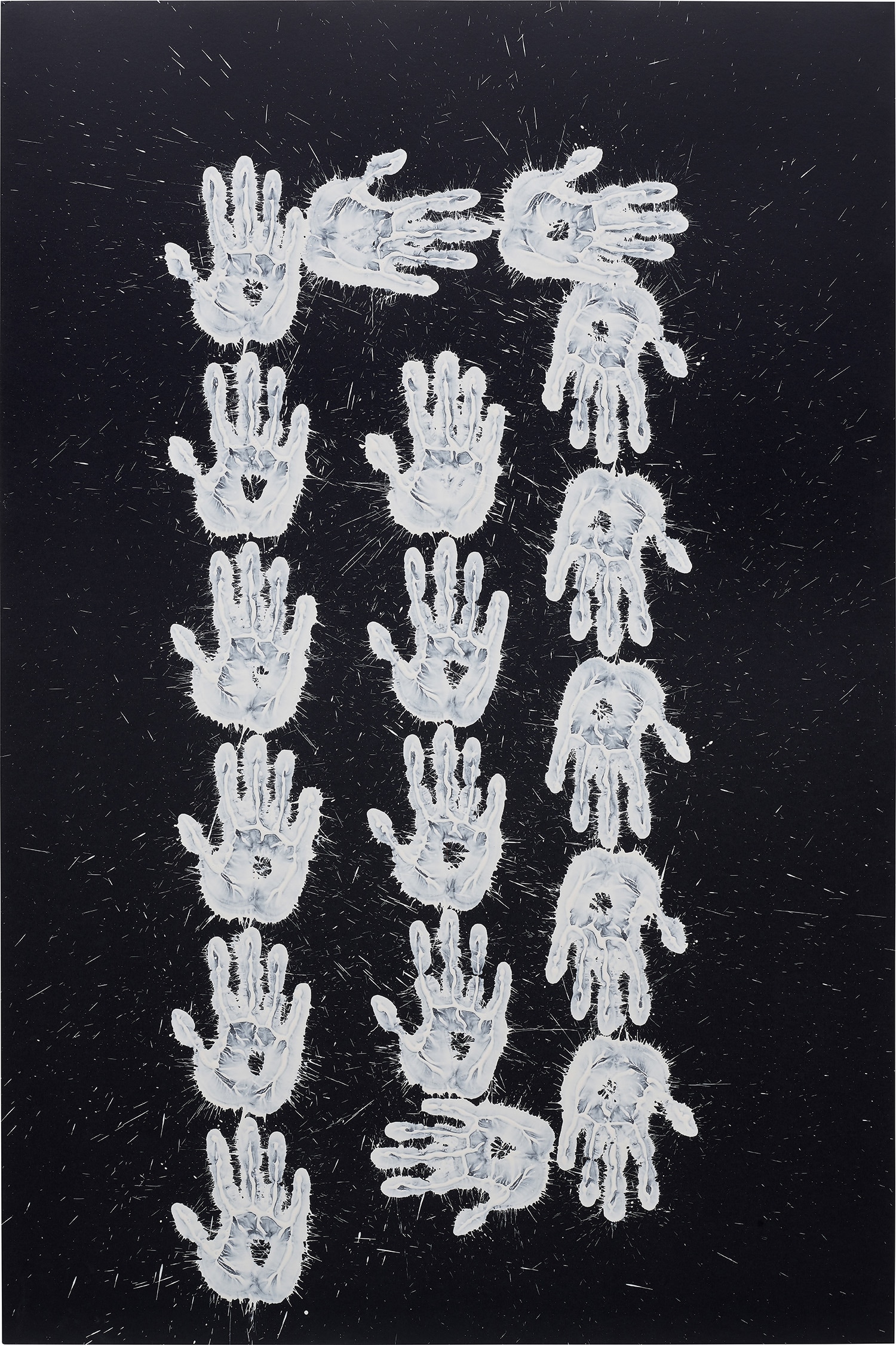
white clay on card, 2005
Long was born in Bristol in 1945, and the landscape of the West Country shaped him in ways that proved permanent. He studied at the West of England College of Art before enrolling at Saint Martin's School of Art in London, where he arrived in the mid 1960s alongside a generation of artists questioning what sculpture could be and where it could exist. Saint Martin's at that moment was a crucible of ideas, producing figures such as Gilbert and George and giving space to a new British conceptualism that was impatient with the static, studio bound object. Long absorbed that energy but took it somewhere entirely his own, stepping outside the institution and into the field, quite literally.
The work that announced him to the world was A Line Made by Walking, created in 1967 while he was still a student. Long walked back and forth across a Somerset field until the flattened grass formed a visible line, and then he photographed it. The gesture was so simple it seemed almost naïve, and yet it contained a radical proposition: that the act of moving through landscape could be the artwork itself, that documentation and residue were sufficient, and that sculpture need not be permanent to be profound. That single image, modest and clarifying, helped establish the foundation of what would become known as land art, though Long has always occupied a distinct position within that broad category, one defined by restraint, intimacy, and a deep respect for the places he moves through.
Richard Long
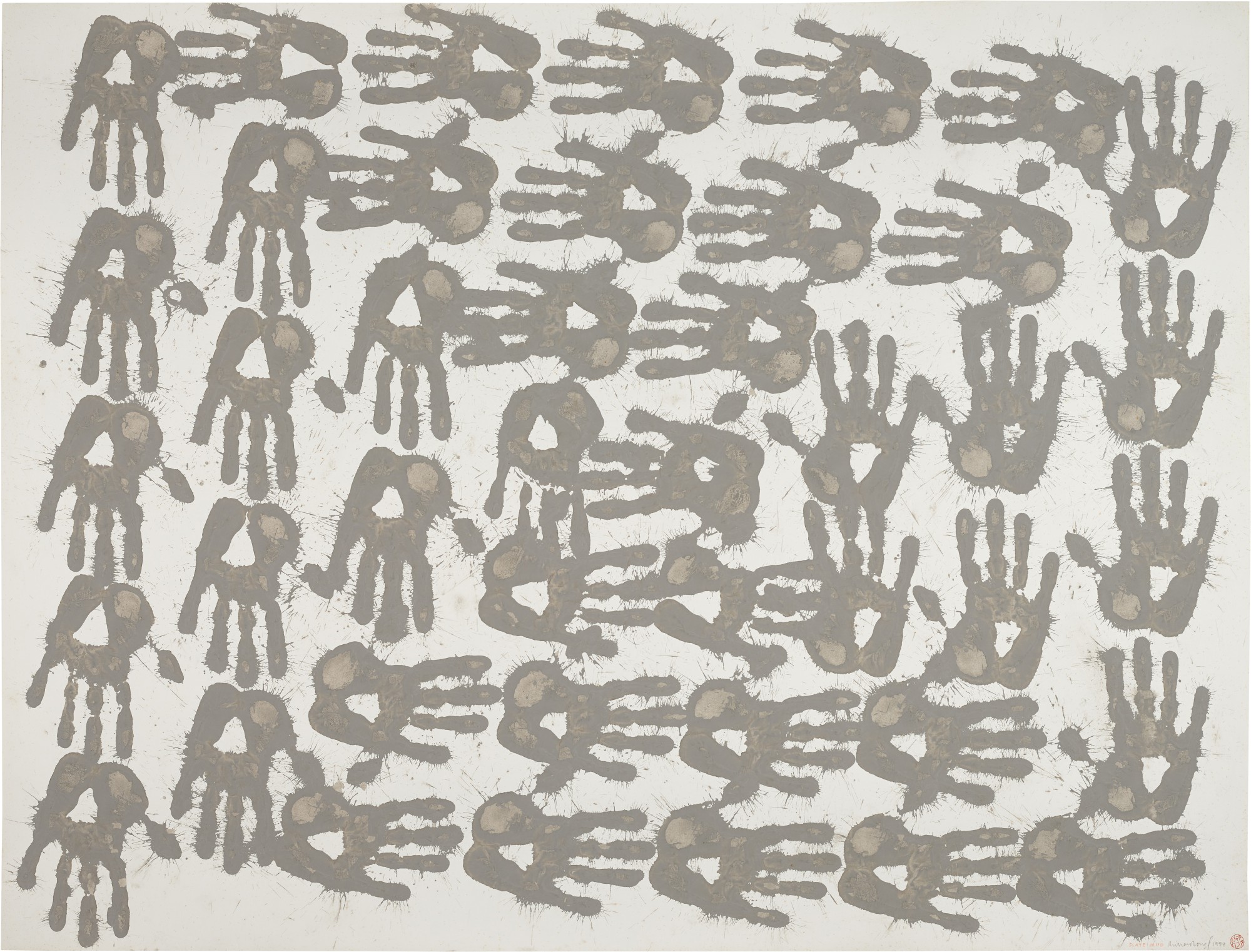
Slate Mud
Over the following decades Long developed two parallel and intertwined bodies of work. The first consists of walks undertaken across every continent, often in remote or challenging terrain, from the Himalayas to the Sahara to the coastlines of Japan. Works such as A Day's Walk on Honshu from 1976, represented on The Collection as an ink on paper map collage enriched with graphite and coloured pencil, show how Long transforms the record of a journey into something formally elegant and emotionally resonant. The map becomes a drawing, the route becomes a line, and geography becomes autobiography.
“A walk is just one more layer, a mark, laid upon the thousands of other marks made by feet, hooves, and wheels.”
Richard Long
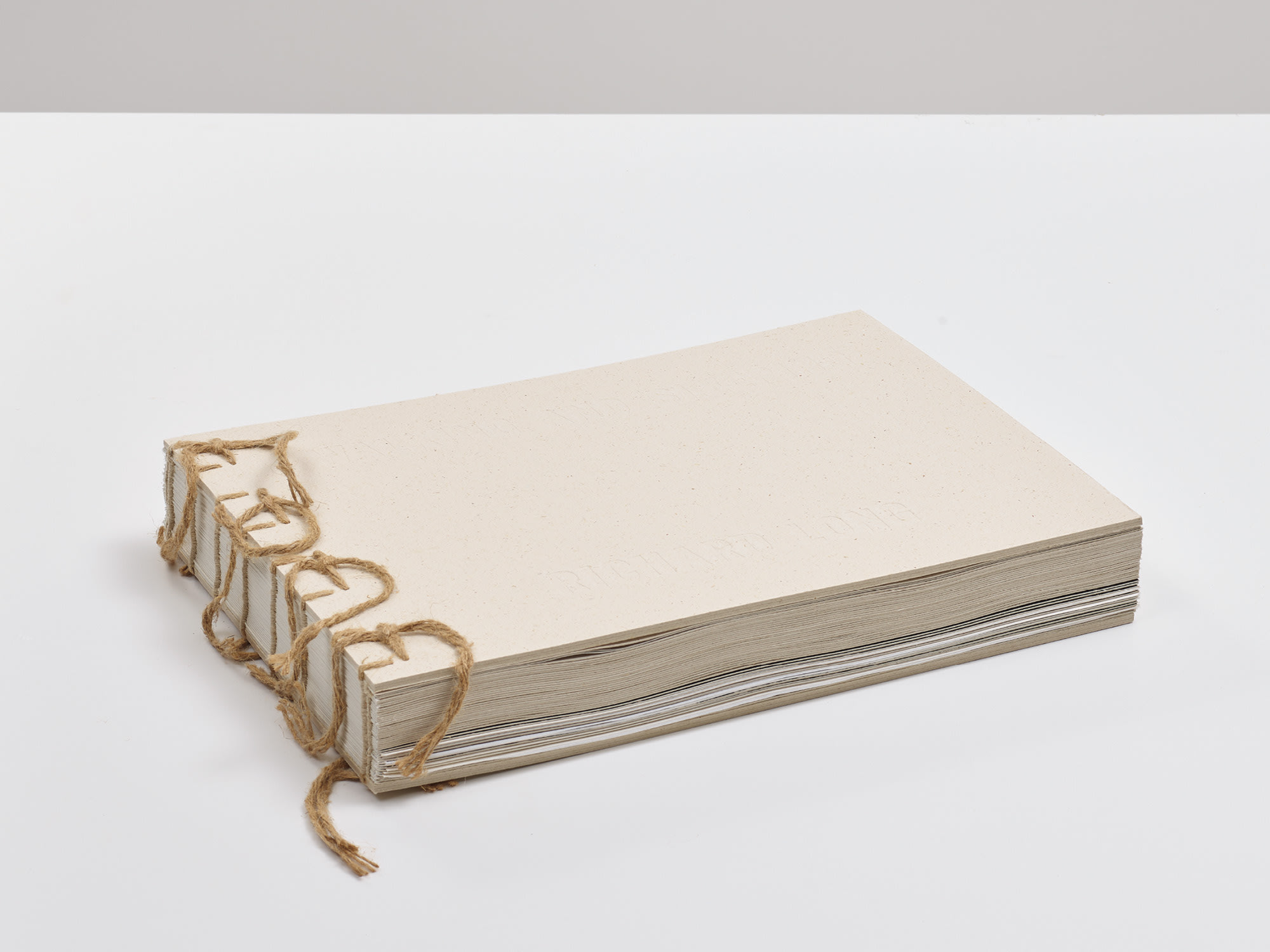
The second body of work comprises the physical pieces he makes in galleries and in the landscape itself: stone circles and lines assembled from local materials, mud works applied directly to walls with his hands, and sculptural arrangements of slate, flint, and marble that seem to breathe with the memory of the places they came from. The works available through The Collection offer an unusually rich cross section of Long's range and materials. Walking and Sleeping, a complete artist's book comprising offset lithographs and pages of accompanying text paired with an original mud drawing on handmade paper, mounted to a linen concertina and wrapped in natural canvas inside a wooden box, exemplifies the care and intentionality Long brings to every format he works in. The book as object, as vessel of a journey, suits him perfectly.
Richard Long
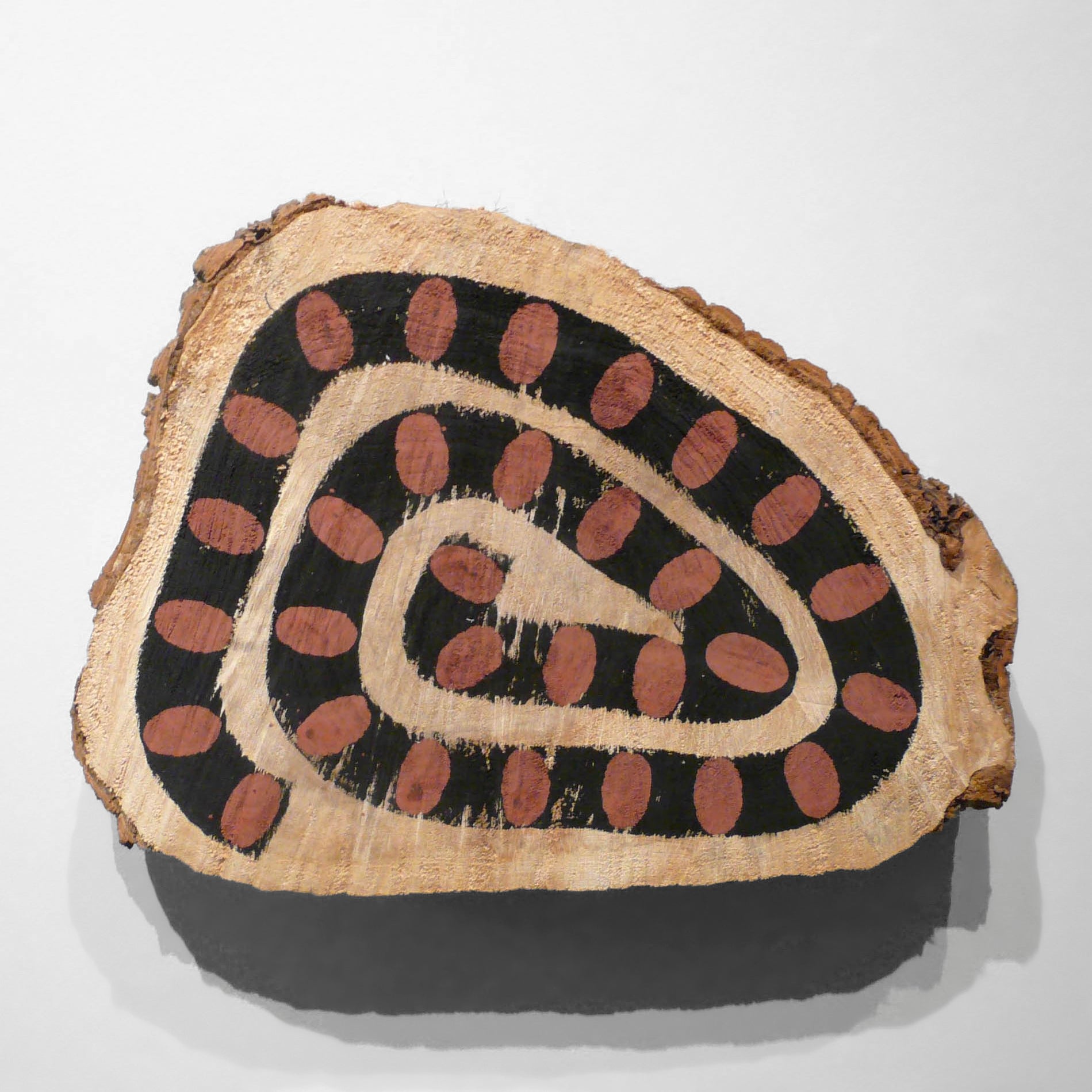
Untitled, 2006
Works such as Slate Mud, combining slate mud and graphite on paper board, and Beer Beach Flint Pebble Line from 2004 demonstrate the material directness that makes Long's practice so compelling to live with. There is nothing decorative or incidental about these surfaces. Every mark carries the specific gravity of a real place and a real encounter with the physical world. For collectors, Long represents a particularly satisfying proposition.
His work sits at the intersection of conceptual rigour and sensory pleasure, demanding intellectual engagement while rewarding it with genuine beauty. The market for his work has remained stable and respected across multiple decades, with major institutions continuing to acquire and his auction results reflecting consistent demand from serious collectors. Works on paper and works in book form such as those found on The Collection offer an accessible entry point into a practice whose monumental gallery installations can feel, for obvious reasons, harder to accommodate in private life. Yet the intimacy of a Long drawing or photograph is in many ways the truest expression of his sensibility.
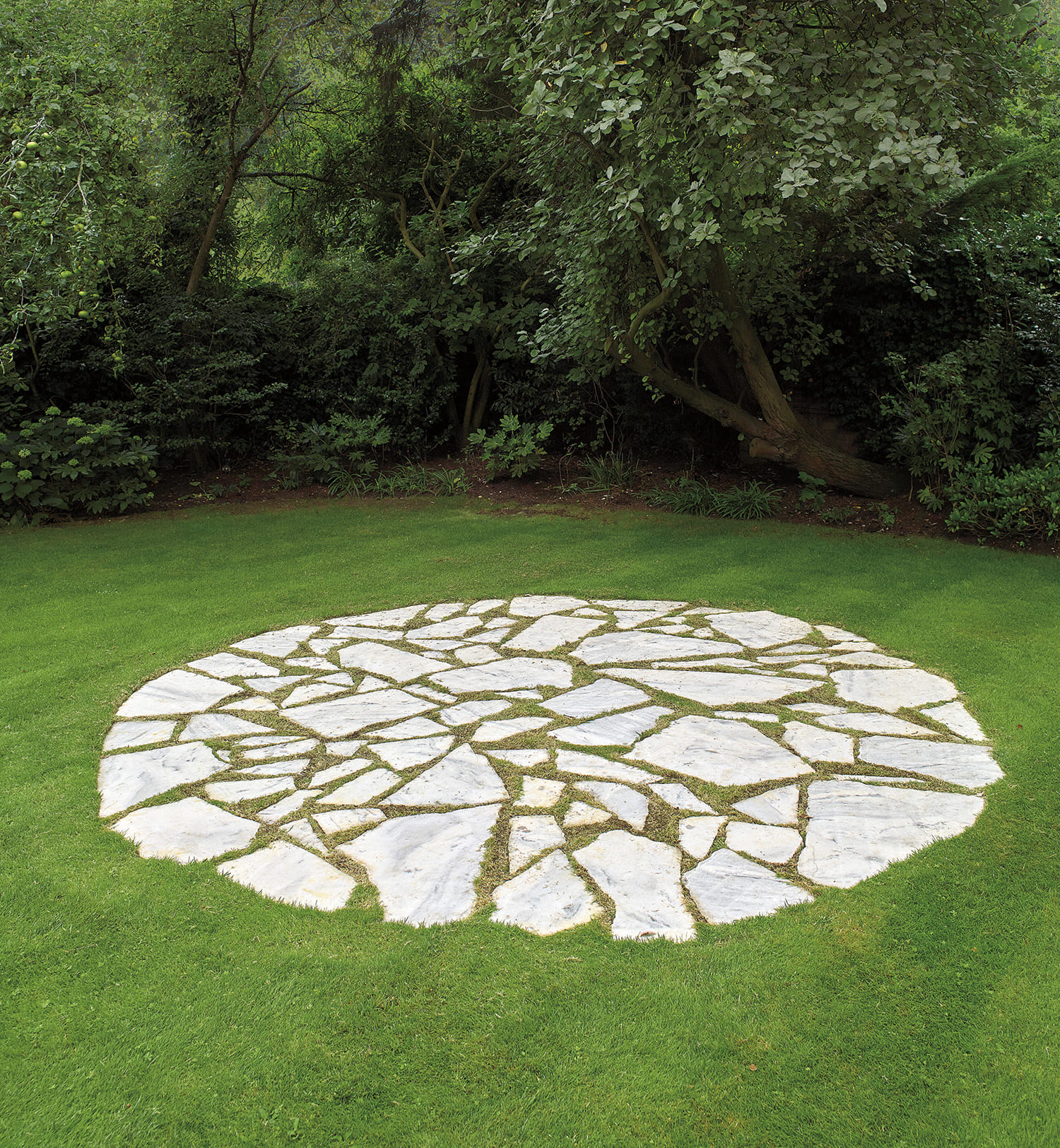
Richard Long
diameter 426 cm (167 3/4 in.)
Light Snow Sleeping Place from 1983, a gelatin silver print mounted on card, carries the stillness and solitude of a night in the open landscape with remarkable economy. Long's position in art history places him in productive conversation with several generations of artists. His concerns overlap with those of his American contemporaries Robert Smithson and Walter De Maria, but where Smithson built the monumental Spiral Jetty in Utah and De Maria filled a New Mexico field with steel poles, Long works with the portable, the temporary, and the found. He leaves as little trace as possible in the actual landscape, a choice that resonates with increasing force in an era of environmental awareness.
Andy Goldsworthy, who emerged a generation later and also works with natural materials and ephemeral outdoor gestures, has spoken of Long's formative influence. Within British art, Long stands alongside Gilbert and George and Tony Cragg as a sculptor who fundamentally expanded the possibilities of the form. What makes Richard Long matter today, more than half a century after that first walk in Somerset, is the quality of attention his work asks of us. In an accelerated and screen mediated world, his practice insists on slowness, on the irreducible reality of the body in space, and on the ancient human impulse to mark passage through the world.
His works do not shout. They wait, with the patience of stone and water, for a viewer willing to slow down long enough to receive them. For collectors fortunate enough to live with his work, that patience is repaid every day.
Explore books about Richard Long
Richard Long
Andrea Tarsia
Richard Long: Walking in Circles
Richard Long, Paul Davies

Richard Long
Germano Celant
Richard Long
Alison Wilding, Hamish Fulton
Richard Long: Selected Works
Richard Long
Richard Long
Peter Reed

Richard Long: Heaven and Earth
Richard Long
Richard Long: A Line Made by Walking
James Cuno