Richard Learoyd
Richard Learoyd: Light Made Perfectly Still
Artist Spotlight · The Collection Editorial
In the rarified world of contemporary photography, few artists command the kind of hushed reverence that greets a Richard Learoyd exhibition. When Fraenkel Gallery in San Francisco presented a substantial body of his work, visitors found themselves standing before images that seemed to breathe, portraits of such physical presence and tonal depth that the usual boundaries between photograph and lived encounter began to dissolve. That response is not accidental. It is the product of one of the most singular and painstaking practices in the medium today, a method that fuses Renaissance ambition with radical technical invention and produces images that are, by their very nature, impossible to replicate.
Richard Learoyd
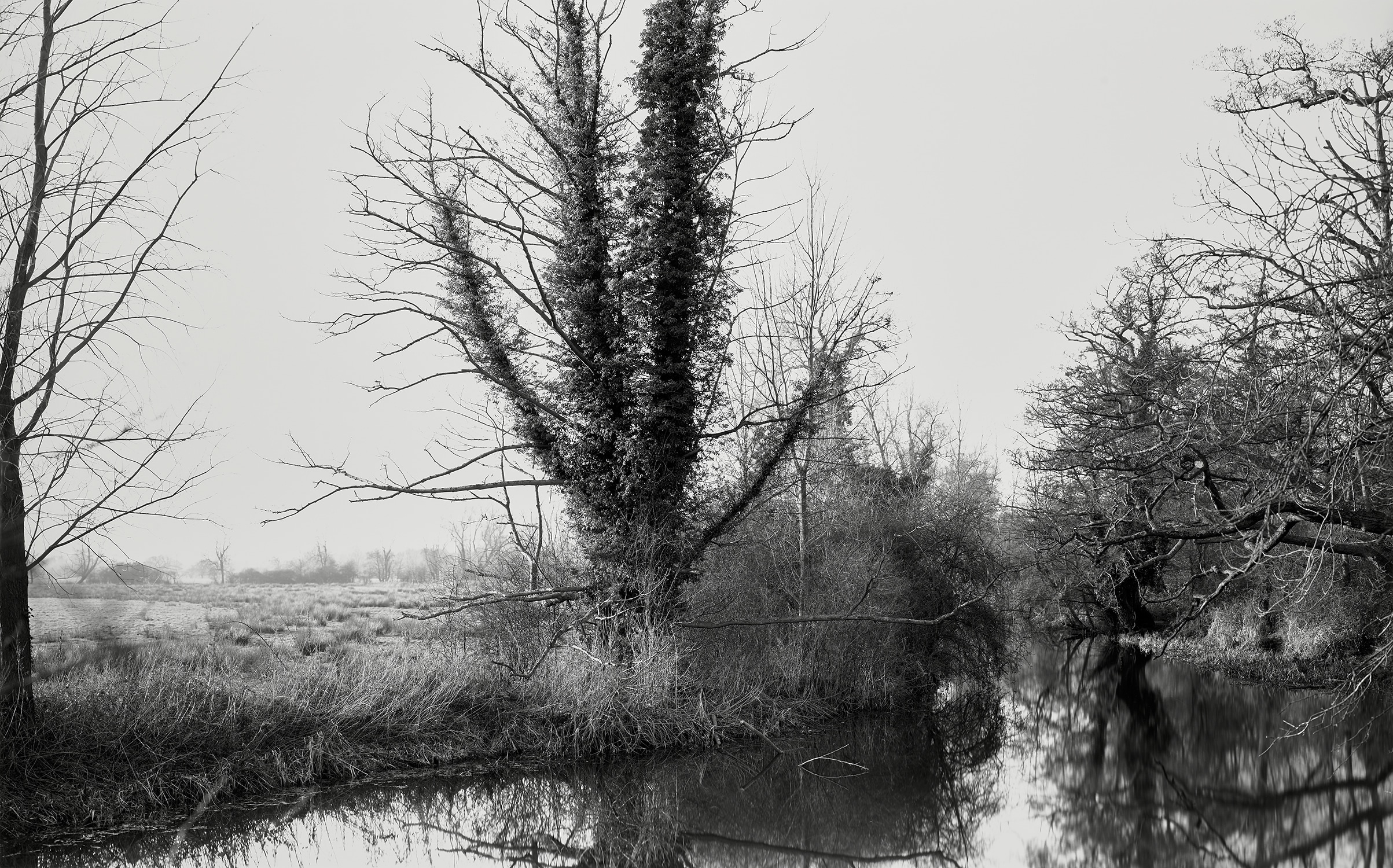
The River Stour from Deadman's Bridge near Flatford (Winter)
Learoyd was born in 1966 and grew up in Britain, developing an early sensitivity to light and form that would eventually find its fullest expression not through conventional photographic training but through a restless interrogation of what the medium could become. He studied at the Glasgow School of Art and later at the Royal College of Art in London, institutions that encouraged experimentation and placed rigorous craft at the center of artistic inquiry. Those years of formation gave him both a conceptual framework and a craftsman's patience, qualities that would prove essential when he began designing the extraordinary apparatus that defines his mature practice. At the heart of Learoyd's work is a room sized camera obscura of his own invention, a device that transforms an entire chamber into a picture making machine.
The subject sits or stands on one side of a wall, light passes through a large lens, and on the other side a piece of photosensitive paper receives the image directly. There is no negative, no digital sensor, no intermediary stage. The result is a unique, unrepeatable print, as singular as a daguerreotype and as intimate as a painted miniature scaled up to breathtaking dimensions. This process is not merely a technical curiosity.
Richard Learoyd
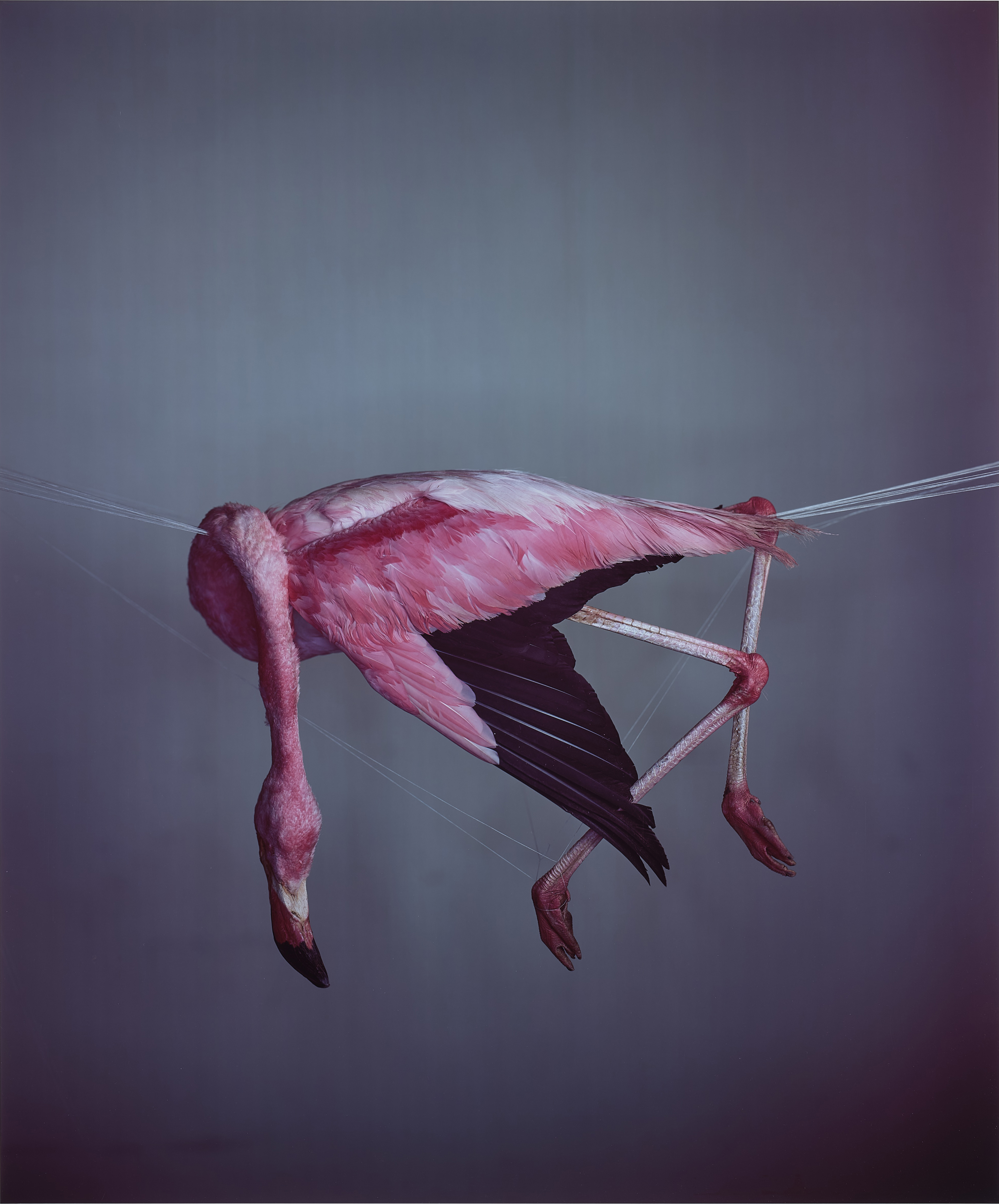
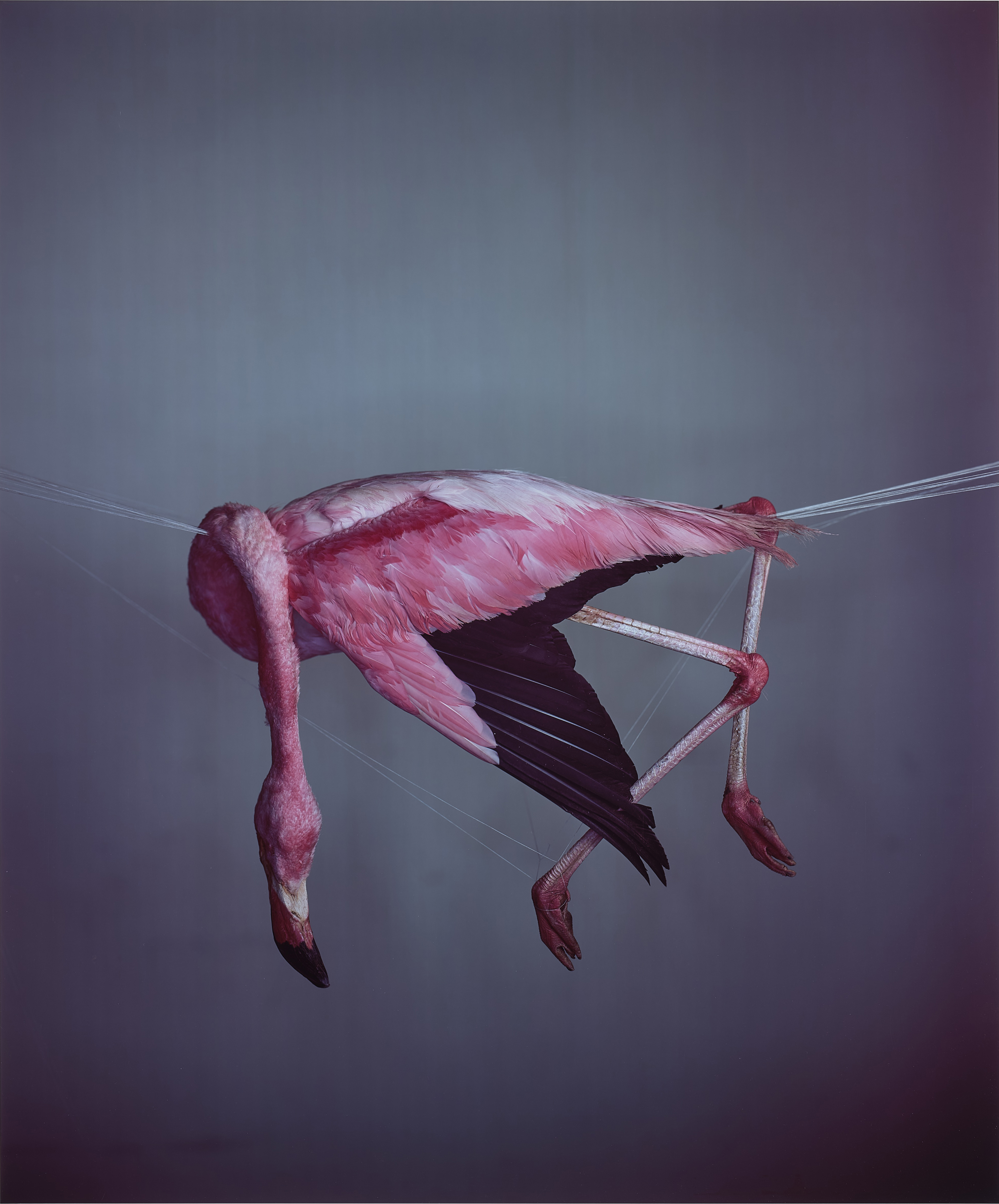
'Flamingo 3'
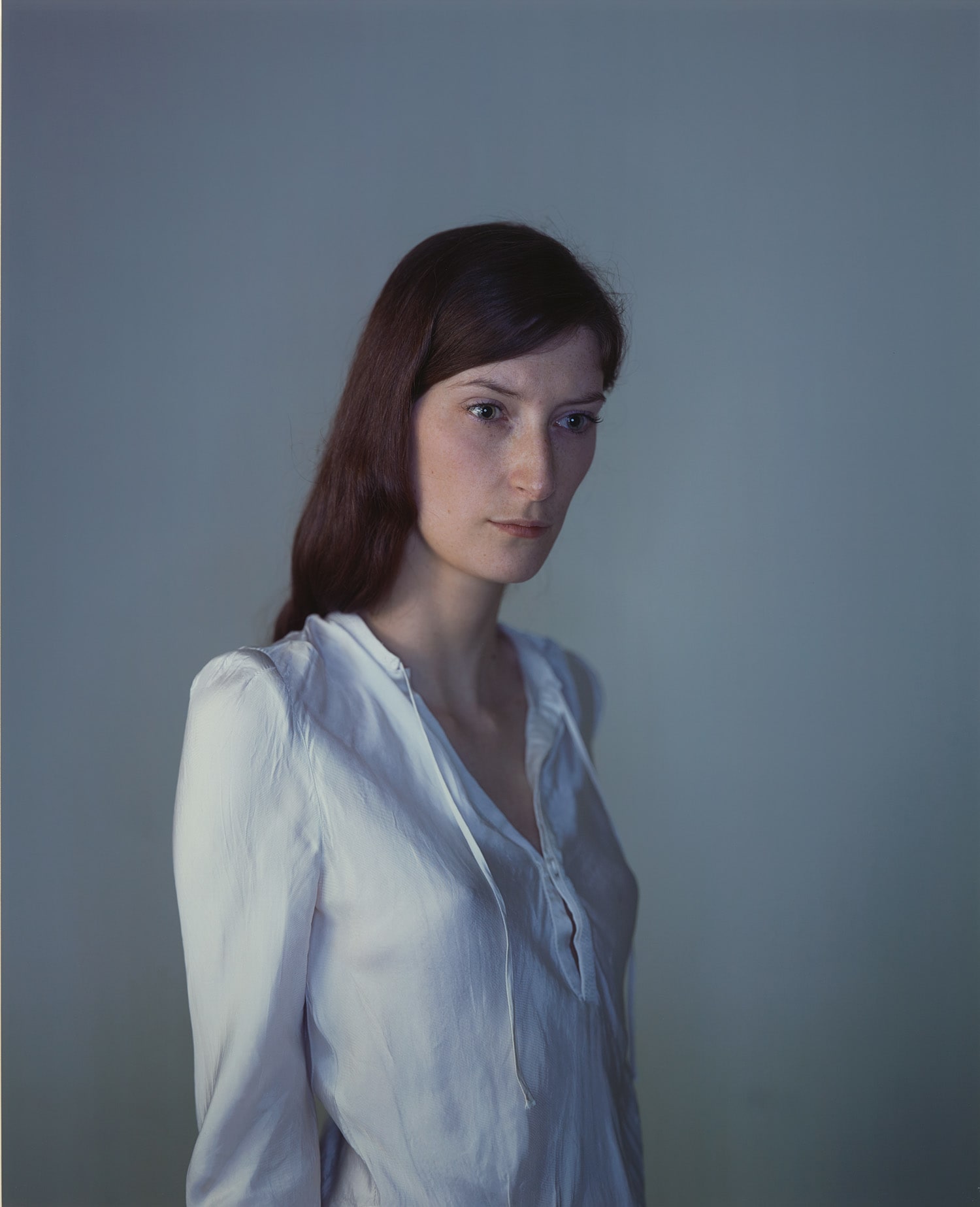
It is a philosophical commitment, a decision to make every image matter in a way that reproducible photography, by definition, cannot. The portraits that emerge from this process carry a quality that is almost impossible to describe without resorting to the language of painting. Works such as Jasmijn and Agnes, both produced as unique dye destruction prints, present their subjects with a stillness and psychological weight that recall the great Northern European portraitists of the sixteenth and seventeenth centuries. The skin tones are luminous, the shadows possess true depth rather than the flat gradients of digitally processed work, and the eyes of each subject seem to hold an entire interior life just beneath the surface.
Learoyd often works with the same sitters across extended periods, and pieces such as Agnes, July 2013 (5) and Agnes A reveal how that sustained relationship deepens the work, introducing a serial tenderness reminiscent of how Thomas Eakins returned to favored subjects or how Lucian Freud spent years in the company of a single model. Beyond portraiture, Learoyd has extended his vision to figure studies and still life arrangements of startling beauty. Tatiana on Mirror and Phie on Plinth explore the body as form and surface, the unique print format lending each work an irreplaceable physical presence. Long Black demonstrates his command of tonal contrast and compositional economy.
Richard Learoyd
Jasmijn
And then there is The River Stour from Deadman's Bridge near Flatford, a gelatin silver print that invites comparison with the great tradition of British landscape, including John Constable, whose own attachment to that stretch of the Suffolk countryside produced some of the most beloved images in Western art. That Learoyd chooses to work in that same landscape, in winter no less, speaks to a willingness to engage with art history not through pastiche but through genuine conversation. After Ingres similarly signals his interest in the painted tradition, placing his photographic process in dialogue with classical figurative ideals. For collectors, a Learoyd is a genuinely rare proposition.
Because each work is unique, there is no edition to dilute value or complicate provenance. The print you acquire is the only one that exists in the world, a fact that fundamentally changes the relationship between collector and object. His work entered major institutional collections including the Museum of Modern Art in New York, the J. Paul Getty Museum in Los Angeles, and the Victoria and Albert Museum in London, and that institutional endorsement has been matched by sustained interest from serious private collectors who prize works of exceptional craft and conceptual integrity.
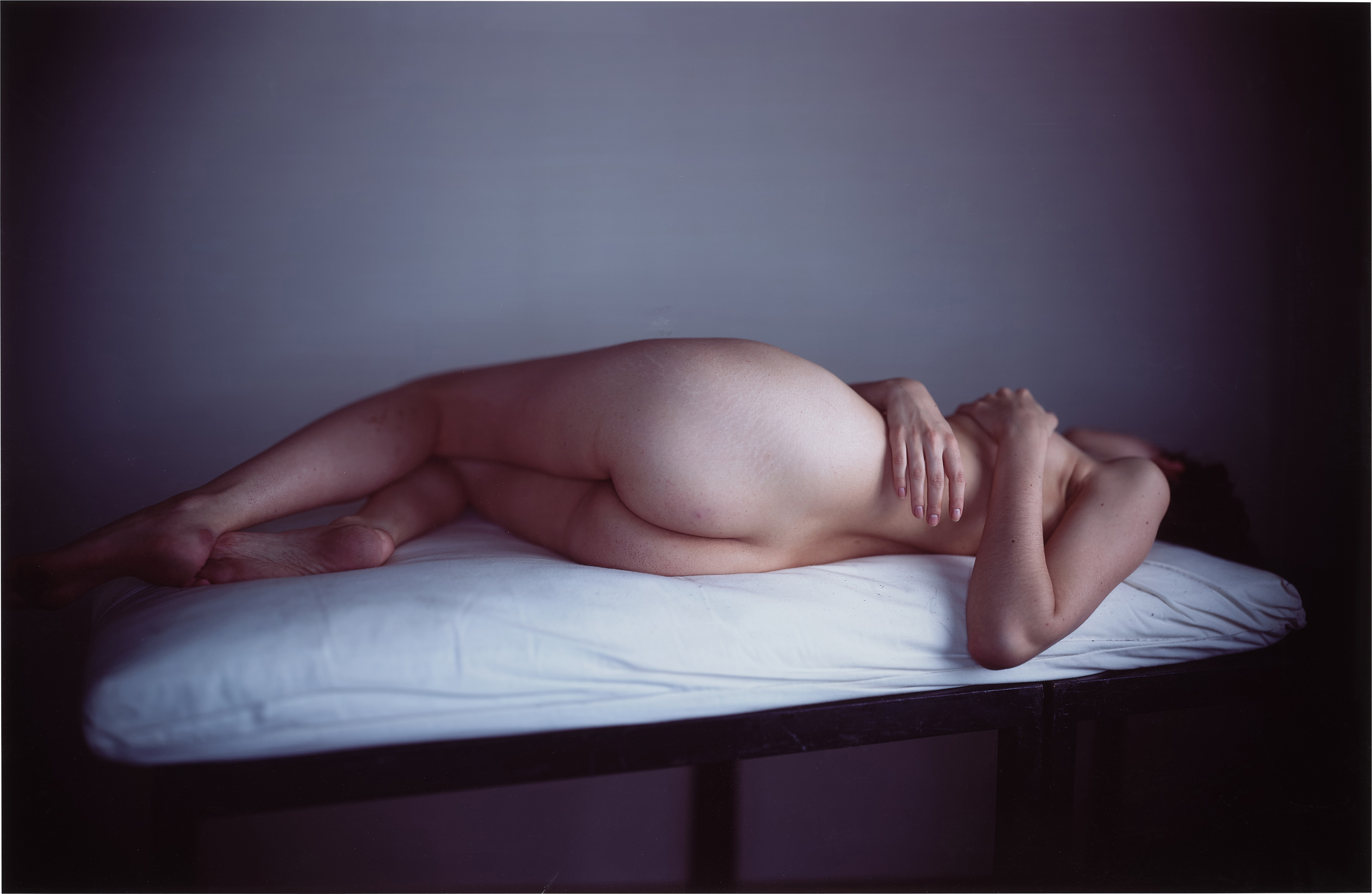
Richard Learoyd
After Ingres
Prices for his unique prints reflect both their rarity and their growing critical standing, and the market has shown consistent strength as awareness of his practice has spread beyond specialist photography circles into the broader contemporary art world. Placed within the sweep of photographic history, Learoyd occupies a position that bridges several traditions at once. His commitment to the unique object connects him to the pioneering spirit of William Henry Fox Talbot and the calotypists, while his engagement with painted portraiture and the language of old master light aligns him with artists such as Rineke Dijkstra, whose own large scale portraits pursue psychological intimacy through sustained attention to the subject, and with the late work of Irving Penn, who in his final decades pursued ever more refined and irreducible images of the human figure. There is also a kinship with Sally Mann in her insistence that the photographic process itself, its materiality and its accidents, be allowed to speak.
These are artists who believe that how an image is made is inseparable from what it means. What makes Learoyd's contribution feel particularly vital at this moment is precisely its resistance to the forces that define so much image culture today. In an era of infinite reproducibility, algorithmic generation, and frictionless distribution, he has chosen the most demanding, most time consuming, most irreversible path available. Each sitting is a collaboration between artist and subject that cannot be undone or revisited.
Each print carries the full weight of that singular encounter. To own a Richard Learoyd is to hold something that the digital age has made almost mythological: a photograph that is also, in the truest sense, an original.