Richard Artschwager
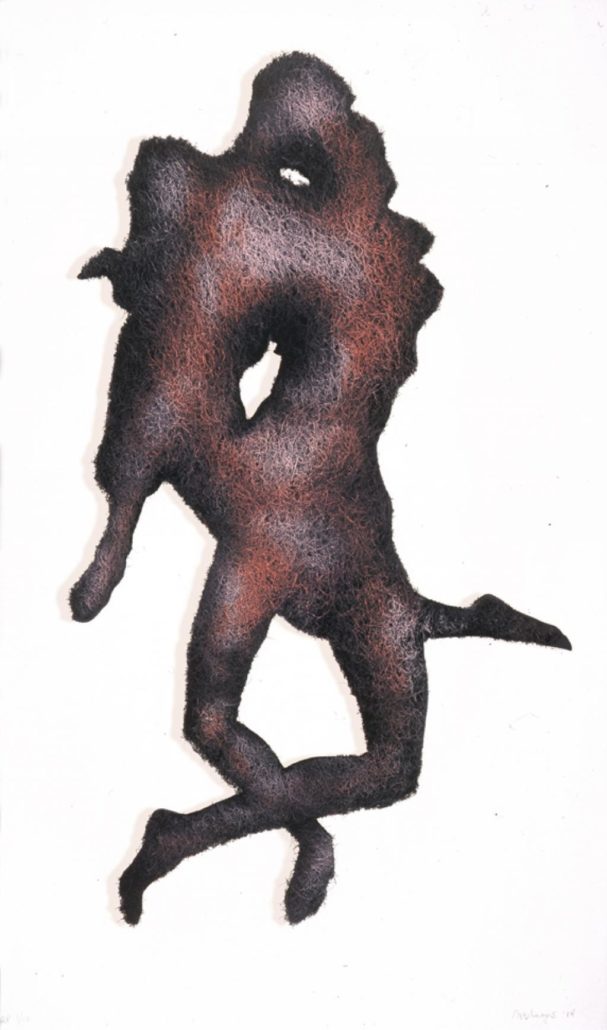
Richard Artschwager, Master of Beautiful Uncertainty
Artist Spotlight · The Collection Editorial
“I wanted to make something that was neither painting nor sculpture but had the attributes of both.”
Richard Artschwager, interview with Barbara Rose, 1965
There is a moment, standing before a Richard Artschwager work, when the mind does something wonderful and strange. The eye reads a table, a chair, a door. The hand, reaching out, finds Formica and wood, bristle and celotex. The brain, caught between recognition and resistance, simply pauses.
Richard Artschwager
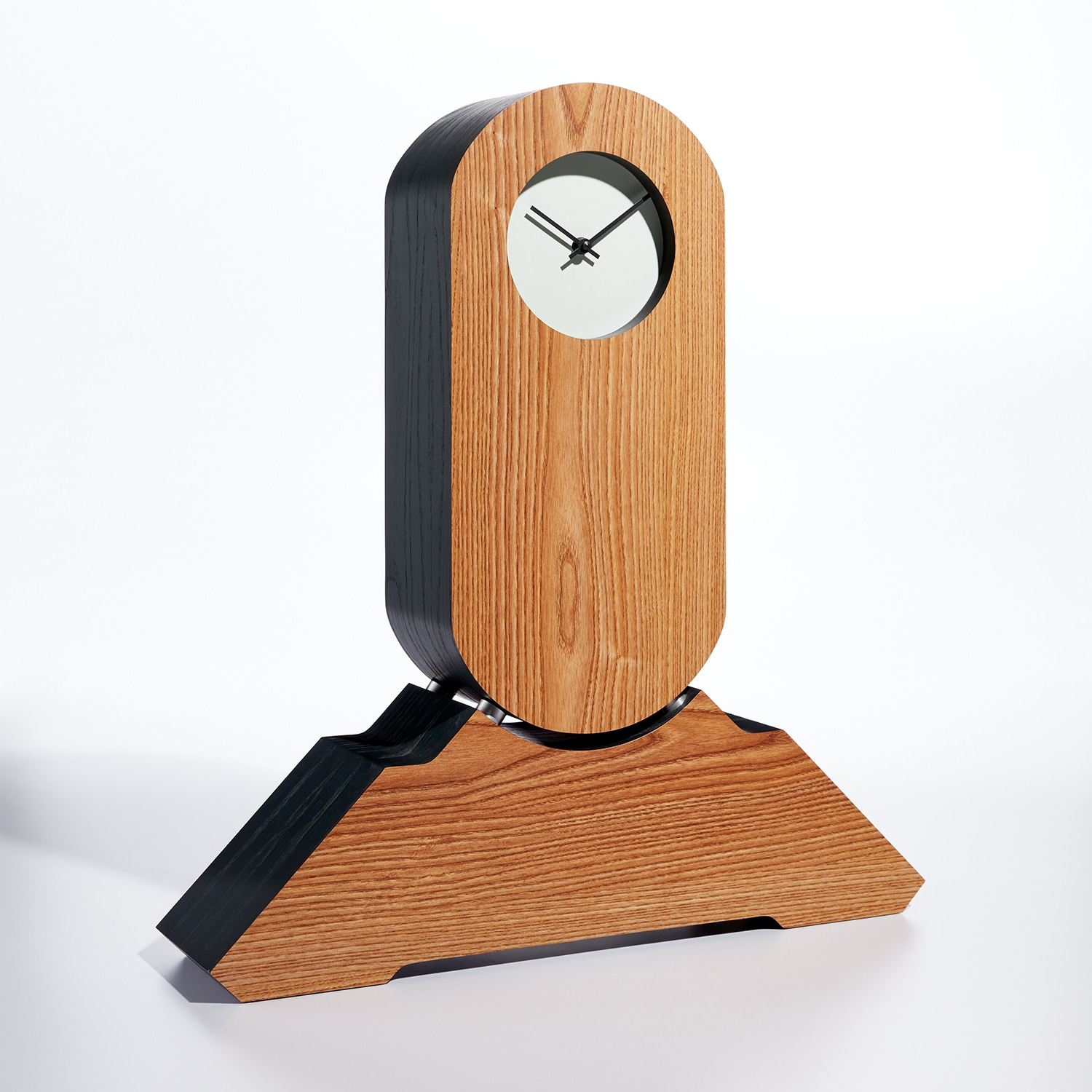
Time Piece (A. 18)
That pause, that hovering instant of productive confusion, was the entire point. Artschwager spent six decades engineering that sensation with the precision of a master craftsman and the mischief of a born provocateur, and the art world has spent just as long catching up to what he was doing. Richard Ernst Artschwager was born in Washington, D.C.
in 1923, and his formation was anything but conventional. His father was a botanist, and Artschwager grew up with a scientist's disposition toward close observation, the habit of examining the world not for what it looked like but for what it actually was. He studied at Cornell University under the abstract painter Amedee Ozenfant, and after service in World War II he returned to New York where he trained with Ozenfant more seriously. But the defining turn came not in a studio or gallery but in a workshop.
Richard Artschwager
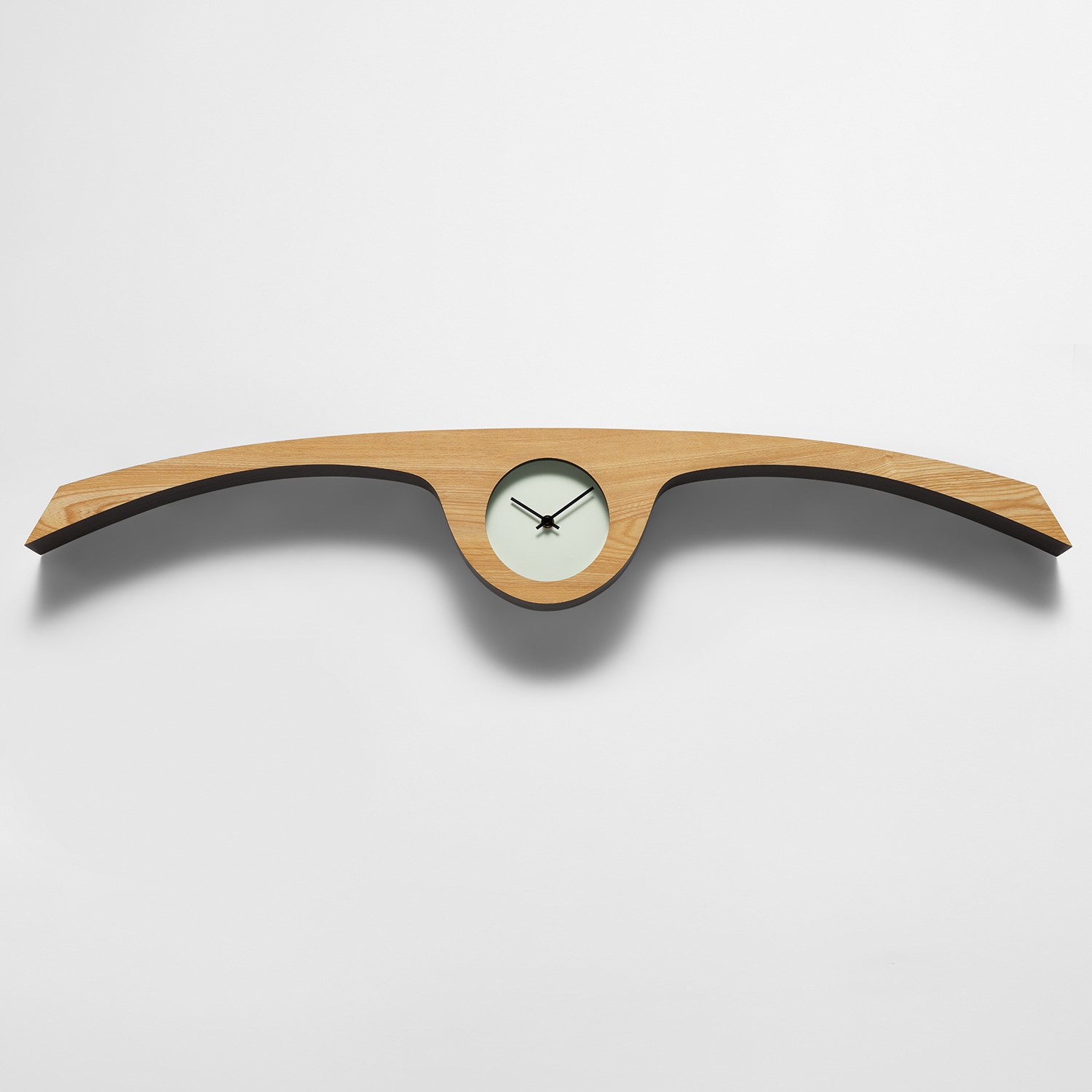
Klock (A. 15)
In the 1950s, unable to sustain himself through painting alone, Artschwager set up a furniture making business in New York City, crafting custom cabinets and tables for clients. He learned to work with wood, to understand joinery, surface, and the quiet authority of a well made object. That education would prove irreplaceable. The furniture business burned down in 1958, and Artschwager pivoted, or rather accelerated, into what became his singular artistic practice.
“Furniture is the sculpture of everyday life.”
Richard Artschwager
By the early 1960s he was constructing works that looked like furniture but refused to function as furniture, objects that occupied the same visual register as a desk or a dresser but that delivered, on closer inspection, a kind of philosophical vertigo. He was working with Formica, the synthetic laminate beloved of midcentury American kitchens and diners, printing photographic images of domestic interiors and applying them to blocky wooden forms. These works arrived at a moment when Pop Art was in full bloom and Minimalism was asserting its cool authority, and Artschwager occupied an uneasy, thrilling position between both camps without fully belonging to either. Leo Castelli began showing his work in 1965, placing him alongside some of the most significant artists of his generation, and the art world began to pay serious attention.
Richard Artschwager
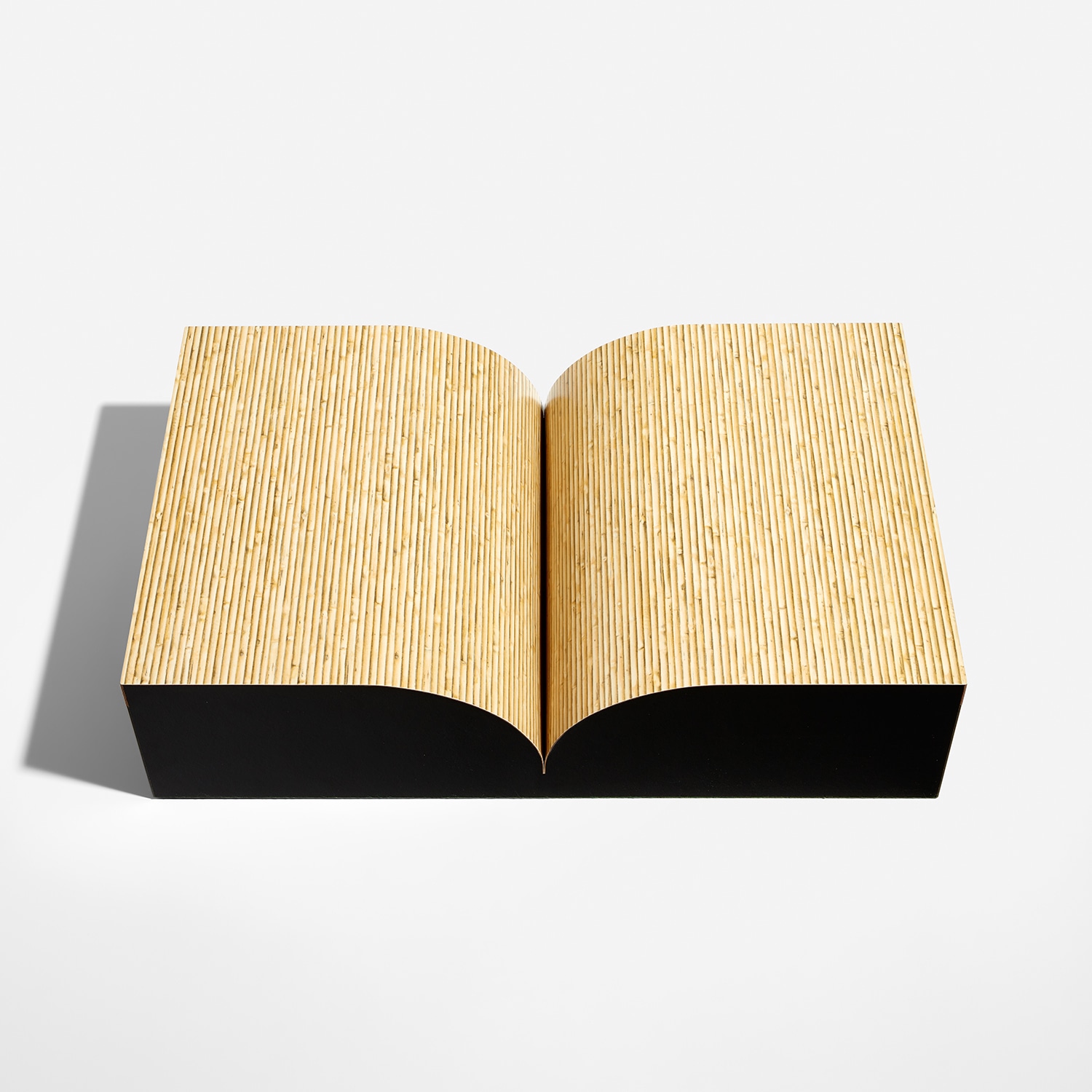
Book (A. 10)
What made Artschwager so distinctive was his refusal to stay in any one lane. His practice encompassed sculpture, painting, works on paper, and a mysterious ongoing project he called the blp, a small teardrop or exclamation shaped form that he began installing in public spaces in New York from around 1968 onward, tucking them into street corners and building facades like visual footnotes to everyday life. The blp had no fixed meaning and no commodity value. It was pure notation, a reminder that looking was itself an act worth performing.
His paintings on Celotex, the rough industrial wallboard he adopted as a canvas in the 1970s, added further texture to this inquiry. Works like Pull, from 1990, in Formica and acrylic mounted on panel, carry a strange domestic warmth even as they refuse easy categorization. They feel simultaneously like paintings and like something you might find in a waiting room, and that ambiguity is precisely their charge. Among his most celebrated works are the furniture multiples he produced in collaboration with Brooke Alexander Editions in New York, a body of work that sits at the heart of his legacy and represents an extraordinary collecting opportunity.
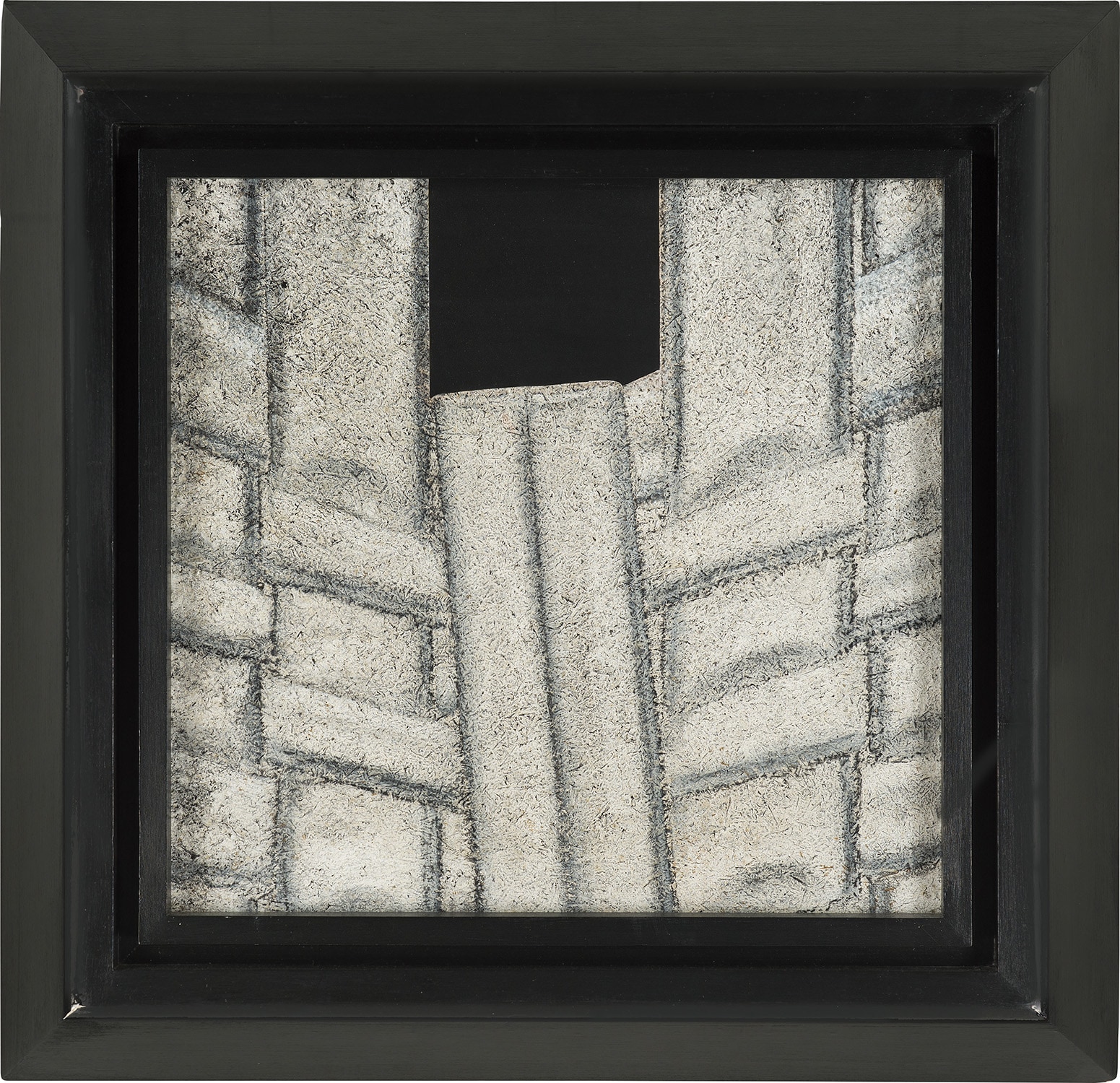
Richard Artschwager
Pull, 1990
Time Piece, Klock, Chair/Chair, Book, and Four Approximate Objects are among the most intellectually satisfying multiples produced by any American artist of his era. Chair/Chair, constructed from oak, cowhide, Formica, and painted steel, is both a piece of sculpture and a kind of philosophical joke: it is a chair about a chair, a representation of sitting that also, technically, allows you to sit. These editions were produced with meticulous attention to craft, and works like Book and Four Approximate Objects, co published with Daniel Weinberg Gallery in Santa Monica, demonstrate his ability to compress enormous conceptual ambition into modest, exquisitely made forms. His Exclamation Point from 1997, composed of nylon bristles on wood, brings the blp into three dimensions and gives it a bristling, almost animate presence.
On the secondary market, Artschwager's works have attracted sustained interest from collectors who appreciate the combination of conceptual rigor and tactile pleasure that his objects deliver. The multiples, produced in editions that are not always large, represent an accessible entry point into a practice whose primary works can command significantly more. Collectors are drawn to the furniture pieces and the Formica works in particular, objects that hold their own on a contemporary wall or plinth while carrying the full weight of art historical significance. Artschwager sits in natural dialogue with contemporaries like Donald Judd, whose minimalist structures shared a similar commitment to the language of furniture and fabrication, and with Jasper Johns, whose painted objects occupied a similarly ambiguous territory between image and thing.
He has also been meaningfully compared to Ed Ruscha, whose engagement with vernacular American visual culture overlaps with Artschwager's affection for the synthetic and the everyday. Later artists working with found objects, institutional materials, and the aesthetics of the functional owe him a significant and not always acknowledged debt. Artschwager's legacy is one of genuine originality sustained across an unusually long career. He continued working and exhibiting well into his eighties, and major retrospectives at institutions including the Whitney Museum of American Art confirmed his standing as one of the essential American artists of the postwar era.
He died in Albany, New York in 2013, leaving behind a body of work that remains as alive and as surprising as ever. To collect Artschwager is to bring into your space an object that will keep asking questions, that will keep resisting the easy answer, that will keep doing what the best art always does: making the familiar feel genuinely, delightfully strange.
Explore books about Richard Artschwager