René Burri
René Burri, The World In One Frame
Artist Spotlight · The Collection Editorial
“I always say that I don't want to be sentimental. But I am a humanist, and that changes everything.”
René Burri, interview with Magnum Photos
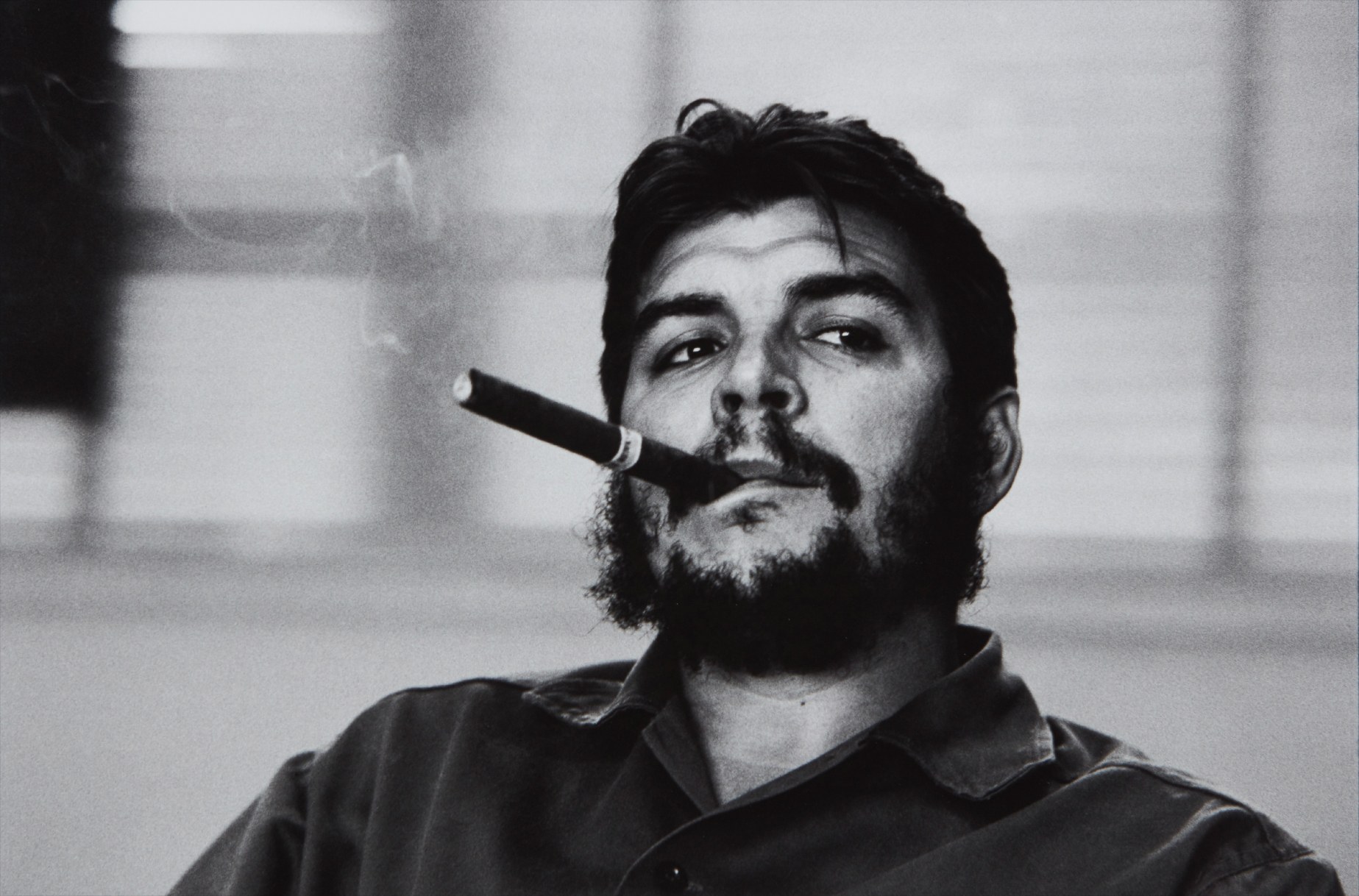
There is a photograph that almost everyone has seen, even those who cannot immediately name its maker. A young man, cigar held loosely between his fingers, gazes somewhere beyond the camera with an expression caught between charisma and contemplation. René Burri made that image of Ernesto Che Guevara in Havana in 1963, and in doing so produced one of the most reproduced photographs of the twentieth century. That a single frame could carry so much political weight, so much psychological texture, and still retain the formal elegance of great portraiture is a measure of what made Burri extraordinary among his generation of documentary photographers.
René Burri
Ernesto Che Guevara, Havana, Cuba
Burri was born in Zurich in 1933, and from an early age showed a sensitivity to the visual world that would shape everything that followed. He studied at the Kunstgewerbeschule in Zurich, the applied arts school that produced generations of Swiss designers and image makers with a rigorous, disciplined eye. It was there that he encountered the teachings of Hans Finsler, whose approach to photography emphasized clarity, structure, and the expressive potential of light. By the time Burri was completing his studies in the early 1950s, he had already begun using a Rolleiflex with a confidence that belied his age.
His early documentary work with deaf and mute children, completed in 1955, demonstrated a capacity for empathy and intimacy that would define his humanistic vision across six decades. His relationship with Magnum Photos began in 1956, the year he joined the legendary cooperative founded a decade earlier by Henri Cartier Bresson, Robert Capa, George Rodger, and David Seymour. Becoming a full member of Magnum in 1959, Burri entered an institution that understood photography as both journalism and art, as both witness and authorship. Within that context, he flourished.
René Burri
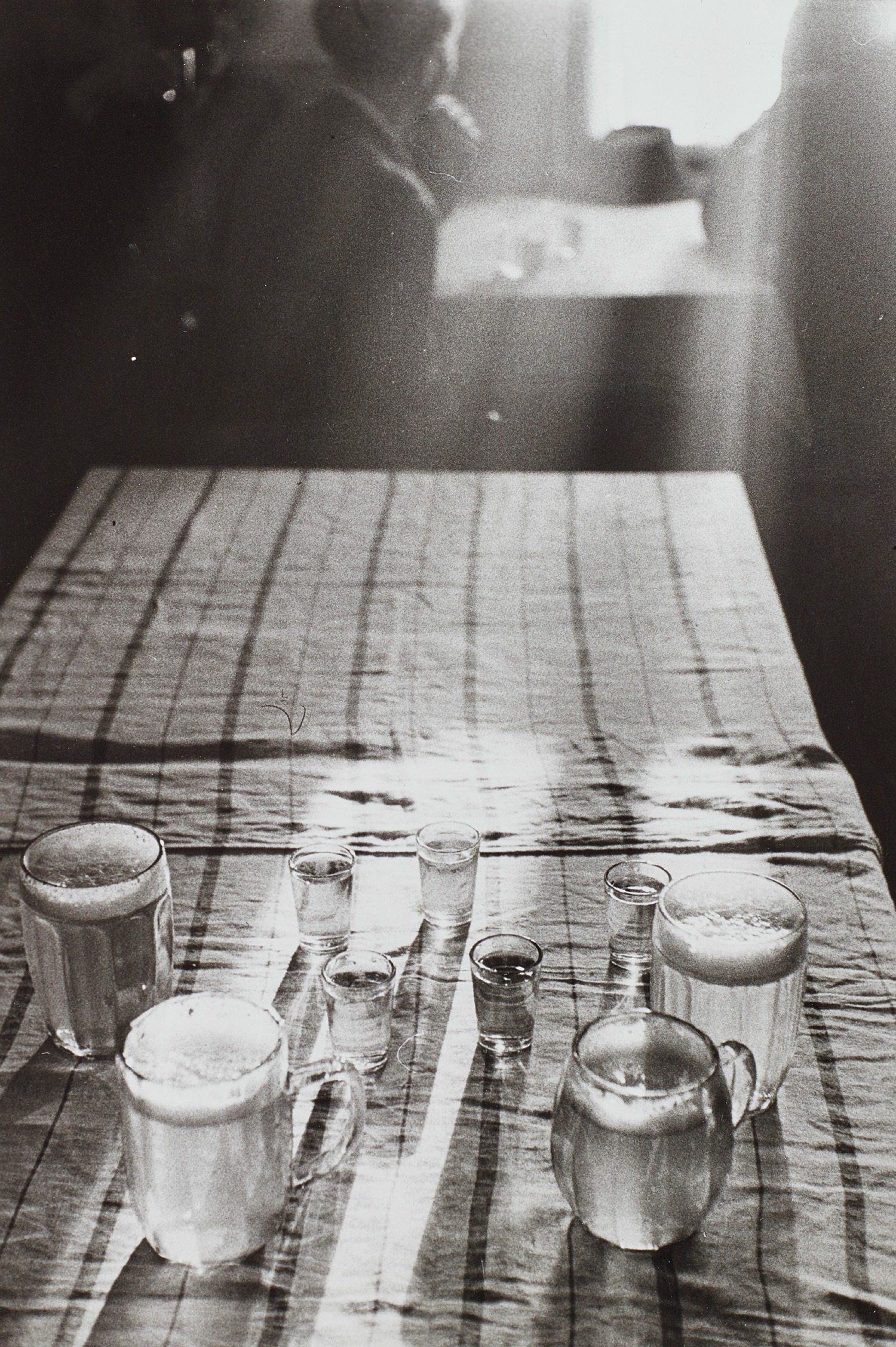
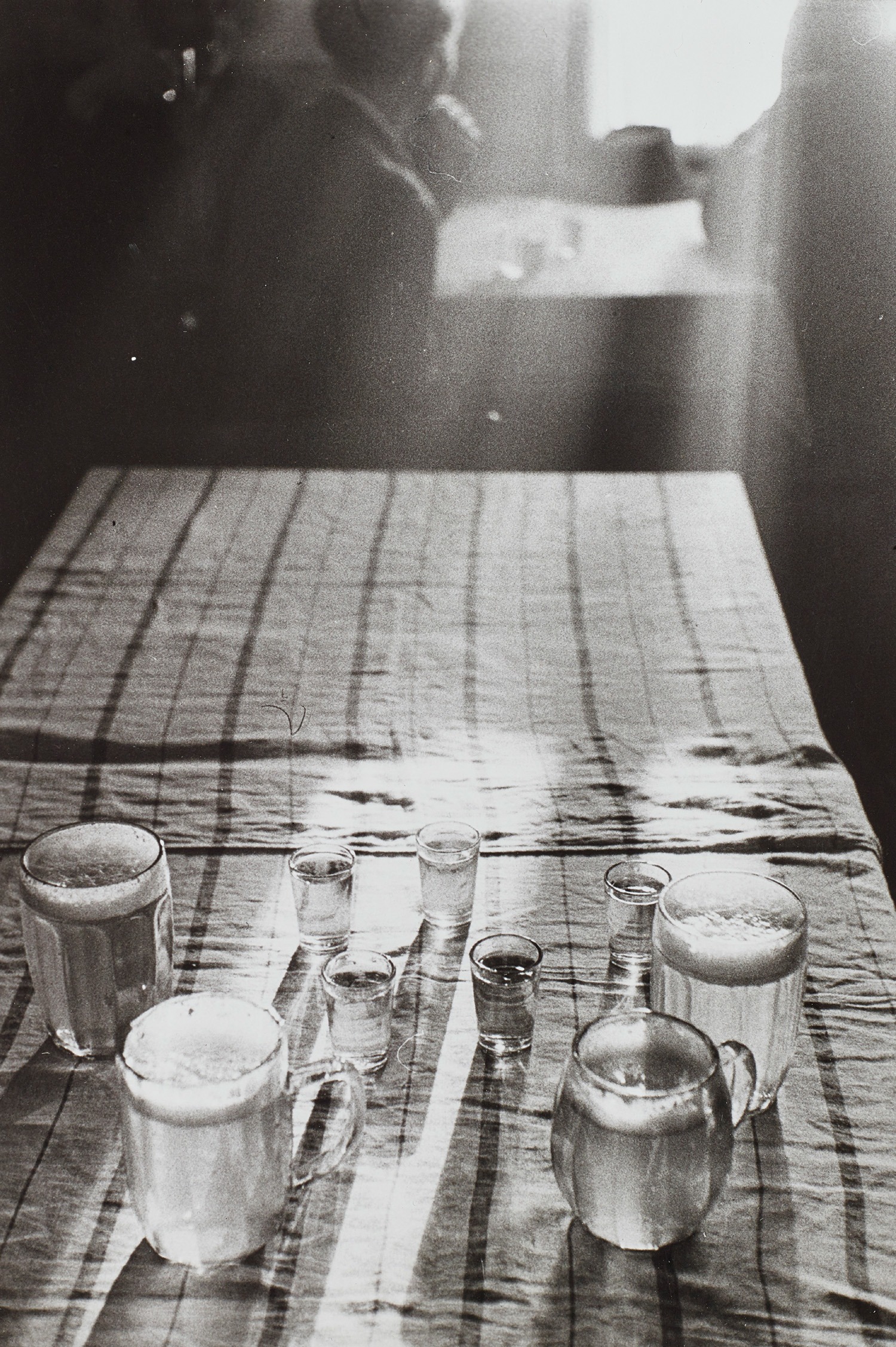
Beer Glasses, Czechoslovakia
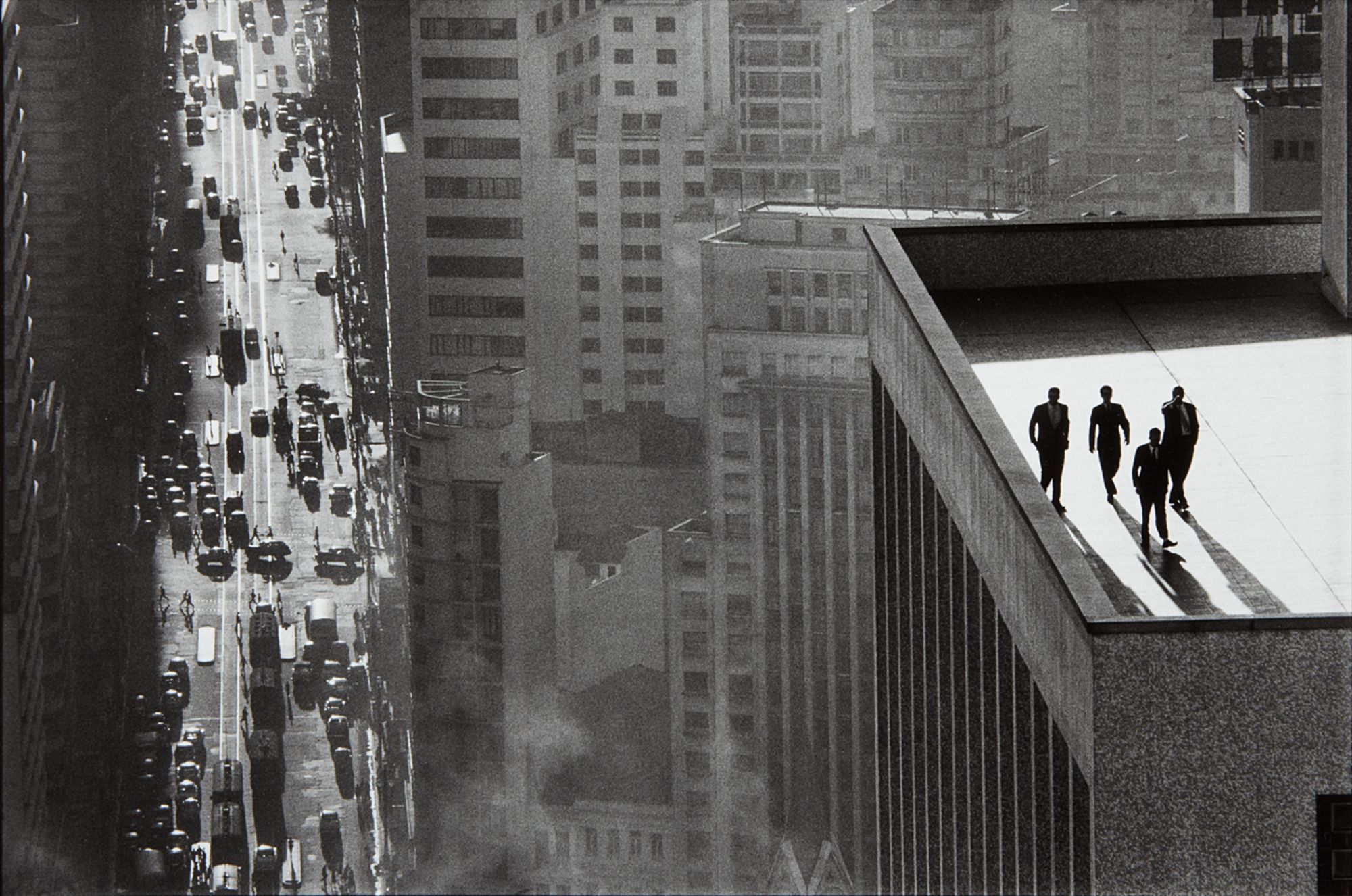
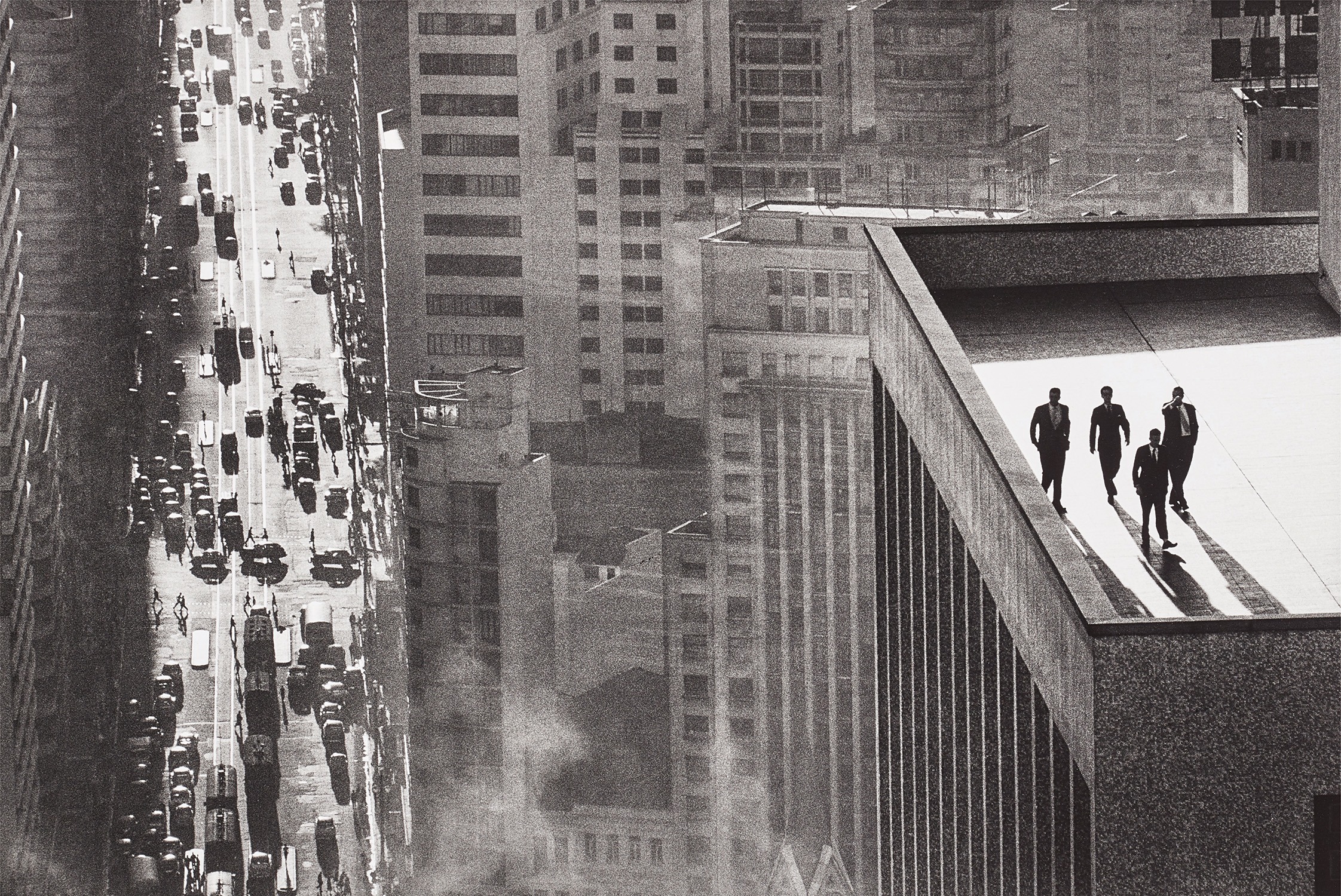
His assignments took him across Latin America, through the Middle East, into Asia, and across Europe, giving him access to the full sweep of postwar geopolitical transformation. Unlike photographers who embedded themselves in conflict, Burri was drawn to the texture of ordinary life under extraordinary circumstances, to the way cities breathed and people moved within systems larger than themselves. The range of his archive is genuinely astonishing. His sweeping aerial views of São Paulo, made across several decades, capture a megalopolis in perpetual becoming, a city eating itself and growing simultaneously.
“Photography is a language. If you master it, you can say all you want with it.”
René Burri
Shot from rooftops and helicopters, these panoramas feel as much like abstract compositions as they do social documents. The formal relationship between light, shadow, and the dense grid of concrete structures gives these images an almost painterly grandeur. Equally arresting is his portrait of Pablo Picasso at the Villa La Californie in Cannes, in which the artist appears transformed into something owlish and ancient, caught in a private moment that Burri rendered with warmth and gentle wit. Then there are quieter works: beer glasses in Czechoslovakia arranged like a still life; wilted lotus blossoms at the former Summer Palace on Kunming Lake in Beijing; a newspaper seller on the Calle Florida in Buenos Aires.
René Burri
São Paulo, Brazil
These images reveal a photographer who was as attentive to beauty and melancholy in the margins as he was to the spectacle of history at its centre. For collectors, Burri's work offers something increasingly rare in the photography market: images with genuine historical consequence alongside formal properties that reward sustained looking. His gelatin silver prints, many produced later under his direct supervision, carry the tonal richness that this process at its best can achieve. Works such as the 2001 print of São Paulo, Brazil and the 2004 print of Che Guevara in Havana are exemplary examples of how Burri understood the printed object as a continuation of the photographic act, not merely a record of it.
The market for his work has remained consistently strong at auction, with major international houses including Christie's and Phillips regularly featuring his prints. Collectors are drawn not only to the iconic subjects but to the breadth of the body of work, which rewards building a collection across geographies and themes. The Che Guevara portrait naturally commands the highest attention, but connoisseurs increasingly recognize that the quieter images, the street scenes, the architectural studies, and the intimate portraits, represent equally compelling acquisitions. To place Burri within the broader history of photography is to situate him alongside a generation of humanist documentarians who believed in the photograph as both record and revelation.
René Burri
Sao Paulo, Brazil
His natural peers include Henri Cartier Bresson, whose geometric precision shares a kinship with Burri's structural sensibility, and Ernst Haas, the Austrian Magnum photographer whose poetic approach to colour and form similarly resisted the purely journalistic frame. Burri also resonates with the work of Sebastião Salgado, whose epic social vision carries a comparable ambition to render geopolitical reality as visual experience of the highest order. Among portrait photographers, his intimacy with his subjects brings to mind the quiet authority of Yousuf Karsh, though Burri always allowed the circumstances of encounter to shape the image rather than imposing a studio's controlled theatre. In the years since his death in Zurich in October 2014, Burri's reputation has continued to grow rather than settle into the amber of historical assessment.
Major retrospectives at institutions including the Musée de l'Elysée in Lausanne helped consolidate his standing as one of Switzerland's most significant cultural contributions to twentieth century visual art. The Fondation René Burri works to preserve and contextualize the archive, ensuring that the full scope of his practice remains accessible to scholars, curators, and collectors. At a moment when documentary photography faces renewed questions about authority, truth, and the ethics of the gaze, Burri's work stands as a model of engaged humanism: images made with curiosity and care, with a belief that to photograph someone honestly is an act of profound respect. His frames do not merely record the world.
They ask us to look at it more carefully, and to feel the weight of what we see.
Explore books about René Burri