Reginald Easton
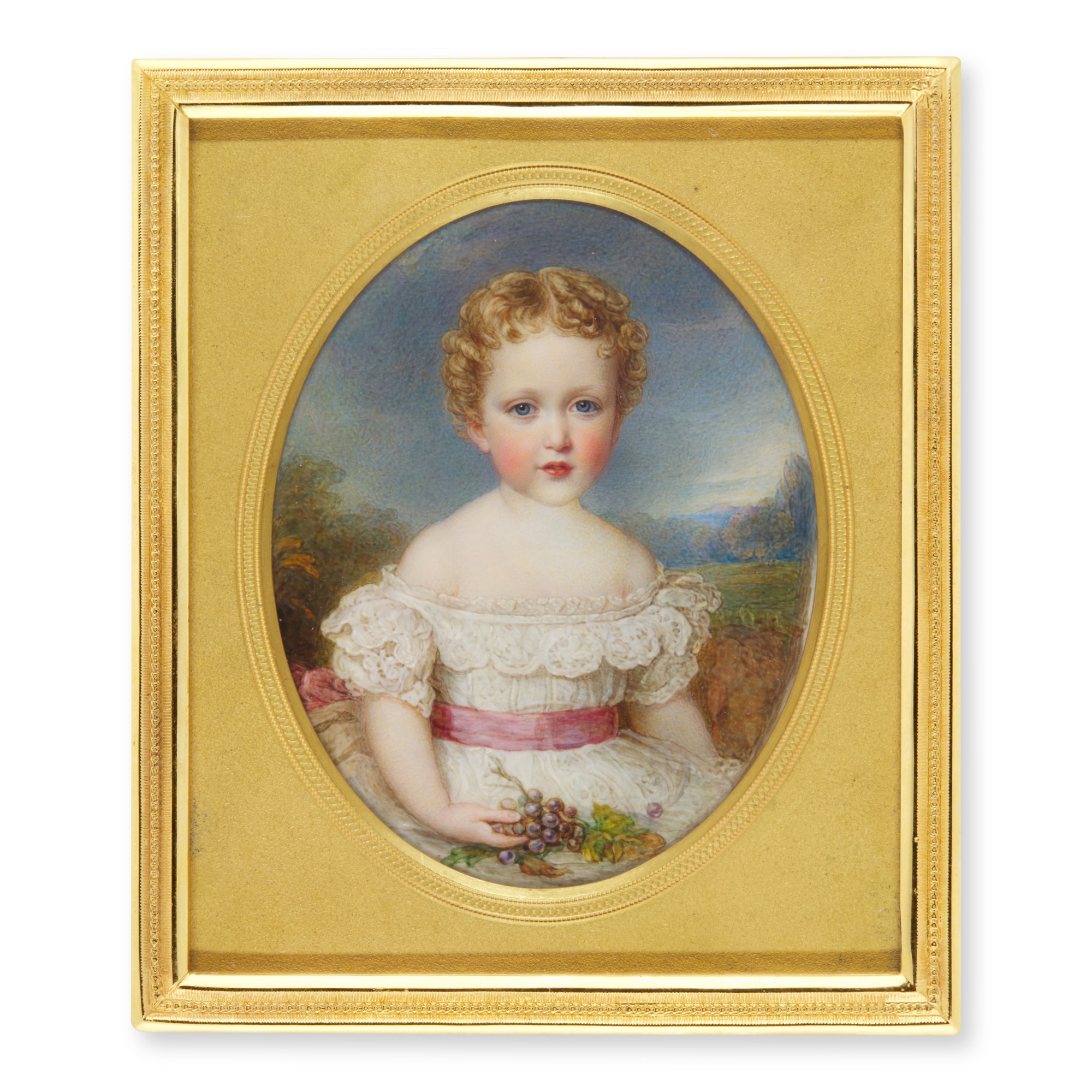
Reginald Easton, Master of the Witnessed Moment
Artist Spotlight · The Collection Editorial
There is a particular kind of artist whose value becomes clearer with the passage of time, whose work gains gravity the further we move from the world they recorded. Reginald Easton was precisely such a figure. A British painter and illustrator working at the heart of the Victorian era, Easton occupied a singular position: he was both a fine portraitist of exceptional sensitivity and a frontline visual journalist whose drawings brought distant conflicts and grand historical events into the parlors and reading rooms of nineteenth century Britain. To encounter his work today is to feel the pull of a vanished world rendered with uncommon care and skill.
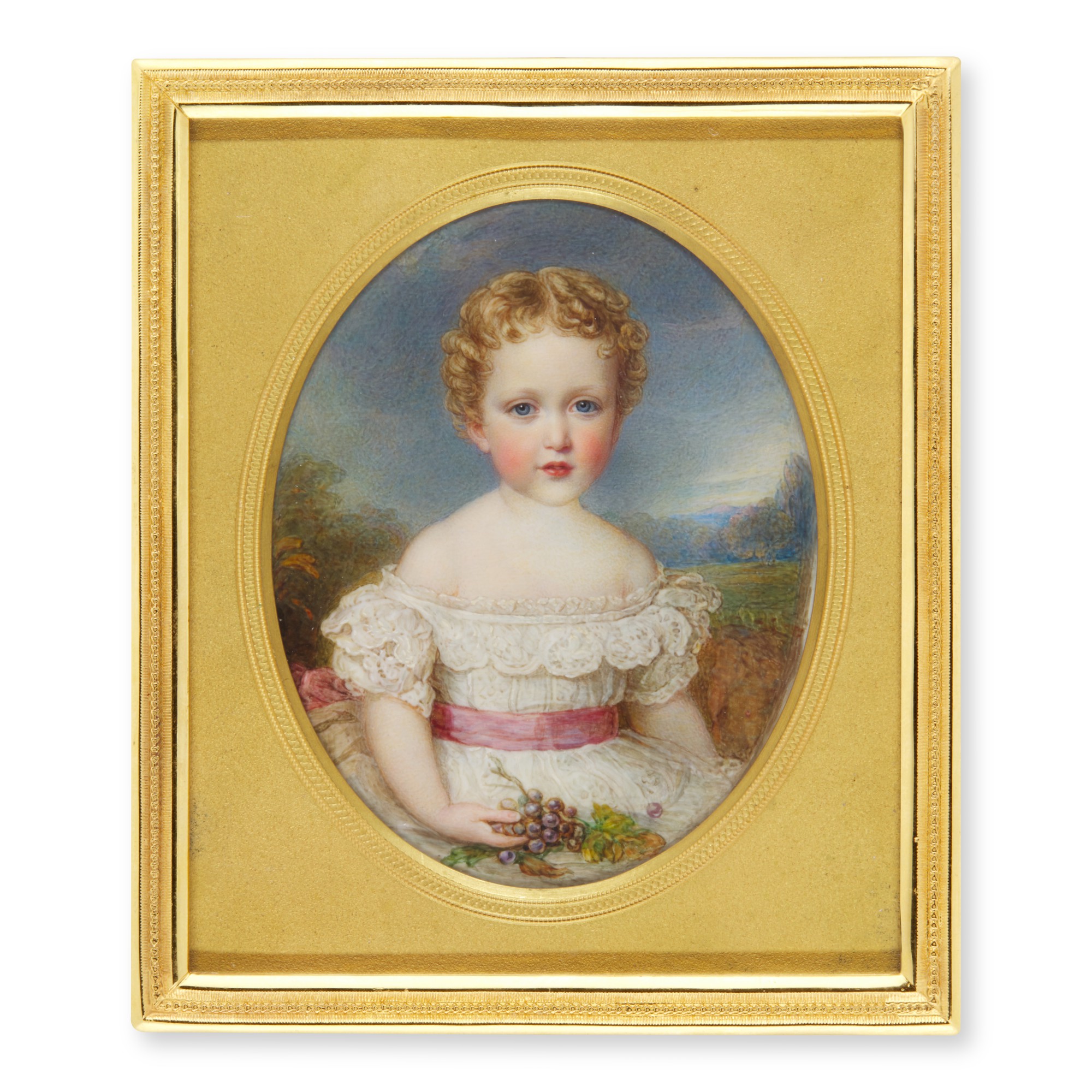
Reginald Easton
Portrait of Prince Albert of Schleswig-Holstein (1872-1956), when a child
Easton came of age during one of the most visually fertile periods in British art history. The mid to late nineteenth century saw the rise of illustrated newspapers and periodicals such as The Illustrated London News, which created an entirely new profession and a new kind of artist. These were men and women who could draw quickly, accurately, and with enough compositional intelligence to turn a chaotic scene of battle or ceremony into a compelling image for a mass audience. Easton proved himself exceptionally suited to this calling.
His training in the conventions of academic portraiture gave him a command of the human figure that few of his contemporaries in the war correspondent tradition could match, and this grounding would define the character of his entire career. His work as a war correspondent artist placed him in the documentary tradition that bridged fine art and journalism before photography had fully supplanted illustration as the primary visual medium of record. In this capacity Easton developed a mature and confident draftsmanship, capable of conveying not merely the outward facts of a scene but its emotional temperature. His maritime paintings draw on this same discipline: the sea, like the battlefield, demands an artist who can read a dynamic and unstable environment and commit it to a fixed image with conviction.
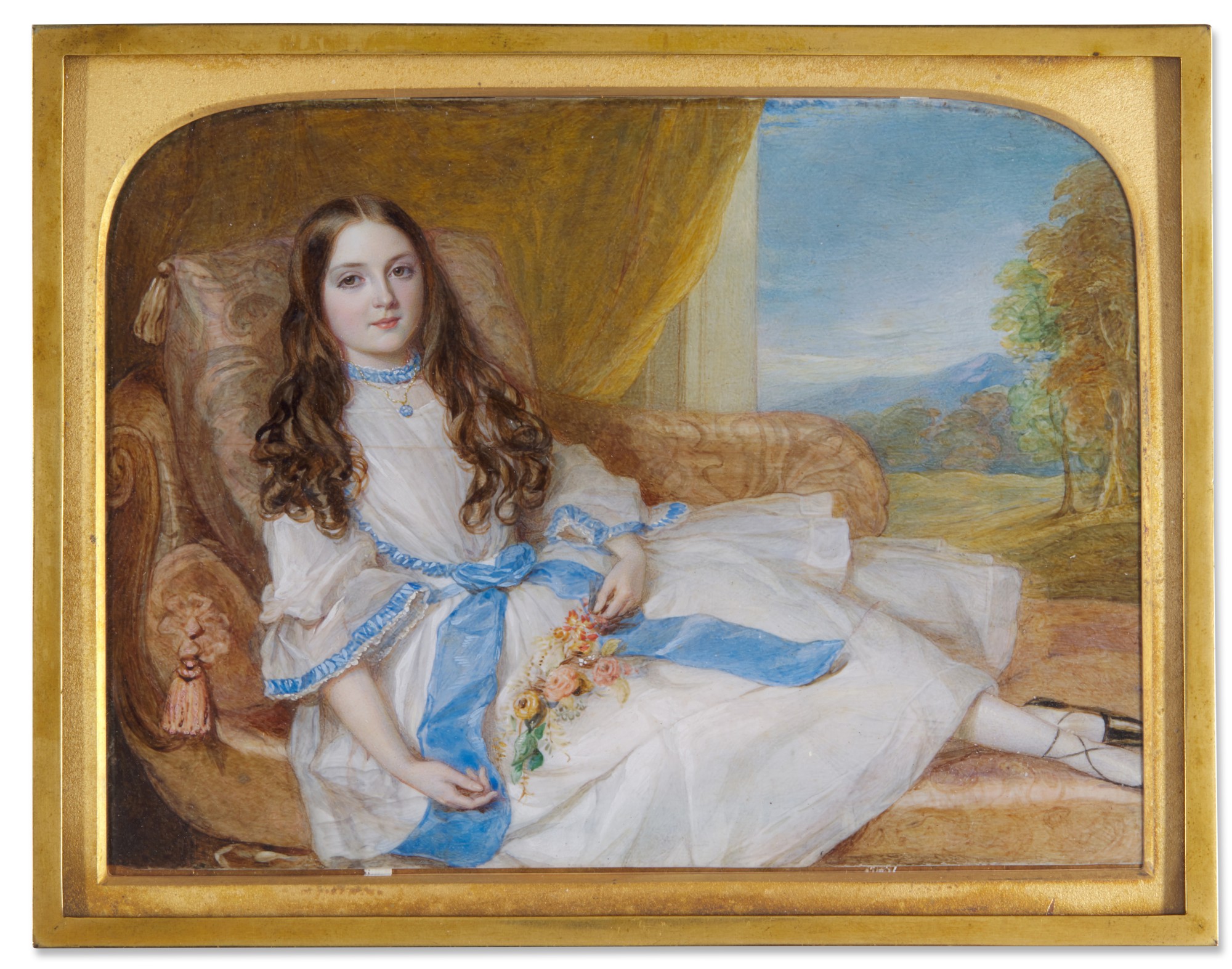
Reginald Easton
Portrait of Edith Montgomery
Easton brought to his maritime subjects the same attentiveness he had cultivated in the field, producing works of genuine atmospheric power that reward extended looking. Among the most telling examples of his portraiture is his work depicting Prince Albert of Schleswig Holstein as a child, dated to the subject's early years in the 1870s. The painting is a superb illustration of Easton's gift for capturing dignity and natural ease within a single composition. Royal and aristocratic portraiture in the Victorian period carried enormous social weight, and the fact that Easton was entrusted with such a commission speaks directly to the esteem in which he was held by patrons of the highest rank.
The work balances formal expectations with a tenderness of observation that elevates it well above the merely commemorative. Alongside this, his portrait of Edith Montgomery reveals the other dimension of his portraiture practice, demonstrating his capacity to render private individuals with the same attentiveness and quality he brought to subjects of public significance. For collectors approaching Easton's work today, there is a compelling case rooted in both rarity and historical resonance. His output as an illustrator and war correspondent artist means that a significant portion of his production exists in the form of works on paper, drawings, and engravings that documented events of genuine historical importance.
These works carry a documentary authority that purely decorative Victorian painting cannot claim. His oil portraits, meanwhile, occupy the refined middle ground of high Victorian academic painting, comparable in their ambition and finish to the work of artists such as George Richmond, whose own portrait practice spanned social and intellectual circles of similar prestige. Collectors drawn to the British academic tradition will find in Easton an artist whose work aligns comfortably with the best of that context while offering a distinctive angle through his dual identity as both portraitist and field artist. Within the broader landscape of nineteenth century British art, Easton's position as a war correspondent artist connects him to a lineage that includes figures such as William Simpson, whose documentary illustrations of the Crimean War brought that distant conflict home to British audiences with unprecedented immediacy.
Both men worked in the conviction that art could serve truth as well as beauty, and that the witness had an obligation to record. Easton's maritime work, meanwhile, places him in conversation with the rich tradition of British marine painting that runs through the century, a tradition supported by a strong collecting culture and a deep national identification with the sea. His fluency across these registers makes him an unusually versatile figure whose work enriches any collection with serious Victorian holdings. The legacy of Reginald Easton is one of quiet endurance.
He was not an artist who sought the grand statement or the revolutionary gesture. He sought fidelity: to the face before him, to the wave breaking at a particular angle, to the smoke and confusion of a military engagement recorded at first hand. In an era when the relationship between image and reality was being renegotiated by the emergence of photography, Easton and his contemporaries made a passionate and ultimately successful argument that the trained eye and the skilled hand could offer something the camera could not, namely interpretation, emphasis, and the particular humanity of one person looking carefully at another. His portraits and maritime scenes carry that argument forward into our own time, and they do so with grace.