Rebecca Horn
Rebecca Horn: Body, Machine, and Boundless Wonder
Artist Spotlight · The Collection Editorial
“I want to create a dialogue between the body and the space around it, a living conversation.”
Rebecca Horn, interview
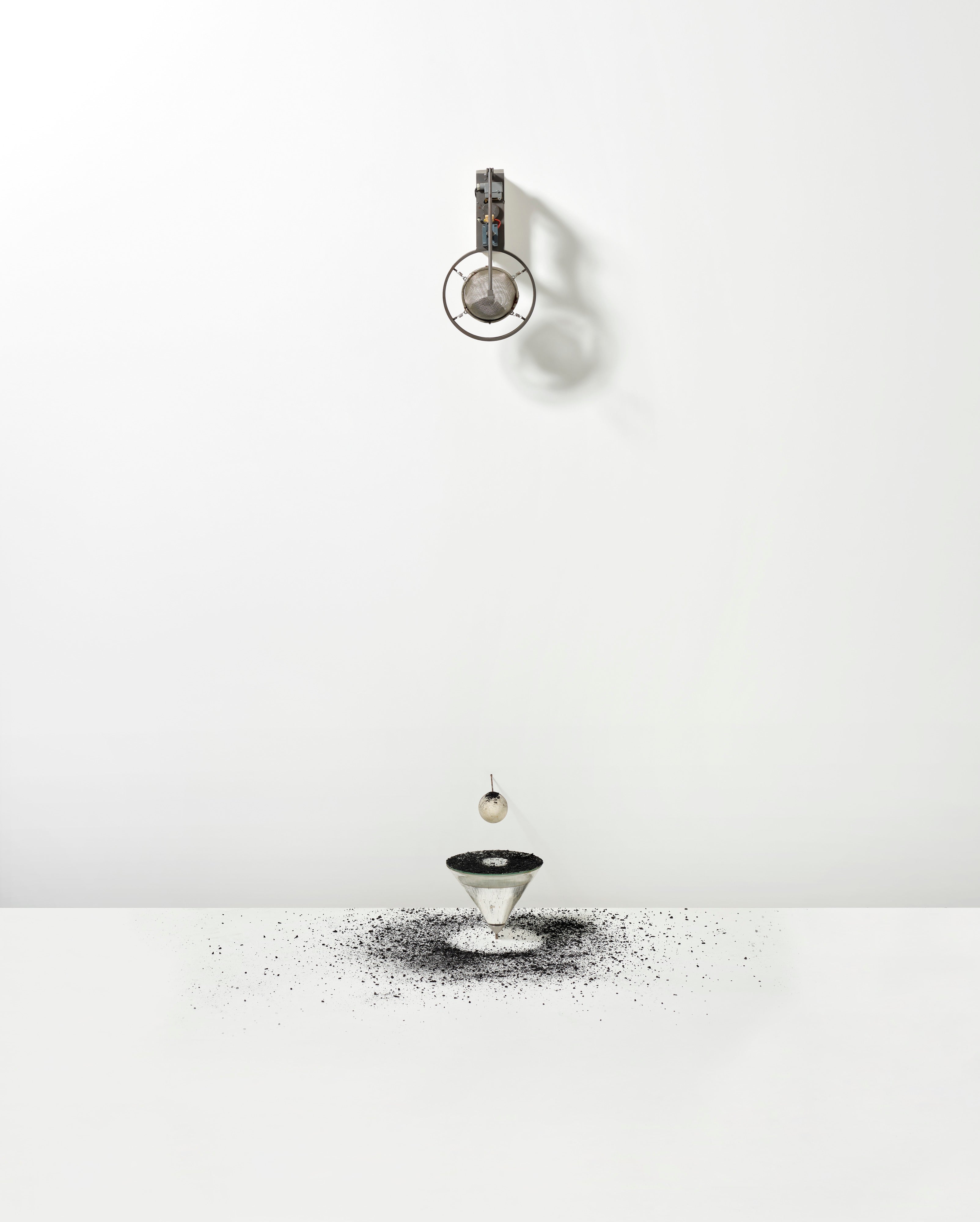
In the autumn of 2023, the Tate Modern in London staged a focused presentation of Rebecca Horn's kinetic installations, drawing visitors into rooms alive with the hum of mechanical wings and the slow drip of pigment onto canvas. It was a reminder, urgent and transporting, that Horn's universe of feathers, funnels, mirrors, and motorized contraptions remains among the most emotionally intelligent bodies of work produced in postwar European art. Her sculptures do not merely occupy space. They breathe within it, performing loneliness and desire and transformation with a quiet theatrical authority that few artists have ever matched.
Rebecca Horn
Der Niedergang des Phönix, 1994
Rebecca Horn was born in Michelstadt, in the Odenwald region of Germany, in 1944, into a country still in the earliest and most fragile moments of reconstructing itself. Her childhood unfolded against the long shadow of the Second World War, and the psychological weight of that inheritance, the body as a site of damage and recovery, would become one of the defining preoccupations of her art. When Horn was a young art student working with fiberglass and polyester materials at the Hochschule für Bildende Künste in Hamburg, she suffered a serious lung illness that required more than a year of hospitalization and isolation. Bedridden and separated from human contact, she began constructing intimate body extensions from materials she could manage alone, bandages, fabrics, and light structural forms that she wore and performed in.
This period of enforced stillness gave birth to an entirely original artistic language. Upon her recovery, Horn studied at the Central Saint Martins College of Art and Design in London, an experience that placed her at the center of a vibrant international conversation about performance and the body that was reshaping contemporary art in the late 1960s and early 1970s. Her early body sculptures and performances, works like Unicorn from 1970 and Finger Gloves from 1972, extended the human form into extraordinary new geometries. A woman walking through a field with a horn rising from her head, her fingers elongated by white fabric sheaths reaching toward the ground, these images entered the collective visual memory of the period and positioned Horn alongside artists such as Joseph Beuys, Vito Acconci, and Marina Abramovic as a central figure in the performance and body art movements emerging across Europe and North America.
Rebecca Horn
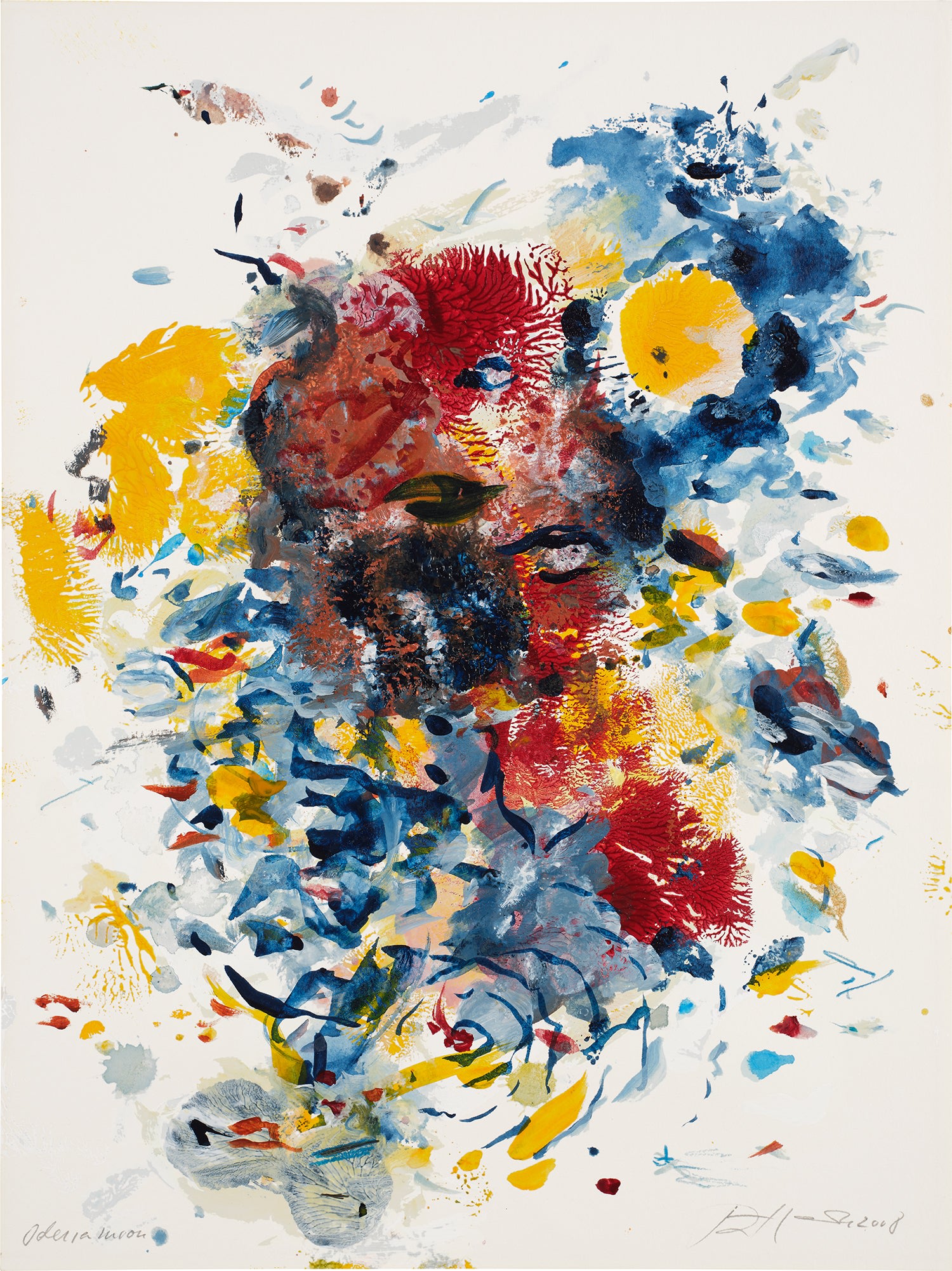
Odessamoon
Over the following decades Horn's practice underwent a profound and beautiful transformation. She moved from the performing body outward into kinetic sculpture and installation, creating works that seemed to possess their own nervous systems. Her machines do not feel industrial. They feel animate, melancholic even, as though driven by impulse rather than engineering.
Large fans unfurl and collapse like breathing lungs. Violins bow themselves in empty rooms. Rifles fire bursts of red pigment at the corners of galleries in a gesture that reads simultaneously as violence and painting. Horn's sustained interest in poetry, particularly the work of writers she admired in the German Romantic tradition, and her deep engagement with alchemy, mythology, and the erotic saturated her work with literary and philosophical richness.
Rebecca Horn
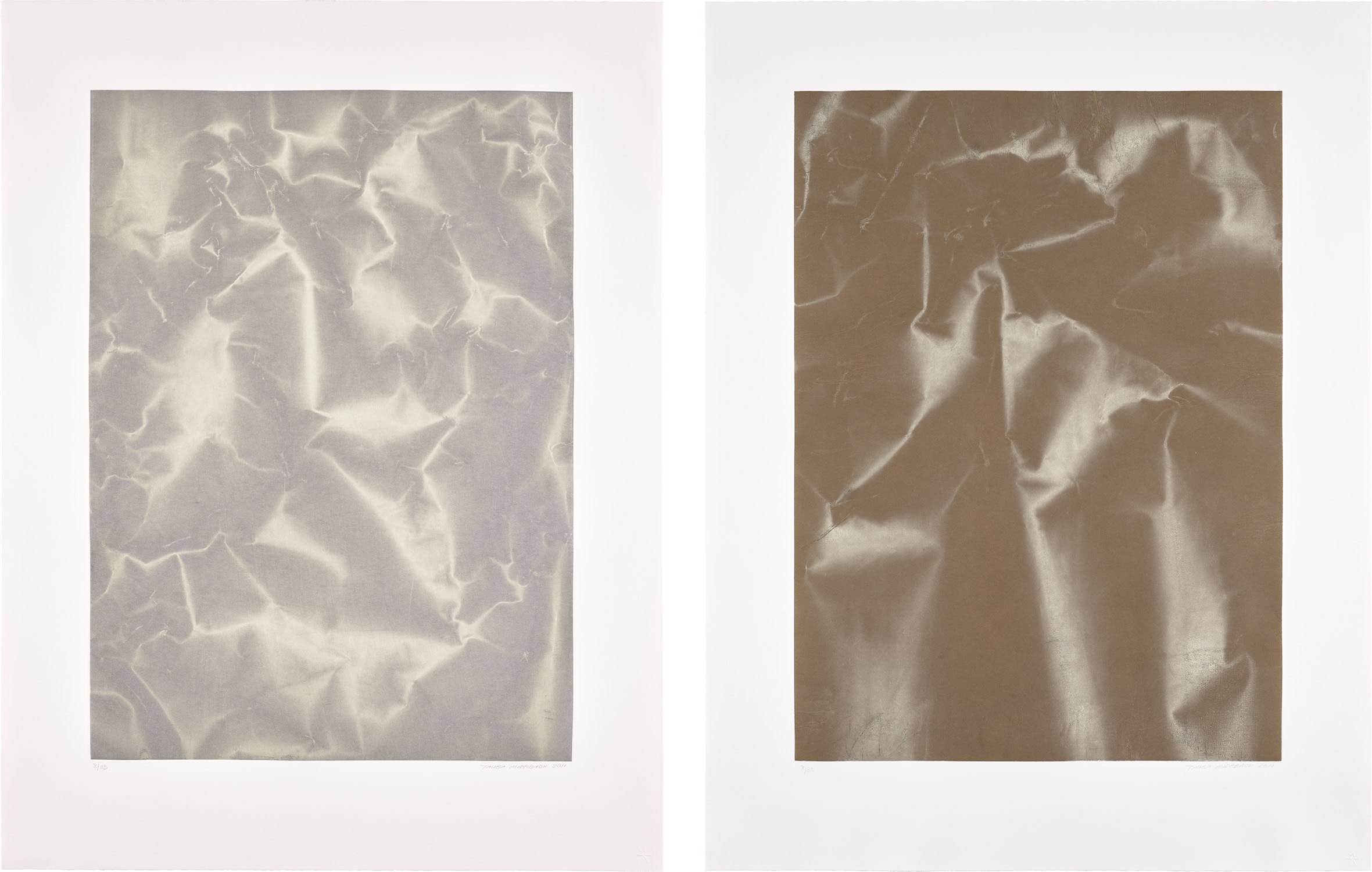
Swan Ladder (P. 40/41)
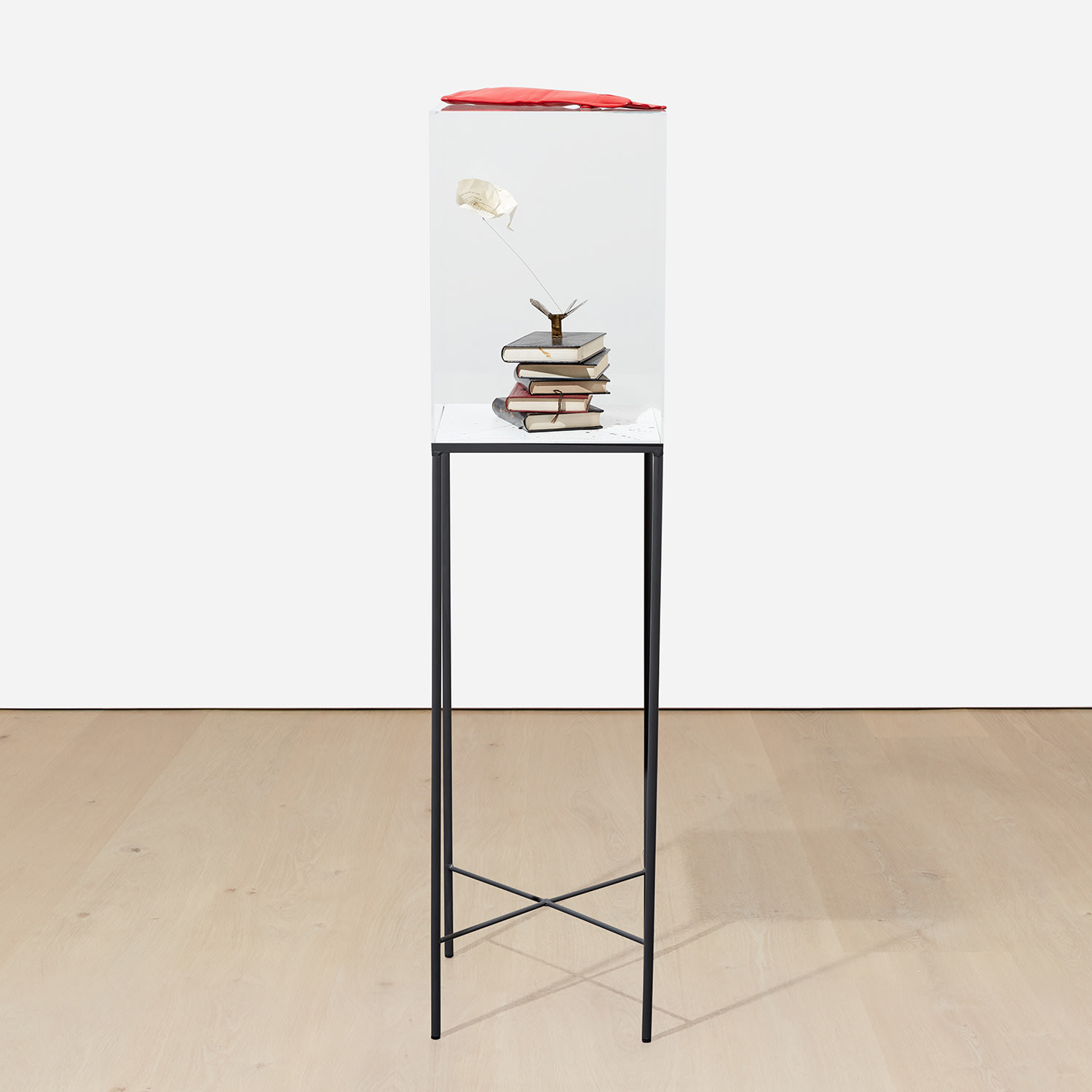
Her film work, including the celebrated feature Buster's Bedroom from 1990, confirmed her fluency across disciplines. Among the works that illuminate her vision most compellingly are the pieces now available through The Collection. Der Niedergang des Phönix from 1994 and Le papillon du divin marquis from the same year both emerge from one of Horn's most fertile and symbolically concentrated periods, when the phoenix and the butterfly served as recurring totems of transformation, mortality, and rebirth. The Swan Ladder is a work of exquisite restraint: a swan's feather housed in a glass box with a funnel, black ink, and a mirror, the materials arranged with an almost alchemical precision.
The mirror and the ink and the organic feather are in dialogue, reflecting and absorbing light and meaning simultaneously. Odessamoon and Deer Hunters Spring, both unique works on paper combining acrylic, pencil, and ink, show Horn's hand in its most intimate register, drawing as a form of thinking, each mark alive with the same poetic intensity as her large installations. Oracle from 1988 and Zenith of the Ocean II in the photographic medium round out a selection that offers collectors a genuinely rare breadth of access to her practice. From a collecting perspective, Horn's work occupies a position of considerable art historical significance and remarkable market stability.
Rebecca Horn
Le papillon du divin marquis, 1994
Her kinetic installations command serious attention at auction at Christie's, Sotheby's, and Phillips, while her works on paper and unique multiples provide entry points into the collection for those drawn to her imagery and symbolism. The Swan Ladder type of multiple, combining sculptural object with organic material and reflective surface, is characteristic of the hybrid forms that make her so unusual to collect and to live with. These are not passive objects. They invite sustained looking and reward it over years.
Collectors who have built relationships with Horn's work frequently describe it as among the most personally resonant in their holdings, precisely because her engagement with the body and its vulnerabilities speaks to something universal in the human experience. Within the broader arc of postwar and contemporary art, Horn holds a singular position. She shares with Joseph Beuys, her great compatriot, a shamanic sensibility and a belief in art as a form of healing, though her aesthetic register is more intimate and less monumental than his. She is in conversation with the Surrealists, particularly with Max Ernst and his ornithological obsessions, and with the Viennese Actionists in her unflinching treatment of the body.
Yet she belongs to no single movement. Her work is too personal, too rigorously her own, to be contained by any single label. She has exhibited at the Venice Biennale, the Documenta in Kassel, and in major retrospectives at the Guggenheim Museum in New York, institutions that recognized early that her contribution was not supplementary but essential. Rebecca Horn passed away in 2024, leaving behind a body of work that feels more necessary with each passing year.
In a cultural moment that is increasingly preoccupied with questions of the body, of vulnerability, of the relationship between the organic and the technological, her art arrives not as historical artifact but as living provocation. The feathers fall. The ink spreads. The mirrors double and multiply the world.
To collect Rebecca Horn is to bring into one's life an artist who understood, with extraordinary depth and compassion, what it means to be a body moving through time, reaching always toward something just beyond the fingertips.