Raoul De Keyser
Raoul De Keyser: Painting's Quiet Revolutionary
Artist Spotlight · The Collection Editorial
There is a particular kind of attention that great painting demands, not the gasping confrontation of a monumental canvas, but the slow, rewarding lean forward that smaller, more intimate work requires. It was this quality that drew visitors to the Whitechapel Gallery in London when it presented a significant survey of Raoul De Keyser's work, introducing his paintings to an international audience that had, for too long, encountered them only through reputation and rumor. The response was one of quiet astonishment: here was a Belgian painter working on a modest scale with muted, considered colors, producing work of profound intelligence and visual poetry. De Keyser had spent decades earning exactly this kind of recognition, and when it arrived, it felt entirely deserved.
Raoul De Keyser
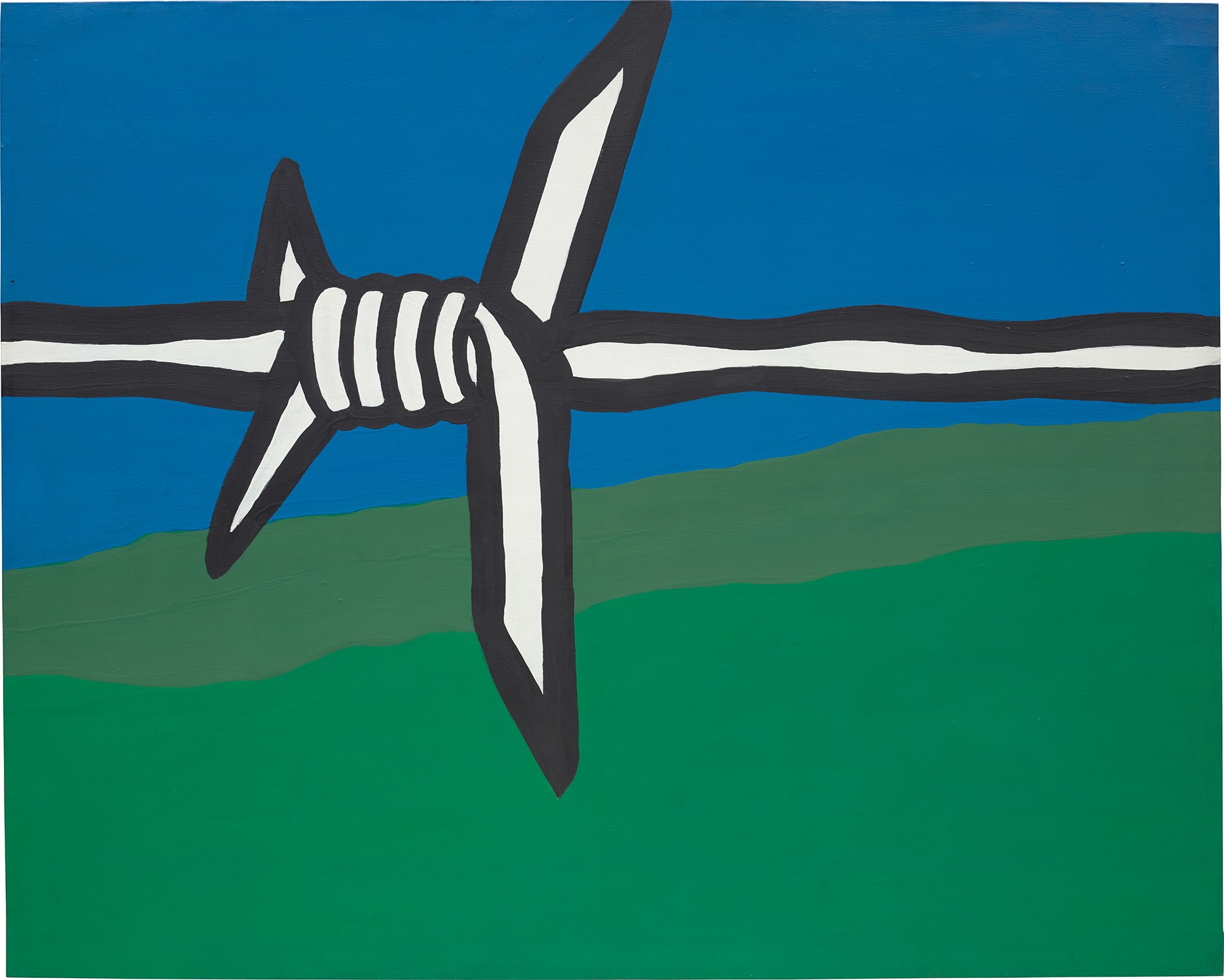
Gampelaere omgeving, 1967
Raoul De Keyser was born in Deinze, a small city in the East Flanders region of Belgium, in 1930. He came of age in a country shaped by the aftermath of war, and his early formation was as much that of a curious observer as a formally trained artist. He studied at the Sint Lucas Institute in Ghent, though his development as a painter owed at least as much to his sustained engagement with the world around him as to any institutional curriculum. Deinze was not a cultural capital, and De Keyser spent most of his life there, working as a sports journalist and art critic alongside his painting practice.
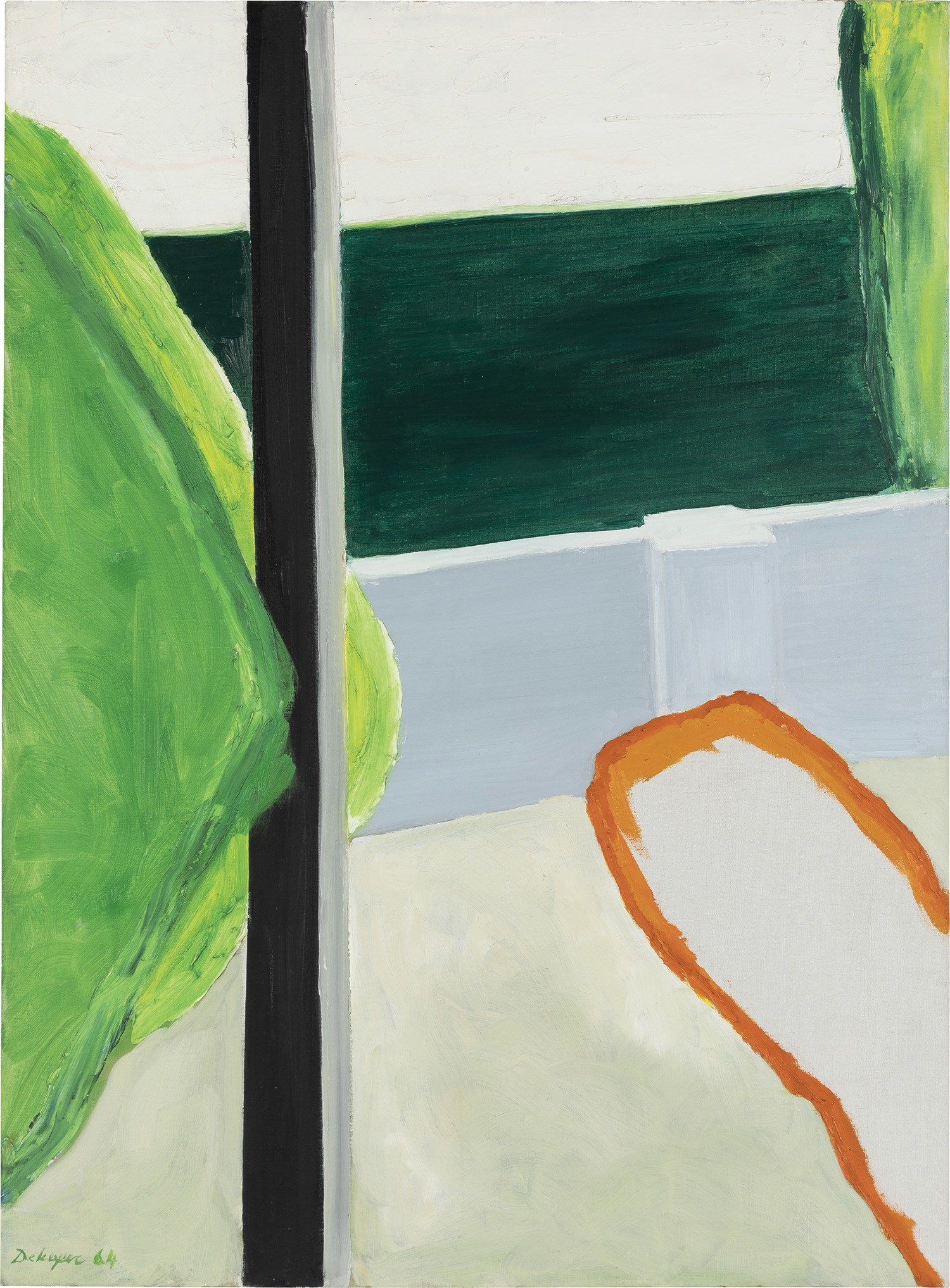
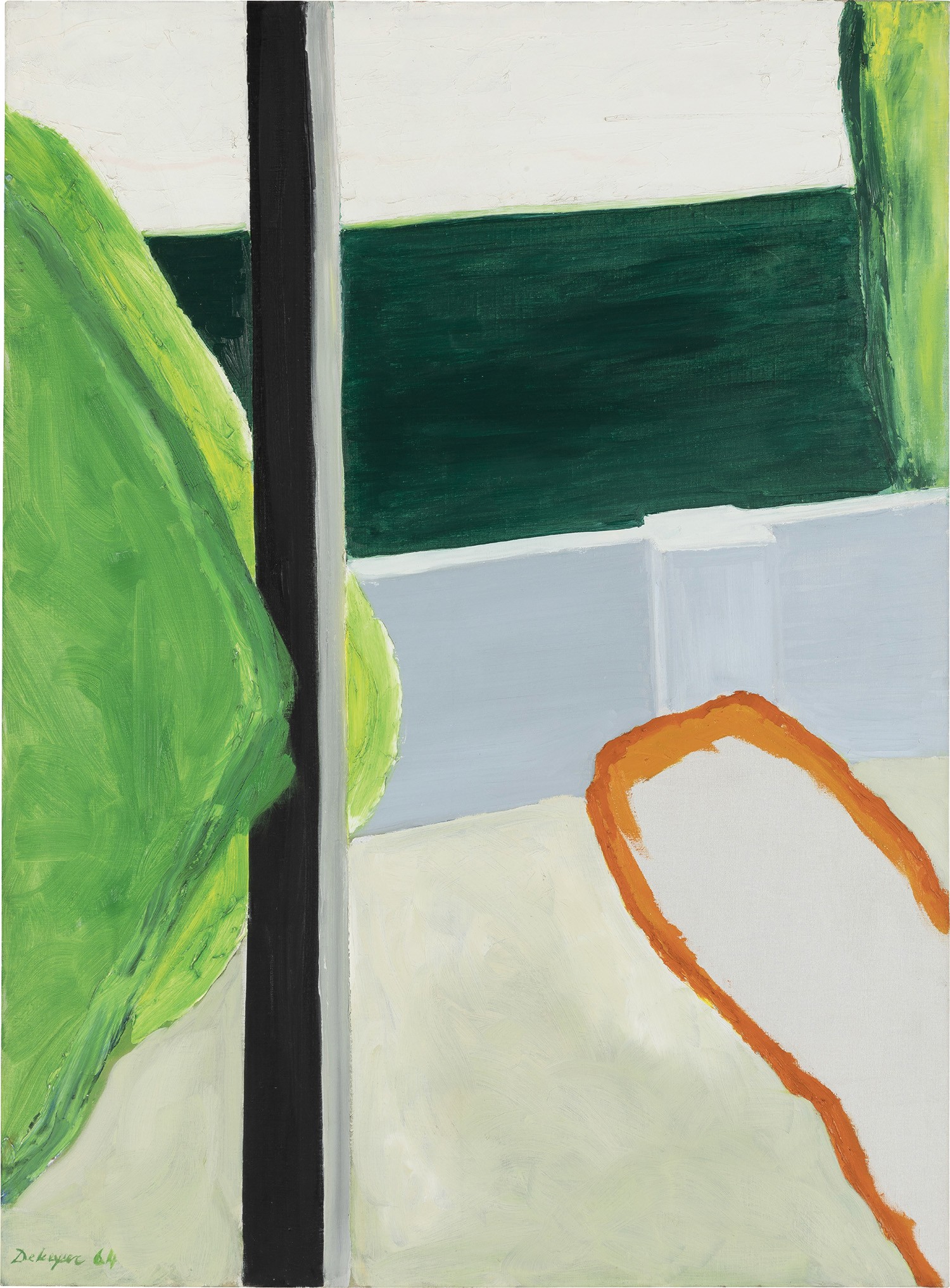
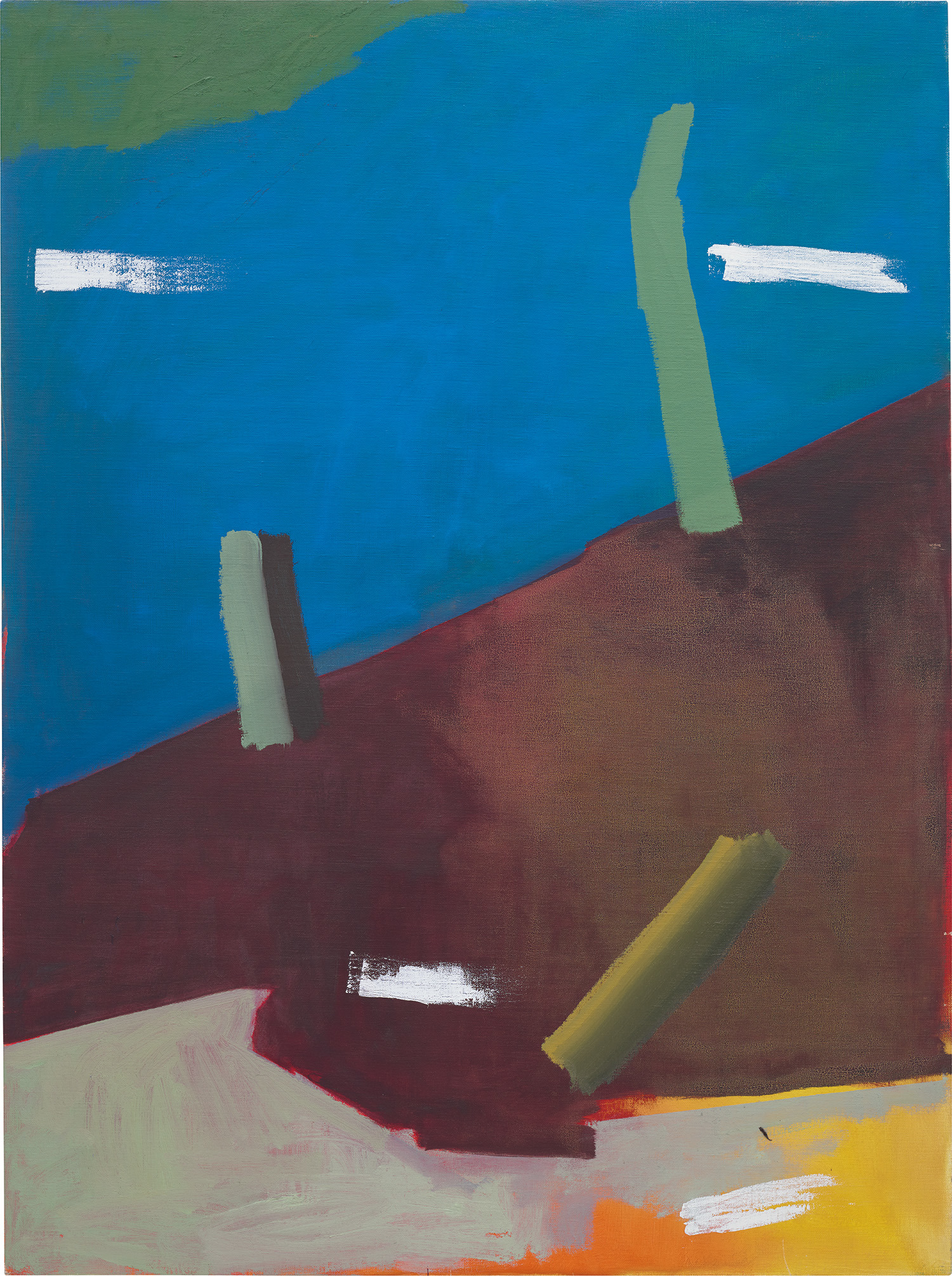
This dual life, embedded in community and daily observation, gave his art a groundedness that distinguished it from the more theoretically driven abstraction of his contemporaries. De Keyser came to painting seriously in the 1960s, and his earliest canvases show an artist already thinking carefully about the relationship between what is seen and what is painted. Works from this period, including the oil on canvas "Vóór het vlakke groen" from 1964 and the acrylic paintings "Gampelaere omgeving" and "Doelpaal" from the late 1960s, reveal a painter testing the distance between figuration and abstraction. The title "Doelpaal," which translates loosely as goalpost, is characteristic: De Keyser drew frequently on the language of sports fields, gardens, and the local Flemish landscape, translating these observed forms into geometric fragments and residual marks that retained the feeling of their origin without illustrating it.
Raoul De Keyser
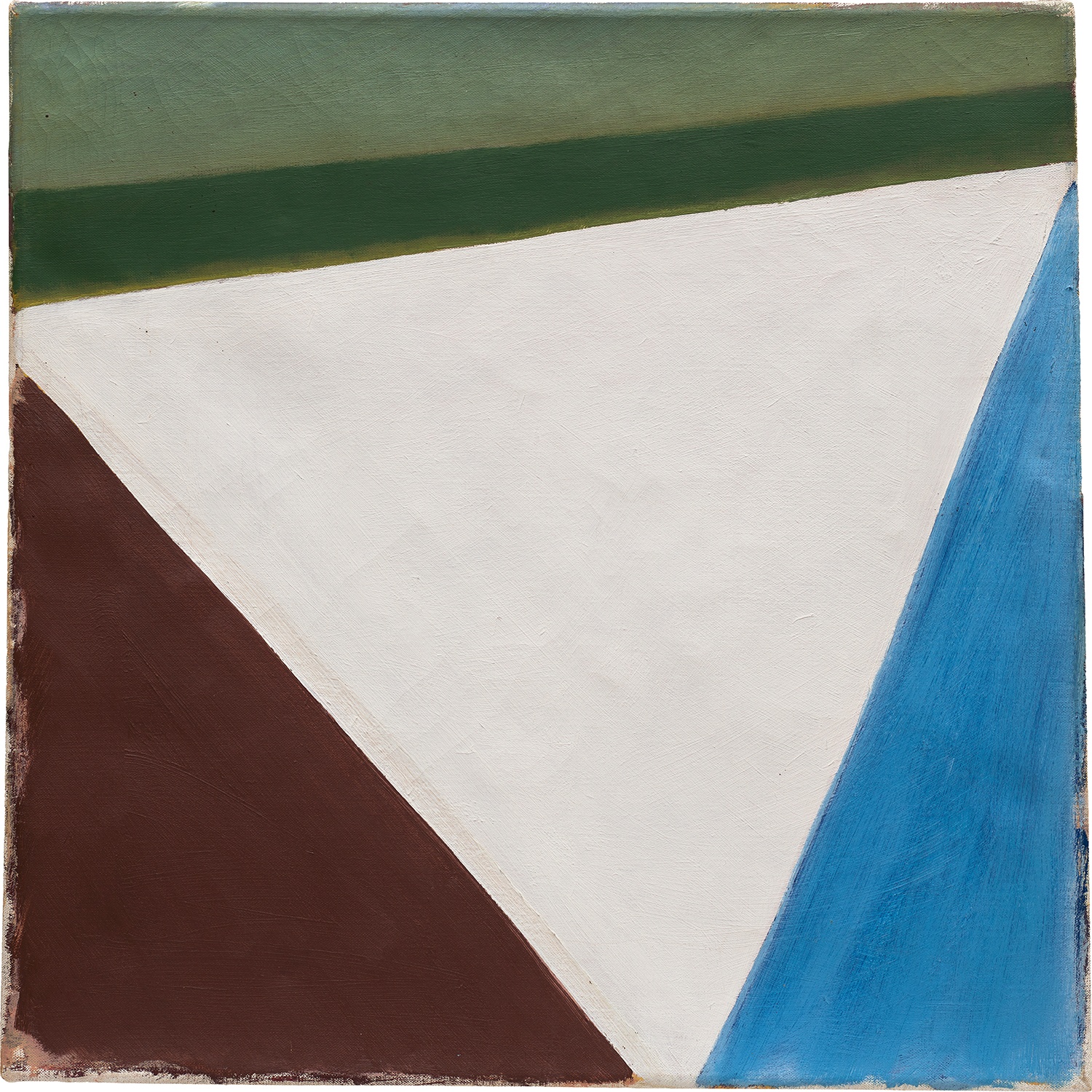
Zeven voor Jeanne 2, 1980
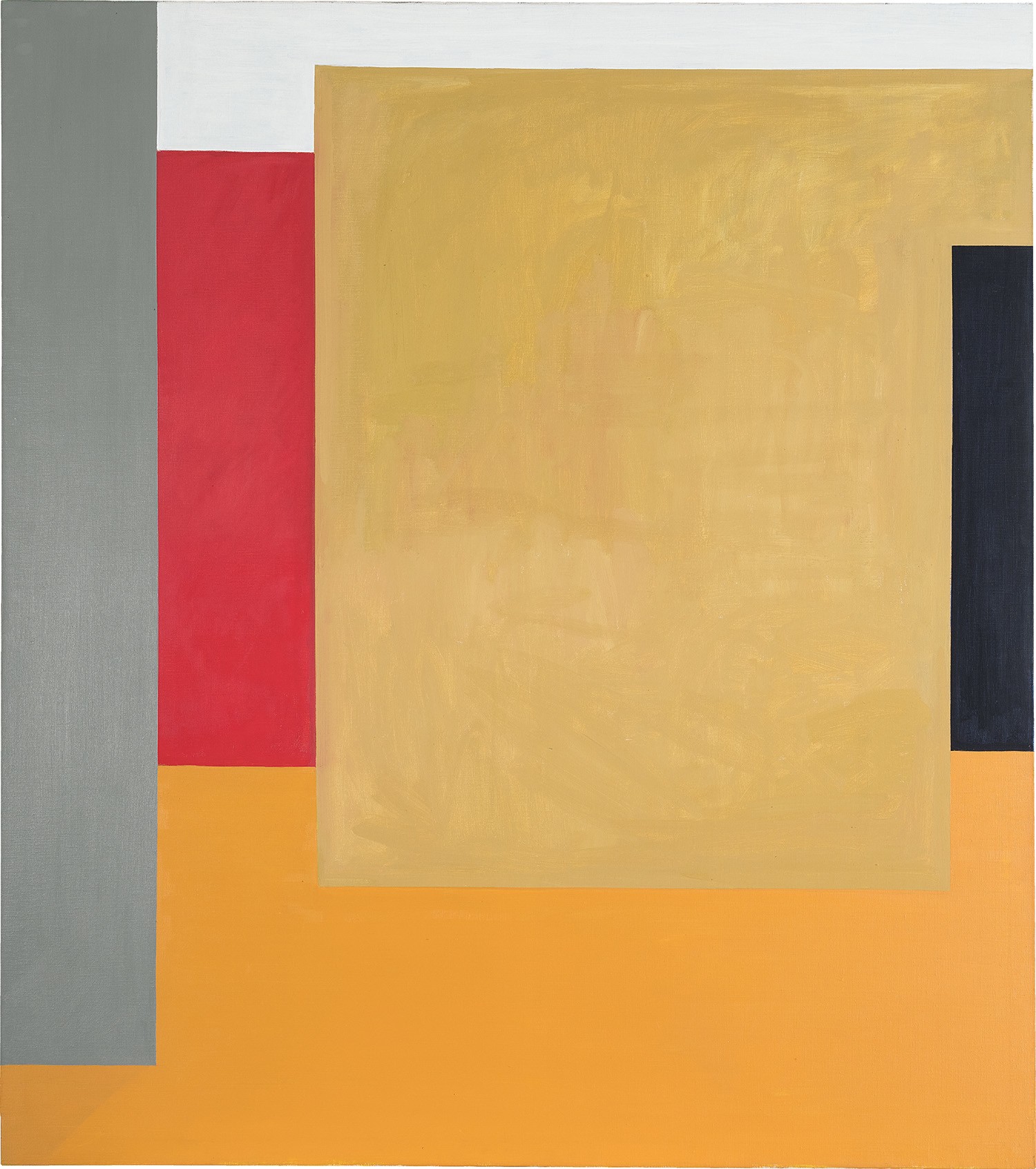
This is painting that knows where it has been without insisting on telling you. Through the 1970s and 1980s, De Keyser's practice deepened and grew more assured. Works such as "Krijthoekcorrectie" from 1978 and "Zeven voor Jeanne 2" from 1980 demonstrate his mastery of a reduced formal vocabulary: a canvas might contain little more than a rectangle of pale color, a smudged arc, a horizon implied rather than stated. Yet these paintings are never sparse in the way that word implies emptiness.
They are, instead, full of considered decision, each mark evidence of a long conversation between the painter and his surface. By the mid 1980s, with works like "Hellepoort" from 1985 and "Kabinet" from 1989, De Keyser had established a visual language entirely his own, one that placed him in dialogue with the great tradition of European modernism while remaining stubbornly, productively local. The international art world began to catch up with De Keyser's achievement in the 1990s and into the 2000s. His relationship with the Zeno X Gallery in Antwerp, which represented him for many years, provided a platform for sustained critical attention, and exhibitions followed in Germany, the United Kingdom, and the United States.
Raoul De Keyser
Vóór het vlakke groen, 1964
The Museum of Modern Art in New York included his work in significant group presentations, a recognition that positioned De Keyser alongside the artists with whom he belongs: painters like Luc Tuymans, whose cool Flemish realism emerged from some of the same cultural soil, and international figures such as Ellsworth Kelly, Agnes Martin, and Brice Marden, all of whom share De Keyser's commitment to the expressive power of restraint. His late work, including the evocative "Surplace nr. 1" from 2002, showed an artist still discovering new territory within his chosen limits, painting that seemed to breathe. For collectors, De Keyser's work offers something increasingly rare: paintings that reward sustained living with.
These are not works that announce themselves from across a room and exhaust their meaning in a single viewing. They change in different light, at different hours, in different moods. Collectors who have brought a De Keyser into their home frequently describe a growing relationship with the work, a sense that the painting gives back more the longer it is known. His small scale makes him accessible in the most literal sense, fitting gracefully into domestic spaces, but his ambition is anything but modest.
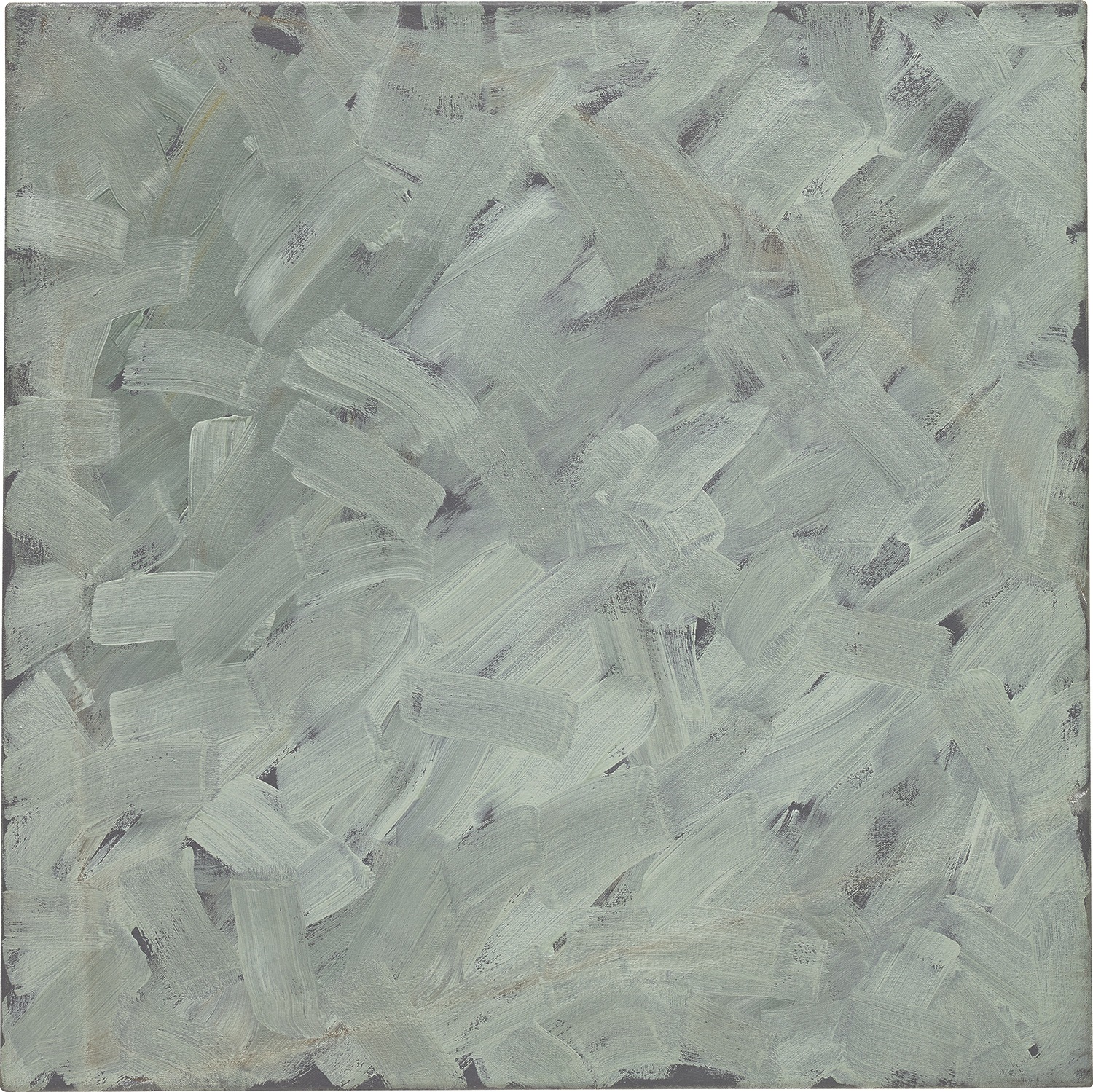
Raoul De Keyser
Krijthoekcorrectie, 1978
Works from the 1960s and early 1970s represent an exciting entry point for collectors interested in the origins of his practice, while the mature paintings of the 1980s and works from his late career represent De Keyser at his most fully achieved. De Keyser died in Deinze in 2012, in the same city where he had spent almost his entire life, and where so much of what he painted had its roots. His passing drew tributes from institutions and fellow artists across Europe and beyond, a measure of the esteem in which he was held by those who had followed his career most closely. What he left behind is a body of work of remarkable coherence and depth, paintings that ask for slowness in an era that rewards speed, that find the monumental within the intimate, and that demonstrate, with quiet conviction, that the most enduring art is often made furthest from the center of attention.
To encounter a De Keyser is to be reminded of what painting, at its most considered and most human, can do.
Featured Works
Explore books about Raoul De Keyser
Raoul De Keyser: Paintings and Drawings
Museum of Modern Art
Raoul De Keyser
Dieter Schwarz
Raoul De Keyser: Works on Paper
Kunsthalle Basel
Raoul De Keyser: A Retrospective
Documenta and Museum Fridericianum
De Keyser Paintings 1984-2004
Ghent Museum of Contemporary Art