Ramiro Gomez (now Jay Lynn Gomez)
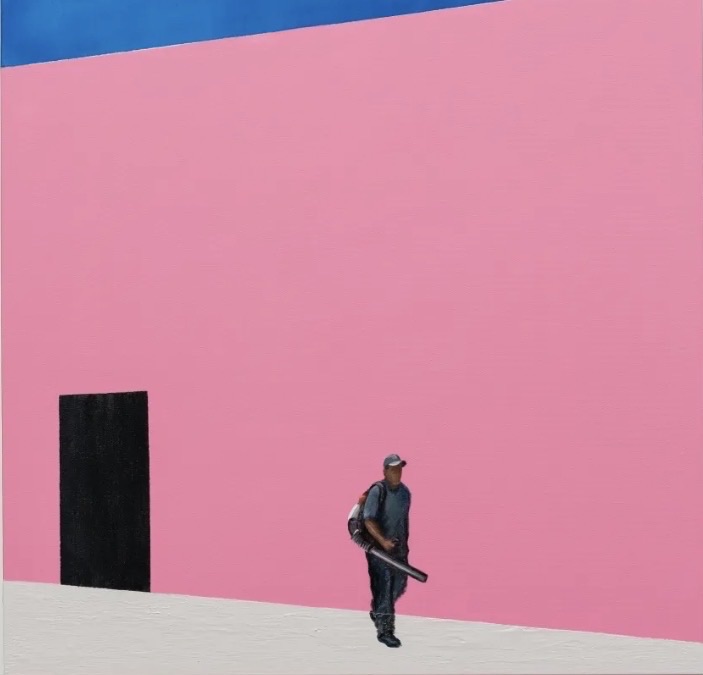
Ramiro Gomez Makes the Invisible Radiant
Artist Spotlight · The Collection Editorial
“I want to bring visibility to people who are often overlooked, who are in plain sight but not really seen.”
Ramiro Gomez, interview with the Los Angeles Times
In recent years, few artists working in the United States have generated as much genuine critical and popular momentum as Ramiro Gomez. His work has appeared in major museum collections and earned sustained attention from curators at institutions attuned to the most urgent conversations in contemporary art. At a cultural moment when questions of labor, immigration, and belonging sit at the center of American life, Gomez arrives not as a polemicist but as a portraitist of uncommon empathy, a painter and maker of objects who insists on the full humanity of people that the art world has historically looked past. Gomez was born in 1986 in San Bernardino, California, to immigrant parents whose lives embodied the very themes he would later explore in paint and cardboard.
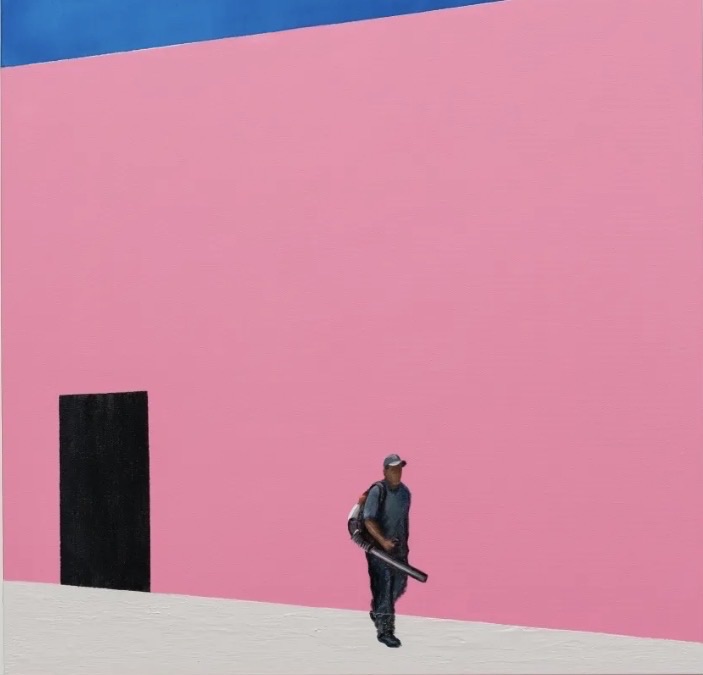
Ramiro Gomez (now Jay Lynn Gomez)
Paul Smith Store, Los Angeles, 2016
Growing up in the Inland Empire, he absorbed firsthand the texture of working class immigrant experience in the American West, the long hours, the commutes, the quiet dignity of labor performed without recognition. That formation would prove foundational. Before committing to art full time, Gomez worked as a live in nanny for a family in West Hollywood, an experience that gave him direct access to the social geography of Los Angeles and to the peculiar invisibility that domestic workers navigate daily inside the homes of the affluent. It was during that period in West Hollywood that Gomez began making his earliest cardboard cutouts, life size figures of nannies, gardeners, and housekeepers placed within the very landscapes they tended.
The intervention was simple and devastating: figures cut from cardboard and painted with recognizable care, positioned in manicured gardens or beside luxury automobiles, visible only until someone decided they were not. The gesture was both activist and formally elegant, drawing on a long tradition of public and site specific art while insisting on a specificity of subject matter that institutions had rarely honored. Those early works announced an artist who understood that scale, material, and placement were not neutral choices. His painted canvases, which developed alongside the cutouts and have grown increasingly ambitious in scale and surface, bring together acrylic, spray paint, and house paint in compositions that vibrate with color and life.
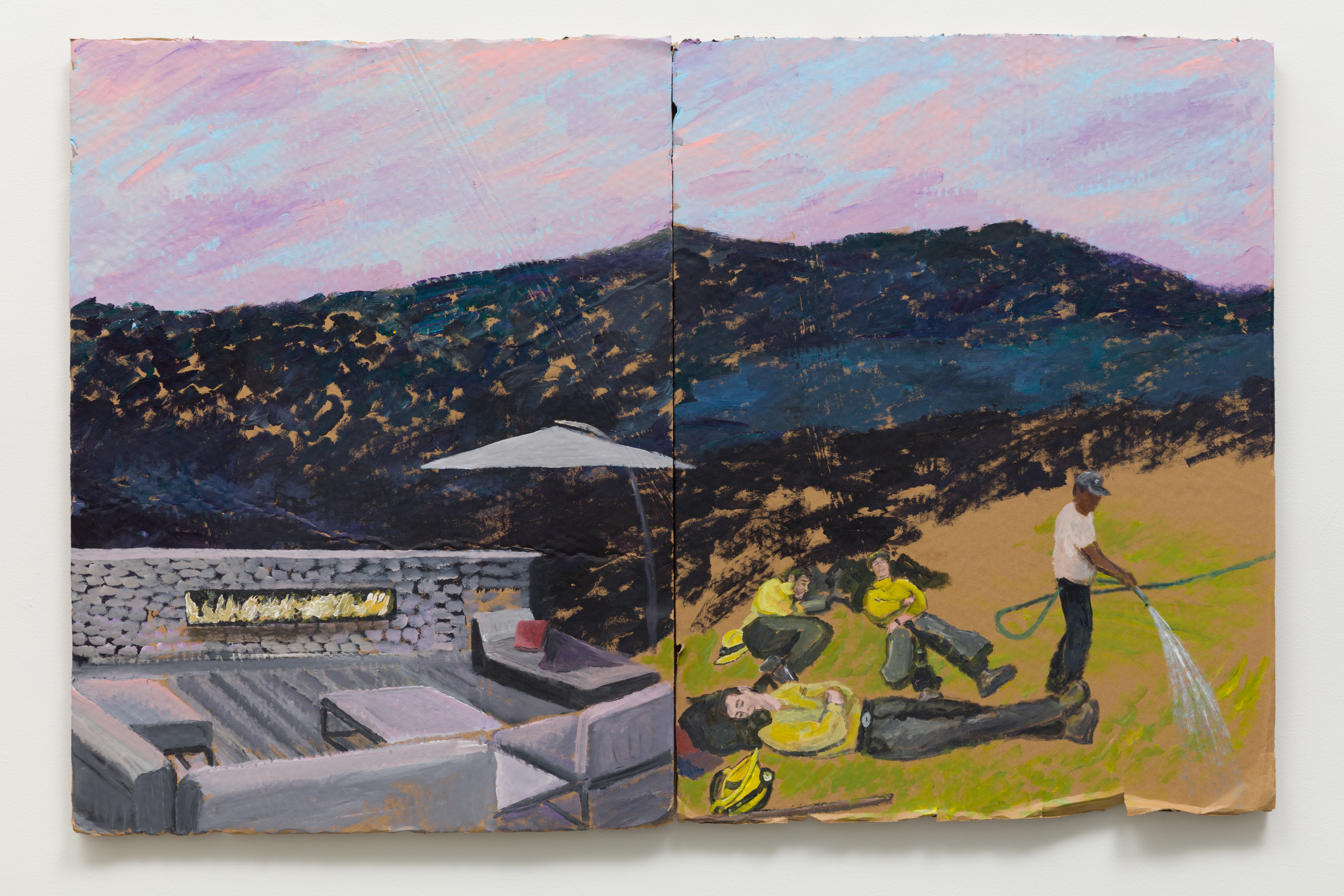
Ramiro Gomez (now Jay Lynn Gomez)
After the Fire, 2019
Works like Ruido, completed in 2019, demonstrate how Gomez has evolved beyond document or protest into something richer and more formally complex. The layering of paint types is itself a kind of argument: house paint, the medium of maintenance and anonymous labor, elevated onto the gallery wall alongside the spray paint of urban vernacular expression. The result is a surface that rewards sustained looking, with passages of great tenderness nestled within compositions of real visual energy. Paul Smith Store, Los Angeles, an archival pigment print from 2016, captures another dimension of Gomez's practice.
Working from or in dialogue with the visual language of advertising and display, he places a worker figure against the gleaming surfaces of a luxury retail environment, making visible the labor that sustains the world of consumption that such stores represent. The photograph operates as both critique and portrait, and it demonstrates Gomez's ease moving between media. Whether on canvas, cardboard, or photographic paper, his eye is consistent and his intention clear. After the Fire, also from 2019 and executed in acrylic on cardboard, shows his willingness to address catastrophe and resilience through the lives of ordinary people rather than through abstraction or spectacle.
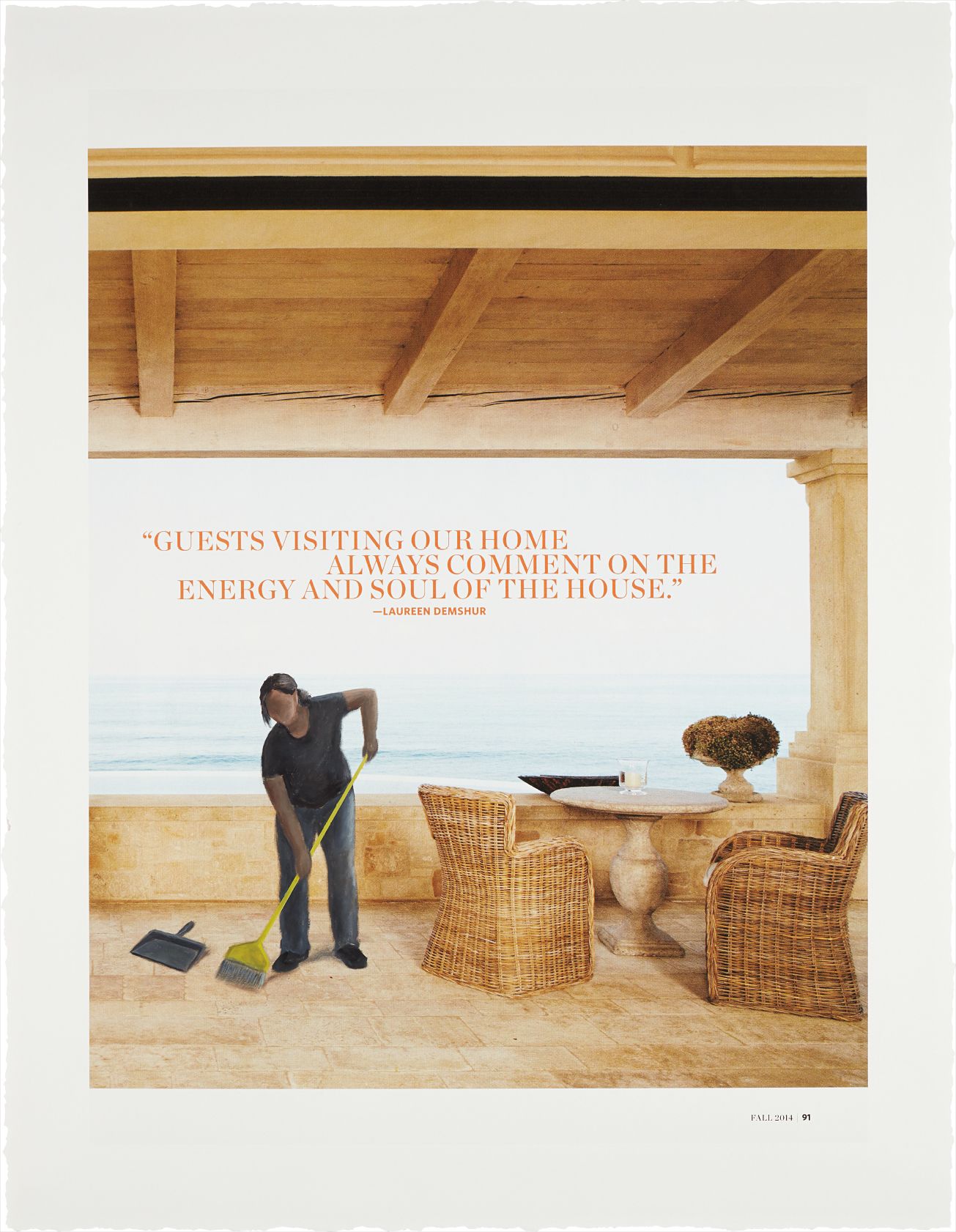
Ramiro Gomez (now Jay Lynn Gomez)
Energy and Soul, 2015
For collectors, Gomez represents an opportunity that is simultaneously urgent and historically grounded. His work sits within a distinguished lineage of American social realism and politically engaged figuration, connecting to artists like John Biggers, Carmen Lomas Garza, and the broader tradition of Chicano muralism that transformed the visual culture of the American Southwest in the late twentieth century. At the same time, his practice is in active, evolving conversation with contemporary peers working at the intersection of identity, labor, and place. Collectors who have been drawn to artists like Titus Kaphar or Jordan Casteel will find in Gomez a kindred spirit whose formal intelligence matches his moral seriousness.
The market for Gomez's work has grown steadily as institutional recognition has deepened. His pieces have entered notable collections and generated consistent interest from collectors who understand that mid career painters with a clearly defined vision and a subject matter of genuine cultural importance tend to reward sustained commitment. The works available on The Collection represent different facets of his practice, from the photograph that places labor inside the vocabulary of luxury to the painted canvases that carry the full weight of his technical development. For a collector entering his work now, there is both the pleasure of owning something beautiful and the satisfaction of participating in an art historical conversation that is only growing more significant.
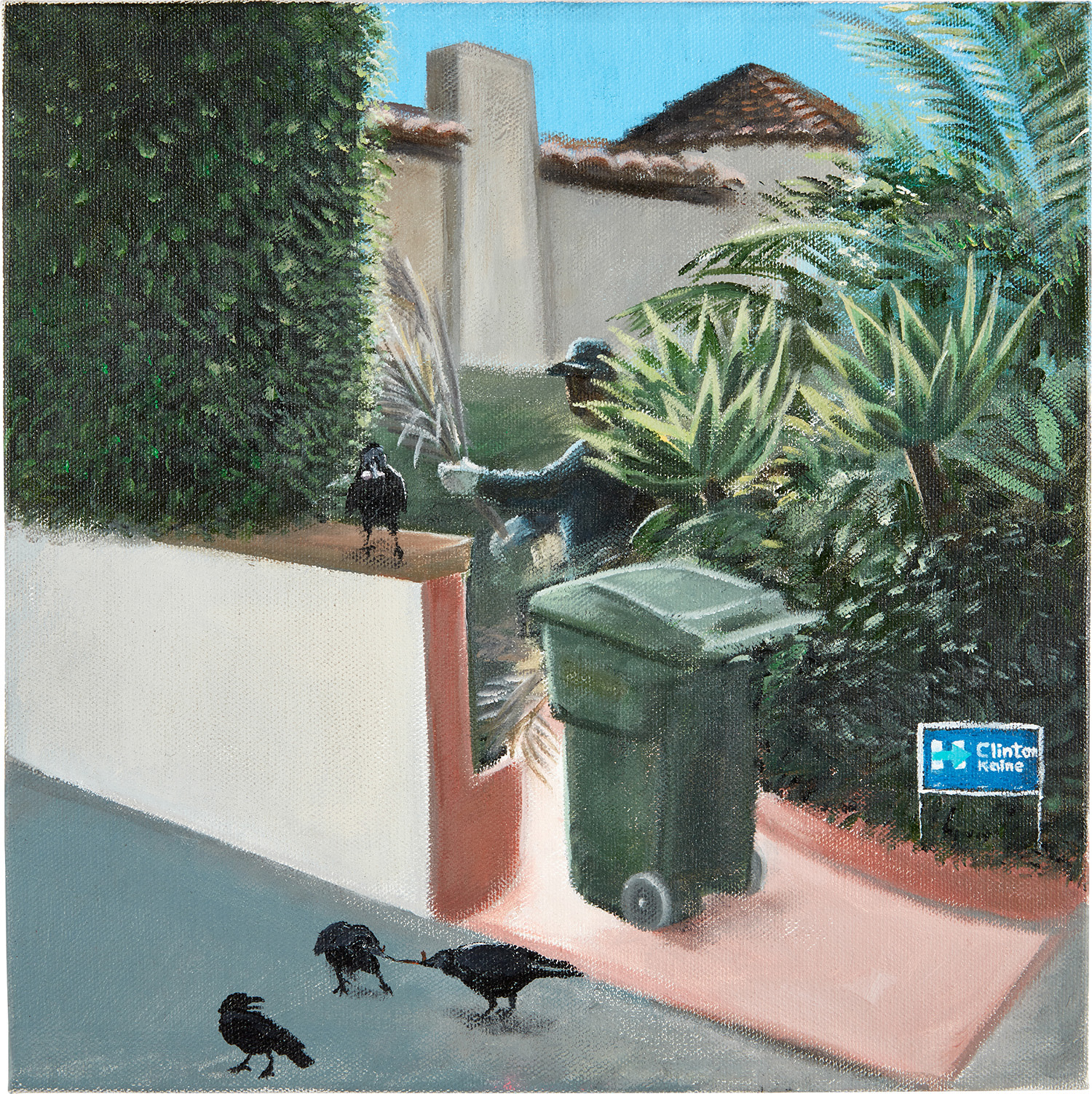
Ramiro Gomez (now Jay Lynn Gomez)
The Squabbling Crows (Election Day Afternoon on the West Side of Los Angeles)
What ultimately makes Gomez so important is that he refuses the two easiest paths available to an artist working with politically charged material. He does not aestheticize suffering into something palatable for comfortable audiences, nor does he reduce his subjects to symbols or statistics. He paints and cuts and places people, specific, dignified, fully rendered people, into the visual field and asks us to hold their gaze. In a country still negotiating its relationship to immigration, to domestic labor, to the hierarchies of who gets seen and who does not, that act of insistence is not merely political.
It is generous, and it is art at its most necessary.