Rafael Coronel
Rafael Coronel: A Master of Luminous Mystery
Artist Spotlight · The Collection Editorial
There is a moment, standing before a Rafael Coronel canvas, when the figure looking back at you feels more alive than anyone in the room. It is a sensation that has drawn collectors, curators, and fellow artists to his work for decades, and it explains why institutions from the Museo de Arte Moderno in Mexico City to the Smithsonian have long held his paintings in their permanent collections. Coronel occupies a singular position in the history of Mexican art, neither a muralist in the tradition that preceded him nor a pure abstractionist in the vein of his contemporaries, but something altogether his own: a painter of the interior world, of faces that carry entire lifetimes in a single expression. As interest in twentieth century Latin American modernism continues to deepen among collectors globally, Coronel's work feels more urgently relevant than ever.
Rafael Coronel
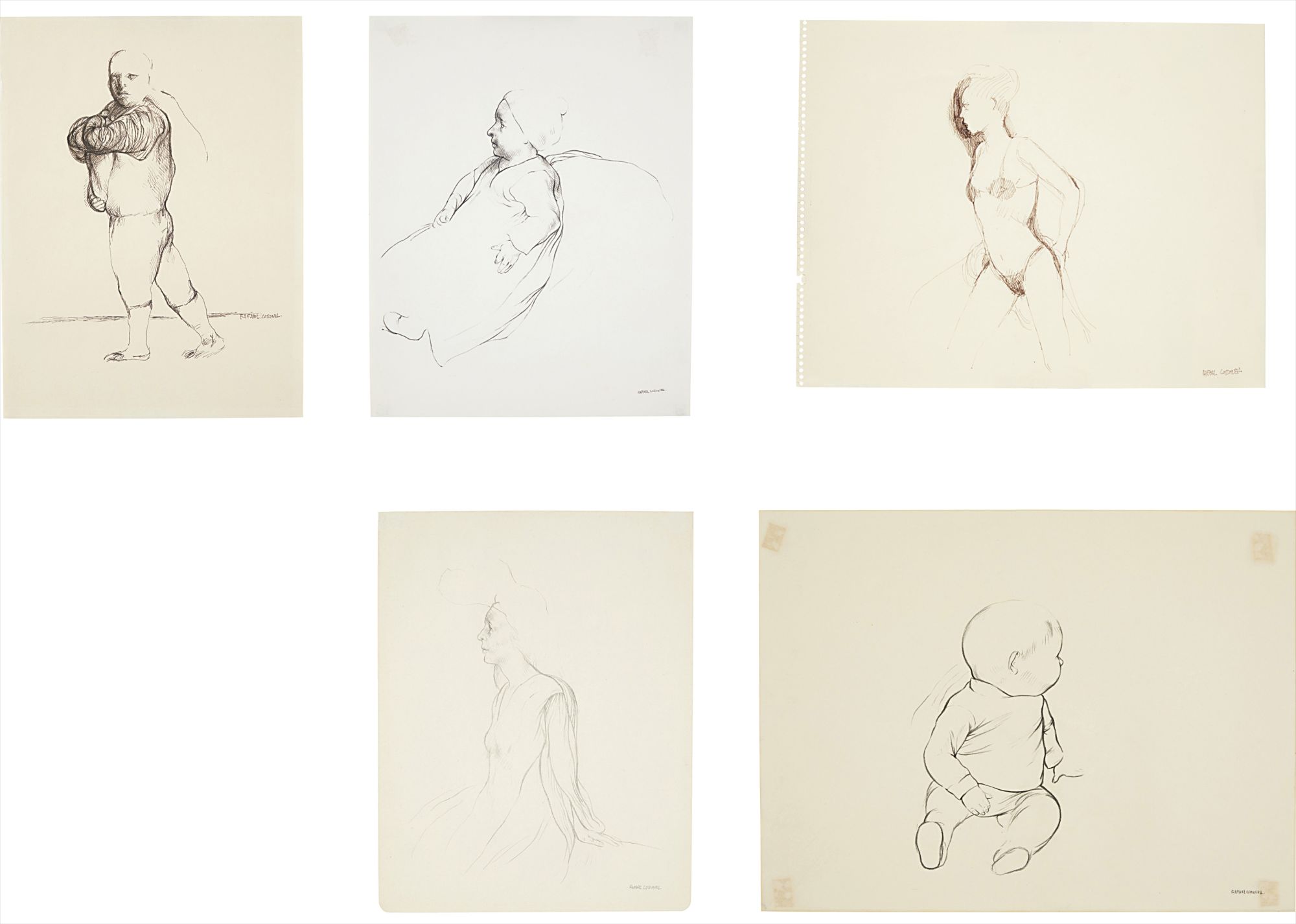
graphite on paper
Rafael Coronel was born in 1932 in Zacatecas, Mexico, a colonial silver city whose austere beauty and deep indigenous heritage left an indelible mark on his visual imagination. The landscape of Zacatecas, with its ochres and silvers, its baroque churches and dusty plazas, its population of miners and wanderers and penitents, became an almost unconscious vocabulary for the artist. He came of age at a moment when Mexican art was transforming itself, still in the long shadow of the great muralists but increasingly restless with that tradition's heroic, collective ambitions. Coronel was drawn instead to the particular, the solitary, the quietly overlooked.
His move to Mexico City brought him into one of the most charged artistic circles imaginable. He became the son in law of Diego Rivera, marrying Ruth Rivera and entering the orbit of a family and a generation that had remade the visual culture of an entire nation. Yet rather than chafing under that enormous influence or simply inheriting it, Coronel charted a course of disciplined independence. He studied and absorbed but remained fundamentally oriented toward his own obsessions: the psychology of the face, the dignity of marginalized figures, the way silence and shadow could be made to carry emotional weight that color and rhetoric could not.
Rafael Coronel
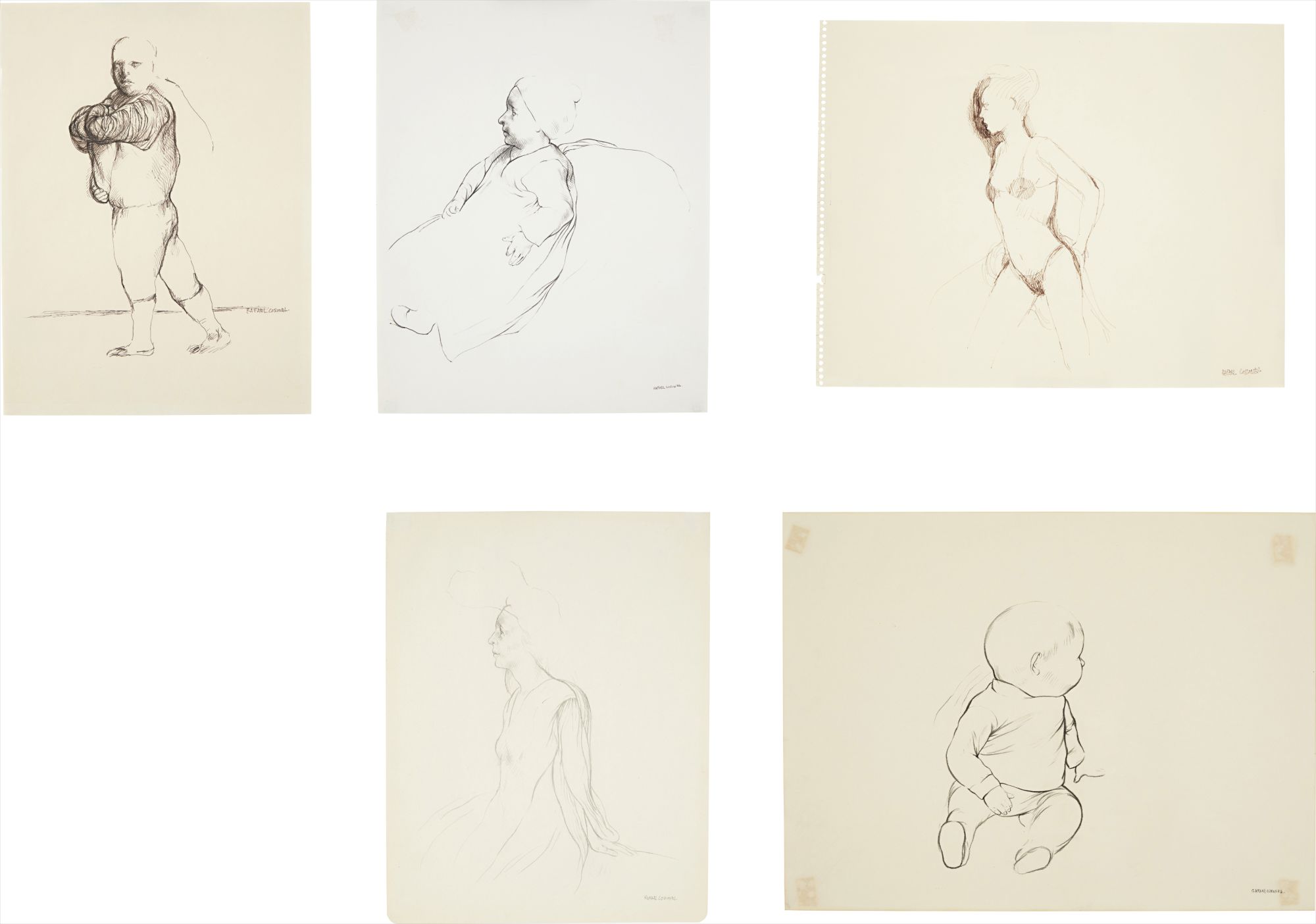
circa 1980
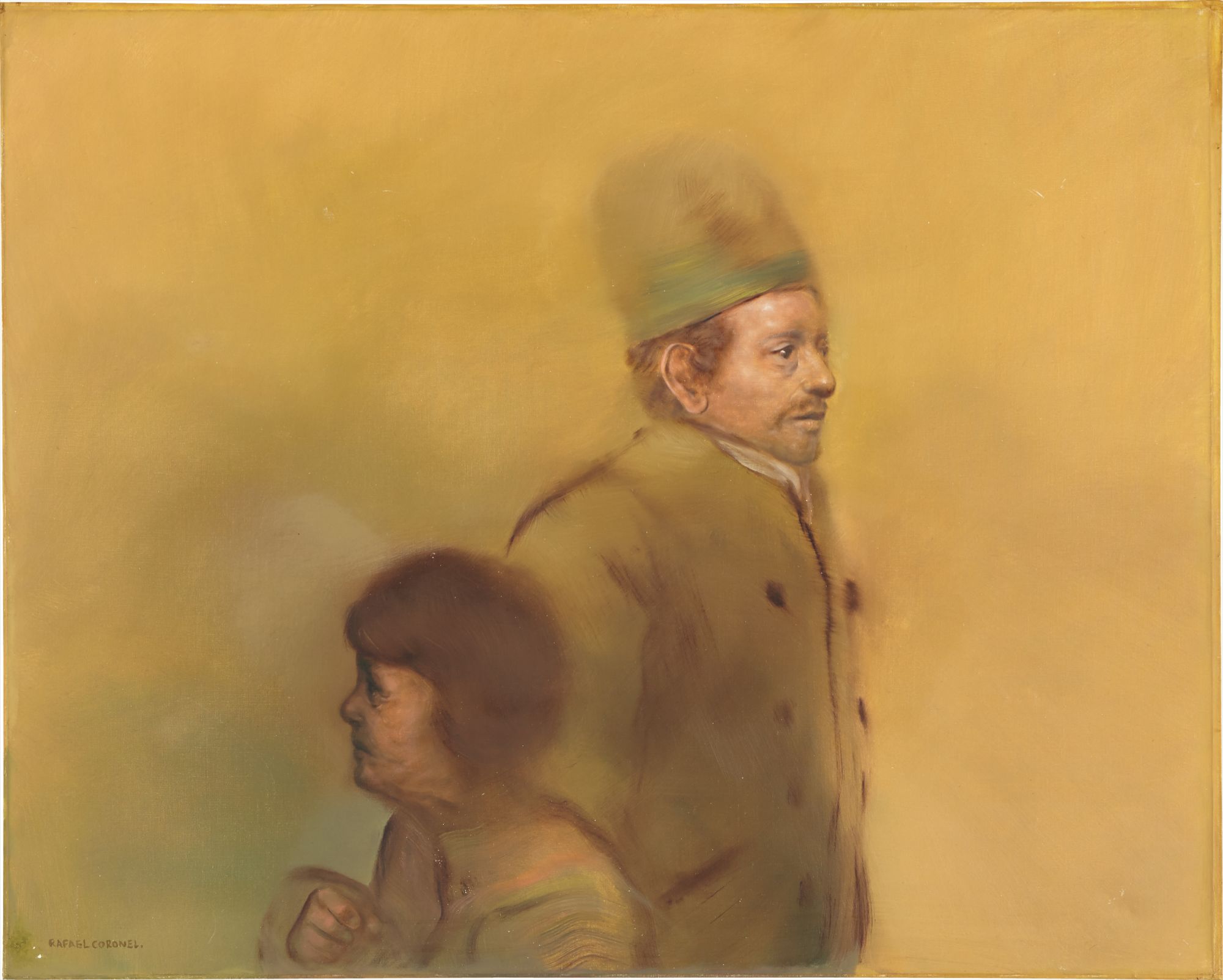
This combination of deep rootedness and genuine independence defines his early formation and distinguishes him from his contemporaries. The central achievement of Coronel's practice is his treatment of the anonymous figure. He painted beggars, masked subjects, wanderers, and unnamed individuals with a gravity and tenderness that transforms them from social types into universal presences. His palette is muted and mineral, built from earthy browns, ashen whites, faded cobalts, and the warm grays of old stone, colors that feel as though they have been drawn from the walls of Zacatecas itself.
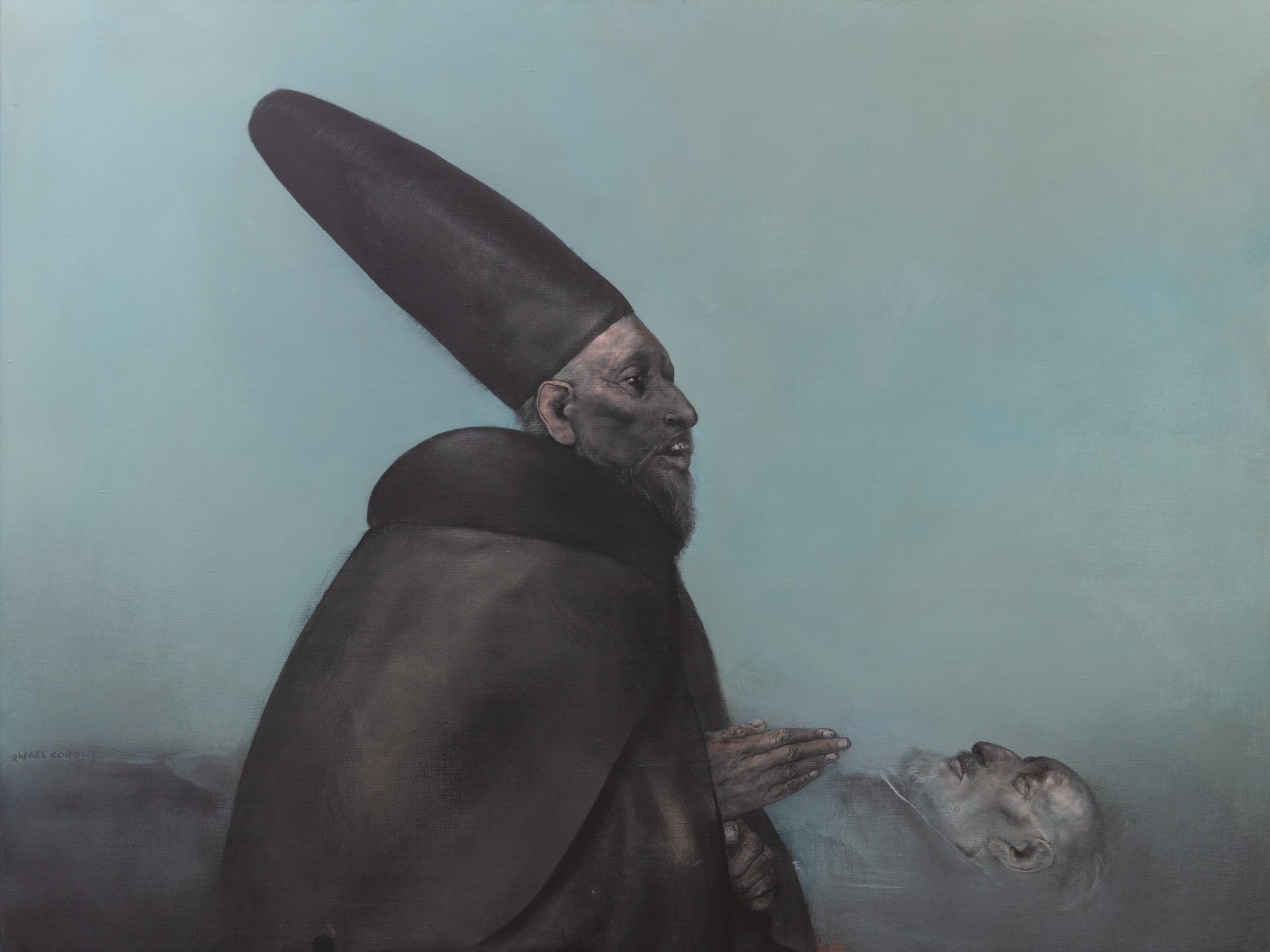
His technique layers paint with a slow, ruminative density, so that surfaces accumulate history and texture the way old walls do. There is nothing sentimental in this work, and there is nothing condescending. These are portraits of the full weight of human experience, rendered with a kind of reverence. Among his most celebrated works, La Bendicion from 1968, executed in acrylic on canvas, stands as a definitive statement of his vision.
Rafael Coronel
La Bendicion, 1968
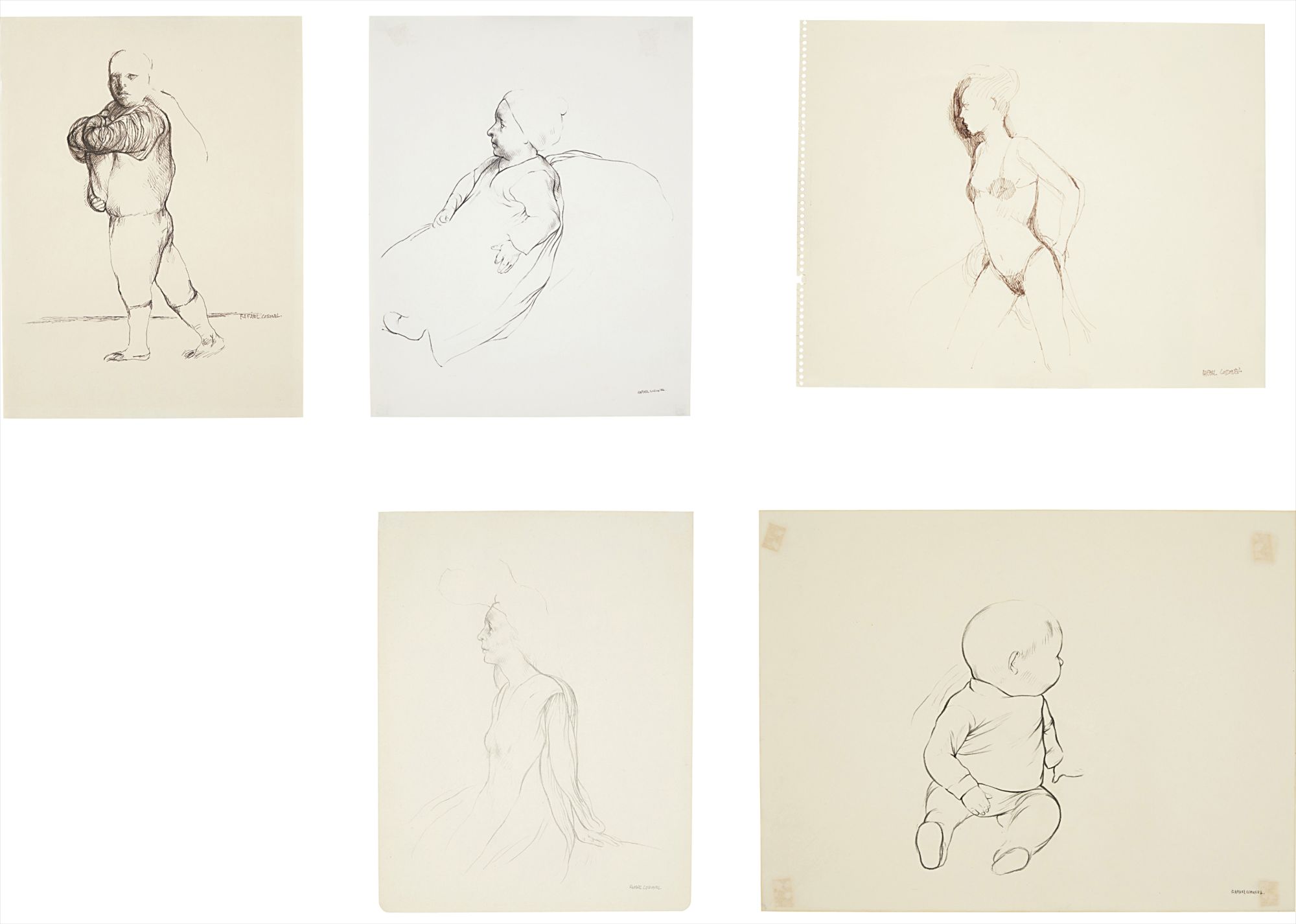
The painting's quiet ritual gesture, a blessing conferred or received, carries the full freight of Coronel's engagement with faith, vulnerability, and the sacred dimensions of ordinary life. His graphite works on paper reveal another dimension of his practice, demonstrating that his mastery is not dependent on the richness of paint but is rooted in an uncompromising command of line and tonal structure. These works on paper are increasingly prized by collectors who recognize in them the unmediated directness of a great draftsman thinking through his most essential concerns. His oil portraits, sometimes simply known by his own name as a title, suggest an artist willing to turn his unflinching gaze even toward the act of self accounting.
For collectors, Coronel represents a compelling proposition that has only grown more compelling with time. His work sits at an intersection that sophisticated collections increasingly prize: fully realized within the Mexican modernist tradition, yet genuinely distinct from it; figurative at a moment when figuration has reasserted itself at the very center of the art market; and psychologically complex in a way that sustains attention across years of living with a work. Auction appearances of significant Coronel canvases have consistently attracted serious bidders, and the market for his works on paper has deepened as collectors recognize the quality of his draftsmanship. Works from the late 1960s and 1970s, when his style was at its most concentrated and assured, are particularly sought after.
Rafael Coronel
Rafael Coronel
To understand Coronel's place in art history, it helps to consider the broader constellation of figurative painters working across the Americas and Europe in the postwar decades. His psychological intensity invites comparison with artists like Lucian Freud, whose commitment to the unsparing scrutiny of the human face shares something essential with Coronel's project, even as their surfaces and sensibilities differ profoundly. Within Latin American art, he might be placed alongside Francisco Toledo, another Mexican artist whose work carries deep roots in regional culture while achieving universal resonance. The difference is that Coronel's world is urban and anonymous where Toledo's is mythic and indigenous, yet both share a refusal to aestheticize poverty and a genuine ethical seriousness in their engagement with overlooked lives.
What makes Rafael Coronel essential now, decades into a career of singular dedication, is precisely the quality that first made his work unsettling to those expecting something more declarative or politically legible. He insisted on the interior life of people who were culturally invisible, on the mystery at the center of faces that his society had trained itself not to look at too closely. In an art world that has returned with great seriousness to questions of figuration, representation, and the ethics of the painted gaze, Coronel's entire body of work reads as a long, quiet argument for the transformative power of genuine attention. To collect his work is to bring that argument into your daily life, into the room where you begin and end each day, and to be changed by it in ways that take years to fully understand.
Explore books about Rafael Coronel
Rafael Coronel
Jacques Lassaigne
Rafael Coronel: Retrospectiva
Instituto Nacional de Bellas Artes
Rafael Coronel: Obra Gráfica
Rafael Coronel
The Art of Rafael Coronel
Raquel Tibol
Rafael Coronel: Dibujos
Museo de Arte Moderno