R. H. Quaytman
R. H. Quaytman: Painting Rewritten Chapter by Chapter
Artist Spotlight · The Collection Editorial
“Painting is an object in space. It has edges. It has a relationship to the wall and to the room.”
R. H. Quaytman, interview with Artforum
In the galleries of the Museum of Modern Art, or the spare white rooms of a Zurich kunsthalle, something quietly extraordinary happens when a R. H. Quaytman exhibition opens. The walls do not simply receive paintings.
R. H. Quaytman
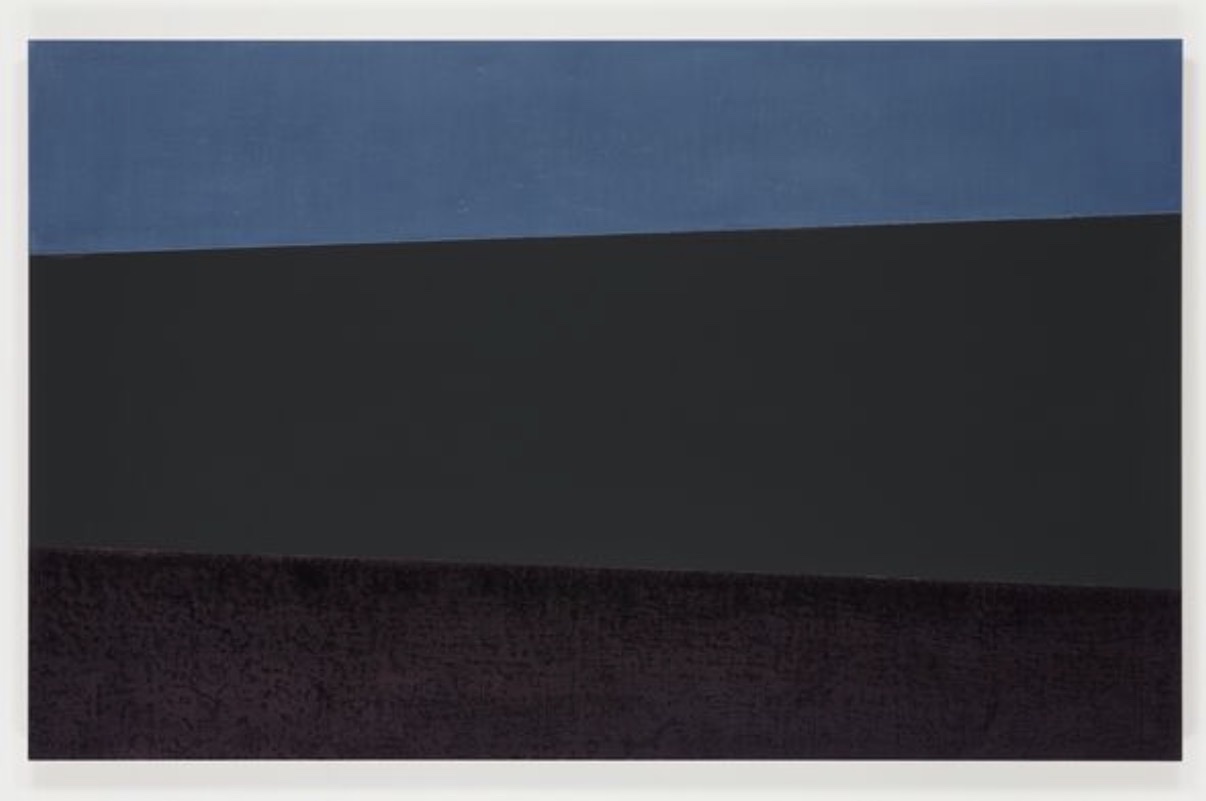
Morning, 4.545%, Chapter 30, 2016
They become arguments. They become memory. The paintings arrive in groups, organized into what Quaytman calls chapters, and each chapter is a sustained conversation with the specific building, the specific institution, the specific light and history of the place where it will be seen. It is a practice unlike almost any other in contemporary art, and in recent years, as her retrospective engagements and museum presentations have deepened her international reputation, Quaytman has come to occupy a singular and quietly essential position in the story of painting after postmodernism.
Rebecca H. Quaytman was born in Boston, Massachusetts in 1961, into a family with deep roots in American intellectual and artistic life. Her father, Harvey Quaytman, was a respected abstract painter whose work engaged seriously with the legacies of color field painting and minimalism, and his influence was both an inheritance and a productive complication for his daughter. She studied at Bard College and later at the Glasgow School of Art, where the rigorous British critical culture of the 1980s sharpened her instinct for connecting visual form to institutional and social context.
R. H. Quaytman
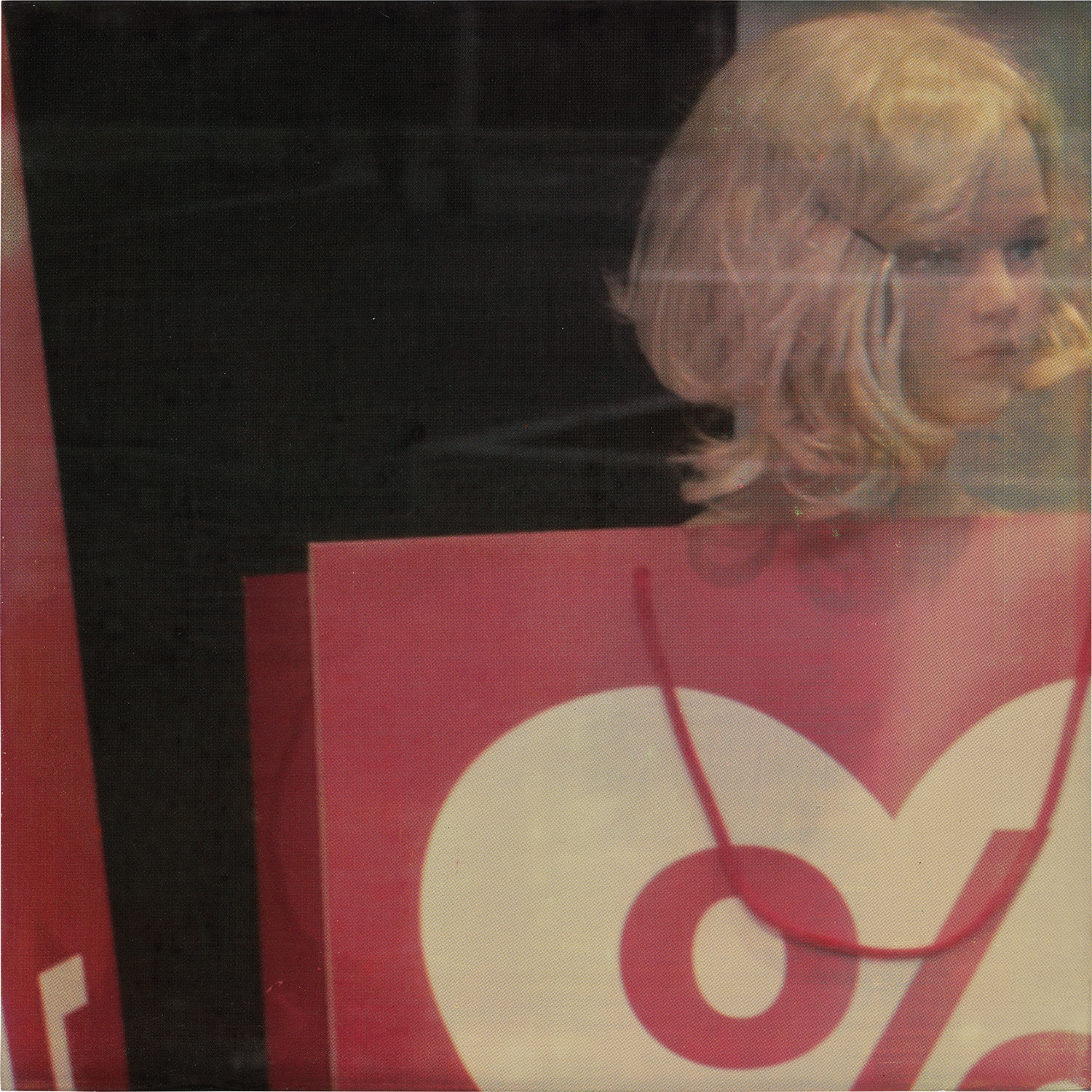
"ד", Chapter 24, 2012
These years of formation gave her both a painter's sensibility and a theorist's patience, a combination that would prove rare and generative. Quaytman returned to New York and became a central figure in the downtown art community of the 1990s and early 2000s. In 2002 she cofounded the artist run space Orchard on the Lower East Side, alongside artists and critics including Michael Asher, Andrea Fraser, and Jeff Preiss. Orchard operated until 2008 and became one of the most intellectually ambitious project spaces of its era, a place where the social and economic conditions of art making were treated as legitimate subjects for artistic inquiry.
For Quaytman, running Orchard was not a detour from studio practice but a direct extension of it. The questions the space raised about how art circulates, who sees it, and what institutions do to meaning fed directly into the chapter system she was developing in her painting. The chapter structure is the organizing genius of Quaytman's practice and the thing that most immediately distinguishes her from her peers. Beginning formally around 2001, each new body of work constitutes a numbered chapter, and each chapter responds to the architecture, collection, history, and institutional identity of the venue for which it is made.
R. H. Quaytman
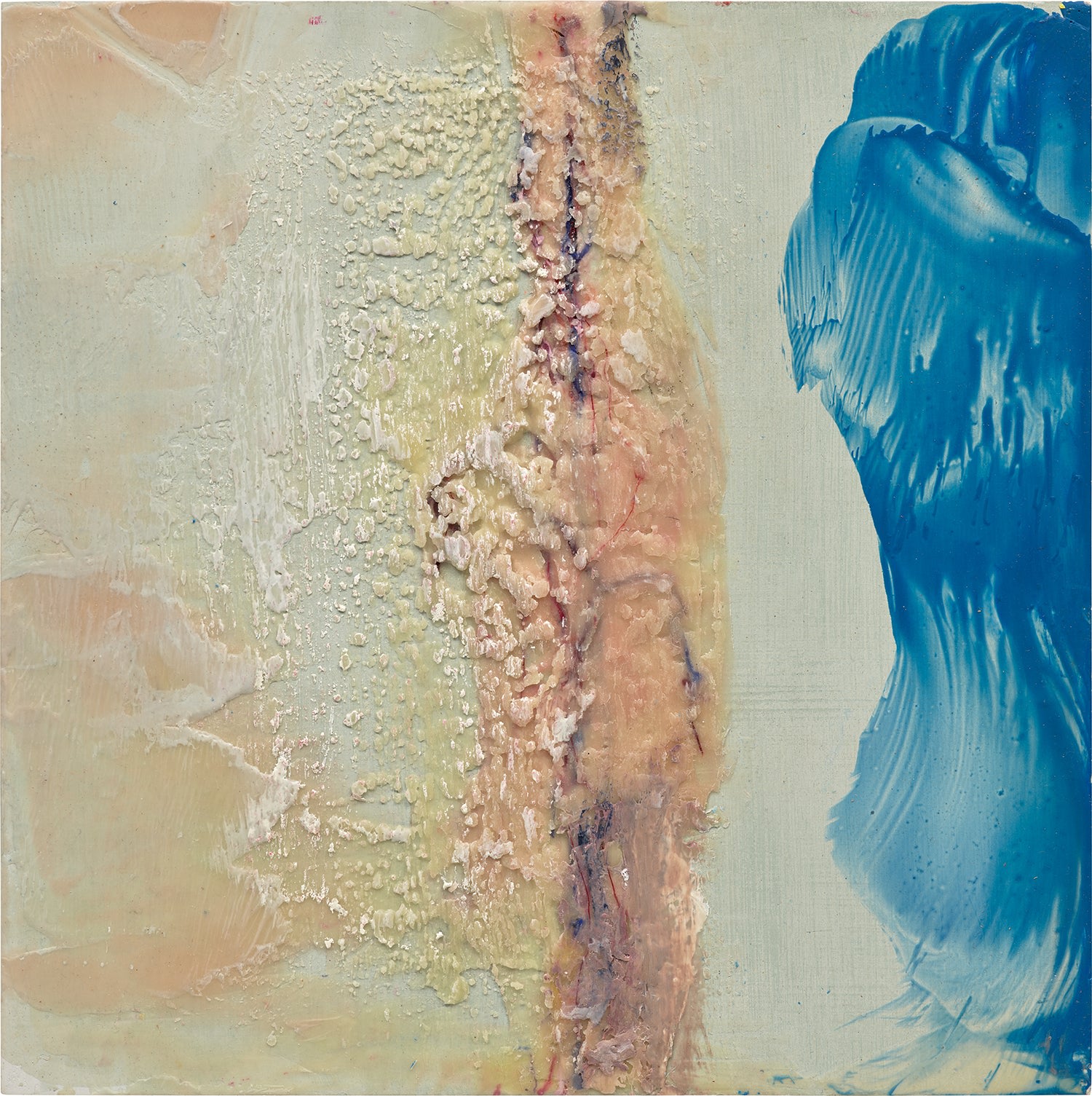
December, 2014
Chapter 24, represented by the striking work titled simply with the Hebrew letter dalet, was created in relation to Tel Aviv and its charged landscape of memory and image, and it incorporates silkscreened photographic elements alongside geometric abstraction in a way that feels simultaneously intimate and structurally airtight. Chapter 30, which includes the painting Morning, 4.545%, is a meditation on finance, time, and the optics of value, with the title itself referencing an interest rate that inflects the entire visual logic of the work. These are not merely clever conceits.
They are rigorous pictorial investigations that use numerical and linguistic systems to hold the painted surface in productive tension. The material vocabulary Quaytman employs is as precisely calibrated as her conceptual framework. She works almost exclusively on wood panels that conform to a specific set of proportions derived from the golden ratio, and these panels are prepared with gesso and sometimes lacquer, giving surfaces a luminous depth that rewards close looking. Silkscreened photographic imagery, often sourced from archival or documentary photographs, is layered with geometric forms in ways that destabilize the boundary between abstraction and representation.
The encaustic and oil panel titled December, from 2014, demonstrates how far she can push this layering toward something genuinely poetic, the wax medium giving the surface a warmth and translucency that makes the painting feel almost like a natural object. Across all her work, there is a consistent insistence that painting can carry photographic memory and conceptual argument without surrendering its essential physicality. For collectors, Quaytman's work presents a particularly compelling proposition. Because each chapter is conceived as a group, individual works carry with them the intellectual weight of the larger series, and owning a single painting is in some sense owning a fragment of an extended argument.
This gives each piece an unusually rich provenance of ideas. Her primary market has been handled through significant galleries including Gladstone Gallery in New York and Galerie Gisela Capitain in Cologne, and her institutional profile has grown steadily through solo presentations at venues including the Art Institute of Chicago, the Wexner Center for the Arts, and major European kunsthalles. Works that enter the secondary market carry strong scholarly interest, and the relative scarcity of individual chapters in private hands only deepens their desirability. Collectors drawn to the intersection of painting, photography, and conceptual rigor, those who also admire artists like Wade Guyton, Laura Owens, or Silke Otto Knapp, tend to respond immediately to Quaytman's work.
Within the broader arc of art history, Quaytman's practice can be understood as a sustained and original answer to the question of what painting might do after the exhaustions of the 1980s. She is in conversation with artists who tested the limits of the painted surface, among them Sigmar Polke and Gerhard Richter, but she refuses the ironic distance that often characterized that generation. She is also in dialogue with institutional critique, with the legacies of artists like Michael Asher and Hans Haacke, but she insists on the primacy of the painted object in a way that those figures generally did not. The result is a body of work that feels genuinely synthetic in the best sense, drawing on multiple traditions without being reducible to any of them.
What Quaytman has built over more than two decades is something rare: a practice with its own complete internal logic, a world with its own rules of time and space and meaning. The chapter structure means that the work is always growing, always in progress, always generating new relations between past episodes and present circumstances. For anyone thinking seriously about collecting painting that will matter in the long term, that will deepen in significance as the chapters accumulate and the conversations multiply, her work represents one of the most rewarding possibilities available in contemporary art today.