Prince Paul Troubetzkoy
The Prince Who Captured Life Itself
Artist Spotlight · The Collection Editorial
Imagine the studio of a restless aristocrat, hands perpetually dusted with clay, eyes fixed on a sitter who cannot quite keep still. This is how Prince Paul Troubetzkoy preferred to work: quickly, intuitively, catching the living moment before it dissolved into pose or performance. That electric approach to sculpture, so radical at the turn of the twentieth century, now feels more vital than ever. As museum audiences and private collectors rediscover the Impressionist sculptors who stood alongside Rodin, Troubetzkoy is emerging as one of the most compelling and underappreciated voices of his era, a figure whose bronzes crackle with personality and whose life story reads like a novel.
Prince Paul Troubetzkoy
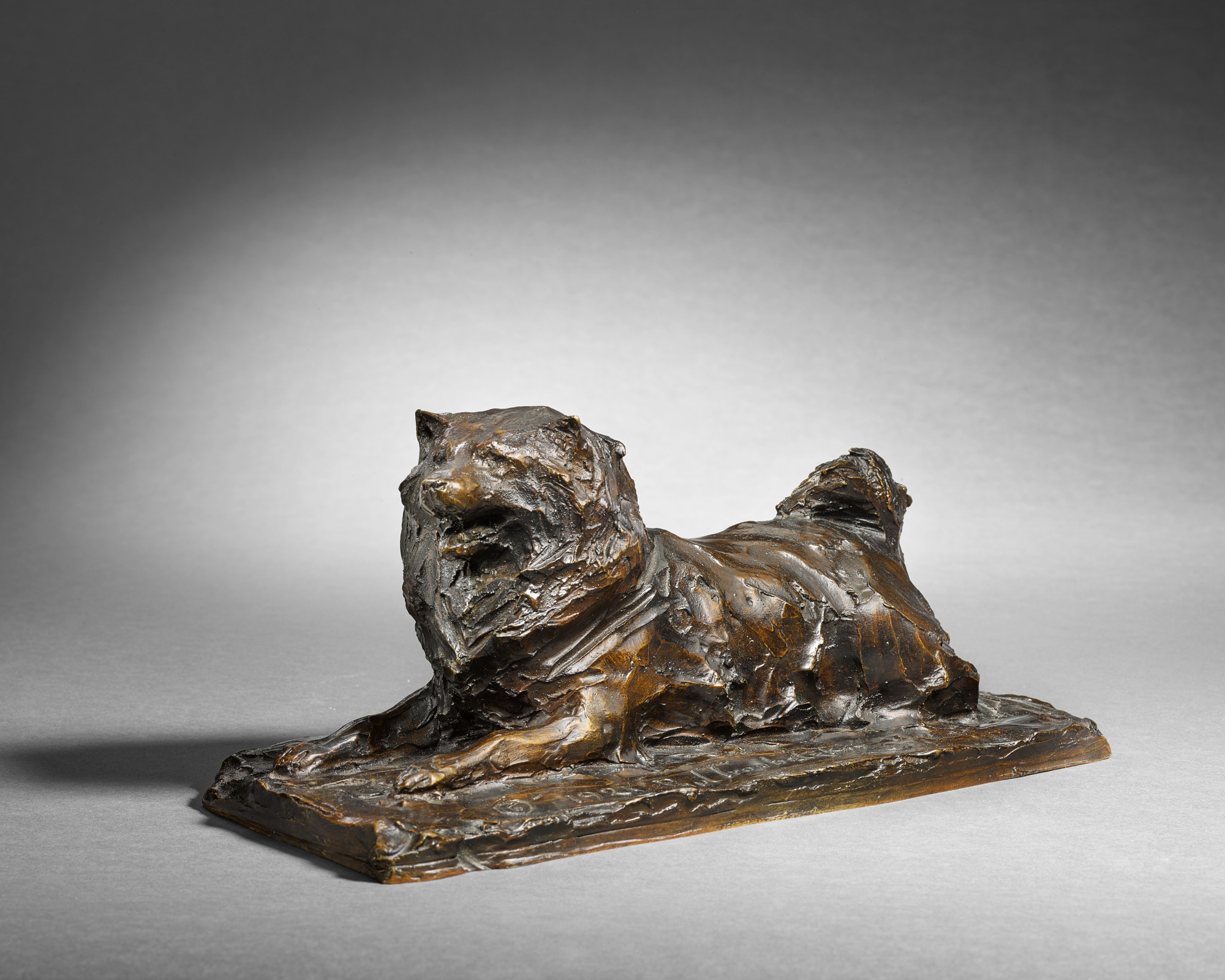
Spitz Dog
Paul Troubetzkoy was born in 1866 on the shores of Lake Maggiore in northern Italy, at his family's villa in Intra. His father was Prince Pierre Troubetzkoy, a Russian nobleman of considerable cultural refinement, and his mother Ada Winans was an American singer from New York whose warmth and musicality left a permanent mark on her son. That double inheritance, Russian soul and American openness, would define Troubetzkoy throughout his career. He grew up speaking multiple languages, moving between Italian landscapes, Russian intellectual circles, and eventually the great salons of Paris and London.
He was largely self taught as a sculptor, never submitting to the formal academic training that shaped so many of his contemporaries, and that freedom from convention became his greatest asset. By his early twenties Troubetzkoy had settled in Milan, where he began attracting serious attention for his small bronzes of horses, dogs, and figures in motion. His technique was unmistakably his own: he worked directly and rapidly, preserving the thumbprints and gestural marks of the modeling process rather than smoothing them away. Where the academicians prized a polished, finished surface, Troubetzkoy embraced texture and immediacy.
Prince Paul Troubetzkoy
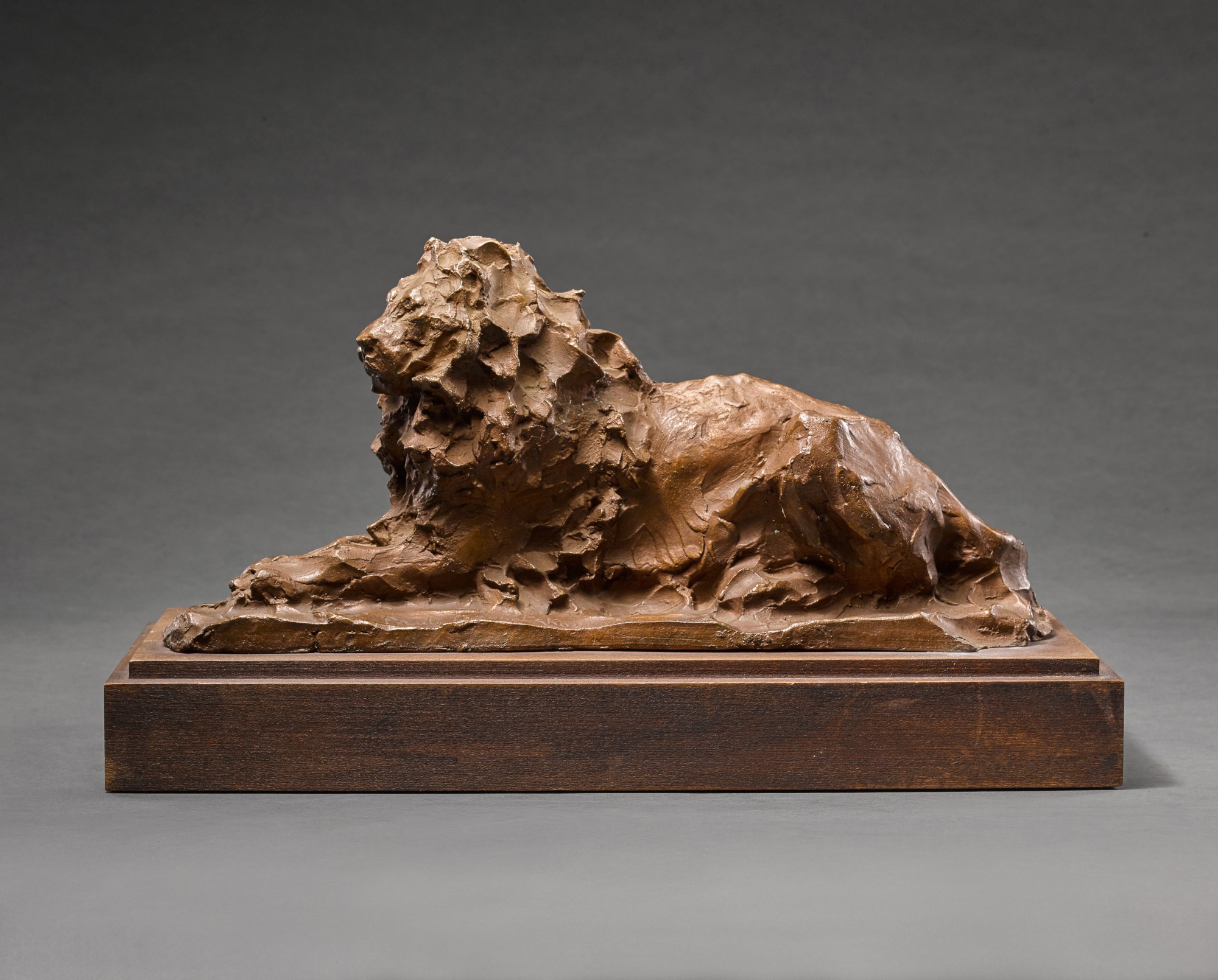
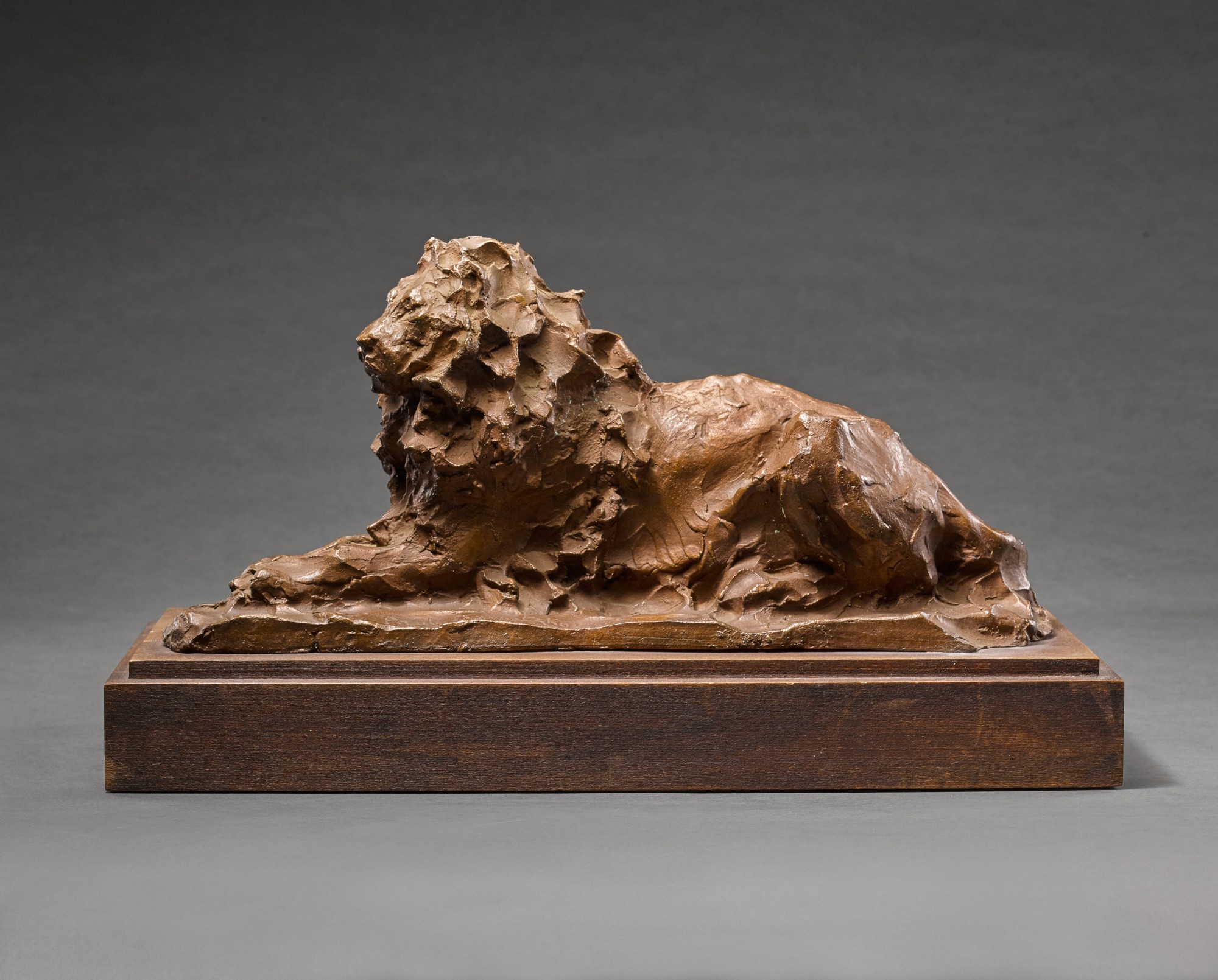
Lion
The result was sculpture that seemed to breathe. In 1899 he moved to Russia at the invitation of the Moscow School of Painting, Sculpture, and Architecture, where he taught briefly and immersed himself in the country his father had come from. It was during his Russian years that he produced what many consider his masterpiece, a monumental equestrian statue of Tsar Alexander III unveiled in Saint Petersburg in 1909, a work of such psychological intensity and formal daring that it scandalized official circles and was eventually removed from its prominent position. The tsar's own son reportedly found the portrait unflattering, which was perhaps the highest compliment Troubetzkoy could have received.
It was also in Russia that Troubetzkoy formed one of the great artistic friendships of his age, with Leo Tolstoy. The two men were drawn together by their shared vegetarianism, their love of animals, and their mutual suspicion of convention and authority. Troubetzkoy made several portraits of the great novelist, capturing Tolstoy with a directness and psychological penetration that photographs of the period rarely achieved. These portrait bronzes stand among the finest likenesses in the history of sculpture.
Prince Paul Troubetzkoy
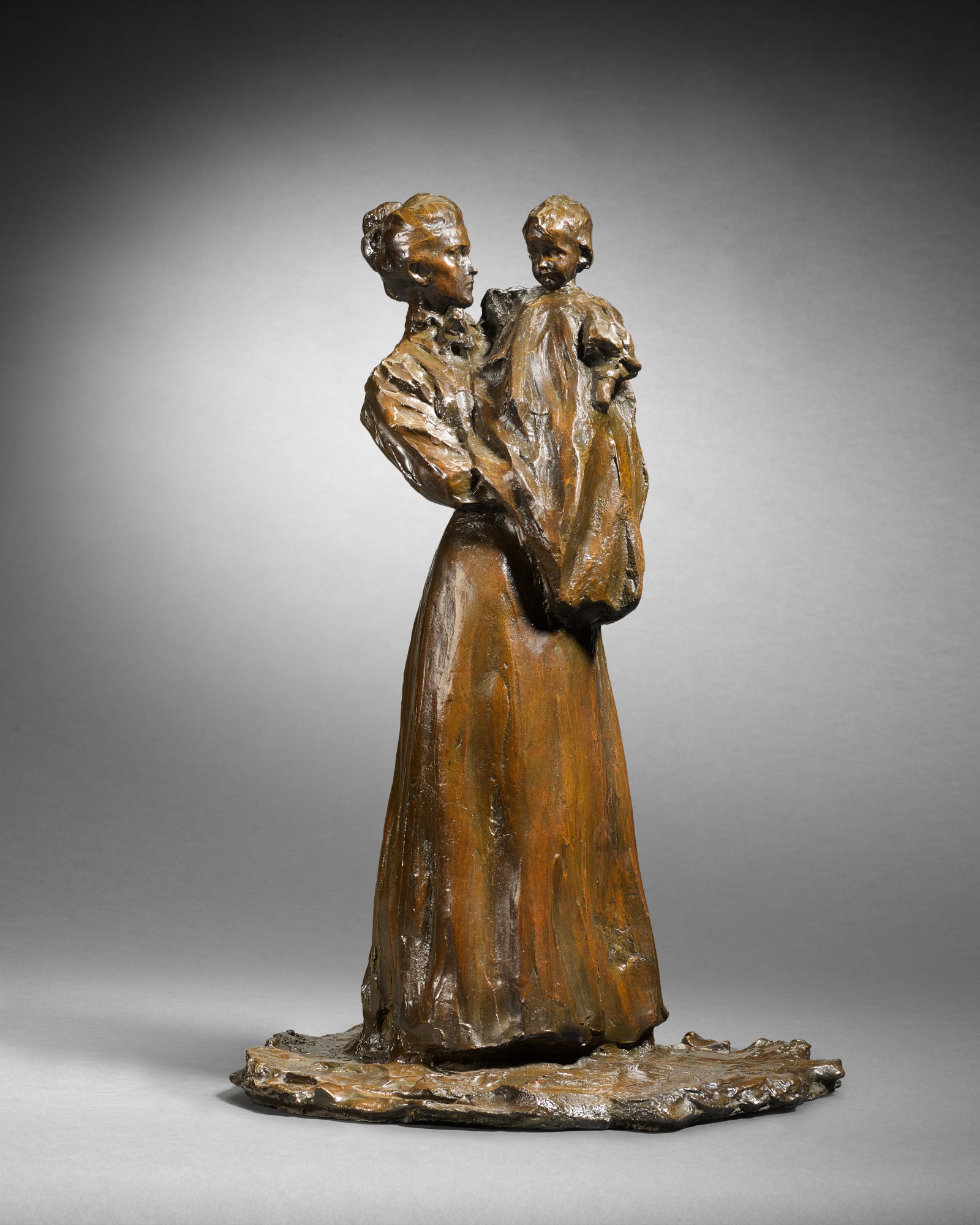
Mother and Child (Princess Gagarina and her daughter Marina)
Later, in Paris, Troubetzkoy sat with Auguste Rodin, producing a portrait of the older sculptor that Rodin himself admired. To have earned the respect of Rodin was no small thing, and it confirmed Troubetzkoy's position at the very center of early twentieth century sculptural life. The works available on The Collection offer a particularly rewarding window into the full range of Troubetzkoy's genius. The bronze portrait of Lady Constance Stewart Richardson, with its dark rich patina and sense of arrested movement, demonstrates his gift for capturing social poise without reducing a sitter to mere status.
The Mother and Child depicting Princess Gagarina and her daughter Marina is deeply tender, the figures leaning into one another with an intimacy that feels observed rather than composed. His animal studies, including the Spitz Dog and the Lion set on its wood base, reveal the naturalist's eye that ran beneath everything he did. Animals fascinated Troubetzkoy because they could not pretend, and in that sense they were perfect subjects for a sculptor committed to truth over flattery. The portrait of William Kissam Vanderbilt and the elegantly titled Dopo il Ballo, a portrait of Adelaide Aurnheimer caught in the reflective aftermath of an evening's festivities, show the breadth of his social world and the consistency of his vision across subjects drawn from very different spheres.
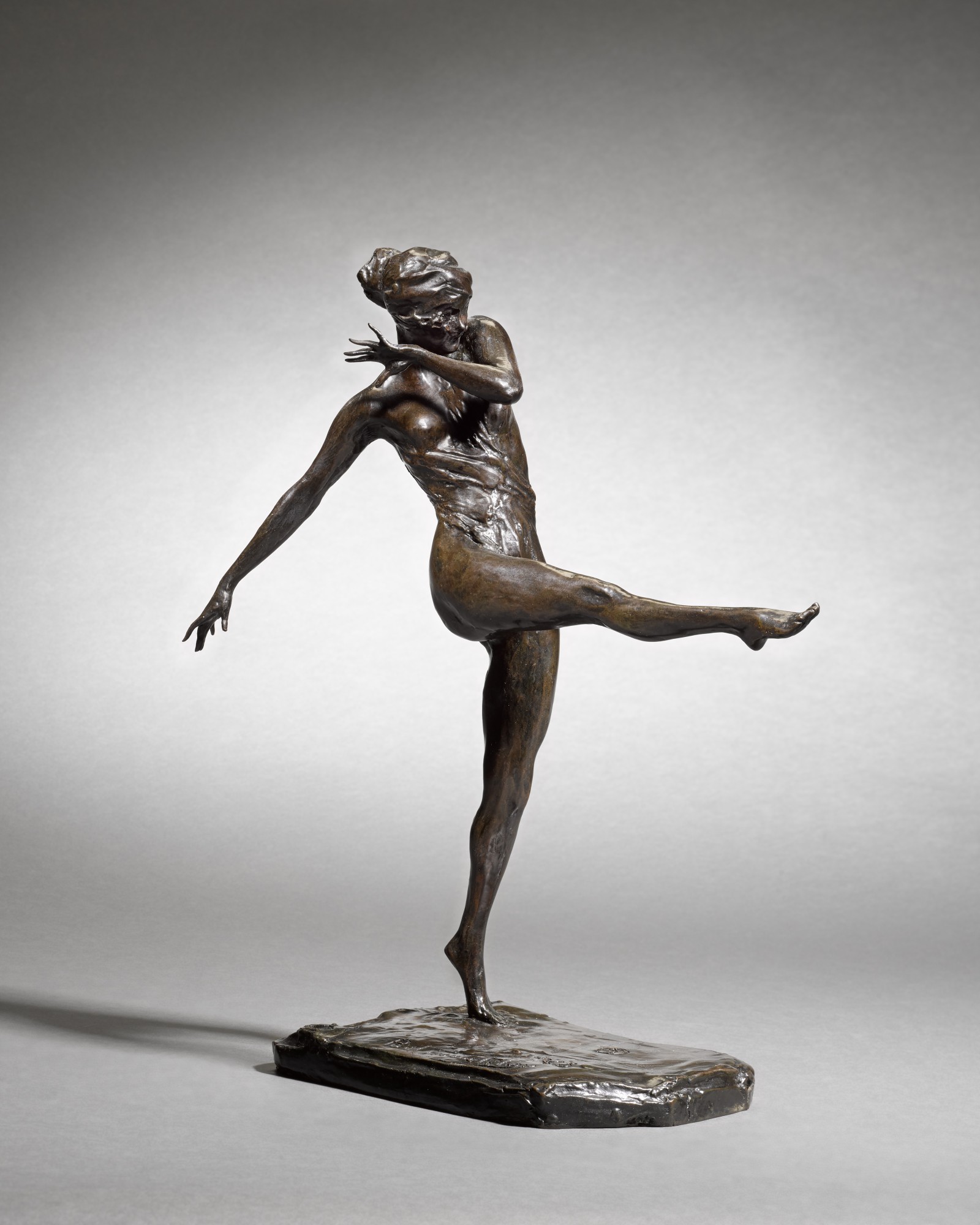
Prince Paul Troubetzkoy
Lady Constance Stewart Richardson
For collectors, Troubetzkoy represents a genuinely rewarding proposition. His works appear regularly at the major auction houses including Christie's, Sotheby's, and Bonhams, and prices for significant bronzes have risen steadily as the broader market for Belle Époque sculpture has matured. The quality to seek is immediacy: the best Troubetzkoy bronzes have a surface that still seems warm, as though the clay were set only minutes ago. Patination varies across his output, from warm golden browns to the deeper, cooler tones of his later work, and condition of the original casting matters greatly to long term value.
His portrait bronzes of known subjects command the strongest prices, but the animal studies and intimate figurines offer entry points that reward careful attention. Unlike many of his contemporaries, Troubetzkoy signed and often dated his works, which aids both attribution and scholarship. Within the broader arc of art history, Troubetzkoy occupies a fascinating position alongside other Impressionist sculptors who sought to translate the broken light and spontaneous observation of painting into three dimensions. He is most naturally compared to Medardo Rosso, the Italian sculptor who was similarly obsessed with the fleeting impression, and to the great Rodin himself, though Troubetzkoy's touch was lighter and his social world considerably wider.
He was also a contemporary of the Russian Symbolist painters and the decorative artists of the Mir Iskusstva movement, and his work shares something of their commitment to beauty as a serious intellectual and moral proposition. Troubetzkoy died in 1938 at his villa on Lake Maggiore, not far from where he had been born. He left behind a body of work that spans continents, social classes, and species, unified by the belief that the job of the sculptor is not to idealize but to see. In an era when the art market has grown newly attentive to figures who fell between canonical categories, a Russian prince who was also an American, an academic outsider who was also a society favorite, a portraitist who cared more for dogs than for decorum, his moment has arrived with full force.
To collect Troubetzkoy is to bring into your home not just a beautiful object but a living encounter with one of the most gifted hands of his age.