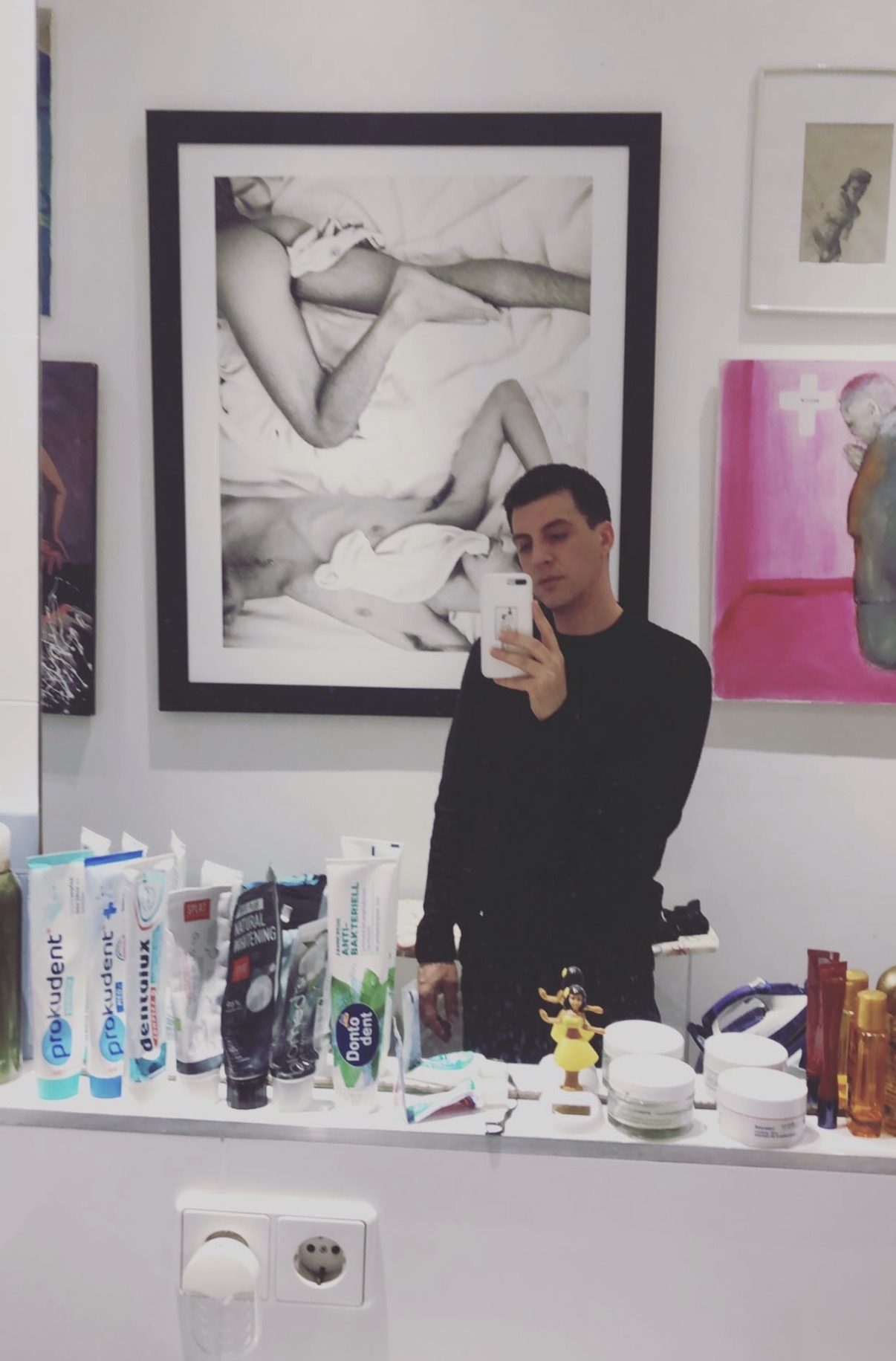
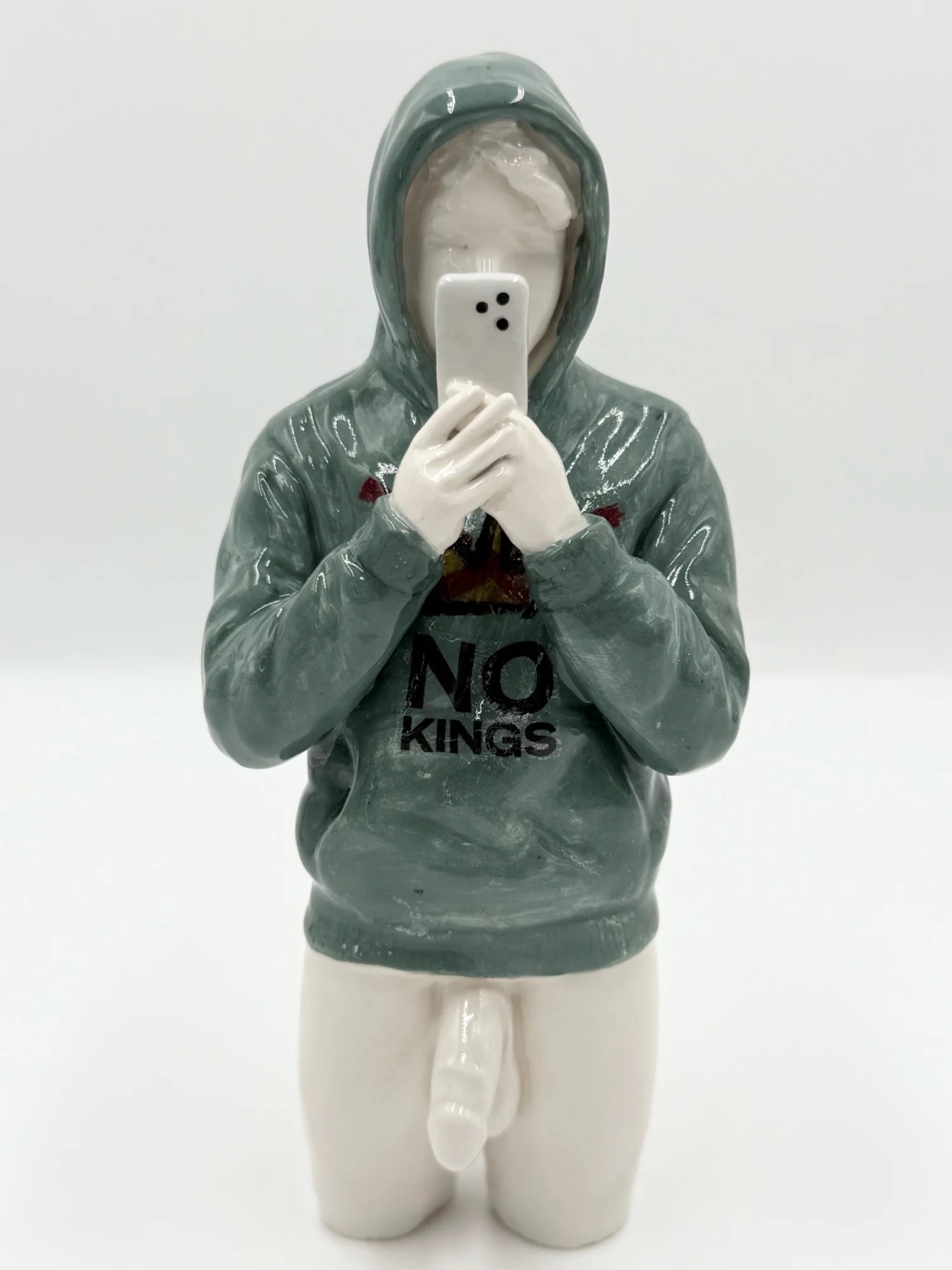
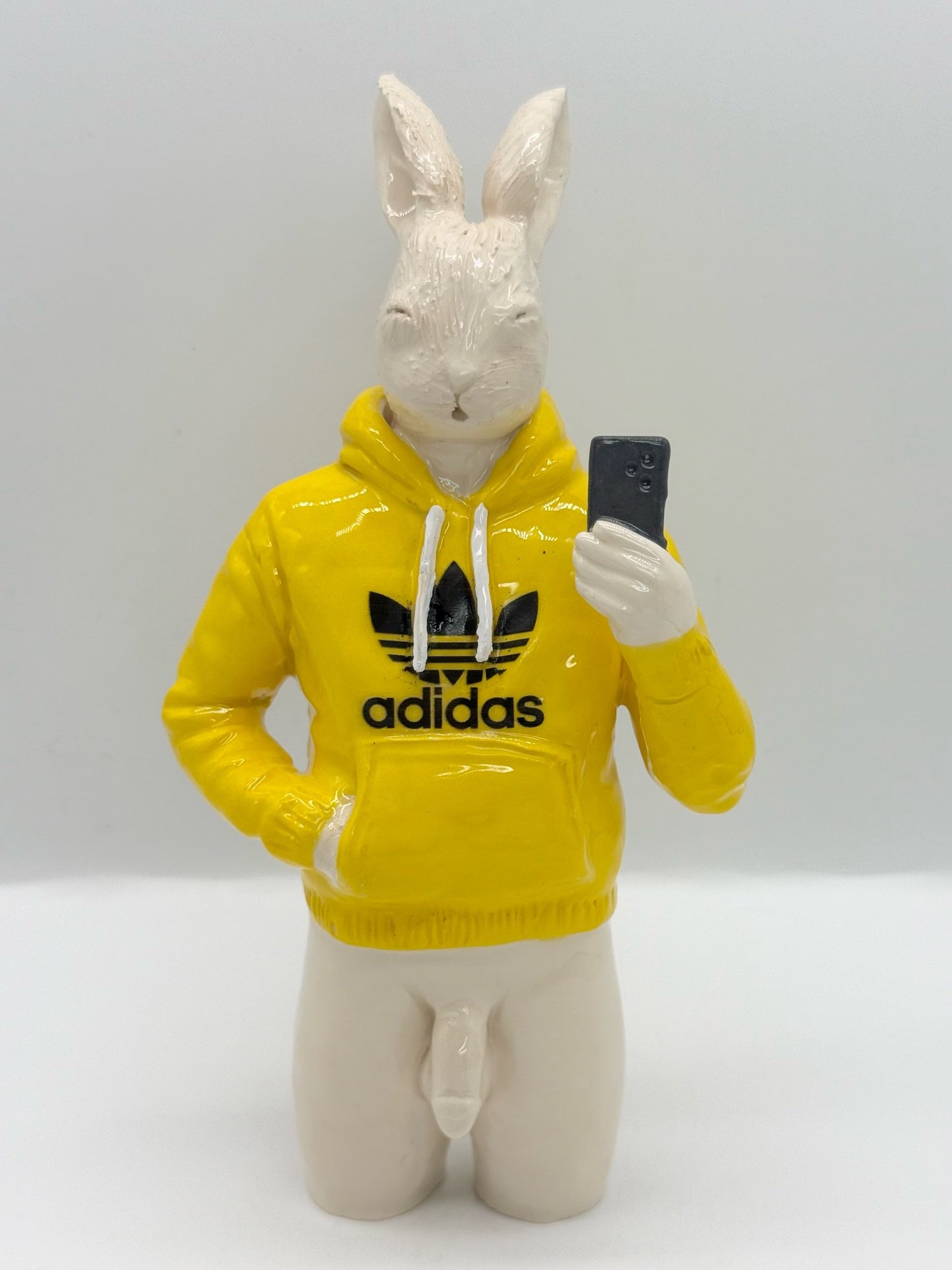
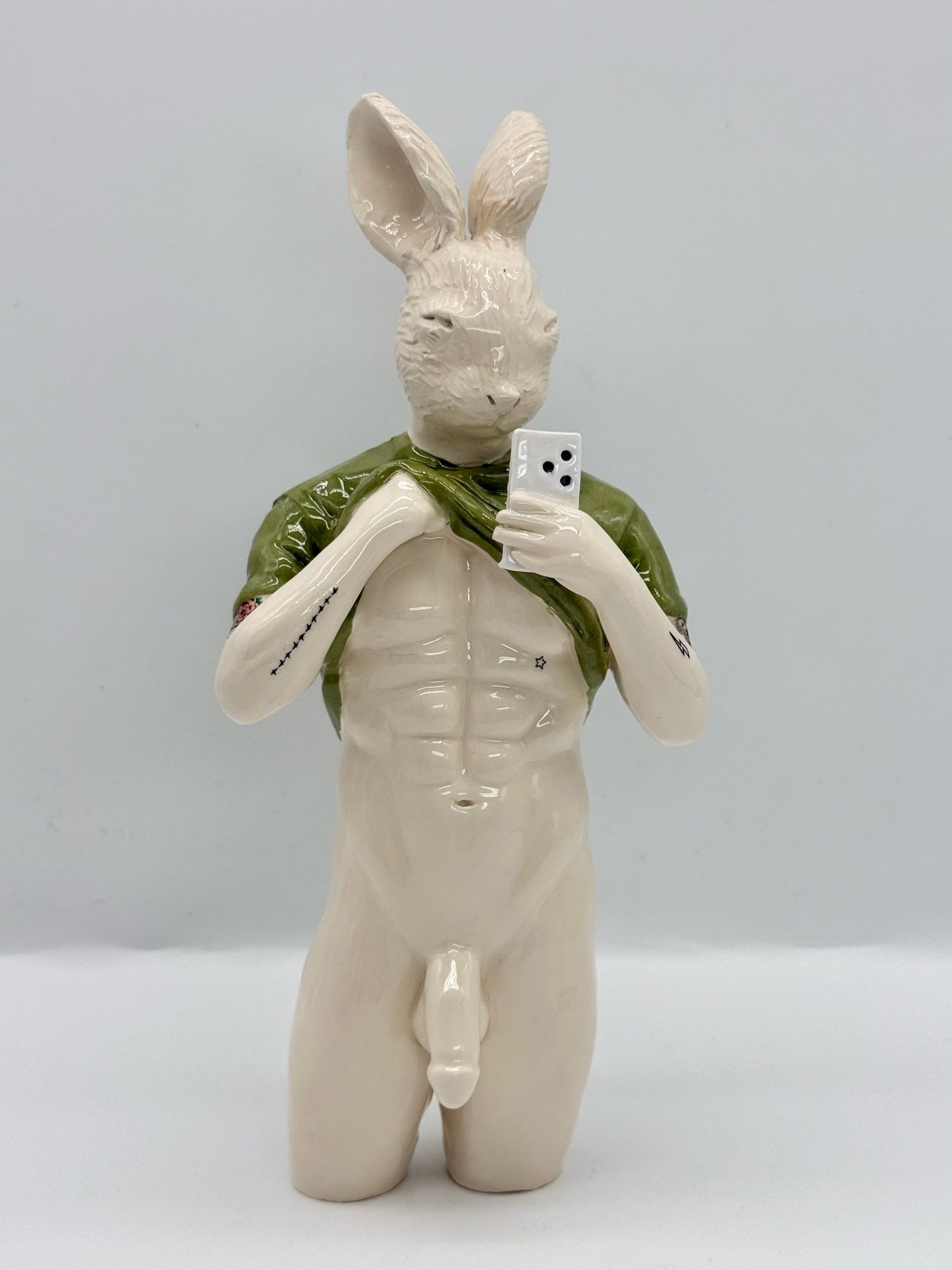
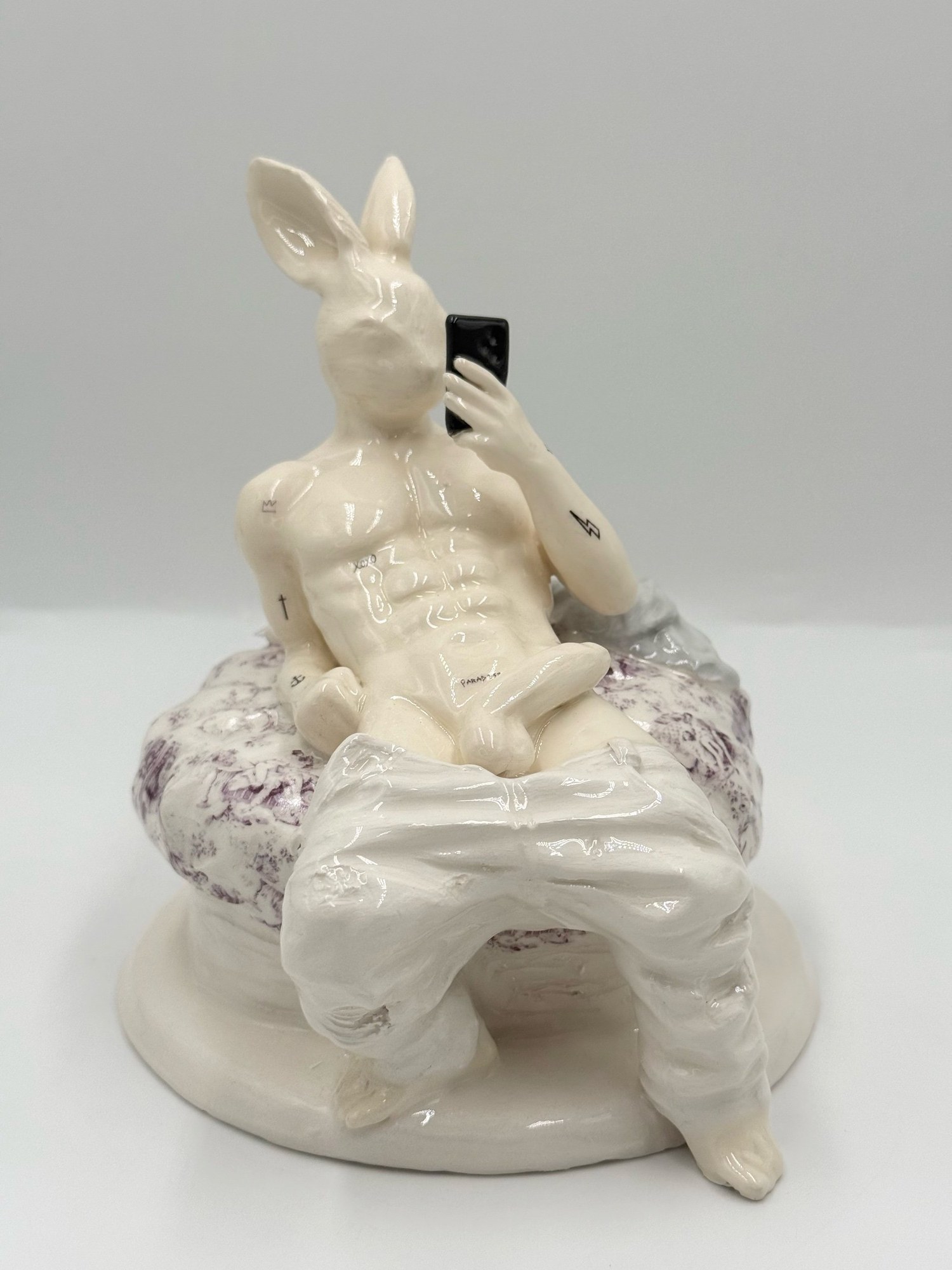
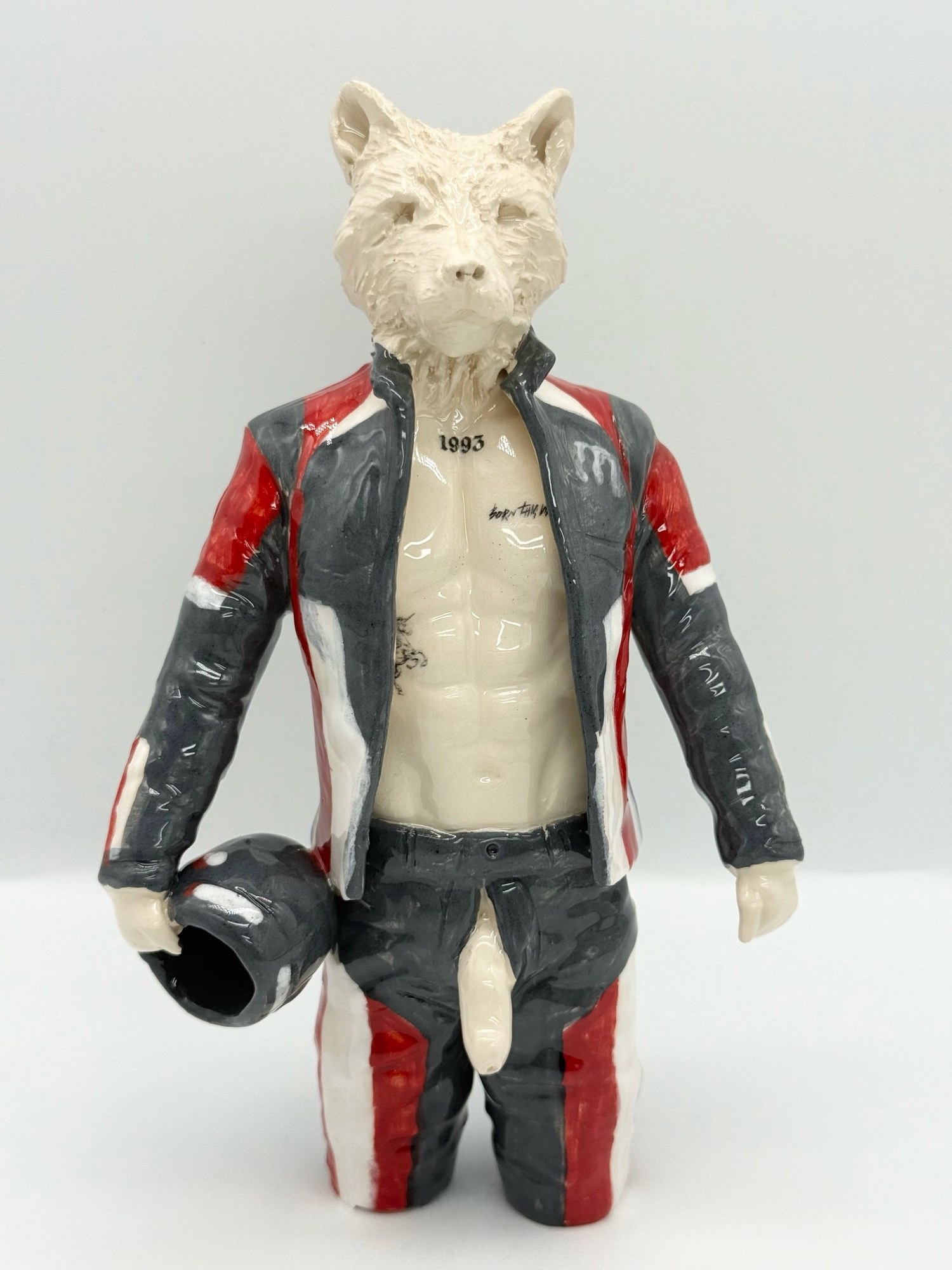
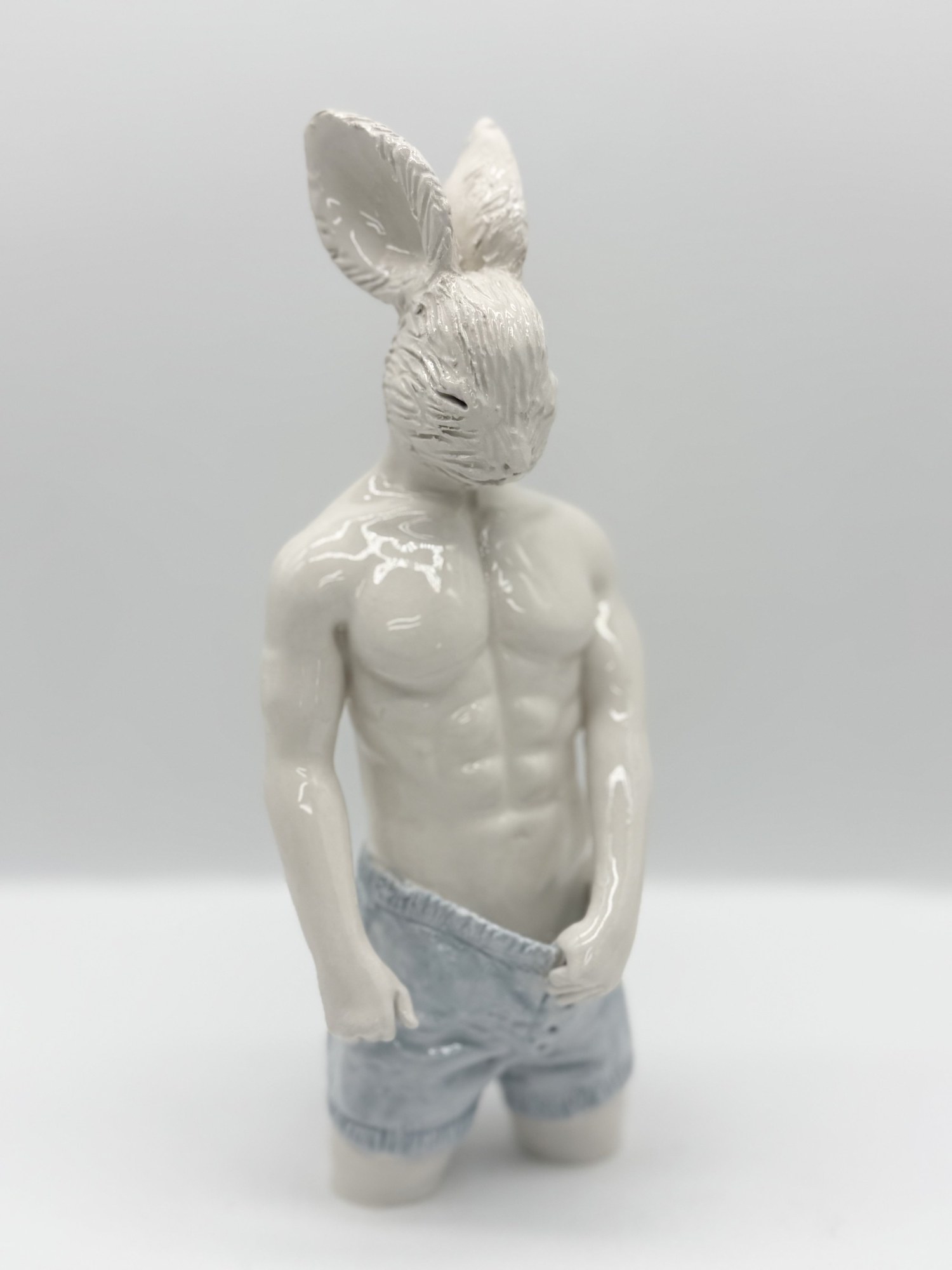
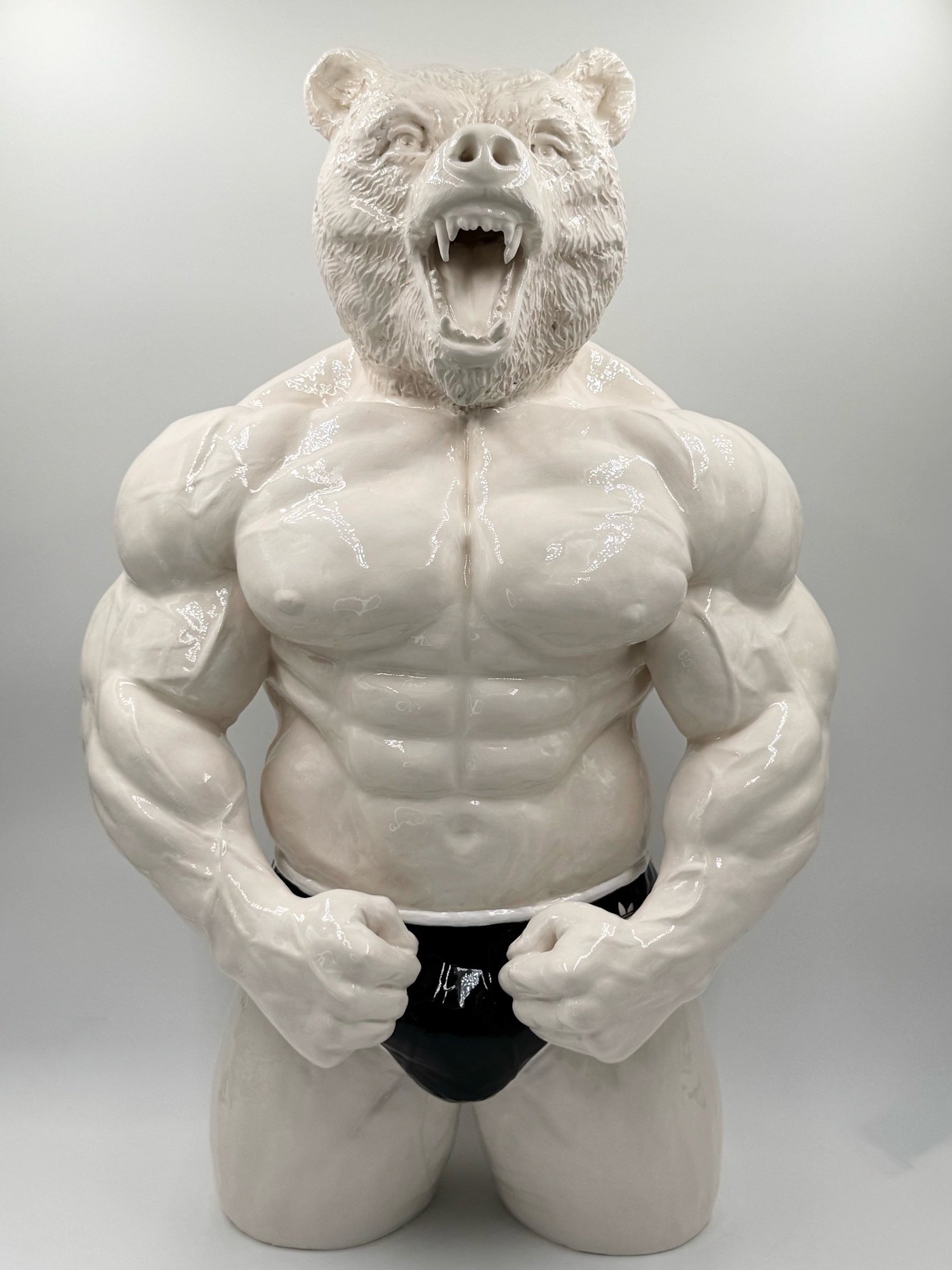
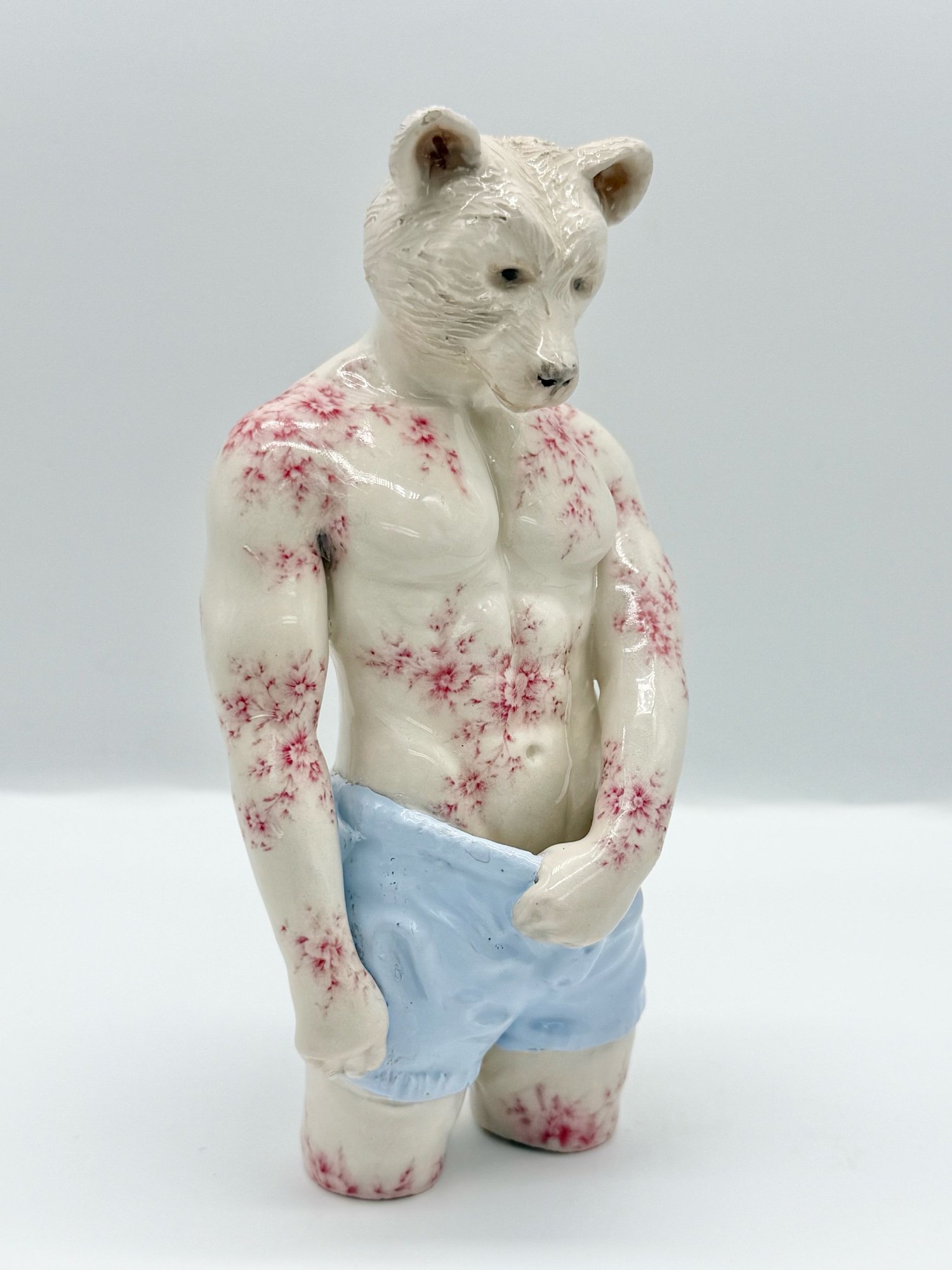
His work combines elements of humor, provocation, and an open celebration of queer and gay culture, resulting in pieces that are as liberating as they are bold. His sculptures are anthropomorphic. They feature human bodies with animal heads, such as rabbits, lions, and pigs. This choice is not random but carries a deep significance. Anthropomorphism, the attribution of human characteristics to non-human entities, allows him to explore complex themes in a freer and more creative way. Using animal heads instead of human ones helps liberate the sculptures from the constraints and prejudices associated with personal and social identity. Animals symbolize primal instincts and natural freedom, elements often repressed in human society. The combination of human bodies with animal heads creates a surreal fusion that challenges conventional perceptions and invites viewers to a deeper reflection on sexuality and identity. The provocative and sexual nature of the sculptures serves to break taboos and stimulate an open conversation about sexuality. The choice of animal heads adds a dimension of playfulness and transgression, making the works both accessible and unsettling. This provocation is not for its own sake but is a means to explore and challenge social norms that restrict sexual and personal expression. As an openly gay and queer artist, my work celebrates the freedom to be oneself without compromise. Each sculpture is a small manifesto of authenticity and pride, telling stories of resilience, joy, and self-acceptance. Through fluid and often playful forms, I aim to create a dialogue that embraces diversity and challenges social norms. In an era where narcissism and self-love are central themes in popular culture, his sculptures also reflect these dynamics. Exhibitionism and the selfie culture prevalent on social media resonate in my work. In this context, animal heads can be seen as masks we wear to present idealized versions of ourselves. His sculptures play with these ideas, exploring the boundary between genuine self-expression and narcissistic identity construction. His work extends beyond sculpture. As a content creator on Instagram, he share the creative process, inspirations, and the meaning behind each piece. His presence on social media is a natural extension of his art, a means to connect with a global community, share his vision, and promote a message of inclusivity and love. His creative process is intuitive and experimental. He work with ceramics for its versatility and the ability to manipulate the material into expressive and dynamic forms. Each piece begins with an idea or emotion, taking shape through the play of lines, volumes, and colors. Ceramics allow him to explore the tensions between strength and fragility, stability and movement. His mission is to create art that not only beautifies but also stimulates, challenges, and inspires. I want my sculptures to be visual conversations that invite viewers to look beyond the surface and confront their own perceptions of identity and desire. His art is an invitation to celebrate diversity, find beauty in difference, and recognize the power of personal freedom. Pietro Spirito Manduria (TA), Italy. Accademia Belle Arti di Brera (Pittura), Milan, Italy. Lives and works between Berlin and Paris.
Spotted by
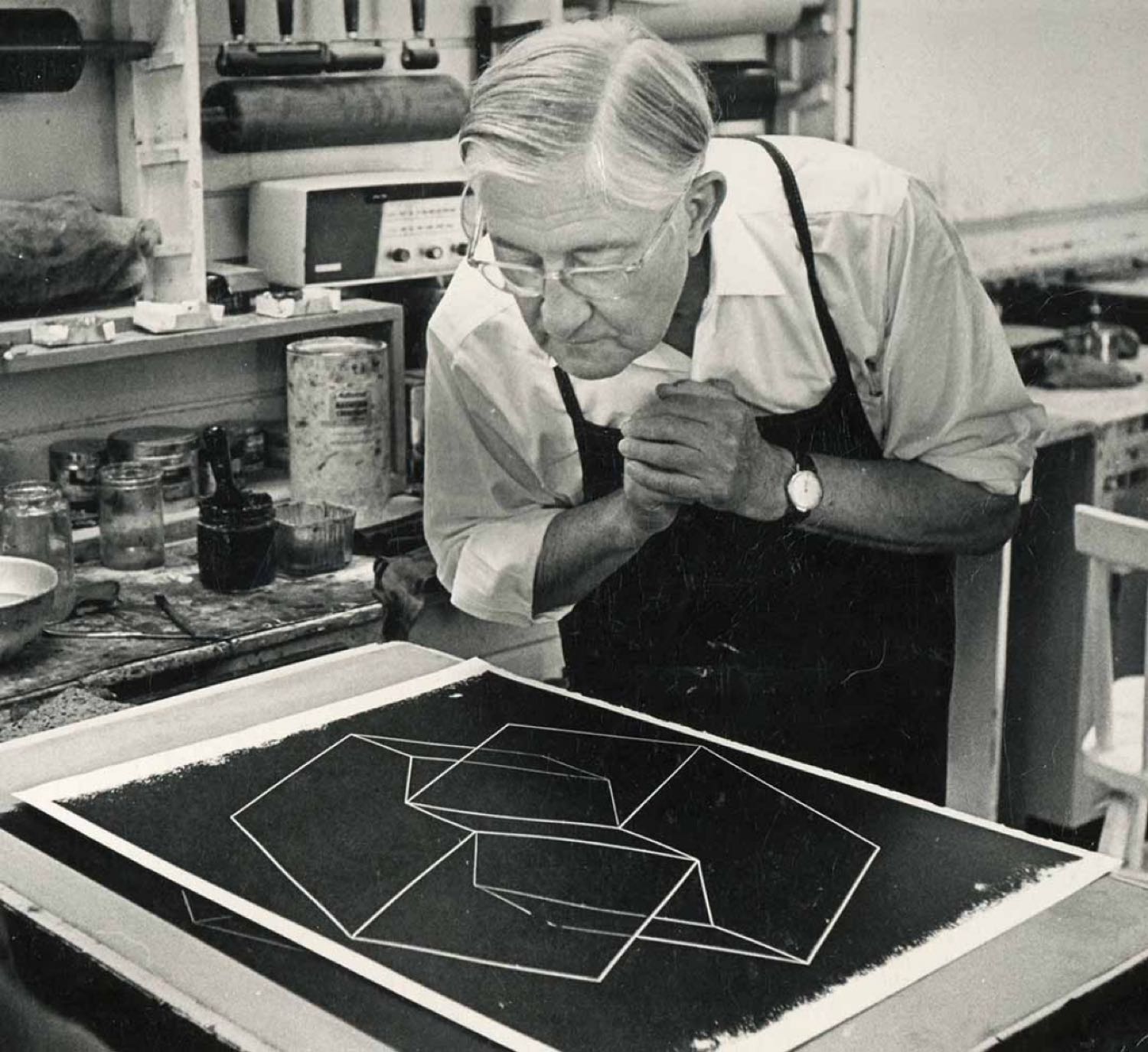
Artists in conversation
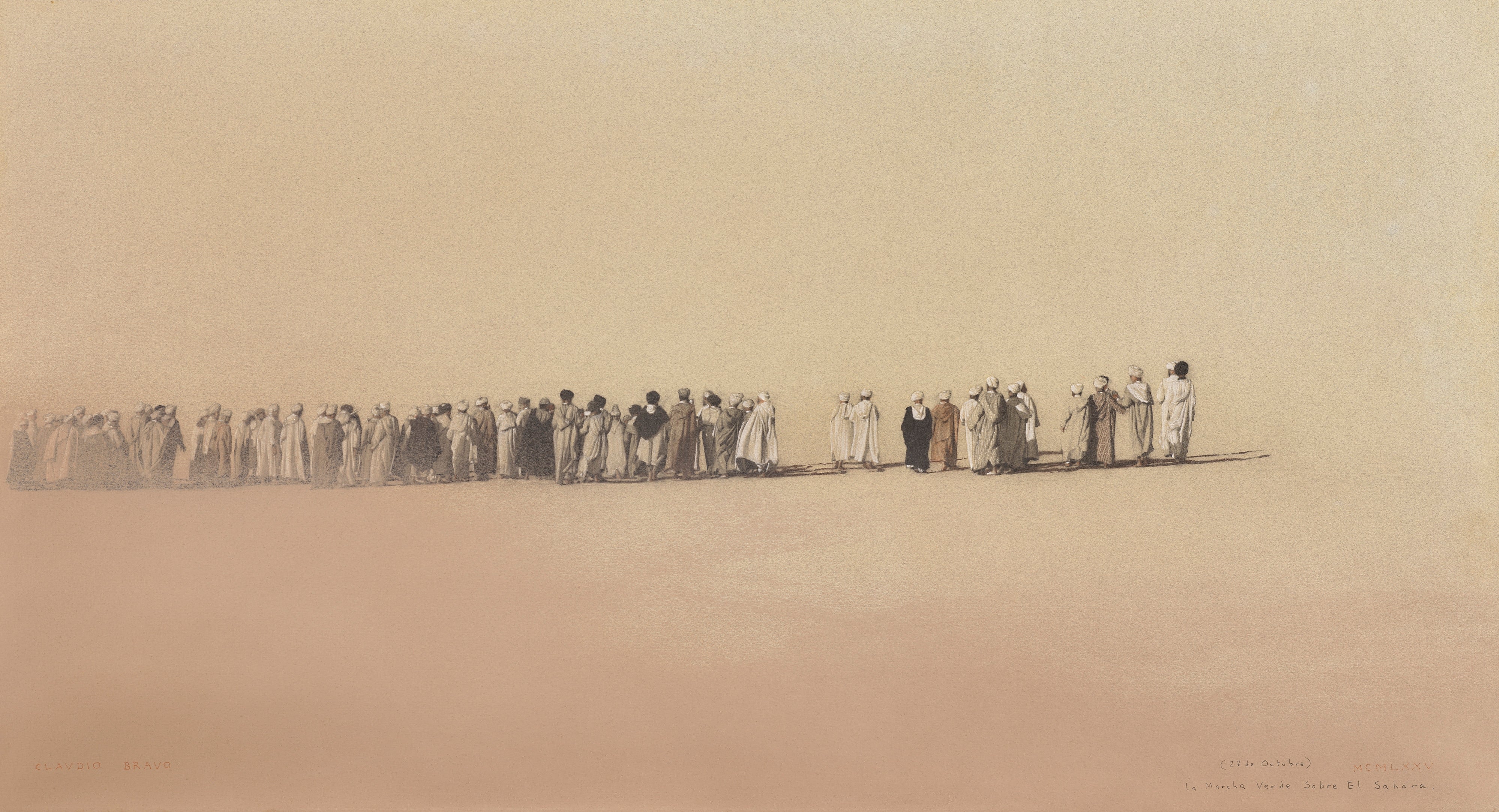
Claudio Bravo
Bravo shared a commitment to figurative painting that bridges classical technique and contemporary sensibility, rendering subjects with formal precision and a meditative stillness that parallels Spirito's own approach to the human condition.
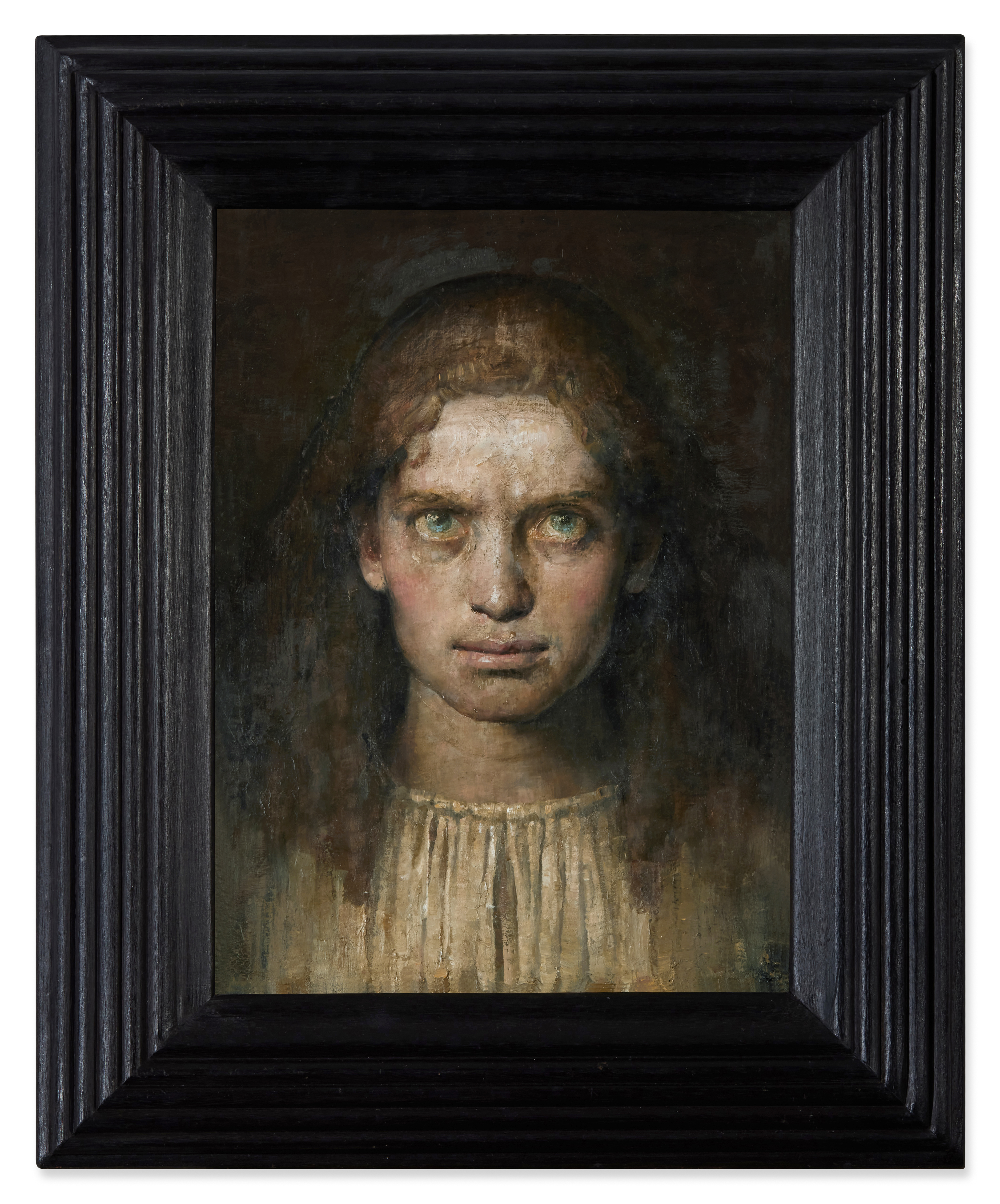
Odd Nerdrum
Nerdrum's deeply narrative figurative paintings, steeped in Old Master technique and charged with themes of memory and existential weight, resonate closely with Spirito's blending of classical Italian heritage and contemporary emotional inquiry.
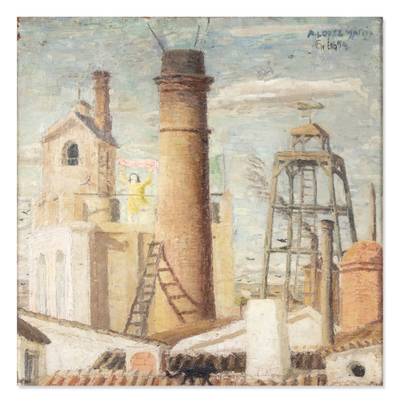
Antonio López García
López García's slow, painstaking figurative and landscape work carries the same meditative sensibility and balance of formal rigor with emotional resonance that characterizes Spirito's painting and drawing practice.
Artists who inspired them
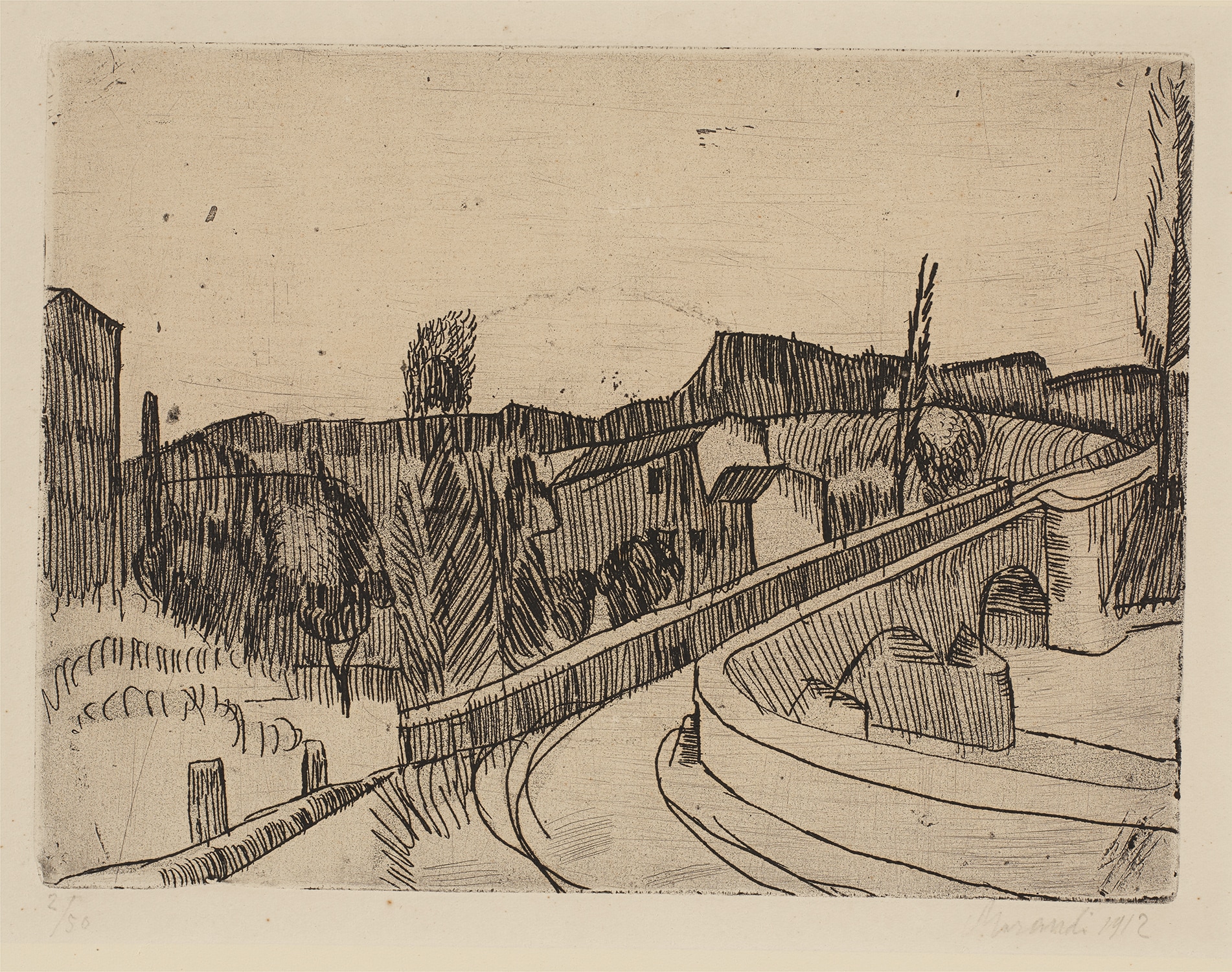
Giorgio Morandi
Morandi's quiet, introspective compositions rooted in the Italian still life and landscape tradition offered Spirito a model of how restrained formal means can carry profound meditative and emotional depth.
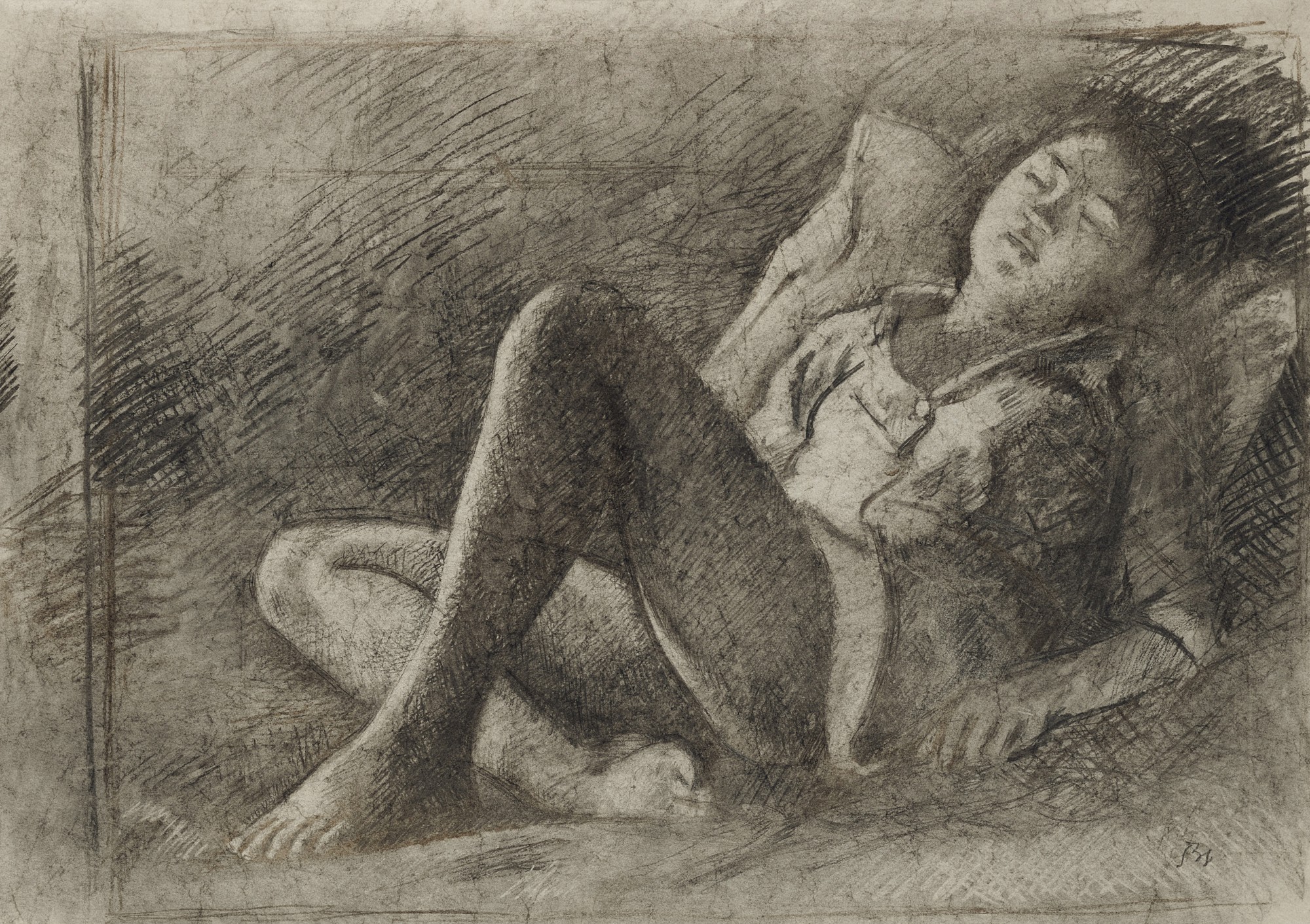
Balthus
Balthus demonstrated how a contemporary artist could absorb the lessons of Italian fresco and Renaissance figure painting into a personal, psychologically charged figurative language, a synthesis that informs Spirito's own relationship to classical heritage.
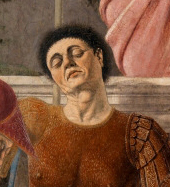
Piero della Francesca
The geometric clarity, monumental stillness, and luminous landscape settings found in Piero della Francesca's work constitute a foundational classical reference point for Spirito's compositions and his ongoing dialogue with Italian pictorial tradition.