Pietro Bellotti
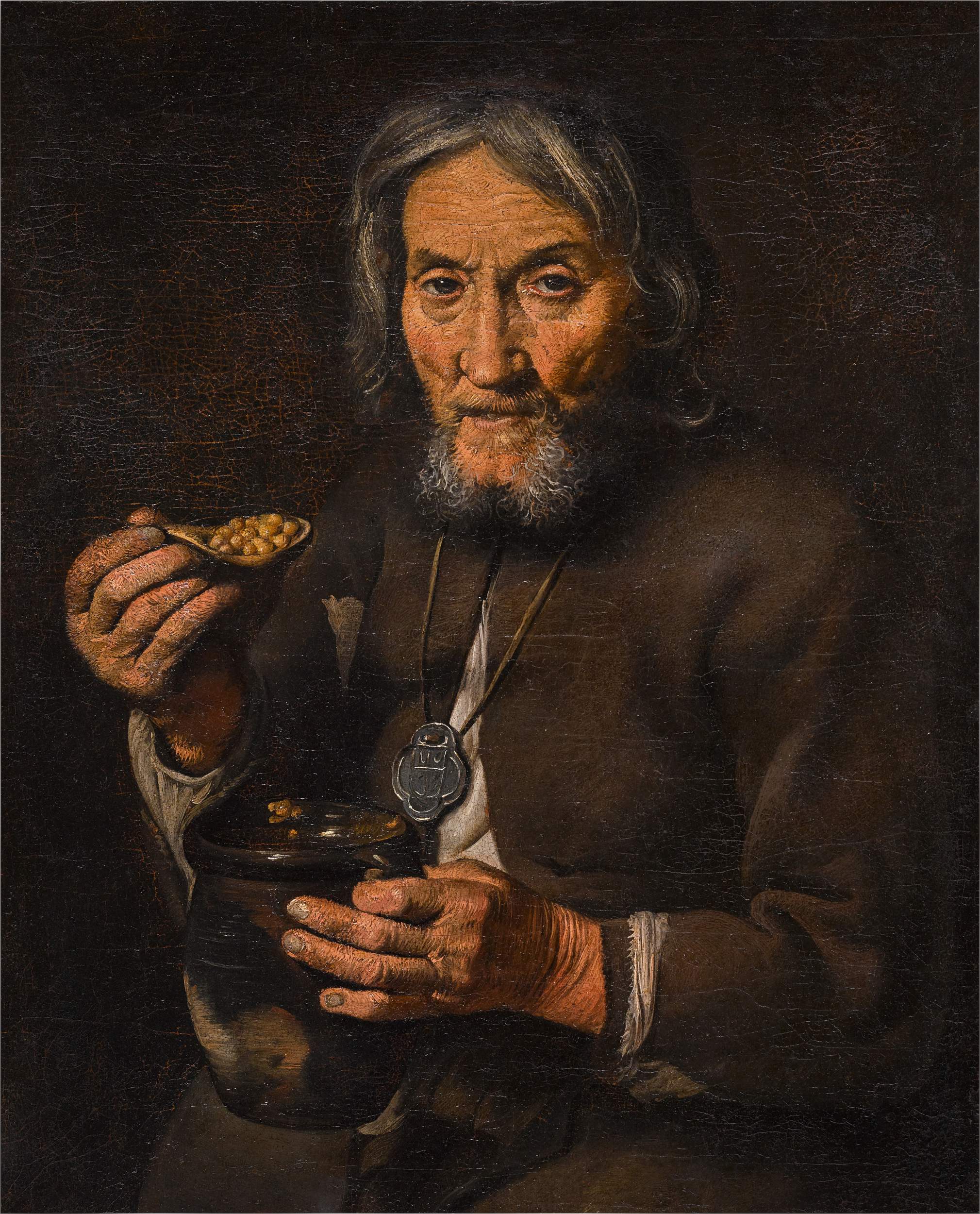
Pietro Bellotti, Master of the Human Face
Artist Spotlight · The Collection Editorial
Stand before one of Pietro Bellotti's portraits of an aged man and something quietly extraordinary happens. The face looking back at you is not idealized, not softened by the conventions of courtly flattery or religious allegory. It is simply, overwhelmingly present. Every line earned by time, every shadow pooling beneath a weary eye, every wisp of a grey beard rendered with the patience of someone who genuinely believed that old age was not a subject to be mourned but a landscape to be mapped with reverence.
Pietro Bellotti
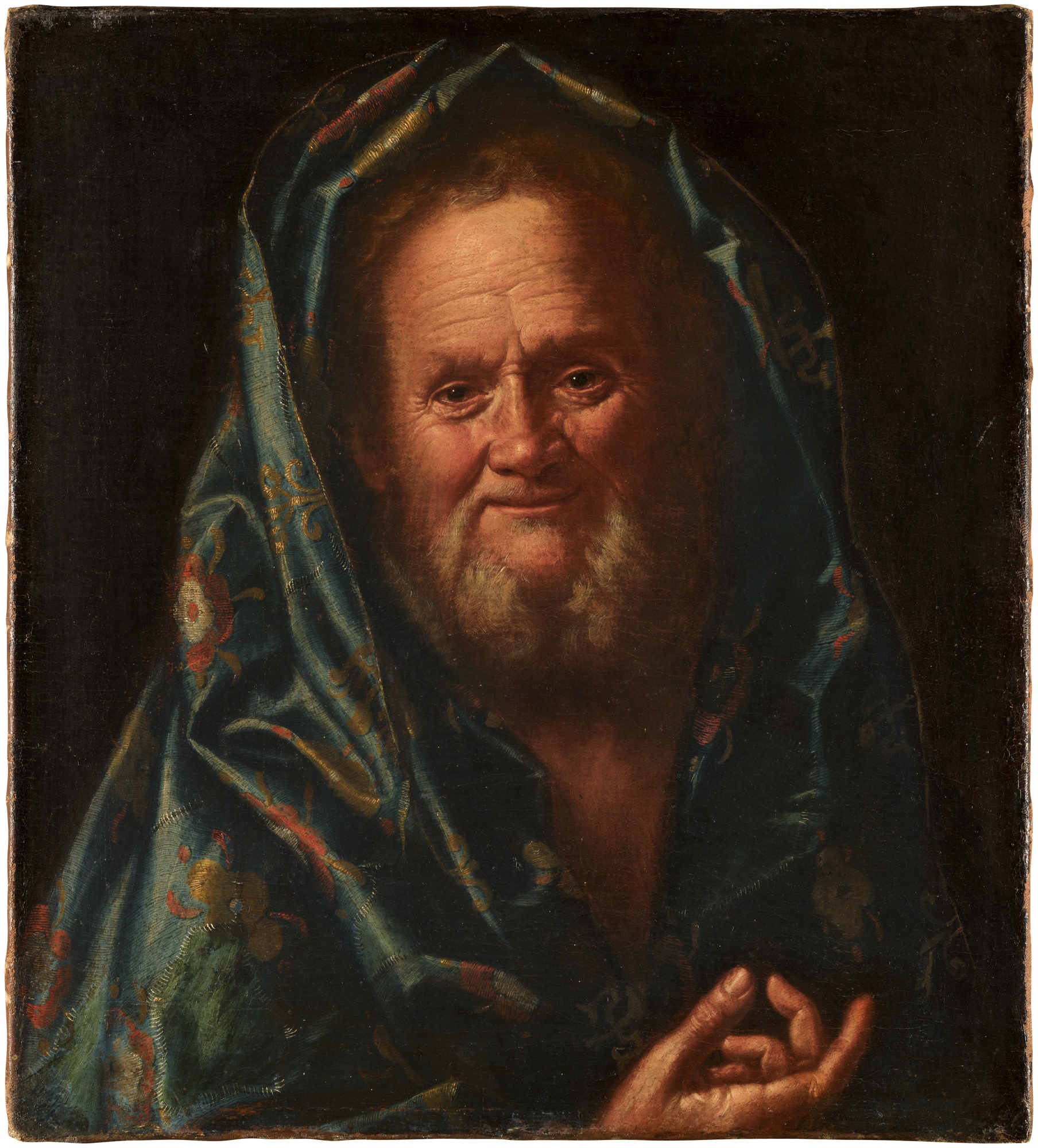
Portrait of a bearded man
In an era when Baroque painting so often reached for the theatrical and the sublime, Bellotti reached instead for the intimate and the true. Born in 1625 in Volciano, a small settlement near Salò on the western shore of Lake Garda, Bellotti came of age in a region steeped in the rich artistic traditions of northern Italy. The towns clustered along Lake Garda sat at a crossroads of influences, close enough to Venice to feel the gravitational pull of its magnificent painting culture and open, through trade and travel, to the sensibilities flowing down from the Dutch and Flemish north. Little is documented about his earliest training, but the fingerprints of his formation are legible in every canvas he left behind.
He absorbed, with remarkable thoroughness, the tenebrist legacy of Caravaggio, that revolutionary use of deep shadow and concentrated light that had electrified Italian painting in the early seventeenth century and continued to shape its practitioners long after the master himself was gone. By the mid seventeenth century, Bellotti had established himself in Venice, the city that would become his primary home and the theater of his mature practice. Venice at this moment was a place of enormous cultural vitality, still commanding respect as a center of artistic production even as its political power softened. The city's painters were navigating between the grandeur of the Venetian Renaissance tradition and the newer currents arriving from Rome and the north.
Pietro Bellotti
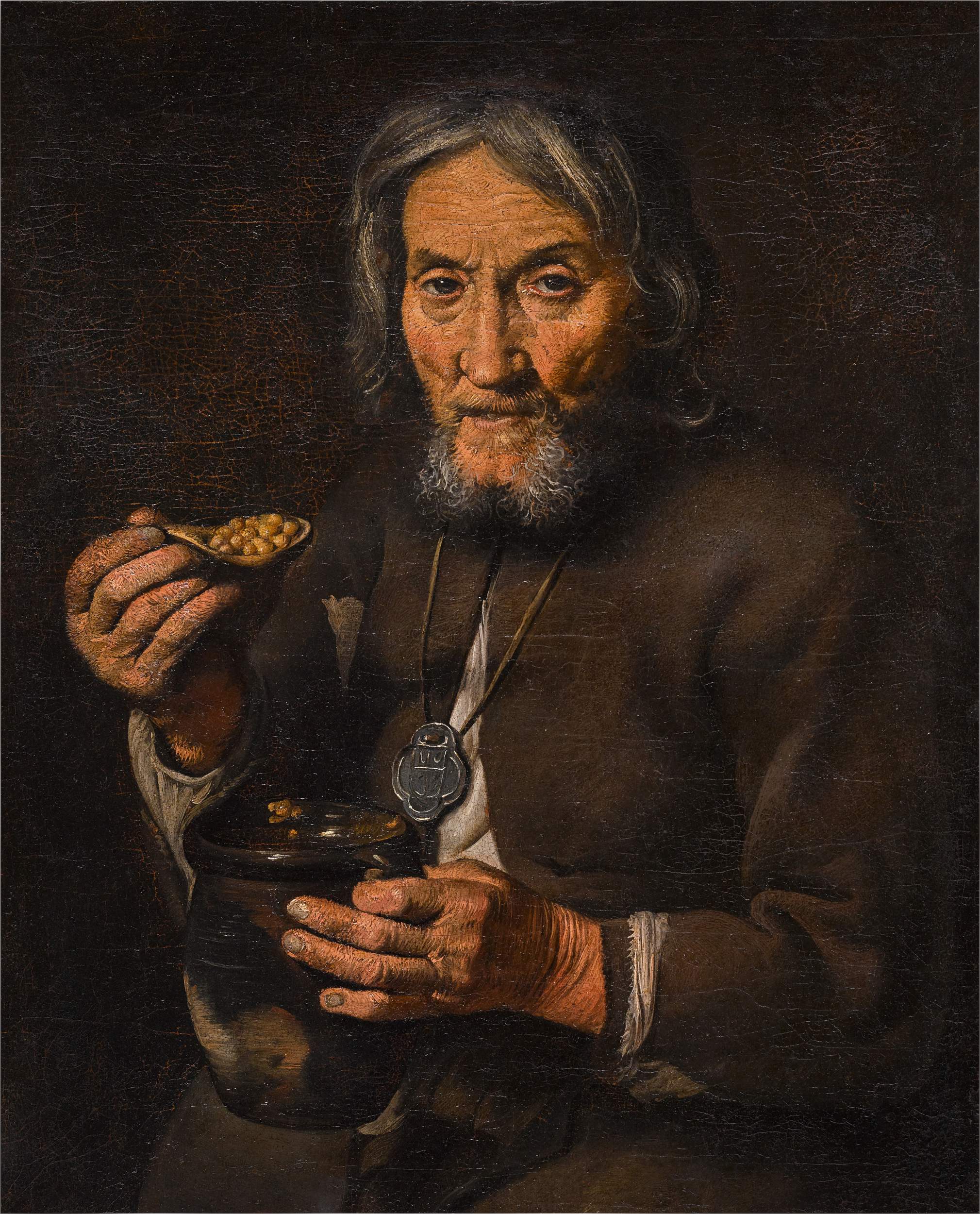
A man eating chickpeas
Bellotti carved out a distinctive position within this world, one informed not only by Caravaggio's dramatic chiaroscuro but by the genre painting traditions of the Dutch Golden Age. Artists such as Rembrandt van Rijn and the Leiden school had elevated humble subjects, ordinary men and women in the act of living, to the dignity of serious painting. Bellotti understood this impulse deeply and made it entirely his own. What distinguishes Bellotti most forcefully is his sustained devotion to what art historians sometimes call character heads, portraits or near portraits of elderly men and women that prioritize psychological expression over social status.
These are not pictures of patrons or princes. They are studies in what a face accumulates across a lifetime. His technical approach is meticulous, almost tender in its attention to texture. Skin, stubble, the translucent fragility of an old ear, the particular way light catches a cataracted eye, all of these details are rendered with a precision that feels earned rather than merely demonstrated.
Two works that exemplify this vision are Portrait of a Bearded Man, an oil on canvas of quiet authority, and A Man Eating Chickpeas, a genre scene of disarming warmth and specificity. The second of these invites immediate comparison with the tradition of bamboccianti painting, those beloved scenes of everyday Italian life that Dutch and Flemish artists helped popularize in Rome and beyond. Yet Bellotti brings to such subjects a directness and an emotional weight that feel distinctly his own. For collectors, Bellotti represents an opportunity that is both historically significant and aesthetically rewarding in the most direct sense.
His works have appeared at the major London and New York auction rooms, including Sotheby's and Christie's, where they consistently attract serious attention from collectors of seventeenth century European painting. The appeal is not difficult to understand. Bellotti sits in a productive conversation with some of the most celebrated names in Baroque art. Those drawn to the psychological intensity of Rembrandt, the genre warmth of Gerard Dou or Adriaen van Ostade, or the tenebrist drama of followers of Caravaggio such as Bartolomeo Manfredi will find in Bellotti a painter who synthesizes those worlds with genuine originality.
He is not a peripheral figure borrowing from greater masters. He is an artist who understood the most searching questions of his moment and answered them in his own voice. The market for Bellotti's work rewards patience and discernment. His canvases do not appear constantly, which makes each one that does surface worth careful attention.
Collectors who specialize in character studies and genre scenes of the seventeenth century hold his work in particular regard. The condition of a Bellotti, the preservation of his subtly layered surfaces and his careful tonal transitions, matters enormously to its impact, and works that retain their original atmospheric depth carry a presence that reproductions never fully convey. For anyone building a collection around the golden age of European realism, a Bellotti is not a footnote. It is a statement.
Within the broader arc of art history, Bellotti occupies a position that scholars have increasingly recognized as deserving more sustained attention. He belongs to a generation of Italian painters who did not simply imitate the dramatic breakthroughs of Caravaggio but absorbed them into a more northern, more domestically scaled sensibility. In this he shares something with contemporaries and near contemporaries such as Giovanni Battista Langetti and Johann Carl Loth, fellow painters working in Venice during the second half of the seventeenth century who also explored tenebrist techniques in service of expressive figure painting. But Bellotti's commitment to the elderly face as his primary subject gives his body of work a thematic coherence that is unusual and moving.
His legacy endures because the questions he was asking remain alive. What does a face reveal? What does it conceal? What does time do to a person, and what can paint do to preserve that story?
Bellotti answered those questions across a long career with remarkable consistency and genuine feeling. At a moment when collectors and institutions alike are broadening their engagement with the full richness of the Baroque period beyond its most famous names, Pietro Bellotti stands as one of those artists whose rediscovery feels not like excavation but like recognition, a confirmation that extraordinary work, patiently made, has a way of finding its audience at last.