Pierre Chareau
Pierre Chareau, The Poet of Living Space
Artist Spotlight · The Collection Editorial
Few moments in the history of modern design feel as charged with possibility as stepping inside the Maison de Verre for the first time. Located at 31 rue Saint Guillaume in Paris's seventh arrondissement, this extraordinary structure, completed in 1932, continues to draw architects, collectors, and admirers from around the world. It has been the subject of renewed scholarly attention in recent years, with major publications and institutional studies revisiting its radical intelligence, and it remains one of the most visited private residences in the canon of modernism. The building's enduring magnetism says everything about its creator: Pierre Chareau, a figure whose influence on twentieth century design was both profound and, for many decades, quietly underacknowledged.
Pierre Chareau
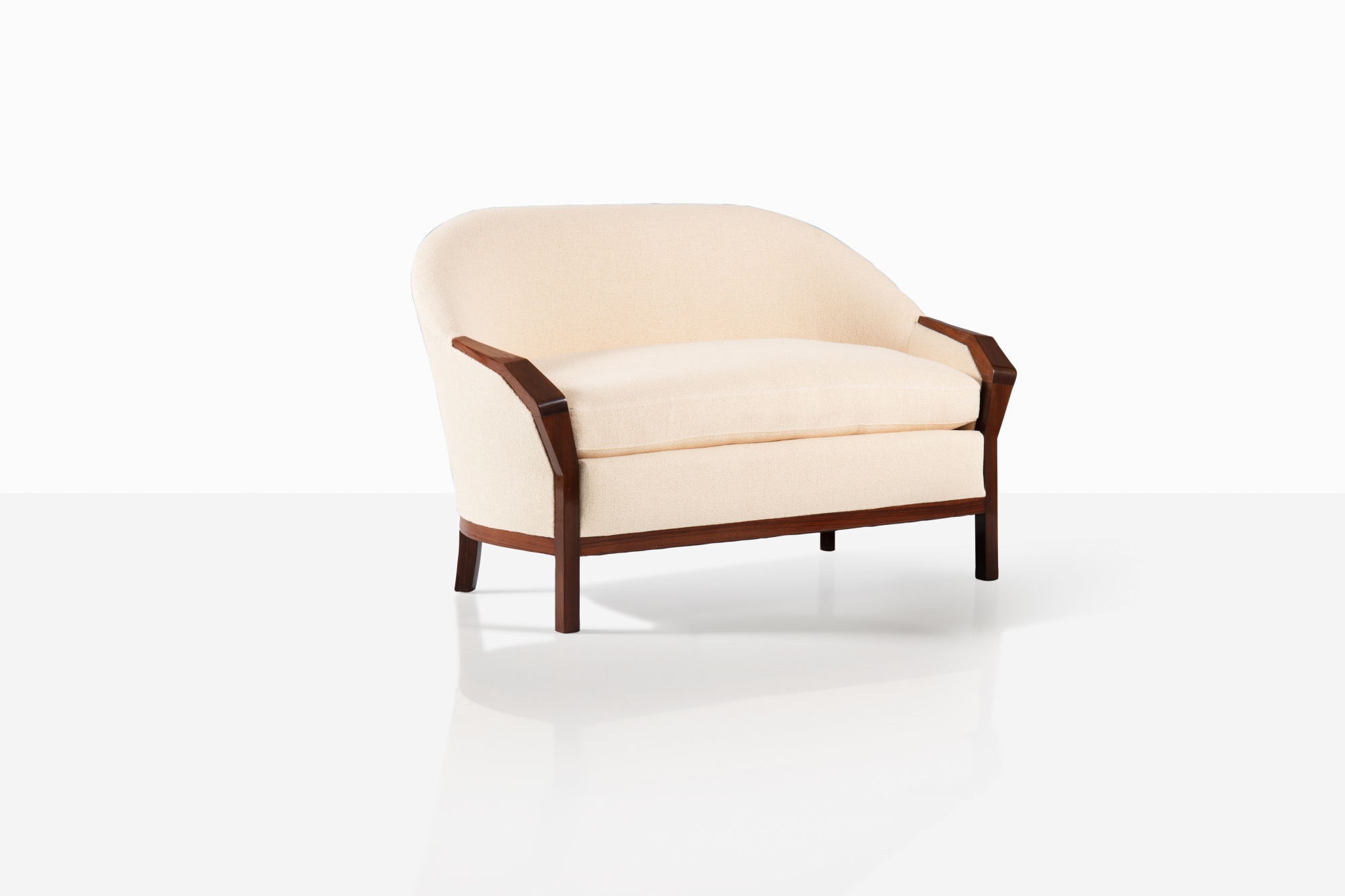
Canapé
Chareau was born in Bordeaux in 1883, into a France that was reshaping itself through industrialization, urbanist ambition, and the confident flowering of the decorative arts. He trained in London at a young age, working in the offices of Waring and Gillow, a distinguished British furniture and interiors firm that introduced him to the practical craft of furniture making and interior arrangement at the highest level. This early immersion in the English tradition of considered domestic design, attentive to material quality and functional elegance, would leave a lasting imprint. When he returned to France and eventually settled in Paris, he carried with him a sensibility that was neither purely French nor purely Anglo, but something more restless and synthetic: a genuine curiosity about how people actually inhabit space.
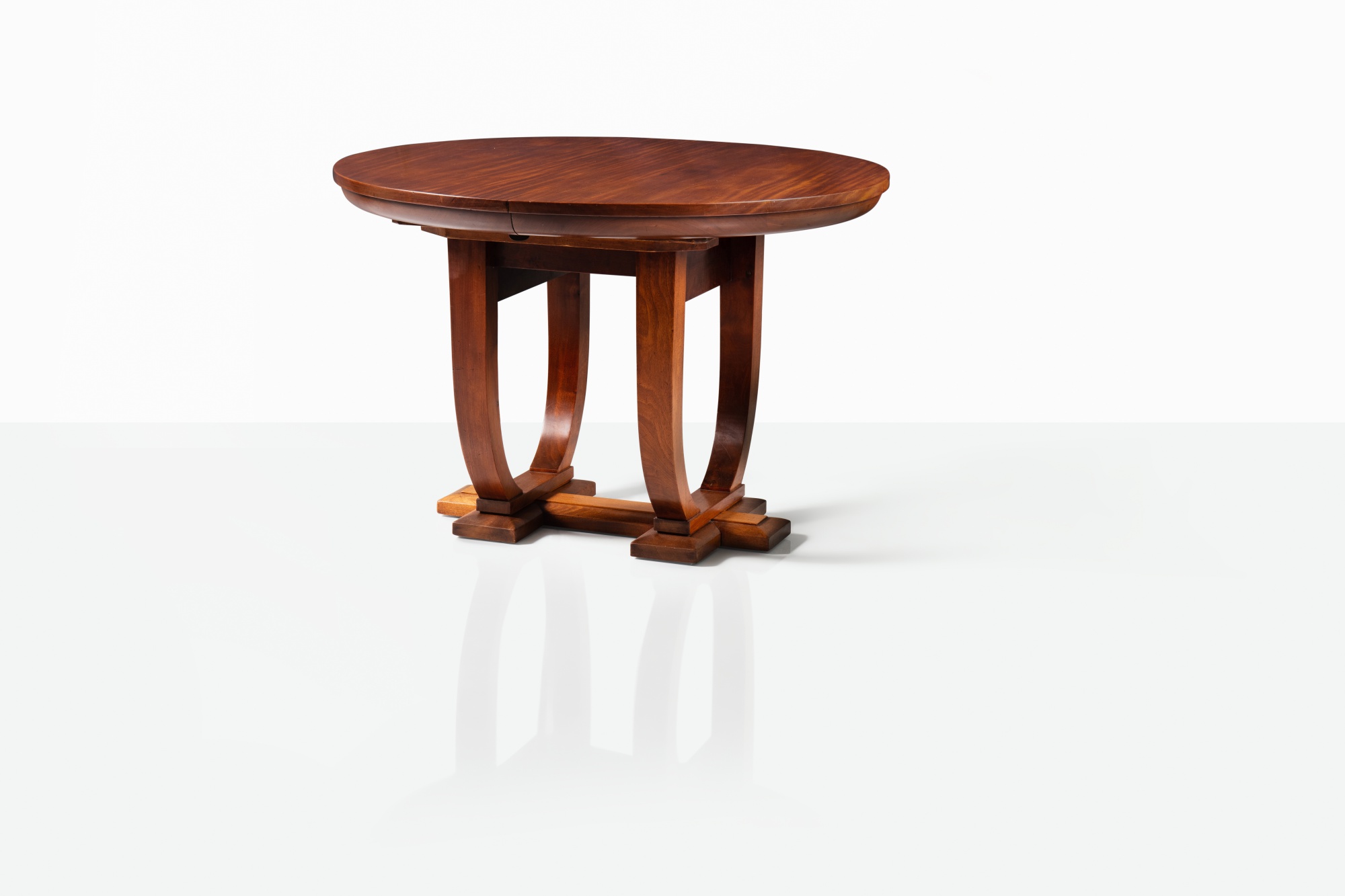
His career in Paris gathered momentum during the years surrounding the First World War, and by the early 1920s Chareau had established himself as one of the most distinctive voices in French interior design. He participated in the landmark Exposition Internationale des Arts Décoratifs et Industriels Modernes in 1925, the event that gave Art Deco its name and international profile. Chareau's contribution, notably his Bureau Bibliothèque, demonstrated a sensibility that set him apart from many of his contemporaries: he was drawn to the logic of the machine without sacrificing warmth, to industrial materials without surrendering human comfort. His furniture from this period, rich in wrought iron, exotic woods, and inventive joinery, occupied a compelling middle ground between the handcrafted luxury of traditional French ébénisterie and the rational, forward looking spirit of the emerging modernist movement.
Pierre Chareau
Table de salle à manger à rallonges
The Maison de Verre stands as Chareau's supreme achievement, and it rewards close study. Designed in collaboration with the Dutch architect Bernard Bijvoet and metalwork craftsman Louis Dalbet, the building replaced much of the facade of a seventeenth century hôtel particulier with a shimmering curtain of translucent glass blocks, flooding the interior with diffused natural light while preserving privacy. Inside, a system of sliding panels, pivoting screens, retractable stairs, and built in furniture transformed each room into an adaptable, almost theatrical environment. The commission was a private one, created for Dr.
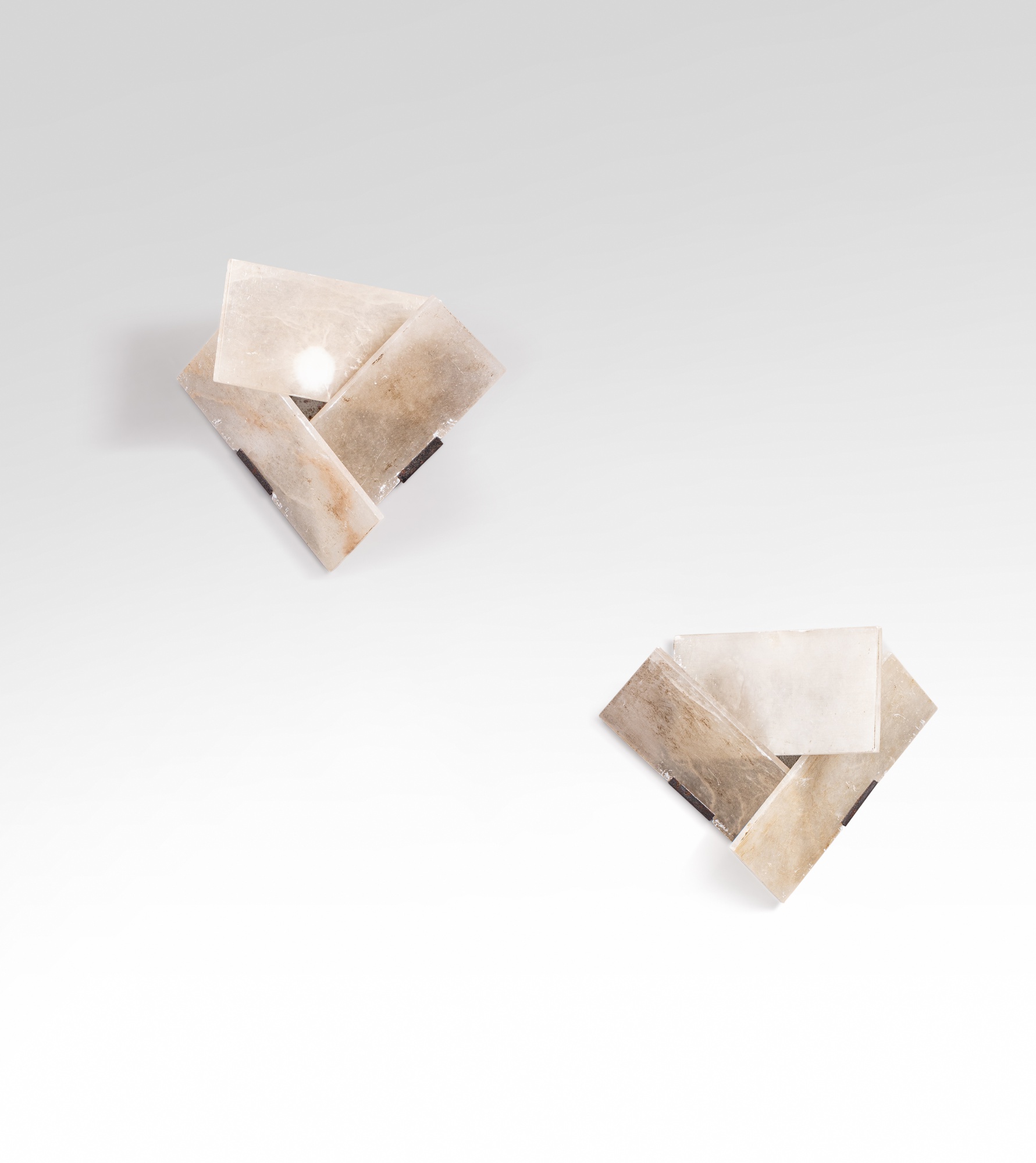
Jean Dalsace and his wife Annie, and the building reflected their progressive intellectual and social circle. Everything in it was conceived as an integrated whole: Chareau designed not just the architecture but the furniture, the lighting, and the fixtures, treating the house as a total work of art in the tradition of the Gesamtkunstwerk. Chareau's furniture and lighting pieces, many of which survive and appear regularly at auction and through specialist dealers, offer collectors an intimate entry point into his vision. Works such as the elegant "Paire d'appliques Mouche" and "Paire d'appliques Auvent" reveal his gift for lighting design, transforming functional objects into graceful presences that animate a wall or a room.
Pierre Chareau
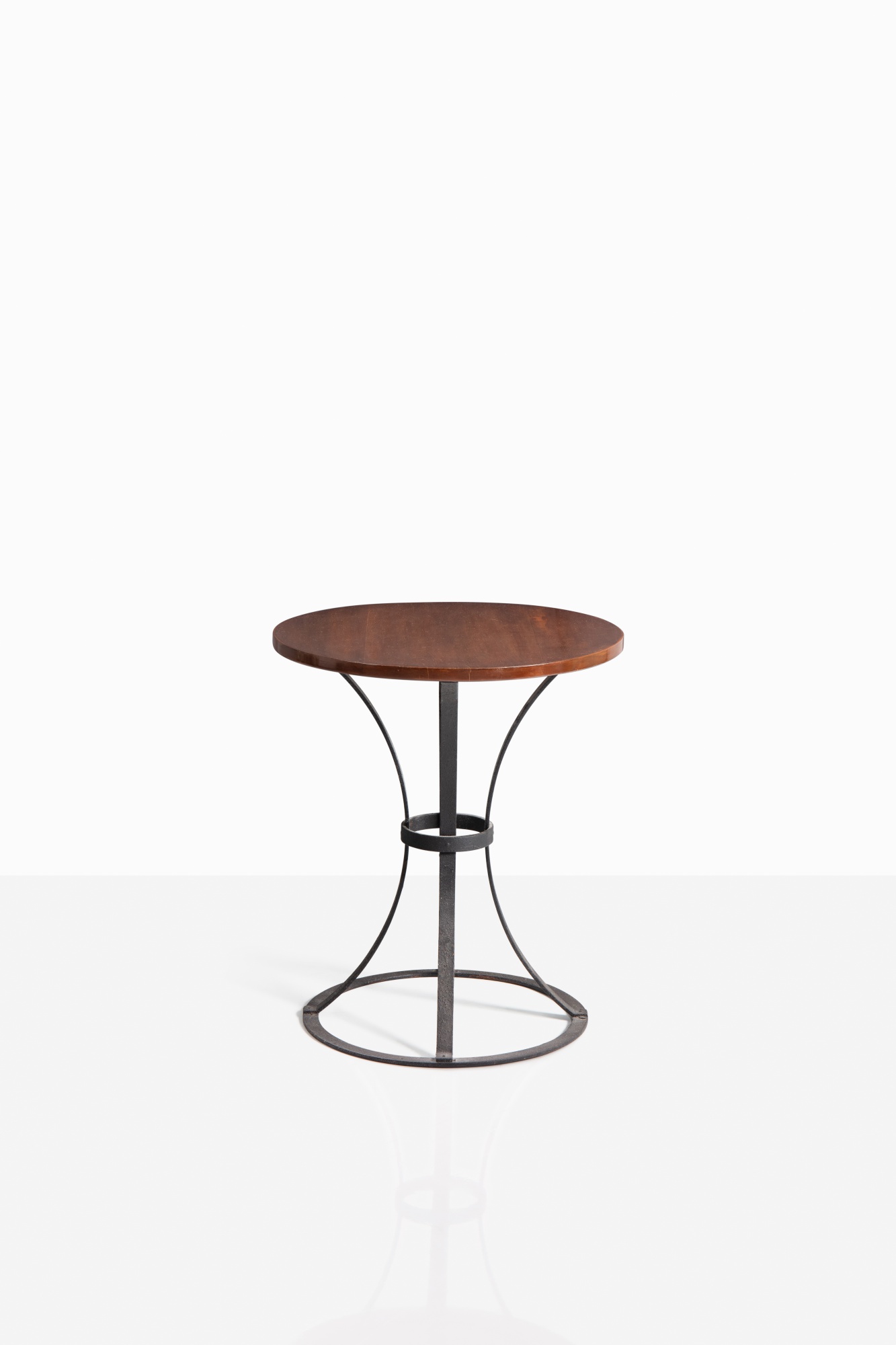
Guéridon, modèle Club-house de Beauvallon
His seating, including the substantial and sculptural armchairs known as "Paire de fauteuils," demonstrates his command of volume and material: pieces that feel entirely of their moment yet remain remarkably livable today. The "Guéridon, modèle Club house de Beauvallon" speaks to his work beyond Paris, as Chareau designed interiors and furnishings for projects in the south of France as well. His storage pieces, among them the handsome "Meuble d'appui" and the cabinet works that bear his name, carry the same spirit of purposeful ingenuity, combining practicality with a quiet formal sophistication. For collectors, Chareau represents a particularly compelling proposition.
His work sits at the intersection of several powerful currents in early twentieth century design: Art Deco luxury, modernist rationalism, and the Arts and Crafts tradition of honest making. Because he was not a mass producer and worked largely through private commissions and limited workshop production, authentic pieces carry genuine rarity. His work appears at major auction houses including Christie's, Sotheby's, and Wright in Chicago, where individual pieces have achieved significant prices reflective of both their historical importance and their enduring desirability as objects to live with. Collectors who are drawn to figures such as Jean Prouvé, Charlotte Perriand, and Eileen Gray will find in Chareau a natural companion: someone equally committed to solving the problem of how modern people should live, and equally gifted in giving that solution beautiful physical form.
Pierre Chareau
Paire d'appliques Mouche
Chareau emigrated to the United States in 1940, fleeing the German occupation of France along with many of his contemporaries. In New York he found a new community, befriending artists and intellectuals including Robert Motherwell, for whom he designed a studio in East Hampton, New York, completed in 1947. This late commission, built with military surplus materials and remarkable for its inventive improvisation, introduced Chareau to a younger generation of American avant garde figures and demonstrated that his creative intelligence had not dimmed in exile. He died in East Hampton in 1950, somewhat removed from the European fame he had earned in the interwar years, but the body of work he left behind was more than sufficient to secure his reputation.
The rehabilitation of Chareau's legacy has been ongoing since the 1980s, when a major retrospective at the Centre Georges Pompidou brought his full achievement back into sharp critical focus. Today, with renewed institutional and collector interest in the heroic period of European modernism and with the Maison de Verre still standing as a living monument, Chareau's place in the canon feels more secure than ever. He was a designer who believed that architecture and furniture and light were not separate disciplines but a single conversation about how human beings deserve to live. That belief, expressed with such grace and rigor across a lifetime of work, is precisely what makes him indispensable to any serious understanding of modern design and, for those lucky enough to own a piece of his vision, an endlessly rewarding presence in daily life.
Explore books about Pierre Chareau
Pierre Chareau: Designer and Architect
Arthur Drexler
Pierre Chareau and Bernard Bijvoet: The Maison de Verre
Jean-Louis Cohen
Pierre Chareau: A Designer and His Public
Mark Lamster
The Maison de Verre: A Glass House by Pierre Chareau and Bernard Bijvoet
Beatriz Colomina
Pierre Chareau: Modern Design in France
Alastair Duncan