Pierre-auguste Renoir
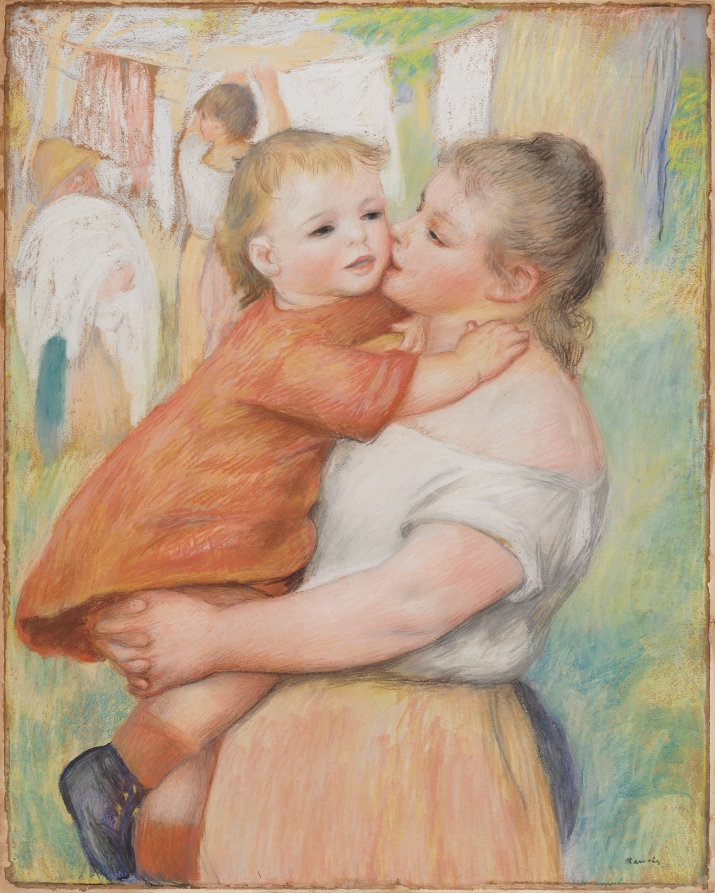
Renoir: Light, Life, and Lasting Joy
Artist Spotlight · The Collection Editorial
“The pain passes, but the beauty remains.”
Pierre-Auguste Renoir
There are painters who document the world, and there are painters who make you want to live inside it. Pierre Auguste Renoir belongs firmly to the second category. When the Musée d'Orsay in Paris devoted a landmark retrospective to Renoir's portraits in 2023, the queues stretched around the building and critics who had once dismissed him as sentimental found themselves disarmed all over again. The exhibition reminded audiences that beneath the dappled light and rosy skin tones lay a painter of genuine psychological acuity, one who understood pleasure not as a shallow subject but as a radical one.
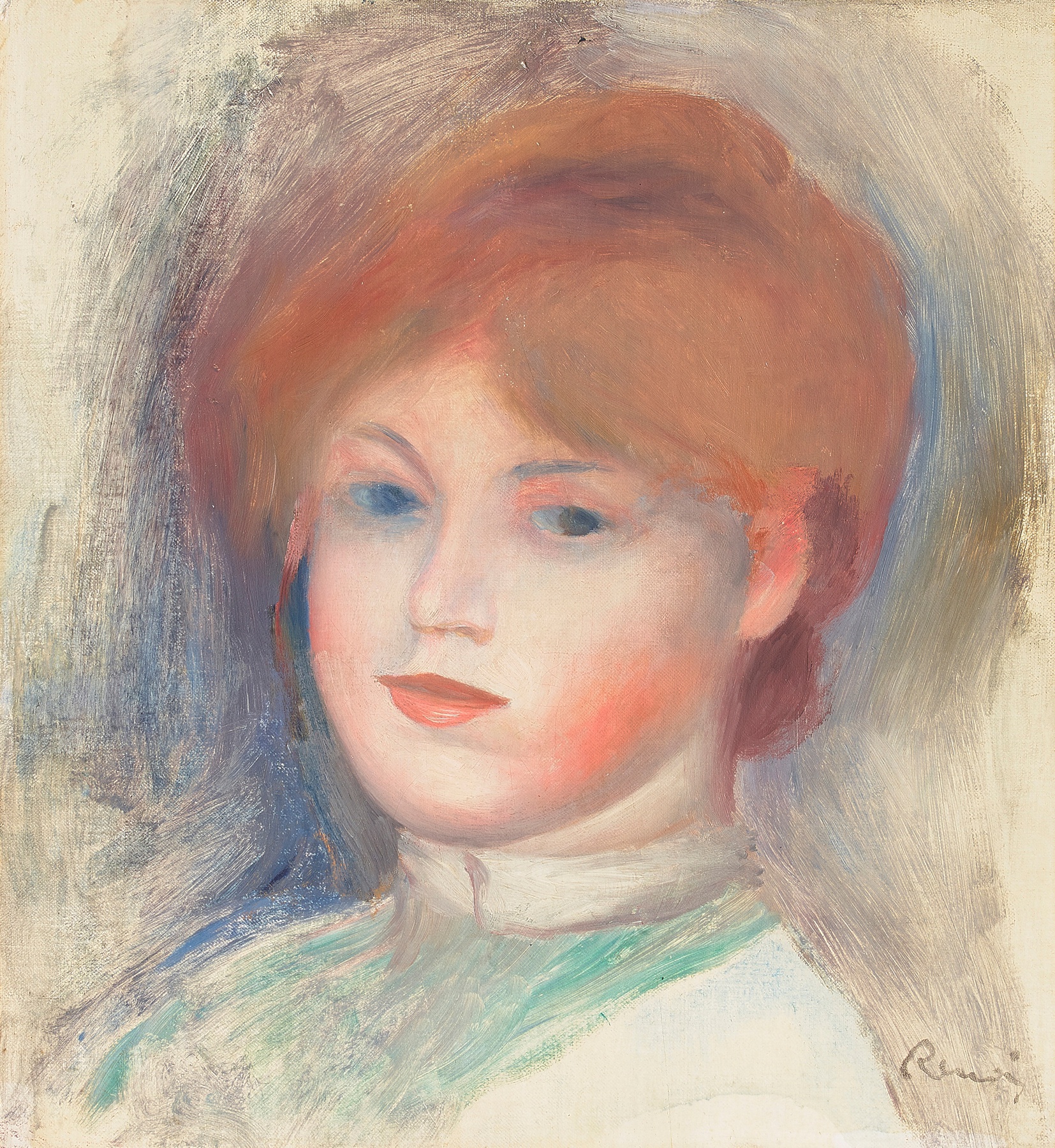
Pierre-auguste Renoir
Buste de jeune fille, 1886
To paint happiness with the seriousness Renoir brought to it is, it turns out, one of the hardest things an artist can do. Renoir was born on February 25, 1841, in Limoges, a city in central France long associated with fine porcelain. His father was a tailor, and the family moved to Paris when Pierre Auguste was still a young child, settling near the Louvre in a neighborhood that would give the boy his first sustained encounter with great art. He began his working life not in a studio but in a factory, painting decorative motifs onto porcelain at the age of thirteen.
This early apprenticeship was not incidental to his later achievement. The discipline of rendering delicate surfaces, the intimacy with color and craft, and the understanding that beauty could be functional as well as fine all seeped into his sensibility and stayed there for life. By the time he enrolled at the École des Beaux Arts in 1862, he already had the hands of a maker. It was at the studio of the painter Charles Gleyre that Renoir's life changed direction in the most consequential way possible.
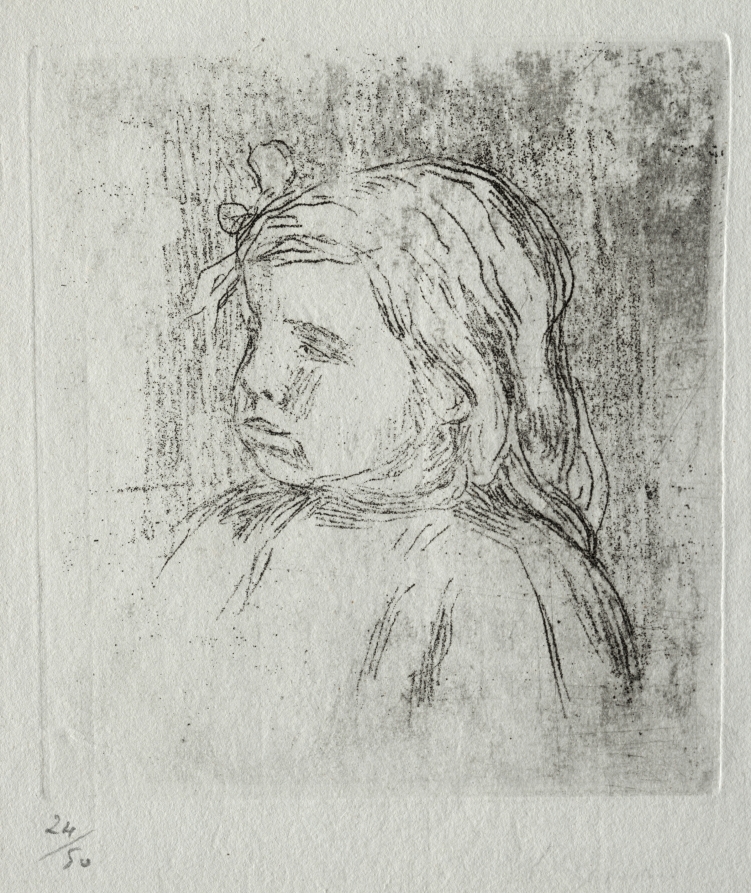
Pierre-auguste Renoir
Claude Renoir, de trois-quarts à gauche, 1908
There he met Claude Monet, Alfred Sisley, and Frédéric Bazille, the group of young painters who would eventually shake French art to its foundations. Together they left the studio and went to paint en plein air in the forest of Fontainebleau, working directly from observation rather than from academic convention. Renoir took to this practice with particular intensity. He had an almost physical relationship with light, responding to its movement across water, through leaves, and across human skin with the urgency of someone who understood that the moment was always passing.
“I have a predilection for painting that lends joyfulness to a wall.”
Pierre-Auguste Renoir
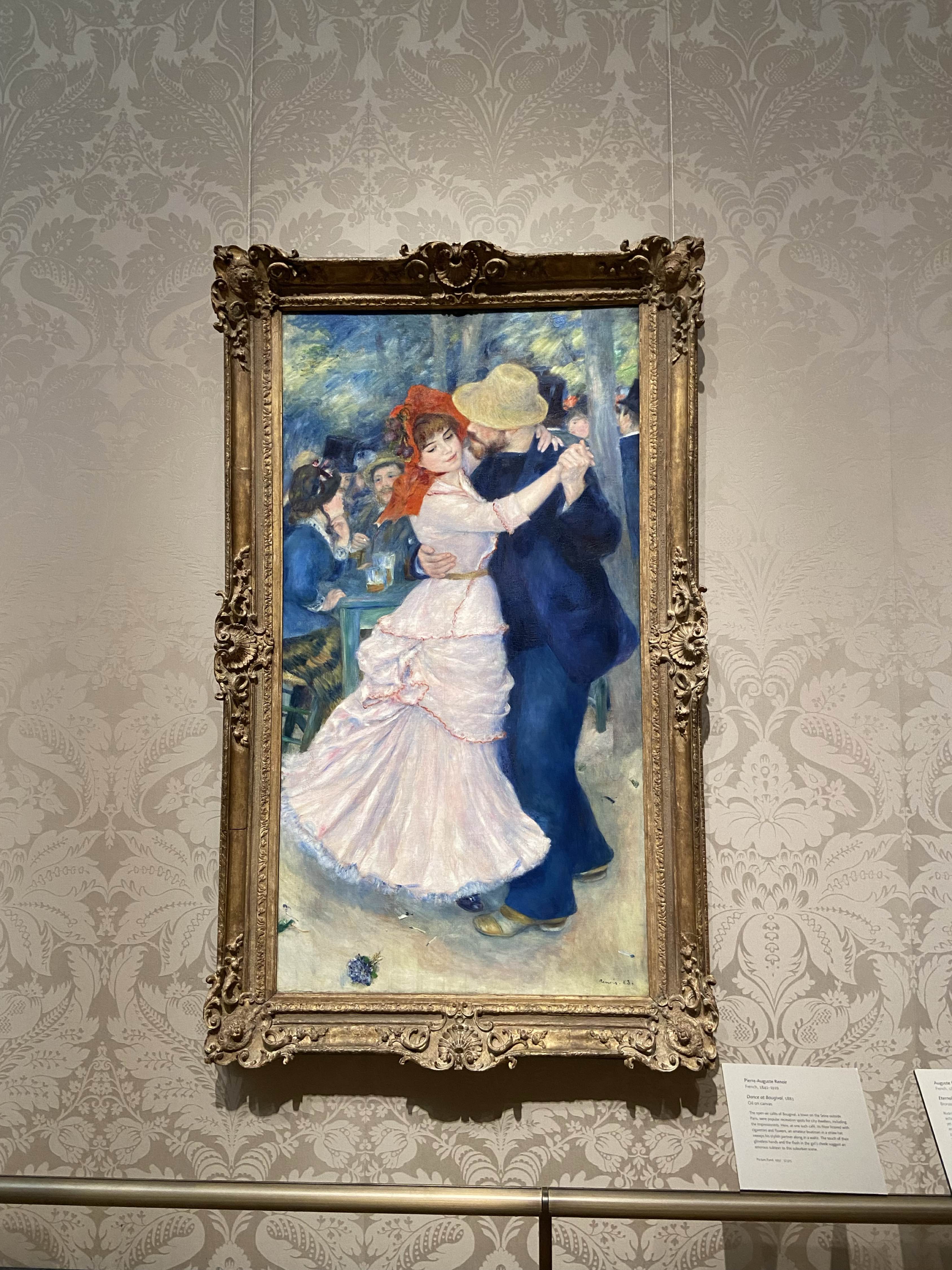
By the time the first Impressionist exhibition opened in 1874 at the studio of photographer Nadar, Renoir was among its central contributors, showing work that announced a new way of seeing. The years between roughly 1872 and 1883 represent Renoir's most celebrated period, the seasons in which he produced the paintings that would define Impressionism for generations of viewers. Works like Le Moulin de la Galette, completed in 1876 and now housed at the Musée d'Orsay, captured the Sunday afternoon dances at a popular Montmartre guinguette with a warmth and compositional complexity that still astonishes. Luncheon of the Boating Party from 1881, now at the Phillips Collection in Washington, gathers friends and lovers around a riverside table in a scene of such generous humanity that it reads almost as a manifesto for the pleasures of ordinary life.
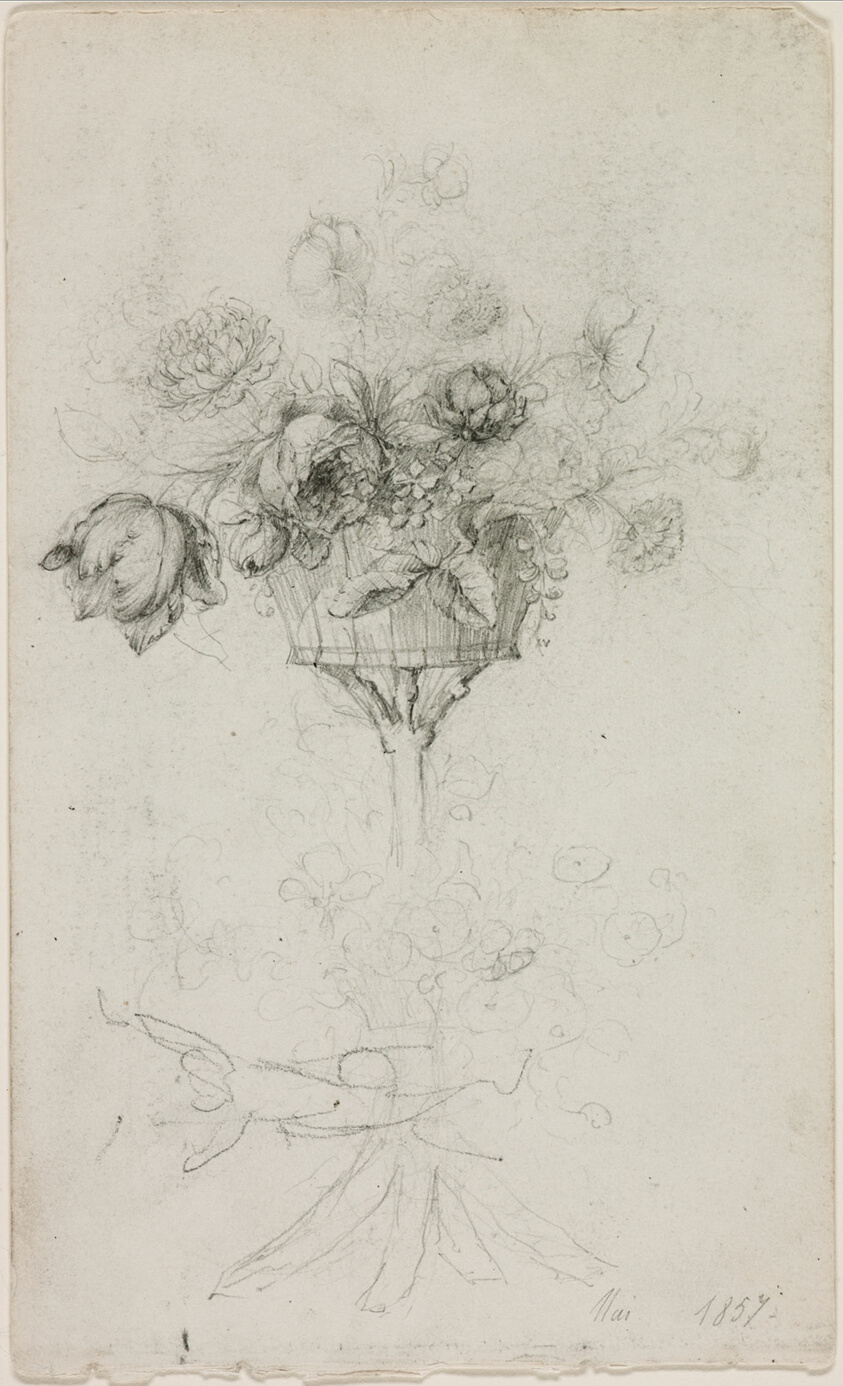
Pierre-auguste Renoir
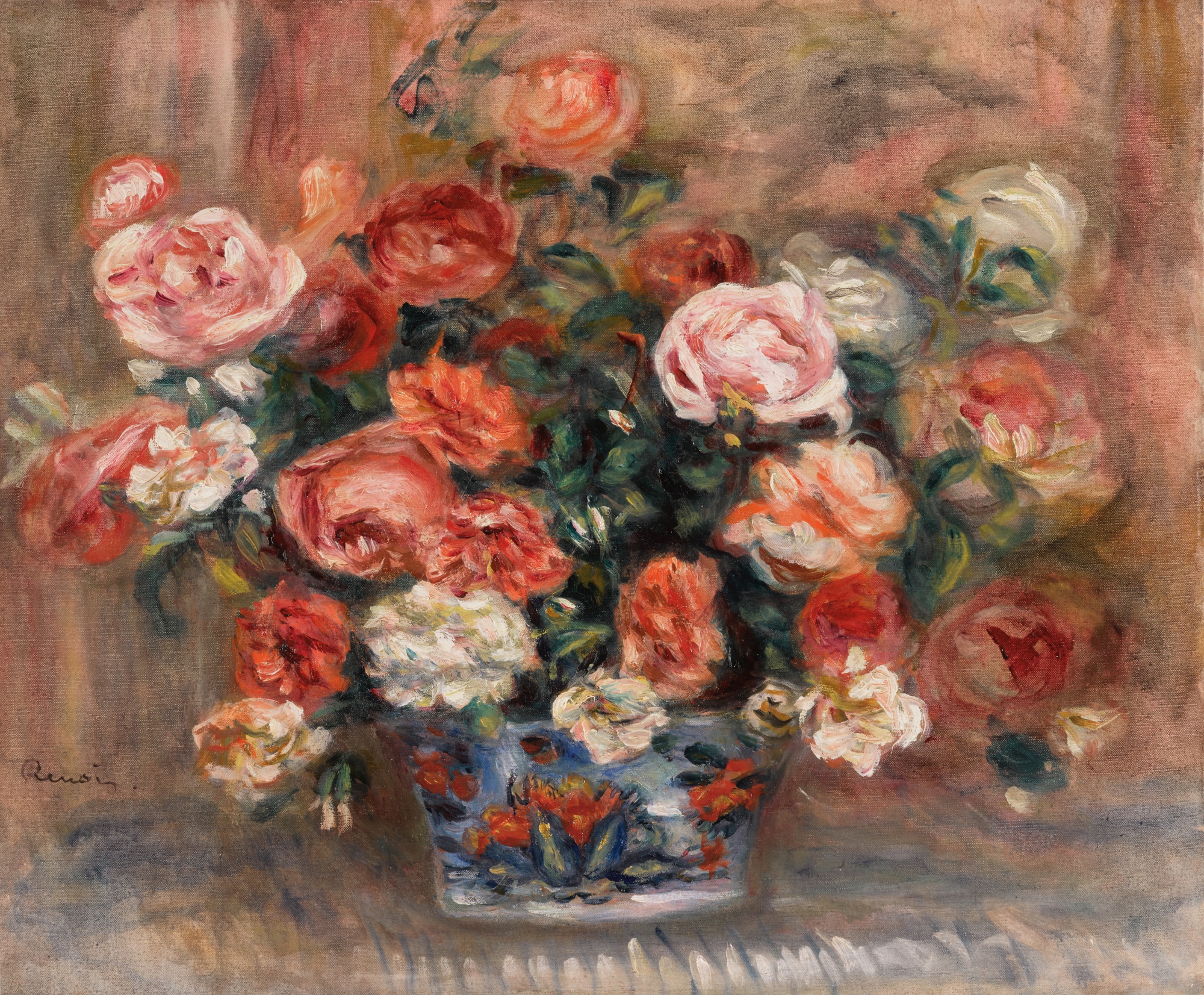
Vase of Flowers, 1857
Renoir's brushwork in these canvases is famously fluid, building form through color rather than line, dissolving edges so that figures and atmosphere seem to breathe together. His palette in this period is extraordinary: pinks, creams, and soft blues animated by unexpected flashes of orange and red. Renoir also worked across a remarkable range of formats and media, and it is in the variety of his practice that collectors today find particular richness. His drawings reveal a draughtsman of enormous sensitivity.
The charcoal work Joueuse de Guitar, completed in 1896 and available on The Collection, exemplifies his ability to translate the warmth of his painted world into works on paper. The seated figure, absorbed in her instrument, radiates the same quality of gentle attentiveness that defines his finest portraits. His printmaking, including drypoints such as Femme Nue Couchée, also available on the platform, demonstrates his engagement with the intimacy of works intended for close, private viewing. These are not secondary works; they are windows into the artist's thinking, records of a sensibility that operated across every medium it touched.
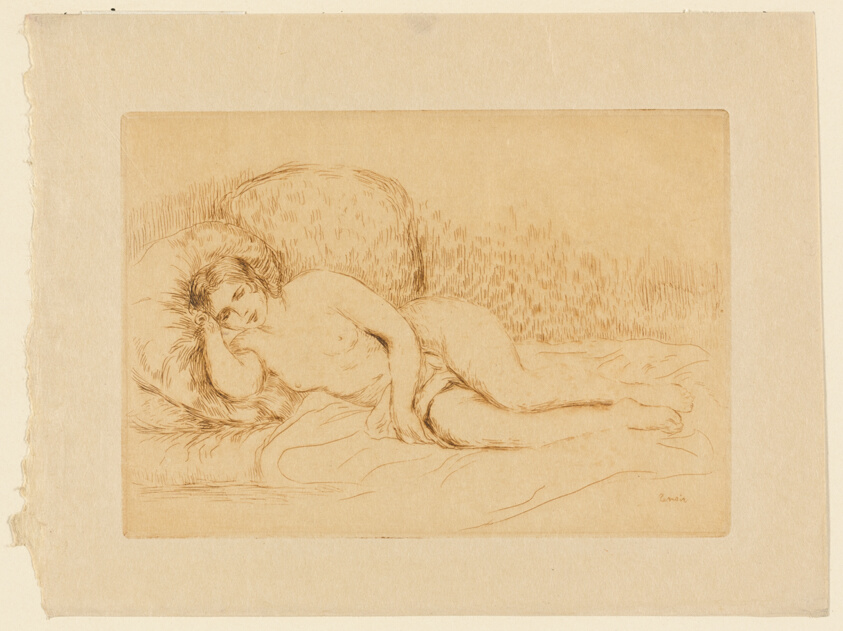
Pierre-auguste Renoir
Reclining Nude, 1906
Works on paper and prints by Renoir represent a genuinely accessible point of entry into a body of work that commands extraordinary prices at the top of the market. From a collecting perspective, Renoir remains one of the most sought after names in the history of Western art. Major canvases from his Impressionist peak regularly appear at Christie's, Sotheby's, and Bonhams, where they attract bidders from across the world. A significant Renoir oil at auction is a cultural event as much as a market transaction.
But the breadth of his practice means that works on paper, prints, and drawings offer collectors the opportunity to engage with his vision at a range of price points. What to look for: the characteristic softness of his line, the warmth of his palette even in monochrome works, and the quality of attentiveness he brings to his subjects. Renoir never painted indifferently. Every work, regardless of scale or medium, carries the evidence of genuine looking.
To understand Renoir fully, it helps to place him within the wider landscape of Impressionism and of French art in the second half of the nineteenth century. His closest peers were Monet, with whom he shared a commitment to the transformative power of natural light, and Berthe Morisot, whose intimate domestic scenes parallel his own interest in figures at rest and in motion. Edgar Degas, his contemporary and occasional rival, approached similar subjects with a cooler, more ironic sensibility; comparing the two illuminates exactly what is distinctive about Renoir's warmth. Later painters including Pierre Bonnard and Henri Matisse absorbed lessons from his use of color and his willingness to treat pleasure as a serious pictorial subject.
The lineage runs forward through the twentieth century and remains alive in contemporary painting today. Renoir spent his final years in Cagnes sur Mer in the south of France, his body progressively crippled by rheumatoid arthritis, yet his output remained extraordinary to the end. He died on December 3, 1919, at the age of 78, having produced more than six thousand works across a career that never lost its appetite for beauty. His legacy is sometimes caricatured as merely pretty, an accusation that dissolves on close looking.
What Renoir understood, and what makes him essential today, is that the depiction of human contentment is not an evasion of reality but a profound engagement with it. In a period of mass leisure, rapid modernization, and shifting social roles, he chose to paint people at their most alive: dancing, eating, talking, resting, loving. That choice was not naive. It was brave.
And it endures.
Featured Works
Explore books about Pierre-auguste Renoir

Renoir
Jean Renoir
Renoir
François Daulte
Renoir: A Life
Barbara Ehrlich White

The Paintings of Pierre-Auguste Renoir
André Chamson

Renoir: Master Impressionist
Colin B. Bailey
Pierre-Auguste Renoir: An Exhibition of His Paintings
Museum of Modern Art
Renoir, Father and Son
Alain Renoir