Philip Taaffe
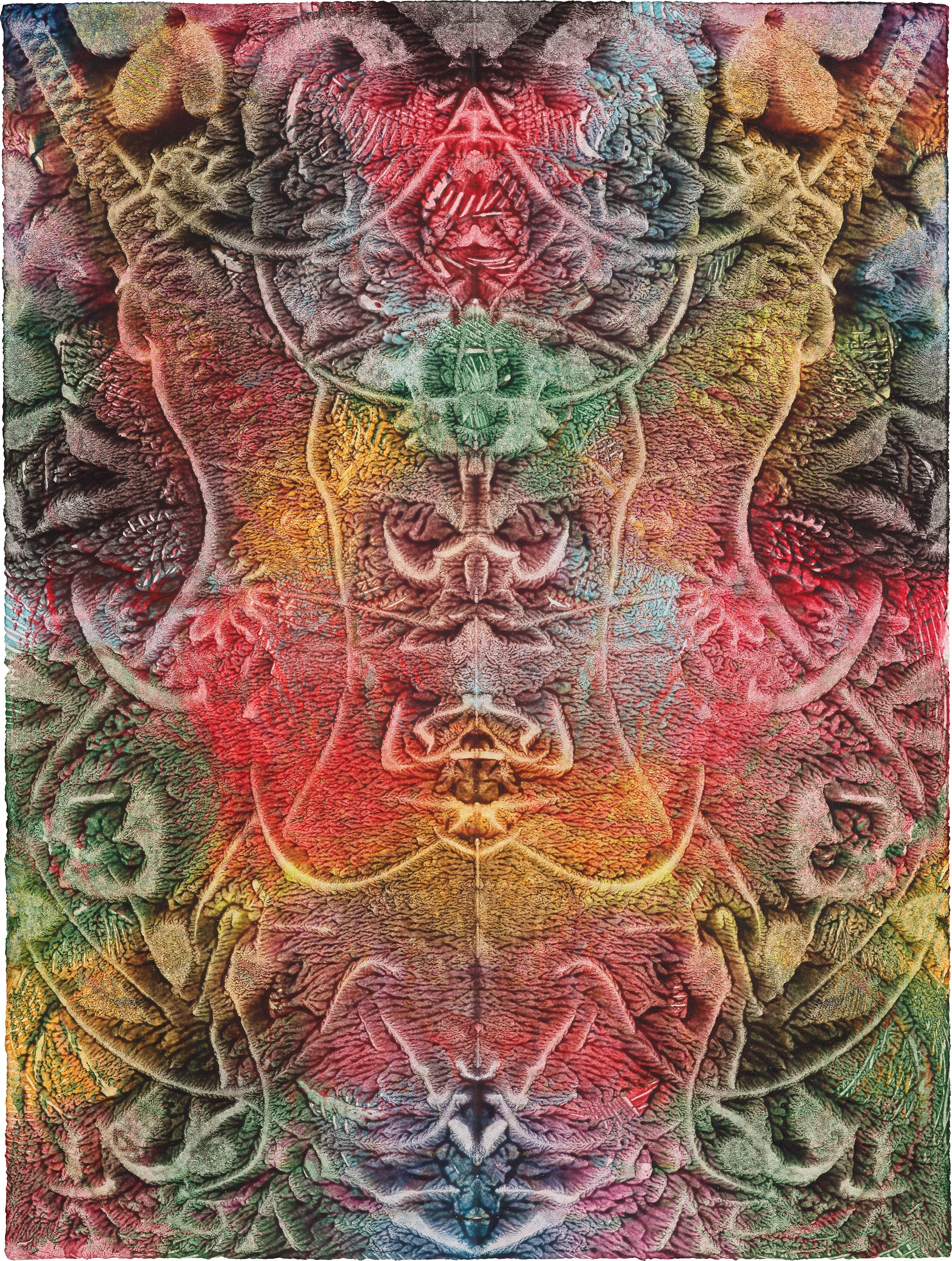
Philip Taaffe, Painter of Infinite Worlds
Artist Spotlight · The Collection Editorial
“I want to use everything that is available to me as a painter, every resource that the history of art and ornament provides.”
Philip Taaffe, interview with Bomb Magazine
When the Gagosian Gallery mounted a major survey of Philip Taaffe's work in recent years, visitors found themselves inside something that felt less like a contemporary art exhibition and more like a portal into an accumulated civilization of images. Richly layered canvases covered in interlocking geometries, botanical forms, and luminous ornamental fragments lined the walls, each one a testament to a painter who has spent four decades building one of the most singular and intellectually generous bodies of work in American art. Taaffe has never been interested in the quick gesture or the conceptual shortcut. He is, above all, a patient maker of worlds.
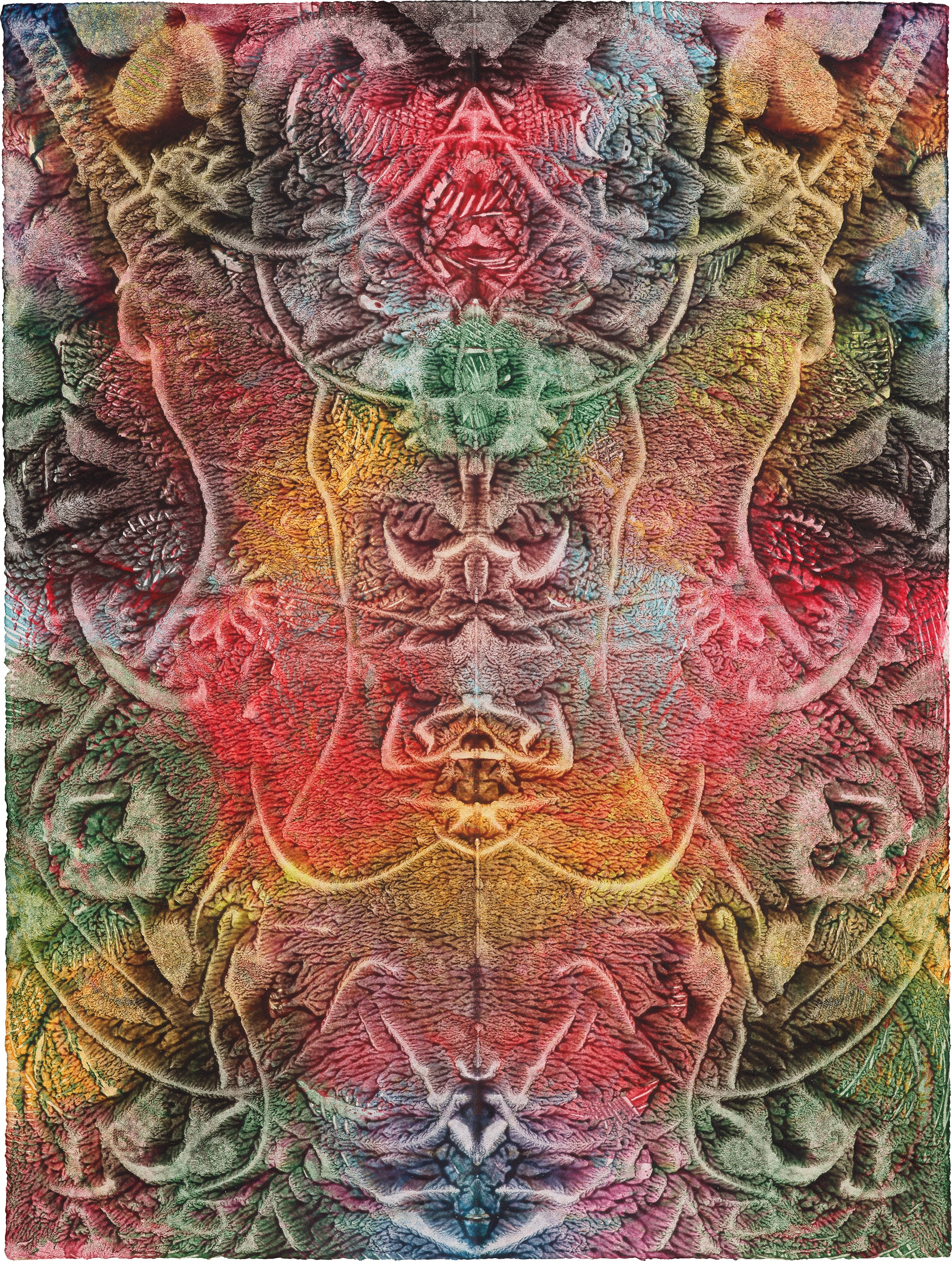
Philip Taaffe
Acerodont
Philip Taaffe was born in Elizabeth, New Jersey, in 1955, and came of age in an American cultural landscape still reverberating with the seismic shifts of Abstract Expressionism, Minimalism, and the early stirrings of postmodernism. He studied at the Cooper Union in New York, graduating in 1977, an institution that placed enormous emphasis on the relationship between formal rigor and visual culture broadly conceived. That training left an indelible mark. From the beginning, Taaffe was drawn not just to making images but to understanding where images come from, how they travel across centuries and continents, and what happens when they are placed in unexpected proximity to one another.
His early career in the 1980s coincided with a moment of intense critical conversation about appropriation and the nature of originality in painting. Taaffe entered that conversation with a series of works that engaged directly with the Op Art paintings of Bridget Riley and the stark vertical canvases of Barnett Newman. Rather than simply reproducing those sources, he transformed them through the techniques of linocut collage and layered printing, introducing a handmade warmth and an almost archaeological texture to what had originally been works of crisp optical precision or austere chromatic drama. Works such as "Overtone" from 1983 and "Untitled III" from 1984 announce an artist who understood appropriation not as mere quotation but as a form of deep conversation with the history of abstract painting.
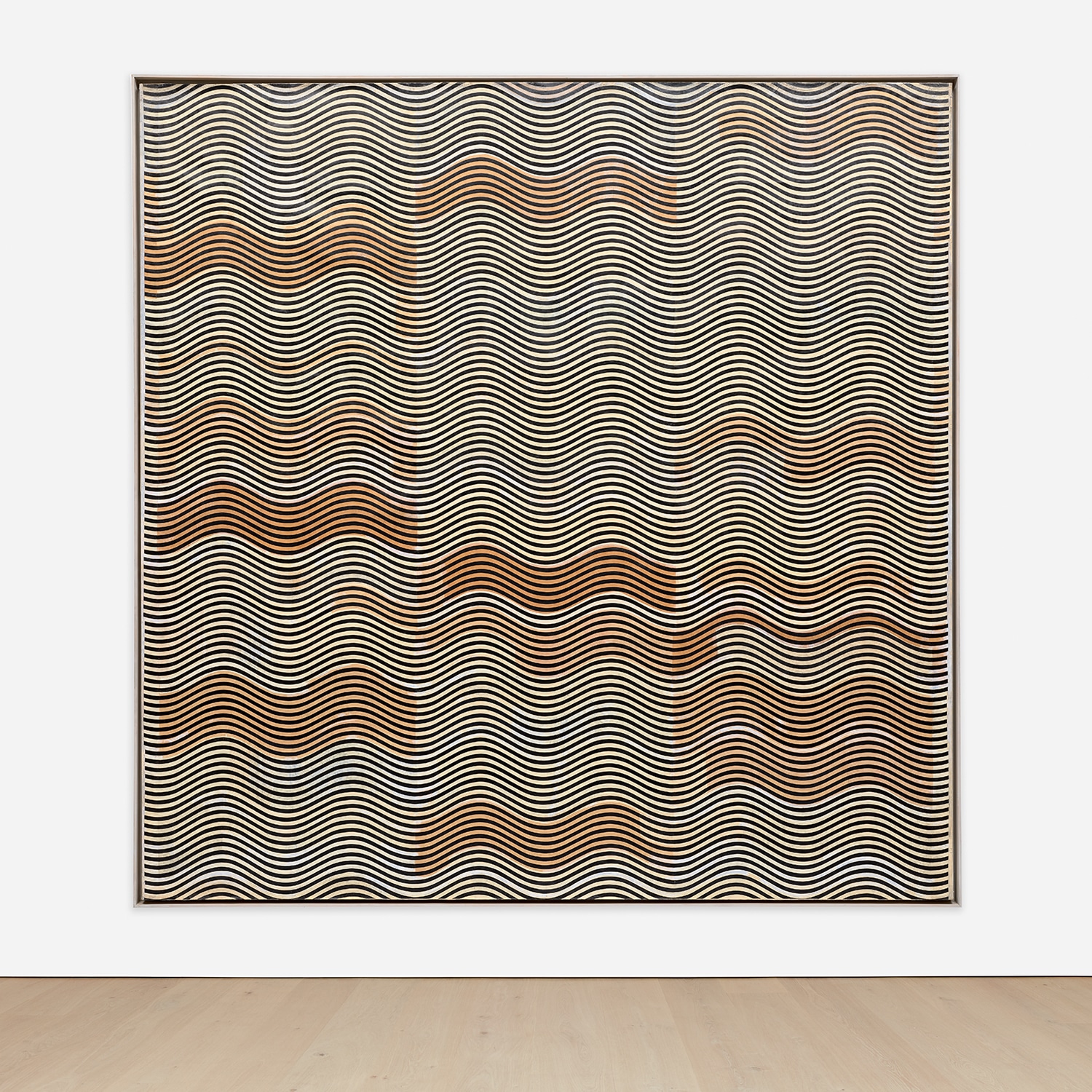
Philip Taaffe
Overtone, 1983
These early pieces remain touchstones for understanding how Taaffe repositioned himself within postmodern discourse while insisting on the primacy of material pleasure. Through the late 1980s and into the 1990s, Taaffe's practice expanded dramatically in both geographic and temporal scope. He began incorporating visual languages drawn from Islamic geometric ornament, Celtic illuminated manuscripts, Byzantine mosaic traditions, Mughal decorative arts, and the illustration traditions of natural history. Time spent in Naples deepened his engagement with Mediterranean cultural memory and the persistence of ornamental traditions across vastly different civilizations.
The result was a body of work that seemed to propose a kind of universal grammar of pattern, one that cut across the conventional divisions between fine art and decorative art, between Western modernism and the global traditions it had so long marginalized. A work like "Composition with Gemstones" from 2001, rendered in mixed media on canvas, exemplifies this ambition: it shimmers with geological weight and botanical intricacy simultaneously, as though the painter had collapsed the distance between a medieval lapidary and a contemporary studio. Taaffe's technical methods are as layered as his iconographic sources. He works with silkscreen, linoprint, monoprint, collage, and hand painting, often combining these processes on a single surface to create effects of extraordinary visual depth.
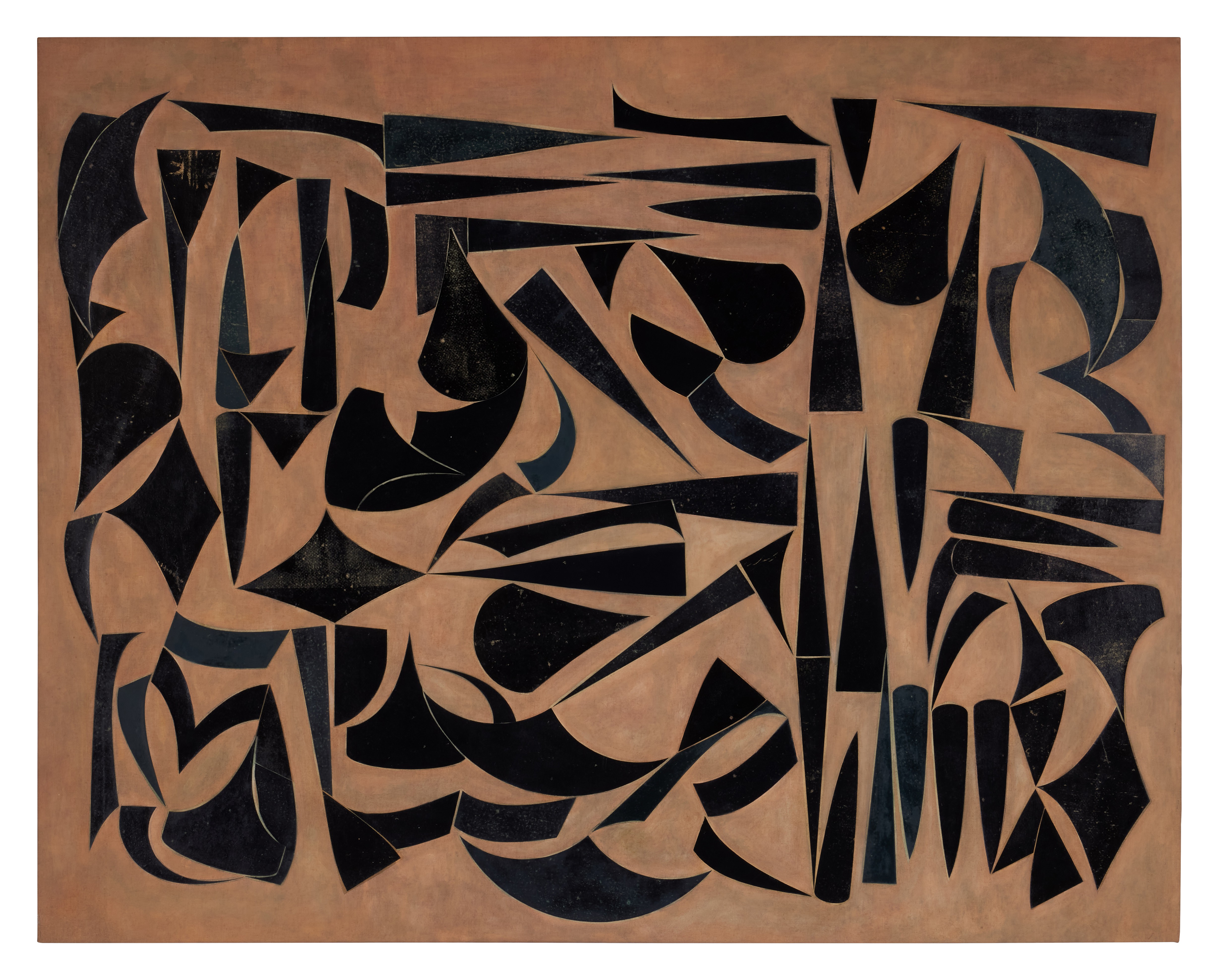
Philip Taaffe
Untitled III, 1984
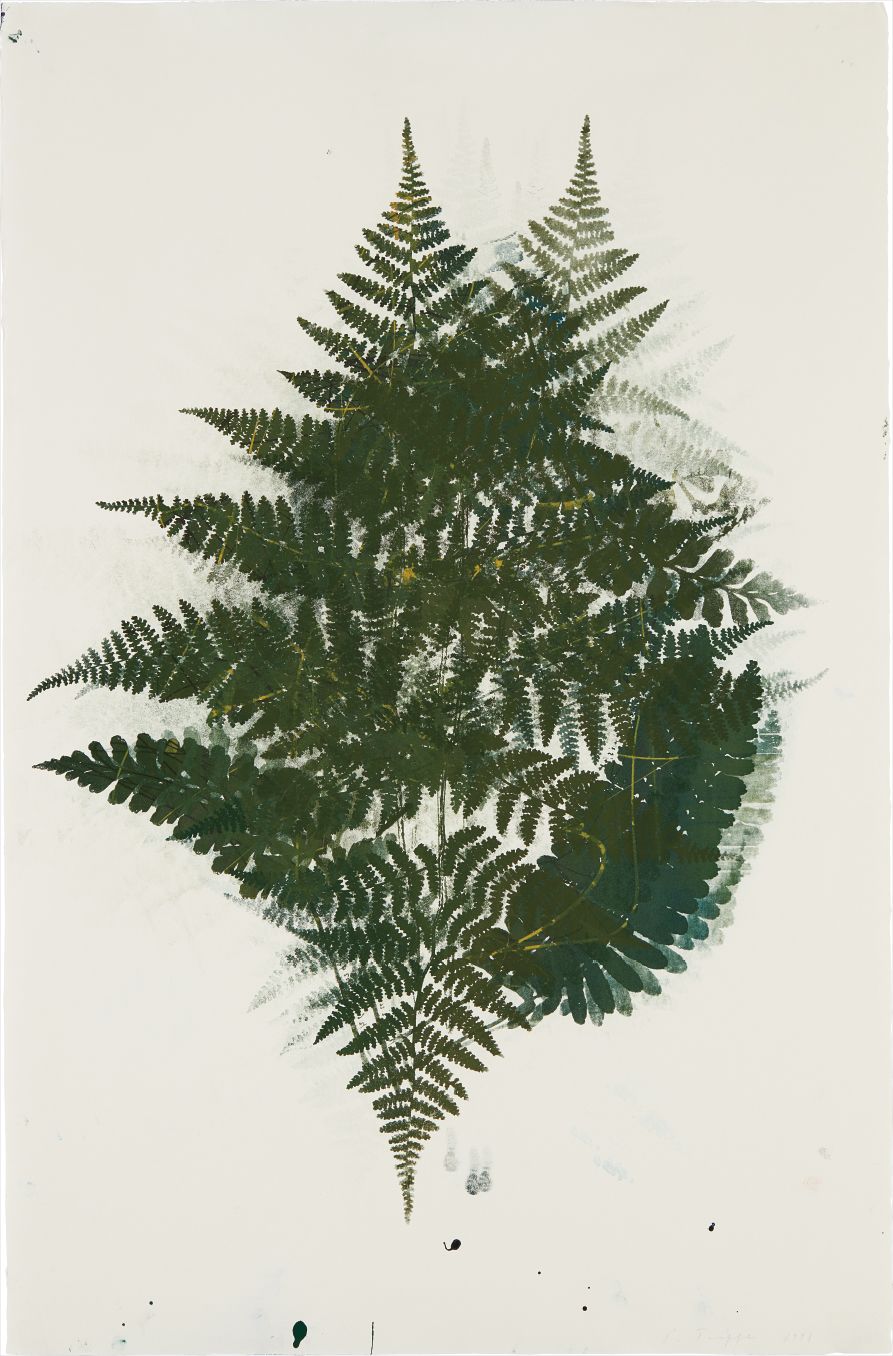
The paper works, including pieces like "Fern" from 1998, executed in silkscreen inks and crayon, reveal a more intimate register of his thinking, where the interaction between printmaking precision and the vulnerability of hand drawing creates something genuinely tender. His mixed media works on canvas and board, such as "Charterhouse" and "Composition with Ornamental Fragments II," demonstrate the full range of his architectural ambition, building surfaces that reward prolonged and patient looking. Each encounter with a Taaffe canvas tends to yield new details, new structural logics, new moments of recognition. From a collecting perspective, Taaffe occupies a position of rare and enduring distinction.
His work has been acquired by major institutions including the Museum of Modern Art in New York, the Whitney Museum of American Art, the Guggenheim Museum, and the Tate in London, a roster that reflects the seriousness with which the museum world has engaged his practice over several decades. On the secondary market, his canvases have consistently attracted collectors who prize intellectual depth alongside visual opulence, a combination that is rarer than it sounds. Works on paper and smaller mixed media pieces offer a compelling entry point for collectors newer to his practice, providing genuine access to his vocabulary without requiring the wall space and resources that the largest canvases demand. The printworks in particular, including monoprints on Japanese paper and screenprints on Dur O Tone paper, carry all the conceptual richness of his practice in a format that has historically offered strong value.
Philip Taaffe
Fern, 1998
The artists most closely aligned with Taaffe's sensibility include figures such as Ross Bleckner, whose engagement with pattern and optical experience shares certain formal concerns, and Terry Winters, whose interest in biological and systemic structures resonates with Taaffe's natural history investigations. The broader context of postmodern painting in the 1980s places him alongside painters who were renegotiating the terms of abstraction after Minimalism, including Carroll Dunham and Peter Halley, though Taaffe's ornamental generosity and his embrace of non Western visual traditions give his work a distinctive warmth that sets it apart from the cooler ironies of much of that moment. What makes Taaffe genuinely important today is his insistence that painting can be both critically self aware and sensuously alive, that a canvas can think rigorously about its own history while still offering the viewer something approaching delight. In an art world that has sometimes treated beauty with suspicion, Taaffe has remained committed to the idea that the richness of human visual culture across all its traditions is a legitimate subject for a serious painter.
His practice is, at its core, an act of sustained and deeply generous attention, to the world, to history, and to the enduring capacity of paint and pattern to make meaning.
Explore books about Philip Taaffe
Philip Taaffe
Robert Pincus-Witten
Philip Taaffe: Paintings and Works on Paper
Klaus Kertess
Philip Taaffe
Peter Halley
Philip Taaffe: Recent Paintings
Various Authors
Philip Taaffe: Cosmic Consciousness
David Moos