Peter Henry Emerson
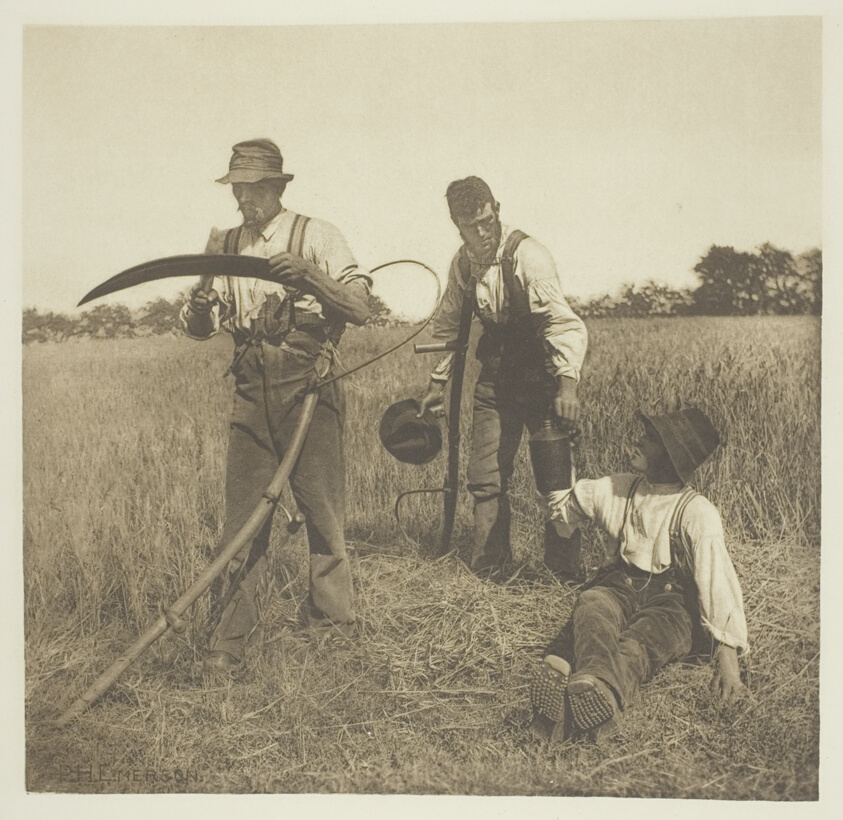
Light, Land, and a Revolutionary Vision
Artist Spotlight · The Collection Editorial
“The photographer must have an eye for beauty and must feel the poetry of a scene before he attempts to render it.”
Naturalistic Photography for Students of the Art, 1889
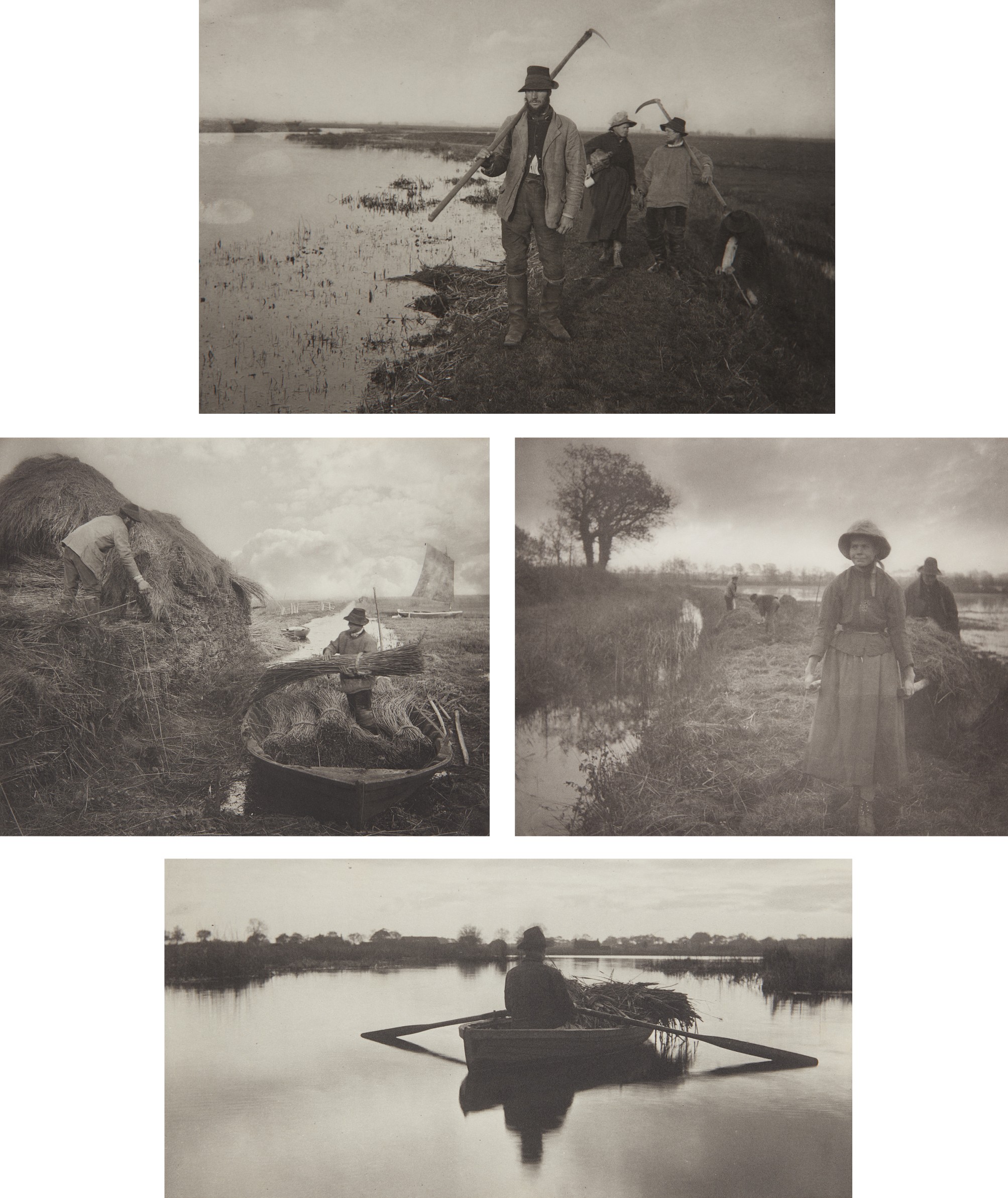
Stand before a platinum print by Peter Henry Emerson and something extraordinary happens. The image does not announce itself with the theatrical sharpness of a commercial studio portrait or the stiff formality of Victorian convention. Instead, it breathes. Marsh grasses soften at the edges, a wildfowler moves through mist as if glimpsed from a distance, and the flat, luminous light of the Norfolk Broads settles over the scene like memory itself.
Peter Henry Emerson
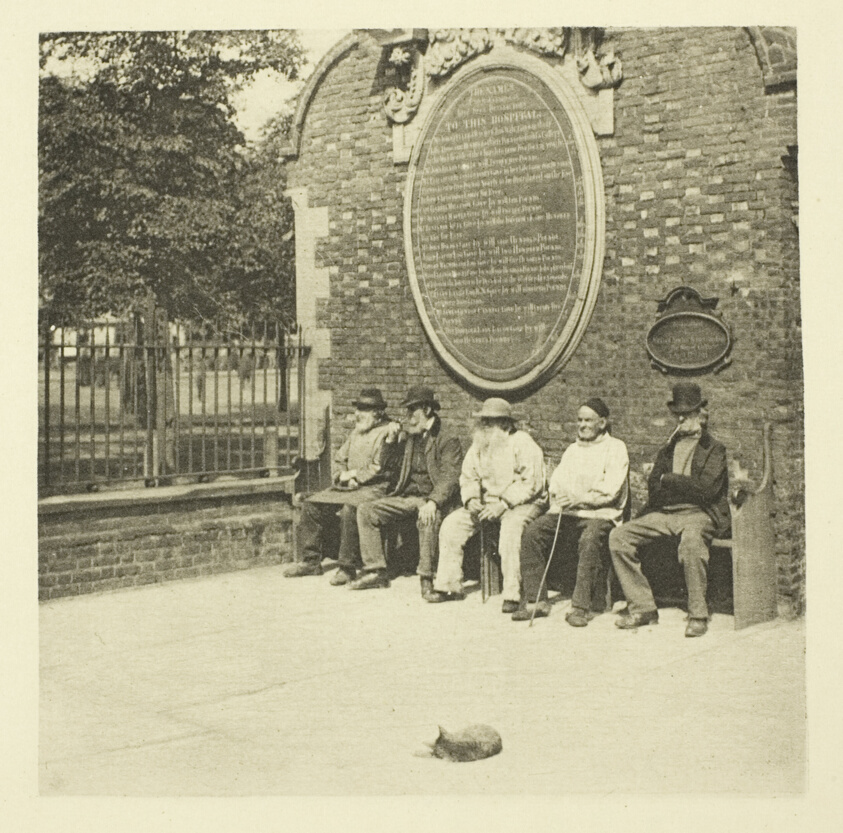
Decayed Fishermen, 1887
In a career defined by provocation and beauty in equal measure, Emerson transformed photography from a mechanical novelty into something that could genuinely be called art, and collections around the world are still reckoning with the magnitude of that achievement. Peter Henry Emerson was born in 1856 in Cuba to a British father and an American mother, and the circumstances of his early years were as restless as the artistic life that followed. After the death of his father, the family relocated to the United States and later to England, where Emerson would eventually train as a physician at King's College London and Cambridge. That scientific education left a permanent mark on his thinking.
He approached photography not merely as a hobbyist or gentleman amateur but with the rigorous curiosity of someone who had studied anatomy, optics, and the physiology of human vision. This combination of medical discipline and deep aesthetic feeling would become the foundation of everything he made. Emerson's breakthrough came when he turned his camera toward East Anglia in the early 1880s. The landscape of the Norfolk Broads, with its wide skies, reed beds, working fishermen, and ancient rhythms of rural labour, became his great subject.
Peter Henry Emerson
Selected Images
He was drawn not to the picturesque postcard England of his contemporaries but to the people who actually lived and worked within that landscape. Influenced by the naturalist painting tradition of the Barbizon School and particularly by the work of Jean François Millet, Emerson saw in the agricultural and fishing communities of East Anglia a subject worthy of serious artistic attention. His collaboration with the painter Thomas Frederick Goodall on the landmark album Life and Landscape on the Norfolk Broads, published in 1886, announced a new ambition for the photographic medium. The platinum prints in that volume, produced in a limited edition and sold by subscription, were conceived as fine art objects rather than documents.
“Nature is the standard by which all art must be judged.”
Naturalistic Photography for Students of the Art, 1889
The theoretical framework Emerson built around his practice was as important as the images themselves, and considerably more controversial. In his 1889 treatise Naturalistic Photography for Students of the Art, he argued that photography should emulate the way the human eye actually perceives a scene, with the central point of focus rendered sharply and the surrounding areas allowed to fall into gentle softness. This was a direct challenge to the prevailing fashion for combination printing and heavily manipulated imagery championed by figures like Henry Peach Robinson. Emerson believed that artifice was the enemy of truth and that the photographer, working with sensitivity and intelligence, could achieve a form of expression every bit as legitimate as painting or etching.
Peter Henry Emerson
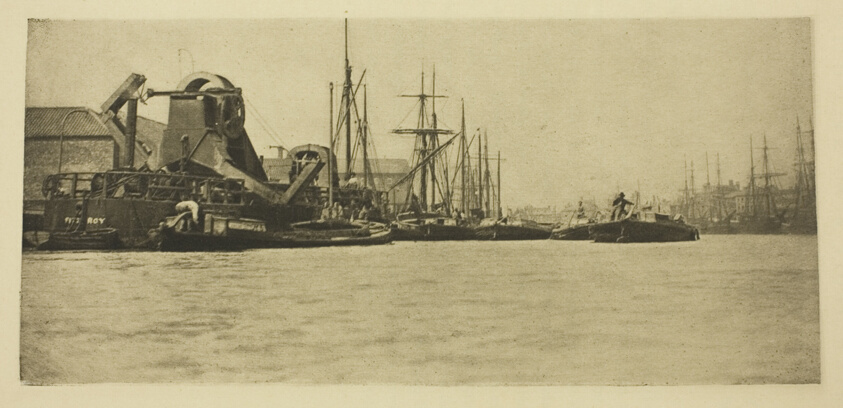
Toil and Grime, 1887
The photographic establishment reacted with fury. The debate he ignited about the artistic status of photography echoed through the following decades and shaped the thinking of every serious photographer who came after him. The works that have entered the canon demonstrate the full range of his technical and emotional intelligence. The Fowler's Return, a platinum print from 1886 and one of the jewels of the Life and Landscape on the Norfolk Broads album, captures a figure moving through a landscape that seems to absorb him rather than merely contain him.
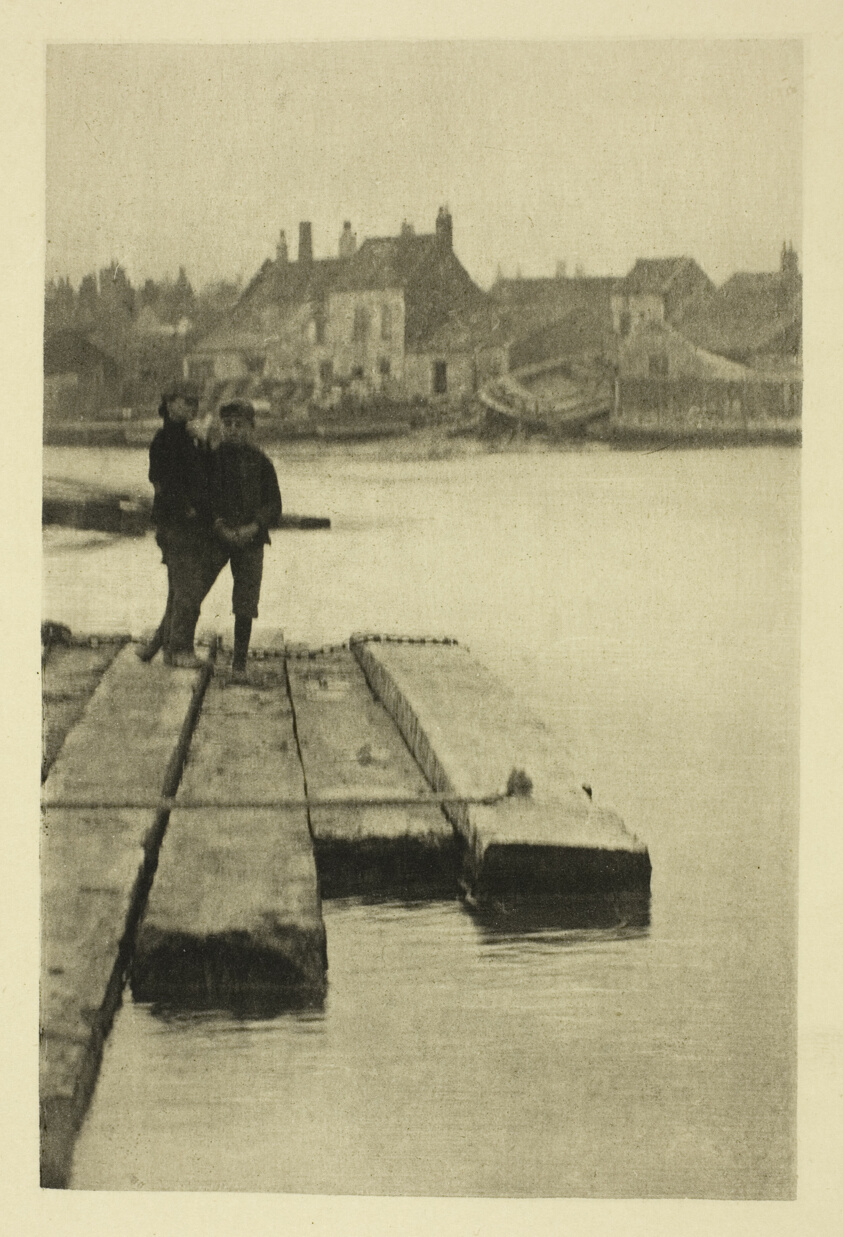
The tonal range achievable through the platinum process suited Emerson's naturalistic philosophy perfectly, producing prints of extraordinary subtlety that remain stable and beautiful more than a century later. His subsequent album Wild Life on a Tidal Water, published in 1890, introduced the photoetching process to a wider audience through plates such as Toil and Grime, Decayed Fishermen, On the Baulks, and The Last of the Ebb, works in which the physicality of the printed surface adds another layer of material richness to already compelling images. These are not merely photographs of working people. They are meditations on labour, time, and the particular dignity of lives lived close to the land and the water.
Peter Henry Emerson
On the Baulks, 1887
For collectors, Emerson presents a compelling case on multiple fronts. His platinum prints from the mid to late 1880s represent some of the finest examples of that process ever produced, made during the period when Emerson was most confident in his naturalistic principles and working with complete creative freedom. Original prints from the Life and Landscape on the Norfolk Broads album and from Pictures of East Anglian Life, the 1888 photogravure album that brought his work to a broader audience, appear at auction with enough regularity to reward patient collectors but with sufficient rarity to retain genuine value. The photoetchings from Wild Life on a Tidal Water have attracted growing interest in recent years as collectors have come to appreciate the crossover between photography and printmaking traditions that these works represent.
When considering Emerson's output, condition is paramount, as the platinum process ages gracefully but the paper supports of the period require careful stewardship. To understand Emerson's place in art history it helps to consider him in conversation with his contemporaries and his inheritors. His naturalistic approach stands in productive tension with the painterly manipulations of Henry Peach Robinson and Oscar Gustave Rejlander on one side, and anticipates the straight photography movement championed in the twentieth century by Alfred Stieglitz and Paul Strand on the other. Stieglitz, who was deeply aware of Emerson's theoretical writings, carried forward the argument that photography deserved to be judged by the same standards as any other fine art medium.
The documentary humanism that runs through Emerson's images of East Anglian working life also places him in a lineage that extends toward the social photography of the twentieth century, though Emerson was always as interested in aesthetic quality as in social record. Emerson's legacy is secure, though it rewards rediscovery in every generation. He gave photography its first coherent artistic philosophy rooted in observation rather than imitation, in natural vision rather than theatrical effect. The landscapes of East Anglia he documented with such love and precision have changed enormously since the 1880s, which gives his images an additional poignancy as historical testimony.
But it is the quality of attention he brought to each frame, the sense that every plate was considered with the care and seriousness of a painter before an easel, that continues to speak most directly to those who encounter his work today. In an era when images are made and discarded by the billion, Emerson's patient, purposeful, deeply felt photographs feel more radical than ever.
Explore books about Peter Henry Emerson

Peter Henry Emerson: The Fight for Photography as a Fine Art
Nancy Newhall
Peter Henry Emerson: Naturalistic Photography
Peter Henry Emerson
Life and Landscape: Peter Henry Emerson, Photographer
Andrew Wilton and Anne Lyles
Peter Henry Emerson and the Development of Artistic Photography
Mike Weaver