Peter Fischli
Peter Fischli Finds Wonder in Everything
Artist Spotlight · The Collection Editorial
“We were always interested in the question of how things hold together, and also in the possibility that they might not.”
Peter Fischli, interview with Tate, 2006
In the spring of 2016, the Tate Modern in London mounted a major retrospective of Fischli and Weiss, drawing tens of thousands of visitors who filed past rubber rats, unfired clay sculptures, and the flickering projections of a chain reaction that had already entered art history. The exhibition felt like a reunion, a celebration of two artists who had spent decades making the profound feel approachable and the ordinary feel miraculous. For many collectors and curators in that gallery, it was a reminder that Peter Fischli, even years after the death of his long collaborator David Weiss, remains one of the most quietly radical artists working in the world today. Peter Fischli was born in Zurich in 1952, into a city that had long positioned itself as a crossroads of European intellectual and cultural life.
Peter Fischli
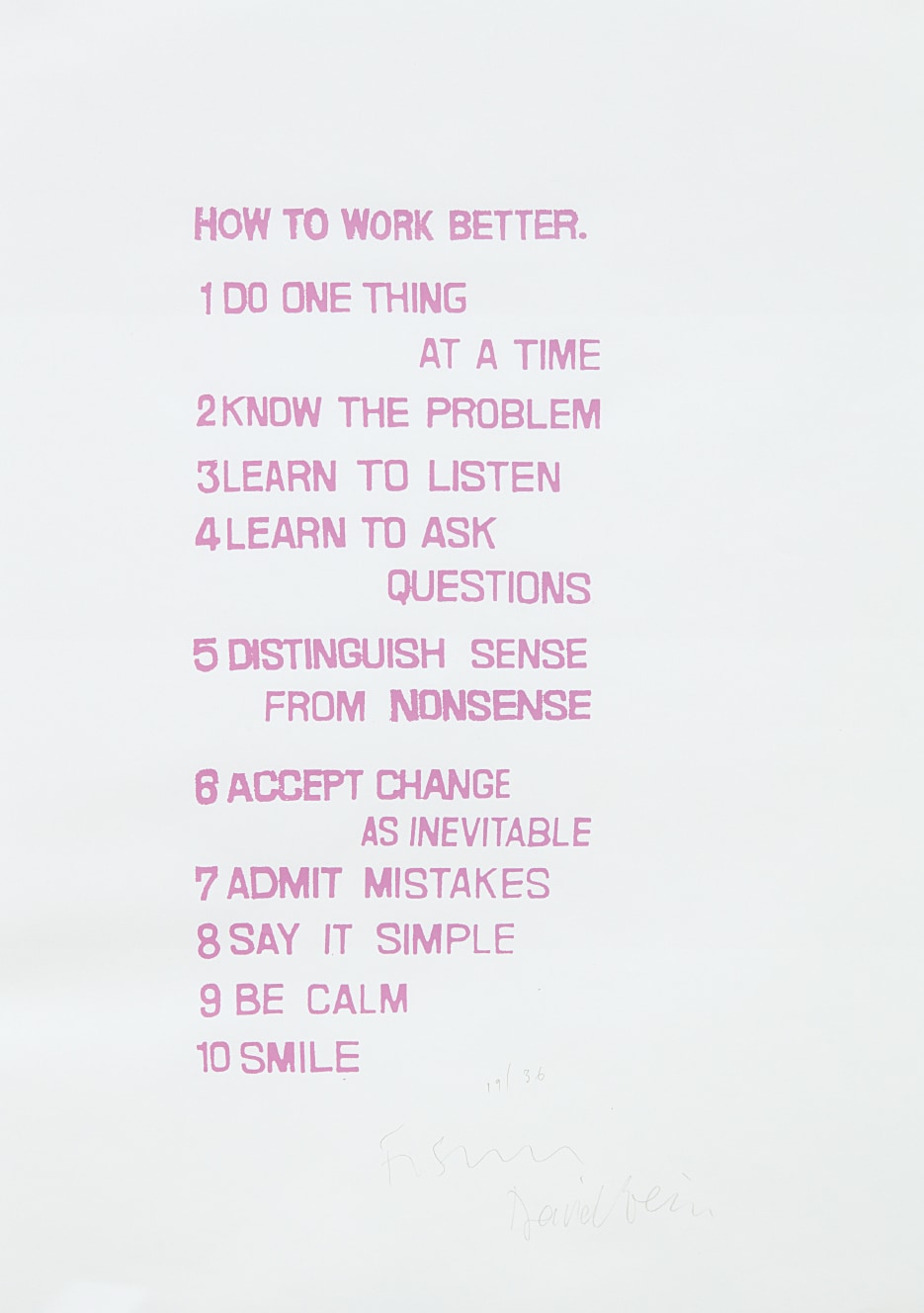
How to Work Better
Switzerland's particular neutrality, its precision, its tendency toward the systematic and the orderly, would become something Fischli and later Fischli and Weiss would gently and lovingly subvert. Fischli studied at the Accademia di Belle Arti in Urbino and later at the Gesamthochschule in Hamburg, absorbing the conceptual traditions that were reshaping European art in the 1970s. It was in this period of ferment, with Arte Povera challenging the primacy of expensive materials and Fluxus insisting that life itself was art, that Fischli began to develop his instinct for the poetic possibilities hiding inside the most unremarkable moments. The partnership between Fischli and David Weiss, which began in 1979, became one of the most sustained and generative collaborations in postwar art history.
Their earliest works together, including the Wurstserie photographs from 1979 in which sausages and cold cuts were arranged into absurdist dioramas, announced a sensibility that was simultaneously deadpan and deeply warm. There was always a joke, but the joke was never cruel. Instead, Fischli and Weiss found in comedy a way of approaching questions that more earnest art might have fumbled: What is the meaning of work? What constitutes an event?
Peter Fischli
Peter Fischli and David Weiss
Why do things happen at all? These were not rhetorical questions for them. They were genuine, recurring, almost childlike in their persistence, and that quality of sincere curiosity became the foundation of everything they made. The work that would define them internationally arrived in 1987.
Der Lauf der Dinge, known in English as The Way Things Go, is a 30 minute film documenting a chain reaction of ordinary objects: plastic bags, tires, candles, foam, and chemical reactions all triggering one another in an abandoned warehouse. The film is hypnotic, funny, and quietly terrifying in its suggestion that causality is both inevitable and absurd. It entered the collections of institutions including the Tate and the Guggenheim and has never stopped being relevant, resonating with anyone who has wondered how one thing leads to another. The Suddenly This Overview series, known in German as Plötzlich diese Übersicht, extended this sensibility into sculpture.
Peter Fischli
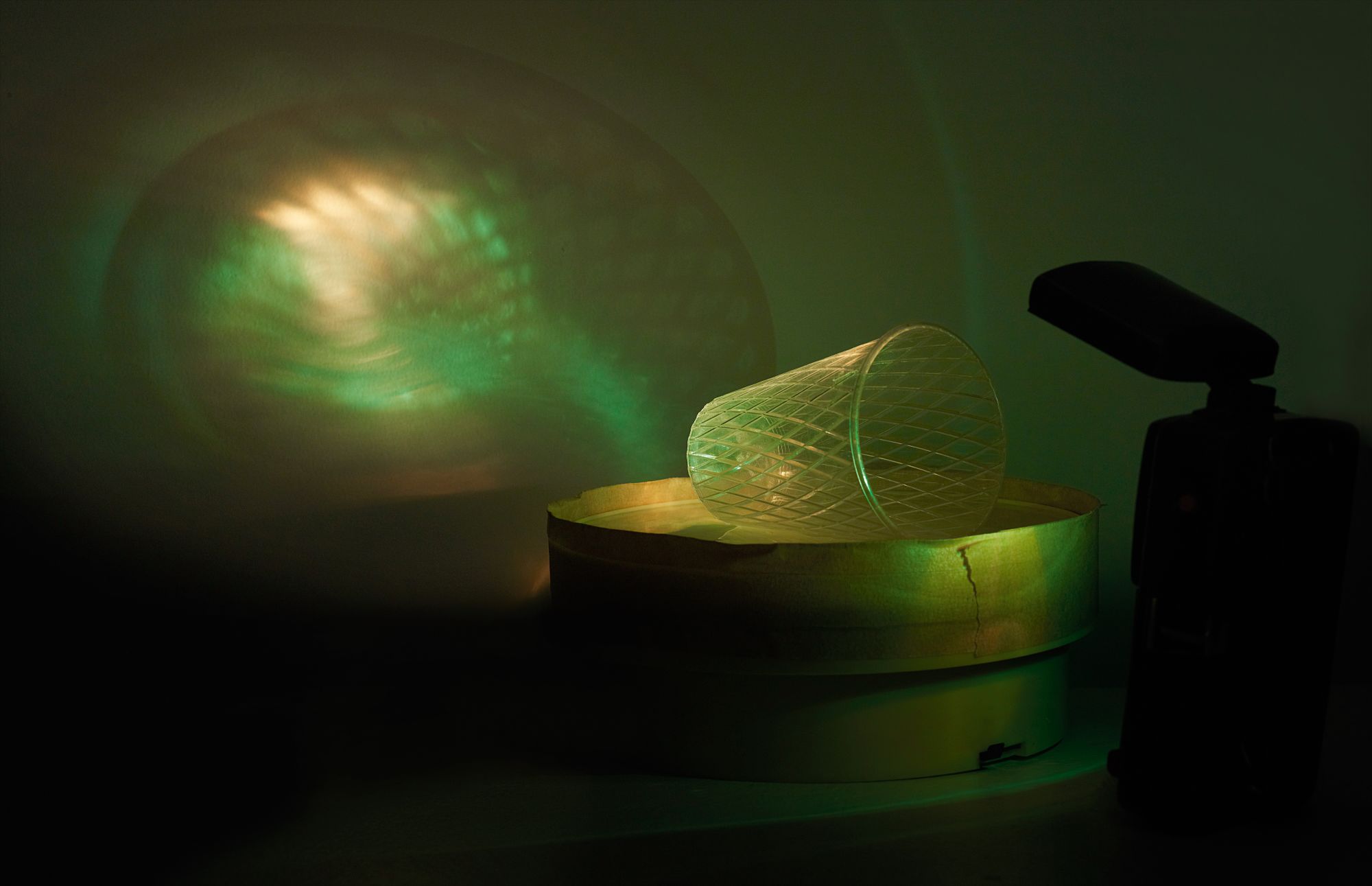
Son et lumière (Le rayon vert)
Hundreds of small unfired clay figures depicted scenes ranging from the cosmic to the comic: the first man on the moon, a couple watching television, a dog. Together they formed a kind of alternative encyclopedia of human significance, charming and melancholy in equal measure. Fischli represented Switzerland at the 2003 Venice Biennale alongside Weiss, an acknowledgment by the international art establishment that their decades of work had produced something irreplaceable. The Biennale contribution drew on the full sweep of their practice, from video to sculpture to photography, and underlined the way their art functioned across mediums without ever losing its essential character.
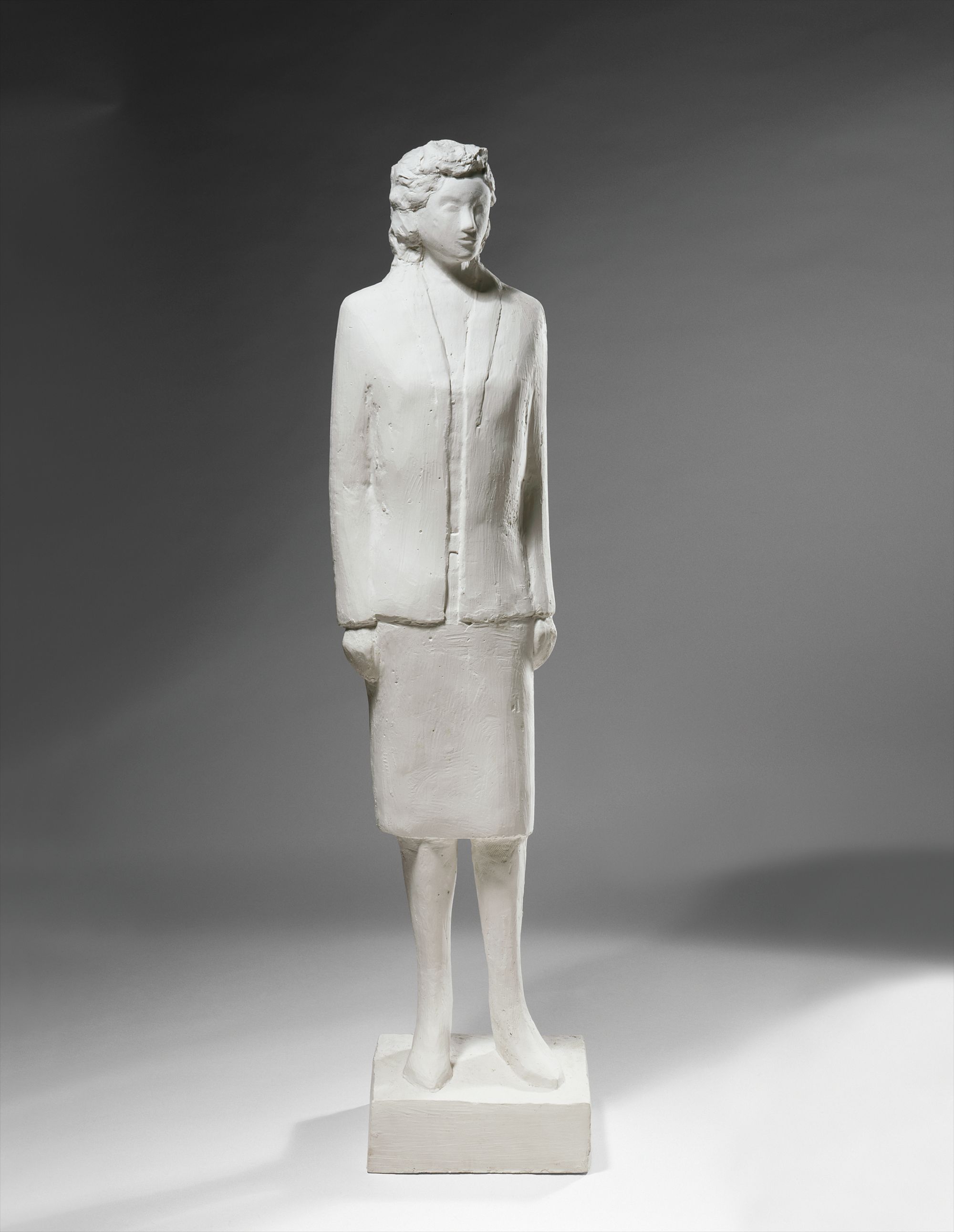
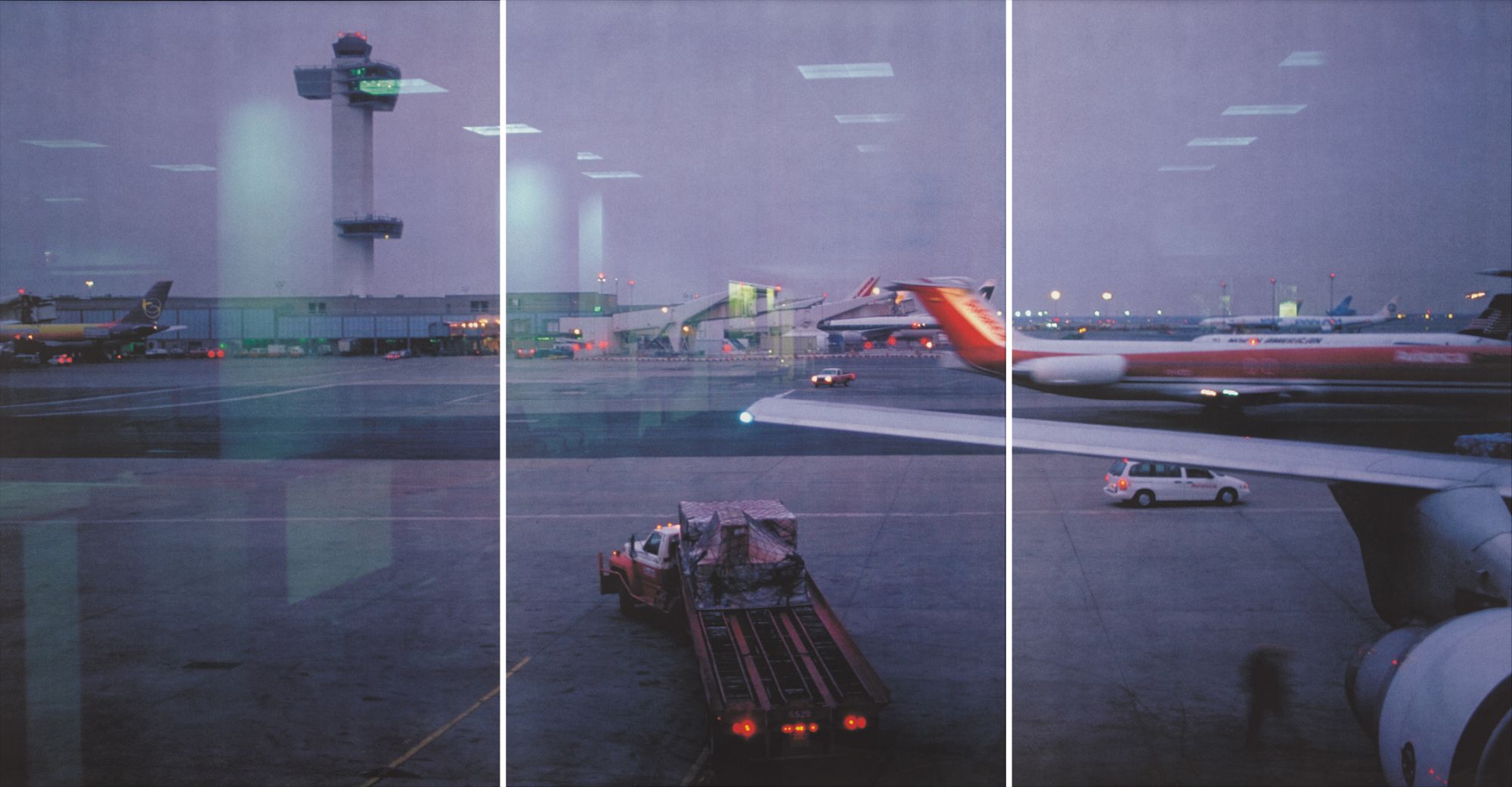
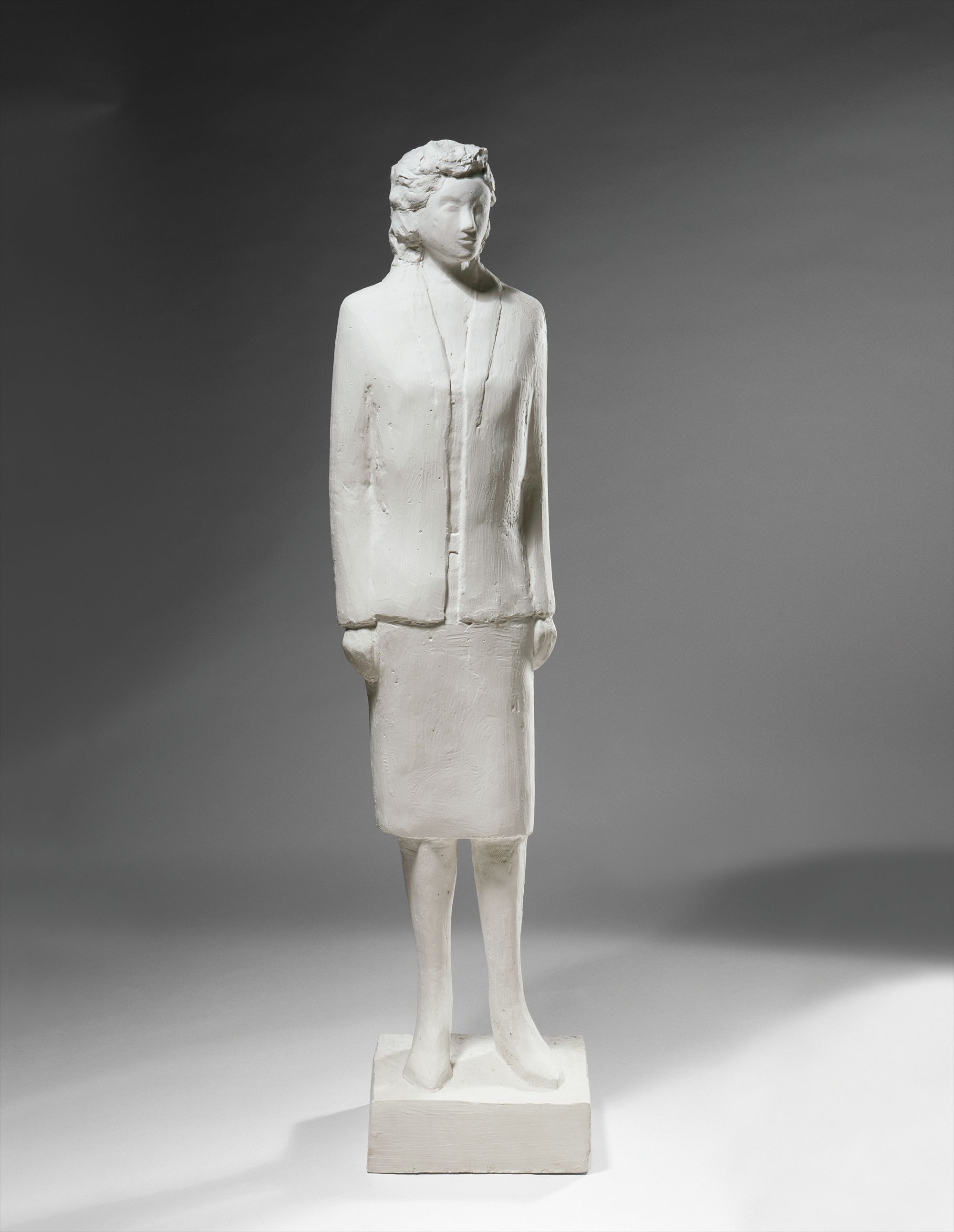
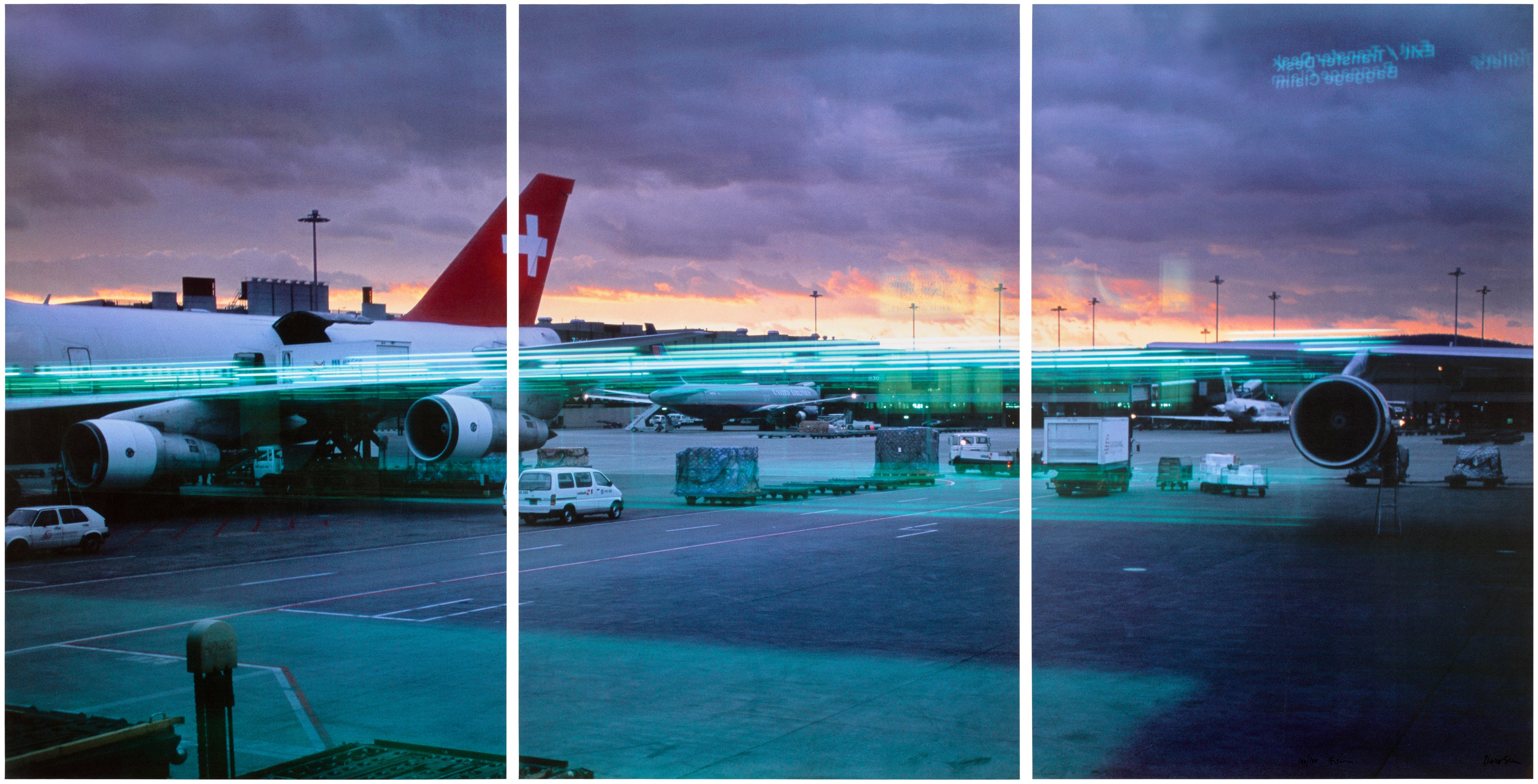
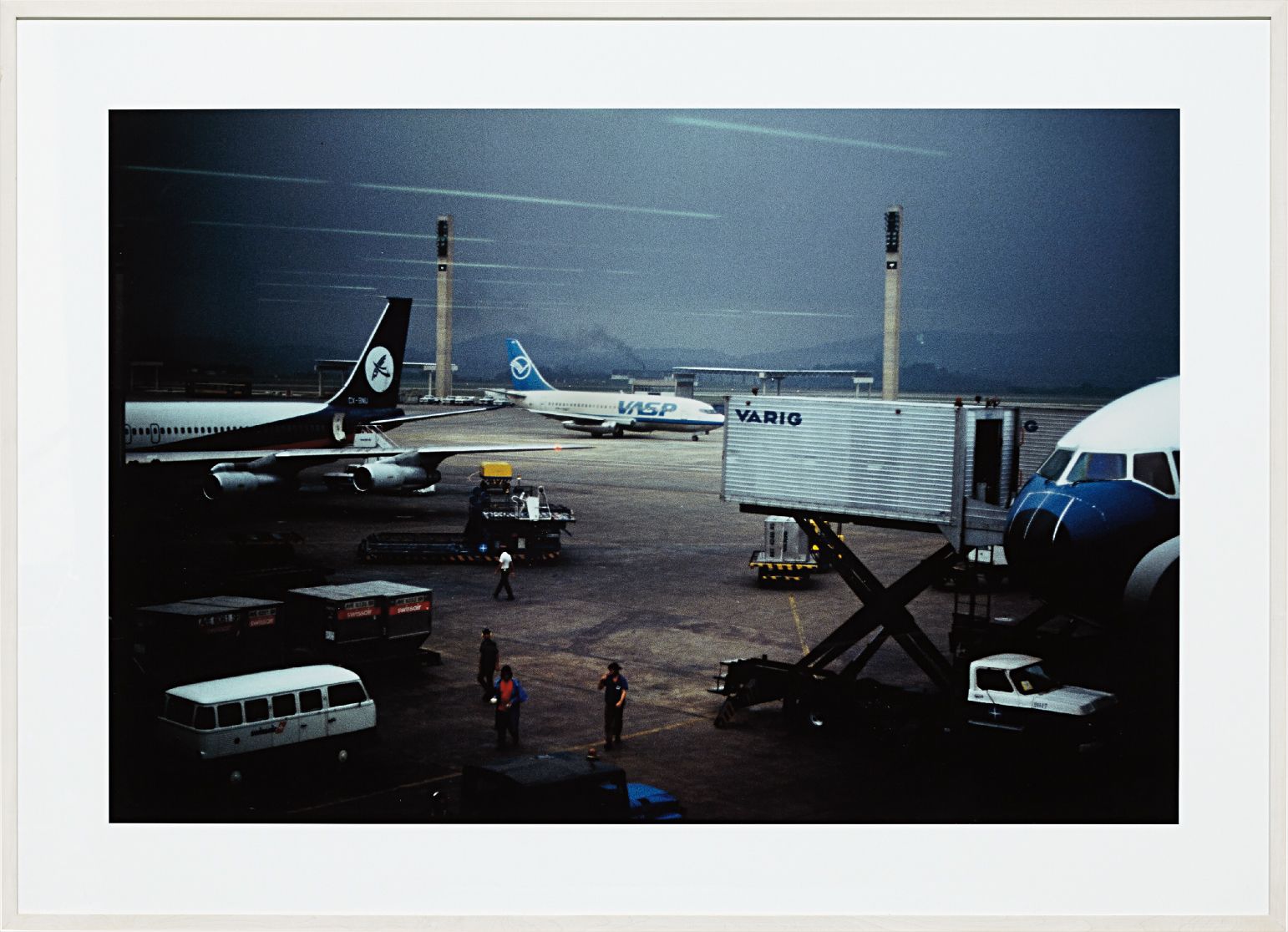
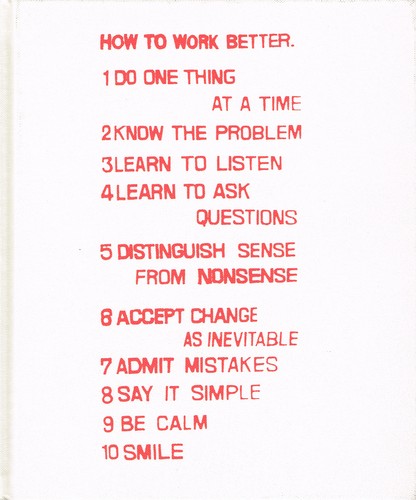
The works available through The Collection reflect the full range of this practice: the white plaster Stewardess carries the quiet pathos that runs through so much of their figurative work, while the Ohne Titel Airport Zürich 2000 lithograph and the panoramic works on Zerkall Bütten paper reveal the artists' affection for systems of transit and documentation, for the strange poetry of the ordinary places we pass through without looking. How to Work Better, the screenprint in orchid on wove paper, takes as its source a set of workplace guidelines that Fischli and Weiss rendered monumental, turning productivity mantras into something tender and strange. For collectors, the appeal of Fischli's work is inseparable from its warmth. Unlike much conceptual art of the same period, which could feel deliberately cold or exclusionary, Fischli and Weiss made work that welcomed you in.
Peter Fischli
Stewardess
The materials were familiar. The humor was accessible. And yet the more time you spent with the work, the more it gave back. Collectors who have lived with the Plötzlich diese Übersicht editions, including the signed and numbered prints from that project, often speak of returning to them the way one returns to a favorite book, finding new resonances with each visit.
The editions and prints in circulation, many of them carefully published in collaboration with institutions and kunstvereine across Europe, represent an unusually coherent body of multiples, each one traceable to specific moments in the artists' practice. In the broader context of art history, Fischli sits in productive conversation with artists who shared his generation's interest in the relationship between art and everyday life. The Arte Povera artists, particularly Alighiero Boetti and Mario Merz, explored similar questions about systems and accumulation. The work of Bruce Nauman, with its interest in repetition and linguistic play, offers another point of comparison.
Closer to home, the Swiss artist Dieter Roth, whose work Fischli knew well, provided a precedent for treating the ephemeral and the humble as legitimate artistic material. But Fischli and Weiss were never simply derivative of these influences. They made something distinctly their own: an art that was genuinely funny, genuinely philosophical, and genuinely kind. Since the death of David Weiss in 2012, Fischli has continued to work and to show internationally, demonstrating that the sensibility he developed over more than three decades is his own as much as it was shared.
His ongoing engagement with questions of perception, time, and the structure of everyday experience has lost none of its urgency. If anything, the world has grown more receptive to the kind of attentive looking that his work demands and rewards. To collect Fischli is to commit to that kind of looking, to bring into your home or institution an invitation to see the familiar world with fresh eyes. That is a rare and valuable thing, and it is why his work continues to matter.
Featured Works
Explore books about Peter Fischli
Peter Fischli David Weiss
Various
Fischli Weiss: In a Restless World
Various
Peter Fischli David Weiss: Collected Works
Peter Fischli, David Weiss
Fischli Weiss: Photographs
Peter Fischli, David Weiss
Peter Fischli David Weiss: Plfranse Nummers
Various