Peter Binoit
Peter Binoit's World of Wondrous Small Things
Artist Spotlight · The Collection Editorial
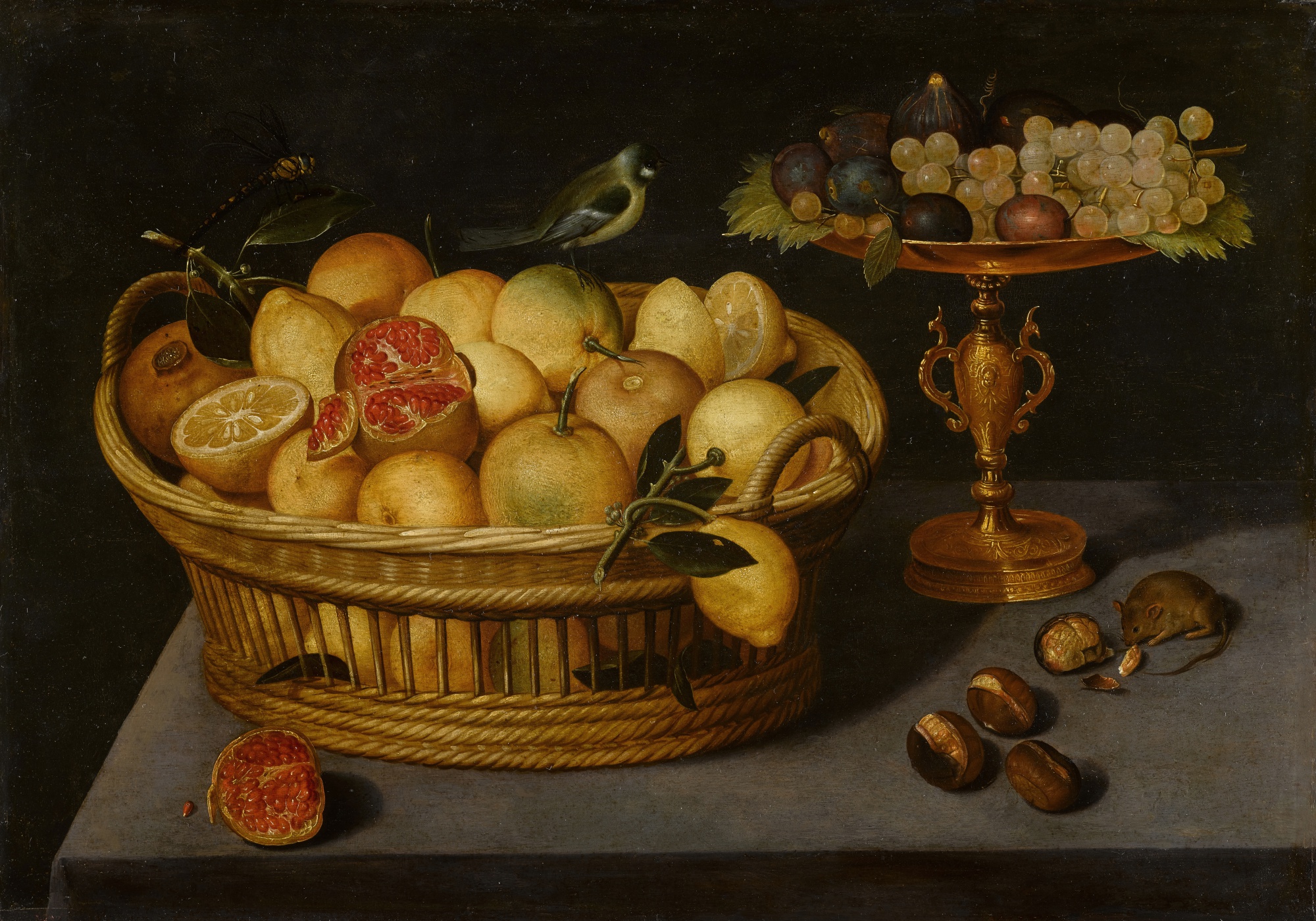
There is a moment, standing before a painting by Peter Binoit, when the eye simply refuses to move on. A mouse nibbles at a chestnut in the lower corner of a composition crowded with lemons, pomegranates, figs, and plums. A blue tit perches at the edge of a woven basket. A dragonfly hovers, wings catching an invisible light.
Peter Binoit
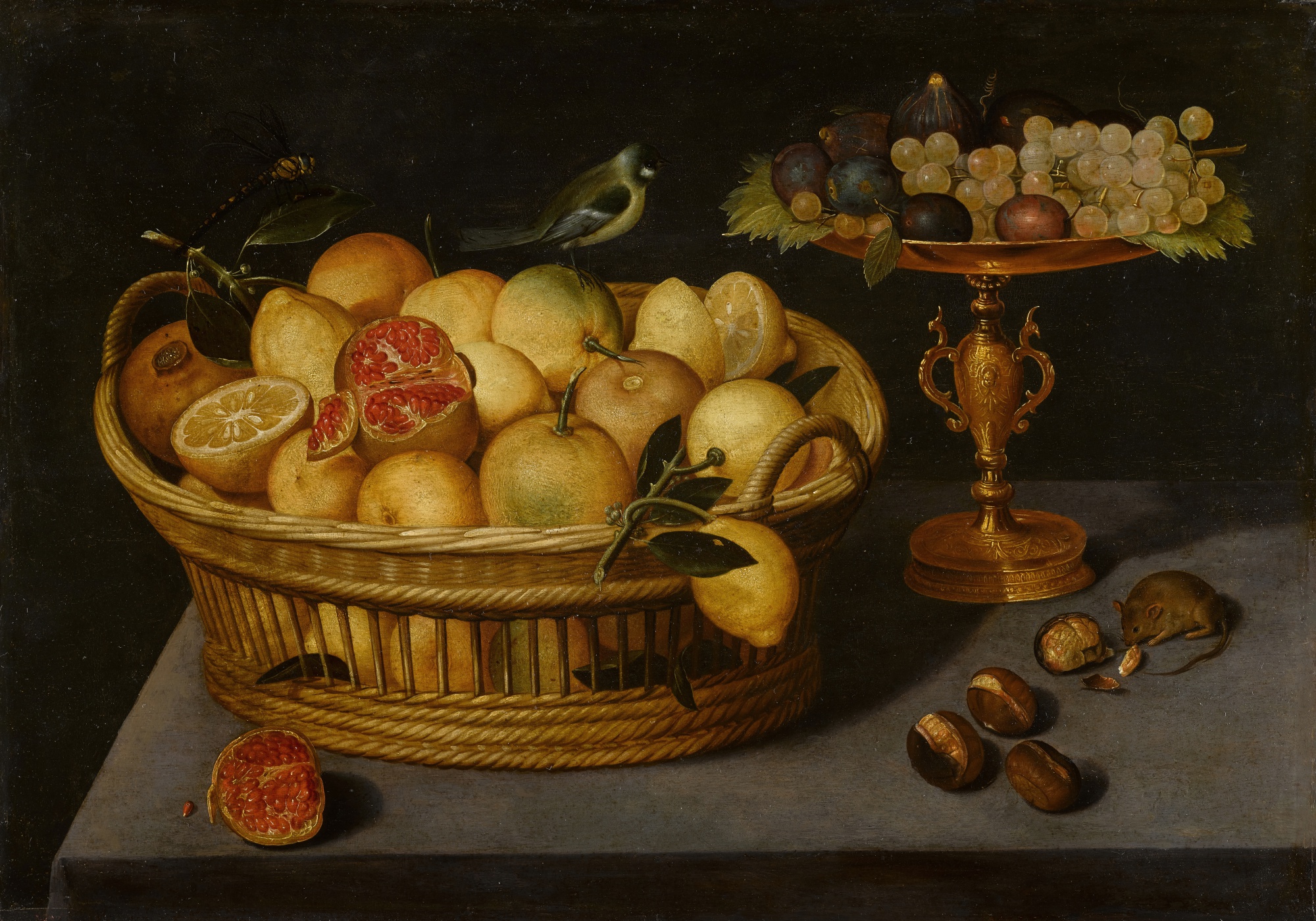
Still life of lemons and pomegranates in a basket with a blue tit and a dragonfly, together with grapes, figs and plums in a gilt tazza and a mouse eating chestnuts, all on a ledge
The whole scene is impossibly alive, impossibly still, and impossibly convincing all at once. That tension, between the abundant and the fleeting, between the sensory and the symbolic, is the signature gift of one of the early seventeenth century's most quietly astonishing painters. Binoit was born in 1590, most likely in Germany, and his brief life of forty two years placed him squarely within one of the most creatively volatile periods in European art history. The early decades of the 1600s saw the still life genre transform from a decorative footnote into a fully autonomous and philosophically loaded art form.
Painters across the Rhine valley, the Low Countries, and the German territories were beginning to understand that a table laden with fruit and flowers could carry as much meaning as a history painting or an altarpiece. Binoit absorbed this emerging sensibility with exceptional fluency, and his work stands as a remarkable bridge between the Flemish tradition of lavish abundance and the more intimate, jewel like precision that would come to define German still life painting at its finest. The formation of his artistic voice almost certainly drew on contact with the wider Flemish and Dutch still life tradition that was radiating outward from Antwerp and Amsterdam during his formative years. Artists such as Jan Brueghel the Elder and Georg Flegel were establishing the visual grammar of objects arranged on stone ledges, the careful balancing of textures and colors, the use of insects and small animals as both narrative punctuation and memento mori.
Peter Binoit
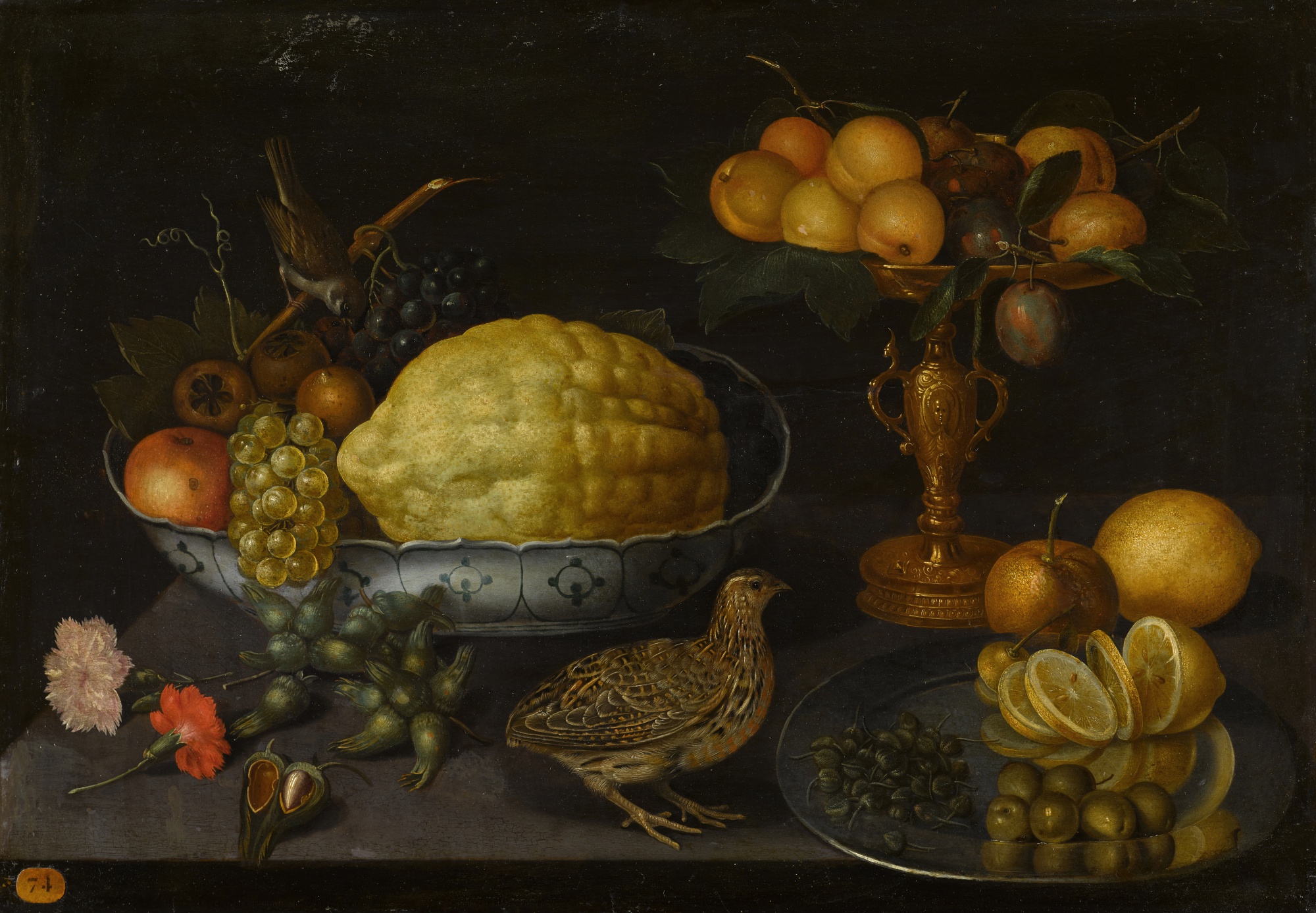
Still life of a citron, grapes, an apple and other fruits in a porcelain bowl with a sparrow, with plums and apricots in a gilt tazza and a sliced lemon, olives and capers on a salver, with hazelnuts, flowers and a quail, all upon a ledge
Binoit clearly absorbed these lessons, and the recurring presence of ledges, gilt tazzas, porcelain bowls, and architectural salvers in his compositions places him in direct dialogue with these contemporaries. Yet there is something in his touch that feels distinctly personal: a tenderness toward the smallest living things, a delight in the unexpected creature that transforms a composition from a catalogue of riches into something approaching a living ecosystem. His technique on beechwood panel is particularly worth noting. The choice of panel as a support was common among German and Flemish painters of the period, and it allowed for an exceptional fineness of finish, a smoothness of surface on which the tiniest detail could be rendered with almost miniaturist care.
In his celebrated composition featuring lemons and pomegranates in a basket alongside grapes, figs, and plums arranged around a gilt tazza, the variety of textures achieved is genuinely extraordinary: the puckered skin of a lemon against the waxy bloom of a plum, the rough weave of the basket against the burnished metal of the tazza. The mouse eating chestnuts in the lower register is no mere whimsy but a memento mori device with deep roots in Flemish symbolism, reminding the viewer that all this abundance is subject to time and consumption. Similarly, in his composition featuring a citron, grapes, a porcelain bowl, a sparrow, plums, apricots, a sliced lemon, olives, capers, hazelnuts, flowers, and a quail on a ledge, the accumulation feels less like excess than like a kind of generous inventory of the natural world, each element present on its own terms and also as part of a larger argument about transience and beauty. His work on flowers, including the luminous panel known as Nature morte aux oeillets avec un papillon et une chenille, demonstrates that his talents were not confined to fruit and fauna alone.
Peter Binoit
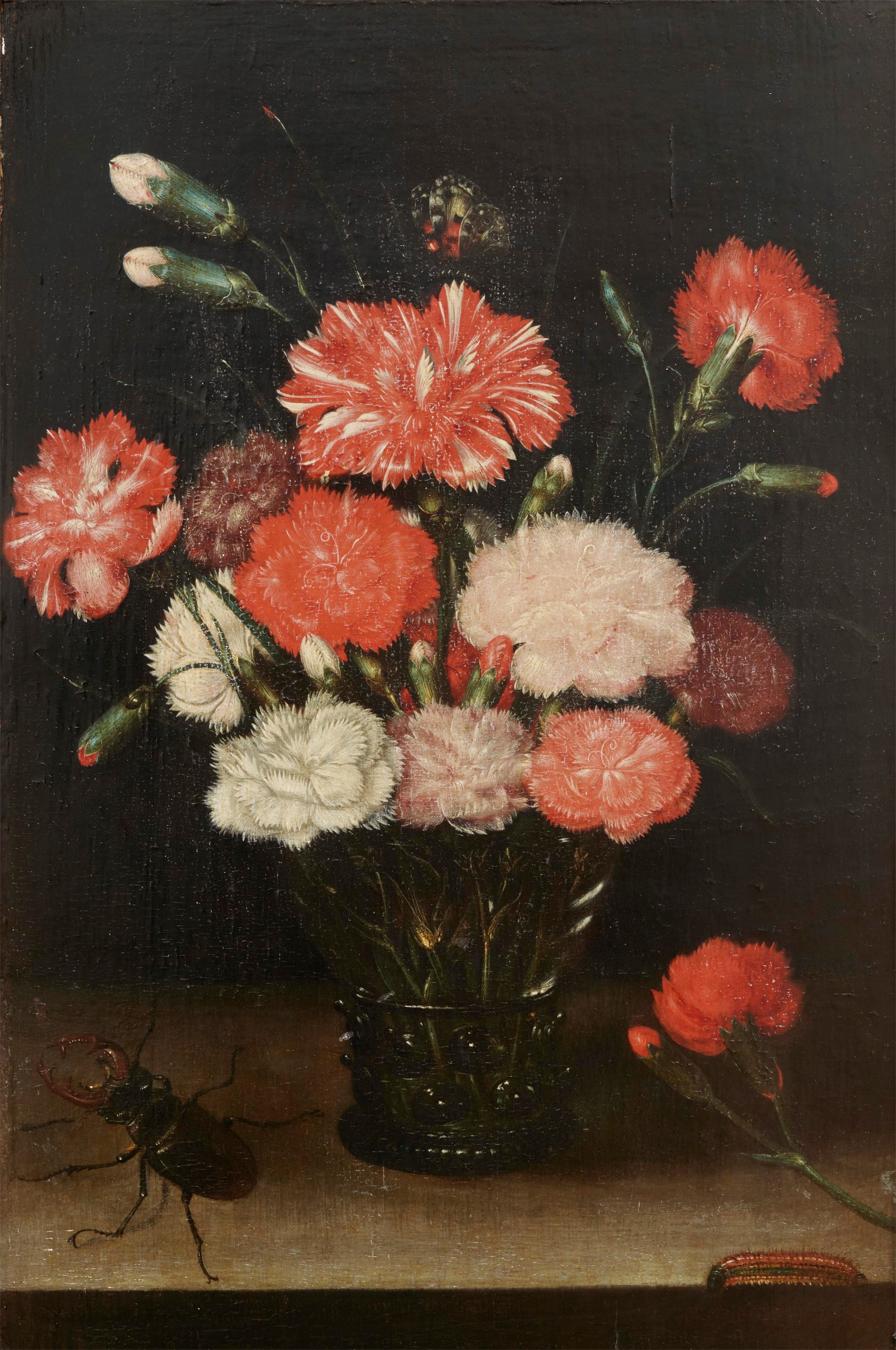
Nature morte aux oeillets avec un papillon et une chenille
The carnations in this composition have the freshness of something cut that same morning, their pink and white petals rendered with a soft exactitude that suggests both affection and observation. The butterfly and caterpillar introduce the same dual register found across all his work: the beautiful and the mortal in close proximity, each enhancing the other's meaning. These smaller, more concentrated compositions also reveal Binoit's understanding of color harmony and compositional economy, qualities that can sometimes be harder to perceive in his more elaborate multi object arrangements. For collectors, Binoit represents a genuinely rare opportunity.
His output was not large, and works that can be confidently attributed to him appear on the market infrequently. When they do surface, they tend to attract serious attention from specialists in early German and Flemish still life, as well as from collectors drawn to the broader category of pre eighteenth century European panel painting. The specificity and verifiable quality of individual works matters enormously in this field, and Binoit's commitment to his beechwood panels, with their capacity for extreme refinement of surface, means that condition is a particularly meaningful consideration. Works that have survived in good condition carry not only their original beauty but the additional resonance of having endured nearly four centuries with their remarkable surfaces intact.
Within the broader art historical map, Binoit sits in productive company. Georg Flegel, his near contemporary and fellow German, offers perhaps the closest formal parallel: that same love of the small and the closely observed, the same willingness to let a single insect or creature reframe an entire composition. The Flemish painters Jan Brueghel the Elder and Ambrosius Bosschaert the Elder were working in an adjacent territory, though with a somewhat more sumptuous and less intimate register. Collectors who admire any of these figures, or who are drawn to the broader world of early modern still life, will find in Binoit a painter of comparable ambition and considerably rarer availability.
The legacy of Peter Binoit is the legacy of attentiveness itself. In an era when paintings were frequently required to be vast in scale and sweeping in subject, he chose to focus on the small, the perishable, and the exquisite. His work asks us to slow down, to look again, to notice what the eye might otherwise skip over in its rush toward the monumental. There is something in that invitation that feels not only historically significant but genuinely contemporary, a reminder that the deepest pleasures of looking are often found not in the grand gesture but in the mouse, the dragonfly, the single carnation, and the caterpillar making its slow way across a petal.