Pete Hocking
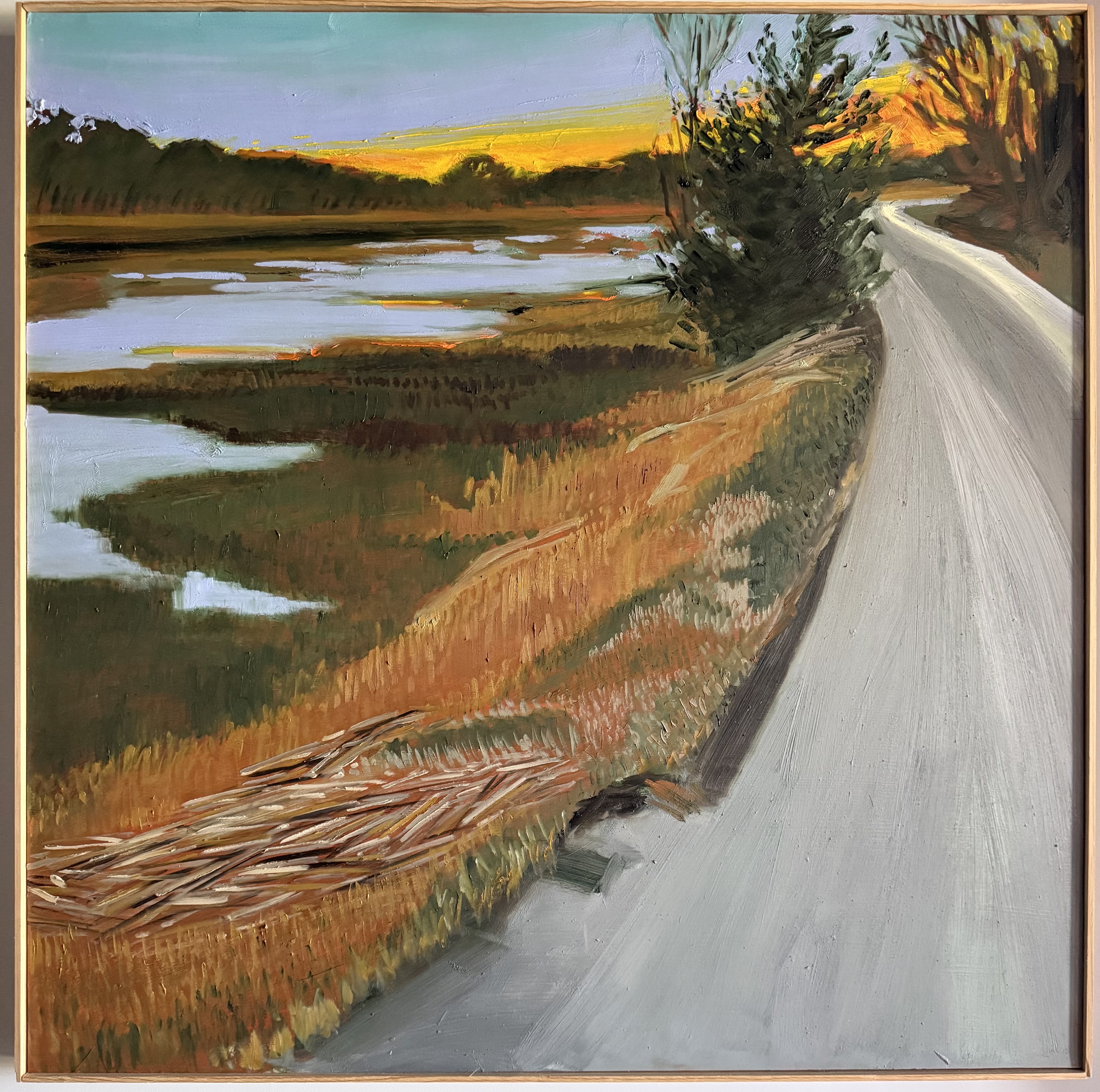
Pete Hocking Paints Light Into Being
Artist Spotlight · The Collection Editorial
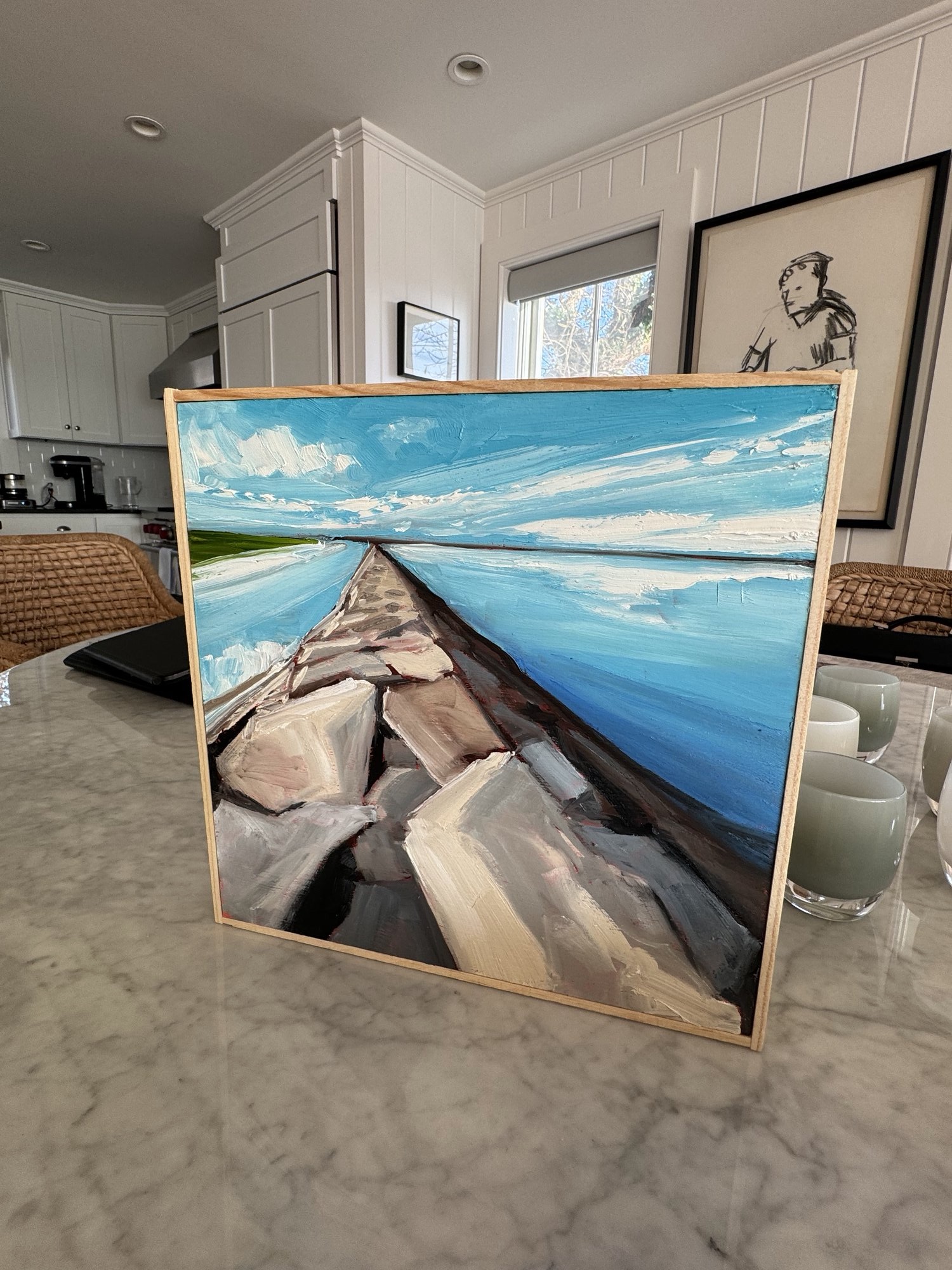
There is a particular quality of light on the Western Australian coast that resists easy description. It is fierce and generous at once, pressing down on limestone cliffs and lifting off the surface of the Indian Ocean in ways that seem almost theatrical. Pete Hocking has spent his career chasing that light, and in recent years his paintings have found an audience that recognises just how rare and difficult that pursuit truly is. His 2023 oil on panel work Breakwater No 18 stands as one of the most assured statements of his mature practice, a work that captures not merely the appearance of a coastal breakwater but the full sensory weight of standing beside one, salt in the air, the ocean doing what oceans do.
Pete Hocking
Breakwater No 18, 2023
Hocking grew up in Australia, shaped by the vast and luminous landscapes that define the continent's southwestern edge. Western Australia occupies a particular place in the Australian cultural imagination, distant from the art establishment centres of Sydney and Melbourne, closer in spirit to the raw edge of the natural world. For a painter drawn to landscape and the coastal environment, this geography is not merely a backdrop but an active force. The scale of the coastline, the intensity of the sun, the way colour behaves differently here than almost anywhere else on earth, these are the conditions that formed Hocking's eye and gave his work its distinctive character.
Hocking works primarily in oil, a choice that aligns him with a long tradition of painters who have understood oil's unique ability to hold and transmit light. His development as an artist reflects a deepening engagement with that tradition, moving from the influence of broad Australian landscape painting toward something more personal and more urgent. His compositions are dynamic rather than contemplative, built from bold colour decisions and a confident, gestural handling of paint that gives his surfaces genuine physical presence. There is nothing timid in his approach.
Pete Hocking
Solstice
Where lesser painters might soften a coastline into something picturesque, Hocking insists on its energy. Breakwater No 18 and the canvas Solstice, two of his most talked about recent works, demonstrate the range within his practice. The breakwater paintings have become something of a signature series, returning again and again to a single architectural subject with the obsessive attention of a painter who understands that repetition in art is not redundancy but revelation. Each iteration finds something new in the same structure, a different hour of day, a different mood of ocean, a different conversation between the built and the natural world.
Solstice, with its title invoking a precise astronomical moment, suggests that Hocking is equally interested in time as a painterly subject, the way a specific quality of seasonal light transforms everything it touches. Within the Australian art market, Hocking occupies a position that collectors have come to appreciate with growing confidence. His works appear regularly at Australian auction houses, where they attract the attention of private collectors who respond to the combination of technical accomplishment and emotional directness that defines his practice. Collectors of Australian contemporary painting frequently find that Hocking's work sits comfortably alongside both historical Australian landscape painting and the more internationally oriented work of his contemporaries.
His paintings hold their own in any context, which is perhaps the simplest and most reliable test of quality. For those building a collection with an eye toward both aesthetic pleasure and long term value, a Hocking coastal work represents a considered and rewarding acquisition. To understand Hocking's place in contemporary painting, it helps to think about the broader tradition of artists who have taken on light and landscape as their primary subject. Australian painters from Arthur Streeton onward have grappled with how to render a light that differs fundamentally from the northern European light that shaped the conventions of Western painting.
More recently, painters working in expressive, gestural modes have found ways to bring emotional intensity to landscape without sacrificing formal rigour. Hocking belongs to this lineage. His work also connects to an international conversation about Neo Expressionism and figurative painting, movements that have reclaimed the painted surface as a site of genuine feeling after decades of conceptual dominance. What makes Hocking's work matter today goes beyond technical accomplishment or market performance.
His paintings offer something increasingly valuable in contemporary life, a sustained, attentive encounter with the natural world rendered through the intelligence of a skilled human hand. In an era of screen mediated experience, the directness of a Hocking oil, its insistence on materiality and presence, carries a kind of counter cultural weight. He reminds viewers that the coast exists, that it has texture and temperature and an almost overwhelming vitality, and that painting remains one of the most powerful tools available for transmitting that knowledge across time and distance. His career is still in full development, which means that the most exciting chapters of his contribution to Australian and international art may well lie ahead.