Pedro Reyes
Pedro Reyes: Art That Heals the World
Artist Spotlight · The Collection Editorial
“A weapon is a device intended to cause death. We were interested in the possibility of turning them into something that generates life.”
Pedro Reyes, on Palas por Pistolas
In the spring of 2023, the Palacio de Bellas Artes in Mexico City hosted a landmark survey of contemporary Mexican art that brought Pedro Reyes back into sharp national focus, a reminder that few artists working today have so consistently turned crisis into creativity. Reyes has spent the better part of three decades building a practice that refuses to sit still, moving between sculpture, architecture, performance, and social intervention with the restless energy of someone who genuinely believes art can change the conditions of daily life. That conviction, worn lightly and executed with considerable wit, has made him one of the most compelling and quietly influential figures in international contemporary art. Reyes was born in Mexico City in 1972, and the capital shaped him in ways both obvious and subtle.
Pedro Reyes
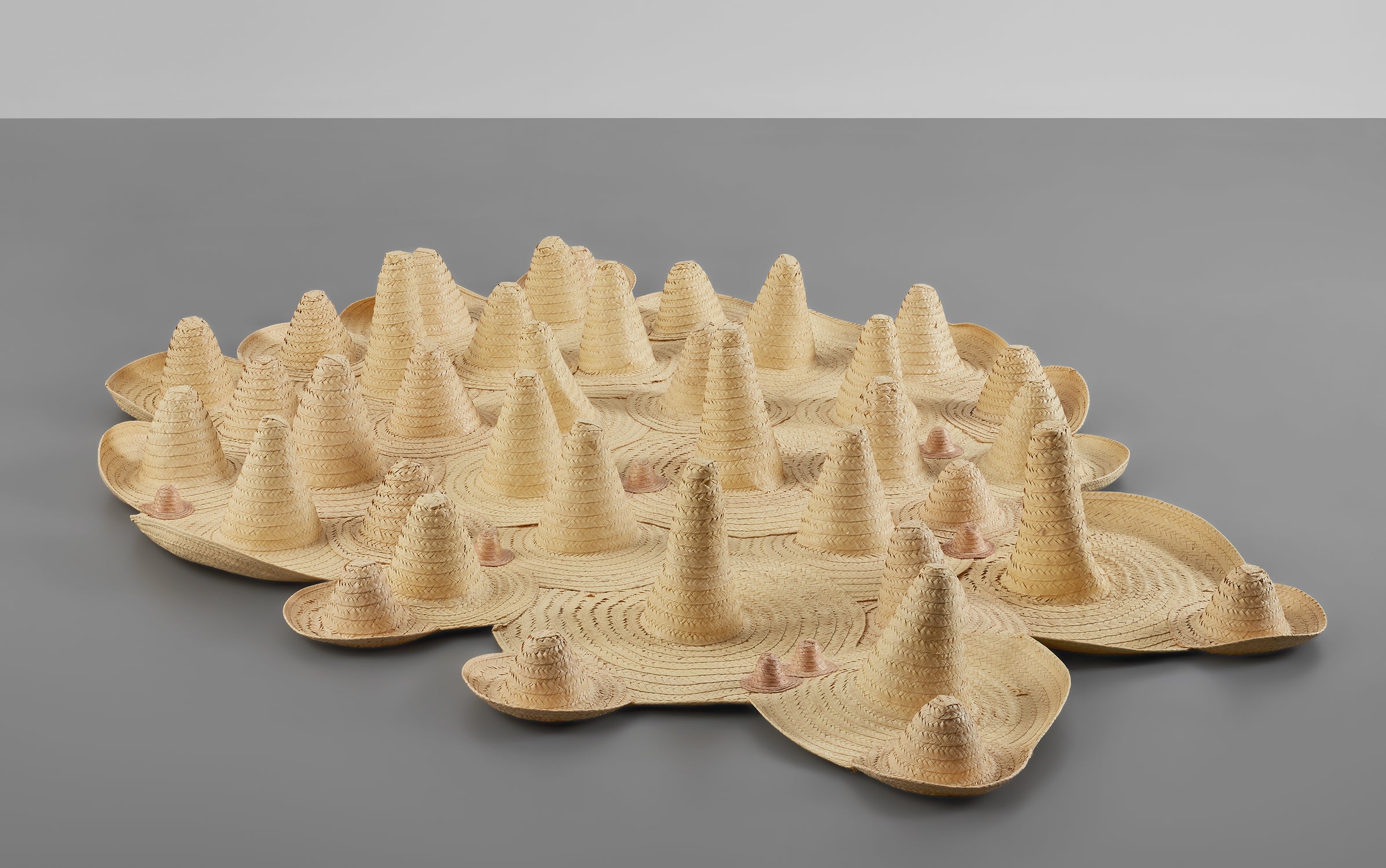
Sombreros colectivo IV, 2004
He studied architecture at the Universidad Iberoamericana, a training that gave him a structural way of thinking about problems that would prove far more useful to his art than any conventional fine arts education might have. Mexico City itself, sprawling and contradictory, violent and luminously creative, became his first and most enduring material. Growing up in a society where the relationship between institutions, citizens, and public space was perpetually contested gave him both subject matter and urgency, a sense that making things was never purely aesthetic but always also ethical. His early work in the late 1990s and early 2000s showed an artist already drawn to the intersection of form and social function.
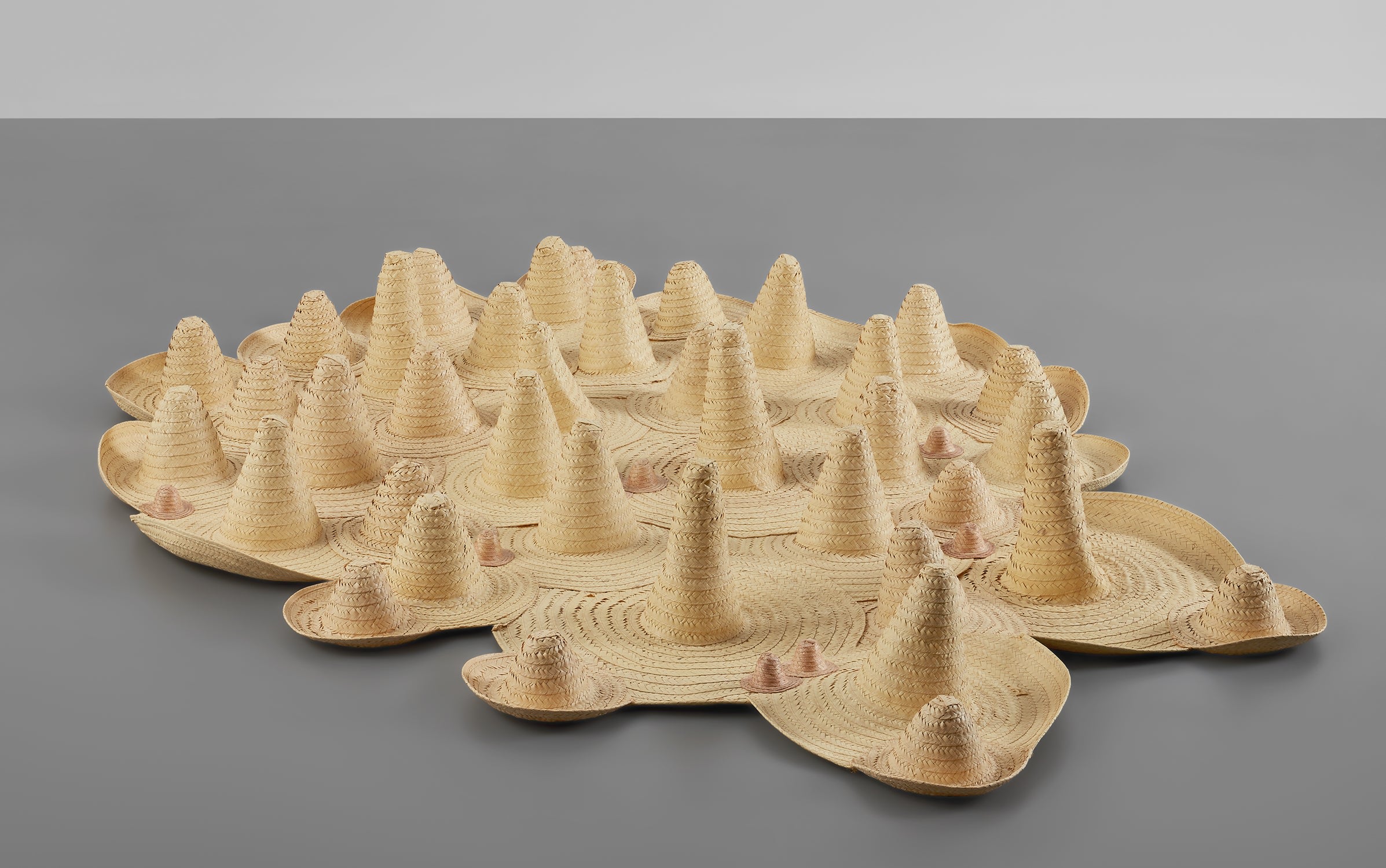
The series of collective sombreros, among them the evocative Sombreros colectivo IV from 2004, announced a sensibility that was playful without being trivial. These sculptures, which reimagined the iconic Mexican hat as a shared architectural proposition, proposed that objects could model new forms of collective life rather than simply represent existing ones. There was humor in them, but also a genuine philosophical argument about community, identity, and the way designed objects carry cultural memory. The project that brought Reyes to sustained international attention was Palas por Pistolas, launched in 2008 in the city of Culiacan in the Sinaloa region of Mexico, one of the areas most devastated by narco violence.
Pedro Reyes
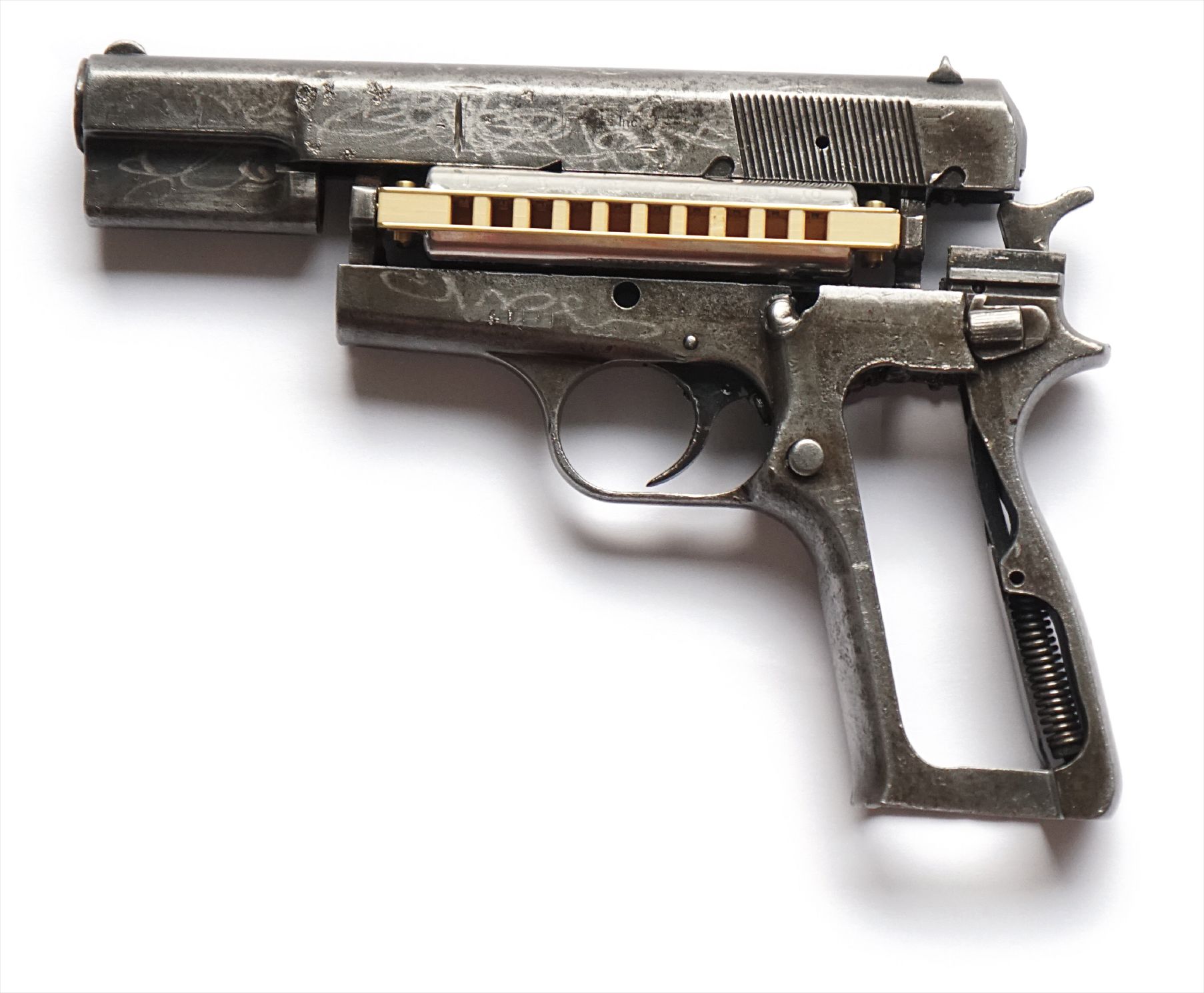
Disarm (Harmonica), 2017
Working with local authorities, Reyes organized a gun amnesty program that collected over 1,500 weapons from the community. Those weapons were then melted down and the metal recast as 1,527 shovels, which were subsequently distributed to art institutions and universities across the Americas and beyond, each used to plant a tree. The poetic logic was almost unbearably precise: instruments of death transformed into instruments of cultivation, violence converted into growth. The project was not merely symbolic.
“Art should be a rehearsal for other forms of social life.”
Pedro Reyes, interview with Artforum
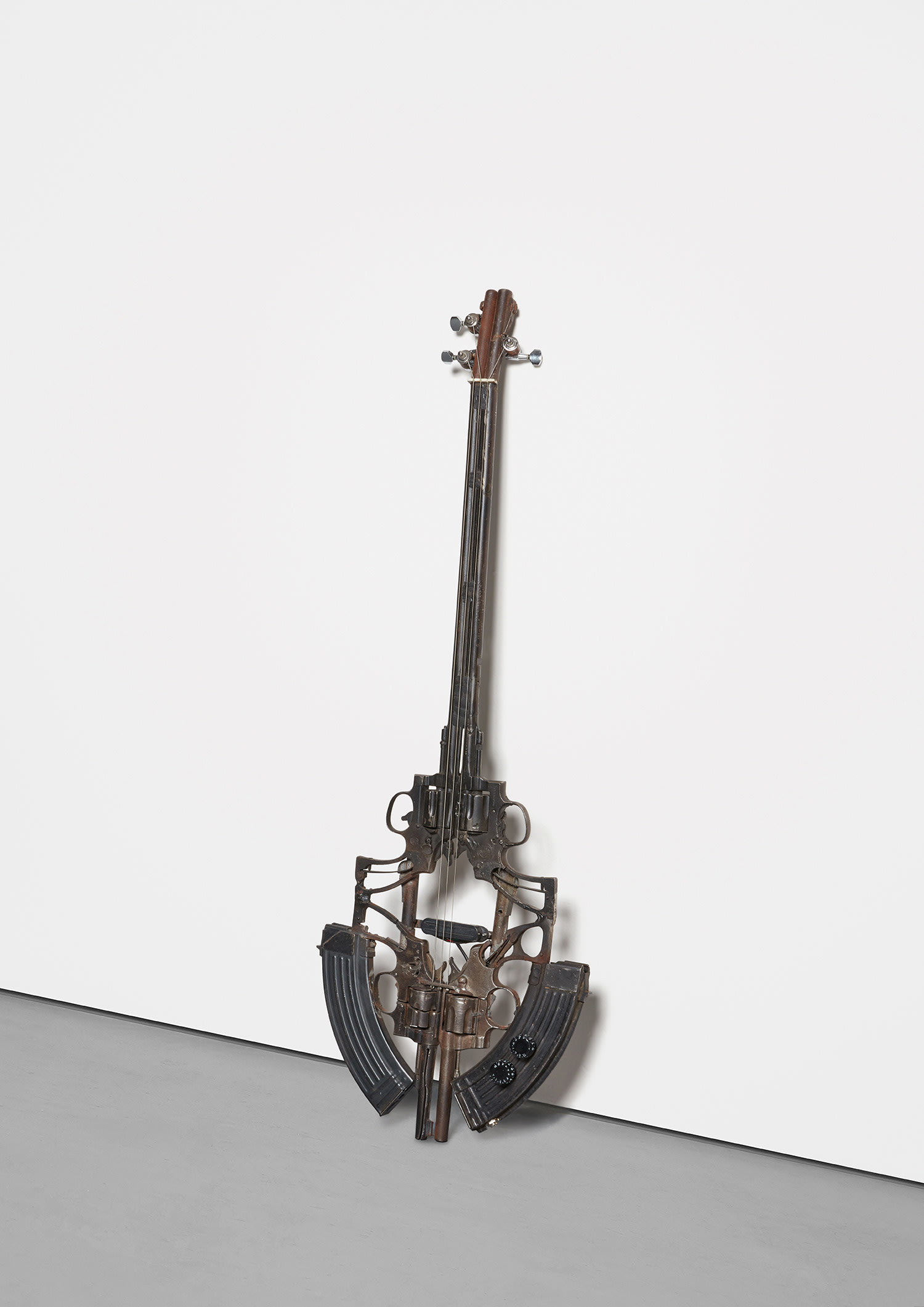
It was operational, civic, and deeply moving in its insistence that transformation is possible. Disarm, which Reyes developed from 2012 onward and which has been exhibited in museums and galleries across North America and Europe, extended that thinking into the realm of sound. Working with military weapons confiscated by Mexican authorities, Reyes and a team of craftspeople converted the firearms into functioning musical instruments, among them harmonicas, guitars, and wind instruments. The Disarm (Harmonica) of 2017, a work now held in distinguished private collections, exemplifies the project at its most intimate and precise.
Pedro Reyes
Guitarra
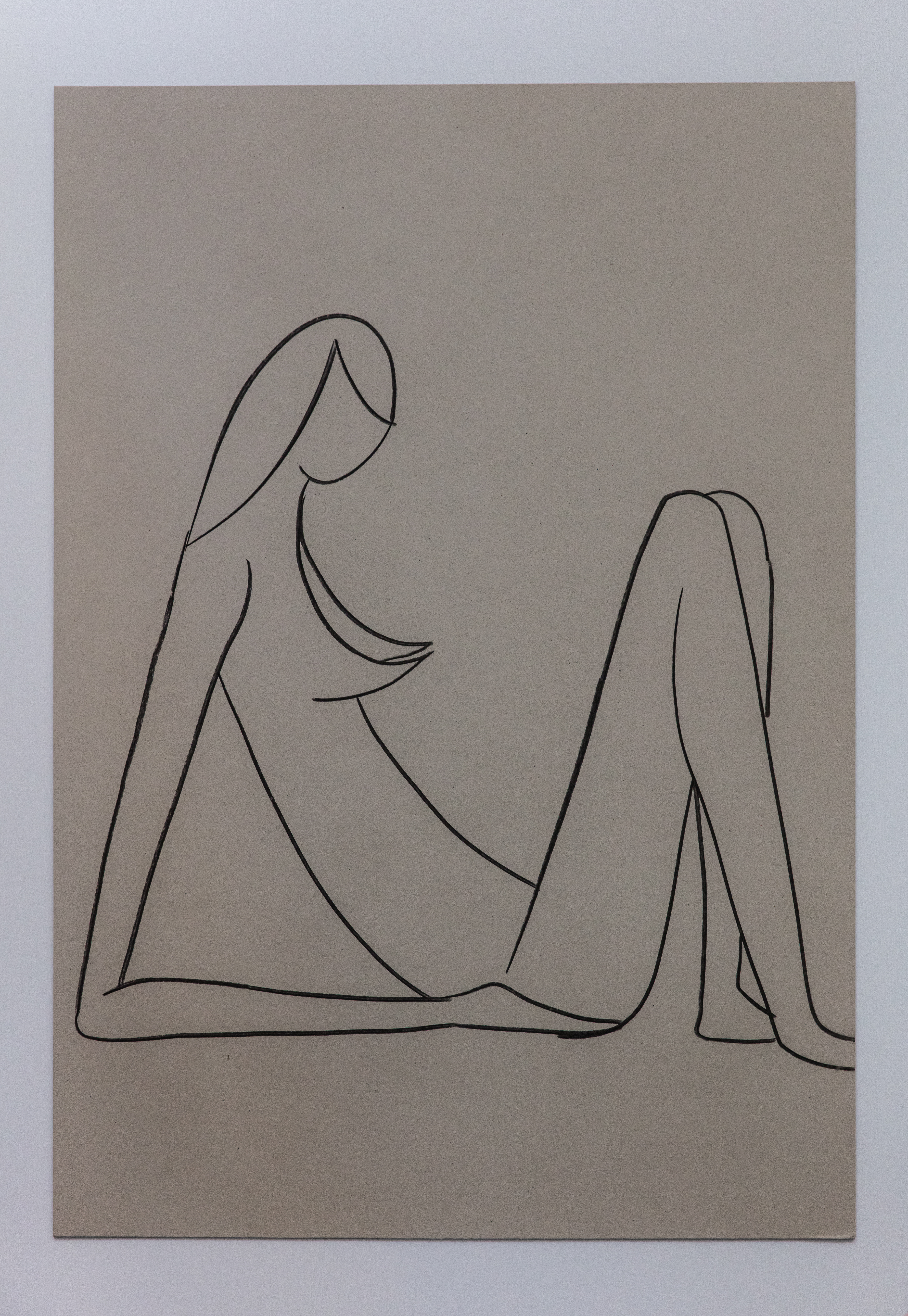
A harmonica constructed from the parts of a weapon becomes an object of meditative beauty, something you want to hold, to breathe through, to play. The transformation is complete and the argument is made without a single word of explanation. Reyes is also a committed draftsman, and works on paper form an important and sometimes underestimated strand of his practice. The 2017 charcoal on card Reclining Figure reveals an artist deeply conversant with the figurative tradition, thinking through the body with the kind of attentiveness that connects him to a lineage running from Diego Rivera through Henry Moore.
These drawings are not preparatory studies but finished works in their own right, evidence of a mind that moves between the monumental and the intimate without losing authority in either register. For collectors, they offer a more accessible entry point into a practice whose large scale installations can be logistically demanding, while losing none of the conceptual seriousness. The market for Reyes has grown steadily and discerningly over the past decade. His works appear regularly at auction through Christie's and Sotheby's Latin American art sales, as well as in the specialized contemporary sales that increasingly recognize Mexican artists as central rather than peripheral to the global story of art since 2000.
Pedro Reyes
Reclining Figure, 2017
Collectors drawn to Reyes tend to be those interested in work that does something, that carries a genuine argument about the world rather than simply decorating it. His pieces hold their value not because of speculation but because of conviction, the sense among serious collectors that this is an artist whose work will only become more significant as the questions he addresses, about violence, ecology, community, and the role of institutions in public life, become more pressing. In terms of art historical context, Reyes belongs to a generation of artists who came of age after the dematerialization of the art object and who found in social practice a way to reinvest making with consequence. He shares sensibilities with figures such as Thomas Hirschhorn, whose installations use humble materials to address political catastrophe, and with Tino Sehgal, whose practice interrogates the relationship between art and social encounter.
Within Latin America, his lineage connects him to the activist tradition of Mexican muralism while also looking forward to the participatory models developed by artists across the continent. He is also frequently discussed alongside contemporaries such as Teresa Margolles, whose practice similarly engages with the human cost of violence in Mexico, though Reyes consistently chooses transformation and possibility over mourning. What makes Pedro Reyes genuinely important, not just interesting, is his refusal to accept the terms of any single discipline or institution. He is an architect who makes sculpture, a sculptor who makes music, a musician who plants trees.
Each project is an argument that the categories we use to organize creative life are obstacles as much as they are supports. In a moment when so much contemporary art feels either hermetically theoretical or decoratively empty, Reyes reminds us that the best art is a proposal, an invitation to imagine that things could be arranged differently. His studio in Mexico City continues to generate projects of ambition and warmth, and the sense among those who follow his work closely is that the most significant chapters are still ahead.
Explore books about Pedro Reyes
Pedro Reyes: Soundtracks
Pedro Reyes, Cuauhtémoc Medina
Pedro Reyes: Harvest
Pedro Reyes
Pedro Reyes: Imagine
Pedro Reyes, Cuauhtémoc Medina
Pedro Reyes: Conversations
Pedro Reyes, Various Curators
Pedro Reyes: Works and Projects 2000-2010
Cuauhtémoc Medina