Paul Pfeiffer
Paul Pfeiffer Turns the Spectacle Inside Out
Artist Spotlight · The Collection Editorial
When the Solomon R. Guggenheim Museum included Paul Pfeiffer in its landmark survey of video and digital practice, it confirmed what a generation of curators and collectors had long sensed: that this quietly radical artist had fundamentally changed the way we understand images, crowds, and the machinery of collective desire. Pfeiffer works in the space between the event and its transmission, finding in the gap between lived experience and broadcast spectacle a subject rich enough to sustain a practice spanning more than two decades. His work asks, with genuine urgency and formal precision, what we actually see when we think we are watching.
Paul Pfeiffer
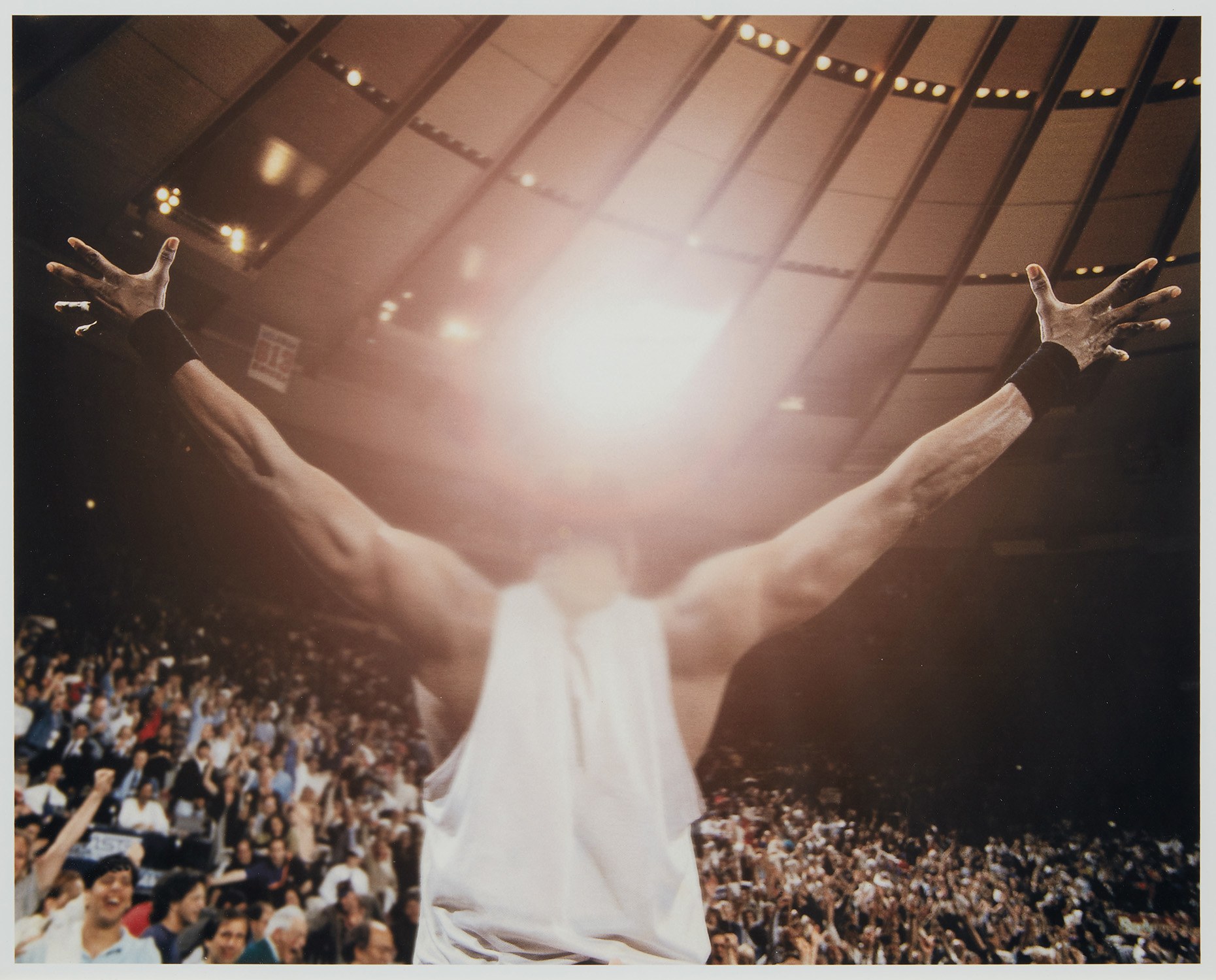
The Four Horsemen of the Apocalypse #7
Pfeiffer was born in Honolulu, Hawaii in 1966, and his upbringing across multiple cultural landscapes, including time spent in the Philippines and later in San Francisco, gave him an early and intuitive sensitivity to how identity is constructed through media and performance. He came of age during the era of satellite television, when the spectacle of global sport and celebrity culture was becoming the shared visual language of modern life. He studied at the San Francisco Art Institute before completing his MFA at Hunter College in New York, where he developed the conceptual and technical vocabulary that would define his mature practice. New York in the 1990s was a generative environment for artists thinking seriously about media, technology, and representation, and Pfeiffer absorbed those conversations deeply.
His artistic breakthrough came at the turn of the millennium, when his early video works began circulating in exactly the right institutional and critical circles. The piece that announced his arrival was a small, almost jewel like video work featuring manipulated footage of a boxing match in which the figure of the boxer had been digitally erased, leaving only the movement of the crowd, the ropes, and the strange residue of athletic presence. The Whitney Museum of American Art included him in its 2000 Biennial, a watershed moment that brought his work to broad critical attention. Shortly after, he received the prestigious Bucksbaum Award, given by the Whitney to a Biennial artist deemed to show exceptional promise and significance, which provided both financial support and an institutional imprimatur that accelerated his international profile considerably.
Paul Pfeiffer
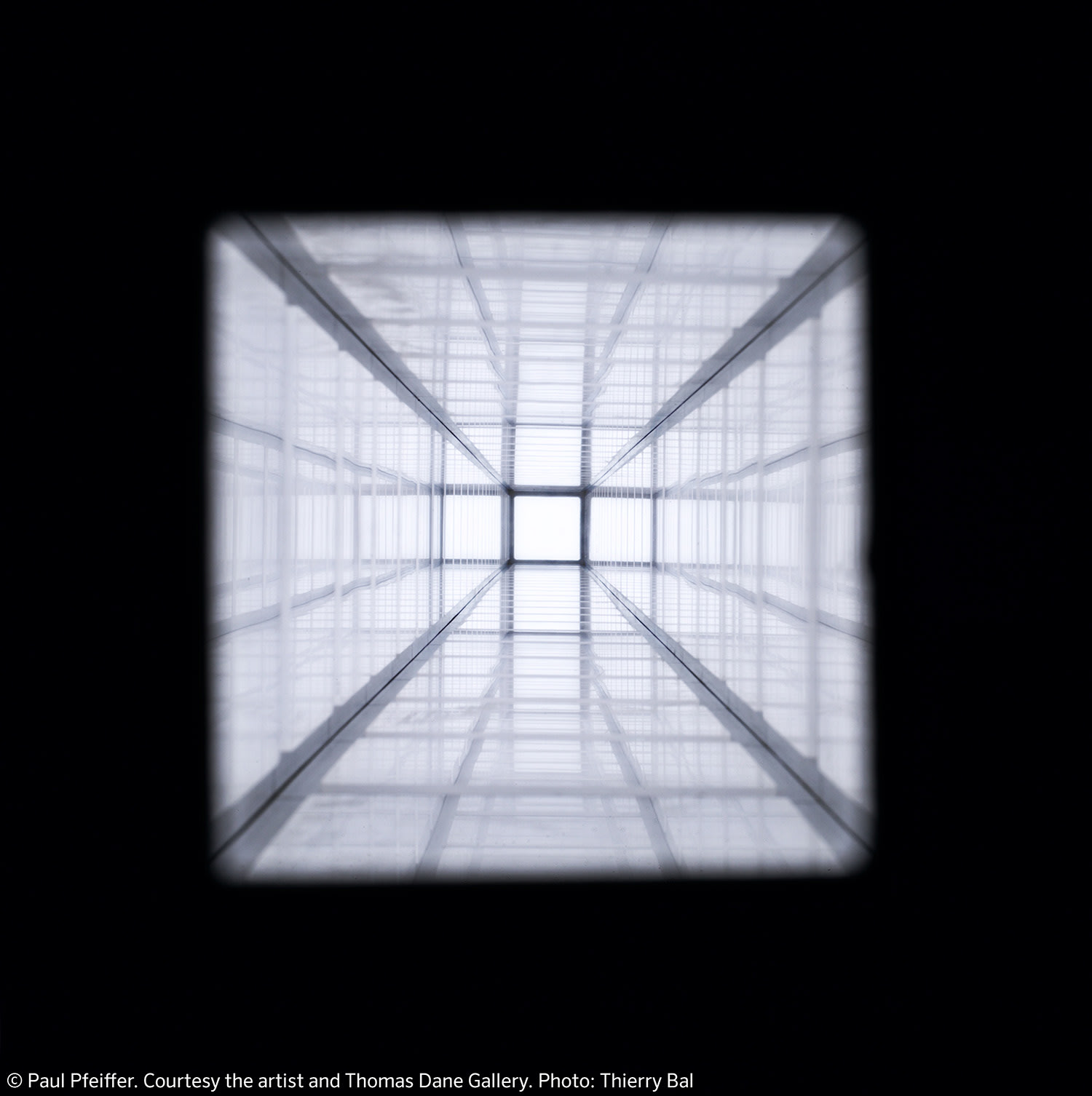
Vertical Corridor, 2004
At the center of Pfeiffer's practice is an interest in what he has called the theology of spectacle: the way that sports arenas, pop concerts, and televised events function as secular cathedrals, organizing mass emotion and collective belief. His ongoing series "The Long Count," which draws on footage from the legendary 1974 heavyweight championship bout between Muhammad Ali and George Foreman in Kinshasa, known as the Rumble in the Jungle, is among the most discussed works in his output. By isolating and looping specific moments, slowing the footage, and removing or altering key figures, Pfeiffer transforms a historical event into something closer to myth or ritual. The series rewards sustained attention: the longer you watch, the more the familiar dissolves into something genuinely strange.
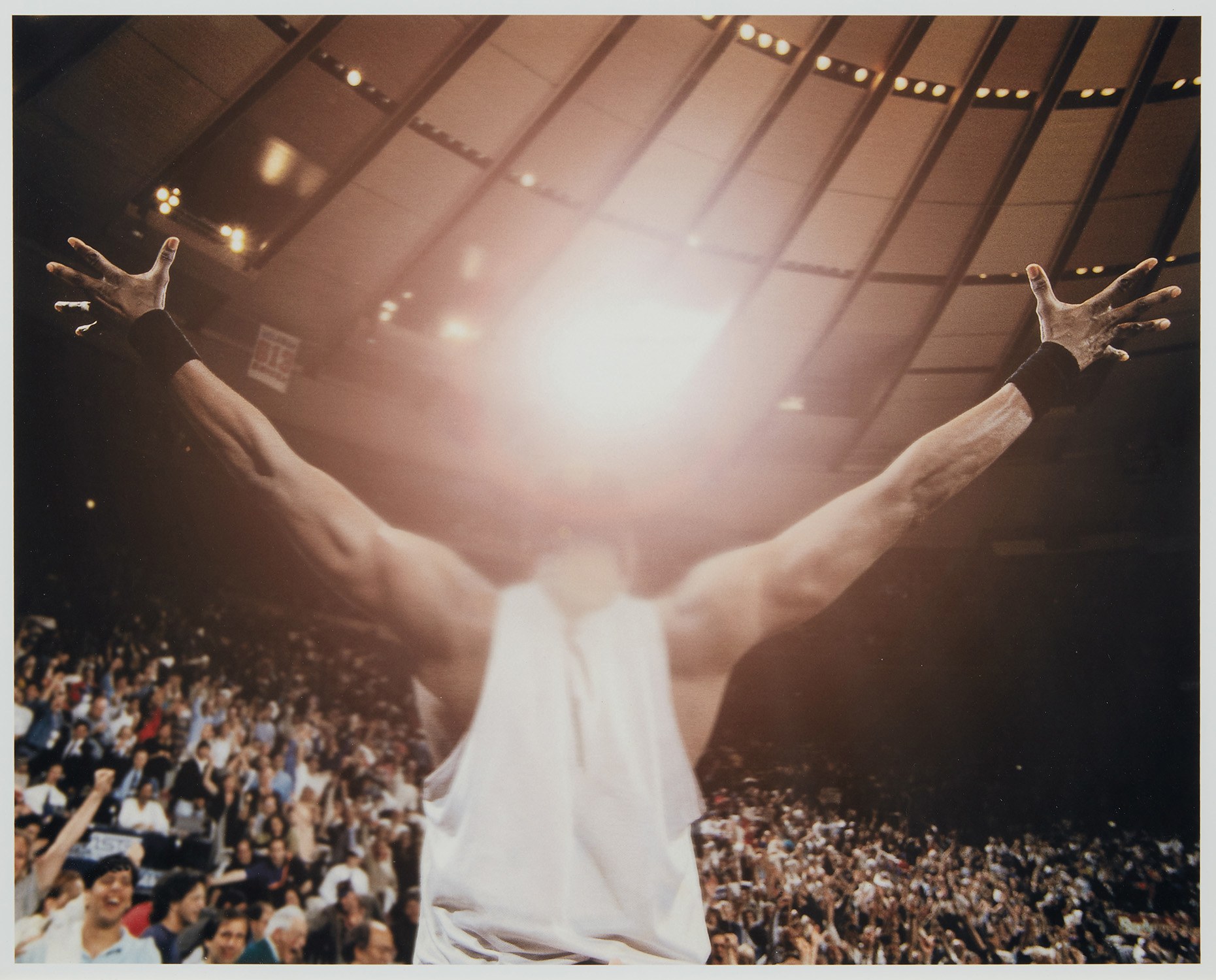
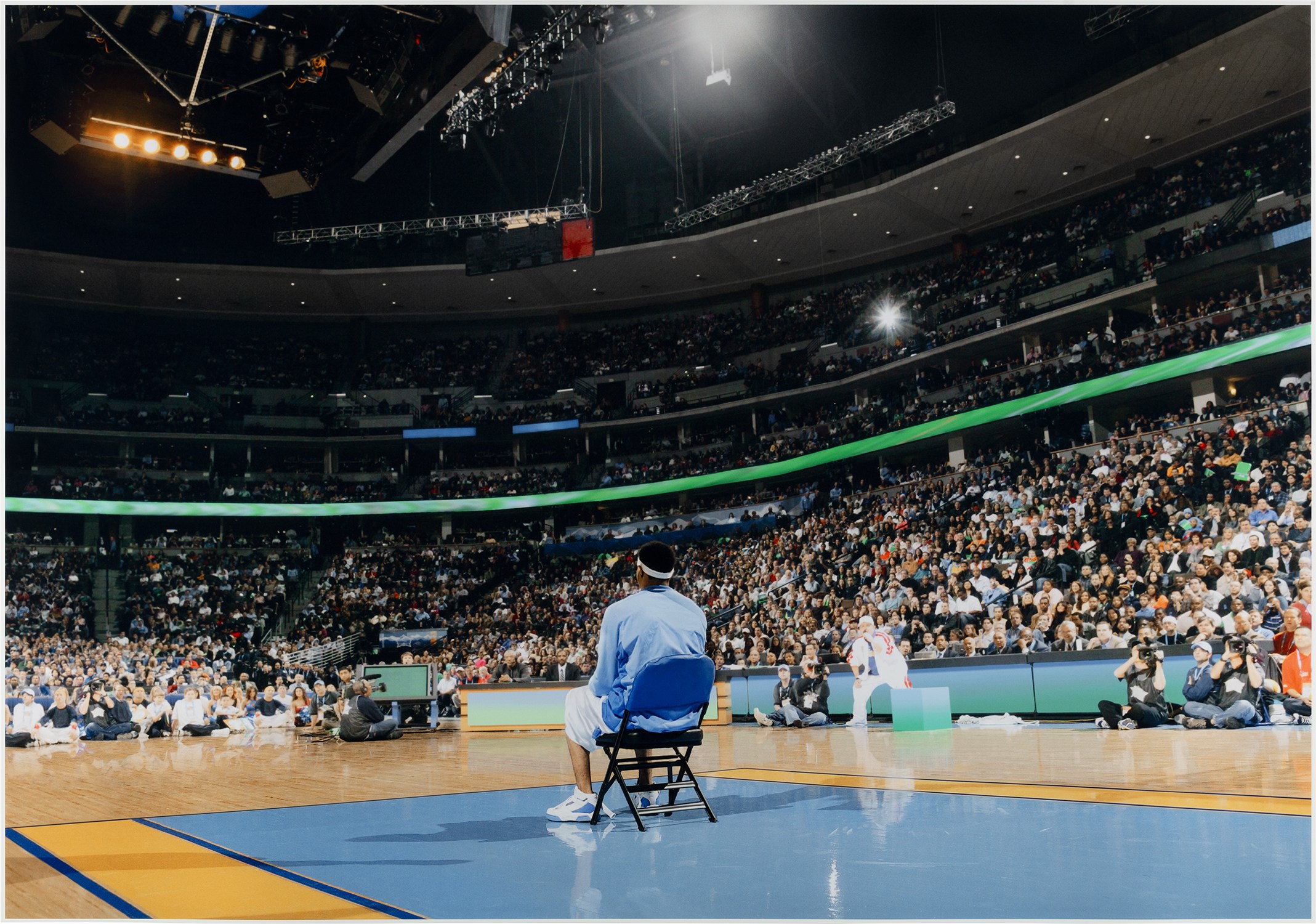
The "Four Horsemen of the Apocalypse" series, several works from which are available through The Collection, represents one of the most sustained and formally ambitious bodies of work in contemporary photography and video. Drawn from manipulated imagery of basketball games and large scale crowd events, these monumental chromogenic prints isolate figures, multiply them, and arrange them against fields of artificial light and amplified color. The effect is simultaneously ecstatic and unsettling, like staring at a religious icon that has been assembled from secular source material. Works such as "Four Horsemen of the Apocalypse I" from 2000 and the later numbered prints in the series show Pfeiffer refining his command of scale, surface, and chromatic intensity over time, making the group as a whole a compelling document of an evolving vision.
Paul Pfeiffer
Four Horsemen of the Apocalypse (27)
Among the most physically striking objects in his practice are the sculptural video works, where the screen or monitor becomes a material presence rather than a transparent window. "Vertical Corridor" from 2004, constructed from metal, Plexiglas, neon armature, and mirror, exemplifies this dimension of his work. The piece does not simply display an image; it constructs an architecture around it, implicating the viewer's body in the experience of looking. Similarly, "Burial at Sea" from 2004 pairs a digital video loop with a chromed thirteen inch television and DVD combination, turning the domestic screen into something ceremonial and slightly alien.
These objects insist on their own materiality in a way that keeps Pfeiffer's practice firmly rooted in the tradition of sculpture even as it fully inhabits the world of moving image and digital manipulation. From a collecting perspective, Pfeiffer occupies a genuinely distinctive position in the contemporary market. His works are held in major institutional collections including the Museum of Modern Art in New York, the Guggenheim, and important European museums, which provides a stable foundation of institutional validation. The chromogenic prints in the "Four Horsemen" series are particularly sought after, combining the visual impact of large scale photography with the conceptual depth of a rigorously sustained artistic investigation.
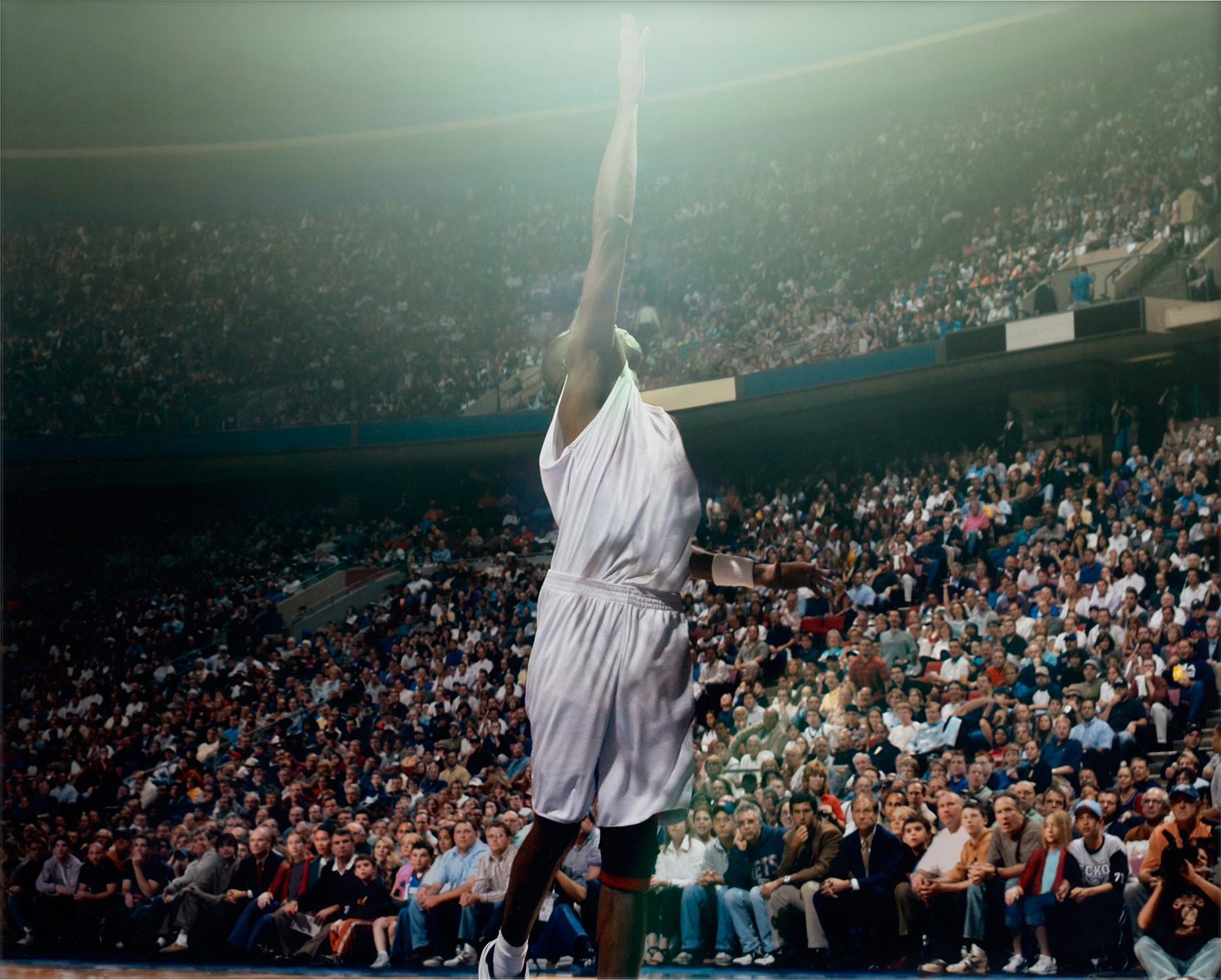
Paul Pfeiffer
Four Horsemen of the Apocalypse, No. 18, 2004
Collectors who are drawn to artists working at the intersection of photography, video, and conceptual art will find in Pfeiffer a figure whose work rewards both immediate sensory engagement and long term intellectual companionship. The installation works, with their specific technical requirements and unique material configurations, carry an additional charge for collectors interested in works that transform a room rather than simply inhabiting it. Pfeiffer belongs to a generation of artists who came to prominence in the 1990s and early 2000s, thinking seriously about how digital technology was reshaping visual culture. His peers and contemporaries in this conversation include artists such as Doug Aitken, whose large scale video environments share Pfeiffer's interest in immersion and spectacle, and Hito Steyerl, who has pursued related questions about the politics and poetics of circulating images.
Within American art history, his work can be understood as a descendant of the Pictures Generation's interrogation of mass media imagery, carrying forward the critical intelligence of artists like Richard Prince or Cindy Sherman into a fully digital landscape where the machinery of image production has become even more pervasive and more invisible. What makes Pfeiffer matter today, perhaps more than ever, is the prescience of his central concern. We now live entirely inside the condition he began analyzing at the start of his career: a world in which the mediated version of an event is not merely a representation but is, for most people, the event itself. His work does not despair of this condition, nor does it celebrate it uncritically.
Instead, it opens a space for genuine perception, asking us to slow down, to look again, and to notice the extraordinary human energies that flow through even the most commercially saturated images. That is a rare and valuable gift, and it ensures that his practice will continue to grow in significance as the culture catches up to what he saw so clearly, so early, and so beautifully.
Explore books about Paul Pfeiffer